
Zeno's Conscience
We are in Trieste between the late nineteenth century and the early years of the twentieth. The author imagines that a psychoanalyst publishes "out of revenge" the memoirs of one of his patients, who broke off treatment and told a pack of lies. The novel thus adopts the narrative form of an autobiography. "Lying comfortably in a club armchair," Zeno attempts to recall the most significant event
Cosmopolis
Eric Packer is a brilliant young financier who loses and makes millions of dollars in a matter of seconds, speculating on currencies and the stock market. The novel chronicles a single day in which Eric travels across the city in his limousine, alternating between fleeting sexual encounters, hurried breakfasts, traffic jams caused by violent protests and the funeral of a music idol, a doctor's ex
The Quince of Istanbul
The quince is > the only fruit that with time can make its fragrance grow stronger rather than languish. It is ugly, full of bumps, but with time it grows rounder, softer, more beautiful and feminine . The tale is the chronicle of a tenacious love, for a land and for a woman. The land is Bosnia, “the land of long loves and long grudges.” The woman is Masa, “a Tatar face, eyes like black gra

The Crisis of the European Mind
The book traces the development of ideas from 1680 to 1715, a period in which, as the author states > a crisis occurred in the European mind: between the Renaissance, from which it directly derived, and the French Revolution, which it prepared, there was none more important in the history of ideas. Man, and man alone, was becoming the measure of all things . The first part of the book deals w

A Heart So White
The novel opens with a mystery (the suicide of the presumed first wife of the father of Juan, the protagonist and first-person narrator) and closes with the resolution of the enigma, which I shall not disclose so as not to deprive the reader of the surprise. Between these two poles of the narrative, the secret unfolds slowly, for deep down it is always known, or suspected: like Lady Macbeth in Sha
The Heart of Things
The novel is set in the early twentieth century, at the close of the Meiji Restoration or Renovation: the prolonged era between 1867 and 1912 that began with the reassertion of imperial power over the Tokugawa Shogunate. This historical anchor serves not only to contextualize the narrative—centered on the ambiguous and complex relationship between two generations—but also to underscore its contemp
Cyclops
The novel opens with a historical premise: a ship with a mysterious cargo sinks off the coast of Cuba. Immediately thereafter, the scene shifts to a Florida beach in the 1980s. A blimp, > motionless in the tropical air, poised and tranquil, like a fish suspended in an aquarium , awaits an American tycoon to embark on a search for the alleged treasure that sank to the ocean floor with the shipwr

Of Love and Shadows
The novel is set in Chile, ten years after the coup d'état that brought Pinochet and the military junta to power, establishing a brutal dictatorship: Chile, > a spot on the map, immersed in a vast and prodigious continent where progress arrives centuries late, (...) a territory in whose eternal humus mythological animals drag themselves along and human beings live unchanged since the dawn of the

The Da Vinci Code
The novel is set in France and recounts the search for the Holy Grail—which purportedly points to the existence of a female apostle—and for a sect that has concealed and guarded this secret across the centuries, one of which Leonardo da Vinci was allegedly a member. Following the murder of the Louvre curator who was the custodian of the secret, his granddaughter and a scholar of medieval symbolo

From Life
The book is a collection of short stories published by a very young Matilde Serao at the age of twenty-two. In 1883, the twenty-six-year-old author, after "four years of militant artistic life," wished she could "change everything," finding these juvenile writings flawed in form, lacking "depth of impressions," and muddled by an "encumbrance of ideas." Reading them more than a century later, thi

Her Side of the Story
> Behind the wall supporting one another, huddling together, forming a clot of suffering and waiting. (...) I heard them moaning, pleading, unheard: because a woman's voice is merely poor breath; and the wall is stone, cement, bricks . This novel speaks of the separateness between man and woman, of two distinct worlds whose boundary is impossible to cross. This theme is "decked out in a rag of a

David Copperfield
The novel recounts the life of David Copperfield, who, after a happy childhood with his mother and a nurse, is persecuted by his stepfather. He is sent to a harsh, authoritarian school and, upon the death of his mother, is forced to work in a factory while still a child. He is subsequently taken in by an aunt, who provides him with comfort, an education, and the means for an apprenticeship at a
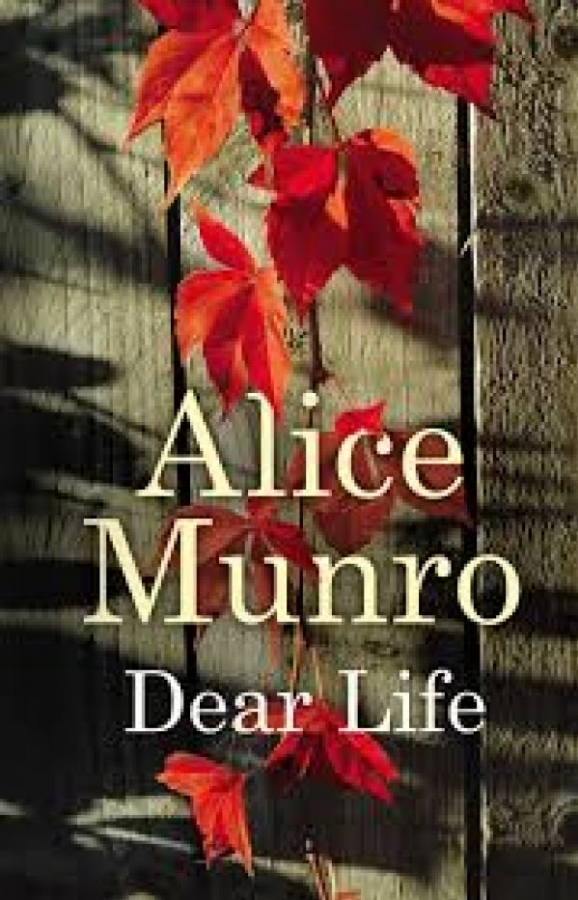
Dear Life (Getting Out Alive)
The book brings together fifteen stories, the last four of which > form a separate unit, autobiographical in feeling, sometimes even in fact . To make overall sense of stories that might otherwise be viewed as episodes of a female condition devoid of evolution and without outlets ( > too late to do anything else. When it could be worse, much worse ), one should perhaps start from the final

Death at La Fenice
The book is set in Venice and is a detective novel. A renowned conductor dies in his dressing room during an opera performance. A police inspector investigates, naturally suspecting homicide. In the end, it turns out to be suicide. The conductor had abused his wife’s daughter, who, by administering antibiotic injections, renders him progressively deaf. Driven by despair, the conductor killed

The Decameron
If we consult the Zingarelli dictionary, we find the following definition of the adjective "boccaccesco": "affected, salacious as in certain tales of Boccaccio." And the dictionary adds: "identifies situations, descriptions, writings of a sexual nature, to which a vein of lightness, amusement, and even mordancy is nonetheless not foreign > . This definition reflects common perception, which stems

Demetrio Pianelli
The novel is set in Milan at the end of the nineteenth century: a city with its > broad straight avenues and luxury shops, (...) the movement of the trams and the bustle of busy people, intent on making money, working, producing, paying little heed to idle chatter, enjoying life without fuss or fancy ; in the background of human affairs a great clamor prevails, and yet not so far away lies the

Continental Drift
Questo romanzo è un vortice dʼacqua, che risucchia lʼintero racconto in un unico incomparabile episodio, tragico ed intenso, dopo il quale niente è come prima. Il problema è che questo mulinello è una «sabbia mobile», così lento e vischioso da sfinire il lettore. Ma andiamo con ordine. Bob è un giovane di trentʼanni, padre di due bambini, sposato con una donna che lo ama; ha un posto fisso e un
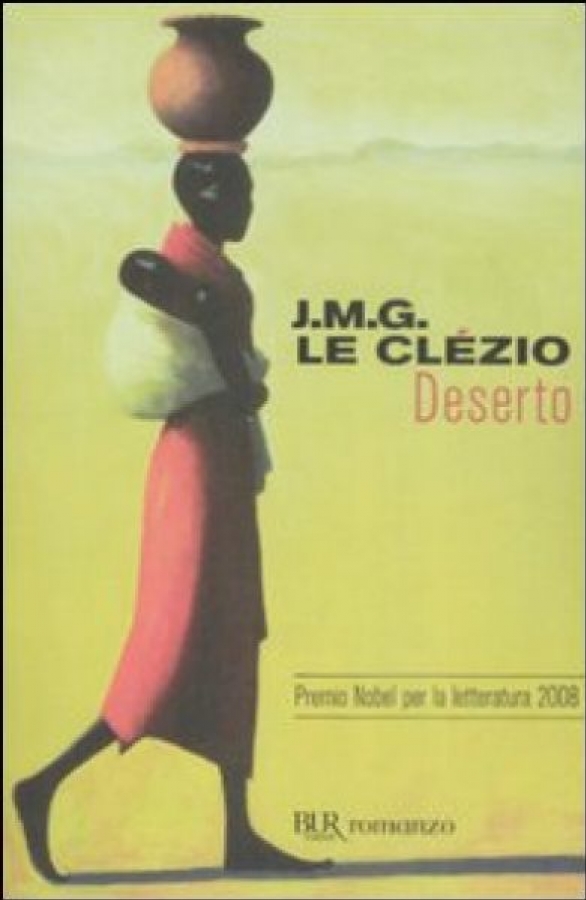
Desert
This is a book that develops along two narrative paths that are seemingly distinct, yet bound together by an ideal thread. On the one hand, it narrates the story of a desert people, followers of a sheikh revered as a saint, who intend to resist the French conquest of Saharan Africa. The desperate march of these people is seen through the eyes of a boy, who may well be the grandfather of Lalla, t

Of Blood and Ice
Imagine a *Promessi Sposi* where Renzo and Lucia are two lunatics—or presumed to be such—the setting is a late-nineteenth-century Lecco teetering between superstition, charlatanry, and positivism, the center of the narrative is an insane asylum, and the author is not Manzoni, but a debut writer. Antonio Ghislanzoni, the only historical figure among them, tells his friend Baldo Bandini, a penniless

Dirty Love
The bottom line is very simple: a wasted talent. Remarkable stylistic skill is placed at the service of tedious stories devoid of narrative development, inconclusive and cynical relationship dramas: in short, an unbearable book. In *Listen Carefully as Our Options Have Changed*, Mark has discovered that his wife, Laura, is cheating on him: he knows because he hired a detective to tail her and ha

The Deserter
It is a great anti-war novel; it recalls two other books on the subject, both reviewed on this site: Karl Marlantes's *Matterhorn*, set in the Vietnam War, and Erich Remarque's *All Quiet on the Western Front*. While the former is an epic tale, a sort of modern *Iliad* demonstrating the futility of war as an occasion for social change (dispelling a great myth!), and the latter is a descent into th
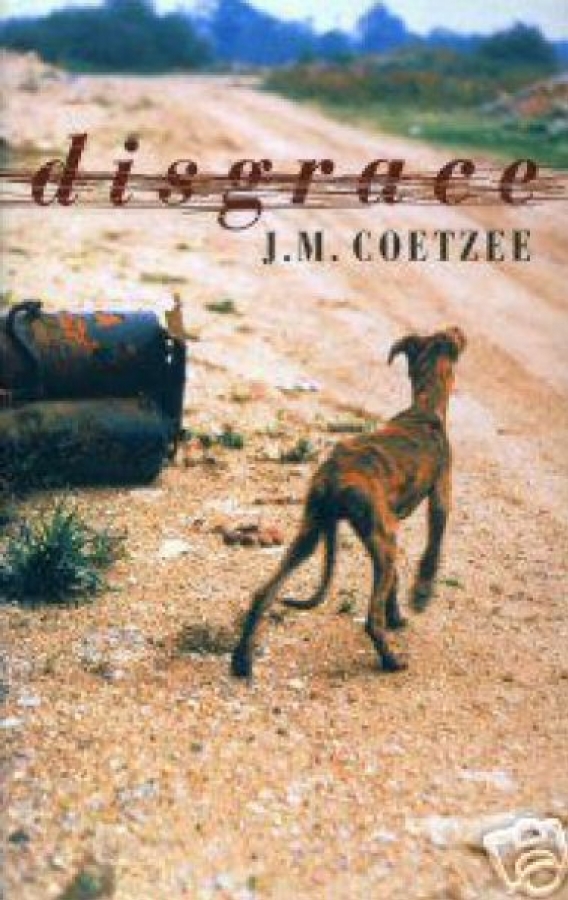
Disgrace
A literature professor is expelled from the university following a relationship—essentially sexual—with a female student. The man is over fifty and twice divorced. Accustomed to being courted by women, he now finds himself alone, reduced to seeking sex with prostitutes, and thus lets himself be drawn into the affair, in pursuit of his own vanity and his own eros. He moves to the countryside to

Disguises
*Disguises*—in Italian, *travestimenti*—is a short story centered on the theme of disguise as an ambiguous game leading to the distortion of reality and of the self. Henry, a ten-year-old boy, is orphaned and goes to live with his aunt, a former actress. The boy is made to undergo an evening ritual in which the two dress up and perform the roles inherent to their assumed appearances. It is a ga

The Dismantling
The decommissioning with which the book deals is that of the Bagnoli steelworks in Naples. Through the literary device of a technician, Vincenzo Buonocore, recounting his story directly to the writer, the history of the factory’s closure and its impact on the social fabric of this town in Campania is interwoven with a personal tale. > If I am to be completely in this book, and Rosaria must be i