Finished reading on: December 02, 2025
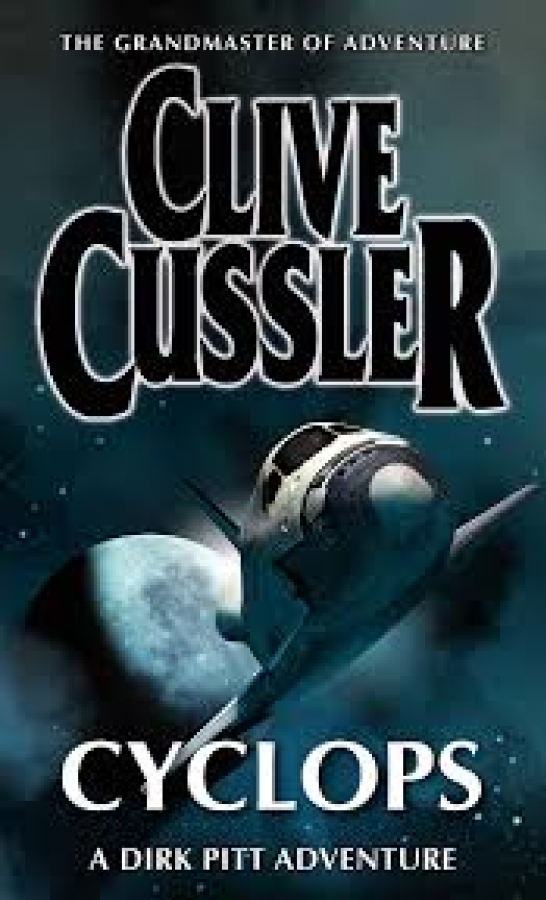
Cyclops
AI Translation Notice: This review was translated from the original Italian using artificial intelligence. Book quotes and excerpts are translated interpretations and will not match the author's original English phrasing or official published translations.
The novel opens with a historical premise: a ship with a mysterious cargo sinks off the coast of Cuba. Immediately thereafter, the scene shifts to a Florida beach in the 1980s. A blimp,
motionless in the tropical air, poised and tranquil, like a fish suspended in an aquarium
, awaits an American tycoon to embark on a search for the alleged treasure that sank to the ocean floor with the shipwreck.
What no one knew, or could possibly suspect, was that Raymond LeBaron and his friends aboard the Prosperteer had vanished into a mystery that went far beyond any search for treasure. From this moment onward, an incredible and convoluted series of events begins to unfold. After five hundred pages, unraveling the narrative threads is no easy task; let us attempt it. LeBaron is part of a secret circle of capitalists that has established a base on the Moon, where the Soviets have also landed; the latter will attempt to storm the American outpost, only to be wiped out by the valiant defenders in a battle fought on the surface of our satellite—and all this unbeknownst to the President of the United States! LeBaron and his men were not killed in the blimp's crash, but were taken prisoner by the treacherous communists at a secret base in Cuba; what is more, the Soviets intend to eliminate Fidel Castro, who wishes to break free from the Soviet Union. Such a tangle of events already demands a hero to unravel it, and that hero is Dirk Pitt, a sort of Sandokan at the very center of Cussler's literary output. In this novel, we first meet him in a gripping scene on a Florida beach, where our hero prevents the wind-tossed blimp from wreaking havoc among the poor holidaymakers, caught between fascination and terror:
the multicolored sails of the "windsurfer" fleet flashed across the blue-green water like a crazed prism. We then find Pitt, presumably weary after this heroic escapade,
among three dozen gleaming vintage cars, an antique airplane, and a late-nineteenth-century railway carriage. Pitt barely has time to gaze fondly upon a fabulous sports coupé, destroyed by an explosion and which he intends to restore to its former elegance and beauty, when he receives a phone call from LeBaron's wife asking him to help her find the hidden treasure. And yet more adventures follow until our American Sandokan leads "the good guys" to foil the plots of the villainous and bumbling Soviets, even uncovering the mysterious cargo. Overwhelmed, yet glad for such superficiality after having read László Krasznahorkai's The Melancholy of Resistance (see the review on this site), I set the book aside, certain that I will not read another by this author.
There are thrillers, and then there are thrillers. To judge the novel, however, we must look to the myriad American films that pack cinema halls and flicker across our television screens. The sheer crowding of characters and subplots masks the thriller writer's struggle to lend depth to stories and protagonists. In this novel, Pitt seems indifferent to the charms of the sole female figure, the beautiful widow; there is only a brief and chaste love scene, while he displays empathy and solidarity toward his fellow adventurers in a distinctly camaraderie-driven style. He is not, therefore, a true Sandokan—dark and melancholy because his beloved is his enemy's daughter. To the author's credit, it must be said that the violence is restrained, perhaps because the novel was written in the 1980s.
From a stylistic point of view, the novel is well written. The descriptions are particularly striking in their precision and detail. The finest scenes are those on the water, confirming the author's love for this environment.
Why read it? It can provide a moment of diversion if one is weary of dense reading. But only once!