Finished reading on: July 13, 2009
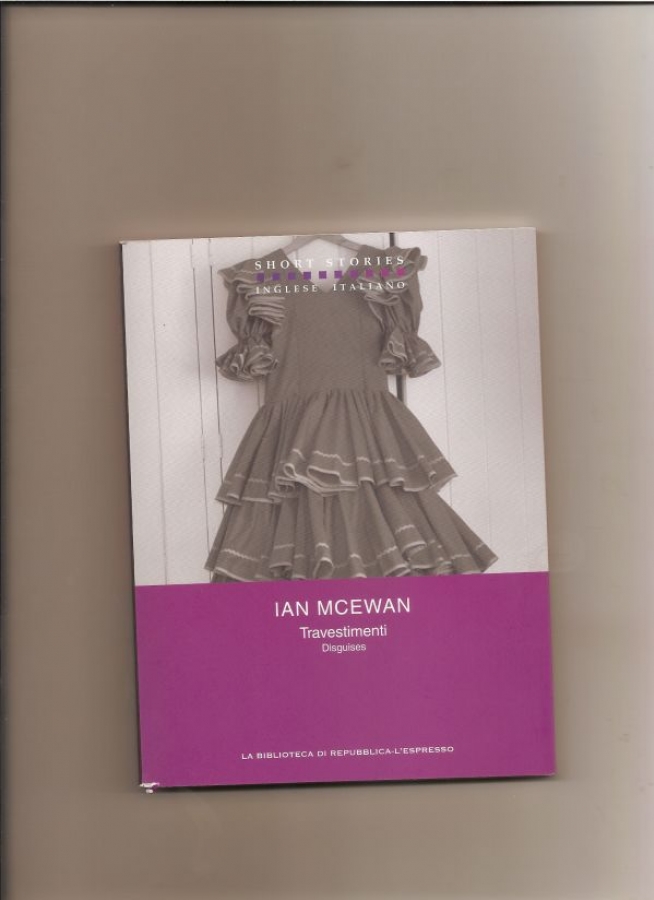
Disguises
AI Translation Notice: This review was translated from the original Italian using artificial intelligence. Book quotes and excerpts are translated interpretations and will not match the author's original English phrasing or official published translations.
Disguises—in Italian, travestimenti—is a short story centered on the theme of disguise as an ambiguous game leading to the distortion of reality and of the self.
Henry, a ten-year-old boy, is orphaned and goes to live with his aunt, a former actress.
The boy is made to undergo an evening ritual in which the two dress up and perform the roles inherent to their assumed appearances.
It is a game that turns unsettling when the aunt forces the boy to dress as a girl and, met with her nephew's resistance, displays an authoritarian and aggressive temperament.
As was to be expected, the boy makes friends and meets a girl his own age who invites him to her house.
Henry is no longer a child; he is becoming an adolescent, and his aunt's inclinations grow increasingly intolerable.
The aunt throws a costume party, and the story culminates in a crescendo of illusions, masquerades, and scenes either real or merely imagined, at a gathering where it is difficult to tell who is doing what:
now it came back to him, if you are dressed as someone else pretending to be them, you take the blame for what they have done, or for what you do being them...
or that you did?
It is a muddled story, tangling together several themes: disguise as play, the forging of identity in adolescence, and a conception of reality as illusion—an impression created by one's own senses rather than an objectively existing world.
There are too many psychological and philosophical motifs for the story to remain intelligible; it seems merely an occasion to experiment with new subjects and cement stylistic virtuosity.
Why not read it? It is difficult to read, inconclusive, and weighed down with literary preciousness.