Age of iron
The novel is set in South Africa in the mid-1980s, during the era of apartheid. An elderly classics teacher learns that she has incurable cancer. She resolves to recount the final days of her life to her daughter, who left the country many years ago: > I tell you the story not so that you may take pity on me, but so that you may learn how things are. It would be easier, I know, if the story came from someone else, if it were a stranger’s voice resounding in your ears. But the fact is, there is no one else. I am alone, the only one writing. Do not pass it over, do not forgive easily. Read everything with a distant eye . This declaration by the protagonist encapsulates the novel’s multifaceted meanings: the events, and above all the companions, of the old woman’s final days, the loneliness and nostalgia for the past, the exile from her daughter. An alcoholic vagrant and a stray dog find shelter at the protagonist’s home; initially wary, but growing increasingly trusting, she takes them in, finding solace and friendship. Meanwhile, the plight of two Black youths draws the elderly teacher into the grueling living conditions of the Black population and, above all, into the brutal repression of the Afrikaner police. Upended by events that shatter a hitherto tranquil existence, the letter to her daughter changes in meaning: intended as a way to reinforce their bond, the woman instead finds herself swept into turmoil and uncertainty. Her love for her daughter grows more abstract and distant, while her feelings deepen toward those closest to her in suffering and in the face of death: the vagrant, the dog, and the two Black youths. And a plea for love rises from the old teacher: > and this long letter, I say it now, is a plea toward the sunset, toward the west (the daughter lives in the United States) for you to return to me. Come and hide your head in my lap as a child does, as you used to do. I cannot live without a child, I cannot die without a child. What I endure, in your absence, is grief. I produce pain. You are my pain. This is an accusation. Yes, I accuse you. I accuse you of having abandoned me . It is a powerful, ancestral novel, dominated by classical themes typical of Greek tragedy—those of Aeschylus and Sophocles. The relationship between mother and child is explored not in psychological terms, but by tracing it to an ineluctable destiny: the detachment of offspring from their parents. The daughter’s flight from South Africa begets the mother’s exile, her solitude, and with it the awareness that she will not be remembered after death > let me go from myself, let me go from you, letting go of a house still alive with memories: it is a difficult task, but I am learning . > Do not be afraid, says the protagonist, I will not seek you out. It is not my soul that will remain with you, but the spirit of my soul, the breath, the movement of the air around these words, the faintest turbulence traced in the air by the otherworldly passage of my pen across the page your fingers now hold . Why read it? It is not an easy read, not least because the author frequently opens philosophical digressions, but the novel’s cosmic depth and the evocative power of many of its pages are well worth the effort.
The Hive
The novel is set in Madrid during World War II: it is a period of deep economic crisis, marked by widespread squalor and a sense of "hopeless waiting"—the expectation of generic change paired with resigned pessimism. Dona Visi is happy because her daughter has found a fiancé, > someone studying for a position as a notary , her husband > tosses and turns between the sheets, > Fine, hold off on ringing the church bells. (...) Let's wait and see how it turns out , and her husband knows full well, having run into his daughter prostituting herself. Madrid is a city where everyone > walks aimlessly, with hands in empty pockets -- pockets that, at times, are not even warm -- with empty heads, empty eyes, and in their hearts, without anyone being able to explain it, a deep, implacable void. (...) Night falls (...) over the city's strange heart. Thousands of men sleep wrapped around their women, without thinking of the harsh, cruel day that perhaps lies in wait for them, like a wildcat, in just a few hours. Hundreds upon hundreds of students lapse into solitary vice. And a few dozen girls wait -- what are they waiting for, my God? Why do you deceive them so? -- their minds full of golden dreams.... If *The Family of Pascual Duarte* > (see the review on this site) revolves around a character dominated by a bloodthirsty disposition, by an irresistible fate, here we have a series of episodes, anecdotes, and figures in a disordered succession that makes it difficult to trace a unifying thread. On the other hand, what is the point of delving into the story of Elvira, already a weary prostitute, or that of Celestino, who talks to himself, or of understanding better who > the neighborhood poet really is, (who) has red cheekbones and sometimes, when the mood strikes, faints in the Café and has to be carried to the restroom. They are numerous figures, physical and thus contextualized, yet also allegorical of a human condition; and it is futile to dwell on them, so similar is their fate. If two reference points are really to be found, they can be identified in Dona Rosa and Martín. The former > comes and goes between the tables of the Café, bumping into customers with her enormous backside , at the center of a kaleidoscope of the defeated and the resigned, > with their elbows on the old, crusty marble of the tables, (...) once funerary slabs (a magnificent image of a world where everything has crumbled). And she, the formidable tavern-keeper, > pats her belly (...) Move along, move along.... Everyone in their place. (...) The hairs of her mustache twitched defiantly, solemnly, like the antennae of a cricket in love and full of pride. Martín is a young intellectual who survives on a few newspaper articles, on meals provided by his sister—who sets something aside for him without her husband's knowledge—and on the generosity of a brothel madam, who allows him to sleep in a warm bed beside a young prostitute. > He feels the young woman's hair on his face, feels her naked body beneath the sheets, feels her breath which, at times, is slightly raspy, almost imperceptibly so , and he recites a melancholy poem to her, dreams of being hired by the Social Security Institute, of visiting his mother's grave, and does not even realize that the Francoist police are searching for him. > Martín, out of a vague premonition, does not want to hurry..... It is true that we are in 1940s Spain, but isn't this hopeless waiting" perhaps the very sentiment pervading us right now, in the face of announcements of dramatic turning points (peace in Ukraine, the end of the genocide in Gaza), only to find ourselves repeatedly trapped in the most brutal paralysis? Are we not like the characters of this hive, a metaphor for our own condition? We would not feel so close to Cela's narrative had the author not relied on a dry, essential, and intense style, so distant from the convolutions of contemporary Spanish writers such as Cercas, Marías, and Aramburu (see the numerous reviews of their novels on this site). Cela's prose, steeped in raw magical realism, recalls Grazia Deledda's *Canne al Vento* (see the review on this site). The novel's limitation lies precisely in the dispersal of its many anecdotes, in the disorientation of the narrative—elements that make it difficult to navigate the reading and assign it an overarching meaning. One must simply surrender to it, without searching for a cohesive plot. Why read it? Splendid prose, a metaphor for our current condition
My Brilliant Friend
For much of the novel, the brilliant friend seems to be Lila; she is intelligent, capable of mastering any subject (even Latin) without attending school; she is brave, creative, enterprising; with adolescence, she also blossoms into a stunning young woman. Elena, the first-person narrator and co-protagonist alongside Lila, has been enthralled by her since elementary school, yearning to resemble her, both in body and mind. > I became fixated on Lila, who had very thin, agile legs, and was always moving them, kicking even when she sat next to the teacher (...) I decided that I had to model myself on that girl, never lose sight of her, even if she got annoyed and pushed me away. (...) I trained myself to accept Lila's superiority in everything with good grace, and even her bullying . Through Elena's words, we follow—with a touch of envy—the childhood and adolescence of the two friends and their many peers in a working-class neighborhood of Naples: violent, cruel, yet vital and authentic. Is the novel, then, the narrative of a friendship between Lila and Elena, and with it, of a social milieu? Toward the end of the book, we realize the theme is something else entirely: the author speaks of detachment from one's origins as a consequence of education, of opening up to new cultural and linguistic horizons. When Lila, still an adolescent, marries the neighborhood's wealthy grocer, securing a position in the eyes of the local community, the two friends share a clarifying conversation—for themselves, and for the reader as well. Elena is excelling in high school and declares, with “a nervous little laugh,” that she will abandon her studies once she earns her diploma. Lila replies, curt and resolute: > you're my brilliant friend, you have to be the best of them all, boys and girls (...) you must study always . In that moment, Elena realizes how they had ended up “in two different worlds,” despite living in the same neighborhood, despite having shared the same childhood. Elena had drawn from Lila the drive to study, but schooling had become her own personal wealth. > I had grown up with those boys and girls (our peers in the neighborhood), I considered their behavior normal, their violent language was my own. With them, I couldn't use anything I learned every day; I had to restrain myself, somehow demean myself. (...) Yet that very celebration (her friend's wedding) confirmed that Lila—the only person I still felt was indispensable despite our diverging lives—no longer belonged to us, and with her gone, any mediation between me and those young people (...) had run dry. The story of Lila and Elena’s friendship provides the occasion for a rare reflection. In common sentiment, schooling is always seen as performing a positive role, of emancipation and spiritual uplift. It undoubtedly is, one hopes, yet too often we overlook how education alienates us from our world of origin, causing us to lose our anthropological roots and squandering values and outlooks that are not always entirely negative. What will remain of Naples in a society that demands complete homogenization? Moreover, change is difficult and tormented for the person undergoing it. Elena, in fact, does not feel superior to her friend or to her peers; quite the opposite, she experiences this detachment with surprise and anguish, struggling to attain an awareness that she has long denied to herself. Her romantic entanglements reflect this very inner conflict: she is in love with Nino, another brilliant high school student, yet she gets engaged to Antonio, a decent young man, but alas, so ignorant. Why, above all, hadn't I stopped to say to Nino stay, come to the reception (...) let's talk among ourselves, let's dig ourselves a den to keep us out of this way Pasquale drives, out of his vulgarity, out of the violent tones of Carmela and Enzo, and even—yes, even—of Antonio? " The theme of detachment is not tackled through a faux-narrative approach that is in truth sociological and prescriptive. The author develops a multifaceted cast of characters, each delineated with effectiveness and psychological depth. Likewise, the neighborhood is described with vibrancy and emotional investment, while never concealing its insular, stagnant, and violent nature. Judgments are not handed down from the heights of an assumed social and cultural superiority, nor does the prose adopt justifying or populist tones. The literary merits—the characters, Lila in particular, the setting, and the plain, elegant prose—make one forgiving of the narrative’s weaknesses: a slow, at times repetitive pace, and a plot left hanging, perhaps to herald future volumes. Yet serialized novels ought to conclude with an atmosphere of suspense, rather than merely an ellipsis. Why read it? Lila’s figure is fascinating, the writing refined and elegant.
Murdered Love
Imagine something akin to Anna Premoli’s novel (*Ti prego lasciati odiare*): a love story, delicate, mildly ironic, woven from brisk dialogue and youthful musings. It could be a tender fairy tale, were it not set in Jordan—which, for most women, is > an oppressive prison, its atmosphere rendered all the more fraught by the risk of dying at the hands of one’s own relatives. Jordan is my home. I love its rugged beauty, its sweeping history. Yet, perhaps, I may never return there again . There can be no happy ending to an impossible love story in a society where > a woman who breaks any of the rules she is expected to respect is not afforded the luxury of forgiveness . As readers, we foresee the novel’s tragic conclusion from the very beginning. This breeds a mounting anxiety, which prevents us from fully losing ourselves in and savoring the beautiful friendship between Norma and Delia. Though belonging to different faiths, they grew up together sharing the same dreams of freedom and emancipation from an age-old female condition. > Our parents insinuated into daily life the idea that men were superior to women. We were not enslaved with whip and chains, but rather persuaded by centuries-old words and teachings to place ourselves in that condition of our own free will . While their mothers believed in "the Arab way of life," Norma and Dalia conform to the oppressive customs of tradition out of fear. Yet > fear can be overcome.... and so, sooner or later, things will have to change . To carve out their own space of freedom, the two young women devise a business venture: hairdressing, a typically feminine occupation that poses no threat to tradition, a sort of holding pattern awaiting the arranged marriage to which they are inexorably destined. Once left in the shop by whichever brother is "on duty," tasked with chaperoning them, Norma and Delia feel free to talk, to share confidences, to read women’s magazines, to dream. This haven in an "insidious sea of religious rules" is upended by the arrival of a young man, who forces them "to behave as we should not have." On the other hand, > were we to rely on subterfuge and deceit to get what we wanted, and let a suburban beauty salon, a hotbed of gossip, define the boundaries of our lives—boundaries that could have been so much broader? Could we risk our necks for a love story? . The two girls have no doubts, even knowing that Delia, a Muslim, can never marry the young man, because he is Catholic. The rules of Jordanian society prohibit marriages between people of different faiths. They know the risks they run. By seeing a young man without her father’s permission, the girl dishonors her family, and her relatives are permitted to punish her with death. Yet we are not faced with just another tale of star-crossed lovers forbidden to love. Norma and Delia reject their inexorable destiny. > Although it had all amounted to little more than some pastries and a coffee, the taste of that ordinary freedom was too delicious to surrender. We had traveled only a few kilometers, yet we had entered another world . As the narrative draws closer to its tragic denouement—Delia’s murder at her father’s hands—the writing style shifts, imperceptibly at first. The increasingly reckless encounters between Delia and the young man are still recounted with apparent lightness, which nevertheless fails to mask the girls' fear and anguish. Then, all at once, the narrative becomes dense and dramatic. With the death of her friend, Norma grows up in an instant. She realizes that her ties to Jordan and its traditions have died with Delia. Yet, as she flees her homeland, she grasps, as never before, her mother’s profound sorrow, the barrier > she had erected to protect her soul from the harshness of life... the surviving remnants of that unique, independent person . Refusing to be trapped by pity for her mother, even while feeling closer to her than ever, makes Norma free as a person, even before being free as a woman. The novel can be read from many perspectives: a sociological and anthropological portrait of Jordan, a country that conceals a cruel, pervasive tribal tradition beneath a veneer of modernity; an impassioned indictment of the widespread acceptance of honor killings and, more broadly, of the condition of women in Arab countries; the chronicle of a sweet friendship, of a shattered bond; a *Bildungsroman*, a painful path toward adulthood. When Norma heeds her mother’s prudent advice—to apologize to Delia’s father, the very man who killed her friend—the girl cynically embraces the lie, recognizing that only through subterfuge and deception can a woman survive. Does she risk deluding herself, as her mother did, "glimpsing ghosts of lost opportunities in her heart," or does she open herself to a new life, truly free and autonomous? Is fleeing Jordan enough to be recognized as a person? Why read it? A novel that is ironic and light at first, then, in its final pages, intense and dramatic. A book that prompts deep reflection on the female condition.
The Army of Sleepwalkers
The context is the French Revolution. > Revolution is like those decks of playing cards where kings, queens, and jacks are split down the middle, one right side up and the other upside down, head up and head down; you turn and spin the card, but not a damn thing changes, the king standing upright is forever tied to the inverted one, as if sneering mockingly at him, as if whispering from below: I am you headed for ruin! Enjoy it while you can, because the world turns upside down . In this whirl the people—call them the masses, class consciousness, or the «flea-ridden mob»—are the ones who believe in a new world, where they envision themselves as protagonists only to find themselves used by power, like a collective sleepwalker. The revolution, in short, is a «Grand Parody». To recount it, the authors trace four narrative threads, initially distinct and ultimately brought together into one. The first consists of the story of Marie, a woman of the > famished and shit-smeared people, yet standing tall, bloodthirsty, an enormous dragon of fremendous beauty . In this way, the authors are able to speak of the sans-culottes and, at the same time, of the role played by women in the French Revolution: a role often overlooked, yet vital to that great upheaval and to the history of female emancipation. It was the first time women’s rights were clearly articulated. To give voice to the people and their protagonists, the authors invent a language, displaying creativity and great literary mastery. The writing is a blend of Bolognese dialectal forms and syntactic and linguistic structures that evoke the style of Beppe Fenoglio. It is without doubt the most captivating and least predictable part of the novel. The second narrative strand follows the fortunes of an Italian *commedia dellʼarte* actor: Leo, who realizes that during the revolution, the real theater is reality itself. > How would it have been possible to return to reciting an old script within the confines of a hall, when theater had become history beneath the sky of France? . And indeed, Leo becomes «both actor and spectator at once», transforming into Scaramouche, an avenger and fighter for freedom. The third thread deals with animal magnetism, a scientific theory and practice widespread in the eighteenth century. It posits that there is a universal fluid coursing through all living beings. Harnessing it would allow one to cure illnesses and ailments, working for the good. Yet can magnetism be used to pursue evil? To subjugate other men, turning them into automatons, a sort of «army of sleepwalkers»? This is what the novel’s third protagonist, Dr. DʼAmblanc, discovers. Like all scientists, he «seeks not justice, but the confirmation of a hypothesis», and this leads him to sacrifice the life of a boy under his care, merely to verify whether magnetism could be employed for sinister ends. Finally, there is the section most deeply steeped in philosophical and psychoanalytic references: the asylum, the upside-down world par excellence. > The ward of the insane was a parody of a city district... everything that happens in here is a parody of the world out there... in short order, passing from mouth to mouth, news transmuted into wild rumors, as the alienated enriched them with their anxieties and bent them to the tortuousness of their indecipherable codes... studying the delirium of those who live openly in the Grand Parody can help us understand those who, seemingly saner, sink into it without being aware of it . In the development of its four narrative lines, the novel proceeds slowly and tortuously. It is demanding yet stimulating, rich in compelling scenes and food for thought. At a certain point, the narrative accelerates, turning into adventure, plot twists, and sudden shifts in direction. It becomes an easier read, but grows predictable, assimilating into the many modern novels that mix suspense with the paranormal. It falls to the reader to discover the unexpected conclusion. We can only say that power is overcome by humanity at its most fragile: a woman by now resigned to squalor and alcoholism. Yet the people advance; will they ultimately emerge victorious? It is a major historical novel, well documented, capable of recounting an epochal episode of our history in an engaging manner. The idea of telling the French Revolution from multiple perspectives is not merely an effective literary device. It makes it possible to address universal and contemporary themes, such as: the question of how far the people are a mob and how far a conscious force for transformation; the relations between men and women which, even in a time of great upheaval, are swiftly reined back into the former’s dominance over the latter; science as progress for the good of humanity and as an instrument of oppression; madness as the laying bare of the paradoxes of normalcy; political and social struggle transformed into performance, into theater. The novel’s limitation lies in its characters: the realm of feelings and interpersonal relationships is lacking, with the result that the protagonists turn out to be stereotypes, emblematic figures of a philosophy of history rather than living, autonomous characters. The creativity, which shines through above all in the prose, is placed at the service of an intellectualist approach. Why read it? A superb historical novel, a reflection on the contemporary world, captivating prose. It reads very well.

The Attack
> How to accept remaining blind in order to be happy, how to turn one's back on oneself without facing one's own negation?... non does not restore grace to a rose by transplanting it into a pot, one denatures it; one believes one is embellishing the living room, yet in truth one does nothing but disfigure one's own garden . Amin, an Arab Israeli, is a brilliant surgeon, happily integrated into Tel Aviv's polite society. After a devastating bombing of a restaurant, in which numerous civilians die, among them many children, Amin discovers that the suicide bomber is his wife, Sihem, the woman who > cradled my tenderest years, adorned my plans with glittering garlands, filled my soul with gentle presences. I no longer find anything of her in me, nor even in my memories . How is it possible that his wife is a homicidal fanatic? For a few pages, the novel seems to take an intimate turn: the secrets concealed within marital relationships. Then, the narrative reclaims a more existential and social direction. Amin wants to know who persuaded his wife, certain that Sihem was brainwashed by someone. He journeys to the Occupied Territories, into the midst of the war between Palestine and Israel, which he had desperately sought to escape. As a terrorist tells him, > the good doctor lives beside a war, he just doesn't want to hear about it. He thinks his wife shouldn't worry about it either.... Well, the good doctor is wrong . Amin's dreams shatter against the ruthless realization that his wife acted of her own accord, because > she must have harboured hatred within herself all along, even before knowing me..... she carried inside her a wound so foul and atrocious that she was ashamed to confide it to me; the only way to be rid of it was to destroy herself along with it . Yet perhaps, far more rationally, the truth lies in what Sihem writes in her farewell letter: > what use is happiness when it is not shared. No child is safe without a homeland . The journey into the Occupied Territories is also, for Amin, a return to childhood, to his people. The narrative does not tell us whether Amin too becomes aware of his people's tragedy; we only know that he dies—accidentally or deliberately?—in a slaughter perpetrated by an Israeli drone to eliminate a religious leader. With great narrative skill, the novel opens and closes with the slaughter in which the protagonist meets his death. According to some critics, Amin's death, inexplicable within the plot of the story, serves as a metaphor for an endless conflict and the destruction of a people: the Palestinians. It is an overly simplistic interpretation for a complex novel, one that refuses to take a side, neither against nor in favour of the two warring peoples. This assessment is confirmed by the positive portrayal of certain Israeli characters, such as Amin's tender female friend, and the alternation of colloquial language with poetic and, for long stretches, sermonizing prose. The narrative pace is tight, the dialogue dense and effective, the Israeli milieu and its characters convincingly depicted. What jars, instead, are the political soliloquies, such as those of the religious leader and the terrorist chief, which ring false and conventional. The Palestinian setting likewise feels artificial. It is evident that the author feels far more at ease in an urban, Western-style environment. Why read it? It is a gripping read.
The Adventures of Héctor Belascoarán
The book collects three novels featuring Héctor Belascoarán as their protagonist. The first novel, *Days of Combat* (1986), recounts the protagonist’s life transformation: from a married engineer and corporate executive to a detective searching for clients and, on his own initiative, hunting down a serial strangler. In reality, the hunt for the strangler is a way to find himself, to escape a life that had sunk > slowly into the oblivion of an accelerated race, a car race in which he competed without even knowing it, a marathon of assholes running the prescribed forty-two kilometers along roads that weren't even recently paved . It is ostensibly a "noir" novel, but in truth an introspective one—in some ways a journey of liberation from a bourgeois, respectable existence that had grown far too constricting. And in the background, the true subject of the novels already emerges: Mexico, and Mexico City in particular—a violent city that "feeds on carrion." In the second novel, *The Ghost of Zapata* (1992), both the writer and the protagonist have hit their stride. The narrative pace has quickened, the prose has become taut and lean, and Héctor is now a detective taking on an unjust society where everyone, starting with the police, is corrupt and violent. The protagonist is dragged against his will into three cases: searching for Emiliano Zapata, who is rumored to still be alive; investigating the murder of a high-ranking corporate executive in the midst of a bitter union dispute; and preventing a teenage girl from committing suicide. And Héctor carries out these tasks > with the desire to believe anything, eager to see Zapata, who by now must have been ninety-seven, burst galloping onto the ring road atop a white horse, amid a hail of bullets . In the third novel, *Some Clouds* (1992), Héctor is resting on a Caribbean island when he spots his sister and realizes that > changes were coming and he was tired, listless, disheveled, unkempt, craving beers, boleros, and the sound of the ebb and flow of the waves. He wanted his solitary palm tree, the sunsets, and the occasional round, good-natured cloud in the sky . His sense of justice proves stronger than his indolence, and he finds himself entangled in a story of syndicates, crime, and corrupt cops against whom he must fight like a lone warrior. The reference point is undoubtedly Raymond Chandler, even if Héctor lacks Marlowe’s cynicism. Above all, he plays the solitary, righteous detective unassumingly, almost by accident. > "Listen, old Paco," Héctor said, stubbing out his last Delicado in the tin ashtray, "I'm not really such a great detective. The only certain thing is that, not knowing how to write stories, I butt into other people's. Me alone, against the system—give me a break! I've been working on my aim for five years, and with a .38 I couldn't hit an elephant at ten meters. I'm crippled, when it rains I limp, yesterday I found my first gray hairs, and I'm lonelier than a stray dog. I get pissed off just like you do, it eats away at me thinking about what this nation has come to. I'm as Mexican as anyone else . What do you say to that now? I'm a detective because I like people." Why read it? The first novel is heavy going, but the other two are a pleasure to read. And above all, one appreciates the protagonist’s civic passion—free of rhetoric, just like that of any Mexican.
Berlin
On this site, we have already published a review of the first volume of the great Berlin saga, written between 2015 and 2018 by Fabio Geda and Marco Magnone (see *I fuochi di Tegel*). In a “worn and decaying Berlin,” an epidemic had wiped out all adults, leaving only those under the age of eighteen alive: they had plummeted into a > violent, primordial world beyond time, [that] was robbing them even of words . They must carry on living, even though > they were certain that something hideous would leap out at them from a balcony, or from inside a car, catching them unawares . They have banded together into factions with distinct values and dynamics, within a wall encircling the whole of Berlin—a kind of prison that protects them yet confines them to a claustrophobic fate, living with the knowledge that they will die at eighteen. While in *I fuochi di Tegel* the authors introduced the setting and characters, the subsequent volumes chronicle life in this feral world: in *L'alba di Alexanderplatz*, it is the fight against a panther, a ferocious beast lurking in abandoned subway tunnels; in *La battaglia di Gropius*, amidst a freezing winter, with the vast supplies of food and firewood from abandoned supermarkets and buildings exhausted, hunger and cold drive a major battle between the Tegel faction, led by the savage Wolfrun, and the Gropius faction, headed by the hesitant Jacob; in *I lupi di Brandeburgo*, our heroes must venture beyond the wall to rescue little Nina; and finally, in the last two books (*Il richiamo dell'Havel* and *L'isola degli Eroi*), the epic saga culminates in a clash between adults and youths, in a haunting finale albeit brightened by a Hollywood-style epilogue. The narrative is kaleidoscopic, multifaceted and rich in viewpoints, allowing each reader to pursue whichever dimension appeals most, should one wish to look beyond the adventure—which remains consistently surprising and compelling. Identifying a common thread might seem challenging, yet it becomes clear if one follows the trajectory of a single character. Sixteen-year-old Jacob has found himself reluctantly thrust into leadership of the Gropius group; Sven, the former leader, was a charismatic figure, confident in his choices because he was always guided by the values of solidarity and peace. Jacob, by contrast, longs to continue living his adolescence (first loves, friendships, nostalgia, melancholy), but cannot; he must shoulder his responsibilities. And he does so in his own way, not always conforming to conventional notions of leadership: he is hesitant, often ponders what Sven or his father would have done, and does not always make decisions that prove right. It is his conscience that drives the pivotal choice of the entire epic saga. In a frozen and hostile landscape, a brave few have ventured beyond the wall in search of Nina. They cross paths with Wolfrun, the ruthless leader of the Tegel faction, an unsparing enemy driven by hatred toward life. Stranded with her horse, Wolfrun has fallen into icy water and would surely perish were it not for Jacob’s decision to rescue her. > Jacob thought of that idea of the world they had tried to build day after day, a world where saving one's own life was not enough to feel safe, and without giving himself any more time to think, he turned back . And it will be Jacob and Wolfrun, so divergent yet now allied and perhaps already in love, who lead the youths to face their final, most daunting challenge. Deftly constructed in terms of style and narrative, it reads like an epic poem, a blend of the *Aeneid* and the *Iliad*. Alongside the grand battles shines a sense of mutual humanity, a Virgilian *pietas*, the bedrock of familial sentiments of care and friendship. To be sure, the narrative depicts mechanisms of power and domination, extending to the racist attitudes of adults toward the young, yet the numerous positive characters consistently make choices that defy the delusion of subjugation. It is regrettable that the authors eventually abandon the backbone of the narrative—namely, the rebuilding of a society liberated from the burden and errors of the “grown-ups”—only to become ensnared (who knows why) in a plotline recalling the horrors of Nazism, weighing down the narrative unnecessarily and redundantly. Why read it? It captivates through its setting and characters.

Borders no Borders
*Borders* (2022) and *No Borders* (2023) are two novels that develop the same story and must be read and reviewed together. The common thread can be identified in one of the many literary references found in both books: the short story *The Seven Messengers* by Dino Buzzati. The prince, having set out to explore his father’s kingdom, after years of travel recognizes that > there is no border, I suspect. (...) There are no separating walls, no dividing valleys, no mountains closing the pass. I will probably cross the boundary without even noticing, and I will keep going forward, unaware (see the review of Buzzati’s *Sessanta Racconti* on this site). Borders are those between peoples, just as they are the barriers we erect between one another. Following an epidemic triggered by the environment’s revolt against human exploitation, the survivors built themselves a technological city, enclosed within high walls and surrounded by a vast desert of concrete. In this metropolis, called Magnolia to evoke the cruelty of Nature, > the past has been erased, and with it the literature of the past. (...) In Magnolia there is only one version of our history! With food and attentive care, they have turned citizens into faithful servants incapable of thinking! (...) everything is eco-sustainable, recyclable, and interconnected, where civil society is satisfied and the youth is confident in its own beliefs, disdainful of the beliefs of old. In this world where Utopia is forbidden, an elderly poetess continues to live, having adopted the metaphorical name of Olmo. She has taken in four young people. They bear the names of forgotten writers: Lindgren is a Black girl with a mass of bushy hair, and like Pippi Longstocking she looks at the world from her own perspective, wilful and stubborn; Dickens, like the English writer, is a great storyteller > but he is so charming that you forget about it ; Alcott, like the author of *Little Women*, > is so serious, always thoughtful yet always willing to listen ; Verne > sees beyond , capable of envisioning the future in harmony with animals and plants. Between the four of them is a deep bond of brotherhood: they grew up together, feel different from their peers, and are guided by Olmo, the bard of a different world, of an Earth regenerated to new life, which she remains convinced still exists somewhere out there. And so, when Olmo urges them to leave Magnolia without her, the youths feel abandoned. > You want to make explorers out of us! Deep down, nobody cares about us. We are worth nothing. Then, they realize that they are > the children of Olmo, (...) Magnolia cannot tolerate the presence of four young people endowed with the strength and power of Olmo. (...) To be sure, they have absorbed all her knowledge, but would they know how to use it?. Like the protagonist of the film *Poor Things*, who must break away from her creator to claim the world for herself, Olmo's children feel they must leave. It is time to cross borders, to venture toward the unknown, retracing a journey once undertaken by the great explorers and, further back still, the Argonauts: the quest for a Promised Land, the pursuit of a Utopia. Lindgren, Dickens, Alcott, and Verne abandon the safety of Magnolia and take to the road, like the father and son in Cormac McCarthy's *The Road* (see review on this site); awaiting them is a desolate, deadly reality at first, followed by a lush, wild nature that has reclaimed the planet, and ultimately a community of men and women desperately striving to safeguard the past—books, for instance—despite living an existence regressed to primitive levels, devoid of technology and science. Which is better? The hyper-advanced city where everything is regulated and diseases no longer exist, or returning to the dawn of humanity, when one fought merely to survive and ensure the reproduction of the species? Here lies Utopia: fighting for a world where an equilibrium is struck between Technology and Nature, between Progress and Freedom, and where Poetry may once again become the driving force of Humanity. Alongside the “Grand History” in which fundamental material and ideological forces contend, there is also the story of the four young people. Leaving the protective wing of Olmo and Magnolia leads them to encounter other youths, thus fracturing their bonds of kinship. Lindgren slowly discovers she has fallen in love with the very nephew of Magnolia’s Dictator, yet unlike *The Black Corsair* (see review on this site), she overcomes these barriers through a gradual journey of growing trust; Alcott meets a young woman who > walks straight as a queen, (...) uses unusual words, (...) raised by the characters of her novels preserved in the great library of the Lighthouse where she lives in solitude; Dickens falls in love, without knowing why, with a girl who wishes to live in Magnolia, where women are not forced to bear children as in her primitive village; and finally Verne finds, within this society returned to a primitive state, that loving bond with animals he has always yearned for. At first, the intruders are received with mistrust and threaten to break the brotherhood; then, affection, the desire for mutual support, and understanding of the other lead them to evolve from a closed group into an open community, where borders are blurred and constantly shifting. As Dino Buzzati’s character puts it, > Tomorrow morning a new hope will draw me even further ahead.... One should not think that this is a novel dominated by philosophical digressions. The narrative is rich in adventure, even if a lyrical dimension prevails and consistently overshadows the plot. The narrative structure is akin to that of *The Road*: short, almost self-contained paragraphs, providing occasions for evocative descriptions of nature and psychological insights into the characters—analyses that remain, however, perpetually suspended; the dialogues, very well constructed, alternate with detailed yet fantastical representations of the setting: consider the allure of the Lighthouse on the coast of Brittany, one of the most intense moments of the entire novel. The author fails to create plot twists, dramatic turning points, or moments of genuine tension. Perhaps it is a book addressed more to adults than to young adults. Why read it? Enjoyable, interesting, with a beautifully drawn figure in Lindgren.
The Bottle Imp
*The Bottle Imp*, in Italian *Il diavoletto nella bottiglia*, is a short story that revolves around man’s ambiguous relationship with evil. Keawe, the protagonist, > was a poor man, brave and industrious; he could read and write like a schoolmaster, and was furthermore a first-rate sailor . One day, in San Francisco, he stops to admire a splendid house. When Keawe expresses his desire to possess such a home, the owner tells him that his entire fortune originated from a bottle in which an imp resides. Whoever purchases this bottle will have all their wishes granted. There are, however, drawbacks: one goes to hell if one dies while still in possession of the bottle, and it must always be sold at a price lower than its purchase cost. Keawe is torn, but ultimately agrees to buy the bottle for fifty dollars. His life swiftly undergoes a radical transformation: he becomes a wealthy man and can afford a magnificent home. He manages to sell the bottle and is thus able to live peacefully and happily, not least because he has since fallen in love with a young woman, Kokua, whom he intends to marry. One day, however, he discovers he has contracted leprosy and resolves to track down the bottle once more so that the imp may cure him. Thus begins a search that leads him to discover that the price of the bottle has been steadily falling, down to a mere two cents. Yet the bottle would then have to be bought for one cent—and how could it ever be sold afterwards, given that the cent is the smallest coin available? Keawe buys it nonetheless and marries Kokua, but finds no happiness, knowing that upon his death he will go to hell. Once she learns the terrible secret, Kokua decides to secretly purchase the bottle herself through an ingenious expedient: she travels to a French-held island where coins of lesser value than a cent are in circulation. Yielding to evil has created a sort of “reverse chain letter,” breeding further evil to the point where the two lovers become entangled in a paradoxical short-circuit, wherein the happiness of the one becomes the source of the other’s torment. Then, as in a fine fairy tale, comes the happy ending: Keawe manages to sell the bottle to a drunkard, ridding himself of it forever. The story mirrors the structure of a fable (the presentation of the initial situation, the hero confronting hardships until he successfully overcomes them) and also bears the hallmarks of a maritime yarn, unfolding as it does among ships and southern cities. The underlying concept, however, is the depiction of the trajectory of evil, played out entirely through its progressive loss of value. As if to say: the more one lives immersed in evil, the more one grows accustomed to it, to the point that the imp is worth less and less. Why read it? It is remarkably well written, if at times repetitive, but above all, the moral underpinning the tale remains profoundly relevant. In recent years, Italians have gradually accepted increasingly illegal, immoral, and vulgar behaviors, the cost of which drops ever lower because they have by now become part of the collective ethos. Beware! There is no end to the worst.

Buddenbrooks: The Decline of a Family
The title and nineteenth-century framework suggest a great social novel centered on the decline of an upper-bourgeois mercantile family. As often happens with great books, as one delves deeper into the reading (and we imagine the same occurred for the author while writing it), another theme emerges: the unstoppable force driving toward dissolution, decay, and death. To express the novel’s profound meaning, Mann makes brilliant use of music. The adolescent Hanno, the last descendant of an entrepreneurial dynasty, plays “one of his improvisations” on the piano. He plays a motif > extremely simple, (...) a short-breathed invention, a meager invention, which nonetheless acquired a strange, mysterious, and significant value . At first the motif remains in the background, submerged by “bustling runs,” vigorous, as if urging on to “ever new efforts.” Then the first > sweet, wandering, tormenting motif, that first mysterious motif , takes over. > The tide of surfacing cacophonies fell upon her, gathering threateningly, surging forward, retreating, climbing, sinking, and straining once more toward an ineffable goal that had to arrive, to arrive at once, in that very instant, at the dreadful climax where the yearning torment had become intolerable. And it arrived: it could no longer be stopped, the convulsions of longing could be prolonged no more; it came as if a curtain were torn aside, as if gates were flung open (...) it was the motif, the first motif! What brought about the end of the Buddenbrooks was not ruinous speculations, the squandering of wealth through disastrous marriages, or competition from rival merchant families; it was an internal decay, a weariness, a slow yet inexorable loss of the founders’ primal energy. We are in Lübeck, a Hanseatic city on the Baltic Sea, and the story unfolds between 1835 and 1877. The firm of Johann Buddenbrook (founded in 1768) is at the height of its wealth and prestige. The novel centers on the siblings Antoine and Thomas. The first three hundred pages recount how the young Antoine, clever and restless, renounces love out of loyalty to the “firm,” in order to contribute through a marriage of convenience to the family’s good name and prosperity. Already betrothed to a Hamburg merchant, she falls in love with a young man, but upon reading the thick ledger recording the Buddenbrook genealogy, she feels > like a shiver, (...) like a link in a chain, her father had written. Yes, precisely as a link in that chain, she held great importance and responsibility: she was called upon to contribute with deeds and resolve to the history of the family . Antoine unhesitatingly devotes herself to being the vestal virgin of the family, the custodian of an upper-bourgeois decorum. Then emerges the figure of Thomas, who reaches the pinnacle of the social ladder with his election to the city senate. > Thomas Buddenbrook (...) showed in his face and carriage a pronounced sense of dignity; yet he was pale, and his hands especially (...) were as white as the cuffs emerging from his black sleeves, with an icy pallor that betrayed how cold and dry they were. Those hands, whose well-tended oval nails bordered on a bluish tint, could assume at certain moments, in certain postures of convulsive unconsciousness, an indescribable expression of hostile sensitivity and almost morbid reserve—an expression that hitherto had been alien and ill-suited to the rather broad, bourgeois, even if shapely, hands of the Buddenbrooks . From his very appearance, the inner suffering of Thomas is evident—one for whom shouldering the firm and the family is a duty, not a pleasure. > He felt a void in his soul. (...) But his need for action, his restlessness, his activity had been fundamentally different from the tenacious, steady industriousness of his fathers: an artificial thing, then, a craving of the nerves, a narcotic, (...) a martyrdom . Now ill, Thomas confesses to his sister how he has grown increasingly fond of the sea. > Long waves rolling in and breaking, one after another, endlessly, aimlessly, wild and desolate . His sister falls silent: > but one does not say such things! she thought, looking away so as not to meet her brother’s eyes . And so, when in its final pages the novel descends into long descriptions of the deaths of Thomas and Hanno, with sorrowful scenes of the few surviving women, helpless and stunned by the tragedies that have destroyed the Buddenbrooks, we are not surprised; for we are well aware that the vitality, the sense of sacrifice, and the allegiance to a great dynasty have all withered away. The anticipation of death lies at the center of Thomas Mann’s world, and this novel is no exception. At first, death seems distant, for prosperity fosters an atmosphere of placid bourgeois serenity; only the depictions of the characters and their surroundings are soft, ambiguous, decadent. And yet we are in the triumphant nineteenth century! More than the plot, it is the writing that skillfully, subtly conveys the sense of decay. Then, past a certain point, the narrative becomes explicit: the accounts of agony and illness (even of visits to the dentist) are meticulous, attentive to every physical and moral suffering; the settings turn dull, gray, joyless; the characters grow ever sadder. It is neither a social nor a psychological novel; the context always lingers in the background, the characters are drawn through their physical appearance without delving into their emotions or existential conditions: they are brushed in rather than delineated. It is the writing itself that speaks to us, creating the atmosphere, conveying the overall meaning of the novel. Why read it? It is long, at times redundant, but one must let oneself be carried by the words.
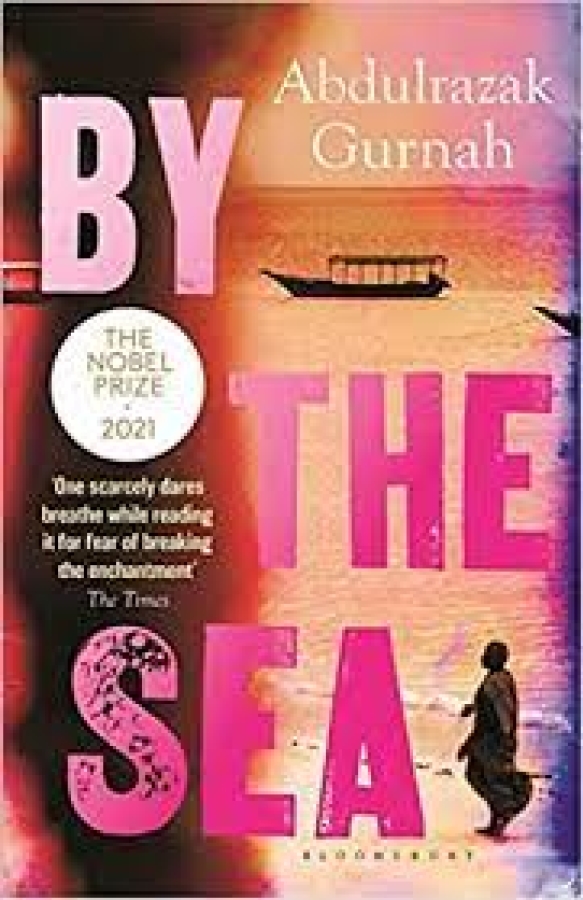
By the sea (on the seashore)
> My name is Rajab Shaaban. It is not my real name, but one I borrowed. (...) It belonged to someone I knew many years ago . Already from this sentence, which introduces one of the two protagonists, we can grasp several of the novel's hallmark traits: the lie, as both subterfuge and a relish for storytelling; destiny and absolution from sin, for Sha'ban is the eighth month of the year, > when the fortunes of the coming year are decided and the sins of the truly repentant are forgiven ; the flight from memory, > before it becomes so solid as to hold us in its grip and crowd out every other thought . We also stand before a crossroads of civilizations and languages: Shaaban is in England and speaks English—the place and language of the colonizer; he hails from Zanzibar and East Africa, yet the entire narrative is steeped in Arab culture and wondrous, neighboring India. Shaaban has pretended not to know English; an interpreter is needed, and Latif, a young literature professor also hailing from Zanzibar, is called upon. As it happens, Latif’s father is also named Rajab Shaaban; is it a mere coincidence, or does someone else lurk behind this name, perhaps even Saleh Omar, who brought his family to ruin? The lengthy conversation between Shaaban and Latif, indicatively titled "Silence," is preceded by two preparatory sections. The first, "Flotsam," recounts Shaaban's arrival in England, the divestment of his culture of origin and of his past, like an old piece of furniture, the useless relic of a life that is no more and can never return. One must not be misled by the subtly ironic portrait of English society, nor by the reflections on British colonialism: the true themes are dislocation and remembrance. In the squalid room of the reception centre hangs a mirror, > too wide for that small, dark room, (...) in that oppressive light, my reflection looked like that of a creature suspended in an encroaching gloom, the circle of light slipping into shadow, hanging over my shoulders like a loose noose . But the darkness was precious to him because it was full of "murmurs and whispers," whereas before, (the noises) had been so dreadfully obvious. (...) Moments slip through our fingers. Even as I tell them to myself, I can hear the echoes of what I am suppressing, of something I have forgotten to remember. > The second part is characterized right from its title by narrative realism: Latif is the name by which the young man is known in East Germany, where he went to study, fleeing his family's social and economic decline. Lucidly, almost detachedly, Latif recounts his family’s vicissitudes: the inept, naive father; the mother who uses her beauty to engage in scandalous love affairs; his affection for his older brother and the latter's descent into ruin up to his disappearance; and the figure of Hussein, a Mephistophelian character, manipulator, and rogue. It is a commercial society built on deals, trade, negotiations, ups and downs, where one must be shrewd and where reputation is paramount. A prosperous transit hub of trade between India and the Arab-Muslim world, Zanzibar is swept away and impoverished by oppressive, obtuse British rule; yet it endures, ever in search of new commerce and sources of wealth. It will not be the colonialists who destroy Latif's family, but familial rivalries, Hussein's deceit, and Saleh Omar’s lust for financial retribution—Saleh Omar being, in Latif's eyes, the true culprit. Yet, into this expansive social chronicle, something magical creeps in. In rationalist East Germany, in the cradle of Marxism-Leninism, Latif has been deceived: he believed he had an epistolary romance with a young German woman, only to discover that she is a fifty-year-old lady who concocted stories, eager to dream and recount something out of the ordinary. And here we come to the pivotal section of the novel. Latif visits Shaaban to understand what happened, to complete those missing stories, (...) like a child or something like that, when your parents tell you what you did and said, and you have no memory of it." Yet, "some things are not worth knowing." And why does Shaaban agree to tell his tale? "I needed to be released. Not to be forgiven and cleansed of my sins. (...) I needed to be released from the burden of events and stories that I had been unable to tell, and that in telling I would fulfill the strong longing I felt to be heard and understood > . Shaaban is not interested in telling the truth; on the contrary, his narration of events transforms him from culprit into victim, destabilizing Latif. Shaaban needs to tell stories, like the narrators of *One Thousand and One Nights* (see review on this site), like Herman Melville's *Bartleby, the Scrivener*, "the unshakeable authority of that man's defeat, of the noble futility of his life > : in short, a fabricator of words. As in the *Odyssey* (see review on this site), the reader no longer wonders whether Ulysses is telling the truth or lying shamelessly: one surrenders to the spell of the narrative, to a fascinating, magical world of family quarrels, love and betrayal, lost affections and vendettas, until poor Latif loses all certainty about his own past; only in this way is it possible to begin a new life, to forget to remember. It is a mistake to chase the plot, to make futile attempts to reconstruct the backstory, to bring order to the characters and their mutual ties. To appreciate the novel, one must allow oneself to be carried along by the fluidity of the prose, as when floating in a splendid, saline, deep sea, yielding to the currents, swimming only occasionally to regain one's bearings. As in Dino Campana's *Canti Orfici*, the narrative winds around itself again and again, abandons and resumes, views the same episode from different angles; only occasionally does it open a parenthesis on history and society, but that is not what matters; what the author is eager to explore are the charms and perils of remembrance, the necessity of abandoning memory—as a mere chronicle of what has been—to advance into the present. To this end, the lie is also useful. The novel's flaw is not confusion or fragmentation; it is that in the end it runs on so long as to become verbose and redundant. The contamination of the English language can occur in many ways. Think of Nadine Gordimer, the great Achebe (see the review of *Things Fall Apart*") and Chimamanda Adichie ("*Half of a Yellow Sun* > on this site), where indigenous tongues innervate the English language, which retains its composure while enriching itself with new lexicon; think of the talented NoViolet Bulawayo, who transitions effortlessly from Zimbabwean English to the slang of American teenagers (see *We Need New Names* > ), and finally the D'Annunzian Salman Rushdie, with his magnificent neologisms (see his masterpiece *Midnight's Children*" also on this site). In Gurnah we encounter an elegant, clean style, which finds in the very fluidity of its storytelling the imprint of Arabic and East African languages. Why read it? It is captivating to get swept up in, if a little too long.
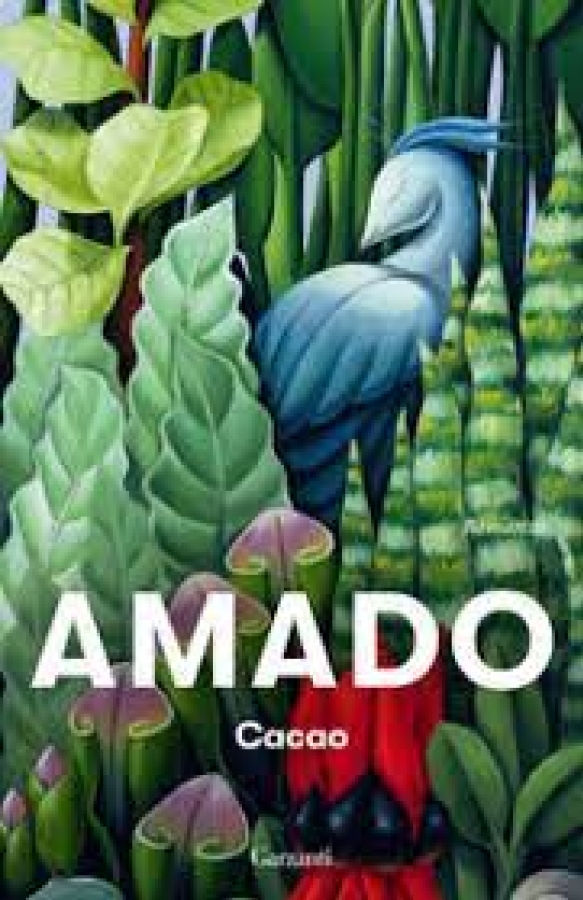
Cacao
This short novel recalls a novella by Giuseppe Verga: *La Varanisa* (see the review of *Le novelle* on this site). The Sicilian writer admirably synthesizes the peasant condition by describing the feet of a wretched girl: > those feet accustomed to walking in the snow and on rocks scorched by the sun, to tearing themselves on thorns, or hardening on stones, could have been beautiful . In the same way, Amado repeatedly emphasizes the large feet produced by the harvesting and processing of cocoa on the vast Brazilian *fazendas*. > The cocoa was dumped into the troughs to ferment for three days. (...) Then, freed from its pulp, the cocoa was put out to dry in the sun in the drying trays. There too we danced on it and sang. Our feet grew broad, our toes splayed. (...) Jaca! Jaca! The children climbed the trees like little monkeys. The jackfruit fell—thud!—and they pounced on it. (...) Their broad feet were like those of adults, their bellies swollen, huge, from the jackfruit and the dirt they ate . The young Amado chronicles the lives of day laborers on the vast cocoa plantations: > that yellow fruit, with sweet seeds, which made them prisoners of a life of dried meat and jackfruit ; "a proletarian novel" imagined as written by a young man reduced to poverty by the greed of a capitalist uncle; exploited and humiliated in factory labor, he pursues a nebulous destiny of redemption among the field hands, among the *affittati*, forced to work like slaves for the great landowners. What drives him? To belong among the wretched of the earth, to break radically with the ambiguities of the bourgeoisie in order to discover that the future lies solely in solidarity among the poor, in their desperate and resolute resistance to exploitation and abuse of power. The narrative bears the stamp of the social novel: a sort of Brazilian Émile Zola, Amado intends to describe coldly—"naturally," as Boccaccio might say—the peasant condition and the transformation of the young narrator and protagonist into an experienced and wretched field hand. The stages of this transformation, both physical and mental, are marked by the grand themes of humanity: the environment, magnificent and violent; communal life, complete with its festive moments; friendships and loves; revulsion toward the ruthless, greedy master and his arrogant, amoral family; the gradual awakening of class consciousness; and ultimately, taking a definitive stand. The protagonist courts the owner’s daughter, who wishes to marry him. > We will do what cannot be undone. (...) You will become a master. I bowed my head to stare at the ground. I was piling up leaves with my hand. (...) No, Maria. I will keep working. If you want to become the wife of an *affittato* . One must not be deceived by the spare, almost investigative style. A certain sense of the fantastical, the unreal lingers, fed by an ambiguous relationship with cocoa, as though amid such wonder social redemption were inevitable. > Darkness enveloped everything. Guitars wept, birds chirped. The golden cocoa fruits and the serpents. Stars shone in the sky. The lanterns along the road looked like souls taking flight. Night on the *fazenda* is sad, gloomy, painful. It is at night that people think...(...) We looked at the cocoa plantation and could find no answer. The question that naturally arises upon reading *Cacao* is whether the human condition of the poor is not fundamentally the same across all latitudes. What difference is there between the characters of this novel and the protagonists of Verga’s *I Malavoglia*, Zola’s *Earth* and *Germinal*, or Steinbeck’s *The Grapes of Wrath* (see the reviews on this site)? Always the same desperate struggle for survival under the rapacious, ruthless weight of the rich? There seems to be no hope, leaving the intellectual with nothing but a resigned detachment: at times adopting a socialist rhetoric (see the "manifesto" section of *The Grapes of Wrath*), in other cases merely describing while invoking literary justifications, as with Verga’s *verismo*, and in still others withdrawing into a melancholic irony, as in Jorge Amado’s later books. It is as if the writer and the poet have accepted defeat, entrusting journalism with the task of reminding us, without exaggeration, that social suffering exists in the world, and not merely bourgeois torments. I read the book after the great lexical and imaginative binge of *Grande Sertão: Veredas* (see the review on this site), which makes Amado’s essential, linear style feel like fresh air—like plunging into clear waters over a sandy bed, free from the lights and shadows of deep, reef-strewn seas. The sentences are short, the adjectives few; the charm of the narrative relies on the events themselves, as if they spoke on their own. Yet, what nostalgia for the writing of João Guimarães Rosa! Why read it? A great social novel.
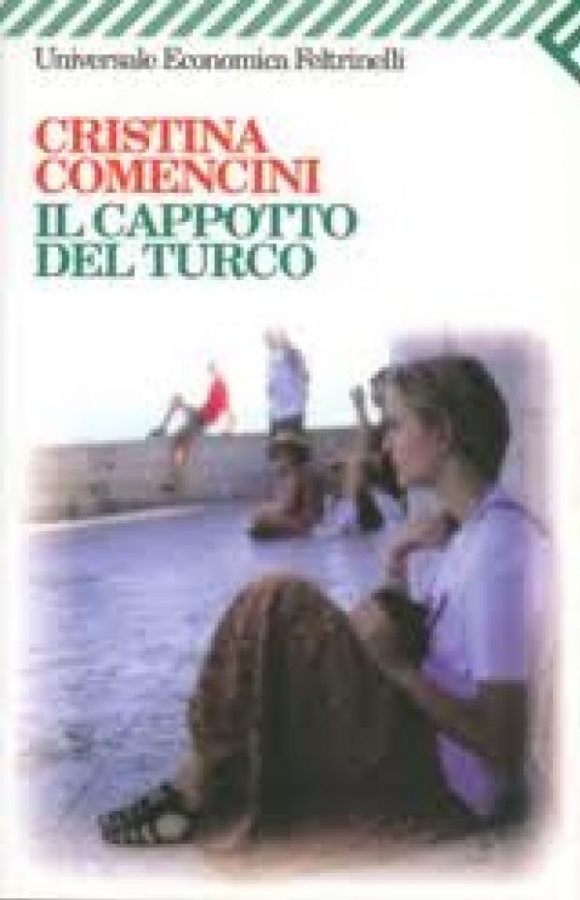
The Turk's Coat
> I wish it were she who wrote about me. To gather thoughts about those years centuries away. To justify my cowardice, my need for certainty... I am a seeker of gold nuggets, I collect precious fragments, intersections of my life with hers, thoughts of her, sudden emotions that interrupted years of my heart's silence, years of absence. I stretch time so as not to reach the epilogue with which I cannot make my peace . The protagonist and narrator, Maria, recounts her life, but above all speaks of her sister, the indecipherable Isabella, with her stark white skin, her > fine hair of an indefinite shade between brown and red, greenish eyes like the bottom of a lake . The sisters possess "opposite natures," yet precisely because of this their bond is profound and troubled, a perpetual pursuit wrought with unspoken words, misunderstandings, and above all, regrets. Childhood sees them closely knit, with Maria fraught with dread over the trouble Isabella might cause—Isabella immediately revealing herself to be adventurous, reckless, and irreverent beside her elder sister, cautious, meticulous, and rational. It is only natural that Isabella should be the first to take an interest in the movements of 1968, dragging into this political chapter a recalcitrant sister and Marco, Maria’s fiancé. Rapidly, the roles are reversed. The mercurial Isabella abandons the revolutionary factions to roam the world, while Maria and Marco become committed activists.Maria’s verdict on those years, so momentous in the history of our country, is merciless. > They did not fundamentally alter the course of my life. They seem distant to me, the words hollow. We wanted to shoehorn the world into a century-old idea. There were no others to be found . Yet for Maria these are momentous years: she marries Marco, has a child, separates, and goes to live on her own. Why, then, is it an insignificant period? The sister's absence weighs heavily, a void she cannot fully bridge through caring for her child, through work and study. And Isabella resurfaces in a singular manner, true to her unpredictable nature. A Turkish man arrives at Maria’s door, sent by Isabella. Mehmet is a man, > built like a wardrobe.. dark eyes and a drooping mustache.. wearing a military overcoat of an undefinable color . A love affair ensues.«I spoke with him as I used to speak with you», Maria will one day say to Isabella, who has just confessed that she too had an affair with the Turk. > Except Mehmet had given himself to both of us by presenting opposite sides of himself. With me he had pretended to be a good husband, telling me I was a strong woman.. and to her, who instead loved taking the plunge, he had offered his experiences and his adventurer’s fantasies . And so the Turk’s coat becomes the metaphor for the relationship between the two women: united yet distant, ever seeking one another out, yet incapable of finding a serene stability in their bond. It takes very little to shatter a fragile equilibrium and lead the two sisters to say and do things they will regret. Isabella returns home pregnant just as Maria is herself expecting a baby girl with Marco, with whom she has reunited. First, Isabella, in a moment of fury toward her sister, causes a car accident that forces Maria into premature labor. Then Maria discovers that Isabella and Marco have shared a kiss. The outrage is such that it drives Maria to write a letter steeped in vitriol: «Stay away from me, you stink, you disgust me». She immediately regrets what she wrote, but fails to reach Isabella, who drowns during a boat trip. > I folded Mehmet’s coat into four and slipped it into a large plastic bag, along with the old clothes... in this anonymous room, on my table, her photographs have multiplied. Now only she lives here; I feel dead. It was not what I wanted . The novel addresses a relationship often left unexamined: that between siblings. Lovers and friends are, in some way, chosen; siblings are found «already given». Yet it is a bond that endures for a lifetime, even if from the intensity of childhood it subsequently wanes into a more distant, often deeply estranged dynamic. «We concealed nothing from one another, at least up to a point». These words, which the author places in Isabella's mouth, encapsulate with great precision the trajectory of a sibling relationship, just as the image of the coat, folded into a plastic bag to be discarded, symbolizes the conclusion—perhaps inevitable—of an «inheritance» of childhood. The new family, formed with a partner, becomes paramount. The prose is spare yet expressive, rich in poetic resonance. The narrative plot is taut, relying more on the description of events and situations than on dialogue—as if to signify the incommunicability that hallmarks the relationships between the characters, particularly between Maria and Isabella. Reflections are entrusted to dreams, introducing occasional yet evocative oneiric vistas. Why read it? A magnificent novel, concise yet intricate.

Cat on a Hot Tin Roof (La gatta sul tetto che scotta)
The underlying theme is mendacity; the author develops this subject within the context of the family—the very social sphere that, more than any other, ought to foster mutual trust. For years, the members of this family have acted in apparent harmony; when, however, it is revealed that Big Daddy, the family patriarch and “authoritarian master-father,” is suffering from cancer, the impending death overwhelms the protagonists: does truth emerge from this sort of catharsis, or a new lie? As Tennessee Williams explains in the “Notes for the Designer,” the setting is the bed-sitting-room of a great plantation house in the Mississippi Delta; two bachelors, the former owners of the plantation, once lived in this room, and therefore > the room must evoke some ghosts; it is gently and poetically haunted by a relationship that must have involved a tenderness which was not common . It is the appropriate setting for a play > that deals with the deepest extremities of human emotion, and needs that softness as a background . The theatrical work unfolds in three acts. The protagonists of the first act are Brick, a former football player now turned alcoholic, and his wife, Margaret. The man refuses to have any relations with his wife after she betrayed him with his best friend—who died, perhaps by suicide, in the wake of the adultery. The loss of the only person who truly mattered to Brick has driven him to seek solace in alcohol. While Brick pursues the victimhood of “the charm of the defeated,” Margaret refuses to surrender: she is keenly aware that the family is about to fall apart, and she does not want her husband to forfeit his social and economic standing to his brother. Brick, deeply beloved by his parents, faces severe disadvantages regarding any inheritance: he is an alcoholic and, moreover, has not yet fathered any children, whereas his brother has six. In her long conversation with her husband—in truth a soliloquy—Margaret wonders what the victory of “a cat on a hot tin roof” might be: “Just staying on it, I guess, as long as she can...” but then adds that silence does not work, > locking the door and shutting oneself in a burning house in the hope of forgetting that the house is on fire . In the second act, we witness the confrontation between Big Daddy and Brick, between father and son. Here again, it is largely a soliloquy: Big Daddy does most of the talking, and we learn that this man—outwardly strong, resolute, and domineering—is consumed by disgust. > For all these goddam lies and liars that I’ve had to live with, and all this goddam hypocrisy I’ve lived with for all these forty years ; such is his disgust that at times he thinks it far better to have > a goddam blank (...) than all this crap that nature fills it with . Faced with this desperate confession, Brick replies that the conversation is > like all the others we’ve ever had together in our lives! It’s senseless, senseless, it’s, it’s painful (...) you don’t have a goddam thing to say to me! Brick’s passivity suddenly turns into fury when his father voices the suspicion that there was something more intimate than mere friendship between Brick and his friend; and then Brick, cowardly like all the weak, reveals to his father the truth that had hitherto been concealed from him: he has cancer and is dying. With Big Daddy’s desperate cry (“All liars, all liars... lying, dying, liars!”) the second act comes to an end. In the third act, the sons and daughters-in-law inform Big Daddy’s wife, who is also unaware, of her husband’s true condition; Brick’s brother attempts to persuade their mother to place all the estate in a trust, effectively cutting Brick out of the inheritance. Brick remains as detached as ever, while Margaret fights desperately, to the point of telling a blatant lie: she declares she is pregnant and can therefore give Big Daddy a grandchild. There are two versions of the third act. In the original draft, the author imagines the story concluding with Margaret’s declaration of love to Brick, to which he replies with elusive cruelty: “Wouldn’t it be funny if that was true!” In the second draft—the one staged, at the director’s behest—the author has Brick support his wife’s lie and accept Margaret’s unconditional love: “I admire you, Maggie” (says Brick), to which the woman replies: > what you need is someone to take care of you, gently, with love (...) and I can! I’m determined to do it, and nothing is more determined than a cat on a hot tin roof. Has death finally dispelled the veil of mendacity? In the first version, Tennessee Williams answers in the negative: not even the “black thing” that comes “uninvited” frees us from hypocrisy and mutual distrust; human relationships are burdened by an existential condition of emptiness, clogged with too many lies—we are doomed not to communicate. Certainly, this pessimistic vision cannot be dispelled by the conclusion proposed by the director, far too cloying and banal to ring true. Tennessee Williams offers an observation particularly useful for understanding the play: > some mystery should be left in the revelation of character in a play, just as a great deal of mystery is always left in the revelation of character in life, even in one’s own character to himself . And thus we must look at how the characters evolve throughout the story, bearing in mind that “the actors must be allowed freedom on the stage.” It is thus clear how Brick remains locked within his own world; Margaret’s personality, by contrast, emerges with increasing strength, as though she refuses to remain merely the wife of a broken man, standing ready instead to take the reins of the family. Death reveals the true character of the human being. The play is nearly flawless, which accounts for its great success. While the third act, in its final version, is bustling and populated by a large cast, the first two acts suffer from a certain static quality, barely mitigated by offstage background noises and the fleeting appearances of minor characters. On the page, the two acts come across as wordy and redundant; to be sure, that assessment might change under the light of theatrical performance. Why read it? It is a great theatrical work, and the figures of Brick and Margaret possess tremendous fascination; to truly appreciate it, one must experience it in the theatre.

The Cities of the World
Journey, flight, and the quest for change constitute the themes of this novel, set in the arid Sicilian landscape and amid a thousand cities—real in name, yet fantastical and imaginary in their depiction. Two shepherds, father and son; a girl on the run, who finds refuge with an aging itinerant prostitute; two young newlyweds, perpetually traveling for reasons impossible to know; a father seeking to abandon his son in a welcoming city. Contrasting these characters forever in transit is an apparently motionless setting, yet one in truth awaiting profound social and economic shifts: an old woman, awaiting a death long in coming, observes the countryside and neighboring towns through a telescope, hoping for a transformation that might upend society. The characters cross paths throughout the narrative, but there is effectively no unifying thread other than the journey across these many cities. This is a distinctive novel, one that leaves a longing for change and a sense of freshness, born precisely of the presence of the young who are, despite it all, searching for something in the future.
The Heart of Things
The novel is set in the early twentieth century, at the close of the Meiji Restoration or Renovation: the prolonged era between 1867 and 1912 that began with the reassertion of imperial power over the Tokugawa Shogunate. This historical anchor serves not only to contextualize the narrative—centered on the ambiguous and complex relationship between two generations—but also to underscore its contemporary relevance; much like today, we find ourselves in a period of transition in political and social structures, as well as in consciousness and sensibilities. A young student meets an older man, identified only by the appellation of "master." He is captivated by him—drawn to his taciturn, gruff demeanor, his solitary lifestyle detached from society and fellow human beings, and his ever-cryptic musings on love, honor, and money. In an ambiguous fashion, the master exerts a kind of blackmail over the young man: the foreboding expectation of betrayal. > I am a lonely man, but in a sense, aren't you as well? (...) In meeting me, you probably feel a certain loneliness. But because I lack the strength to help you break free from it, you will now turn elsewhere and no longer come to see me. (...) "You may think I might drift away," (the young man replies). (...) The master seemed not to be listening to me. "Yet you must be careful, for there is guilt in love. If you stay with me, you will find no satisfaction, but neither will you run any danger." Few clues offer a glimpse into what lies behind the master’s misanthropy: he regularly visits the grave of a friend whose death reportedly transformed the man’s character, without the reasons or background of this change being disclosed. Following his graduation, the young man returns to his parents’ home while waiting to find employment. His father is gravely ill, already nearing the end. > My melancholy tended to shift alongside the shifting shrill of the cicadas, as though the destiny enveloping me were moving by degrees through a vast cycle of different existences. The young man is torn between filial affection and duty, which urge him to remain at his father's bedside, and the longing not to sever ties with the master. > To me, the master was a shadowed figure, and I would not have been satisfied until he revealed himself entirely. A lengthy letter, preceded by urgent telegrams, drives the young man to commit an unforgivable act: he abandons his dying father to rush to Tokyo to the master. What does the master write in this sort of ethical testament? It is as though the young man had fulfilled a hermeneutic function. > I would rather see my past erased along with my life than offer it to someone who does not desire it. In truth, had it not been for someone like you, my past would never have been known to anyone, even indirectly. To you alone, then, among millions of Japanese, do I intend to recount my past, because you are sincere. There is no need to delve into the master's expansive confession, which unburdens his guilt onto the young man’s fragile shoulders. Suffice it to say that he acted dishonorably—he who considered himself steeped in virtue. He drove a friend to suicide by laying bare the contradictions between the friend's spiritual aspirations for an ascetic life and his romantic longing for a young woman, who was also loved by the master. > And so, despite my earnest desire to pursue an honest life, I strayed from it. I was a fool, if you will, a cunning and arrogant man. (...) Inside me arose, like a vortex, the feeling that I had won by cheating, and that I had been defeated as a human being. In the fine preface, expressively titled "Soseki: Solitude as Art," Gian Carlo Calza retraces the author's personal and literary biography, defining *Kokoro* (*Il cuore delle cose*) as "a faithful account of the author's own life or destiny." When one considers that none of the novel's protagonists bears a name, and that already in a 1905 work (*I Am a Cat*, see review on this site) Sōseki had played upon two characters (the feline narrator and the tedious English teacher) to depict the different facets of a single personality, one might suggest that the young student, the master, and the friend represent distinct vantage points for probing the author’s character: the youth embodies the fragility of a hope-filled youth; the suicidal friend signifies the search for spiritual anchors in an era of transition; and finally, the master is Sōseki himself, now disillusioned, locked in individualism and a pessimistic vision of life and Japan. If we step away from the author's biography and make a bold leap into contemporary Italy, the relationship between the young man and the master seems to keenly capture the intergenerational crisis afflicting our country. We, the "baby boomers," are the bad mentors who dispense nuggets of wisdom and fine rhetorical phrases, yet like Sōseki's master, we are dishonest because we are manipulative—shielded by our pensions, our conduct far removed from our pompous pronouncements. The young are the student: naive, filled with aspirations, fleeing from the false guides in whom they no longer believe! This modern transposition is also hinted at by the theatrical adaptation of *Kokoro* (*Il cuore delle cose*) in Kenzaburō Ōe's work (see the review of *The Changeling* [*La foresta d'acqua*]), where the master is viewed as a "false educator" by the high school students attending the performance. In an elegant and lucid manner, the author investigates the psychological and moral entanglement between the master and the young man, as well as between the former and his suicidal friend. The narrative unfolds slowly, at times repetitively; the extended letter bears too heavily the hallmarks of a soliloquy to escape being prolix. Why read it? It prompts numerous reflections on the present.

Of Love and Shadows
The novel is set in Chile, ten years after the coup d'état that brought Pinochet and the military junta to power, establishing a brutal dictatorship: Chile, > a spot on the map, immersed in a vast and prodigious continent where progress arrives centuries late, (...) a territory in whose eternal humus mythological animals drag themselves along and human beings live unchanged since the dawn of the world , where a gilded, powerful elite coexists with a marginalized, silent mass. Francisco belongs to a family that fled Spain following the rise of Francoism; he works as a photographer, commits himself to social causes, and covertly assists the flight into exile of the many persecuted by the military regime. And it is precisely while looking for work that he meets Irene: > with her strange mane of hair tousled over her shoulders, (...) she wore an overly long skirt of homespun fabric, an unbleached blouse, (...) with rings on every finger and a rattle of bronze and silver bracelets on her wrist, (...) with a coquettish smile, the final touch needed to conclude that this young woman could steal every thought of his, for he had seen her just as she was in his childhood readings and adolescent dreams. The young woman, however, belongs to that elite living sheltered behind "doors guarded until the curfew signal." Francisco senses that many things separate them, from social standing to family ties and culture; unwilling to jeopardize their friendship by confessing his feelings, he prefers that love "fill her gently, just as it had happened to him." An extraordinary event brings about a radical shift in their lives, especially Irene's. Word spreads that a girl possesses miraculous powers while in a trance, and crowds flock to seek miracles and help from her; the throng and curiosity provoke the military to intervene, but the young woman, endowed with prodigious strength in her state of ecstasy, hurls the officer—the arrogant and criminal Ramirez—into a pigsty, where he sinks into the filth before the stunned eyes of his soldiers, the onlookers, and a pig. It is an affront that cannot go unavenged; a few days later, the girl is taken away and vanishes into thin air. Irene refuses to accept the official accounts; she begins to investigate, thereby awakening to the reality in which she lives, and, at the same time, to her love for Francisco. Confronted with the bloated, unrecognizable corpses, in the horrifying discovery of a mine where the butchered bodies of the victims of military violence lie hidden, Irene does not resign herself; slowly yet inexorably, she reveals a character resolved to uncover and denounce the unspeakable horror of violence. Irene is no longer the eccentric, colorful scion of the haute bourgeoisie; the chrysalis has transformed into a pained, conscious fighter. The main narrative thread, the story of love and shadows between Francisco and Irene, is embedded within the choral tale of a people, an intricate weave of events, characters, situations, and contexts told in a fantastical, almost surreal atmosphere—both when capturing microcosms and when delving into violence, without coyness or subterfuge, but with stark clarity, compelling the reader to blanch just as Irene did. A muted sense of resignation pervades the work, as if Latin America could never be liberated from abuse and violence, leaving no alternative but flight, or losing oneself in the splendid landscapes, among the great peaks of the cordillera, or more simply in the explosion of clamor and color of the markets: > piles of seasonal fruit, peaches, melons, watermelons, (...) stalls of spurs, stirrups, saddles, and straw hats, rows of red and black crockery, cages of chickens and rabbits, amidst a hullabaloo of shouts and haggling . The prose flows smoothly, with that narrative rhythm rich in asides and digressions so characteristic of South American literature; at times one loses one's way, and it perhaps becomes somewhat trite in the second half, lingering too long, yet it remains consistently engaging and evocative. Why read it? It confronts violence through the lens of love.

Dracula
The figure of Dracula has spawned a literary and cinematographic output that has exalted its horrific aspects, thereby distorting the complexity of Stoker's novel. The opening of the narrative reflects the preconceived notion we have of Dracula’s story. Jonathan Harker, a young real estate solicitor, travels to the Carpathians to conclude the sale of a property to Count Dracula, who intends to move to London. Much like in Conrad’s *Heart of Darkness*, the journey through these largely uncharted mountains is an immersion into the unknown of the human consciousness—one that the young Jonathan struggles to accept. One need only consider the physiognomic description, so dear to nineteenth-century anthropologists, of Dracula’s face: > had a very marked, very marked, aquiline face, with a thin and prominently protruding nose and particularly arched nostrils. (...) The eyebrows were exceptionally massive, almost meeting over the nose.(...) The mouth, so far as I could see it under the heavy moustache, was fixed and rather cruel-looking, with peculiarly sharp white teeth . With mounting dread, young Jonathan realizes he is caught in a nightmare, trapped inside a castle where he is a prisoner and could fall prey to the bloodlust of Dracula and four female vampires. Jonathan miraculously manages to escape (it is not clear how, and narrative gaps of this sort are frequent throughout the novel). The narrative then shifts to England with an opening reminiscent of Jane Austen. Mina, Jonathan’s bride-to-be, meets Lucy, who "looked sweeter and lovelier than ever": what follows is an idyllic description of the English countryside. The reader is initially taken aback, but then Stoker deftly prepares us for Dracula’s arrival aboard a phantom schooner and the transformation of the charming Lucy. It is difficult to fathom what is taking place; it is something inexplicable to a mindset steeped in scientism and rationalism. The mystery will be unraveled by a Dutch scientist summoned to the rescue by one of his disciples, a psychiatrist and friend of Lucy’s. Slowly yet stubbornly, the professor realizes that Count Dracula requires blood to secure his immortality and has come to London to create new vampires, thereby conquering the world. The professor also discerns the weaknesses of Dracula and vampires in general: their power exists only by night, by day they lie in a coffin, and they recoil before the Cross and the Host. To rid oneself of vampires, one must drive a stake through their heart and decapitate them. The group attempts to save Lucy. In a dramatic scene that alone justifies reading the book, Lucy—clutching at night a child whose blood she has drained—seeks refuge in her tomb, not before attempting to seduce her fiancé in order to turn him into a vampire as well. It will fall to the professor to stop her, and to the fiancé—at first incredulous, then devastated—to pierce her heart, thereby saving the girl's soul. The message is unmistakable: true love demands an extreme act, and what ultimately matters is the spirit, the Good that must be shielded from Evil. From this moment on, it becomes an all-out battle between the cohesive band of friends, led by the professor, and Count Dracula. The protagonist of this clash is Mina, Jonathan’s wife, who also falls prey to Dracula and runs the risk of becoming a vampire like her friend. It will be Mina’s determination, coupled with her resolute rational vision, that guides the group to their foregone victory—for now. The novel is read in a single breath; the episodes follow one another at a pace that is not always relentless, interspersed as they are by lengthy disquisitions from the professor—a pivotal figure in the plot, yet far too predictable in his erudition. The reader remains captivated by the gloomy atmosphere and by the secondary characters who are, in truth, central to the narrative, Mina in particular. As the story unfolds, Dracula recedes ever further into the background: a terrifying monster, yet "childish" in his reasoning and thus easily predictable in his conduct (notwithstanding everything, we Europeans remain superior from an ethical and rational standpoint). One can identify three narrative strands: the Gothic imprint typical of the nineteenth-century English novel, with its penchant for the exotic, the mysterious, and the gory; the reflection on a science that must stand ready to accept the incomprehensible and reckon with religion; and finally, friendship and love, seen not merely through a romantic lens, but as forces capable of driving human beings to fight and sacrifice themselves. Mention must be made of the narrative structure. It is built upon the accounts of the various protagonists through diaries and letters. The narrative 'I' shifts continuously, thus affording insight into different perspectives: the psychiatrist friend who can scarcely believe what is occurring and, for much of the novel, accepts events out of deference to the professor; Jonathan, who manages to leave a record of his journey into the Carpathians and subsequently expresses his love for Mina by keeping her vampiric impulses in check, preparing himself for the ultimate sacrifice—namely, driving a stake through her heart; and finally Mina, who fights desperately to avoid turning into a vampire, aiding the group by accepting a subordinate female role (she types up her husband's journals to make them available to the circle), ever anxious not to become an unwitting conduit of information for Dracula. Mina’s reasoning is subtle (astounding for a woman, remarks the professor!): she weighs the various alternative routes Dracula might take to return to his castle to find sanctuary; in doing so, she anticipates the monster’s moves—a splendid display of strategic thinking! As so often happens, multi-authored narration bogs down the narrative momentum, rendering it at times repetitive and redundant. Why read it? Compelling and evocative.
The Duke
> For ten years now I had been living up here in Vallorgàna alone, in the villa of my ancestors. (...) I was certain that I found myself in the best fortune I could desire. Nothing of importance occurred in my days. Nothing complex entangled my gaze. No disruption in daily life. No decision to hinder my stride . Such is the opening of the tale of the man we will come to know only as the Duke. Heir to an ancient noble family, the Cimamonte counts, the Duke belongs to the culture of the few, > that of those who, by means and tradition, live in a world of thoughts from which the majority are excluded . The Duke lives, or would like to live, on an island, formed by his villa and Vallorgàna. Two events intervene to shatter this "terrifying" isolation. Mario Fastrèda, the acknowledged head of the small community, has the trees cut down in a woodland owned by the Duke; it is a petty transgression, one that could be let pass, were it not that the Duke discovers an ancient codex recounting the history of the Cimamontes. Reading the deeds of his ancestors, the chronicle of Cimamonte abuse and violence, he realizes that the feuds were "fatuous and pretentious," yet for a nobleman they were instead "duties of respect," worthy of the utmost attention. And it is as if a dragon, dormant for centuries, > were rising up from the earth, from roots stretching taut, from rubble crumbling, from crusts breaking apart . A war begins between the Duke and Fastrèda; it is dictated by "a profound past, (...) the fruit of the ancient order of above and below." For page after page, the author retraces the events of this senseless feud, incomprehensible from a rational point of view, yet rooted in ancestral hatred. It is the setting that lends fascination to the story: the Mountain towering over the village like a sacred monolith, the woods, looming and menacing, advancing at the expense of the meadows, the small community, growing ever older and desperately anchored to traditions, grudges, and legends, and finally mysterious, ancient omens, such as the flight of a white-winged crow. We are not before Dino Buzzati's magical forest (see *Il segreto del bosco vecchio* reviewed on this site); Melchiorre is a historian of trees and of their land, and he knows full well that it is not true that "woods and mountains are a mirror of virtue," as naive naturalistic mythology would have it. Fortunately, the narrative of the feud is interrupted by Maria; against hatred, love supervenes. "It was an enchantment of an extraordinarily physical nature, entirely directed toward the body:" sweeping and utterly distinct, untamed, mercurial, irreverent, and with something, moreover, inexplicably wild." But Maria is the niece of Fastrèda, the enemy. The autumn wind, "dancing and whispering, showed me in its mirror shreds of myself and fragments of other things, and finally, embracing a beech stump, delivered a lash and began to whisper more insistently. It asked me whether I wanted to lose Maria or keep her. (...) Whether I was intoxicated by her body alone or whether in her I had grasped the inexpressible > . It is a dilemma that the Duke would probably not have been able to resolve on his own. First, a violent storm drives him from Vallorgàna, instilling in him a disillusionment with the past, the looming history of his ancestors; he no longer wishes to return to the village, he wishes to abandon the villa to ruin. He returns to take inventory of the things to be sold, encounters Maria, and through her brown eyes discovers this rare and yet raw and yet enclosed place, which can open only by braving steep slopes and ascents, skirting cliffs of woods.... > He realizes he belongs to Vallorgàna not by the will of his ancestors, but because this is his place, whose history towers over and transcends that of individuals. When he tells Maria, the alluring Maria replies: perhaps > . But why so much agonizing? Was it not enough to tell her that he was staying because he loved her? Estrangement, fury, love, disenchantment, and enchantment are the cadences of a great novel, unfolding within a confined setting over which looms the history of men and nature—a history that from remote past "continually risks becoming" present past." In the end, it will be the present that triumphs, but this long-awaited conclusion is reached only after many pages, numerous philosophical reflections, and frequent digressions. The plot loses momentum; at times it resembles a *zibaldone* in which the author sought to say too much about his own world at the expense of the narrative and the characters. What makes reading it a pleasure is the prose, rich in adjectives that never hinder the fluid cadence of the words, offering instead an enjoyable sense of the baroque. Why read it? Enjoyable, captivating, even if long.
The Ferramonti Inheritance
Chelli is a “minor” nineteenth-century author, forgotten and relegated to the margins of Italian literature. Only Benedetto Croce remembered him in his *Letteratura della Nuova Italia*, misspelling his surname to boot (calling him Ghelli) and citing him as a chronicler of the bourgeoisie of Rome as capital. Chelli, however, is a fine writer, both for his narrative technique and his original handling of the character system. The historical context is Rome in the second half of the nineteenth century, undergoing profound urban and social transformation since becoming the capital of a major state. The social milieu consists of petty-bourgeois shopkeepers and clerks; the dominant values are the “god of money” and social ascent at all costs. > From Piazza di Ponte to Campo dei Fiori, Padron Gregorio Ferramonti enjoyed the notoriety and esteem accorded to a man believed to be nearly a millionaire. He had built his fortune with his own hands . It is true that his wealth was the subject of much gossip, but Ferramonti, > like all enriched wretches, navigating murky waters, knew men, held them in no esteem, and above all mistrusted them . This contempt extended to his children as well: his two sons, Mario and Pippo, and his daughter, Teta. The first squanders his father’s money; the second is coarse and ignorant; while the daughter bears the grave fault of having married a modest, even penniless, petty ministry clerk. Padron Ferramonti severs all relations with his children, who are full of rancor toward their father and, above all, terrified of being disinherited. Yet they are so superficial, so devoid of energy and ambition, that they could hardly wage a successful fight for the Ferramonti inheritance. Irene will take this task upon herself. > She brought... a note of elegance, a charming smile, and a splendor of beauty, a thrill, a joy, a subtle intoxication that permeated men and things, (yet) she felt in her nerves, in her blood, and in her brain something she could not define: a fever consuming her whole being, warning her that she was born for wealth and dominion . The Ferramonti inheritance had to be hers! She had to overturn a destiny that had decreed her > born poor, among shopkeepers, among people who would have thought her raving mad had they been able to know her for what she really was . To achieve her goal, Irene marries Pippo, manages to reconcile the three siblings, and becomes Mario’s mistress in order to enter the “grand circuit” of the Roman bourgeoisie and profit from her brother-in-law’s fortunate financial speculations. And finally, she targets her father-in-law, Padron Gregorio, winning him over with her charm, > with her myriad caresses of an affectionate kitten... with gentle chatter that steeped him in ineffable bliss . When the old man dies of an apoplectic stroke, brought on by the many delicacies fed to him by his so-very-affectionate daughter-in-law, Irene finds herself holding a document that would make her the heir to the lion’s share of the estate. We readers follow her, intrigued and astonished, in the execution of her ambitious and daring design; and Chelli is so skillful that we fail to see where he is heading, or the rationale behind so many unpredictable moves. We are convinced of her victory because the psychological gulf between Irene and the other characters is simply too vast. And yet, our “heroine” suffers a resounding defeat. Why? Chicanery, ruthlessness, the lust for money, and well-concealed adultery are all acceptable to the Roman bourgeoisie—public scandal is not. > She was unhappy. She could not recall a single day of her existence that marked a truce in the secret rebellion against her own destiny, with which her heart was poisoned... (and so she surrendered) to the audacities of a woman who defies the world, having once sought to deceive it through hypocrisy . She flaunts her affair with her brother-in-law (Mario is a notorious libertine) and consents to dress scandalously and provocatively, letting herself be seen walking > with a roguish sway of the hips that momentarily revealed through the slit of her skirt her left leg, seemingly bare under the flesh-colored stocking, the scarlet garter against the white hose, and her arched little feet in satin slippers; then came an explosion: it was a marvel! nothing like it had ever been seen! And to think that at first she had wanted to refuse!.. In short, the desire to please, to feel pursued by > a wave of obscene thoughts, like an outpouring of equivocal smirks and reckless glances , gains the upper hand over the cold calculator and ruins her. Her fragility betrays her. It becomes easy for the lawyers to argue that Irene duped old Gregorio with the vile arts of a harlot, and that the will was therefore extorted by deceit. The victor turns out to be none other than the despised yet shrewd petty ministry clerk, who finds himself heir to a vast fortune after Pippo and Mario die tragically, driven to despair after being abandoned by the woman they loved, Irene. Prudent, opaque bourgeois conduct triumphs over the courage—transgressive though it may be—of one who seeks to upend the social hierarchy: a bleak omen for the new Italy. Behind a seemingly simple plot lies a sophisticated narrative technique. It is as if we were standing before a film in which the camera constantly shifts perspective, without lingering on a single character or setting. Each protagonist becomes, in turn, the focal point of the narrative, so that each appears able to move freely and steer the story toward an outcome different from the one that actually unfolds. Only intermittently does Irene’s point of view emerge, and the reader realizes, with astonishment, that the entire sequence of events is part of the woman’s overarching design. Yet precisely when the camera focuses on her, it becomes apparent, contrary to all expectation, that she is not, perhaps, a purely wicked orchestrator of deceit. She is also a woman, solitary and vulnerable, with her own doubts and weaknesses. The author acts like a director who allows his actors to improvise. Without an omniscient psychologist, > the official portraits of the actors and the explanations of the inner workings of their actions fall away; each is described and intelligible only insofar as they are the object of their own analysis or that of others, and the persuasiveness of these diverse perspectives is in direct proportion to the perspicacity of the observer , that is, of the reader (Roberto Bigazzi, preface to the 1972 Einaudi edition). Why read it? A sophisticated fresco of the Roman bourgeoisie; a splendid portrait of a woman—social-climbing and transgressive.
Ettore Fieramosca
> Fieramosca's father, grown old in the wars that tore Italy asunder during the fifteenth century, could give Ettore nothing but a sword; and as a youth, the latter believed the profession of arms to be the only one worthy of him, nor could he for many years conceive thoughts above the times in which he lived, wherein the force of arms was employed solely to augment reputation and wealth. Ma wisdom grew with the passing of years; and in the brief lulls from warring, rather than spending his leisure in hunts, jousts, and other youthful pleasures, he held studies and letters dear; and having come to know the ancient authors, and the honorable deeds of those who had shed their blood for the good of their homeland and not for the profit of whoever could best pay them, he understood how wicked a trade the profession of arms was in itself, if practiced in the manner of a brigand with the sole aim of enriching oneself with the spoils of the weak, and not for the virtuous cause of defending oneself and one's people from foreign aggression . This lengthy quotation, with which D’Azeglio encapsulates the protagonist’s formation, aptly conveys the style and meaning of the novel: the story of a duel fought to redeem slighted Italian honor, but also a reflection of a towering figure of our Risorgimento, Massimo D’Azeglio. A man of letters, painter, writer, soldier, patriot, and ultimately prime minister and mentor to Victor Emmanuel II during the turbulent years that followed the defeat in the First War of Independence. With this novel, D’Azeglio embellishes with imagination a historical event that genuinely took place in 1503: the Challenge of Barletta. Several Italian knights in the service of Spain were gravely insulted by a French baron, who had cast doubt upon the valor and loyalty of our fighters. A challenge ensued, from which the Italians emerged victorious. The historical event, however, serves as a backdrop to an intense and ill-fated love story. Ettore Fieramosca, > perfect in the proportions of his body, [which] he displayed... in close-fitting attire , is in love with Ginevra. The young woman is the object of Cesare Borgia’s depraved desires. Ettore fortuitously manages to save Ginevra, hiding her in a convent near Barletta. It is not merely romantic passion—chaste though it is—that binds the two youths. Ginevra, too, is a fervent patriot. When Ettore informs her of the challenge, > Ginevra’s breathing grew more hurried; her bosom, like a sail caught by the gusts of an oncoming wind, rose and fell, swelling with vehement, conflicting passions, yet all worthy of her; her eyes, which seemed to temper themselves according to the youth’s words, caught fire, casting sparks. What daring sensuality in D’Azeglio’s words! It is pointless to expect a happy ending. We are in the nineteenth century, and love stories must end tragically. Ginevra dies, abducted and defiled in her virtue by the cruel Borgia. Ettore, unaware of the loss of his beloved, wins the challenge, but upon learning the truth, disappears without a trace. For many years, the mountaineers of the Gargano spoke > of an armed knight upon the summit of certain inaccessible crags, which hung above a chasm plunging sheer into the sea . Adventures of daring and love, intrigues and betrayals follow one another with an agility and mastery that are surprising and in some ways unique for nineteenth-century Italian literature. D’Azeglio is a forerunner of Salgari. The wealth of episodes and characters nevertheless weighs down the plot, often making it difficult to return to the main thread. In many instances, the narrative seems merely an occasion for grand frescoes. D’Azeglio, as an accomplished painter, depicts with meticulous detail and vivid colors the feasts, receptions, and duels of a century that loved amusement even while constantly waging war. And the author recalls that the culinary art was exceedingly difficult in those days, because > all dishes were required not only to please the palate, but likewise to delight the eyes of the guests... the platters of confections were fashioned, now like mounds upon which grew trees laden with candied fruits, now in the likeness of ponds of distilled waters, wherein floated little skiffs of worked sugar, filled with sweets: some depicted an alpine mountain with a volcano at its peak, and the smoke that issued from it was of the most delightful fragrance . It is difficult to find the novel in its unabridged form, as D’Azeglio’s Italian is often archaic, even grandiloquent. One must not surrender. It is precisely his writing that imparts that sense of the imaginative and the unreal which is the book’s very charm. Why read it? It is a pleasure to lose oneself in D’Azeglio’s ardor and imagination.
The Water Forest
A renowned septuagenarian writer, Choko Kogito, returns to his childhood home to examine the suitcase where documents said to reveal the reasons behind his father's suicide are supposedly hidden. We find ourselves in a forest on the banks of the waters where his father drowned on a stormy evening. Choko visits the memorial commissioned by his mother to commemorate the tragic event. > A large, rounded stone protruded from the bare earth, resembling a fragment of a meteorite. When I drew closer and tried to get a better look -- it also bore a likeness to a strange, sea-green cluster of vegetation -- I noticed that it carried an inscription of merely five lines. (...) > You did not prepare Kogii to climb into the forest/ And as though caught by the river's current you will never return./ In Tokyo during the dry season/ Memories surface in my mind in reverse/ From old age back to the years of childhood . The first two lines were written by his mother, urging Choko to prepare for death, but also to ready his son—her grandson, burdened with a severe disability—for the end of life. This is an initial leitmotif running through the entire novel: the contemplation of Death, the desperate clinging to life that manifests as the > lack of the courage needed to attempt writing his "final work" and upend his entire oeuvre. The remaining lines, composed by the writer himself, signal the other theme, likewise characteristic of old age: journeying back to the years of childhood, confronting the figure of the father, interrogating the manifold facets of Memory. Other novels come to mind, such as Salvatore Satta’s *The Day of Judgment* or Christine Dwyer Hickey’s splendid *The Cold Eye of Heaven* (see the reviews on this site). Kenzaburo does not wish to write an "I-novel," where the subject stands at the very center of the narrative, ceaselessly speaking of himself, reducing setting, events, and other people to a mere "mirroring ego." To avoid lapsing into the narcissistic ego so pervasive in our time, Kenzaburo resorts to accounts related by others and to theatrical representations, casting the writer as an astonished, admiring spectator. As in Dante, the protagonist-narrator remains in the background, overshadowed by characters and events. This preamble sidelines the plot, which nevertheless exists and will burst forth toward the end of the novel. Choko wants to recount his father's drowning, which he witnessed helplessly as a child. Why did his father kill himself? And why did Kogii, the imaginary friend, lure him toward the waters? What does memory hold? At first, everything seems distinct; then, everything blurs and vanishes between imagination and reality. > All at once I saw dozens of silvery dace before me, (...) and beneath that school of fish, enveloped in the silt of the dark riverbed, I had the distinct impression of catching sight of a large, naked body.... my father! His character gently floated, cradled by the underwater current. And there I was, watching him, trying to mimic his movements. (...) I took an index card and wrote: "I love my father desperately." The suitcase contains no clues to decipher his father’s suicide; Choko sinks into depression, withdraws into himself, mistreats his son, and might even kill himself. What saves him is a young actress, Unaiko, who involves him in the scriptwriting of an episode dating back to the mid-nineteenth century: a peasant revolt led by a woman, a rebellion bloodily suppressed, with the woman subjected to a gang rape before being executed. It seems an "innocuous" historical incident to commemorate, until Unaiko decides to declare during the performance that as a child she was repeatedly raped by her uncle, a powerful official, and that the entire matter was silenced. A scandal looms, the hypocrisy of Japanese society is laid bare, reality bursts onto the stage, and Choko is saved. It is difficult to summarize this complex novel in a review. Alongside the themes already noted, there are many others: the physical decline of the man and the writer, reminiscent of Thomas Mann's *Death in Venice* (see the review on this site); disability, and thus the burden of having a "different" child; the cathartic role of theater, which also enables the demystification of one of the seminal texts of modern Japanese literature, Natsume Sōseki's *The Heart of Things* [*Kokoro*] (review on this site); the magical allure of nature, a quintessential Japanese motif; and finally, the social and cultural transformations of contemporary Japan, still suspended between tradition and modernity. Many topics are present—perhaps too many. The reader presses forward, losing themselves in the meanders of the narrative, at once fascinated and fatigued. To his father, who was speaking to him of the *Great Dictionary of Chinese Characters*, the adolescent Kenzaburo Choko replied: > if all words are in a dictionary, then it will no longer be possible to find new ones, and there won't be any fun left! With an elegant, fluid style, drawing upon deft technical and stylistic devices, the writer explores numerous modes of expression, from epistolary exchanges to theater, from music to oneiric lyricism. It is a broad narrative keyboard (with a lexical one impossible to pin down), in which Kenzaburo indulges all too frequently, ultimately weighing down and protracting the tale, causing the central core to be lost from view. As the author himself observes, they seem like "fragments," as though the unity of Being were no longer attainable. Why read it? It is a stream of consciousness with an unobtrusive "I."
Frankenstein in Baghdad
An old junk dealer, a drunkard and charlatan, stitches together a corpse from the fragments of bodies torn apart by bombs—so frequent in Baghdad during the American occupation in 2005 and 2006. An old woman lives in contemplation of a painting of Saint George, who, in her eyes, has promised the return of her son, missing for twenty-five years in the Iran-Iraq War. Hasib, a young hotel security guard, is killed in an explosion triggered by a Sudanese suicide bomber. It is impossible to piece his body back together, and his family is left to weep over an empty coffin, as so often happens in Baghdad today. Yet the young man’s soul takes possession of the corpse reconstructed by the junk dealer, breathing new life into it. Is this the doing of Saint George, seeking by these means to fulfill the pledge made to the old woman, deceiving her for a greater good? Or > each member of the family dreamed something about Hasib, and those dreams, assembled and intertwined, contemplated one another, (...) giving birth to Hasib’s dream body. (...) And some of them went too far in their dreaming, pushing the tangled, compact skein of dreams with their own hands far away, farther than family, friends, relatives, and neighbors combined could have imagined, to a place that would never have crossed their minds ? Superstition, imagination, and lies are merely facets of history that one ultimately comes to believe, > forgetting that they were merely lies turned true at some point in the past . Be that as it may, a new being, dubbed the “Whatsitsname,” comes to life, stalking the streets of a Baghdad neighborhood; and we follow him along his trajectory: at first an avenger, determined to > mete out exemplary punishment, (...) for the innocents who have no support other than their own souls striving to defend themselves against death ; in the end a murderer, who kills simply to remain alive, replacing decaying parts (a hand, an eye, toes...) with fresh ones. > That was his only justification. He did not want to decompose and vanish. (...) This was why he clung to life, perhaps more than the others—those who surrendered theirs, their lives, and pieces of their bodies, just like that, out of fear . The Whatsitsname has much to tell; he harbors the memories of all who provided pieces of their bodies, yet the only person who listens to him is the old woman, who believes him to be the ghost of her lost son. Yet even she cannot comprehend him; she is weary, it is time for bed. > “Why don’t you rest, my son? Shall I lay out a small mattress for you in the courtyard?” she said, putting an end to his long, sprawling monologue. He felt he truly wanted (...) to lie down on the thin cotton mattress, gazing at the square of sky and counting the stars until falling asleep. But that life was not granted to him . Summarized thus, the novel might seem a cross between a macabre tale and a metaphysical parable, an allegory of today’s existential condition, in Iraq as elsewhere: the only way to reassemble one’s fragmented existence, both individual and collective, is to plunder parts from others, in an endless vicious circle that can sustain itself only through perpetual looting. Fortunately, around this main narrative thread unfold other subplots, leaving the reader unsure whether they are mere background color or the book’s true subject: the neighborhood life and its denizens; the tribulations of a brilliant young journalist ground down by the machineries of power, women, and easy money; a shadowy intelligence department that relies on astrologers and necromancers to divine the bombings that soak the city in blood and unmask their perpetrators; and finally the author himself, the accidental chronicler of a pervasive fear, of > an image that shifted and multiplied according to the number of heads resting on pillows in the night, anxious and alert . Numerous characters and diverse situations alternate and overlap, all rendered with an ironic and paradoxical touch, effectively turning the entire novel into a vast metaphor for power and for how > there are laws that operate only under specific circumstances, and when something occurs that obeys these laws, man is astounded and claims it to be an absurdity, a superstition, or, at best, a miracle . Delicate, elegant, light yet far from superficial, steeped in nostalgia and affection for Baghdad, the novel is near perfect; it lacks only narrative pace. The story unfolds slowly, fragmenting into too many episodes and characters, confusing the reader and depriving the work both of narrative surprises and of the psychological depth that would have lent substance to its protagonists. Why read it? It is an absorbing read despite confronting a harrowing reality.
Fire
The book is part of a series that explores social and civic issues through the lens of noir. In this case, the backdrop is the Camorra. Leonardo is a businessman colluding with organized crime. Seeking revenge for a slight, he attempts to kill someone under the protection of a powerful clan boss and is subsequently forced to go on the run, accompanied by his daughter, who remains entirely unaware of her father's true line of work. He takes temporary refuge in a holiday resort in Salento. In parallel, another story unfolds: Lu is a troubled youth sent by his father for a few days to stay with relatives, also in Salento, near the resort where Leonardo and his daughter are staying. A romance begins between Lu and the daughter, Cecilia. Meanwhile, in an effort to protect himself, Leonardo makes contact with another clan boss, a bitter enemy of the first mobster. As Leonardo sinks ever deeper into criminal complicity—to the extent of taking part in an arson attempt on a forest near the resort—Cecilia gradually comes to understand the true nature of her father, whom she had always believed to be an honest man. The Camorristi kidnap Leonardo and Cecilia, but Lu's intervention saves the girl, and love allows the young man to achieve an emotional balance he had previously lacked. The novel weaves together multiple themes: the crime narrative intertwined with the nexus between business and the Camorra, youth social alienation, parental absenteeism—parents perpetually consumed by their own problems and emotionally distant from their children—and the environment as an arena for the assertion of power (indeed, the motives for burning down a forest are inexplicable, save for those linked to prestige and organized crime’s pursuit of visibility). The narrative unfolds with a certain lightness, using irony without ever becoming heavy-handed. The result is an enjoyable, engaging read, further bolstered by an effective, fast-paced style. Why read it? It is a book that tackles crucial themes of social relevance in an accessible, engaging manner.
The Day of Judgment
A few years before his death, an illustrious jurist retraces his childhood in a timeless Nuoro; and > as in a developing negative, distant faces reappear, (...) and perhaps, as I think of their life, because I write their life, they sense me as a ridiculous god, who has summoned them on the day of judgment, to free them forever from their memory . It could easily be a mundane autobiography, interesting merely for its depiction of a Sardinia (between the nineteenth and twentieth centuries) where there still existed > a magical sense of things, whereby every act was a ritual, every word the echo of another word, every occurrence a mystery , and the only hope was «to create ghosts to cling to». Were it only this, the book could rest forever on dusty shelves, alongside all too many family chronicles and nostalgic, often folkloric descriptions of a society that no longer exists and can never return. The novel endures, however, beyond its context, because it speaks of another matter altogether: death as the dissolution of memory. Since > each of us, even if we merely look within ourselves, sees ourselves in the fixity of a portrait, not in the succession of existence , the novel is likewise composed of characters and episodes that appear, at first glance, isolated and repetitive; the reader derives from it a sense of fragmentation and incompleteness, of a confused and superficial narration. One longs for more, especially when the author addresses the core of the narrative: the patriarch father, authoritarian and absent; the mother, seemingly marginal yet pivotal in the care of hearth and children; the numerous siblings; the manifold books gathered with love, through which > fantasy entered the austere house (...) and operated silently, touching men and things with its magic wand . We would like to know more of young Sebastiano (behind whom the author conceals himself), of his bond—both joyous and unhappy—with his brother Peppino, of their shared passion for bookbinding, of «a childish industry», meaningless perhaps, yet an expression of the «imagination of the gratuitous». Instead, we are left disappointed, for the myriad stories and characters must converge upon a single objective, both narrative and existential: the day of judgment, the extinction of memory, and with it, of existence itself. Sebastiano is on the verge of leaving Nuoro to study in Sassari. The author treats this episode fleetingly, almost as if he wished to forget it. Donna Vincenza, the mother of many children, > prepared his provisions with good breaded cutlets and sugar-dusted fritters. Sebastiano left it all behind, ashamed of his mother, (...) and departed in the dark of night, like someone eager to belong to others . And what of Pietro Catte, who had gone to the mainland to make his fortune, and who one day stepped off the coach, «amid sneers and taunts», and «like an automaton joined the procession», following the summons of the driver, > the devil himself, with horns and a pointed beard and a twisted tail , who led him to hang himself from a great oak tree. And Gonaria, who spoke with God and was betrayed because God let her brother, the canon, die; whereupon the poor woman locked her brother’s room forever, only to open it twenty-five years later and discover it had become a nest of mice, woodworms had devoured the furniture, and clusters of cobwebs hung from the ceiling. > If one does not die, one lives. And this truth, which seems obvious, is on the contrary fraught with consequences, because life transforms everything; nothing withstands its implacable truth. (...) To know oneself, one must play out one’s life to the very end, to the moment one is lowered into the grave. And even then, there must be someone to gather you up, resurrect you, recount you to yourself and to others, as in a final judgment . It is not an easy book: numerous characters and stories follow one another without any apparent order. Often one must pick up the thread of the narrative again; if instead one surrenders to it, the mind turns to oneself, to one's own life, to the memory of those who shared it with us, and to how this memory has dissolved over time, because «if one does not die, one lives». And then one realizes that it is not so important to keep a «chronicle» of existence as it is to wander in remembrance, because, as the author says, it is not a matter of another’s destiny, but of our own; and there comes a moment when we too face our final judgment. Aiding the reading is a refined, simple, and elegant prose: traces of juridical language can be glimpsed; far from being a flaw, this lends slowness and deliberation to the narrative; it is what one expects, and it keeps the portraits, their characters, and their stories from being trivialized. One must allow oneself to be ensnared by the tale, just as our memory, clouded by time, runs along the course of our life. Why truly remember the past, when it is better to be guided by the imagination? Only myth opens our hearts to mystery. Why read it? Pleasurable and profound.

A Golden Age: Days of Love and War
The novel is set in Bangladesh during the brief yet bloody war of liberation from Pakistan, from March to December 1971. The author traces the events from the perspective of Rehana: a woman who wishes merely to be a wife and mother: > she had married a man she did not expect to love; she lived a life of composure, a life with few surprises. She had asked her father to find her a husband with few ambitions. Someone whose wealth would not suddenly dissolve . And yet the woman finds herself widowed, without an income. Fragile and defenseless, she lacks the strength to prevent her brother-in-law from taking away her two children, Sohail and Maya. The desperate longing to have them back leads her to commit an act inconceivable for her, a religious woman observant of traditional norms: she steals jewels from a blind man and manages to reclaim her children by proving she has sufficient income to raise them. Having allowed her children to be taken from her, even if only briefly, leaves a deep wound; it fosters a sense of guilt in Rehana that shapes her relationship with them. She is a widow; she has left the children fatherless, having chosen not to give them a new parent. When the people in revolt declare the independence of Bangladesh, Rehana > felt certain that everything would resolve itself: (...) the country would become her home, and the children would continue to be her babies. Suddenly the world would be righteous on its own, and they would go on living ordinary, unexceptional lives . Yet, > a war had come to find them. Whatever was going to happen had already happened; now they would have to live in its shadow. We might wish to live in peace, leading an existence made up of small things (cooking, tidying the house, tending the garden, raising children, delighting in their love), but war arrives, and nothing is ever the same again. The novel does not grapple with the grand theme of war and peace; rather, it chronicles the inner journey that leads a slight, thirty-five-year-old woman to take an active role in her people's struggle for freedom, against a cruel and ruthless repression. At first, Rehana does so for her son, who has joined the Resistance; later, she acts out of a commitment to fight for the independence of Bangladesh. Rehana allows the partisans to hide ammunition and dynamite in her garden, shelters an officer of the liberation army critically wounded in an attack, and finally, courageously frees a prisoner by showing up alone at the prison and bribing the guards. Why does she risk her life? > I want to do my part. Maybe it isn't for my son, maybe it is something else. You don't think I can love anything other than my children? I can, I can love other things. Along this journey there are two pivotal moments in which a sort of stripping away of her innermost essence takes place. At her daughter's request, she decides to use her most precious fabrics to make blankets for the partisans: > the saris lay before Rehana like images in a photo album, evocative, a little accusatory Yet why not do it, if Maya dressed in white (the color of widowhood) to signify her contempt for luxury, and perhaps also an everlasting mourning for her father? > We are at war, (...) To prove that I belong here. That is why I am doing something . She severs ancestral ties as well. At the war's end, she visits her brother-in-law in prison—he who had fought and tortured partisans, and who now appeals to family ties in asking her to secure his release. > She is about to utter the obvious, expected words—“out of respect for my husband”—but then the sight of all of them, Joy and Aref and Mrs Sengupta, appeared before her. Yet even so, she might have forgiven him, but then she remembered the look on Maya's face when she learned of Sharmeen (her daughter's best friend, raped and slaughtered), and those first days of the war when she realized she would not emerge from it with her entire world intact And she said: > I cannot forgive you, brother. For my daughter's sake, I cannot forgive you. It is an intense book, in certain passages rich in action, which lends pace and suspense to the narrative. The author skillfully navigates two planes: family relationships and grand History, which, as is often the case, is compressed into a few months. The pivot around which the tale revolves is the mother-daughter relationship. For Rehana, it is taken for granted that Sohail will commit to the struggle, even if she is overwhelmed by fear for his life. She does not accept Maya's behavior. Toward her daughter, social prejudices and difficulties in communication and mutual understanding converge. When Maya leaves her mother to cross the border, intending to fight from there for the revolutionary cause, Rehana expresses her anguish and urges her to be careful. Yet her daughter tells her that it is she who is always worried about her mother. > Rehana was surprised to hear these words, but she understood that it had to be true, (...) a small window into her daughter's sealed heart. It was not that she was distrustful; she was burdened. Burdened by her beloved father, by the one who was gone, by her own widowed mother . It is a pity that this splendid book falters in its ending, which is muddled, rushed, and in certain respects implausible. The book is sustained by an elegant style, simple and effective syntax, and vocabulary that is refined in English while simultaneously enriched by words and idioms native to Bengali. Here we encounter that long-awaited blending of English with the local tongue, rare among writers of the Indian subcontinent. Why read it? A magnificent read, which transcends the specific history of Bangladesh to become a tale of all wars of liberation.
The Great Heist of Crimson City
Crimson City > had only a single dusty street that branched off at one point into a single dusty crossroads. A church, a laundry, a post office, a general store, a bank, a hotel, a saloon. Everything had a rundown, filthy appearance, bleached by the sun, as if the surrounding desert were trying to swallow the town one bite at a time, (...) as if into the space of twenty houses and three streets they had crammed an assortment of wreckage and remnants of a real city, one with a plan, an intention, a future. Roy had arrived a few years ago. > He's a good kid, the sheriff said hastily. > Just think: he stepped off the train all by himself eight years ago, and he’s been here ever since. (...) He works hard, never a complaint. He’s become one of our own. One day, two people arrived from the desert: a man, whom everyone took to be the famous Sheriff Pickett, and a half-breed girl, who introduced herself as his sister. Piper > was so swaggering, tough, sleek, with two pistols strapped to her thighs, slender bones, spring-loaded muscles, and a devilish glint shining in her eyes. They had received a letter from the sole survivor of the Gordon brothers' outlaw gang—men cut down by Sheriff Pickett, evidently all except one, who was now seeking vengeance in a duel, right in this miniature town. While the townsfolk, trembling yet thrilled, awaited the killer's arrival, love blossomed between Roy and Piper: the boy seemed timid and apprehensive before the brazen, weapon-savvy gunslinger; Piper began to be drawn to Roy’s gentleness and naivety, apparently fragile and defenseless. Are we facing the classic tale of a romantic boy who falls for a mysterious, strange, and stunning girl waiting to be rescued by a knight? Will Roy realize that passion alone is not enough to save his beloved? Much like what occurs in Fabio Geda and Marco Mugnone’s *Il lato oscuro della Luna* (see the review of the novel on this site). Then, suddenly, we discover that Roy is far different from who we believed him to be. The boy is the sole survivor of the Gordon brothers, and he has come to Crimson City to slaughter those who destroyed his family: Sheriff Pickett and his daughter. Will love prove stronger than vengeance, or will Roy press on toward his goal, seeking Piper’s life as well? I leave it to the readers to choose their preference. For my part, I would have welcomed an ending akin to *Il Corsaro Nero*, who fell in love with his enemy's daughter yet pursued his revenge, abandoning his beloved in a boat adrift at sea. > Amid the moans of the wind and the roar of the waves, muffled sobs could be heard at intervals... Look up there! The Black Corsair is weeping! (you can read the review of Emilio Salgari’s novel on this site). Are we certain Roy came to Crimson City merely for revenge, or did he harbor other motives? The plot is well-constructed. In the first part, the premise of a miniature town cut off from everything—where the sole link to the civilized world is a train passing every two weeks—is compelling: an insular community governed by its own dynamics, waiting for unlikely change. Still, the narrative proves somewhat tedious and flat. Then comes an unexpected twist, and the novella turns into a suspense-laden thriller. Perhaps the resolution should have been less cloying; instead, it lapses into a Hollywood-style "happily ever after." The prose is very simple, perhaps overly so, even for a novel aimed at young adults; the narrative framework relies predominantly on dialogue and action, to the detriment of vivid descriptions and nuanced psychological depth, leaving the characters' choices and motives rather thinly drawn. Why read it? It becomes genuinely gripping after a sluggish start.
The Grapes of Wrath (Furore)
> In the dust there were little craters where the rain had fallen, and there were clean spots on the corn, and that was all. (...) The dust-filled air hung over everything with a softer sound than fog had. (...) The men were silent and did not move often. And the women came out of the houses to stand beside their men—to see whether this time the men would break. Faced with the destruction of the harvest, the farmers and their families stand struck dumb and resigned: an inexorable fate against which, nonetheless, one must fight. The evocative, intense opening foreshadows the novel's two levels: a political manifesto calling workers to unity, organization, and struggle; and a family engulfed by economic crisis yet determined to pursue a dream, setting out toward the promised land, California. > The stars disappeared, little by little, toward the west. And still the family lingered like dreaming wanderers, their eyes cast upon the whole, not seeing the details, but the entire dawn, the entire earth, the complete weave of the countryside, in a single glance. In this review, I will follow the exodus of this family, for this is the very heart of the novel. We can divide the plot into four movements: the abandonment, the journey, the camps and the work, and the final catastrophe. The first, from chapter one to chapter ten, serves as a sort of preamble: with great power, it depicts the despair, the looming and violent eviction with bulldozers crushing the home, the hurried decision to leave, the frantic sale of their few possessions, the slaughter of the pig and chickens to secure the necessary provisions for the trip, and finally the waiting before departure, amid mingled feelings of dread and hope. “The abandonment” allows the author to introduce the characters: the elderly, stubborn and frail all at once; the head of the family, already struggling to fully assume his role; the uncle, constantly on the verge of collapse from guilt (he let his wife die); the numerous offspring (four sons and two daughters, one of whom is pregnant); and a strange preacher who has decided to pray no longer because it serves no purpose (“all this holiness, everything I didn't understand”). Then there is Ma: a tragic, towering heroine. > She was heavy, but not fat. (...) Her strong, sun-browned arms were bare to the elbow, and her hands were round and delicate, like those of a plump child. Her full face was not soft; it was controlled, with kindness. Her hazel eyes seemed to have lived through every possible tragedy and to have borne them with pain and suffering as passages toward an infinite serenity and a superhuman understanding. She seemed to know, accept, and gladly assume her role: the citadel of the family, an impregnable stronghold. And it is she who will emerge as a pillar during the “journey,” the great exodus (chapters 11 to 18). > The people in motion, searching, were migrants now. These families who had lived on a little piece of land, who had lived and died on forty acres, who had eaten or starved to death on forty acres, had now the whole West to traverse. On the road, an anthropological transformation takes place: not everyone is able to confront the change; one son flees, the pregnant daughter’s husband abandons her, the old folks die and are buried far from their land, wretchedly like all the poor who no longer have a homeland; the eldest sons, Tom and Al, react differently, the former yearning for rebellion and the latter chasing girls, as if nothing were happening. It becomes increasingly difficult for Ma to hold the family together, yet she fights on, indomitable and indestructible, even as she is often submerged by memories. > I go back to the sad things—that night Granpa died and we buried him. I was all set on the road, and struggling and moving, and it wasn’t so bad. But now I’m here. And Granma—and Noah walking off like that! (...) I can remember how the mountains looked, sharp like old teeth beside the creek where Noah went. I can remember how the weeds looked where Granpa lies. I can remember the chopping block by the front door with the feather stuck in it, all scarred with cuts, and black with chicken blood. At last, the family reaches California. “The camps and the work” (chapters 19 to 29) are far removed from what the migrants expected: the camps where wagons are parked are squalid, putrid, unlivable; work is scarce, wages are starvation-level, and all attempts by the workers to organize are crushed. People literally starve to death; Ma fights desperately to support the family and keep it together, driven by a deep conviction: > woman carries all of life in her arms. (...) Woman is all one flow, like a river, a few rocks, a few waterfalls, but the river keeps on going in the right direction. Woman looks at it that way. We aren’t going to disappear. The people keep on going—changing a little, maybe, but keeping right on in the right direction. The determination and endurance of the proletariat are personified in Ma, who reflects through her own strength that of all women. And finally, we arrive at the catastrophe (chapter 30). It is no longer man who oppresses, but nature, unleashing all its fury upon the most vulnerable, upon those living in camps exposed to the rising waters. A torrential downpour, an outright flood, engulfs the camp where the destitute migrants have settled. An attempt is made to build a dyke, only for it to be swept away by timber carried in the torrent. It is the end for the family; in despair, they scramble for safety along the road and seek shelter. They enter a barn, but as they step into the dark, an emaciated boy steps forward, crying out that his father is starving to death. And then the daughter, who had just lost the child she was carrying, approaches the dying man. > Then slowly she lay down beside him. (...) She bared her breast. (...) She moved closer and pulled his head toward her. “There,” she said, “there.” Her hand moved behind the man’s head to support it. Her fingers gently stroked his hair. She looked up and across the barn, and her lips came together in a mysterious smile. Medea, Antigone, Cornelia: all the great women of tragedy come to mind while reading this intense novel. Certainly, the social theme is central; we are presented with a fresco of 1930s America, of the proletariat and migration, analyzing with great clarity the mechanisms of class exploitation: the concentration of wealth, mechanization and the displacement of labor, the creation of a desperate reserve army to drive down wages and impose harsh working and living conditions, police brutality, racism. Many viewpoints are possible; I offer my own particular interpretation: the family’s tragic story reflects an underlying, dark pessimism, redeemed only because the woman stands fast like a “rock,” fighting without ever yielding. The ending—so magical and mysterious, in which the daughter, whiny throughout the narrative, takes charge of a dying man—reveals the novel as “a hymn to the female heroine.” Is this an overly naive and simplistic reading? Perhaps; for me, this is precisely where the novel’s power lies. Steinbeck adopts “the language of the speakers,” to borrow a phrase from Pasolini. This makes translation difficult, as one must immerse oneself in an idiom undeniably far removed from classical English. On the other hand, the author’s very aim was to give voice to rural America, in contrast to the language of the upper bourgeoisie. It is a revolutionary novel in its prose as well: a pity, then, that it is weighed down by an essayistic vein that is in many respects declamatory and redundant. Some critics have suggested that the novel’s structure resembles that of *Moby-Dick*, in which long digressions on whaling complement the story of Ishmael and Ahab. I disagree: in *The Grapes of Wrath*, the essayistic strand is superfluous, whereas the novel would have been far more powerful had it remained confined to the family’s saga, making it compact and less sprawling. Why read it? Intense, magical, and realistic all at once—an innovative feat of writing.

Invisible Man
> All my life I had been looking for something, and everywhere I turned someone tried to tell me what it was. It took a long time and great, painful disappointments of my expectations to realize... that I am nobody but myself! But first I had to discover that I am an invisible man! . The protagonist is a young Black man from the American South. Intelligent and brilliant, he wins a scholarship to a college funded by philanthropists of the respectable white bourgeoisie, where the future leaders of the Black class are educated. The points of reference are, therefore, white values and a social hierarchy that consistently relegates Black people to a subordinate position. The protagonist yearns to integrate, even as he carries within him the last words—still incomprehensible to him, yet prophetic—spoken by his grandfather on his deathbed: "live with your head in the lion's mouth." One day, while chauffeuring a wealthy donor of the college, the protagonist gets lost in the town's outskirts and inadvertently embroils his powerful guest in a sequence of encounters that lay bare the hypocrisy of a social peace between whites and Blacks that cannot exist so long as squalor and segregation prevail. In the novel's finest pages, both in rhythm and irony, the wealthy white benefactor finds himself face-to-face first with a Black man who has raped his own daughter, and then with a cast of bizarre characters in a brothel. And then comes another prophecy, one that ought to shake the young protagonist: an old Black man, speaking to the rich white man, reveals to the youth that he is precisely what whites desire: > you see he has eyes, ears, and a broad African nose, but he doesn't understand the simple facts of life. Already he has learned to repress not only his emotions, but his humanity as well. He is invisible, the living personification of the Negative, the most perfect realization of your dreams, sir. The mechanical man! . The incident leads to the young man's expulsion from college, prompting him to move North, to Harlem. There he finds employment at a paint factory and is forced to witness firsthand the deep fractures within Black society, between petty departmental foremen who wield their authority with spite and a labor union that views the young Southerner as a scab driving down wages for the Northern working class. Following an industrial accident, the young man is dismissed and taken in by a Black woman. The account of the factory episodes and the discovery of Harlem are likewise magnificent pages, strikingly powerful. The protagonist is a gifted orator, and as he wanders through Harlem, he draws the attention of a political group, the Brotherhood, which recruits him into its ranks to harness his talents. It would seem the young man has finally found a compass. Yet he remains merely what others—in this case, the party—want him to be. The initial signs of conflict between his individuality and the organization's discipline emerge in the reprimands he receives from the Brotherhood's steering committee regarding his speeches, which are nonetheless wildly successful: they are deemed insufficiently scientific, overly impassioned and stirring, unaligned with party prescriptions, and liable to inflame the masses. The friction culminates when the killing of a former Brotherhood militant by a policeman ignites an uprising among Harlem's Black populace. Indeed, at the victim's funeral, the protagonist delivers a brilliant speech that is severely condemned by the steering committee. The riot degenerates into violence, looting, and clashes; the young man takes refuge in a subterranean recess of the city, where he realizes that the Brotherhood deliberately orchestrated the revolt to prove that only a "scientific"—and de facto accommodationist—approach with whites is viable. The protagonist understands that he has been exploited by the party and that, once again, "I had simply been a material, a natural resource to be used." With one departure from the past: > I now recognized my invisibility. I believed in hard work, progress, and action, but now, after having been for society and then against it, I no longer assign myself a role or a limit, and such an attitude is strongly against the trend of the times. Yet my world has become one of infinite possibilities. Do I speak for you? . The book is one of the classics of American literature. It is anchored in its historical context—the emancipation of Black people—with references drawn unambiguously from African American culture: the novel can be read as a literary extension of the blues, marked as it is by numerous poetic passages of unmistakable musicality. The theme of invisibility, however, remains universal: which of us is truly visible to those who look upon us? The book is magnificent and enthralling in its first part, up to the events involving the Brotherhood: the writer's mastery in depicting the diverse episodes and figures, shifting from a "learned" style to vernacular African American speech, yields miniature masterpieces that foreshadow subsequent authors such as Fante and Morrison. The second part is prolix, overly encumbered by political concerns (the critique of the party), and consequently slow, repetitive, and given to philosophizing. Why read it? For two reasons: the theme of invisibility as an existential condition of modern man, and its literary style—a classical English that is simultaneously rooted in its specific context, that of African American society.
My Name Is Not Miriam
> She sees herself sitting in her lovely living room, in the lovely villa Olof inherited, with the lovely furniture she bought because he earns well. (...) The plaid skirt turns into a striped prisoner's dress, the stockings vanish and her shoes slide into nothingness, the parquet floor beneath her feet suddenly becomes raw concrete, (...) and Miriam screams, screams and hears herself screaming, clapping her hands over her mouth to force herself silent. It is not merely that memories of Ravensbrück and Auschwitz continually resurface; Miriam carries the weight of a lie, and of betrayal. To everyone, even her son and granddaughter, Miriam is a Jewish woman who found refuge within hospitable, orderly Swedish society; in reality, she assumed the identity of a dead girl who bore a brand similar to that of Malika, her young Romani self; no one would have welcomed the deportee Malika, belonging as she did to a people considered the lowest among all the world's pariahs (thieves, perjurers, child-abductors, violent, and so forth). She is eighty-five years old when she is gifted a bracelet—a piece of Gypsy craftsmanship. > Tears well up in her eyes, forcing her to blink them away, and words flash through her mind, (...) then she lets those words rise to her lips. The truth, instantly retracted, sets in motion a narrative that unfolds along two parallel strands: the long walk with her granddaughter, who seeks to probe what lies behind her grandmother’s cryptic declaration, and the inhumanity of the concentration camps, which must be banished from the soul if one is not to be overwhelmed. > You cannot talk about everything! (Miriam cries) You have to understand that. Not if you are eighty-five years old and belong to the wrong race, (...) Do you understand or not? It really happened. It was all real. It was another world, and I do not want to go back there. And so Auschwitz bursts into her mind—where her cousin was murdered immediately, where her little brother was used as a human guinea pig, and where the Romani people revolted, only to be exterminated en masse in the gas chambers; then the Ravensbrück labor camp, where, alongside the ruthlessness of the female guards, she—so mistrustful—encountered friendship and solidarity. Yet the dead always return; they stand behind doors easily pushed open. > All right, then. Let them come. She may be old, but she is still capable of slaying a few ghosts of the past. (...) Yes, it is her, it really is Anuscha (the murdered cousin). She is ten years old and nothing bad has happened yet. (...) When she reaches for the handle her hand moves clumsily and tears lurk in her throat, but then the door opens, swings wide, and Else appears (her friend from the concentration camp). She is still tall and thin as a rake, but she looks healthy and full, wearing clothes that are intact. (...) We are destined to lose everything, even the people who matter most to us. And so she no longer tries to hold back her weeping; reaching toward the fifth door, she lets the tears flow. Inside, Didi awaits her (the little brother reduced to a guinea pig). (...) She is a traitor. (...). Hence her shame. She betrayed the dead. She betrayed her people and her language. (...) On one side are them. Yet on the other remain those she never betrayed. Anuscha. And Didi. (...) I still miss you, every single day. As Elsa Morante writes in *Menzogna e sortilegio* (see the review on this site), > the past and the future are two realms of mist and vertigo, which the living can explore only through imagination and memory. What purpose is served by plumbing this palace of death? > No, said her father in a voice that came from a distant place. No, do not remember. Forget and look forward. To do this, one must deceive and betray. And Morante once more: > a lucid insomnia takes hold of me, and in this hushed, depopulated room, from now on I shall interrogate nothing but my true memory. Keeping her secret her entire life, shrinking from the temptation to reveal the truth, is the only way to safeguard her grief: the immense suffering born of the loss of her loved ones, and, bound up with them, her belonging to a people—the Romani—despised and trampled upon. The narrative structure follows a circular arc: the author returns repeatedly to the same themes, situations, and characters, pursuing a social and introspective investigation through successive approximations. The section dealing with life in the concentration camps relies on documentary sources and often takes on the qualities of a chronicle; perhaps it could not have been otherwise, given that the author is not recounting a true story, nor did she experience the camps firsthand. Interviews with survivors allow her to lend depth to the narrative, particularly when depicting the daily lives of the female inmates and the relationships woven among them. Elsewhere, as in the depiction of the Romani uprising, the prose falls flat and predictable. By contrast, the section concerning Miriam’s life in Sweden strikes a different chord: fiction grants the storytelling room to breathe, taking on color and substance because the author knows this social and cultural landscape intimately. A subtle irony emerges regarding Swedish customs, brought into relief by Miriam’s mimetic gifts: a young woman adept at reading body language, vocal inflections, and the behavior of a people—the Swedes—otherwise so utterly foreign to her. What causes disarray is the relentless shuttling between present and past, between reality and remembrance; perhaps a more linear narrative structure would have served the reader better. Why read it? An important, groundbreaking book that reaches far beyond the conventional history of the Holocaust.

I am god
> Wars end. Hate lasts forever. Hatred harbored for years had driven a man to litter a city with bombs. Hatred had driven another to detonate them . The consequences of that insane game that is war provide the ideal backdrop for a thriller. The novel’s premise is the return of a Vietnam veteran, surviving yet monstrously disfigured by napalm, the incendiary weapon widely used by the Americans during the war. As one would say today in polite terms, it was "friendly fire" that reduced the man to the horrific state in which he finds himself: taken prisoner by the Viet Cong and used as a human shield, he was struck by units of his own army, despite their having clearly recognized him. Hatred and vengeance are unleashed against his own fellow citizens, as he confides to his only friend: > I believe it would take the lives of many men to feel the pain I felt in those few months in the hospital . Many years must pass until a series of explosions strikes New York, claiming numerous victims. The investigation is assigned to a young detective, Vivien, who is partnered with Russell, a failed writer from a wealthy family who has come into possession of information crucial to identifying the culprit. As is typical in thrillers, the novel unfolds along two parallel narrative threads: the unraveling of the police investigation, full of plot twists and intricate developments, and the personal lives of the two protagonists, who ultimately fall in love. Among the story’s many offshoots, there is also a priest who reportedly took the killer's confession regarding the murders: the conditional mood is necessary here, as this very confession is the novel's pivotal juncture, one that might allow an attentive reader (certainly not the undersigned, who failed to grasp it) to deduce the killer's identity. The novel is undoubtedly the finest Faletti has written: the story is well-constructed, the plot rich with incidents and characters that nonetheless weave smoothly into the overarching narrative. The prose is even and composed, simple yet effective at the same time. If a criticism must be made, it concerns the novel’s finale, which, as is often the case with thrillers, is insufficiently developed and arrives devoid of tension and suspense. Perhaps the author should have devoted greater care to the conclusion, even at the expense of trimming some of the book’s redundant passages. Why read it? It reads exceedingly well, and the narrative commands the reader's attention.
I Kill
The novel concerns a string of murders committed in Monte Carlo by a psychopath who slaughters a series of celebrities in the grip of a vengeful delirium, seeking to restore a face to his brother, born ill-fated and murdered by their father. An American agent finds himself heading the investigation amidst a tangle of subplots and plot twists. It is a quintessential genre novel, echoing the style and narrative pace of books by Ludlum, Le Carré, and the like: a detective story that relies neither on setting (here reduced to the bare essentials) nor on in-depth character development, nor, ultimately, on suspense. Instead, it relies on narrative velocity and, in this case, on pleasant, lucid prose. It is a good book, perhaps overly long (as novels of this genre tend to be), redundant (for instance, from the discovery of the killer’s identity up to his apprehension), hurried (in how the protagonist uncovers the killer’s identity), and ultimately rather implausible regarding the final confrontation between the protagonist and the “villainous” general. Other passages firmly capture the reader's interest and attention: the initial murder aboard the boat, the phone calls to the radio station, the French commissaire’s search in Aix-en-Provence, and, finally, the killer's capture. At last, Italian literature too has entered a literary genre that has enjoyed—and continues to enjoy—immense success both abroad and in Italy.
The Manuscript Found in Saragossa
The best introduction to this strange book is the figure of its author: Count Potocki, who lived between 1761 and 1815, when he died by suicide. A great traveler, ethnographer, archaeologist, geographer, and philologist, Potocki was the quintessential exponent of the eighteenth-century Enlightenment: his curiosity and immense erudition were placed at the service of a rational approach to reality. A keen observer of religions and customs, Potocki was likewise drawn to esotericism, spiritualism, and the realm of the fantastic in general. The complex interplay between reason and mystery is the guiding thread of the manuscript, whose own history is no less obscure and unbelievable: written in French, it was lost, resurfaced in a translation from an alleged Polish version, and finally what may be the original French text was recovered. Constructed in the form of the *Decameron*, as a series of novellas divided into days, the novel recounts the adventures of Alfonso, who must cross the Sierra Morena to reach Madrid. In fact, the young protagonist—and narrator—makes very little headway, as he finds himself sucked into an infernal and mysterious loop between the gallows of two hanged men and an abandoned inn: in the morning he awakes among decomposing bodies, by day he travels toward the inn, and at night he is visited by two splendid women who claim to be his cousins. In this continuous shuttling back and forth, he encounters other characters who tell him their stories, fraught with apparitions, skeletons, and supernatural retributions. Despite situations that obsessively defy rational explanation, Alfonso continually attempts to find a rationale for them and refuses to accept the existence of mystery. > Perhaps at the inn I had been given a draught to put me to sleep, after which nothing could be easier than to transport me during my slumber beneath the fatal gallows. Pacheco (a madman or demoniac whom Alfonso encounters) might have lost an eye in an entirely different accident than through his amorous liaison with the two hanged men, and his frightful tale could well be a fable.... But slowly he is overcome by a sort of «annihilation of all my faculties».....( he begins to realize the existence of a powerful cabal) > which seems to have no other purpose than to conceal who knows what secret, or to bewitch me with sorceries that I sometimes partially manage to penetrate, but which then, through other circumstances, soon plunge me back into doubt. It is clear that I, too, am part of this invisible chain . Reason wavers before the inexplicable, and vast erudition can be, at best, «agreeable company,» yet it risks ending up like the hundred volumes of another character in the novel: gnawed and destroyed by rats. The narrative structure is founded upon the singular repetition of the same prophecy: an ever-identical situation, reproduced and multiplied through a series of fantastical combinations that seem to have a single aim: to assault the stability of rational interpretation. This repetitiveness, which might otherwise render the reading tedious, is sustained by an explosion of narrative invention and by a style that is pleasing, imaginative, and often ironic. Thirsting for experience and knowledge, Potocki meant to tell us, with this unfinished novel, that life is wondrous. Why read it? It is an enjoyable and fantastical book.
The Marquis of Roccaverdina
The setting is the Sicilian countryside of the second half of the nineteenth century. Rabbàto is a small town, long awaiting rain to put an end to the drought that is driving the entire community to destitution and hunger. The Marquis of Roccaverdina is a wealthy landowner who lives as though the world were immutable and acknowledged his boundless power over things and people. He had long taken a peasant woman, Agrippina Solmo, as his mistress. To keep up appearances, he decides to give her in marriage to his bailiff, on the condition that the marriage must remain unconsummated. Jealousy drives him to murder the bailiff and then to orchestrate the conviction of a poor peasant, who will perish in prison. He feels no true remorse for these outrages (the abandonment of his mistress, the murder of the bailiff, and the condemnation of an innocent man), since, after all, they are merely common folk and to the Marquis of Roccaverdina everything is permitted. Rather, he senses a creeping fear, “the usual apprehension of perils lurking in the shadows.” The abandoned mistress and the murdered bailiff “would suddenly appear and just as suddenly vanish,” and > he felt the strange sensation of walking upon unstable ground that might collapse beneath his feet at any moment . It is cowardice that acts as the catalyst driving the Marquis—previously so confident in himself and his social standing—to doubt, to reflect upon the very existence of God and the validity of religion, upon mankind, and upon himself. In vain, he seeks solace in feverish activity, throwing himself into politics, launching an enterprise to modernize wine production, and marrying a local noblewoman. Only the sight of the countryside, bathed in rain, affords him a measure of peace: > let us leave this subject, for now. Look. The countryside looks like a garden! An immense expanse of green, in a thousand shades of green, from tender to somber, almost black; a triumph, a frenzy of vegetation even in the most unyielding soils, which had never borne a single blade of grass! The suicide of a peasant, from whom he had extorted land through threats and abuse of power, unleashes the madness that leads the Marquis into dementia and, ultimately, to death. In his final illness, only his mistress remains at his bedside to attend to him, a testament to a love that transcends social hierarchy. Yet appearances prove stronger than affection: the poor woman cannot remain at the moment of the Marquis’s passing, and she > let herself be dragged away, offering no resistance, humble and resigned as she had always been, convinced herself that she could no longer remain there, because her destiny had willed it so! It is a complex novel: on the one hand, a rigid and immutable social order within which the characters move according to predetermined roles; on the other, the figure of the Marquis of Roccaverdina, who seeks to break these social moulds, both from an economic standpoint (new crops, modern processing methods, technical innovation, cooperative models among producers) and in the realm of personal affections and feelings. The Marquis has no love for his own social milieu; he feels far more at ease among the peasants, with the old servant woman who raised him, and with the mistress for whom he killed. His madness stems precisely from the contradiction between an unfettered, almost “superhuman” will, and the inability to shake off cultural and social conditioning, superstitions, and the dread of divine retribution. Why read it? It is an absorbing read and a strikingly modern novel. The figure of the Marquis of Roccaverdina is emblematic of an inner conflict typical of our own time.
Mastro Don Gesualdo
The novel is set in Sicily in the first half of the nineteenth century: an ancestral, arid land, > a sun-scorched expanse, hills upon hills, tumbling over one another, bare, parched, stony, scattered with rare and stunted olive trees, with dusty prickly pears . Ever since his youth, Mastro Don Gesualdo has toiled relentlessly to amass wealth and > defend his property against everyone, to pursue his own interest, with not a single person in the town who was not his enemy, or a dangerous and dreaded ally . Moreover, as a commoner outside the circle of local landowners, he must therefore > always conceal the fever of profit, the blow of bad news, the surge of joy; and always keep a closed face, a watchful eye, a grave mouth! He has the opportunity to escape the marginalization to which his peasant origins condemn him: he can marry Bianca, a member of the ancient yet decadent aristocratic Trao lineage. At a reception hosted by an exponent of the local nobility, Don Gesualdo ( > freshly shaven, dressed in fine cloth, with a brand-new hat between hands eaten away by lime ) makes his entrance among the town's notables, only to realize that marriage will not allow him to lower his guard. And it is precisely to take revenge for the icy, contemptuous reception of his marriage by his wife’s relatives that Mastro Don Gesualdo flouts all local traditions by taking on the lease of the communal lands entirely alone, and at an exorbitant rent. The description of the auction is one of the finest passages in the novel, depicting the landowners as they attempt to repel Don Gesualdo’s assault, then seek to invalidate the auction, and finally try to broker a deal—exerting pressure on Bianca as well, and thus appealing to the very kinship ties they had previously repudiated. Yet our protagonist presses onward along his path, steadfast in his position > with his foolish little smirk, the only one who did not lose his head in that bedlam . Don Gesualdo’s victory—first and foremost a social one—concludes the first part of the novel, undoubtedly the most accomplished, owing to the detachment with which Verga narrates, through brisk and rapid dialogue, the dynamics of money and relationships within the local petty aristocracy. The characters seem like puppets trapped within their social roles: there is no psychological introspection; instead, the cold facts speak for themselves. Subsequently, an ideological and stylistic shift takes place: the novel descends into a sugary sentimentalism, taking on the characteristics of a serialized feuilleton. Bianca proves to be an obedient yet distant wife, who shows neither affection nor intimacy toward Don Gesualdo, thereby reaffirming the disparity of their social origins. Their only daughter, Isabella—perhaps the product of an earlier liaison of Bianca's—grows up spoiled and contemptuous toward her father, whom she too regards as a coarse peasant, failing to grasp his sacrifices and toil. Don Gesualdo, now aged and ill, sees the estate he accumulated with such hardship squandered by his daughter and son-in-law, and dies amidst indifference and solitude. And yet, even on his deathbed, he commends to his daughter > his property, to protect it, to defend it.... He explained what his estates had cost him... he reviewed them all lovingly.... he described them minutely, clod by clod, his voice trembling, his hands trembling, the blood still flushing his face, tears welling in his eyes . Only out of a pang of conscience does he implore his daughter to give something (“you will consider it a gratuity”) to the illegitimate children he had by a servant woman—the only person who ever truly loved him. Numerous critics consider the novel to be the > demystification of the social climber.... implicitly aimed at striking at the core values of bourgeois society itself (Romano Luperini 1968) and the chronicling > of the rifts induced in the fabric of an archaic economy and a peasant society by a capitalist-bourgeois economy and society, governed by a brutal, exclusive economic code, by the alienating logic of wealth and possession (Vitilio Masiello 1972). This interpretive approach is superficial and reductive when set against the complexity of Verga’s pessimism. While it is true that the author has his character state that “everyone in the world pursues their own interest, and goes their own way,” it is equally true that the accumulation of property is perceived by Don Gesualdo as a calling—one about which he can only lament, but from which he cannot escape. Likewise, the other characters are all trapped in a social destiny that forces them to live in existential—and at times physical—misery. One need only consider the figure of Bianca herself—among several others in the novel—who is forced to marry a man she does not love and spends her entire life frail and ill. And so, perhaps, the true interpretive key to the novel lies in the impact wrought upon the human personality by an immobile, static social structure that permits neither ascent nor escape. One of the earliest commentators on the novel observed that Verga never reveals > his characters through the internal workings of their soul: he makes them act, he does not show them in the act of thinking (Guido Mazzoni 1890). This authorial approach lapses into superficiality and obscurity in the second half of the novel, where the narrative pace becomes relaxed, fluid, yet conventional. In the first part, up to the magnificent auction scene for the lease of the communal lands, the predominance of dialogue over narration and the reliance on brief character sketches are remarkably original literary devices designed to distance the author and capture the protagonists, highlighting their total surrender to their social roles and effacing the inner stirrings of thought: they are not conscious subjects, but societal marionettes. Why read it? It can at times make for demanding reading, but the novel’s first part is well worth the effort.
The Rose Mechanic
The novel, written in Italian, is set in a country never named, yet readily identifiable as Iran, before and after the Khomeinist revolution. There is perhaps a protagonist, Reza, but he is a figure merely "brushed upon," about whom we know little because his character and fate are determined by the circumstances and personalities of the other characters. Or perhaps he has no need to express himself because "he > is steadfast, with just the right dose of opportunism and selfishness to survive, while those around him are too fragile to endure in a harsh and cruel world. The novel is structured into five chapters, corresponding to the characters who shape Reza's fate. In the first chapter, Akbar takes advantage of the people's credulity to replace his stillborn son with an infant, Khodadad, abandoned on his doorstep. To do so, however, he must cry miracle, thereby offending faith and sealing the fate of Khodadad, who from that moment on will be marked as one favored by God, as one capable of raising the dead. Akbar then commits another sin: he makes love to his sister-in-law, who will later give birth to Reza. The entire narrative thus originates from a dual deception, and it is as though a curse hangs over all subsequent events. In the second chapter, Khodadad, no longer able to bear the role of the miraculously saved > , flees together with Reza to seek a new life in the big city. To convince his friend to follow him, Khodadad leads him to the cemetery, where there is an empty grave, already dug so as not to be caught unprepared by God's inevitable summons. Going to the city, the boy says, is the only way we have to save ourselves from that end there." Yet the practical and prosaic Reza rightly replies to him, "if it's not there, it will be elsewhere > . Life in the city proves far more difficult than they had anticipated, though it must be said that Reza adapts much better than Khodadad. During an altercation with their master, who refuses to pay them, Khodadad is mortally wounded while Reza kills the man. The two boys flee, deciding to part ways. And so Khodadad fades away alone, with the sole consolation of the angel of death, Ezrail, who swayed him, singing in his ear, in a whisper, the lullaby of oblivion, the only one he knew > . In the third chapter, the novel recounts the sad tale of Donya, which, it must be said, hews a bit too closely to the plots of many a nineteenth-century tearjerker. After a wretched adolescence brought on by a cruel stepmother, the girl falls in love with the classic gentleman > of good family and is forced to marry a man she does not love—namely Reza, who has in the meantime become a skilled and prosperous mechanic. Between the two there is neither love nor, even less, passion; yet while Donya suffers deeply from an incomplete, comfortable marital life, brightened by a daughter but emotionally barren, Reza seems content enough, accepting—perhaps with excessive submissiveness—his wife's coldness. Donya's only moment of relative happiness consists of visiting the cemetery of a nearby shrine, where the woman imagines praying over her dead mother's grave: she sits on the ground, and with a small stone knocks three times to draw her mother's attention and let her know she is there to pray for her soul > . Donya's life might have drawn to a prosaic close in a resigned yet peaceful marriage (Reza is, after all, a decent man), were it not shattered, driving her to suicide, by the tragic end of Mahtab, her beloved daughter. The fourth chapter is without question the most dramatic, in many respects harrowing. The girl is arrested by the Khomeinist police, tortured, and strangled. Her only fault is being engaged to a lawyer who defends his clients—often impoverished prostitutes—with excessive fervor. And at the moment of death, Mahtab takes refuge in wonderful childhood memories, imagining she hears her father's words. The darkness and the crack-free silence cradled her. A warm, gentle voice soothed her eardrums with words that reached her liquid, light > . In the final chapter we discover that Reza has had a long relationship with a prostitute, Laleh. It is in fact she who financed Reza's business, enabling him to become a wealthy mechanic. On the verge of death, she longs for Reza to come and say goodbye to her—she who had always helped him. Yet he does not come. If she recovers, he will come and take her away, so he told her. So much pain? He doesn't come. Yet she does not resign herself. The night still seems very long. Sleep does not cradle her. Will the end ever arrive? > For many commentators, the meaning of this book lies in the quotation of verses by a great Iranian poet, which read we played amidst this for a while, then we ended up, one after the other, in the basket of oblivion > . We are not the ones who forge our destiny, which is, in any case, a trifling thing before God. Without doubt, the novel is steeped in a profound religiosity, a sort of existential resignation that finds peace only in the notion that all of life is God's will. Yet one also senses, throughout the book, an abiding desire to escape from the prose of existence: an escape that ultimately can be achieved only through death. To be resurrected lighter and with wings, she tells herself. She must become lighter, with wings, and fly far away. Far away from there. Up high. But then? How to find one's bearings? Which compass to look to? Which qibla to trust? And what if she gets lost all over again? The book's principal virtue is its prose: simple, elegant, delicate. The numerous dialogues do not thin out the narrative; on the contrary, they allow for a deeper exploration of the characters. The complexity of Iranian society emerges vividly, caught between a deep-seated religiosity and modern aspirations. Lingering too extensively on detail, drawing out the various characters' stories, causes the tension to slacken and works against a sharp focus on the fundamental themes, which are neither easily discerned nor fully developed. Why read it? Splendid prose, an intriguing and at times gripping narrative.
The Almond Picker
> We know next to nothing about her, and that's that. The fact is she was good at her job and liked being in charge, and that’s where everyone’s troubles began. Masters like having good workers, but they don't like being bossed around. If they had listened to her, they’d be richer still, but we always remain poor and slighted, even in death . This is how Don Paolino, former chauffeur to the Alfallipe family, sums up the fate of Maria Rosalia Inzerillo, known as the Mennulara, who died at the age of fifty-five. The novel opens with the woman’s death and slowly unravels the mystery of this «criata» (servant): born into utter poverty, she was forced from childhood to work harvesting almonds (hence her nickname); taken into service in the Alfallipe household, she became the shrewd administrator of an ailing estate; and ultimately took the helm of the family, ensuring its financial survival. This is how Orazio Alfallipe describes her, recalling the day he fell hopelessly in love with her. > I saw her, slender and petite. (...) She wore a pale slip, wet from splashes of water. I trained the binoculars on her, spellbound by the rhythmic sway of her body, her small, pointed breasts, and her youthful, harmonious arms. She was beautiful. (...) She watched me circumspectly, yet without fear. What is that?, she said, pointing to the binoculars. (...) Teach me how to look, she said. (...) A sense of wonder welled up in my chest, overwhelming me... The Mennulara’s death upends the small town of Roccacolomba, in a timeless Sicily: people pass judgment, often harshly critical, on the woman’s life, gossiping about the funeral and especially about the Alfallipes' conduct. The latter are convinced that the Mennulara harbored substantial hidden funds; they expect a rich inheritance, but find no such testamentary provisions. Growing increasingly exasperated, they fail to comply with the woman's directives regarding the obituary and the funeral. Yet even from the grave, she continues to direct the family, forcing them to do her bidding; in particular, she leaves precise instructions to retrieve ancient Greek ceramics and have them appraised by an expert. Because these artifacts had been purchased from grave robbers—and thus could not be legitimately traded—the Mennulara had commissioned copies, and it was these that were submitted for appraisal, securing a certificate of forgery that would allow the pieces to be taken abroad and sold. Blinded by greed and foolishness, the Alfallipes cannot conceive of so clever an expedient; their disdain for the Mennulara, a mere «criata», leads them to suspect some obscure deception. Yet hadn't she served them all her life, salvaging their estate? She was a servant, nonetheless. Upon reading the appraisal, they believe they have been duped; overwhelmed by rage and hatred for the woman, in a fury they shatter both the counterfeit copies and the authentic originals. Before the astonished and amused town, they divest themselves of their long-awaited inheritance and squander the last vestiges of their respectability. In devastating the ceramics, they also obliterate the «mute witness» to the relationship between Orazio and the Mennulara, and to their shared passion for art and history. Must the feelings of a «criata» be respected in a timeless Sicily? Certainly not. The question is whether the Mennulara is a positive figure, an engine of social change, or if her story is, once again, the testimony of a defeat, the acceptance of an inevitable and immutable destiny. Indeed, the Mennulara believed she could elevate herself («she had estranged herself from people of her own station») without altering social hierarchies; she renounced everything, endured a clandestine affair with her master, bore the contempt of the Alfallipes—for whom she was the cornerstone—and, in the end, failed to preserve her spiritual legacy, the collection of ceramics, the testament to an existence. The Mennulara is a defeated figure. But so too are the numerous characters of Roccacolomba: they gossip, at times they seem to rebel, at others they voice wise and benevolent reflections, yet they invariably yield to power and social immobility. This is the profound meaning of the novel, as well as of the figure of the Mennulara: there is no civic future for Sicily. The novel is nearly flawless up to page 152, up to the scene of the ceramics' destruction. Then, for reasons unknown, the author felt compelled to lay bare the Mennulara’s life, resorting to lengthy explanations rather than relying on the plot and the interplay of characters. It was needless, detrimental to the overall pacing of the narrative. It was a pity, as it drained the tension from the story. Why read it? It is enjoyable, engaging, «a majestic entertainment» (Aldo Busi)
Lies and Sorcery
Elisa wanders through the rooms, in silence and solitude, and when she unexpectedly catches sight of her own reflection, she seems to see > a shape moving in these funereal, solitary waters, (...) like a jellyfish , not a saint: “rather a witch.” It is precisely to explain the sorcery that led her to shut herself up in a few rooms that Elisa offers us the tale of her family: and it is “an appearance of shadows,” a “fantastic malady” that speaks of love and death, as in fairy-tale books: “with thee, Fiction, I gird myself, fatuous raiment.” The novel can be divided into two parts. In the first, Elisa has not witnessed the events and characters she narrates: everything is filtered through the reminiscences of those who were still living when she was a child, or through clues, papers, and places. On the other hand, > the past and the future are two fields of mist and vertigo, which the living cannot explore except through fantasy and memory. (...) What is the use of plumbing this palace of death? The mere attempt to plumb it produces anguish and nausea, as when one looks out over a precipice . We will never know whether what she tells us is true, not least because it reads like the narration of a grand deception, of lies meant to cloak the beloved in “fire and splendor.” Thus the maternal grandfather is a scoundrel and a sluggard, yet he captivates his daughter Anna with wondrous tales of travel, jewels, honors, and glory; and Anna forgets that she lives in poverty, venting her rage on her mother Cesira, a petty and desperate woman. The paternal grandparents are hardworking peasants and could have been an anchor of solid substance: their son Francesco, however, was born of the mother’s fleeting affair with a rogue, himself a fabulist and a peddler of "smoke > . One should not be surprised if Francesco, upon going to study in the city, introduces himself as a baron, and one with revolutionary ideas to boot. And what of Edoardo, the wealthy cousin of the destitute Anna: charming, with feminine features, vacuously intelligent, enamored of himself, ready to love, beguile, and betray anyone, purely for the ambiguous pleasure of amusing himself. Anna and Francesco are too naive not to fall into his tempting coils: Anna falls in love with her cousin, dreaming of a bond that can never materialize due to the difference in social standing and, above all, Edoardo’s character, far too superficial for an enduring and responsible relationship; Francesco believes he has found a true friend in Edoardo, unaware that he is being led by the hand from a genuine love (that of the prostitute Rosaria) toward a yearned-for and idealized one, his passion for Anna. And so Anna and Francesco find themselves married, as if under a spell: Anna loves Edoardo and binds herself to Francesco out of despair, while the latter has deceived the woman, masquerading as a wealthy landowner and a young man on the rise. At this point Elisa steps onto the stage, no longer merely the narrator. Henceforth ended is my privilege of attending, a solitary spectator, a comedy of spirits. (...) A lucid insomnia takes hold of me, and in this taciturn and deserted room, henceforth I can interrogate nothing other than my true memory. I can recount nothing, that is, except the things I saw with my own eyes, heard with my own ears, and of which my father and mother, in their differing insanities, made me their confidante and witness > . To be protagonists is an act of maturity, and at the same time of sorrow, because one cannot defend oneself with imaginary remembrance. Memories, like animals that have lain in hibernation, stir at my call, and approach me with velvety, funereal steps > . The experience of the adolescent Elisa is truly extraordinary; she is not merely a party to a toxic and perverse relationship, the cause of her parents’ psychophysical decline; the girl is swallowed into a kind of triangulation with Francesco and Anna on one side, and on the other the ghost of Edoardo, dead of consumption. To humor Concetta, Edoardo’s now-deranged mother, but in reality to gratify herself, Anna invents an epistolary exchange of letters from her cousin. What virtue did this counterfeit correspondence possess? > Dwelling within it, full of feast and fire, was a Thought: (...) it possessed inspired movements, chivalric demeanor, and a coquetry cast, like a bold and light armor, over its bitter voluptuousness. Moreover, its shadowy beauty flaunted adolescent fatuity like an oriflamme, that dear, venial fatuity > . But who was truly the author of this correspondence? The Cousin in his ethereal form as a ghost, or Satan, as might appear from the infernal postmarks > of the letters, or Anna herself, as any doctor would have said, hybrid fruit of a poor, morbid mind”. Were this so, “the counterfeit Epistolary turns within me into a mirror, in which Anna’s beloved face appears to me so disfigured and contorted that memory, will, and fantasy urge me to choose a lie in place of this diagnosis. (...) Of Anna, of this twofold idol of mine, of my sleeping, precious Phoenix, it makes an object of wretchedness and pity. And finally, over the fantastic Epistolary, over our renowned correspondence, it sheds the dismal pallor of insanity, and the shapeless tedium of death > . And then the fantastic Epistolary, just like the novel as a whole, comes to be a stanza of love”, a desperate way by which “the spirit that presides over childish things” seeks to overcome death, “at least in play. The novel has a nineteenth-century architecture: a complex plot, meticulous description of settings, in-depth character analysis, richly vaporous prose of refined elegance. One must not, however, be deceived; if love and death are tightly interwoven—because as soon as one loves, one already knows the beloved will perish—only dreaming, fantasizing, lying to others and to oneself allow us to survive, to keep suffering at bay. The sorcery lies in this: Elisa prefers to shut herself in the solitary rooms, pursuing her own shadows, rather than reckon with reality and retrace the demented aspirations of those who came before her. Does the novel not speak, perhaps, of Elisa’s consciousness? Might it not be the fruit of her diseased mind? Only Alvaro the Cat, Elisa’s faithful companion, knows. When every light is quenched, kindle your pupils in the dark, o torch of my half-sleep, and the solemn truce cracks, a thousand ephemeral torches blaze, childish tigers chase one another in sweet deliria". In reading *Menzogna e Sortilegio*, the mind turns to Thomas Mann. We are in Southern Italy; the colors and characters are those of our South; and yet there is the same demolition of the traditional novel, and one breathes the very same air of decay, of slow decline toward death. Its excessive length is regrettable: we are before a work of great originality, which deserves to be rediscovered and read anew. Why read it? Splendid writing, and long live the imagination!
Michael Strogoff
Michel Strogoff > was tall, vigorous, broad-shouldered, deep-chested... he could endure to the utmost cold, hunger, thirst, and fatigue : an iron body and a heart of gold. In this manner, Verne introduces the protagonist right from the outset. The setting is Tsarist Russia, likely in the second half of the nineteenth century. An army of Tartars is overrunning Eastern Siberia and threatens to seize its capital, where the Grand Duke, brother to the Emperor, resides. At the head of this horde of "barbarians" stands a traitor, bent on presenting himself to the Grand Duke, winning his trust, and ultimately capturing him. Michel Strogoff is entrusted with the mission of warning the Grand Duke in time, journeying across a Siberia torn by war. It is an epic endeavor, an extraordinary mission. This adventurous undertaking can be divided into three parts. In the first, which is rather dull and predictable, Strogoff travels incognito as a merchant, crossing European Russia, the Urals, and then the first Siberian steppes. Right from the start of the journey, he encounters a young woman, Nadia, who must make the same trek to join her father. Strogoff decides to accompany the young woman, believing that doing so will make it easier to avert suspicion regarding his true mission. Here emerges a defining trait of the protagonist—dissimulation—which contrasts sharply with the loyalty and sincerity of the other characters who stand by him, particularly Nadia. A dramatic scene brings about a turning point that injects pace and intrigue into the narrative: Strogoff and the young woman are captured by the Tartars; the protagonist is forced to watch his mother about to be beaten to death, reveals himself as the Tsar's courier, and is subsequently blinded. From that moment on, Strogoff becomes dependent on Nadia, who serves as his guide. This section of the novel is the most compelling, as the protagonist's vulnerability makes him human, less of a superhero; moreover, amidst the ever-adventurous and dramatic developments, other characters appear, generous and eager to lend assistance. Finally, the third part is dominated by grand set pieces, where natural perils intertwine with the drama of battle. Strogoff and Nadia, along with other refugees, journey down an ice-choked river aboard a raft. By a stroke of fortune, they manage to reach the capital, besieged by the Tartars, where the traitor has already infiltrated—only to be slain by Strogoff. The story would be flawless were it not revealed at the end that Strogoff was never blind at all, but had feigned blindness so as to be left free to move, given that the Tartars would have deemed him harmless. Yet how could he lie even to his friends, and above all to Nadia, who had helped him asking nothing in return, out of pure love? In the preface, the commentator views this novel as an "obstacle course" in which "a hero above suspicion" overcomes every trial simply to achieve his goal. It is from this that a sense of coldness, contrivance, and determinism arises, where feelings have no place, relegated to the background in deference to duty and the assertion of one's own strength and will. It is the other characters who offer flashes of human richness, from which the author seems to swiftly retreat, taking refuge in stereotypes. The harsh, grim Siberian wilderness forms the backdrop of the novel—in a sense the true adversary of the superhero, Michel Strogoff. It is a pity that here, too, imagination is lacking; it is mere geography, without the description of Siberia ever sparking the reader's imagination. Why read it? The story is gripping, particularly in its second part. Certain scenes are mesmerizing, such as the Tartar feast with its exotic dances, the epic descent down the frozen river, and the final battle.

Midnight's Children
Can "a person's life be the mirror of a country"? To this question Rushdie responds not with a historical-biographical novel (the classic story of a family intertwined with that of a nation), but with a fantastical, imaginative, and astonishing tale. The protagonist is born in Bombay at midnight on August 15, 1947, the day of India's independence, but also of Pakistan's separation: the so-called "partition." And through this coincidence he has been mysteriously "tied to history" both literally and metaphorically, both actively and passively. Duality is the guiding thread of the narrative, of the protagonist's life as well as of the vast Indian subcontinent, characterized precisely by interdependence and diversity at once. The author imagines that the protagonist, Saleem Sinai, narrates his family's story and his own up to 1984, when Indira Gandhi was assassinated. Saleem's grandparents are Muslims originating from Kashmir, the "mother" of Indian Islam. His grandfather, a Westernized doctor, had been called to treat his future wife, permitted to examine only parts of her body, which remained covered out of modesty. He had therefore fallen in love "in pieces." It is a primary metaphor that recurs frequently throughout the narrative: that of fragmentation. Just as the > ghost of that perforated sheet condemned me to see my own life, its meanings and its structures, in fragments as well , the detachment of Pakistan weighed like a curse upon the new nation, leading to an endless conflict with India. Saleem's grandparents have a daughter who, after her marriage, moved with her husband to Bombay in India, where Saleem was born. At the moment of birth, the midwife swaps the couple's real child with Saleem, who thus usurps his place as a well-to-do child, while the other is destined for poverty. Does independence, then, bear the mark of betrayal? On the day of Saleem's birth, a thousand children were born in India. All possess extraordinary powers, and Saleem has the incredible faculty of communicating telepathically with them all: that is, he manages to forge in his mind an interdependence among distant children with entirely different languages and customs. The mystery of this great country is metaphorically fulfilled—constituted, at the moment of independence, by over five hundred states and a religion, Hinduism, made up of thousands of local deities. How can a country so vast and so fragmented hold together? In 1966 Nehru died, ushering in the era of Indira Gandhi, who introduced authoritarian rule culminating in the phase of the so-called Emergency, when she instituted an outright dictatorship. Saleem's family moves to Pakistan, where they hope to be safer from discrimination and violence against Muslims. Here, strangely, Saleem loses his telepathic powers (has Indira destroyed the unity of the country?). He enlists in the Pakistani army and goes to fight in Bangladesh against the Indian army. Having deserted the army, by then in total disarray, and after hiding in the jungle (a metaphor for the abyss into which India had fallen?), he flees to India, where he marries, lives in a village of acrobats and musicians, and takes up political activity, notably alongside a snake charmer. He seems, perhaps, to have found his path, when Indira Gandhi's crackdown erupts and Saleem discovers that he is one of the few surviving children born on August 15, 1947, > because it is the privilege and the curse of midnight's children to be both masters and victims of their times, to have no private life of their own and to be sucked into the cauldron of the multitudes, and to be unable to live and die in peace . Alongside the bond between personal life and national history, the novel also confronts more intimate themes: Saleem's ugliness (afflicted by an enormous nose), his incestuous love for his half-sister, and the nostalgia for childhood, which, nevertheless, "disappears, or rather, is killed." And the pride of childhood is precisely one of the most intriguing and universal themes of the book: the ability to hide and to travel in one's mind, through one's own imagination, creates a unity that does not exist in reality: > Wonderful irony; the Widow (Indira Gandhi), by bringing us here to separate us, has in fact brought us together! Children, something is being born here, in this dark time of our captivity; let the Widows do their worst; unity is invincibility! Children: we have won ! As happens all too often with Rushdie, the pursuit of baroque, wondrous prose overpowers the narrative, which seems to become—especially in the final part of the book—merely an occasion for "special effects." Already lengthy in its own right, difficult to follow—owing also to its references to Indian history—as one advances through the reading, one becomes completely lost in a deluge of words, neologisms, and complex, rhetorical syntactic structures. One must allow oneself to be carried away by the prose, yet at times it is a struggle to read on. Why read it? The core premise is truly remarkable, just as it remains a remarkably timely book for us Italians: the duality between interdependence and diversity, between unity and fragmentation, constitutes a defining trait of every Italian. Having managed to depict this in imaginative terms represents the fundamental merit of the book. As Paolo Bertinetti wrote in the daily newspaper *La Stampa* on August 12, 2017, the novel's greatest merit, > besides a very fine sense of humour and a pyrotechnic gift for linguistic invention, lies in dismantling the criteria of verisimilitude by placing reality and dream, realistic narrative and mythic invention on the same plane .
The Better Life
The novel is set in a small Istrian village, spanning a period from the early twentieth century to the 1970s. The narrative charts the momentous events of the century just past: the final years of the Austrian Empire, the First World War, annexation to Italy, the partisan war, and ultimately integration into Yugoslavia following the 1947 peace treaty. These historical events had a profound impact on a border community composed of Croats and Italians: the former in the majority and generally poor peasants, the latter a minority of wealthy landowners. Yet it is not the social theme that interests the author, even though it naturally surfaces throughout the narrative, especially in the frequent blending of Croatian and Italian—one of the book's most compelling features. The theme of the story is entirely internal and can be distilled into a single subject: religion and its function for the individual and for a small community. Tomizza envisions an elderly sacristan recounting his life, and that of his fellow villagers, through the succession of parish priests over the years. > How many priests had I not had to deal with: priests with mothers, with sisters, with housekeepers, and priests on their own. During sleepless hours they revolved before my eyes like a carousel reflecting myself and at the same time the political circumstances of their era. I pondered in the dark that each could have appeared better to me, and each worse, depending on the times, but also by virtue of my own changing way of being and assessing them. (...) Why did I stay? It is hard to answer today, for it is hard to be believed. I felt I was serving the church, and through it the community, not the priests, who were all destined to pass away. I had wedded myself to that service, to that duty, even before Palmira, and everything else came second, Palmira included. Yet I was resolved to forge another path for our son, and this commitment partly redeemed me, even in her eyes . This quotation encapsulates the long journey of the protagonist-narrator, which leads him to drift away from religion as he witnesses the decline of the parish he serves throughout his life. > The church is a building like any other; it will end, as is predictable, without making much of an impression: atop the hills one can still see the walls of small churches from centuries past, engulfed by briars. Yet back then there was a recovery, and people returned to the fields as well. Will it happen again? I doubt it. Born to a sacristan, he becomes one while still young. The priests who follow one another are profoundly different: some ignorant and coarse, others overbearing and arrogant, still others frail individuals, quick to sin with wine and women. Only one, a young Croatian priest, seemed to embody what is expected of a man of the cloth. Yet later, when he sees him again as a bishop, he realizes that he too has become false and hypocritical. > From him I would have expected to hear, or at least read upon his face, the disillusionment, the wounds that could not fail to have been inflicted. (...) In earlier times, would he not have been prouder, if not more compassionate? . And so, left without a parish priest to serve, the old sacristan has no choice but to become the chronicler of his people. In the book's final, deeply evocative pages, the protagonist recounts the lives of some of his fellow villagers, such as *gnagna* Zvana Zuncolin, a "stooped, dark little woman," or Michelin, once "a handsome, dark man with gypsy eyes," who spent a lifetime as a drunkard to forget the woman he loved: he remains famous for the phrase, "there are no spare parts for man." The narrative style is not always effortless, yet the reading moves briskly because one remains captivated by the story of a community—first isolated and hidden, then increasingly caught up in momentous events. In Tomizza's narrative, never folkloric or nostalgic, religion intertwines with ancestral pagan customs and new, ostensibly secular and anticlerical mores. And the church is always there, "somehow simply present," with its registers of births and deaths, written partly in Croatian and partly in Italian, in hands both clear and obscure: a presence from which the protagonist wishes to escape, yet cannot, because > it adhered perfectly to that which I had always learned to know and, for convenience, am accustomed to calling ordinary (life), yet it did not completely coincide with it, while still enchanting me, while still helping me discover hidden or unnoticed facets of real life . Yet by thus contenting itself with "its own full power," religion does not resolve the mystery of death, leaving the individual alone and questioning at life's most solemn moment. > Does the void of the heavens descend upon the earth, or does the better life open wide above us? This I did not know, that the world dies with every death of a man . Why read it? Allow yourself to be enchanted by the story of an ordinary life in a small Istrian village, between Croatia and Italy.
Moby-Dick
> Oh, the rare old Whale, mid storm and gale, In his ocean home will be, A giant in might, where might is right, And King of the boundless sea . This anthem closes a vast preamble in which Melville, like "a mere painstaking burrower and grub-worm of a poor devil of a Sub-Sub," compiles an extensive catalogue of citations on the Whale, spanning from the Bible to world literature. Self-taught and an insatiable reader, Melville seeks to forestall the accusation of being a mere chronicler of seafaring life. We must not fall into this trap. *Moby Dick* is the greatest sea novel ever written; and it is so because Melville truly lived the experiences he recounts. > I, Ishmael, was one of that crew. (...) With greedy ears I learned the history of that murderous monster against whom I and all the others had taken our oaths of violence and revenge . What misleads the reader is the pervasive, intense religious atmosphere; yet it could not be otherwise. For Melville, as for most of his contemporaries, the Bible permeates every facet of life: hence the metaphors, the reflections, and indeed the anxieties that define the novel. The narrative may be divided into four parts. In the first, the narrator and protagonist is Ishmael: still a youth, he resolves to ship aboard a whaler out of a vague yearning for adventure and knowledge. In the mid-nineteenth century, Nantucket stood as one of the premier American ports for fleets engaged in the sperm whale fishery; with a narrative style suspended between Charles Dickens and Edgar Allan Poe, Melville crafts a portrait of it that is simultaneously realistic and hauntingly evocative. One is captivated by the figure of Queequeg, a cannibal with whom Ishmael forges a profound friendship. The pivotal moment is the sermon devoted to the biblical episode of the prophet Jonah, swallowed by the whale by the will of God and saved by God alone. It is no myth; it is the truth, thundered to the faithful (sailors and the widows of men lost at sea), that they may know that salvation proceeds solely from faith, from the literal, devout reading of Scripture. He who flouts the words of the Lord is doomed to self-annihilation and damnation. > The world’s a ship on its passage out, and not a voyage complete; and the pulpit is its prow . At last, the vessel sets sail on a long voyage. > We found ourselves almost defenseless upon the hostile ocean. (...) Consider the subtleness of the sea; how its most dread creatures glide under water, unapparent for the most part, and treacherously hidden beneath the loveliest tints of azure. (...) Consider, once more, the universal cannibalism of the sea; all whose creatures prey upon each other, carrying on eternal war since the world began . (...) As this appalling ocean surrounds the verdant land, so in the soul of man there lies one insular Tahiti, full of peace and joy, but encompassed by all the horrors of the half-known life. God keep thee! Push not off from that isle, thou canst never return. > The second part introduces the novel's dramatis personae: the mates and the harpooneers, delineated in chapters bearing evocative titles: Knights and Squires > . It is an effective depiction, for what revolves around Captain Ahab, the monomaniac "protagonist," is essentially a feudal system. He looked like a man cut away from the stake. (...) His whole high, broad form, seemed made of solid bronze, and shaped in an unalterable mould, like Cellini’s cast Perseus > . Yet it is not his physical semblance that marks Ahab’s defining trait; it is his soul, shut up in the caved trunk of his body, there fed upon the sullen paws of its gloom > . A scene of mesmerizing power concludes this gallery of characters and constitutes a watershed for the entire narrative. Ahab reveals to the crew that the voyage's true quarry is the white whale: Moby Dick. Amid a crescendo of collective frenzy, only the first mate, the pious Starbuck, dissents, knowing as he does that it was Moby Dick who reaped Ahab’s leg. Vengeance on a dumb brute, that simply smote thee from blindest instinct! Madness! To be enraged with a dumb thing, Captain Ahab, seems blasphemous > . The pious Starbuck is right, the more so because what Ahab seeks is not mere vengeance; the captain repudiates his own destiny, even in defiance of God's will. They think me mad; I am demoniac, I am madness maddened!(...) The prophecy was that I should be dismembered; and—Aye! I lost this leg. I now prophesy that I will dismember my dismemberer. Now, then, be the prophet and the fulfiller one. > The third part chronicles the circumnavigation of the globe's oceans and the pursuit, slaughter, and flensing of the whales. It constitutes a monumental treatise on marine zoology, authored by a scientist enchanted by, if not enamored of, these great cetaceans. Only intermittently does the plot resurface, now narrated in the third person, so that it may cease to be the mere impressions of a boy and become the chronicle of a detached observer. Certain scenes remain indelibly etched in the imagination: the sharks ravenous for blood while the whale is flensed; the valiant Queequeg plunging underwater amidst the sharks to rescue a fallen shipmate who, like the prophet Jonah, has tumbled into the dark cavity of the whale’s cavernous head; and like a divine obstetrician, he, the cannibal, delivers his friend into new life, pulling him forth from the cranial vault. And what can be said of the enthralling Chapter 87, entitled The Grand Armada > , in which the whaleboats pursue a vast pod of cetaceans, complete with nursing dams and their calves? Equally arresting are the gams with other vessels, they too years into their voyages, aboard which one frequently encounters fanaticism and collective lunacy. After all, there is no folly of the beasts of the earth which is not infinitely outdone by the madness of men. (...) For, lurid-like, as the slaughtered monster slues you deeper and deeper into the panics of the herd, our whole panoply of reason falls from us; we live only in a delirious gasp > . At last, one arrives at the final section, an authentic tour de force. The White Whale is finally sighted: the desperate chase commences. A gentle joyousness—a mighty mildness of repose in swiftness, invested the gliding whale. (...) From each soft side, (...) from each bright side, the whale shed charm upon the sea > . With that very elegance, yet within a terrifying vortex, Moby Dick hurls himself upon the whaleboats, and upon Ahab in particular. Oh, Ahab, cried (the pious) Starbuck, it is not too late (...) to desist. See! Moby Dick seeks thee not. It is thou, thou, that madly seekest him > . What hast thou done, Ahab? How couldst thou contend with the great Leviathan? How couldst thou set thyself against the will of God, rather than surrendering to Him as did the prophet? Without ever losing sight of Melville’s principal design (to illuminate the whaling industry, so little understood and appreciated), *Moby Dick* lends itself to diverse interpretative lenses, and herein lies its modernity. One fruitful avenue of inquiry is to examine the novel through the prism of how humanity has depicted animals across literature and art. A fine study by Gianni Valente ( *Dall’arca di Noè a Moby Dick* > , Edizioni Blu 2004) provides compelling avenues of reflection for assessing the work. Ever since the Bible, our relationship with the animal kingdom has been fraught with ambivalence: symbols of vice and virtue > . We are all familiar with the sinister attributes of the biblical serpent, yet in numerous other passages of the Old Testament, animals bear a redemptive image: as the hart panteth after the water brooks, so panteth my soul after thee, O God > (Psalm 42:1). Animals serve as the expression of a wondrous, vital force; thus are they chronicled by Marco Polo, celebrated in *Orlando Furioso*, and delineated in the travelogues and cartography that accompanied the Age of Discovery. Animals are likewise the object of scientific, artistic, and moral inquiry (witness Leonardo da Vinci). Indeed, all these facets (emblems of vice and virtue, wondrous vitality, empirical science, and morality) converge within *Moby Dick*. The White Whale is an extraordinary monster, the supreme beast of Creation, an emblem of enduring fortitude and eternal solitude, a cruel and terrifying presence propelled by demonic fury. Simultaneously, the great sperm whale is anatomized, dissected with fastidious precision, the subject of dispassionate scrutiny. Viewed through the perspective of our relationship with the animal realm, *Moby Dick* is an unfinished project; it demonstrates the difficulty of establishing a harmonious footing toward our fellow creatures and toward nature as a whole. We project onto the animal our own rational constructs alongside our deepest phobias; we fail to apprehend it as an other > , endowed with an autonomous essence. It is an arduous text, and in many stretches, outright tedious. Its architecture is intricate, marked by an incessant shifting of narrative voice (Ishmael, the third-person narrator, the scientist > , Melville the declamatory orator, Ahab as Melville’s tormented conscience), and by an incessant layering of disparate registers—clinical, evocative, allegorical, and picaresque. The dense fabric of quotations, whose provenances are often vexingly difficult to trace, hardly eases comprehension. The prose is, naturally, laden with the nautical lexicon of the whaling fishery; yet this is not what renders the reading so demanding. Rather, it is the syntax—frequently tortuous and punctuated in a manner that arrests the cadence of thought. It must also be said that one has to let oneself go": surrender the impulse to decipher every nuance, abandon oneself to the evocative resonance of the phrasing, and pursue the musicality of its stride. Finally, the scientific and anatomical digressions regarding the whale are so frequent and protracted as to render the reading genuinely cumbersome; a word of advice: just as one did in one's youth with *War and Peace* and *Anna Karenina*, skip the pages outright, without the slightest pang of guilt. Why read it? It is magnificent; do not labor to absorb every word—heed your own instinct.
The Mill on the Po
*Il Mulino del Po* is defined by its author as a historical novel, chronicling the fortunes of a family of millers from Ferrara between 1815 and the First World War. Bacchelli’s aim is to narrate the history of Italy from the perspective of the humble, > to win for poetry a century, a moment of the mighty humility of the common people, civilized in Italy with a civilization of their own, at times evasive and secret, yet always unmistakable and never crushed by so great, so illustrious, and yet so heavy a burden of history . In the first volume, *Dio ti salvi*, Lazzaro Scacerni finds himself, despite himself, swept up in the great rout of Napoleon's army in Russia. During the disastrous retreat, a dying Italian officer reveals how to recover a cache of precious sacred objects looted from the churches of Ferrara during the Jacobin era. Having returned to Italy, Scacerni uses the proceeds from selling these objects to build a watermill, the *San Michele*, thus becoming a miller of the Po. Until 1860, the Po served as the border between the Papal States and Austria, a hotbed of smuggling frequented by thieves and scoundrels. Scacerni is blackmailed by a fence and gang leader, the Raguseo, to whom he had sold the precious items. Just as he resolves to kill the Raguseo, the latter is murdered. Scacerni saves both himself and his soul. > The question arose explicitly during the long, brooding hours beside the millstones of white and yellow flour, as he reflected on all that God had wrought to save him: and why did He do it? Yet he understood there was no answer, save in an act of grace . The second volume, *La miseria viene in barca*, centers on Giuseppe—nicknamed Coniglio Mannaro—son of Lazzaro, and Cecilia, daughter of the Matto di Paneparso, another Po miller. On a stormy day, Cecilia’s mill is swept away by the tumultuous current and saved by Lazzaro, who virtually takes the girl in as his daughter. Coniglio Mannaro rejects his father’s trade and, greedy for money, embarks on a career as a broker, often by dishonest and unscrupulous means. Cecilia, by contrast, is rugged, wild, and upright, devoted to the mills and the Po. Coniglio Mannaro tricks Cecilia into marriage, and she bears him seven children. The two spouses remain forever estranged, deeply divided by their values and allegiances: Cecilia bound to the river and the children, Giuseppe to the land and to money. Above all, she is revolted by her husband’s dishonesty in personal relationships and business dealings. But retribution > would come from the river; of this she was certain, born as she was in a land where everything—the land itself, good and evil alike—was given and taken away by the river, so that river and fortune were one and the same . Indeed, during the great flood of 1872 (among the book’s most gripping pages), Coniglio Mannaro loses his lands, swallowed forever by the waters of the great river. In a dramatic scene, amid the height of the storm, Cecilia rescues her husband, who, driven mad, had lingered on the embankment and was about to be swept away by the raging waters. In the third volume, *Mondo vecchio sempre nuovo*, Cecilia, battling poverty and hunger, is forced to send two of her daughters into domestic service. One of them, the fair and virtuous Berta, goes to work for a peasant family, where a young man, Orbino, has long been in love with her. In a magnificent chapter, *I giorni della ghirlanda*, which ought to be read in every school, Bacchelli retraces the cycle of rural life throughout the year up to the harvest festival. These pages reveal the author’s profound love for the countryside and the life of the peasantry. Yet alongside the passage of the seasons, the love between Berta and Orbino matures—a modest, well-guarded love, for the two youths have resolved to "fare la prova" (as consummating love before marriage was called back then) only once their union has been sanctioned by their families. A curse weighs upon the destiny of the Scacernis, born of an original sin. It is an era of struggle in the Ferrarese countryside between landowners and the peasant league. Cecilia sides with the masters, solely because she is a woman of the river, bound to tradition, who refuses to take orders from the peasants. Not only must the two young lovers part, but the hatred toward the Scacernis leads to slander against Berta to such a degree that, in a moment of madness, her brother murders Orbino. As in a Greek tragedy, on the banks of the Po, one witnesses the ritual purification of the poor youth's corpse by his unconsummated, chaste bride. For Bacchelli, this is a metaphor for life and death. > The world is no more than misfortune, against which rebelling is even more futile than suffering. To be born is nothing other than to come here to die, as vain as the flowing of the river.... like the river giving up corpses, man's hour dissolves into the time that bears it. There hope falters, charity dies, faith is lost . Just as the saga of the Scacerni family comes to a tragic close, so too ends the history of the mills of the Po, supplanted by steam mills. And with them dissolves the hope of Bacchelli the man and of his world, that of the peasantry. > A family, a people, a land: I did not invent them, I came upon them.... he who has told their tale suddenly feels the void . It is a great book, open to multiple readings. First and foremost, there are the great river and the Ferrarese landscape. This is the most compelling aspect, not merely as a historical testimony, but for the author's ability to depict both the world of the waters and that of the peasantry. Secondly, Bacchelli creates an expansive historical fresco of Italian history, grounded in the contrast between the waning values of the Risorgimento and the resilience of the Italian people—a strength the author traces back to the Catholic faith. And here Bacchelli’s nostalgia emerges unmistakably for a world that modernity has weakened, engulfed, and radically altered: that temporal realm of the popes, which may have been hypocritical, antiquated, and rife with privilege, yet allowed poor folk to survive without being crushed by an extortionate landlord, by taxes, and by the trade union leagues themselves, which the author sharply criticizes. Finally, there is the religious theme: God’s mercy is mysterious, yet it unfailingly operates to grant the righteous their due. Why read it? Reading the work in its entirety is very heavy going, as Bacchelli struggles to sustain the narrative momentum; nevertheless, certain passages, particularly those bound to the natural environment, are strikingly beautiful and insightful. It is best read as a curated selection of excerpts.
Murder for the wrong reason
This is a short story, divided into three chapters. In the first, the corpse is discovered and, as in classic detective fiction, the inspector arrives with his assistant. The author seems to take pleasure in reconstructing the dynamics, well-tested by crime literature, between the seasoned superior and the young officer. From the outset, however, certain peculiarities emerge. The inspector claims to have arrived too late to save the victim (did he know then that he was about to be killed?), who deserved, according to the inspector, to be murdered, being a blackmailer who had numerous affairs with women. Solving the case is difficult, he then adds, “as there are five hundred men, and other women, with a motive.” It must be said that the reader is left disoriented by the first chapter, sensing something unusual yet not quite able to grasp the direction of the story. The second chapter opens receptive to any development. The inspector visits the alleged killer’s house (and, tellingly, goes alone, without his assistant), and here the narrative turns into a continuous oscillation between past and present. The inspector addresses the suspect, who does not reply, reminding him of bygone events: the man had once been in love with a woman who ultimately chose the victim over him because he was wealthy and powerful. The story now abandons the order and rationality of a detective tale, increasingly becoming a sequence of images from the inspector’s mind. The memory of his life resurfaces: > a succession of images drifted through his mind, of days and nights of great passion, tenderness, and continuous peace. He forgot the days during which he had watched the slow disintegration of his own personality and corruption; he even forgot that he was Detective Inspector Mason of Scotland Yard . Yet the bond between past and present is like a mirror in which one is reflected, and through which one can view the present from the past and vice versa. At this point, the mystery grips the reader, and, as in all detective novels, the solution is simple: the inspector is the murderer. One realizes that the second chapter has conveyed the inspector’s thoughts, and that the entire sequence lasted only a few minutes. The third chapter details the mechanics of the crime as well as the evidence that pins down the murderer. A brief yet fascinating story, albeit a challenging read. First of all, the theme of reality’s ambiguity emerges, which only in death finds a consistency beyond imagination: “after all, everything was reduced to a biological fact.” Secondly, the story is a display of virtuosity, both in terms of narrative structure—capable of generating disorientation and suspense in the reader—and in its writing technique. The author readily resorts to idioms and vocabulary belonging to colloquial speech, which does not always make the text immediately accessible: this contributes to the mysterious allure of the story. Why read it? To appreciate the author’s narrative technique.

Dirty water
> In Italy, Neela had a job, a daughter, a home—in that order, but without any of the three truly belonging to her. (...) She had applied herself with unflagging constancy to fashion a new shell; certain things are not learned through the eyes, but with the gut. Behind that thick layer of greasepaint, Neela felt inhabited by a monstrous underworld pressing to surface, which she relentlessly forced back down. After many years in Italy, after a lifetime of toil, she had some money, which in Ceylon, her native land, afforded her a solid financial standing. She decides, then, to return home. This choice appears incomprehensible to her relatives in Ceylon—a country devastated by civil war, military repression, mounting poverty, and the fallout of climate change: a country vastly different from the one Neela had left behind, now transformed by Western patterns of consumption and by new beliefs and customs. The author is not interested in Neela's future, whose life seems dictated by the immutable fate of the emigrant. The novel's central theme is the impact of this departure on Ayesha, Neela's daughter, the "dirty water"—so called because she has become Italianized, while remaining in search of a link to the past, both her own and that of her family. These two existential dimensions are not approached through a predictable sociological lens revolving around the question of identity. With great narrative dexterity, the writer unfolds the chronicle of Neela’s family and that of Ayesha in parallel; unlike her mother, Ayesha cannot return; unlike her aunts and cousins, she cannot place her trust in ancient remedies, in the wisdom of a magical world still populated by spirits and Buddhist rituals, nor lean on anti-colonial and revolutionary ideologies. Where are the roots of a "dirty water" to be found, obliged to survive within a post-capitalist society? Fond of metaphors, the author turns to the image of tropical trees that grow from seeds > that burrow into the cracks in the bark of other trees, choking the host with their own roots. (...) The relationship I wove with my life elsewhere was like this: an existence growing atop another like a parasite. While one sought to take over, dragging along its roots, exposed like raw flesh, the other, underneath, continued to survive on the verge of rot. I felt like a Persephone dividing her time between two worlds. She had sold herself for six pomegranate seeds; what had I sold myself for? The suspicion often arises as to whether Uyangoda is actually speaking of Italy, using Ceylon just as Montesquieu wrote of France by imagining a Persia that existed only in his *Persian Letters*. One derives the same impression when reading Igiaba Scego, particularly the latest book reviewed on this site: *Cassandra a Mogadiscio*. While it is true that the most captivating section of the novel consists of the chapters devoted to Ceylon, the author invariably brings us back, with unsparing starkness, to the existential and psychological drama of Ayesha: a woman so close to us, yet so distant because she is "dirty water." And it is precisely in this "coming and going," between an idealized island and our own daily alienation, that the substantive weight of the novel resides. The narrative structure is well crafted, relying on the first person when dealing with Ayesha, while shifting to the third person to chronicle the family histories: this approach generates a peculiar alternation between the subjectivism characteristic of the contemporary novel and the objectivism that arises from an urge to address the world and "universal" existences. The prose is fluid yet dense; one senses a philosophical undercurrent, especially in certain passages rich in meditation and abstraction. All of this enhances the allure of the reading experience. The plot cannot help but be fragile, given that everything has already been laid bare from the opening sentences of the book. Why read it? A demanding, yet fascinating novel.
Nana
The novel is set in Paris in the years immediately preceding the fall of Napoleon III’s empire. Nana is an eighteen-year-old girl endowed with a peculiar charm that stems, far more than from beauty itself, from her sensuality, youthfulness, and demeanor. From the outset, Zola presents her as a goddess, a deity of vulgarity and scandal. > Nana, very tall, very robust for her eighteen years (in other passages of the book Zola uses the adjective stout), in her white goddess’s tunic, her long hair simply laid bare over her shoulders, walked down toward the stage with an easy demeanor, laughing at the audience. Nana was naked. She was naked with a quiet audacity, confident in the power of her flesh. She was Venus rising from the waves, veiled by nothing but her hair. No one was laughing anymore; the men’s faces, rapt, grew tense, their mouths parched and irritated . For Zola, Nana is an innocent woman, audacious yet fraught with ambiguity and a sensuality that made her “a devourer of men.” The novel opens with a variety show at the theater, where Nana appears amid music, gaudy sets, and foul-mouthed, envious actors and actresses. Nana is, in a sense, a nineteenth-century “showgirl”—a performer, and a mediocre one at that, who is simultaneously the kept woman of wealthy bourgeois gentlemen. In this first part of the novel, the figure of Nana allows for a depiction of nineteenth-century society, where wealthy and prominent figures move from the tedious conversations of austere salons to the life of the theater, if not directly to brothels, squandering their fortunes on mistresses and prostitutes. Hypocrisy and deceit reign supreme. Yet this world does not suit Nana. She seeks, in some way, genuine passion: she beds numerous men, including penniless youths, alienating powerful lovers and thereby squandering influential connections. In the central section, which functions as a sort of caesura between the first (more descriptive) part and the second, more dramatic and complex one, Nana descends into the underworld: she becomes a streetwalker, engages in lesbian affairs, and loses herself in depravity. She does so with voluptuousness, not with revulsion. What ultimately compels her to change her life will not be disgust with the streets, but betrayal and abandonment by the man she loves, who beats her, robs her, and finally casts her out. Nana then resolves to return to high society, but “in grand style,” courting the envy and admiration even of respectable women. She becomes the mistress of a powerful aristocrat, resides in a sumptuous mansion, and squanders fortunes on jewelry, furniture, horses, and carriages. She stands at the very center of French polite society. Yet this life does not suit Nana. As she screams at the aristocrat, who has just uncovered yet another infidelity, > get it through that thick skull of yours: I intend to be free. If I like a man, I go to bed with him . Nana moves like a destructive force, squandering wealth, ruining powerful bourgeois and aristocrats, driving both young and old to suicide. Is she the personification of a social vengeance of the poor against the rich? Or simply the expression of an irrepressible craving for luxury, sex, and depravity? Nana is likely both. Her story ends tragically with her death from smallpox, on the very day France goes to war and the Second Empire begins to crumble. Disfigured by the disease, Nana is abandoned by her friends, who prefer to join the jubilant demonstrations for the departure of troops to the front. Zola is a great social writer, perhaps the greatest of all time. The primary purpose of his novels is to portray and condemn the society of his day from the vantage point of emerging social forces. In his work there is always a social critique that, while lending his novels immense emotional and ideological impact, often desiccates his characters, reducing them to stereotypes of a social class or a societal role. In *Nana*, there is something else. It appears that Zola begins within his conventional frameworks, but gradually Nana’s figure takes shape autonomously. She is no longer merely the representative of a social class. She is a woman who wants to live intensely, a woman who despises men and desires to destroy them for the suffering they have inflicted upon her. It is no coincidence that the turning point of the novel is precisely her abandonment by the lover with whom she had forsaken polite society to endure a life of squalor. Nor is it insignificant that the only person to exert any real influence over Nana is her friend Satin, with whom she shares a loving relationship. From a literary standpoint, Zola alternates passages of extraordinary beauty (the novel’s zenith being the description of the race at the hippodrome) with overwrought pages, somewhat striving for effect and melodrama, as seen in the concluding chapters. What endures, however, is an undeniable ability to convey to the reader the profound essence of events through a chromatic, almost painterly use of language, especially of adjectives.
Don't Call It Night
"Over everything lies a feeble, faded, sorrowful smile." This line by Ezra Zussman "in a poem about autumn evenings" encapsulates the meaning of this book: dense, gray, and seemingly mundane. Theo and Noa share an ordinary coexistence, made of small habits, silences, and fleeting moments of love. Both have led solitary, difficult lives. Having met by chance, they took refuge, in search of a fragile serenity, in a small town in the Israeli desert, where it seemed that > the pale boulders, the slope, the heights to the east, even the harsh glint of the stars, everything was waiting for a change. Imminent, in just a moment, when everything will be clear . Shattering their dreary everyday existence comes the overdose death of one of Noa's students, and the boy's father's wish to entrust her with establishing a drug rehabilitation center. Noa throws herself into the project with enthusiasm: she finally finds a purpose in life and, above all, asserts her independence from Theo, who is older and more experienced than she is. She is also driven by remorse for having failed to grasp the pleas for help the boy had somehow sent her. The town is suspicious and hostile toward the project. Theo would like to warn her, but he realizes that > the only way to help her is not to try to help her... Am I lying in wait, motionless, staring at her in the dark with petrified eyes, waiting for her to collapse from exhaustion? Then I will be able to bend down and take care of her as in the beginning. From the very beginning. There is a protective, almost paternal feeling in Theo, which nonetheless encloses Noa in a sort of chrysalis from which she cannot escape: she is too fragile, too strong is the need to feel protected and to run and nestle > into the dark cave of the chest hair (of Theo) as though he had been pregnant with me . And, > like water slowly flowing across the inside of eyelids shut from exhaustion , the project dissolves into nothingness. Noa herself grows weary of pursuing it, and everything slips back into prosaic daily life, into > a quiet, blissful dream, far from ourselves, far from pain and suffering, intent on listening to the gusts of the south wind that blows and stops and once again stirs the branches of the crippled pines in the garden of the ruin, and from there sweeps onward engulfing the entire town, reaching to feel from the outside the shutters we have closed.... in two and a half weeks the summer holidays will end . It is not the plot that stands at the heart of the narrative, which plays out entirely around the existential world of the characters. The author, however, has no psychological intent; rather, the emotions remain merely sketched, lightly rendered, and therefore mysterious. Even the literary device of dual narration (Theo and Noa are the narrators of the same events) does not lead to an interpretation of the story from two distinct points of view. Far from it: each chapter seems an end in itself, so much so that the reader scarcely realizes they are reading the same story seen from different angles. The true theme is existential, cosmic, and philosophical. The true protagonist is the desert, always identical to itself and always changing, swept by a fierce wind and characterized by an arid environment where vegetation barely manages to take root. The town itself consists of vast empty spaces, like "strips of desert," a botched concept of a garden city > flecked with scrap metal and a few shrubs that have crossed the boundary line between plant and mineral . The distinctive feature of the novel lies in its attention to the urbanistic dimension of human existence. We often forget that the streets, the architecture of buildings, the monuments, the green spaces, and the environment beyond the urban perimeter (where the forces of nature reclaim dominion) shape our existence, imparting to us the character of who we are. Thus, the sudden arrival of change (a drug rehabilitation center, turning into the periphery of a major city, and so on) not only dissolves a fragile urban fabric, but also overpowers and distorts our very essence. And it is not by locking ourselves within the "quiet normalcy" of the home that we can defend against social decay and existential atomization, which also stem from the collapse of meaning in the context in which we live. The core merit of the novel is its writing: both spare and poetic at once. Short sentences paired with expansive periods, punctuation that is at times redundant and at others non-existent, and a sparing, deliberate use of adjectives all contribute crucially to forging a dense narrative climate—exacting yet captivating—where gray and muted tones prevail: an atmosphere of sweet melancholy. Why read it? Though set in Israel, it is a novel that mirrors remarkably well the state of mind of Italians at this moment.

Norwegian Wood
Eighteen years have passed. The writer recalls a great love—his love for Naoko. The novel is both a search for her memory and a journey of liberation from someone who dominated his life. Naoko’s figure has vanished from memory, but gradually her features resurface: > her cold little hands, that lovely straight hair so light to the touch, the soft, rounded earlobes with a small mole beneath... the voice that would sometimes tremble for some reason (it was as if she were speaking on a hill swept by a powerful wind) . This is the opening of the novel, and right from the outset the delicacy of the style is apparent—impalpable and endowed with remarkable symbolic resonance: a narrative approach that mirrors closely the fragility and sensitivity of the protagonist: Watanabe. Watanabe, Naoko, and her boyfriend, Kizuki, are three close friends. Yet Kizuki takes his own life, and the relationship is momentarily severed. Watanabe moves to Tokyo to study and lives in a dormitory, leading a solitary existence with few friends and a deep passion for literature. One day, he encounters Naoko once more and love is rekindled: the two embark on long walks, in silence, Naoko ahead and Watanabe behind, > looking at her back and her straight, black hair, held back by a large brown clip so that whenever she turned to one side, it offered a glimpse of her small white ear . Meanwhile, Watanabe meets Midori, a girl vibrant with life yet also burdened by death, having lost her mother and now tending to her dying father. With Midori, too, Watanabe develops a relationship founded primarily on his availability and willingness to listen: a bond perpetually poised between friendship, sexual attraction, and love. Naoko disappears, only for him to learn that she has been admitted to a sanatorium for psychiatric care. Watanabe spends several days at this mountain retreat, where he reconnects with Naoko and feels a profound love for her take root. Watanabe lives “in a swamp,” caught between his deep friendship for Midori and his idealized love for Naoko: the young man exists as if in a no-man's-land, always available to others but never capable of living his own life to the full. Naoko’s suicide plunges him into despair, from which he emerges only when he realizes he must also live for himself. The pivotal scene marking this passage from availability to self-awareness, from adolescence to adulthood, is his encounter with a fisherman who, in an effort to comfort him, recounts the death of his own mother: > what is he even talking about? I thought. And suddenly I was seized by a senseless rage, wanting to wrap my hands around his neck and strangle him. I have lost Naoko! That marvelous body of hers no longer exists, and you come telling me about your mother! The novel can be read as a coming-of-age story: a young man becomes an adult through suffering. In truth, there are two other crucial dimensions: the theme of death, which, as the author observes, is an integral part of life yet can only be overcome through grieving; and the themes of literature and music as companions along life’s way. Death—Kizuki's suicide—hangs heavy over the narrative, a shadow from which the protagonists cannot break free: it is a painful past that can only be navigated through suffering. It is hardly a coincidence that in the first part of the novel Watanabe reads, and rereads, *The Great Gatsby*, drawn to a heroic and solitary figure, whereas in the second part, when Watanabe must grapple with death and suffering, his reading of choice is *The Magic Mountain*—the tale of a man awaiting death as a fateful destiny. Why read it? The delicacy of the style, the beauty of the characters—most notably the protagonist—and the existential themes explored are all compelling reasons to read it. It is a book to be read with immense pleasure.
Orlando Furioso
The poem narrates the events of the war between Charlemagne and the Arabs, tracing the journey of Ruggiero, progenitor of the House of Este, toward the Christian faith and his allegiance to the Carolingian king. Alongside Ruggiero, the stories of the other characters unfold, weaving innumerable tales—some grafting onto the main plot, while others appear as seemingly random digressions. From reading the poem, an immensely enjoyable and engaging experience, several salient considerations emerge: its modernity. The relentless pace of the narrative, the closing of each Canto (leaving anticipation for what will follow in the next), the interweaving of diverse storylines (reminiscent of a soap opera), the delight in imagination and marvelous, incredible events (an extraordinary succession of special effects). *Orlando Furioso* stands as a precursor to the prevailing approach in literature and cinema, offering tangible proof of how narrative quality can evoke and construct scenes and settings within the mind—unlike contemporary cinema, which demands a passive spectator. A close reading of *Orlando Furioso* through a modern lens would provide valuable material for reflecting upon and re-evaluating contemporary literature and cinematic production; the pleasure of the imagination. In *Orlando Furioso*, critics have often detected an ironic stance on the author's part toward chivalric literature: the renowned Ariostean irony. In my view, however, what strikes one above all is the primacy of illusion and imagination. Throughout the poem (especially in the first thirty cantos), one senses how much the author relishes creating fantastical, paradoxical, and extraordinary situations. And it is precisely from this pursuit of delight (of writing as an escapism for oneself) that the freshness and originality of the entire work spring; woman and femininity. The true protagonists of the poem are women, who consistently exhibit a strong, distinctively feminine character. Consider the figures of the warrior women (Bradamante and Marfisa), who, despite far surpassing men on the battlefield, display a sense of care and affectionate feelings that are quintessentially feminine. Angelica’s very choice to marry an obscure shepherd over Orlando, driving the latter into madness, seems to underscore the contradiction between the depth of female sentiment and the underlying vacuity of male conduct (dominated by pride and a rigid code of honor). The author clearly takes the women’s side, often overtly, and at other times allowing his preference to emerge through the characterization and the flow of events; realism toward politics. One often speaks of Ariosto’s discretion in avoiding burdening the poem with his personal circumstances and ideas. Despite this reticence, it is evident that Ariosto held a realistic and melancholic—yet not cynical—view of the Italian situation, and specifically of the rulers' inability to resolve the country’s fragmentation and its resulting subjugation to foreign powers. In this sense, Ariosto’s perspective as a "public official" surfaces beyond the author’s explicit intentions, offering a glimpse of a figure of profound stature who, unlike Machiavelli, confronts the subject of politics with realism, yet also with profound civic passion. It is therefore likely that the characters and their fates also symbolize political ideas, thus embodying messages that remain to be deciphered. The literary style is exquisite, with verse clearly derived from Petrarch, yet undoubtedly more accessible to read. Perhaps it is precisely this harmonious rhythm that renders it at times somewhat repetitive, especially when the events and the narrative pace fail to hold the reader’s undivided attention.
A parrot flew over the IJssel
In the first tale of *One Thousand and One Nights*, under the expressive title of *The Weaver of the Nights* (see review on this site), Scheherazade deceives the cruel sultan, bewitching him with wondrous and intriguing stories. It is the miracle of the word! Likewise, in this novel, Pari, an immigrant woman infatuated with the Dutch language, will save herself through writing. A Flemish healer entrusts her with the task of narrating the lives of immigrants. > Write the story of the people around you, the story of the foreigners arriving in the Netherlands. (...) Free yourself from your anguish by writing. (...) Perhaps this is your duty, now that destiny has led you to a foreign land. With the storytelling framework and the suffused lightness of the Arabic masterpiece, and in the country where > in every region the voice of the water is heard and feared with its eternal disasters , Pari is to narrate > the story of Mamed, of Catherina, of Lina, that of the colonel, of the colonel's wife, of Tala, of Mr. Rahimi, of the parrot, and your own story. They are all immigrants who could answer the question > what are you doing here? with a single word: > I live. Having placed Pari at the center should not suggest that she is the narrator or the sole protagonist: it is Abdolah who narrates from the vantage point of an invisible and neutral observer, just as the novel is crowded with numerous characters; my choice is justified by Pari's obstinacy in making the Dutch language her own, and by the fact that it is this woman's life, more than that of others, that bears witness to the precarious balance between integration and roots. Married while still a child, Pari followed her husband to the Netherlands. The man's long absences allow the woman to attend a school to learn Dutch. > She felt that something deep within her nature had been set in motion and wanted to destroy everything. (...) She realized that the words she looked up in the dictionary and the sentences she wrote in her new language were actually explosives she wanted to place under her family life, under her past, her present, and her entire existence. She begins publishing short stories in a local newspaper; she goes to live first with her Dutch teacher and then with a journalist: men who demand erotic-sexual games that are new to her yet offensive to her morals. *That is how it is done in Holland*, is the self-assured reply to her timid objections! Until one night her husband bursts in and stabs Pari, while the Dutchman flees without defending her. The past has violently returned. If in her husband's attempt to kill her the oppressive traits of an atavistic world re-emerge from her roots, it is Middle Eastern customs and liturgies that snatch her from death. > Twelve elders wrapped in long black coats, each with a rosary in hand , enter the hospital room where Pari lies in an irreversible coma. > Their sweet words danced like bees in the sunbeams, and the murmur of prayers enveloped Pari's head like a hum. (...) Suddenly the needle moved, tracing with a metallic sound a wavy line, a zigzag of life. As in the fabulous tales of *One Thousand and One Nights*, a parrot (an Angel?) flying over the IJssel saw > a young woman with long golden hair riding bareback on a bizarre white horse with a long mane, (...) a strange place populated by thousands of animals, great primordial elephants, giraffes, dinosaurs, camels, tigers, lions with aged manes, and also very small creatures: mallards, colorful parakeets, butterflies, golden insects. In Protestant, welcoming, and transgressive Holland, all the magic of the Orient had resurfaced to save Pari. The novel unfolds along two tracks: the difficulties of integration—cultural before political and institutional—and individual stories showing how each person faces assimilation differently. The Netherlands presents itself as a welcoming country, yet distrust, fears, and linguistic and cultural differences inexorably emerge. If at first it is intriguing to associate with a foreign man or woman—the former so passionate, the latter fascinating beneath the veil—later the Dutch woman withdraws in concern, and the man fails to show respect for traditions more reserved than those of Dutch society. Even within a framework of difficult assimilation, the individual stories, distinct and parallel, show how through this encounter everyone changes—both the Dutch and the immigrants—yet each in a different way. It is true that fate towers over us—may the will of the Almighty be done!—but each of us plays with destiny differently, carving out our own path; and therein lies the true change. For the parrot over the IJssel, for the Angel or the Almighty, there is nothing left to do but watch us. The novel is a collection of narrative modules that develop autonomously and then intertwine almost by chance; it is difficult to synthesize the various stories, except in a few pivotal passages: the grave of little Tala where everyone gathers to pray, the single public telephone used by the immigrants to call back home, the group of elders living as if they were still in the East, and the mysterious figure of the parrot, perhaps Frederick II's mythical "cockatoo," symbol of ancient Arabic culture. The writing is fairytale-like and realistic at once, never flattened into mere description or pointless political and sociological digressions, and for this reason rich in evocative power. Why read it? It is rambling, yet pleasant to read.
Johnny the Partisan
The events between 8 September 1943 and February 1945 form the historical backdrop of the novel. These are the years of the partisan war. An officer cadet in Rome, Johnny left the army, like so many others following the announcement of the armistice and the ensuing general chaos. He returned home, to Alba. A young intellectual passionate about English literature, he belongs to a lower-middle-class family. His parents would have him hide quietly, without exposing himself. But the young man decides to abandon > a fluid position, remediable from any fatal impact through pretense, subterfuge, or cunning , taking a stand instead > in the great dualism at the price of immediate, unquestionable execution . And then > he set out for the highest hills, the ancestral land that would aid him in its motionless possible, in the vortex of the black wind... in the name of the authentic people of Italy, to oppose fascism, to judge and execute, to decide militarily and civilly . He stumbles upon a Garibaldini brigade, tied to the communists. Like many of his comrades, political ideologies do not interest him; what matters is fighting fascism. He meets Tito, a shrewd young peasant, so far removed from him in culture and social origins, yet so close in partisan brotherhood. He was > happy and eager to mingle with the men, with all of them. They had fought with him, had been born and lived, each with their own origin... to find themselves together in that battle . He kills his first man: > the boy was dancing thirty meters away, blinded by his own courage... Johnny shot him without haste, without ferocity.... he propped himself up on his elbows in an ascensional suspension before his first dead man . The clash with the fascists breaks up the brigade, too poorly armed to resist. Johnny goes in search of another partisan formation and encounters the so-called *badogliani*, closer to his own political sensibilities. He finds a bourgeois environment more familiar to him, and it is with them, in the hill villages around Alba, that he spends the long stalemate of the winter of 1943–1944. Although better organized and equipped than the Garibaldini units, they are utterly unprepared to withstand the joint fascist and German offensive in the summer of 1944. The struggle is brutal and unequal. Johnny sees many of his comrades die and is reduced to a small core, including his friends Pierre and Ettore, with whom he takes refuge in a farmhouse. Yet Pierre flees to the city, where hiding is easier, while Ettore is captured along with the peasant woman who had sheltered and fed them. Desperate and alone, he faces the long, bitter winter of 1944–1945. He hides in the wildest reaches of the woods, in the ravines carved out by torrents, occasionally seeking food and shelter from the peasants, who are themselves exhausted and terrified. > His heart broke with longing for the ancient community, that factious, reproachable, at times repellent community, and for the old battlegrounds and the companionship of the living, the dead, the captured... He yearned to regroup, he would have given half his blood for it, Where is Nord (the partisan commander's nom de guerre)... January 31st is an absurd date to reunite. That morning you will rise and call out, but only the silence of the hills will answer you . By the end of the winter, very little remains of the naive, idealistic student. The loss of his dearest friends, the massacres he was forced to witness, the cold, the hunger, the squalor have turned him into a solitary fighter. When, in January 1945, the partisan ranks begin to reorganize and swell once more (with the Allies' final advance now drawing near), > Johnny was no longer at home there; that patch, far from fading, was widening. He could no longer endure fellowship or routine; he skirted collectivity, patrols, and sentry duty . The naive cry, “Long live us!, forever until the end of human history,” which he had voiced when feeling profoundly united with his comrades, has transformed into a sense of dissatisfaction, of disillusionment with others, driving him to disobey and seek a brave and solitary death. The novel is the ideal sequel to *Primavera di bellezza*, another of Fenoglio's masterpieces. While in that book the author chronicled the political maturation of a young man becoming aware of what fascism was and of the need to bear an individual witness of rebellion, in *Il partigiano Johnny* Fenoglio recounts a young man's partisan journey and how the events of the war and the harshness of the environment left an indelible, unpredictable imprint on his character. While remaining steadfast in his determination to “say no all the way,” never to surrender, by the war's end Johnny can no longer feel part of a broader community—the partisan army—desiring instead to fight the fascists alone, like a solitary hero. And as one reads on, both the language and the relationship between Johnny and his surroundings evolve. If at the beginning of the novel the prose is steeped in English words, as if to convey the protagonist's literary realm, the Anglo-Saxon terms gradually grow scarcer, until Johnny eventually betrays his beloved English tongue, rejecting the role of interpreter in favor of that of a combatant. Similarly, the hill country begins as a backdrop, only to take on an increasingly prominent role as protagonist as the story progresses, almost melding with Johnny's new persona. The woods, the ravines, the villages perched on the mountains, the fog and the frost, the peasant world with its livestock and its dogs, fierce or friendly, become the protagonist's new reality as, like a modern-day Robin Hood, he wages his solitary battle against the villains. In this respect, Fenoglio's book is a magnificent narrative of the Resistance—not the rhetorical one intended to exalt collective history and the emergence of a national consciousness. Paradoxically, the trajectory in the novel is reversed: from a civic and political vision, however naive and unrefined, the protagonist arrives at an individualistic and disenchanted conception of the idealized partisan war. Fenoglio's immense fascination lies in the expressive creativity of his language: > an ungrammaticalized language, ductile, capable of being dismantled and reassembled in its constituent elements with extraordinary fluidity... a magmatic language with which to collaborate creatively. The result is a prose incessantly yielding lexical, morphological, and syntactic neologisms (Dante Isella: *La lingua del partigiano Johnny*). It could have marked an intriguing direction of development for Italian literature. No one followed it, squandering the opportunity to inject fresh, original vitality into a language as stagnant as Italian had become. A weakness of the novel lies in its lack of compactness, leading to a narrative plot that is often sprawling. The relentless focus on the protagonist fails to provide dynamism and dialectic to the system of characters, who, in turn, lack sufficient depth and autonomy to counter the overbearing presence of Johnny's character. It is an epic and individualistic book *par excellence*. Why read it? It is a fascinating book, above all for its language.
The Little Masters
Questo autobiographical account of the Resistance shares the same beginning as other novels that chronicle the years of partisan warfare between 1943 and 1945: as in Fenoglio’s *Primavera di bellezza* or Lajolo’s *A conquistare la rossa primavera*, the protagonist is a young officer, waiting for heaven knows what. > Perhaps we will flicker out like this; then, once we are extinguished, the war too will die down little by little . Instead, the armistice arrives, “like a scream,” and one returns home on foot, amidst columns of German troops. University friends in Vicenza are sought out once again, old discussions are resumed, and one partakes in an > intoxicating collective feeling (...); one sensed the overwhelming power of things rising from below, of spontaneous things; one felt the warmth, the security of being immersed in this surge of the general will . One joins the Resistance, moving through the city and the villages of the Venetian plain, but by October 1943 one is already forced to head up into the mountains, into the Belluno area and onto the Asiago Plateau, the settings where the book largely unfolds. Unlike what happens in Fenoglio and Lajolo, the protagonist does not become a lone wolf, like *Partigiano Johnny*, nor does he acquire a political consciousness that leads him to take a partisan stand, even after the Liberation. The author writes an intentionally anti-heroic narrative, yet does so with trepidation, because > every so often I had the sense of touching a more perilous point, almost a breach in a levee; and it seemed to me that if I stirred it, a flood of chaotic personal, civic, and literary affections would come pouring down and carry me away . And > in the end, the meanings of words vanished as well—adjectives, nouns, those cowards of verbs; (...) Finally, only the I and the non-I remained alone . The progression of the narrative follows the typical phases of partisan history: the emergence of the bands, disorganized and isolated; the roundups of autumn 1943; the long winter that followed; the movement’s growth in the spring of 1944; and then the new Nazi-Fascist offensive, which forces the partisans down into the plains. The protagonist moves through these events without dwelling on acts of war, which consistently remain in the background, focusing his attention instead on the men and the landscape. He meets old friends, makes new ones, loses them (to firing squads or deaths in battle), grazes past fleeting romances, and desperately tries to discuss literature and philosophy, to keep his humanist culture close. He too, like Partisan Johnny, finds himself alone in the long winter of 1944: on the run, starving, shoeless, barely surviving—yet it all feels like a dream. > I walked, with the landscape emerging in bits and pieces, giving the impression of moving. (...) Then the moon makes a long fish-like leap across the sky, its tangerine-colored light settles; I am on my feet and I stay on my feet, I walk down the road between the houses of Frizzòn, I knock on the first door. (...) There is no one in this house. They are all dead. Open up, at least you! I’m dead too. (...) I’m waiting for the coffin to come take me away . Though abandoned (he will be saved by Rosina, a young peasant woman), the protagonist lives as if on a long journey, both real and ideal, across the Venetian mountains, on the brink of the hills and the plains. And often he is overcome by a sense of wonder, as when he looks down from above upon > the torrents, the roads, the villages recognizable one by one in a kind of great lake; everything was enamel and gold, (...) and for a moment a kind of emotion came over me that I had not expected, as if a traveler in China were to look out over a remote valley, and there below Thiene should appear, the smoke of Schio, and the small hills beneath which lies his village, his home . The subdued, delicate atmosphere is the novel’s fundamental virtue: it is the fruit of a deliberately pursued narrative style and approach. As for the former aspect, the writing bears a humanistic, traditional, cultured, and elite imprint; yet the typically Italian rhetoric is stripped of its frills, rendered frugal and essential, thereby enhancing the fluidity of the sentence structure and the richness of vocabulary and idiom. The novel is a sort of remembrance, and thus the author rightly does not intend to provide a chronicle of events, but seeks instead to narrate them through the lens of memory, which shapes individual fragments, viewing them from the perspective of one who sees them now far off, as if in a mist. with a feeling of tenderness, but also of mild detachment. And it is this peculiar trait that makes the novel fascinating. This choice, which prioritizes sensations over events, at times makes the narrative tedious, as it comes at the expense of pacing and character depth. Why read it? It is wonderful to lose oneself in its atmosphere.
Portnoy's Complaint
How is it that a young man from a respectable Jewish family, enjoying an esteemed social standing, seeks out the most sordid and depraved sex instead of marrying young women from good bourgeois society, “with whom to raise intelligent, loving, and sturdy children”? > Dignity, Well-being, Love, Industry, Knowledge, Trust, Decency, High Principles, Compassion! Why the hell do I chase sensational sex? How can I lose myself in something so simple, so stupid, as cunt? The book is a long, entertaining, and hysterical monologue in which the protagonist retraces the events of his life, only ostensibly in a psychoanalytic quest for the origins of his inclinations (voyeurism, fetishism, autoeroticism, oral intercourse), but in reality to assert, to himself and to others, that his was the rightest path in life. To convey the sense of a narrative that defies easy summary or comprehension unless one plunges into its whirlwind prose, overflowing with words and idioms, one might quote a passage in which the protagonist explains why he did not marry one of the good, bourgeois girls he dated. > Well, there was her ostentatious, recurring school slang, to begin with. It was simply unbearable... And then there were her friends' nicknames: there were the friends themselves! Poody and Pip and Peddle... And then my slang caused her distress. The first time I said fuck in her presence (in the presence of her friend Pebble, with her Peter Pan collar and her tight-fitting cardigans, and tanned like an Indian from so much tennis at the Chevy Chase Club), such a look of agony passed over the countenance of the Pilgrim Fathers' heiress that you would have thought I had just branded the four letters into her flesh. Why, she asked so plaintively once we were alone, why must I be so clumsy? What possible pleasure does it give me to be so ill-mannered? What on earth did I prove? Why do you have to be so pus-y? “Where this word,” the protagonist explains, “stands for a ‘disposition to be disagreeable.’” > In bed? Nothing fun, no acrobatics or daring attempts; the way we did it the first time was the way we kept on doing it, I assaulted and she surrendered . If one considers that “ostentatious, recurring school slang” is the rough translation of an untranslatable English phrase such as “cutesy-wootsy boarding school argot,” and that to mean tight-fitting he uses the neologism “cablestitch,” one gets a clear idea of the novel’s prose, which hinges entirely on adjectives and slang expressions. The syntactic structure unfolds without order (like thoughts chasing one another), and the English vocabulary is frequently qualified by the verbal turns of American Judaism. It is an exhilarating read, though the book must be taken in all in one breath. Otherwise, one risks getting lost in the disordered succession of tales and characters. Beyond the obvious vocation for sensational sex, as the author calls it, the overarching thread of the novel can be identified in rules—and the need to break them. > What else, I ask you, were all those dietary prohibitions and rules you started out with (from an early age), what else if not to give us little Jewish children the habit of being repressed? Practice, darling, practice, practice, practice. Inhibition doesn’t grow on trees, you know; it takes patience, it demands concentration, it requires attentive, self-sacrificing parents and an obedient child dedicated to hard work, so as to produce in just a few short years a truly inhibited, tight-assed human being . It is evident that this revulsion toward rules has its roots in Jewish society, toward which the author directs a caustic critique, even if, deep down, one rich in affection and nostalgia. It is no accident that the protagonist’s flight ends precisely in Israel, as if in search of tradition and steadfast roots. The theme of prohibitions is nonetheless a subject of universal significance, considering the incessant appeal to moral codes and behavioral norms made by self-styled, and often hypocritical, spiritual and religious authorities. Why read it? It is an entertaining novel, but it must be experienced through an excellent translation.
The Port of Love
I do not know whether anything exists in our literature quite like Thomas Mann’s novella *Death in Venice* (see the review on this site). Comisso's short piece recaptures much of the atmosphere of the great German writer's masterpiece. One senses the same oneiric anticipation of decay, voluptuous and melancholy. We are in Fiume, between 1919 and 1920: the city, sweet with the fragrance of jasmine, was illuminated > by the glint of the sea, and on the slopes orchards gleamed with blossoms, (...) on the sea, a few sails caught the sun. (...) The warmth of the sun matched the languor of the body restored by good food. I indulged in indefinite pleasures... How can one not recall the “balmy nights” of Piazza San Marco and the “soft, luxurious sweetness” that held sway over the aging writer who went to die in Venice? Comisso recounts his brief Fiume adventure with languid nostalgia through a series of portraits, steeped in an “immense boredom” and in the D'Annunzian notion that “everything in the world yearns for love.” It is a metaphorical journey along the paths of youth: betrayed hospitality, male friendship, passion for the Croatian woman (“come with me, Italy is in love,” Comisso tells her), the murky attraction to the decaying woman ( > withered skin, wrinkles, sullen eyes, hooked hands, a misshapen figure, a parched mouth, and blackened teeth ) right down to the hunchback, a grotesque pimp > who smiled at our frenzy and took pleasure in driving it to an exasperating pitch. (...) I trembled with impatience. The thought of the woods, the moon, and this peasant girl easily yielded to love in the night confirmed for me that the finest dreams of adolescence were achievable in life . And just as Thomas Mann surrenders to fantastical visions, where Venice is > half fairy-tale, half snare for strangers, in whose miasmas a voluptuous luxuriance flourished, (...) notes soothing and caressingly languid , so too does a Karst cave draw Comisso > into an agonizing dreamscape; I imagined an unleashed surge of water crashing over me, crushing and suffocating me against the walls. (...) How could such perfection last, and how could we ever find its equal? (...) The ground was strewn with countless dead bees, and that slaughter felt like an omen of my own end, the consequence of a summer lived too greedily . The Italian army put an end to the Fiume adventure, leaving Comisso with nothing but nausea. > Life weighed heavily on us, and we had grown old along with our clothes, threadbare and steeped in perfume, dust, and sweat . In Comisso’s youthful novella, much recalls the Crepuscular poets; reading it brings to mind the verses of Guido Gozzano: > heart that never bloomed, in vain do you hasten / toward pure mirages in less mournful gardens; / you feel it serves man nothing to linger, / scattering dispersed dreams for a new life (From *I colloqui*, “Le due strade”). Far from being a harbinger of Fascism, the Fiume enterprise was an experiment in free love through which a bourgeois youth, scarred by the violence of the First World War, sought desperately to live, refusing to return to an opaque petty-bourgeois existence while pursuing a kind of revolution of mores and consciences. Comisso recounts this shattered dream: nothing remained but Fascism as a final illusion of breaking free from the prosaic Italy of Giolitti. *Il porto dell'amore* is a youthful work, “teeming with impatience for grammar,” as Rolando Damiani observes in the preface to the collected works of the author; and it is precisely in these grammatical improprieties that the secret of Comisso's charm lies. The author employs a language that blends elevated, classicizing, and elegant forms with incursions of spoken idiom and dialect. The result is a singular, alluring, and mysterious reading experience; as Montale put it, “an exact, light sound of words,” which yields an indecipherable sense of grace. Why read it? Wonderfully languid.
The Quiet Game
Penn Cage, a former prosecutor and now a successful author, has recently lost his wife. To find himself again, he decides to spend some time with his parents in his hometown, a small town in Mississippi. It is like finding oneself > on the thin boundary of a universe of vibrant life and mysterious death, of hidden secrets and glittering facades, and of races inextricably bound by blood and tears, geography and religion, and above all time . In the town, long gripped by severe economic decline, silence and complicity prevail, for both Black and white residents wish to be left in peace, to “keep things quiet, lovely, and easy” so as to attract new investments to the area. By chance, Penn finds himself entangled in a crime that occurred twenty years earlier (a Black man was mysteriously murdered), at the very moment a powerful local figure, Judge Marston, accused his father—a respected family doctor—of having committed grave malpractice in the exercise of his profession. Sensing a link between Marston and the murder, Penn resolves to investigate the bloodshed out of a desire for vengeance against Marston’s accusations—false, as it turns out—against his father. In reality, he still feels guilty about what transpired all those years ago: he had had an affair with Marston’s daughter, the alluring Livy, and remains convinced that the judge sought to punish his father because of their relationship. Can the past be undone? > Who among us, if offered the opportunity, would not want to relive the day or the hour when we first tasted love, or made a choice that forever altered our future, denying a life we might have had? But this sentiment is a trap, because Penn > realizes with muffled surprise (that) intimacy with Livy is not a new experience. It is like walking through a checkpoint into a country I visited long ago and to which I return, older and, I hope, wiser . Indeed, as he presses forward with an investigation rife with plot twists and bloodshed, Penn uncovers that the murder of a poor Black man was entangled in national conspiracies (the machinations of the FBI's then-powerful director and the assassinations of Robert Kennedy and Martin Luther King Jr.), and that Marston’s motives were far more prosaic than he had imagined: the eternal lust for money. Above all, he must face the reality that Livy is a hollow, selfish figure, irrevocably trapped in her squalid past. Shattering the quiet of his childhood town allows Penn to unburden himself of the weight and suffering of memory, reclaiming life not by retreating into the past, but by looking toward the future. The novel’s greatest strengths lie in its setting and its style, polished and meticulous in its prose. As an illustration of this writing, one need only note the sweetness, distinctly Southern and rural, of the townscape described by the author: > the tree-lined road is dotted with trailers and small houses, but as I approach the two-hundred-year-old Episcopal church that defines the settlement, the trees recede, and the grounds flanked by splendid plantations stretch out on either side of the road. Beyond the moss-draped cedars and white fences, swans drift majestically across the ponds, so much so that it feels like being in England . The trouble is that this literary refinement comes at the expense of narrative architecture, which is frequently sluggish and weighed down by episodes tangential to the central plot. The progression toward the denouement is so drawn out that it borders on tedium. Why read it? It is engaging, elegant, and compelling in its evocation of place.
Quichotte
> For as I live this poor life of mine, I seem to brush past another as in sleep; and that that sleep is my present life (Camillo Sbarbaro). In a shattering world, is it possible to save oneself through fantasy, by conjuring up another reality? And in so doing, to elude death? Rushdie attempts to answer this question with a grand fresco: at its center lie the sources of our era's illusions, those that lead us to believe that "anything can happen"—television, cinema, new media, and so forth; then there is the tale of a modest thriller writer: an elderly pharmaceutical salesman peddling opioids is a modern Don Quixote, bearing the evocative name Quichotte, who sets off across the highways of America to win the heart of a television star; next comes the Author, an Anglo-Indian writer as chance would have it, who, as he constructs the story, realizes that Quichotte, > the lonely seeker of love, the loser nobody who believed himself capable, unaided, of winning the heart of a queen, had been with him all his life, a shadow of himself, glimpsed sometimes out of the corner of his eye, whom he had lacked the courage to confront ; and finally Rushdie himself, who seeks to detach himself from the present, so unsettling and ambiguous, in order to bind past and future and thereby conquer death. In the outer frame of this fresco of concentric circles, the "Great Partition"—a dominant theme of the Indian author—is renewed: climate change ravages the earth and imperils survival, populism advances triumphant with its easy panaceas, racism and violence spread, Great Britain is fracturing, cities once open and tolerant like London turn inward with rancor and mistrust, the anchors of an exile like Rushdie dissolve: > the world no longer has an end except that you must finish your book. When you have done so, the stars will begin to fade . This vast fresco, a sort of testament, could not but come at the expense of the narrative: it splinters into a thousand tributaries, loses itself in parenthetical—even philosophical—asides, weighed down by a verbosity typical of Rushdie, yet here unsupported by dazzling prose. The most intriguing narrative thread is the one centered on Quichotte. As he journeys along the roads of America, he is joined by the son he always wished for, Sancho—at first incorporeal, then acquiring flesh and blood through the intervention of the Blue Fairy and the Talking Cricket. A modern Pinocchio, Sancho possesses an individuality of his own but must forge a conscience; unwilling to do so, he will vanish into nothingness: that is, only ethics confers true life. Meanwhile, an eccentric billionaire pitches on television a "door" to another dimension to escape climate catastrophe. Quichotte thus has a purpose: to lead his beloved into another world, to save her. But is any of this real, even within fiction, or merely the byproduct of the opioids that now pervade our society? Most likely they are hallucinations through which one believes survival is possible, that one can do nothing while hurtling toward catastrophe. Together with his beloved, Quichotte bravely throws himself through the door, only to find himself in the Author's reality-unreality—a reality destined to disappear with the end of the book, as happens with all tales of fantasy. > The microscopic man, the creature of the Author's imagination, had brilliantly done the impossible and had joined the two worlds, had crossed from the fantasy world into the Author's real world (...) Stop, cried the Author, knowing what would happen next, the thing he could not stop, because he had already written it; it had already happened, so he could not prevent it from happening. His heart pounded, as if it might tear away from his chest. Everything was coming to an end. Rushdie > could not prevent the end of the world, nor the death of the Author, nor the end of two precious, if small, human lives . How many subjects the great Indian writer seeks to tackle! It is as though his entire life were before him and he wished to retrace it through a staggering tale: the great literature that inspired him, the vicissitudes of his family and homeland, the anguish of existence, the pleasure of fiction—even television fiction. It is as if he wanted to tear away a veil and, through the real-unreal, confront us with our destiny: the extinction of the human species, individual death. To be sure, we are gripped by nostalgia for what the narrative failed to deliver, the incredible story of the modern Don Quixote: how many of us would wish to possess the courage of this eccentric old man, television-addicted and yet wise, to plunge headlong into an improbable romance with a star! If anything can happen.... We have grown accustomed to a baroque, D'Annunzian, sweeping prose; instead, we are confronted with a flat style, easily readable but prosaic and banal, like that of ordinary writers. At times, the great Rushdie resurfaces. Faced with the prospect raised by Sancho that his beloved might not want an elderly bachelor, Quichotte indignantly cries out: > What kind of question is that? (...) It is the question of an ignoramus. It is the inquiry of a baboon trying to speak English. It is the spitting of a fish out of water. It is the dance of an amoeba that thinks it is a human being. It is an insult to the greatness of my quest...
Short Stories
This volume brings together Cesare Pavese’s short stories written between 1936 and 1946. Many of them had already been published, principally in the collection *Fiera dʼAgosto*, while others are unpublished, at times left unfinished. These are the years of the author’s imprisonment and internal exile, of the partisan war, and of the early postwar period. The earliest stories possess the structure of miniature novels, displaying an attention to character and context that is no longer found in the postwar narratives, which become briefer, more meditative, and increasingly introspective. Already in "Terra dʼesilio", which opens the collection, the protagonist—"cast by strange turns of work to the very end of Italy"—reveals one of the stories' guiding threads: a sense of estrangement and yearning anticipation born of the contemplation of nature, of the sea, and of the hills. > Down there lay the sea. A remote, faded sea, which even today hovers deliriously behind all my melancholy. There all land came to an end upon barren, low-lying shores, a hazy immensity.... I would have wished for sheer void beyond that inhuman cliff . The style is spare, yet already symbolic. As one moves through the stories, it is possible to trace the evolution of the author's prose and expressive universe, culminating in the collection’s masterpiece: "Villa in collina". The protagonist has been invited to a reception at the villa he used to frequent as a boy. The narrative revolves around his unrequited love for Ginia—fatuous, enchanting, and treacherous all at once, yet never truly guilty. The story’s incipit is masterful. > I was walking back up the hill road, and the old backdrops of greenery and low stone walls, as they emerged around each bend, seemed false to me. I had lived away from them for so long, barely thinking of them in fleeting, distracted moments, that their actual presence now affected me merely as a symbol of the past. Yet the evening breeze and the scent of that earth were no symbols. Here I bodily recovered the atmosphere of my youth, for these things I had never forgotten; rather, in distant countrysides or along city avenues, I had often caught that scent in the air, savoring other times anew . The return to the world of youth, once so rich with expectations, proves to be a disillusionment, for Ginia now moves within a web of relationships wholly alien to him. Nothing remains for him but to walk away > without memories, barely answering in conversation, yearning for the moment I would be alone . Memory, nostalgia, and the pursuit of solitude become, in the subsequent stories, a "sweet captivity" (as Montale phrases it in *Riviere*), within which the author remains ensnared in increasingly existential terms. A stunning short story, "Il campo di granturco", provides the author with an occasion for self-reflection, since often "certain remote dialogues congeal and materialize over time into natural figures." One day he must have encountered this cornfield, though he could not recall it, but > every time I had dared to take a step inside that yellow forest, the field must have welcomed me with its crackling, sun-drenched voice.... in that crackling there was a deadly silence, characteristic of an enclosed, deserted place, which unfolded in the distant sky a promise of unknown, arduous life, seductive as the hills . Yet if in this story there still remains a sense of a future, in one of the last despair alone takes over. In "Risveglio", the protagonist does not answer his friend’s question about what he will do the following day. He merely turns around and walks away, abandoned to himself. > Nothing could now abolish the wretched reality of my existence... I resolved then to await the day out in the streets.... since the entire city was deserted, and the creaking of a distant cart belonged not to the city, but to the countryside . As many critics have observed, the characters in these stories are "the defeated," whose defeat nevertheless does not prevent them from preserving a mythical, boundless conception of life itself. This resides in the landscape of the hills and in the longed-for anticipation of the sea, while the social context and the various characters recede ever further into the background, mere supporting players in the only dialogue that truly matters: that between the author and nature. Pavese’s stylistic mastery lies in moving toward a lyrical and figurative dimension, all while maintaining a lean, seemingly realist prose. Why read it? Not all the stories are, of course, of the same caliber, but those highlighted here are reason enough to devote time to the reading.
Roman Tales
In the short story *Casa Luminosa*, a young migrant family has arrived in Rome, believing they have found a home where they can live in peace; but the neighbors, incited by the "crow-women," insult and threaten the harmless married couple. The wife returns to her native country while the husband stays in Italy. He goes into a bar and watches a gentleman quietly sipping a chinotto. > I must say I was somewhat amazed, and perhaps also a bit envious of someone who felt so at home in that place, who couldn't care less about boundaries, who wasn't afraid of being a nuisance. Watching him, I had realized how much I had felt, my entire life, either an intruder or merely passing through. The theme of the wanderer who no longer has a place of his own is the common thread running through this collection of short stories, which, rather than Moravia's prose—echoed in the title—evokes that of Mario Soldati (see the reviews of this author's novels on this site, particularly *L'attore*) and the claustrophobic atmosphere of Dino Buzzati's *Sessanta racconti* (likewise reviewed on this site). The intruder is not merely the migrant; it is all of us, isolated and scattered across a Rome poised "between inferno and paradise." The protagonists of the splendid story *La scalinata* (a pivotal juncture of the collection) are all the adrift souls of our society. "The mother" climbs the steps in the early morning > and takes her cell phone out of her bag to snap yet another photo of the view. She immediately sends it to her son, (...) he lives with his grandparents on another continent, in a humid city full of crows and palm trees and dust. "The widow" > who walks down the steps in the late morning, is afraid of the shattered glass and struggles to place her feet. (...) She also feels assaulted by everything they write with spray cans on the walls lining the steps. "The expatriate" > who, at lunchtime, walks briskly across the steps, will undergo surgery the next day. (...) She would have preferred to return to her hometown, (...) but it would be too difficult to organize. "The girl," > who walks down the steps at two in the afternoon, is surrounded by many other girls. (...) Only, unlike the others, this girl doesn't wear miniskirts that look like soft lampshades. (...) Every day, for two or three minutes, (...) without their knowing, she merges into the collective organism, into the arms, the smooth, bare legs, the loose hair, and temporarily imagines being one of them. The "two brothers," who sit on the steps toward sunset having a beer, discover that their father is moving in with a friend and nothing remains of their childhood but a nostalgic memory. "The screenwriter," who lives in a building right beside the steps and wanders through Pasolini's wondrous Rome only in summer (while his wife is at the seaside), ends up mugged on the steps. How does the author, who divides her life between America and Italy, position herself in relation to these exiles and to a Rome that is dazzling yet repulsive, where everyone feels like a foreigner? Like Manto, the "crude virgin" sung by Dante in Canto XX of the *Inferno*, the writer is condemned to "fecer malie con erbe e con imago" (line 123 of the Canto), not to prophesy the future, but to remain imprisoned in remembrance, like Dante's soothsayers walking with their heads turned backward. In the final story, *Dante Alighieri* (a title evocative of her love for our language), the narrator's "I" steps into the open. As the plane descends toward Fiumicino, the author surveys her life as if from above, returning in her mind to the naive, desperate little letter from her first love, who wrote "Dante Alighieri" on the envelope, perhaps to suggest she was his Beatrice. Why, the author wonders, do memories resurface precisely when > the skin has grown thin? And why in Rome of all places, > by now full of broken, mistaken, scarred, discarded, departed things, and yet I cannot bring myself to sever the threads? Jhumpa Lahiri is a great Anglo-Bengali writer (on this site one can read *The Nickname*); she has edited an interesting and wide-ranging anthology of Italian short stories, spanning from Verga to Tabucchi (see the review of *Racconti italiani* on this site). It is precisely from the choice of stories and authors, often unmentioned in school anthologies, that the author's attention to "outsiders" and to "reverie" emerges. It is a trait also found in *Racconti romani*, which collects and rearranges many pieces previously published in magazines. At first, Lahiri's writing is timid and at times hesitant, but it grows increasingly confident, with complex syntax and rich adjectival phrasing: a style undeniably born of a close reading of our classics, particularly Dante. Moreover, even in English, Lahiri is not a sparse, minimalist author; rather, she loves elegance and the meticulous pursuit of words—perhaps this, too, is why she fell in love with our language. Why read it? Intense and enjoyable.
Bebo's Girl
In a celebrated ballata, Guido Cavalcanti sings of the pains of love: “this (is) a desperate and fierce torment,/which consumes and aches and burns and embitters”. Love does not bring happiness, especially if > I can find none of whom to beg for pity,/thanks to that lord/who turns the fortune of grief . This state of mind is depicted with melancholic sweetness by Cassola, and he does so from the point of view of an adolescent girl in an impoverished working-class family in a small Tuscan town newly liberated from the Nazi-Fascists in 1944. The setting is not what matters; it is far more worthwhile to delve into an adolescent girl’s discovery of love, recounted with a surprisingly feminine sensibility. Mara is the daughter of a “shiftless” bricklayer and an affectionate mother, shattered by the death of her son Sante, killed by the Nazi-Fascists. And it is none other than Bube, a partisan and friend of her brother, who upends Mara's life while she is still at the threshold of her first courtships. The young man has come to visit Mara’s father, a figure in the local Communist party. The girl is drawn to the reticent Bube, who possesses the aura of a grown man, yet remains shy and awkward. Mara > was used to daydreaming, and having long conversations with herself. (...) Bube: she didn’t like that name very much. (...) > I’ll call him... Bruno, Bruno is a handsome name, and besides, it suits him, because he really is dark . And when he gives her a pair of high heels, she feels more beautiful, and is thrilled to be alone with her fiancé. > Then Mara said to him: > how wonderful it would be to dance, you and I! Everyone would say what a lovely couple! (...) They kissed. (...) He kissed her several times: each time pressing his lips harder against hers, (...) had he wanted to take her, he could have, because she was as if devoid of strength. (...) No Bubino, no; not now, no; that’s enough now«. It could be the usual languid courtship story when »the fortune of grief breaks in > . Bube, urged on by his comrades, kills a maresciallo and his son. He hides in a country farmhouse, taking Mara with him; from there, he is forced to seek refuge in France to escape the Italian police. Mara goes into domestic service with a family in the city. The memory of Bube fades in her mind, but she feels like a changed person. > The petty vanities of the past, the bickering with her cousin, the gossiping with her friends, made her smile with commiseration when she thought back on them. (...) She would look at her reflection in shop windows: but no longer out of vanity, to confirm that she had a well-proportioned body and a pretty face. The figure that appeared for a moment on the pane of glass was a tragic, sorrowful image. It is as if the bond with Bube, with that reckless and nervous young man, dragged her toward an inevitable destiny. Even her relationship with Stefano, a thoughtful and educated factory worker, is not enough to prompt Mara to break with Bube—a rupture her parents urge her to make. The boy has been arrested and is in prison awaiting trial. Mara goes to visit him in prison, and is told that she must go in alone. > No, not alone... I give up > , Mara was about to say, but suddenly she felt an extraordinary strength sweep through her entirely; she raised her head proudly, and said: All right, I’ll go alone > . (...) She could not have given it a name, but she knew that it was irresistible: that it shattered every fear, every hesitation; that it made her calm and self-assured and indifferent to anything other than the fulfillment of her duty... (...) That was it, that was how it was: she was Bube’s girl. Pasolini seems to have been referring to Cassola when in his poem *In morte del realismo* > he said that > to that ingratitude (Cassola’s), more than to the wound (Tomasi di Lampedusa’s dagger)/realism bowed its head, surrendered. In its day, Cassola’s novel stirred controversy across the cultural sphere and drew fierce criticism from Neorealist poetics; it was accused of being a mawkish tale dealing with banal events and ordinary characters. In truth, the novel speaks of small feelings that grow stubbornly strong when confronted with the vast and painful trials of life. A young girl longing for a simple and joyous love, in the face of unfolding events—recognizing Bube’s culpability as well as his boyish innocence—Mara reveals herself as a courageous and resolute woman, fully conscious of the weight of the role she has assumed. Mara is a discreet hero > , fighting for an ideal of fidelity unto sacrifice. Cassola’s writing has been defined as clear and communicative”, capable of alternating tight dialogue with refined yet simple, readily accessible psychological insights. The plot is structured along conventional novelistic lines, without any lapse in pacing. Beneath the fine Italian prose, one senses a sentence flow that is fluid yet too facile, a lexical poverty (lacking regional idioms and vernacular Tuscan expressions), and a flattening of the language that betrays a certain literary childishness. Whether all this was deliberate or not matters little: the novel would exert a major influence on Italian fiction of the second half of the twentieth century and would be adopted as a reader in the newly reformed compulsory education system. Even today, it remains a novel that adolescents could profitably read. Why read it? Stylistically pleasing; the figure of Mara is beautifully drawn.
Reasonable Doubts
Defense attorney Guerrieri has just been left by his girlfriend when he is asked to represent on appeal a man named Paolicelli, who has already been convicted at first instance of international drug trafficking. From the name, Guerrieri recalls that he is a former fascist thug who took part in beating him during his student days. For this reason, he hesitates to take the case, but meeting the defendant’s stunning wife and an inkling of the man's innocence prompt him to mount his defense. Thus begins the search for evidence to prove that the traffickers used Paolicelli’s car without his knowledge to transport the drugs. Meanwhile, Guerrieri enters into a relationship with Paolicelli’s wife, finding himself in an ambiguous predicament: on the one hand, he has every interest in seeing Paolicelli’s conviction upheld so as to continue the affair and avenge the old beating; on the other, professional duty and a growing awareness of his client’s innocence compel him to commit ever more rigorously to gathering exculpatory evidence. The narrative thus arrives at the appeal trial, where Guerrieri displays his full skill in cross-examining the real culprits and demonstrating to the judges that there is reasonable doubt regarding Paolicelli’s guilt. Yet this success leaves Guerrieri once again alone. The novel unfolds through a continuous alternation between the detective plot and Guerrieri’s personal tribulations, accompanied by bitter reflections on the existential poverty of a life spent shuttling between courtrooms, books, and romantic relationships that never culminate in building a family. The finest part of the book lies in the trial scenes, where the background of the author—a magistrate by profession—plainly shines through. The absence of surprises and the somewhat ritualistic references to the protagonist’s existential and romantic troubles do little to sustain the narrative’s vigor, which ultimately turns predictable. Guerrieri’s moral dilemma (whether to let Paolicelli be convicted or defend him so as to prove his innocence) is treated superficially, without ever bringing the protagonist’s inner conflict into sharp relief. Why read it? It is enjoyable, very well written, and the pages devoted to the courtroom proceedings are of genuine interest.
The Second Circle
The book brings together four short stories by young Russian writers who were children when the Soviet Union collapsed and are therefore utterly detached from the themes inherited from the fall of the empire. The stories exhibit entirely different styles and subjects, yet share a common motif: “the search for something we lack,” as concluded by Vladim, the protagonist of Savelyev’s short story, the most accomplished of the four. Alisa Ganieva’s *Salam Dalgat* is set in a city in the Caucasus. Dalgat, a young student “thin as a stick,” is searching for a relative, a quest that leads him across the city: through the bazaar, into squalid outskirts, to a wedding. Everywhere he encounters desolation, gratuitous violence, and the enduring clash between tradition and modernity. How far removed all this is from the official rhetoric that seeks to project a radiant, virtuous image of the lands and people of the Caucasus! In his wanderings, Dalgat meets a man who wants him to read a book about how the Caucasian nation was destroyed, along with its languages, songs, and secular poetry. Yet when the young man asks what the book is about, the man replies with a smile: “nothing special, nonsense.” While Ganieva’s style remains profoundly Russian, that of Igor Savelyev is minimalist, spare. His *Pale City* explores the world of hitchhiking. The protagonists are youths roaming across vast Russia with no real aim other than fleeing their parents and escaping bourgeois existence. Vladim, in his wanderings, finds lodging for the night in Ufa, one of the many cities bordering the Urals, staying with a chronically delayed university student. Here he meets a girl, Nastya, also a hitchhiker. A brief romance begins, which the young man wishes to pursue, but Nastya > grew heated.... I don’t care where I go (she says), as long as it’s far from home... I need new places to stay for just a short while.... casual acquaintances, people who appear and vanish . And so nothing remains but to hit the road again, in search of that “acute sense of loneliness that cannot be found in normal life.” Anna Lavrinenko’s *The Lost Child* is a delicate, sentimental, even psychological story, yet behind its apparent narrative normalcy lies a paradox: the protagonist, a call-center operator, is convinced he was abandoned by his mother at the age of five. This thought—was he truly abandoned?—has haunted him for thirty years, yet perhaps an event of such magnitude is not required to give meaning to life. > Perhaps it is enough simply to forget one’s keys, to sit down in a deserted stairwell . Finally, Aleksei Lukyanov’s *High Pressure* returns us, in a surreal manner, to the squalor of contemporary political life. A few laborers work wearily in a railway depot when they realize, day by day, that phones, the internet, and all means of communication have ceased to function. The government attempts to remedy this with an absurd scheme: steam-powered radio broadcasting. Yet this does not halt the decay; even important (“sacramental”) words begin to go missing. Everyone wants to escape to the West, but the trains are overcrowded. The future might well be one of desolation, poverty, and loneliness, were it not for the continuing cycle of the seasons. > The green had returned and some retail chains had liquidated themselves in great haste.... and so famine did not arrive . At one point, the government announces via steam radio broadcasting that it has grown weary of its citizens, who are far too ignorant to comprehend it, and has decided to abandon them to their fate. The steam broadcasting explodes, but words return, and freedom is finally attained. Yet are we in Italy or in Russia? The stories are finely written and address overarching themes typical of contemporary society: the disorientation of youth, but also the resolve to forge one’s own future independently and by one’s own means. The stories do not reach closure; they remain suspended and uncertain—yet this is precisely what lies before us: there are no longer any certainties. Why read it? It makes for an enjoyable read, with compelling and intriguing themes.
Sense and Sensibility
Jane Austen’s novels appear detached from their historical setting, the years between 1790 and 1815 marked by the onset of the Industrial Revolution and the protracted Napoleonic Wars. This “timeless” profile is corroborated by what Austen herself wrote to her niece: > three or four families in a country village is the very thing to work on (*Austen’s Letters*, page 275, quotation cited by Katie Halsey in the introduction). The author’s statement is at once contradictory and revealing; it is precisely by immersing oneself in provincial society that one can understand how and why “a man changes his manners and a young woman changes her mind,” and thus grasp the impact of the profound transformations in English society at the turn of the century. (Tony Tanner, introduction to *Pride and Prejudice*, page 368, cited by Katie Halsey). Elinor and Marianne are the daughters of the widowed Mrs Dashwood, forced to leave their beautiful home and comfortable life following the death of her husband and the succession to the estate of Henry, born of a previous marriage of the deceased husband. Setting up with incisive efficacy the inheritance issues that serve as a backdrop to the entire narrative is a long, cynical exchange between the stepson and his wife; before dying, the father had extracted a promise from Henry that he would secure an annuity for his sisters; > it is certainly not pleasant to have a yearly drain upon one’s income, (...) a present of fifty pounds (...) will free me, I think, from my promise to my father. Elinor and Marianne must survive by their own resources, pursuing a difficult balance between sentiment and realism. Elinor > possessed a strength of understanding, and coolness of judgment, which qualified her, though only nineteen, to be the counsellor of her mother. (...) had an affectionate heart, a generous nature, strong feelings; but she knew how to govern them. Marianne, still only seventeen, > was in many respects quite equal to Elinor. She was sensible and clever but eager in everything; in her sorrows, as in her joys, she could have no moderation. Elinor has fallen in love with Edward. The young man > was not handsome, and his manners required intimacy to make them pleasing; (...) but when his natural shyness was overcome, his character gave every indication of an open, affectionate heart, (...) all his wishes centered in domestic comfort and the quiet of private life. In a conversation with her mother, Marianne declares what she understands by love, and she does so precisely while discussing Edward and her sister’s incomprehensible attraction to this young man. > Oh! Mama, how spiritless, how tame was Edward’s manner in reading to us last night! I felt for my sister most severely. Yet she bore it with so much composure, she seemed scarcely to notice it. (...) Elinor has not my feelings. (...) Mama, the more I know of the world, the more am I convinced that I shall never see a man whom I can really love. I have been open and sincere where I ought to have been reserved, spiritless, dull, and deceitful. A bitter disappointment strikes both girls. The handsome gentleman who had trifled with Marianne’s affections suddenly marries a wealthy heiress, accustomed as he is to a life of pleasure and money. Marianne retreats into herself, devastated by grief and scandal, almost to the point of death. Elinor also discovers that Edward is already engaged to the sly Lucy, with whom, moreover, she is obliged to associate out of social propriety. The narrative of his betrayal, of Edward’s lie, > was plain and simple; and though it could not be related without emotion, was unaccompanied by violent agitation or uncontrollable sorrow. (...) Elinor was to be the comforter of others regarding her own suffering, no less than in what concerned theirs; and all the comfort that could be afforded relied on her own clear-headedness and self-command. The pledge of confidentiality made to Lucy, who had opened her heart to her, and her affection for Edward, despite everything, compelled her to silence, preventing her from confessing her misery. In a provincial society, bound by rigid social conventions and dominated by pecuniary interests, amidst fragile and hypocritical men and women, Elinor emerges as a heroine through her moral steadfastness, her determination to be of service to others before herself. Austen seeks to provide a happy ending for both girls, yet the novel could well conclude when the mother and Marianne recognize, with surprise and remorse, Elinor’s concealed vulnerability: an epiphany that forms the foundation of deeper familial bonds. The narrative plot unfolds like a musical variation, in which the original theme repeats through constant modulations; Elinor’s and Marianne’s sentiments are charted in their most minute fluctuations, as the social milieu and the secondary characters impinge, often painfully, upon the two girls’ affections and certainties. Only a woman could have executed such an incisive psychological analysis of the feminine emotional landscape, rich in the sensibility and good sense so frequently lacking in men. Consider the figure of Edward—as for the other, he is such a scoundrel that he barely warrants discussion; Edward is a decent youth, but what does he do? He lacks the courage to tell Elinor the truth, namely that he is already engaged; he resurfaces only after Lucy has chosen another man. One might wonder why Elinor welcomed him back, but that is part of good sense and sensibility: Edward is a decent man, fragile yet fundamentally honest, and, after all, it is time to marry. Elinor is neither Emma nor Fanny of *Mansfield Park*, figures of strength and self-possession (see the review of both novels on this site); she is still a tender girl, and perhaps also a victim of the social structure. She recalls the protagonist of Alba De Céspedes’s *Dalla parte di lei* (see review on this site); today, Elinor might perhaps have killed Edward. The enduring appeal of Austen’s novels derives in substantial measure from her prose, particularly the grammatical contours of her English—perhaps slightly archaic, yet so enveloping and finely articulated as to immerse the reader in a seamless flow of subtle narrative developments, psychological insights, and social observations, all delicate yet sharp. Why read it? Sublime in its writing, profound in its analysis of its female protagonists.
Dreams at dawn of the urban cyclist
The novel opens in its initial chapters with two seemingly parallel storylines. On the one hand, it recounts the most pivotal episodes in the life of an adolescent, his circle of friends, and his neighborhood in Porto Alegre. The boy perpetually courts risk, yet fails to display genuine courage: thus, he does not come to the aid of a friend who is murdered by a rival gang. There emerges in the boy a propensity to pursue adventure and a superhero’s existence within the realm of fantasy, to the point of inflicting wounds on himself and causing self-harm merely to prove that he is capable of enduring pain and that he has lived through extraordinary trials. On the other hand, there is a successful plastic surgeon about to set off to conquer an unclimbed peak with a mountaineering friend. On his way to pick up his friend, he returns to his old neighborhood, and we come to realize that the surgeon is none other than that same adolescent grown into adulthood. Adolescent memories then resurface: he gets involved in a street fight to save a boy, encounters once again a female friend with whom he had shared his childhood fantasies, and realizes that “living, on the other hand, had nothing heroic about it.” He had lived > in a permanent limbo between innocence and heroism, inhabited by phantasmagoric projections of himself, slightly distorted by what he would have liked to have been in the past or become in the future . He has finally become an adult. The novel tackles several themes. The first of these is the pursuit of life’s authenticity—that is, of a life genuinely lived—solely through extraordinary feats meant to highlight one's courage and virility. One does not truly live unless one is a superhero. > They are boys living at the pinnacle of the human illusion of invincibility, seduced by the opportunity to put their physical vigor to the test and avenge the cosmic injustice of being born . The blatant falsity of this worldview surfaces only when the protagonist lacks the courage to help his friend, thus failing to demonstrate the true capacity to be a man. The dominant theme of the book, however, is the relationship with one’s own body and the process of alienation through which, from being protagonists, we become spectators of ourselves, as if at the cinema. The protagonist perceives the reality of his own feelings only if they translate into a physical alteration of the body. This initiation begins in childhood when, standing before the bathroom mirror at home, he uses felt-tip pens to simulate blood and wounds on his body; it unfolds through genuine accidents, sought out precisely to hurt himself, and culminates in his professional calling: becoming a plastic surgeon. Just as at the moment of initiation, the protagonist sees himself as a spectator watching a film. > C’è sangue sul suo volto, una ferita terribile all’occhio, un’altra al braccio, e lui che si trascina fuori dal veicolo sulla sabbia bollente, la sabbia che si incolla al suo sangue, gli spettatori correvano a prestare soccorso all’eroe del film. Il suo film. La scena rasentava la perfezione. Il trucco non avrebbe potuto essere più realistico. Che bella cosa il sangue, pensò prima di svenire . > Lui iniziò a vedere la cosa dall’esterno, come una telecamera piazzata sul soffitto. La maledetta telecamera che era la sua unica amante. A volte la telecamera spuntava fuori negli istanti cruciali della sua esistenza: era come se lui stesso, si staccasse dal corpo per diventare l’osservatore. C’era lui dietro alla telecamera, che usciva di scena, attraversava la membrana tra realtà e fantasia e sceglieva una sedia nella platea vuota di un cinema buio . The novel is thoroughly engaging. The prose ranges from a neo-modernist style (long, winding periods, bordering on soliloquies) to succinct, remarkably effective dialogue. The depiction of the settings and characters proves equally incisive.
Arturo's Island
> One of my earliest boasts had been my name. I had soon learned (it was he, I think, who first informed me of it) that Arturo is a star: the swiftest and most radiant in the figure of Boötes, in the northern sky!. Thus begins Arturo Gerace’s long quest for Love: > an indecipherable dilemma, without the solace of hope, or of revenge ; a quest that, to unfold, required an enchanted place like Procida: > a land of adventure, a blessed garden! , but also > a bewitched and voluptuous mansion. The novel encompasses three distinct natures, profoundly intertwined: the narrative, the fantastic, and the oneiric. Orphaned at birth, Arturo was nursed on goat’s milk by the foster-nurse Silvestro. He grows up alone in a ruined Castle. His father is perpetually traveling, and the boy roams across the island and along the shores. Arturo lives freely yet melancholically, fulfilled only when his father is at home. > My childhood is like a happy land, of which he is the absolute ruler! (...He who strode resolutely forward, like a sail in the wind, with his blond, foreign head, swollen lips, and hard eyes, looking no one in the face. And I followed behind him, proudly casting my dark eyes to the right and to the left, as if to say: “Men of Procida, my father is passing!”. This adoration is unmarred by the brusque and severe manner the father displays toward Arturo, nor is it broken by the arrival of the stepmother, a girl barely older than Arturo (who was then fourteen), perhaps married on a whim. The boy’s relationship with his stepmother wavers between jealousy and attraction, typical of an adolescent undergoing his first stirrings of love and perpetually searching for a maternal figure. One day, the father returns to Procida accompanied by a convict, who is locked up in the island's penitentiary. The man grows taciturn, no longer wanting to walk or sail with his son; instead, he frequently vanishes to sing a love serenade beneath the convict's cell. Arturo's infatuation with his father dissolves painfully, especially when he overhears him being dubbed a “Parody” by the malicious convict: a pitiful imitation of a man of the world, of a great traveler, when > it will be a stretch if he even made it as far as Benevento, or Rome-Viterbo!. Arturo enters adulthood because he sees his father in his true nature, selfish and petty: he must also leave the marvelous island, overly steeped in joyful roaming and anxious anticipation. Adolescence has ended; Arturo sets out to discover the world and resolves to go to war. Thus far, we are faced with a coming-of-age novel, at times verbose and banal. What renders it original and compelling are the narrative’s fantastic and oneiric dimensions. Consider the ascent toward the Penitentiary, trailing behind the father: the alleyways of the ancient village, the narrow, climbing streets, the walls plunging sheer over the island's high cliffs made the Penal Colony look like the > Castle of the Knights of Syria; fairy-tale adventurers (...) crowded that walled palace , and Arturo became > a funereal Knight Errant, (...) and the voices of the village not far off (...) seemed to me the voices of a childish race. A central episode of the novel takes on fairy-tale suggestions, evocative of distant, fabulous worlds and spoken tales. Consider, on the other hand, the image of the seashell, a dreamy naturalism applied to a celestial phenomenon. > Outside the midnight window, (...) a tiny cloud could be seen which, drifting across the turquoise of the sky, within moments took first the shape of a seashell, then of a small hot-air balloon, then of an ice cream cone, then of an old man's beard, then of a ballerina. Reality, fantasy, and dream hybridize, and the narrative tones blur; the novel bears less and less resemblance to a coming-of-age tale (a sort of Neapolitan *Treasure Island*, see the review of *Treasure Island* on this site) and increasingly assumes the imagery and cadence of *The Thousand and One Nights* (see the review on this site). Morante makes no attempt to impart a traditional stamp to the novel, as she had attempted in *Menzogna e Sortilegio* in 1948 (see review on this site); imagination soars from the opening pages, from that singularly starlit incipit. Even within a meticulous and ostensibly naturalistic style, the narration is so oneiric and fairy-tale-like that it suggests a journey deep into consciousness. An early clue lies in the choice of Arturo as narrator, and hence the first-person perspective; then, the disordered, invasive succession of images, bordering on dreams and visions; finally, the characters, who resemble archetypes of different facets of the psyche: the stepmother, an animalistic figure obstinately faithful; the father, stubbornly selfish and hostile; the foster-nurse Silvestro, embodying the Mother figure and returning to rescue him; the wicked malice of the convict, destroyer of Absolute Love. It is as though the protagonist (Morante herself?) hung in the balance, poised before divergent paths, ultimately choosing detachment: a separation also from the yearned-for place where one was born and raised. The narrative proceeds at a leisurely pace, intent as it is on plumbing the depths of the narrator-protagonist’s soul when faced with the diverse situations that unfold before him. It is a continual excavation, marked by detailed descriptions that would border on tedious were they not sustained by grammatically exquisite prose, an airy and elegant lexicon, and a pervading atmosphere of pleasure. Why read it? Fascinating, even if at times verbose.

The Story of a New Name
Elena continues the story of her friendship with Lila. The first book, *My Brilliant Friend*, had ended with Lila’s marriage to Stefano, the wealthy grocer. > I wanted to sink back into the neighborhood, to be as I had been. I wanted to throw away studying, the notebooks crammed with exercises. (...) What I could become outside Lila’s shadow counted for nothing. What was I compared to her in her wedding dress, to her in the convertible, the blue pillbox hat and the pastel suit? This reflection of Elena’s does not halt a trajectory that leads the two young women to drift apart and continually seek each other out. What is life without Lila for Elena? > Time settles down and the salient facts slip along the thread of the years like suitcases on an airport conveyor belt; you take them, you put them on the page, and it’s done. (...) With her I didn't want to have real relations, just hello, generic phrases. (...) On the one hand I said enough, on the other I grew depressed at the thought of not being part of her life, of her way of inventing it . Elena continues her studies, passes her classical high school exit exams with flying colors, attends the Scuola Normale in Pisa, graduates, writes a novel, becomes an author. All this culture is nothing more than a mask: > I learned to control my voice and gestures. (...) I brought my Neapolitan accent under control as much as possible. (...) At school I had learned to make people believe that I knew a great deal . And above all, Elena found herself “sterilized by study,” bringing under control her feelings, anxieties, and her very boldness. In search of the “best disguise,” upon reading some of Lila’s notebooks she realizes that > the mask worn so well (...) was almost face. Suddenly I became aware of that almost . (...) Behind the almost I seemed to see how things stood. I was afraid > . Beneath the apparent conquest of freedom lies hidden, for Elena, the loss of an authentic life. For Lila, however, her unhappy marital and romantic tribulations lead to a life full of diverse and reckless adventures > , to an effective conquest of her autonomy as an individual and a woman. Lila realizes immediately that the marriage was a mistake: Stefano turns out to be an insensitive, vulgar, and even violent man. The young woman tries desperately to rebel and then to accept married life, even though it is so false and devoid of love. During a summer vacation she encounters Nino, the young intellectual with whom Elena is also infatuated. If for the latter her love for the young man is still an adolescent crush, for Lila it is an overwhelming affair in which physical attraction is intertwined with the desire for cultural elevation. She gets pregnant, is abandoned by Nino, and commits what is madness in the eyes of the neighborhood: running away, living on her own with her child, and working—she, once wealthy and pampered—as a laborer in a sausage factory. Elena visits her friend at the factory, sees the sordid work environment, and is disgusted by the stench of fat that (her friend) carried on her > . She would like to tell her about her own success; instead, she discovers that in the evening, after putting the child to sleep, Lila studies programming languages: they did exercises with flowcharts, they trained to strip the world of the superfluous, they schematized everyday actions according to only two values: zero and one. Obscure words in the squalid room, whispered so as not to wake Rinuccio. I understood that I had arrived there full of pride (...) but she (...) was reacting by effectively explaining to me that I had won nothing, that in the world there was nothing to win, (...) and that time simply slipped away meaningless, and it was good only to see each other from time to time to hear the mad sound of one's brain echoing inside the mad sound of the other's brain". Elena’s cultural ascent, her cultivated and artificial Italian that suppresses the dishonorable dialect of childhood, her educated and sophisticated friends act as a sort of solvent that distills the narrative; the Neapolitan milieu, the vitality of the neighborhood, the authenticity of life disappear gradually yet decisively. It is a net loss for the narrative, all the more so because the author lingers for about 100 pages in a meticulous and long-winded account of the two girls’ summer vacation and the story of falling in love with Nino. It is an adolescent regression, unredeemed by the final part of the book: Elena’s integration into university life in Pisa and, more broadly, into the upper-middle class; Lila’s struggle to live her love for Nino fully; Lila’s resignation and subsequent escape; and, finally, the intense closing pages. The writing—elegant, fluid, flawless—sustains the entire narrative, which is all too often verbose and redundant. Substance and originality are lent by the implied yet potent critique of formal education as a site of normalization and masking. Why read it? The two protagonists captivate; the narrative style redeems a plot that is slow and at times sluggish.
The Philippine Massacres
With exceptional timing, in 1897 Salgari published a novel "of adventure and love" that recounts the Philippine Revolution between 1896 and 1898: a conflict between the Philippine independence movement and Spain, which would ultimately lead the latter to lose its colony. As had already occurred with Cuba during the Spanish-American War of 1898, recounted by Salgari in another novel (see the review of *La capitana del Yucatan* on this site), the ambiguous American support for the Filipino patriots would culminate in the annexation of the Philippines by the United States. While in the novel set in Cuba Salgari squarely sides with Spain against the perfidious American imperialists, here the author's stance is ambiguous; he is bound to be anti-colonialist, and thus against Spain, yet a growing vein of racism shines through: the insurgents are heroic yet bloodthirsty and cruel, devoid of genuine military competence when matched against the valiant and skilled Spanish officers. Consider the description of the insurgent camp: > it was a chaos of haphazardly pitched tents, improvised huts, hovels of every shape and size, simple lean-tos, absolutely primitive shelters. And what of the > diverse races of the Far East: from the mestizos, a cross between European blood and Asian peoples, and therefore > of lively character, exceptionally quick-witted, who formed the backbone of the insurrection , to the Chinese, > with their faces the color of ripe lemons , down to the Malays ( > with wide mouths armed with sharp teeth like those of wild beasts ), to the Tagalogs, > with almost rhomboidal, bony but pleasant faces. It reads like a treatise by Cesare Lombroso; on the other hand, in 1885 we occupied Eritrea, Italy's colonial venture had begun, and Salgari captures the spirit of the times—nationalistic, imperialist, and racist. The historical and ideological framing risks diminishing the novel: beyond the traditional adventures and plot twists typical of Salgari's tales, here we are faced with an anguished love story that recalls *Il Corsaro Nero* (see the review on this site). The novel opens with a shocking scene in which a mob of opium-intoxicated men, drugged by treacherous Mohammedan priests to take revenge on the infidels, wreak havoc among the population of Manila and are about to butcher Teresita, a seventeen-year-old girl ( > two eyes of a deep black (...) two lips as red as coral ), when two valiant men intervene to save her: the mestizo Romero Ruiz and the Chinese Hang Tu. Romero is in love with the girl, the daughter of one of the chief commanders of the Spanish army. How can one love an enemy's daughter? Making the dilemma even more intriguing, Than Kiù, a heroine of the revolution and Hang Tu's sister, is also in love with Romero. We are faced with a web of sentiments, from Hang Tu's friendship for Romero to the young Chinese woman's passion for the mestizo. Beloved to excess, the mestizo fails to grasp the suffering, even when Hang Tu saves the life of Teresita's father—doing so for Romero's sake—and when Hang Tu nurses the gravely wounded mestizo with devotion. For Romero, only the beautiful Spanish girl exists; besides, how could he fall in love with a Chinese woman, he who is nearly European? Than Kiù and Hang Tù, sister and brother, march toward the same fatal destiny. > Look instead, says Than Kiù to Romero, at my star following that of the white woman. Its pale light constantly flickers as though it might go out from one moment to the next. When it has arrived above my country it will die, and on that day the daughter of the land of the sun will die as well. (...) Hang Tu, ever motionless, watched the black mass vanish into the darkness. When the lanterns disappeared behind the lighthouse, he bowed his head upon his chest and sat beside Than Kiù, murmuring: - I loved you so much, Romero, but you did not love my sister. - A dark, romantically sorrowful thread runs through the entire narrative. We find ourselves before the familiar Salgari, with a plot constructed around desperate clashes, flights through the jungle, and moments of intense suspense. The setting is exotic, almost dreamlike, inhabited by evil spirits: > high above circled legions of those hideous and enormous bats, (...) with bodies roughly forty centimeters long, and membranous wings over a meter wide, (...) in the fruit-bearing trees quite a few of those small quadrumana could be seen stirring (...) with their rich, soft, brownish fur , and then macaques, snakes, crocodiles, quicksand. It is a fantastically grim world, reflecting, perhaps, the torments and nightmares of Salgari the man. Ostensibly an adventure story, the novel is disquieting, a harbinger of the author's horrific suicide. Salgari's limitations also emerge: the characters are stereotypes; the writer fails to delve into the protagonists' inner depths; the adventures feel repetitive to anyone who has read the author's other works, carrying a sense of the predictable, of the déjà vu. Why read it? It is among Salgari's most complex novels, from both a historical and personal perspective.

Super Sad True Love Story
> Privatization, nationalization, savings incentives, spending stimulus, regulation, deregulation, fixed exchange rates, floating exchange rates, exchange controls, free currency exchange, more tariffs, fewer tariffs. And the net result: bankruptcy . We find ourselves in an imaginary America, governed by an authoritarian, police-state "bipartisan" regime in the throes of full economic and political decline: > zero for our economy, zero for military power, zero for everything that made us proud of ourselves . In a technological world where books are no longer read, but where one endlessly consults one's tablet (with the result that > you know every filthy detail of the world, while my books know only the minds of their authors ), Lenny Abramov is a forty-year-old Russian-Jewish man who works for a genetics firm specializing in extending the lives of its wealthy clientele. The novel opens during the protagonist's final days in Rome, where he has lived for a year drinking, having sex, and indulging in the Italian *dolce vita*, blithely squandering company money with meager commercial results. Just the day before his departure, he meets an American woman of Korean descent, Eunice, and falls madly in love with her. "How can I bring her to reconcile her youth with my decrepitude?" Lenny wonders: > we are such an improbable couple, so implausible because she is gorgeous and I am the ugliest forty-year-old in this place... I know we are living in Rubenstein’s America (the President of the United States)... but doesn’t that make us even more responsible for each other’s destiny? And it is precisely this attentive care and affectionate protection that allow Lenny to win over, step by step, Eunice’s otherwise eccentric and capricious heart. A love story unfolds against the backdrop of a devastated and decadent New York. For Lenny, loving Eunice is also loving his city—a desperate longing to lead a normal life amid the rubble of an empire. > Is it still my city? (Lenny asks himself) I have a ready answer, cloaked in obstinate despair: it is. And if it weren’t, I will love it even more. I will love it to the point that it will become mine again . Yet collapse inexorably arrives. Protest demonstrations are violently quelled by a police force privatized by major corporations. Chinese, Venezuelans, and Norwegians conquer America and divide its spoils, condemning New York to become an enclave for the wealthy and forcibly expelling residents from their homes. Amid this catastrophe, the love story also comes to an end, and with it Lenny’s entire frame of reference, leaving behind nothing but "the complete, black silence." It is a sophisticated novel, built upon a dual narrative structure. On one side lies Lenny’s diary—lexically refined, erudite, and ironic, replete with evident references to contemporary America; on the other are Eunice’s messages, composed in a youth-speak jargon. What emerges is a narrative and stylistic counterpoint that effectively conveys their divergent understanding of affection and events. For Lenny, it is a matter of escaping the fear of death and finding meaning in life before the collapse of his world. For Eunice, the romance is merely a parenthesis, to be navigated opportunistically while prioritizing her family of origin and personal ambitions. A distinctive feature of the novel is its use of words: recherché, caressed, alluring, endowed with unusual meanings. On a windy day, Lenny encounters a weary, elderly woman who > looked up at the looming wind and said one word: Gale. Just one word, a word that meant nothing more than a period of weather marked by strong winds, but it took me by surprise, it reminded me of how language was once used, its precision and simplicity, its power to summon memories.... and a hundred other days of gales appeared before me.... we were communicating with words . Yet it is precisely this preciousness of language that weighs the reading down, hindered by a narrative that is slow, repetitive (due in part to the dual structure), and often long-winded. A certain New York intellectualism prevails, to the detriment of narrative freshness. Why read it? It is a sad love story, a last stand against the collapse of the Western world.
The Sympathizer
Reviewing this novel was no easy task: the narrative strands are numerous, rich in literary, political, and philosophical references, and what is more, they succeed and overlap one another so as to create an often indecipherable tangle to which it is demanding to give an overarching meaning. It is easier to say what the book is not: its subject is not the Vietnam War, as numerous critics have superficially claimed (for that, one must read Karl Marlantes's *Matterhorn*, reviewed on this site); the author does not speak—or at least not predominantly—of the condition of those straddling different histories and cultures, in this case American and Vietnamese (see Jhumpa Lahiri's *The Namesake*, also on rikipedia); nor, finally, is the narrative a political critique of the three nations involved: the United States (the defeated turned media victor), South Vietnam (the victim), and North Vietnam, the victor steeped in a cruel totalitarian ideology. In order to construct a unified picture, let us begin with the plot. The protagonist, and narrator, was born of a liaison between a French priest and a Vietnamese woman, > and strangers and acquaintances enjoyed reminding me of it since childhood, spitting on me and calling me bastard, although sometimes, for a change, they called me bastard first and then spat on me.(...) Perhaps not surprisingly, I am a man of two minds. I am not some misunderstood mutant from a comic book or a horror movie, although some treated me like one. I am simply able to see any issue from both points of view . We might call this quality sympathy, and it translates into an inconsistent disposition of mind: a melancholy nostalgia for French Saigon, destined to disappear, with its corruption, street beggars, nightclubs, gorgeous and available girls, so much so that the author writes that > we were not a people at war electrified by martial marches. No, we fought to the rhythm of love songs, as if we were the Italians of Asia ; a restive yet yielding allegiance to a country that > insisted for the first time in history on a mysterious acronym, USA, (...) that had drawn so many prefixes with super > from the federal bank of its narcissism, (...) that it would not be satisfied until it had locked every nation in the world in a wrestling hold and forced it to shout Uncle Sam ; an ideological bond with the dream of a socialist revolution that will finally liberate Vietnam from the colonizing powers: being a > vanguard that quickens the pace toward revolt, sets the clock of history, and rings the alarm of revolution . Why choose between these different souls? And indeed the protagonist spies for the Vietcong, belonging to a mysterious cell that answers to an equally obscure committee, while at the same time serving as an aide, and friend, to a South Vietnamese general—nationalist, racist, and classist—and is, finally, steeped in American culture, from alcohol abuse to a flawless diction in the language. To be a man of dual personality, he must fashion a mask for himself, > but most actors spent more time without the mask, whereas in my case it was the opposite. No surprise, then, that I sometimes dreamed of trying to remove the mask from my face, only to realize that the mask was my face. Being both spy and confidant is a trap, forcing the protagonist to perform deeds, and even think, against his own values: he must please the General and his friends ( > nothing could make me happier, I said, even if I was, for reasons I could not tell these people, utterly miserable ), he must help them flee to America, he must take part in a sickening propaganda film about good Americans and evil Vietcong, he must execute suspected traitors on the General's orders, he must collaborate on the conspiratorial schemes of the American right and Vietnamese refugees. How to shatter the mask? > What would happen if one took off the mask and the other saw him not with love, but with horror, disgust, and rage? Our protagonist would likely persist in ambiguity for his entire life were it not for a traumatic turning point. Sent on the General's orders to Laos to fight the Vietcong, he is captured by those who ought to be his comrades, left to rot in a re-education camp for a year writing his confession, and finally subjected to an interrogation that is outright torture: bound, gagged, deprived of sleep, blinded by light all day long. His interrogator is none other than the friend who introduced him in his youth to revolutionary doctrine and later became his cell leader. He is faceless, his visage destroyed by a napalm bombing, and so a man with two faces is tortured by a “face of hideous asymmetry.” The protagonist must reveal what he refused to admit in his confession: there is Nothing, we are trapped in the present and the past, here and there, exiled and alone in a fragmented and indifferent world, > where nothing was something now existed, specifically us, (...) we confess to being certain of one and only one thing, we swear to keep, on pain of death, this single promise: we want to live . Much like the protagonist of Ralph Ellison's novel (*Invisible Man*, reviewed on this site), our protagonist too recognizes that he had been “simply a material, a natural resource to be used,” and therefore > I no longer assign a role to myself, (...) the world has become one of infinite possibilities . A complex novel, as noted. It is sustained by refined writing, worthy of a great writer: articulate syntactic structures, with frequent subject shifts and numerous parentheticals, and yet the prose flows effortlessly, airy and engaging; the use of words and idioms belonging to a classic American register, which manages to stay true to the spoken language without lapsing into banality; shifts in narrative register, some typical of the espionage novel (one thinks of the escape from Saigon), others characteristic of fiction hinged on social relationships, in the vein of Andre Dubus (see *Separate Flights and Other Stories*, reviewed on this site), and still others bearing an intense lyrical stamp. I warmly recommend reading Chapter 14, and in particular the description of Lana's singing, a great stylistic masterstroke. To escape the pervasive intellectualism and move toward heartfelt sentiment, one should read the passages concerning his childhood and his bond with his mother (Chapters 9 and 11, though the theme resurfaces constantly). Why read it? A profound and refined novel.
The Tale of Murasaki (the story of Murasaki)
As Wikipedia notes, Murasaki Shikibu (973–1014) was a Japanese poet renowned for the epic *The Tale of Genji*, likely written around the year 1000 when she served as a lady-in-waiting. Murasaki (Japanese for violet) is the name of the novel's female protagonist—a name also attributed to the poet herself, as her real name remains unknown. *The Tale of Genji* quickly achieved widespread circulation, turning Murasaki into an icon celebrated as the founder of the Japanese language, elevating it at last to the same rank as dominant Chinese literature: in short, Murasaki can be regarded as a kind of Japanese Dante. Attesting to Murasaki’s popular renown, legend has it that she began composing the work while in ecstasy before the full moon and, seized by frenzy, wrote on the backs of sutras (sacred texts of Japanese Buddhism)—a transgression that consigned her to hell. In her fictionalized biography, Liza Dalby retraces Murasaki's life: her youth and the study of Chinese despite women's exclusion from literary education (when her father praised his daughter to his friends, they pointed out it was time she married), her first sonnets with the invention of Genji, her stay in Echizen, where she finally came into contact with Chinese sailors, merchants, and diplomats, her marriage to an important imperial court official, her widowhood and role as lady-in-waiting to the empress, and ultimately her retirement to a Buddhist monastery. For those of us who know little of ancient Japan, the novel is of great historical interest: the economic and cultural relations with China; an approach to nature intent on capturing its "heart," transcending the naturalistic perspective of Chinese literature; the meticulous description of Japanese women’s varied, elaborate dress (the attention to colors and fabrics is astonishing); and the power struggles within the Imperial Court. Beyond these many impressions, the author addresses a central question through Murasaki: is "honest poetry" possible, as Umberto Saba phrased it? Is coherence between life and literature achievable? At the opening of the diary imagined by Dalby, Murasaki states that > life alone has never been quite enough. It becomes real to me only when I enrich it in stories. Yet somehow, despite everything I have written, the true nature of the things I sought to grasp in my novel still manages to slip between the words and lie, like little piles of dust, between the lines . It is an awareness the poet has held since her youth as a woman of letters, but one that finds dramatic confirmation as Murasaki accepts the painful destiny of women. Genji is a romantic figure, feminine and masculine all at once, to whom a woman can entrust herself completely, with trust and assurance. > Genji was meant to put an end to the draft of ill will that generally destroys relationships between men and women . It is a fantasy, devised to alleviate her own melancholy and that of her friends. Their choices immediately confront her with the contradiction between life and literature: the first friend marries an elderly official and her adolescent dreams dissolve into a drab solitude; the second kills herself rather than meet the same fate; the third, with whom Murasaki shares an intense intimate relationship, resolves to retreat into a monastery. The dream is shattered once and for all when Murasaki is raped. > I was vexed by how little literature prepares us for real life. (...) Uncertain whether it happened or not, sadly fading away, I scarcely noticed the laughing morning flowers . She could retire to a monastery like her friend, but ambitious and presumptuous, she remains convinced she can master her own destiny. Already acclaimed for her novel, she enters the imperial palace as a lady-in-waiting. > There was a dark side to that place. At times it reminded me of one of those monstrously large spiderwebs I had seen in Echizen . She becomes the mistress of the Regent, who uses her as a brilliant court chronicler and possesses none of Genji’s gentleness. She allows herself to become entangled in power struggles, in the rivalries and slander that permeate the women's quarters, and in the sexual harassment from men to which the court ladies must resign themselves. > I felt like the caterpillar that stays hidden in the shade, slowly digesting experiences in order to turn them into something else. (...) I could not deny that Michinaga (the Regent) had slowly influenced Genji's character, but it was not because of anything he had done directly. Genji had changed on his own. If he had become a bit coarse, well, that is what happens when one moves in the world. (...) I had come to the conclusion that my character Murasaki had outlived her usefulness. I had created a woman so perfect that there was nothing left for her to do but die. It took a long time to realize that I needed to sacrifice her to move forward. And it took me even longer before I realized that the problem did not lie with Murasaki, but with Genji. (...) The spider thrives, lost among the barren reeds glistening with frost, unable to foresee when it will weave its web anew . In the first part of the novel, before Murasaki enters the imperial palace, one has the impression that the author is writing about a Jane Austen heroine: resolute, independent, even within the confines of society. Then, slowly, that vitality withers, resignation sets in, and Murasaki bends, submitting to the power of men. The author's focus shifts to the context; the narrative becomes granular and repetitive, losing its rhythm, as if the writer were unable—or unwilling—to plumb the depths of Murasaki's soul. It is true that the poet often returns home to rest and concentrate on her work, but why does she agree to let herself be trapped once more: was it not possible that she was enticed by the allure of power, by the bewitching charm of the Regent? These are questions that would have been intriguing to answer. I have one: the pursuit of glory. The prose is elegant, refined, lexically rich within a linear syntax. The inclusion of short poems, in Japanese and English, evokes the romantic and sophisticated atmosphere of the Japanese literary world, of Murasaki, and of Dalby herself: the sonnets possess a distinctive beauty and resonance. It is regrettable that in the second part the narrative loses momentum and becomes verbose and tedious. Why read it? Historically interesting; Murasaki's figure is captivating.
Taras Bulba
For those of us who have dreamt of the battles and heroes of the *Iliad*, Gogol’s *Taras Bulba* recalls the great Homeric epic (see review on this site). There is a warrior people, the Cossacks, who arose from the “ancient, peaceful Slavic spirit” like a “burst of flame,” > an extraordinary manifestation of Russian strength, struck by the flint of misfortune from the breast of the nation. In place of the ancient principalities, of tiny towns filled with dog-breeders and hunters, in place of petty lords who feuded and traded with those towns, there arose formidable settlements, military units, entrenched camps, bound by the common tie of danger and hatred for infidel predators , the Ottoman no less than the Catholic Pole. Then there is a city that, like Troy, resists the Cossack siege, and there is Agamemnon with Achilles and Hector: namely, Taras and his sons, Ostap and Andriy. With superb brushstrokes, Gogol delineates their characters. > Taras was one of the genuine old colonels. (...) He loved the simple Cossack life. (...) Perpetually restless, he regarded himself as the legitimate defender of Orthodoxy. (...) Ostap was considered one of the finest comrades. (...) He was slow to yield to impulses other than those of struggle or a raucous, unbridled carouse. (...) Andriy too burned with the thirst to distinguish himself in feats of war, yet his soul was accessible to other feelings. (...) The image of woman began ever more frequently to rise in his ardent imagination , all the more so after he had met a young Polish noblewoman in Kyiv. In the background there are not merely military encampments, collective drinking bouts, looting, and combat; Gogol also sings of the Ukrainian plain, whose nature > had no beauty that could rival it; the entire surface of the earth appeared as a green-gold ocean, upon which millions of colorful flowers had burst forth. (...) Motionless, high in the sky, sparrowhawks hovered with wings outspread and eyes fixed upon the grass. The cry of a passing flock of wild geese echoed from who knows what distant lake. In an atmosphere at once epic and lyrical, the tragic events of Taras and his sons unfold, a sort of metaphor for the fate of the Cossacks, who would vanish from history under tsarist rule. Enamored of the beautiful Polish woman, Andriy betrays his comrades, but Taras is no Priam. > To betray like this? To betray the faith? To betray your comrades? cries Taras upon confronting Andriy, > stand there still and do not move! I gave you life, and I will kill you!. Overwhelmed by the Polish army, the Cossacks succumb; Ostap is sent to the scaffold. In the face of death the young man cries out, as if seeking one last aid from his father. > Father, where are you? Do you hear all this?, I hear it, was heard in the general silence, and in that same instant thousands of men shuddered. The voice of Taras is lost in nothingness, in death, while the great river flows between many inlets and sandbars, > the resonant cry of the swan echoes over it, and the proud wild duck darts swiftly across. Whoever has read the review up to this point may wonder what we are speaking of: who were these Cossacks? Whoever is interested in knowing may search the web; here it suffices to say that we are speaking of a history far removed in time and space, almost a legend. The events recounted by Gogol concern seventeenth-century Ukraine; yet *Taras Bulba* also speaks to our present day. Gogol is the bard of a people desperately yearning to be free, thus becoming the herald of all peoples fighting for their land and their destiny. Let us read his words, ringing with social grief, then as now, beneath manifold acts of violence and oppression. > There will be, there will be a bandura player with a gray beard spread across his chest; he may still be virilely human, aged only by his hoary head. (...) Thus their fame will spread high across the entire land, and all who are born thereafter into the light of the world shall speak of them, for the mighty voice of the singer reaches far, (...) calling all men without distinction to holy prayer. Gogol is renowned for an unfinished novel, *Dead Souls* (see review on this site), in which, with grotesque comedic tone and remarkable psychological subtlety, the author depicts provincial Russia—a sort of aimless reportage, devoid of moral designs, with no other interest than capturing the flow of life in all its immediacy. The contrast in style and motifs with *Taras Bulba* is striking: in the latter, the characters belong to a choral narrative, nearly prisoners of their tragic destiny, while a people and a land stand at the center of the writing—writing that seems to echo great epics, like Dante's own *Comedy*; for instance, in the similes Gogol employs, drawing on episodes of daily life to describe death on the battlefield. A Cossack is mortally pierced by a lance, > in streams gushed his young blood, like rich wine that careless servants brought up in a glass vessel from the cellar; (...) the master, rushing in at the noise, clutches his head in despair; he had saved that wine for a joyous hour of his life, (...) that he might recall (...) the past, another time when men took their pleasure differently and better. Why read it? A powerful book, a hymn to freedom.
To Kill a Mockingbird (Il buio oltre la siepe)
> As I made my way home, I thought that Jem and I would grow up, but there was not much else left for us to learn, except algebra . With this verdict Scout, the novel’s young narrator, sums up the events of the book. But what has the little girl really learned? Maycomb is a southern town in the United States: > a tired old town. (...) In rainy weather the streets turned to red slop; grass grew on the sidewalks, the courthouse sagged in the square. (...) There was indeed a caste system in Maycomb, but to my mind it worked this way: the older citizens, the present generation of families who had lived side by side for years and years, were utterly predictable to one another: they took for granted attitudes, character traits, even gestures, since they had recurred in every generation and set in time. Scout is a lively, independent, restless little girl. Her "hero > is Jem, her older brother; her moral touchstone is her father. Atticus, addressed by his first name by his children, is an esteemed lawyer and the town’s representative in the state legislature; a widower, he raises his children to respect others and the community, but above all according to authentic values of justice and freedom. They’re certainly entitled to think that, and they’re entitled to full respect for their opinions, but before I can live with other folks I’ve got to live with myself. The one thing that doesn’t abide by majority rule is a person’s conscience > . Scout and Jem spend the long, hot summers constantly exploring the yard next door. In particular, they are drawn to a house where a person lives in hiding, shrouded in mystery. Who is he? Is he a monstrous and dangerous being? Why does he never step outside? The children attempt in some way to uncover this dark secret. And once again, as in so many episodes of the novel, Atticus’s serene wisdom emerges: everyone has the right to live as they see fit; what Mr. Radley (the shadowy figure) does might seem strange to us, but what he does isn't strange to him. “And besides, is it right,” Atticus asks, “to put his life's history on display so that it's at the mercy of neighborhood gossip > ? Atticus treats his children as equals, offering them advice but also accepting theirs: what would I do, Scout wonders, if Atticus didn't feel the need for my presence, help, and advice > ? The story could continue along the lines and rhythms of a childhood tale, when an incident of typically racist nature bursts in. A Black man is accused of having raped and beaten a white girl; Atticus is the court-appointed defense attorney, an assignment he accepts even though he knows it will pit him against the community. If I didn't, (he tells his daughter), I couldn't hold up my head in town, I couldn't represent this county in the legislature, and above all, I couldn't even tell you or Jem not to do something again > . What unfolds in the courtroom confirms Atticus’s great stature, both as a lawyer and as a man. His closing argument is the very epitome of what democracy is. Thomas Jefferson once said that all men are created equal. (...) We know (...) that some people are smarter than others, some have more opportunity because they are born with it, some men make more money than others...(...) But there is one thing in this country in which all men are created equal.(...) That institution is the court system > . Justice is an ideal; justice nevertheless exists because under the law all men are equal. Atticus deludes himself: the young Black man, though clearly innocent, is convicted simply for being Black; he is then killed during an escape attempt from prison. It is a double defeat: the judicial system is not impartial, and the young man did not believe in the justice of the law. The white girl's father decides to seek revenge because during the trial his honor > had supposedly been tarnished by Atticus; everyone understood that he was the one who beat his daughter. On Halloween night, Scout and Jem are attacked by the man. Jem tries to save his sister, and in the scuffle the attacker stabs and kills himself (or is he killed by the boy?). Jem, unconscious and injured, is brought to safety by none other than Mr. Radley, the monster next door. The story could have a happy ending, were it not that Atticus is convinced his son killed the man and wants the sheriff to proceed against Jem. If this thing's hushed up it'll be a simple denial of the way I’ve tried to raise Jem. Sometimes I think I’m a total failure as a parent, but I’m all they’ve got. (...) If I lived with that, I couldn't look him in the eye, and the day I can't do that I’ll know I’ve lost him. I don’t want to lose him and Scout, because they’re all I’ve got. > The sheriff refuses to press charges, standing on his authority, concluding disconcertingly: let the dead bury the dead > , that is, let justice be done, with the death of the one who was the cause of the conviction and killing of an innocent man. A Black man. And so what has Scout learned? She has learned that Justice does not exist, that there is no impartial judicial system; what is right and what is wrong, good and evil, are established by the community in which one lives: it decides, according to ancestral and deep-seated values, when to intervene, when to condemn an innocent man so as not to call into question the distinctions between classes and races, and when, instead, to conceal guilt behind a wall of silence, because prosecuting it would undermine the premises of coexistence and mutual respect. An enigmatic sentence concludes the novel. Atticus turns to his daughter and asks her if she too is convinced that the man killed himself. Scout reassures him by saying: well: it would be like killing a mockingbird, wouldn't it? > My interpretation is as follows: the mockingbird is innocence, which still believes in Justice; pretending to believe that the man killed himself is like acknowledging that capital-J Justice does not exist—family ties and community values alone firmly prevail. Scout is ready to become a young lady. After all, if Aunty could be a lady at a time like this, so could I." Scout has conformed; she has emerged from childhood. Alongside the grand ethical theme, that of Justice, the novel offers a splendid depiction of Southern society, its environment, and its social mechanisms: a narration through the eyes of a little girl, with the bewildered gaze of childhood. Enriching this fresco is the prose: it draws on the vocabulary and syntactic constructions typical of Southern speech, thereby lending freshness to the narrative and stripping it of any potential heaviness that might have arisen from its moralistic underpinnings. Reading it in the original language is obviously not easy, not least because an ordinary dictionary does little to aid in understanding the colloquial words and idioms. The lengthy digressions on town life are interesting, yet they slow down the narrative pace, which is not always gripping. Why read it? One cannot help falling in love with Atticus and his children.
All Our Secrets
According to verse 41 of Surah XXIX of the Quran, the house of those who do not follow Allah is as fragile as a spider’s web ( > those who have taken protectors other than Allah are like the spider that takes a house. But the frailest of all houses is the house of the spider. If only they knew! ). Huseyin and Emine have always strictly observed moral codes and fulfilled their duties, yet this did not prevent their family from disintegrating. After years of relentless labor in Germany, Huseyin bought an apartment in Istanbul, and just as he is ready to welcome his family, he dies of a heart attack. > Just one week, to stroll with them along the seafront, to offer your children a glass of çay, to take your daughter’s hand and tell her how much you love her, to tell your sons that you are proud of them, to call Sevda and ask her for forgiveness. If Huseyin is able to die still believing he was loved and respected (in his own eyes, he was a righteous and good father and husband!), his wife Emine will have to face her own faults mercilessly, after the author recounts the stories of their four children. > The phone call came in the middle of the night. A scream. At first, Umit could not tell whether that scream had come out of one of his dreams, which lately had been waking him continuously with a lump in his throat. Umit, still an adolescent, has just realized that he is in love with a boy his age, and his psychoanalysis sessions have unveiled the dark undercurrents of an outwardly serene family. > And then suddenly, almost out of nowhere, you start talking about when you used to wet the bed, (...) and then about those ugly, hushed quarrels between your parents, (...) the endless murmuring of your mother trying to calm herself by reciting surahs from the Quran, which terrifies you. Sevda, who arrived in Germany only at thirteen and never attended school, was forced into marriage while still an adolescent; when she returns to her parents wishing to separate, her father’s words are categorical: > “You’d better go back to Ihsan, Sevda.” “But I don’t want to.” (...) “He is coming to pick you up tomorrow.” These were the last words Sevda ever exchanged with her father. Peri is the daughter who went to university, the pride of her parents even though they do not understand her. And after all, how could they understand a daughter who studies Nietzsche and has met a peculiar Kurdish boy, Ciwan, to whom she manages to confess that within her family > a crack has formed somewhere and now it is shrouded in silence , as if there were secrets they refuse to reveal, that her parents keep bottled up inside, beginning with their language, Kurdish, which only they are permitted to speak. And the eldest son, Hakan: why does he decide to drive to Istanbul? Perhaps he does not wish to attend the funeral of the father he still resents for forbidding him from attending a film audition? > Hakan never had an opportunity, and now he gets by as best he can. The stories bring us to the novel’s final chapter, in which, during a dramatic confrontation between Sevda and her mother, the secrets of this family—seemingly so flawless under the guidance of Allah—are laid bare: it is a kind of catharsis where the voice within us, our conscience, demystifies all the rules that loom over us, the representations we construct of ourselves, to finally make us understand who we are. > You ask who I am? It doesn’t matter, Emine. The real question is who you are. Because I am only a part of you. Emine. I am the chasm between your faith and your deeds. I am the contrast between the image you have of yourself and the face you show to others. I am the gap between what you deem right and wrong, the fine crack in your morality, the rift between who you are and who you ought to be. And in the apartment where you thought you would live out your remaining years, rediscovering your love for Huseyin—an apartment now reduced to rubble by the earthquake—you imagine, Emine, opening the door. > your heart exults. You say: Ciwan. Even the greatest mystery of your life, your gravest fault, is unveiled, > and you will be able to forgive yourself. It would be reductive to read the novel solely through its social and anthropological lens: a Kurdish-Turkish family that emigrated to Germany, the outcome of an intertwining of stories, cultures, languages, and rifts hard to heal. Across all the characters, even the most educated and integrated like Peri, lingers the sense of being outsiders, people who could be cast out at any moment; all the more so because their Kurdish origins, carefully concealed by the parents, render them potential foreigners or even enemies within Turkey itself. All of this is certainly present; yet to appreciate the novel one must aim higher, looking to the unsaid within every family, to the difficulty of communication between parents and children, to the elders’ presumption to chart their offspring’s destiny, to the fact that home is as fragile as a spider’s web and cannot be saved by relying on God, moral strictures, money, and consumerism. The family must be > the place where you will always forgive one another. Because only forgiveness can alleviate our loneliness. Because only if you forgive will you be forgiven in return , thus speaks conscience to Emine. The novel is structured into chapters that correspond to the story of each protagonist. At first, the reader is disoriented, mistaking them for simple character sketches linked only by the fact that the figures belong to the same family. Only at the end does one realize there is a common thread, revolving around a tragedy of abandonment and rejection. The plot does not always sustain the same narrative momentum, particularly in the chapter devoted to Hakan, which feels somewhat trite and out of tune. The prose is forged from taut dialogue and psychological insight, at times remarkably effective, particularly in the narration of Sevda, undeniably a central figure. Notable is the shift from the third-person narrator to the second-person “you,” skillfully employed whenever the author addresses Emine and Huseyin—a literary device that evokes a blend of accusation and understanding, yet always maintains emotional proximity to these two tragic figures. Why read it? A truly fine work, bordering on a masterpiece.

The Twelve Tribes of Hattie
> Fate had brought Hattie out of Georgia to bear eleven children and keep them alive in the North, but she herself was only a child, profoundly inadequate to the task she had been given . She is a Black woman; she left a land of segregation only to find herself in a degraded, impoverished, solitary, and marginalized urban periphery, yet she is determined not to return to the South and to raise her children against all odds, beyond her own strength, beyond her very capacity to love. The story begins in 1928, when sixteen-year-old Hattie has just given birth to twins. The cold, malnutrition, and the lack of medical care and medicine lead to the infants' deaths. > Oh, their skin was so soft! She felt their death like a mutilation in her own body : a wound that leaves her like > a lake of ice, thin and smooth, beneath which nothing could be seen or known or > a long January afternoon, the trees are always bare and there is not a single flower . Had Hattie been capable of loving more, of worrying less about keeping her children alive, would their lives have been better? The novel revolves around this question, and the author explores it with great skill by recounting episodes from the lives of the eleven children over a span of fifty years, up to 1980. After the dramatic episode of the twins' death, the narrative continues: Floyd, the eldest son, discovers his homosexuality; Six, another son, severely burned as a boy, finds his calling as a preacher in a Protestant church, but reveals himself to be a false and hypocritical man. The narrative then returns to Hattie to tell us about the only daughter born out of wedlock, the fruit of a brief and unhappy love affair, and about Ella, whom Hattie decides to give away to a sister in order to offer her a better future than that of her siblings. In the subsequent chapters, Alice's existential void takes center stage: she has married well and lives in an affluent home, but is condemned to a fragile survival due to her separation from Billups, the brother to whom she is deeply attached. Franklin, another son, has been abandoned by his wife and in some way courts death in Vietnam. With the final episodes, narrative tension mounts. Another daughter, Bell, has severed ties with Hattie ever since the latter discovered she had slept with an old lover of hers; yet Bell did so because as a child she had seen her mother with that man and she was so > beautiful and happy that an afternoon full of light was pale by comparison (...) whereas Hattie had always been stern and angry with Bell > . Only in the hospital bed, where Bell is admitted with tuberculosis, do mother and daughter find each other again, but even in this circumstance, Hattie had that same stern expression, in which Bell saw tenderness, Hattie's tenderness, which was always harsh > . Finally, we witness the madness of the youngest daughter, Cassie. Hattie and her husband, now elderly and frail, are forced to have her committed to a psychiatric hospital. As they take her away, Hattie sees in the rearview mirror her granddaughter, Cassie's daughter, running after the car, calling out and trying to stop them. She knew Cassie would not have wanted to be seen by her daughter at her worst. This was Hattie's kindness. With sorrow she parted daughter from granddaughter." The lives of Hattie's children are all in pieces, shattered because they never received that maternal love they so desperately needed. On the other hand, the amount of love a parent can give is finite; in Hattie's case, her social circumstances were far too wretched to leave her with any energy to devote to her children, beyond what was spent keeping them alive and preventing them from dying as the twins did. Too much suffering can only be endured by steeling oneself, by becoming hard and strong! The novel carries a powerful social dimension, yet it assumes a universal significance that transcends the specific plight of African Americans. The author addresses parent-child relationships, the difficulty parents face in understanding that material well-being is not enough, that there is something more that must be given: attention and affection. The failing of Hattie's tribe—and of children in general—is the inability to appreciate parental devotion, the tenderness and love that parents so often cannot or do not know how to express. The book is exceptionally well-written, with a gripping narrative pace and remarkably well-drawn characters. In her fateful misery, Hattie is a figure out of Greek tragedy, an African American Medea, harsh yet protective, difficult to forget. The author acknowledges her debt to Toni Morrison, yet Mathis's style is more straightforward than that of the great African American writer, just as her characters are more firmly anchored in their specific social condition. The novel displays a lucid narrative realism, a rich yet non-idiomatic vocabulary, and a classical, almost textbook syntax. Why read it? Dramatic, deeply compelling..
Men Who Hate Women
The novel is a thriller. A journalist is hired by a powerful industrialist, Vanger, to investigate the disappearance of his niece, which occurred twenty years earlier. The journalist thus moves to a remote island in northern Sweden, where the elderly industrialist has retired. Meanwhile, the narrative follows a young woman who works for a security firm and is remarkably adept at computer-based investigations. Owing to her violent, troubled past, the young woman endures the abuses of a lawyer who is supposed to serve as her legal guardian and supervisor. In the meantime, the journalist begins to uncover clues that point to the sexual deviance of a family member: this person tortures and murders women. At a certain point, the journalist and the young woman begin working together, embark on a romantic liaison, and become embroiled in a series of perils, frequently risking their lives. The story draws to a happy resolution with the death of the serial killer, the discovery of the niece—who had fled to Australia to escape the serial killer, her own brother who had been abusing her—and finally the journalist’s triumphant return to his publication. In truth, the story does not end entirely on a positive note, as the young woman has fallen in love with the journalist, only to watch him walk away with another woman. While structured as a thriller, its true underlying theme is men’s attitude toward women. Women are invariably the victims, whether subjected to physical violence or wounded in their deepest feelings. The figure of the journalist is indeed emblematic: driven by intense political conviction, he nevertheless drifts from one woman to the next, favors noncommittal relationships, and fails to realize that he has drawn into a romantic bond a young woman who believed she had finally found an emotional anchor. > "Salander, you really are a pathetic idiot," the girl said aloud to herself. She turned on her heel and set off once more toward her freshly cleaned apartment . At times, the book slips into banality and dwells excessively on the sexual theme. The style is sparse and unadorned, making the reading experience both compelling and engaging.

The Man of Elcito
Brigandage was an endemic scourge of the Papal States as well as of the Kingdom of the Two Sicilies; between 1860 and 1870 the phenomenon took on a strong anti-unification character, not so much out of an attachment to the old regimes, but rather as a reaction against a State that portended to be centralist, bureaucratic, and repressive toward the lower classes. The clash between the outlaw bands and the army of the newly formed Italy was violent; recourse was made to summary executions, which engulfed the civilian population accused of aiding the brigands. *Lʼuomo di Elcito* is set in the Marche region in 1866. It is not a historical novel: the historical backdrop serves merely as the occasion to examine how a man transforms from an “empty shell” into possessing an identity of his own—not through conscious choice, but swept along by the current of events. The protagonist is Sergeant Toschi. With consummate narrative skill, the novel opens with the account given to Colonel Negri of the cholera epidemic that ravaged Ancona in 1866. Toschi, along with a few soldiers, had remained in the Marchigiano city while its inhabitants and the rest of the troops fled for fear of contagion; in truth, Toschi had not followed the others because he and his comrades had been thrown into prison. To the colonel, however, the sergeant spun a different tale: with immense valor, his squad had held the city. From the outset, the protagonist’s manipulative faculties emerge—talents that will resurface in the correspondence between Toschi and the colonel, and later in the half-truths our sergeant will feed to the notorious, formidable brigand Olmo Carbonari. Once again, the imagination proves to be a resource, as well as an aesthetic pleasure found in inventing, telling, and listening to stories. Precisely on account of the devotion to duty displayed during the events in Ancona, Toschi and his squad were entrusted with an important mission: to track down, capture, and exterminate > pockets of brigands (...) who have no interest whatsoever in living under a single Nation . It is an assignment the sergeant and his men pursue with an almost fanatical zeal, perpetrating violence, rape, and murder. Why such relentless ferocity? From the incessant references to his father, we understand that Toschi was driven by an unremitting urge for vindication: > I became a sergeant at thirty-two, I defended the Nation in Piedmont with the Hunters of the Alps, and I fought alongside Garibaldi. Is that enough for you? No, I know it is not enough for you... During nights plagued by nightmares, Toschi sensed that what he was doing gave no meaning to his life. > He walked along a dusty road under a huge white moon that illuminated the night, the hills, and the fields. He encountered the band of the brigand Colucci. The men marched in single file, each holding a finger inside the hole in his head. Why do you keep a finger inside your head?, Toschi asked. To keep our thoughts from escaping, one of them replied; if we lose our thoughts, we forget where we are supposed to go . And precisely to furnish himself with a purpose, to “catch a fly that isn't there,” the sergeant decided to continue the hunt for the brigands even after his discharge, when he could have simply returned home. It felt natural for him to do so. Events led him to become embroiled in a shootout, culminating in his acceptance into the mountain community founded by the brigand Olmo Carbonari within an ancient monastic settlement. > The room where he was confined became the empty belly of an inverted world, a hidden place where (...) his identity was no longer his own. And despite this, the brigand had restored to him his name: Anselmo . With subtle mastery, from the moment Toschi is welcomed into the community of Elcito, the author begins referring to the protagonist by his given name, as if to signal that he had finally attained his true self. There he discovered solidarity and ancestral—and therefore profound—bonds of friendship; he lived in a natural world in perfect harmony with humanity, and he even uncovered selfless love; yet something remained missing: he was still “incapable of recognizing himself.” Along with some of his new companions, Anselmo took part in an expedition that found shelter with a peasant sympathetic to the brigands. Spurred first by a mundane call of nature and then by the urge to slip away and return home ( > the choice to flee had always been there, timid, drowsy ), Anselmo stole away into the night; he thus saved himself, for in the meantime the soldiers, tipped off by the treacherous peasant, slaughtered his companions. What was he to do? > The radiant morning light illuminated the verdant crowns of the trees, the terraced vines cascading down the hills, and a few distant peasants. (...) For once he envied the total lack of prospects that punctuated their days... But how could he continue waking up every morning and sleeping every night, knowing his companions had been betrayed and butchered? > The novel concludes on an open, unresolved note. The final events seem to unlock numerous possibilities, both political and existential. I like to think that the protagonist ultimately found inner peace: balance and serenity born of a conscious choice, not merely prompted by solidarity toward his fallen comrades or, worse still, by revenge. This hoped-for resolution also stems from the book’s most compelling section, where the author depicts Olmo Carbonari’s community: a marvelous, perhaps imaginary realm where humans, beasts, and nature coexist in flawless harmony—a sort of elemental communism in which human consciousness, shattered today by the oppression of man over man, has been made whole again. Or perhaps, Anselmo’s fate simply mirrors that of the monks of the ancient settlement, who shut themselves inside their dwellings and let themselves die, because “they could not accept the hatred that had taken root within them.” It is an excellent novel. The narrative architecture is solidly built and engaging; the author adroitly deploys literary devices now common among many successful novelists: the protagonist delineated through dreams and recollections, shifts in perspective, stories within the main story, the epistolary format, framing characters, and narrative twists. It brings to mind, for instance, Faletti at his best. As is often the case in contemporary Italian literature, the prose is matter-of-fact, discursive, failing to conjure an atmosphere that is not strictly rooted in the plot. An exception is the description of the town of Elcito: one senses that the author is writing of something he feels deeply—the simplicity of life immersed in the natural world. A bolder willingness to depict nineteenth-century Marche, to truly inhabit this landscape, convey its peculiarities, and grant greater room to the setting would certainly not have gone amiss. Why read it? It is a contemporary tale that conjures an enduring utopia.
The Old and the Young
The year 1893, in which much of the novel unfolds, was fraught with grave events for Italy, and for Sicily in particular. The government was embroiled in the Banca Romana scandal. In Sicily, the revolutionary outburst of the Fasci Siciliani movement, which had rallied a large part of the subproletariat (peasants and sulfur miners), was bloodily repressed by an army corps dispatched from the mainland. The dread of social revolution forged an alliance between the Bourbon loyalists and the patriotic factions of the island’s ruling class, as well as between the latter and the northern bourgeoisie. It was a decisive year for the history of the Mezzogiorno, sounding the death knell for the lingering hopes of a southern renaissance fostered by the Unification of Italy. Against this backdrop, Pirandello, still under the sway of *verismo*, penned an ostensibly historical novel, yet one deeply woven with memories of his native soil and family, steeped in a bitter sense of dejection that only estrangement from the affairs of life can render bearable. The novel is divided into two parts. The first, undeniably the more accomplished, is set in Agrigento, which, > in the wretched remnants of its ancient life gathered up there, rose silent and astonished, a survivor in the void of eventless time, in the neglect of a shelterless squalor . The gulf between past grandeur and present decay is conveyed not merely by the landscape, but also by the clash between the old and the young. The former are emblematically embodied by Prince Ippolito (an unyielding Bourbon loyalist) and Mauro Mortara, an aging Garibaldian soldier who subsists on the glorious memory of Risorgimento exploits. While the old remain entrenched in the roles thrust upon them by history, moving with steadfast conviction, the young are instead adrift, weighed down by a present life ever further removed from Risorgimento ideals, at a loss as to which values might offer them roots. Between the old and the young stir the opportunists—those who, out of self-interest or sheer indolence, capitalize on the moral decay of Italian society. There exists, furthermore, another faction, which has grasped “the vanity of time” and retreated into isolation on the fringes of madness. As the reading progresses, one becomes keenly aware of the narrative’s contemporary resonance. Are we reading of nineteenth-century Sicily, or of contemporary Italy? Is the rift between the old and the young the eternal generational conflict, or rather the consequence of a dispiriting, desolating inheritance bequeathed by past generations to their successors? > What could youth do, if the grasping, fearful, overbearing jealousy of the old crushed it so, with the weight of the basest prudence and of so many humiliations and disgraces? If to youth fell the furious, silent expiation of all the errors and unworthy compromises, the mortification of every pride, and the spectacle of so much ugliness? Yet so long as the social order remains immutable, each can comfortably enact the role assigned to them or assumed by choice: the revolutionaries can shout slogans against the powerful, the latter can hatch illicit schemes and villainies, the old can cling to their values, while the young let themselves be swept along and, ultimately, ruled by the opportunists. It is a comedy whose tragic nature stems not from the characters’ awareness, but from the desolation of the landscape and the blinding poverty of the common people. What a stark contrast between Pirandello’s prose, which betrays an intimate communion with his land, and that of Camilleri, where Sicily is reduced to mere folklore and facile irony! This, too, bears witness to our country's decline. Social revolution and political upheavals forcefully intrude upon the play of fictions. The second part of the novel, largely set in Rome, charts the disintegration of roles and the necessity for each individual to confront the truth. All the characters find themselves in the predicament of Corrado Selmi, a Risorgimento hero turned hollow, corrupt deputy: > the candid, light smile that had accompanied every act of his life had turned into that grim, hard, bitter grimace. Once again, he felt afraid of himself: afraid of gaining a precise awareness of a certain dark, hideous thing that had suddenly lodged itself deep within his being, throwing him into disarray, leaving him with the impression of being torn apart inside, irreparably . And each reacts according to their own strength, stripped of all pretense: Corrado Selmi takes his own life. In a desperate bid to dissociate himself from the deceits of the powerful Flaminio Salvo, the decent yet submissive Aurelio Costa is slaughtered by the sulfur miners alongside Nicoletta Capolino, who had hitherto been a social climber, eager to trade her feminine charms for success. Dianella, the sole daughter of the wealthy Flaminio Salvo, descends into madness at the sight of her father’s depravities. Lando, Prince Ippolito’s son, concedes in the face of the violent uprisings that his socialist ideals were nothing more than intellectual yearnings. Even Flaminio Salvo confesses that his greed has culminated in nothingness, in vanity. Who, then, holds the truth? Perhaps Don Cosmo, Lando’s uncle, was right when he remarked: > It will pass, the corners of his mouth drawn down, his brow rippled as if by waves of thoughts pushed back by the ebb of his disconsolate wisdom, and with those eyes that seemed to banish and scatter into the vanity of time all the bitter and vexing contingencies of life. It will pass, my dear friends... it will pass . Pirandello the novelist is entirely subordinate to Pirandello the playwright. This trait is particularly pronounced in the second half of the book, where the narrative erupts into rigorous, tight, impassioned dialogues between characters who seem to perform upon a stage. In the first part, while one cannot speak of Pirandello as a *verista* or a social writer in the vein of Zola, the prose succeeds admirably in conveying the tragic essence of Sicily—a profound, infinite sorrow for a desolate land once resonant with life and culture. Why read it? It remains an acutely relevant book, for it portrays the Italy of today as well.
A Private Venus
Duca Lamberti is a physician struck off the medical register for having ended the life of a terminally ill patient; he has been released from prison and is offered a singular job: to rid the young scion of a prominent industrialist, Davide Auseri, of his alcoholism. > It was a sweet face, like a page’s, yet virile, untouched as yet by alcohol.(...) What expression did that face have? He searched for it, and then remembered what expression it was: that of a boy taking an important exam, unable to answer a question—an expression of anguish and timidity, and a few pathetic attempts to appear natural . Though perplexed, Lamberti accepts the assignment because > he is the prince of social redemption ventures, the duke, ah, what humour: freeing humanity (...) from the scourge of alcoholism; freeing humanity from the fear of death . There is also a second motive, lurking deep within the soul, in that interior world from which we always seek to escape: > the onslaught of thoughts, of memories, but when the tide rolled in, it submerged him and battered him far more than he had ever feared. All right, move on, he had gotten everything wrong . The first part of the novel seems redundant compared to a "noir > , which tells of the Milan of prostitution, immoral blackmail, and the ruthless violence inflicted upon naive, fragile girls. The premise frames the figure of Duca Lamberti, a former physician turned makeshift investigator, who finds in the police inquiry the solution to the causes of young Davide's alcoholism and, simultaneously, discovers a purpose for his own life. Thus emerges a character plunging into the abyss of an upwardly mobile, wealthy, and seemingly happy Milan. Everything was going filthily wrong in ways the placid, efficient Milanese (...) could not imagine, even if every day in the *Corriere* they read major stories of that kind; yet to them they belonged to a fourth dimension of an Einstein of crime, even more incomprehensible than the Einstein of physics." At this point the "noir > , whose plot we will certainly not recount, let alone its conclusion, can begin. Scerbanenco brings Raymond Chandler to mind (see the review of *The Long Goodbye*). As with the great American writer, the noir is a "non-noir" > . The order that characterizes the detective novel is absent; we are not in the presence of a solid plot that resolves into a triumph of good over evil. Everything remains opaque. Consider the novel's heroine: Livia Ussaro. Duca is drawn to her ( distinguishing marks: the way she looked at him was not in the least fair > ), yet he exposes her to the point where the girl will be scarred by the criminals, and Lamberti waits, failing to intervene to save her. "Enough now," he too thought of Livia, or was it a prayer, more than a thought. (...) "Do we really have to stay right here and wait > . (...) Shut up, shut up, why did he always have to get involved in dead-end situations, in eternal principles. (...) When someone had a sick head like his, he knew no bounds . As Luca Doninelli writes in the preface, in Duca Lamberti there is a melancholy > that stems from a gaze more disenchanted (I would even dare say: more cynical) than that of the criminals. (...) He is not good, thank God: he merely sees further, and is not afraid to look. He sees as far as there is to see. The charm of the novel lies in the writing: reading just a few pages is enough to be captivated by the elegance of the language and the melancholic sweetness of Scerbanenco’s Italian. I highly recommend the account of the poor girl’s entrapment, a victim of criminal machinations. As the poet says, speaking of the sad fate of a spider lured by a swallow, > the festively adorned stars,/call to him softly,/and let fall traces/visible to weeping,/while they veil the snowy/enchantment of their faces . (Enrico Cavacchioli, *Il ragno*). With the same poetic register, Scerbanenco conjures a muted atmosphere, a sadness that overwhelms and fascinates us. (The review of *L'isola degli idealisti* can be read on this site). Why read it? Let us be enthralled by the writing.
The Twenty-Three Days of the City of Alba
> It was the wildest parade in modern history: in uniforms alone, there was enough for a hundred carnivals. (...) Alongside the men marched the female partisans, dressed in men’s clothes, and here someone in the crowd began to murmur—Ah, poor Italy!—because these girls had faces and a gait that set all the townspeople winking . The partisans’ conquest of Alba lasted less than a month, and Fenoglio traces a realistic chronicle of it, devoid of rhetoric; at its center lies the contradictory nature of man. > But they weren't all whoring, of course; in fact, most were out commandeering cars, tires, and petrol. Not without quarreling among themselves with their safeties off, they tracked down and seized a great number of automobiles, with which they began a thrilling driving school along the ring road . Yet why does one become a partisan? To understand Fenoglio’s answer to this question, one must reverse the order of the stories, starting from the final ones, which seem ostensibly removed from the events of the liberation war. In *Pioggia e la Sposa*, a young boy is dragged by his aunt to a wedding, despite the torrential rain, which forces him (a «city-dressed boy») to cover himself with his priest-cousin’s hat. We understand that the boy has lost his mother; he is alone, and his aunt, stern and surly, is his only source of affection: > I saw that her eyes, together with her hand, grazed my soaked hair, and this time her hand was relaxed and tender, just as my mother’s hand had always been, and even her eyes seemed extraordinarily kind toward me, and less dark . Solitude turns into an anticipation of death in *L’odore della morte*: the protagonist, now a grown man, happens upon a girl and begins following her, merely to pass the time. He is attacked by her fiancé, but during the struggle he felt > that smell (...) already everywhere inside, having passed through his nostrils, his mouth, and his pores, unstoppable as the very power that distilled it; it must have already enfolded his brain, for he felt mad . In the other stories that do not deal with the partisan struggle, solitude, the prosaic nature, and the futility of life are recurring themes; flight, the resignation to an unhappy fate, and in some cases even suicide seem to be the only possible outcomes of the human condition. Thus, the choice to become a partisan is not the fruit of ideals; it is, rather, a revolt against an existence devoid of prospects. In the story *Un altro muro*, Max has been captured by the Fascists; he dreams of «the face of his corpse» and shouts to his cellmate: > do you feel up to dying for the idea? I don't. And what idea, anyway? If you search inside yourself, do you find the idea? I don't. And neither do you . At that moment > he hated his friends and comrades; he saw them that night roaming the high hills, free and masters of their own lives, armed, untroubled, and proud; he saw the hills illuminated as if by day by the moonlight on the frozen snow; he felt the wind coming in from the sea, sweeping through the great pass between the Apennines and the Alps . It is not the ideals of Justice and Freedom that move the partisans, but the desire for a primordial freedom: an indecipherable mixture of pent-up energy, of a longing for change, of standing alongside others on the right side. Yet partisan life does not resolve existential predicaments: either because death arrives too soon, or because war brings further violence and destruction in its wake. And in the end, once the liberation has been achieved, returning to a normal life is no longer possible and, as in *Ettore va al lavoro*, one knows only how to embrace the gun once more and go rob former Fascists. All the stories are remarkable, but one is especially so: *Gli inizi del partigiano Raoul*. > He intended to take Raoul as his nom de guerre. Along a completely deserted road he walked with a light heart; despite having left his widowed mother alone back in the village, he felt like nobody’s son—and that is the ideal condition for doing the two truly grave and hard things for an individual: going to war and emigrating . His headlong courage soon turns into revulsion at the life that awaits him: > what good is my education to me? Here, to hold out, you have to become a brute! And I don’t have it in me, I am good! Oh mama, mama! He thought back to dawn that very same day—could it really have been only eight hours ago? At night he regains his confidence while standing sentry, but when his watch ends and he finds himself back in a squalid, cavernous room, the sense of wretchedness returns, followed by fear. > How could the others sleep with such abandon? Were they certain they would live to see the morning? (...) The barn door flew open with a resounding bang, and the doorway filled with men clad entirely in black, as if masked from head to foot. (...) The beams of light terminated in white circles like so many tiny moons, zeroing in one by one on the faces of all the partisans. Whether due to that artificial light or something else, they were already all faces of corpses, with motionless eyelids and wide-open eyes. (...) Delio asked him—Slept well for your first time? There was a hint of malice in his voice.... È lʼincubo di un semplice ragazzo, non di un eroe. Fenoglio’s writing is consummate, now mature and confident. It loses certain idiosyncratic traits, such as the richness of idiom and the quest for neologisms. At times, it feels as though one were reading Cesare Pavese. Why read it? Magnificent stories: a mirror of the human condition.
Toilet
In Hindu tradition, a widow > must remain in perpetual mourning... her head is shaved clean. her ornaments removed... she must eat no cooked food in order to cool sexual energies, avoid worldly gatherings because a widow brings misfortune (having caused her husband's death), and she must remain chaste, devout, and faithful to her husband’s memory . Religious tradition is compounded by economic motives. Through the marginalization of widows, sequestered in dedicated dwellings, the relatives—of both the woman and the deceased—rid themselves of a claimant to the inheritance. Yet > the combination of moral unworthiness and innocence lends (widows) an irresistible erotic appeal. And eroticism is heightened by their vulnerability and availability . The lack of financial means (they are frequently abandoned by their families), loneliness, and social ostracism render widows easy victims of prostitution. The book addresses the lives and destinies of these widows. It does so through the story of a young girl. Chuyia is not yet six years old when she is given in marriage to a man far older than herself. She is still living with her family, waiting to become a woman, when her husband dies. She is cast out mercilessly into a house for widows. Uprooted from her world, abandoned and forgotten by her parents, the child must rebuild an emotional sphere of her own. She finds it in several companions in misfortune, older than she: old Bua, who still reminisces about the sweets and delicacies served at her lavish wedding; Shankuntala, who lives out her fate as a widow with profound devoutness and wonders whether her life is not > an illusion that burst like a bubble and opened into another illusion in which she was a widow , and the radiant Kalyani, who, precisely because of her beauty, has been coerced into prostitution and has learned to “live like a lotus, uncorrupted by dirty water”. Kalyani’s life is, in fact, a series of discrete episodes, of compartments—some opened to the sunlight, others (“the nocturnal calls”) repressed and hidden from herself. In their own way, each of the widows has found a modus vivendi to render life bearable, an existence otherwise intolerable. And this would have been Chuyia’s fate, were it not for two terrible events: Kalyani takes her own life upon learning that the young man she loves is the son of the man to whom she is prostituted; Chuyia, not yet nine years old, is drugged and raped, so as to initiate her into prostitution. How can the pious Shankuntala continue to believe in a religion that justifies such cruel and unjust destinies? Is it truly that God is Truth, or is it not rather, as Gandhi says, that Truth is God? Meaning that we must act out of the awareness of being part of a whole, in which every being possesses equal dignity and the right to live. With this awareness, which finally sets her free, Shakuntala resolves to save Chuyia at least, entrusting her to Gandhi. The happy ending is not an unexpected twist—though a welcome one nonetheless. It is the consequence of a cultural and psychological maturation. It is the sign of liberation. The novel unfolds slowly, with a rhythm that mirrors the inexorability of the widows' destiny. The opening scene radiates a childhood serenity that is prematurely dispersed. > Birds hopped among the tree branches, making the leaves tremble and filling the forest with chirping... All of Chuyia’s senses sharpened in the wild beauty of the forest, her breathing slowed to harmonize with the deep rhythm of the plant world, and her heart was at peace . It is the image of that communion with the “whole,” with Truth—Gandhi’s message: a communion shattered by the cruel rules of society. We then follow the young girl into the house of widows. There is no facile moralizing, no overt social denunciation: things are as they are, and as they have always been. Admittedly, small acts of defiance occur, yet a melancholic resignation to one's fate prevails. The women always return to memory, immersing themselves in prayer and the veneration of the dead. A nostalgic gentleness prevails, reflected in the prose: rich in vocabulary, full of refined adjectives, serene as widows are expected to be. The novel gathers speed in its final pages, when, confronted with the horror of what has occurred, Shankuntala reclaims control of her own destiny, and the tumult of the crowd, the cries of the people, and the headlong rush of events take over. Why read it? It depicts the Indian world, suspended between ancestral traditions and renewal. It also depicts the absurd and oppressive rules of any religion and tradition.

What a Carve Up: The Winshaw Family
The book's English title, *What a Carve Up!*, is an explicit reference to a 1961 comedy horror film in which several characters gather for the reading of a will and are murdered one by one. Michael, the protagonist of Coe's novel, was taken by his parents as a child to see this cinematic version, along with a documentary about his hero, Yuri Gagarin. The film's sex scene and the astronaut's death in a mysterious plane crash put an end to Michael's innocent childhood, hurling him into the world of the "apparent and insoluble mysteries of adults," giving rise to a "story with no real ending, whose mysteries I had to unravel soon." Tabitha Winshaw, an elderly woman widely regarded as mad, entrusts Michael, a promising yet penniless writer, with the task of writing her family's history. The young writer sets out to produce a literary work in which anger and passion take over, preventing him from pursuing both the investigation and the writing. If this book, Coe has his protagonist say, > communicates anything at all, it is how much I hate these people, what bastards they are, how they have stripped everything bare, with their vast interests and their influence and their privileges and their grip on every centre of power: how they have backed us all into a corner, how they have carved up the blood of the entire country . The biography of the individual members of the Winshaw family delineates an extremely harsh yet unfortunately realistic social portrait of the Margaret Thatcher era. The general perception of the "Iron Lady" is that of a decisive, unyielding woman—conservative, yet rigorous and honest. In reality, the Thatcher era was a stagecoach robbery orchestrated by reckless, unscrupulous businessmen. At times redundant and verbose, this part of the book stands as a fierce indictment of the contempt shown toward, and the betrayal of, an entire country. Upon learning that a member of the Winshaw family has been murdered, another member of this perverse cabal quips ironically: > Stabbed in the back, how appropriate; does that mean Mrs Thatcher is in the house somewhere? In parallel with the socio-political narrative, Michael's life unfolds through constant chronological shifts, which often fragment and distract the reading experience. It is, however, the finest part of the novel, as well as the most indecipherable. Michael spends his days watching television, overwhelmed by the news and obsessively rewatching the film he had been unable to see in its entirety as a child, when his parents dragged him away during the sex scene. Yet he was left with > the strange feeling that that film had never ended, that I had continued living inside it . The often inexplicable sequence of events and the characters who enter or re-enter Michael's life seem to be > potential bridges to the past: a way of retracing my steps until I found myself face to face with the innocent eight-year-old child who loved to write and who now seemed like such a complete stranger . Yet if life—whether real or imagined?—is nothing more than a perpetual return to oneself, the novel could only conclude with a reenactment of the scene from the beloved film: the members of the Winshaw family gather together for the reading of a will and are progressively murdered by the relative they believe to be dead. And Michael, too, could only meet a mysterious death mid-flight, like Yuri Gagarin. The author himself, through his protagonist, defines the book as > a terrible book, an unprecedented book, part personal memoir, part social narrative, all bound together in a lethal and devastating fermenting concoction . This statement neatly encapsulates the author's attempt to recount a social and political reality through the filter of the imagination. Michael's life is ultimately an ongoing return to the age of freedom, when in childhood everything seems possible to us, even becoming astronauts. The loss of this freedom is a private matter (one grows into adulthood, confronts reality, contends with illness), but it is also a social reality: witnessing, often as helpless spectators, a political catastrophe—the disappearance of a society, of its culture, of its mechanisms of solidarity, of an honest press, of peace, and of the rejection of war. And what, in the end, is left to us? The hope for an extraordinary event: that all the villains might be locked in a room together, allowing for the exaction of a collective vengeance. And only then can one contemplate losing oneself once more in freedom, just as Yuri Gagarin did, dying a hero. The problem with the book is that this blending of personal memoir and social narrative does not entirely succeed, as the author is overly tempted to indulge in literary contrivances (the ending of the book is trite), overtly psychoanalytic references, and an excessive reliance on interlocking plots and stories within stories. Synthesis is thus lost, the characters pale, and the entire narrative fragments. Why read it? It is undoubtedly very well written, engaging, and ironic.
White Fang
*White Fang* is the tale of the birth of friendship between wolf and man, but also the chronicle of a catharsis, of a transition from solitude to sociability. The novel opens with the mortal conflict between the two animal species. Two men, with their dogs, are pursued by a pack of wolves desperately seeking food in the cold North American winter. Patiently, with lucid and ruthless precision, the wolves gradually eliminate the various members of the party before launching their final assault on the sole survivor. In this fateful moment, there is no longer room for the arrogance of the human species, for its intellectual contortions, for its presumed supremacy. The man > cast a terrified glance at the circle of wolves that would predictably form around him, and suddenly the realization struck him that this wondrous body of his, this pulsing flesh, was nothing more than meat, quarry for voracious beasts, to be torn and ripped apart by the ravenous fangs (of wolves) to become their nourishment, just as the mouse and the rabbit had often been nourishment for him . Upon the arrival of some hunters, the wolf pack flees, disbanding. A female and two males depart together. This is the finest part of the book, in which London effectively depicts the wilderness of the forest, the clash of the two males for the female, mating and the birth of the pups, their discovery of the surrounding world, and the famine that decimates the family, sparing only the she-wolf and one of the cubs, White Fang. Nature is fascinating yet brutal; among the various species there is a relentless struggle for food, in which the strongest and most cunning prevails. The competitive vision of the nineteenth century, of a triumphant bourgeoisie, emerges in London’s pages, alongside a romanticism nourished by the richness and mystery of the wilderness. White Fang's mother is a cross between a wolf and a dog. For London, genetic inheritance is an imprinting no being can escape, > because life reaches its summit when that which it is equipped to do is realized to the fullest . The encounter with a tribe of Indians revives in White Fang’s mother her nature as a “dog,” dependent on man. Contact with man is an extremely harsh trial for White Fang, an ongoing conflict between his independent nature and devotion to man’s strength, who in his animal psychology is experienced as a "god > . There is no affection toward man; instead, in White Fang there is fear and admiration. Alongside the men are the dogs. Alone against all, White Fang grows hard, ruthless, a warrior: he never learned to play with (the dogs), he only knew how to fight > . He becomes a cold fighter, but also a solitary and sorrowful animal, having never known the affection and play of other pups. His qualities as a fighter will prove invaluable when, sold to a cruel white man, he is used in dog fights, in which he always emerges victorious. White Fang comes to know the world of hatred to its depths, knowing he can defend himself against it only through strength and cunning: he has no friends and seeks none. And it is during one such fight that White Fang, gravely wounded, is rescued, tended to, and cared for by a wealthy gold hunter. From this point onward, the story becomes trite and predictable. Little by little, day after day, White Fang discovers that he is capable of affection and devotion toward man; he is no longer alone, he is surrounded by an environment full of love, he discovers friendship and, with it, fatherhood: the pup sprawled in front of him. (White Fang) pricked up his ears and looked at him curiously. Then their noses touched and he felt the pup's warm little tongue upon his jaw. White Fang's tongue came out, he knew not why, and licked the pup's muzzle. The first two parts of the book are splendid and clear in their meaning. The wolves’ attack on the men and the expert naturalist’s depiction of the forest are an evident exaltation of wild nature, of the untamed strength of environments where one fights on an equal footing" to survive and not for amusement. Then, instead, the complexity of human relationships takes over: hatred, amusement at the expense of the innocent (animals), the ambiguity of human affection, which demands fidelity and obedience regardless. White Fang is ultimately a victim of man, as are all animals. His instinct must bend to the laws of man, and only in fatherhood does he reclaim his wolfish destiny. From the standpoint of writing, Jack London’s fundamental virtue is his narrative pace, action-packed yet set within an exceptionally compact plot. The author has no need to expand the story, which is instead a continuous deepening of the same theme, entrusted to a rich and multifaceted use of verbs and adjectives. Why read it? It is a pleasure to let oneself be swept away by London’s love for wolves and nature.

The White Tiger
In the splendid stories of *Between the Assassinations*, Arvind Adiga had developed a pessimistic chronicle of an unalterable social destiny, from which one can escape only through a desperate individual choice. The Indian writer returns to this theme with this novel, which recounts the story of a man's rebellion against the petrification of caste, the exploitation of the poor by the rich, and the social imprisonment forged by tradition and family ties. There are no grand ideals behind the revolt; there is merely the desire to have > the chance to be a man, and for that, it was worth killing . The author imagines the protagonist writing to the Chinese premier to explain how one becomes a successful entrepreneur in modern India, "the centre of technology and outsourcing." One need not have attended university or worn fine clothes: entrepreneurs are made of "half-baked clay," they must emerge from the dark side of society and possess the resolve of those who have nothing to lose, who know that there are "only two destinies: eat or be eaten." The protagonist fits the profile. True, in the impoverished village where he was born and raised, they did not even give him a name, calling him merely Munna—boy—yet, from childhood, he senses that he is not destined to "remain a slave." Only, it is not so easy to "spit out one's past." One must break free from the "cage" in which one has been trapped since birth. To depict this social and psychological condition, the author employs an effective metaphor: the poultry slaughterhouse. > Go to Old Delhi and watch how they keep the chickens there in the market. Hundreds of pale hens and brightly coloured roosters, stuffed tightly into wire cages, packed together like worms in a belly (...). On a wooden table (...) sits a young butcher, smiling complacently, displaying the flesh and organs of a freshly slaughtered chicken (...). The roosters see the organs of their brothers lying around them. They know they will be next. Yet they do not rebel. They do not try to escape from the coop.(...) Because the desire to be a servant has been bred into me; carved into my brain, nail after nail, and injected into my blood, in the same way that waste and industrial poisons have been poured into Mother Ganga. (...) Servants must prevent other servants from becoming innovators, experimenters, or entrepreneurs. (...) The coop is maintained from the inside . The narrative is precisely the protagonist's liberation from this subtle yet unbreakable prison. By chance, he manages to move to New Delhi as a driver for the brother of the village boss. He remains a servant in every sense, at beck and call for any need; yet driving the car grants him access to every facet of his master's life, from intimate matters to shady dealings. It is a kind of unveiling, a discovery of the sins and emptiness of the rich. The obedience and subservience inculcated over centuries would have nevertheless kept him a faithful servant; at most, he might have indulged in some petty, innocent pleasure, as other drivers do: urinating in the masters' flowerpots, slapping them while they sleep, beating their pets. An incident helps awaken his consciousness. The master's wife runs over a poor person, and the boss's family demands that Munna take the blame and go to prison. Even the protagonist's own relatives urge him to make this sacrifice, as though it were the most natural thing in the world. Fortunately, the police, suitably bribed, close the investigation, leaving no consequences; but the protagonist grasps the hollow nature of traditional values of loyalty and the hypocrisy of the benevolent paternalism displayed by his master. He often has to drive the latter, carrying a bag full of cash, to bribe government officials. He decides to seize the opportunity: he murders the master and takes the money, laying the groundwork to become a successful entrepreneur. The caustic irony of the narration must not mislead: the novel is staunchly realist, a cold social accounting and a vigorous political indictment. The whole of Indian society emerges desecrated and exposed in its true nature, both modern (the myth of the world's largest democracy, the headlong and all-resolving economic boom) and traditional, which so fascinates Westerners. The protagonist is a stereotypical figure, as cold and cynical as the master he killed: a true "white tiger," because he is cruel and at the same time rare. Munna achieves success, but this offers no solace to the reader. The hope lies in the fact that he performs two acts of humanity: fleeing after the crime, he risks capture by the police to save a young cousin who lives with him; he compensates the mother of a man struck by one of his drivers. Slight gestures of solidarity, which cannot make us forget that the protagonist failed to warn his relatives of the vengeance of the boss's family, who will indeed slaughter them all. Where what matters is "the size of the belly"—money—there is little room to be "good"! The novel's primary virtue is its narrative style: prose that is spare yet rich. The flaw lies in the plot, which fails to sustain an intense narrative pace, rendering the tale often repetitive, burdened with too many sociological and political digressions. In its execution, the author fails to sustain the expectations raised by the intriguing literary device of the letter to the Chinese premier. Why read it? A strong realist stamp, highly effective prose.