Finished reading on: September 11, 2022
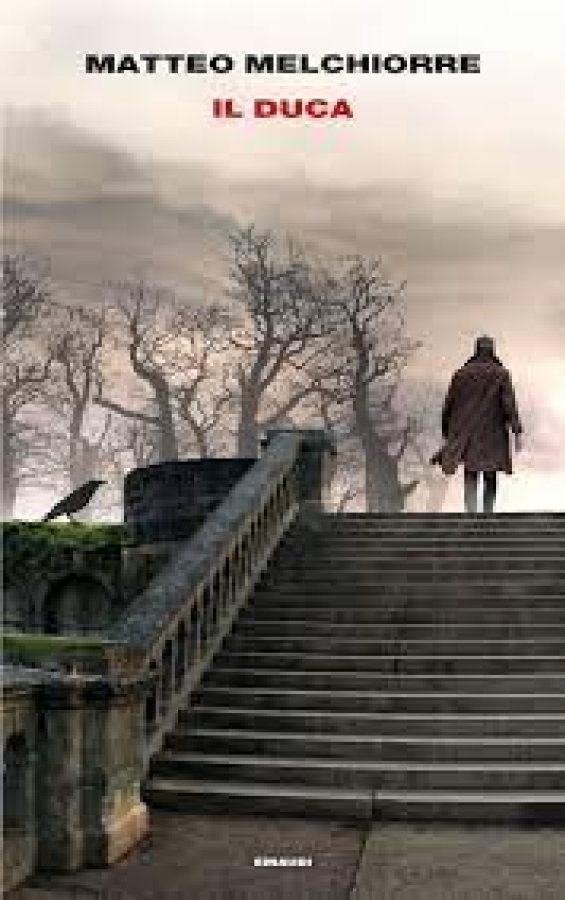
The Duke
Title of the original version reviewed: «Il Duca»
AI Translation Notice: This review was translated from the original Italian using artificial intelligence. Book quotes and excerpts are translated interpretations and will not match the author's original English phrasing or official published translations.
For ten years now I had been living up here in Vallorgàna alone, in the villa of my ancestors. (...) I was certain that I found myself in the best fortune I could desire. Nothing of importance occurred in my days. Nothing complex entangled my gaze. No disruption in daily life. No decision to hinder my stride
. Such is the opening of the tale of the man we will come to know only as the Duke. Heir to an ancient noble family, the Cimamonte counts, the Duke belongs to the culture of the few,
that of those who, by means and tradition, live in a world of thoughts from which the majority are excluded
. The Duke lives, or would like to live, on an island, formed by his villa and Vallorgàna. Two events intervene to shatter this "terrifying" isolation. Mario Fastrèda, the acknowledged head of the small community, has the trees cut down in a woodland owned by the Duke; it is a petty transgression, one that could be let pass, were it not that the Duke discovers an ancient codex recounting the history of the Cimamontes. Reading the deeds of his ancestors, the chronicle of Cimamonte abuse and violence, he realizes that the feuds were "fatuous and pretentious," yet for a nobleman they were instead "duties of respect," worthy of the utmost attention. And it is as if a dragon, dormant for centuries,
were rising up from the earth, from roots stretching taut, from rubble crumbling, from crusts breaking apart
. A war begins between the Duke and Fastrèda; it is dictated by "a profound past, (...) the fruit of the ancient order of above and below." For page after page, the author retraces the events of this senseless feud, incomprehensible from a rational point of view, yet rooted in ancestral hatred. It is the setting that lends fascination to the story: the Mountain towering over the village like a sacred monolith, the woods, looming and menacing, advancing at the expense of the meadows, the small community, growing ever older and desperately anchored to traditions, grudges, and legends, and finally mysterious, ancient omens, such as the flight of a white-winged crow. We are not before Dino Buzzati's magical forest (see Il segreto del bosco vecchio reviewed on this site); Melchiorre is a historian of trees and of their land, and he knows full well that it is not true that "woods and mountains are a mirror of virtue," as naive naturalistic mythology would have it. Fortunately, the narrative of the feud is interrupted by Maria; against hatred, love supervenes. "It was an enchantment of an extraordinarily physical nature, entirely directed toward the body:" sweeping and utterly distinct, untamed, mercurial, irreverent, and with something, moreover, inexplicably wild." But Maria is the niece of Fastrèda, the enemy. The autumn wind, "dancing and whispering, showed me in its mirror shreds of myself and fragments of other things, and finally, embracing a beech stump, delivered a lash and began to whisper more insistently. It asked me whether I wanted to lose Maria or keep her. (...) Whether I was intoxicated by her body alone or whether in her I had grasped the inexpressible
. It is a dilemma that the Duke would probably not have been able to resolve on his own. First, a violent storm drives him from Vallorgàna, instilling in him a disillusionment with the past, the looming history of his ancestors; he no longer wishes to return to the village, he wishes to abandon the villa to ruin. He returns to take inventory of the things to be sold, encounters Maria, and through her brown eyes discovers
this rare and yet raw and yet enclosed place, which can open only by braving steep slopes and ascents, skirting cliffs of woods....
He realizes he belongs to Vallorgàna not by the will of his ancestors, but because this is his place, whose history towers over and transcends that of individuals. When he tells Maria, the alluring Maria replies:
perhaps
. But why so much agonizing? Was it not enough to tell her that he was staying because he loved her?
Estrangement, fury, love, disenchantment, and enchantment are the cadences of a great novel, unfolding within a confined setting over which looms the history of men and nature—a history that from
remote past "continually risks becoming" present past." In the end, it will be the present that triumphs, but this long-awaited conclusion is reached only after many pages, numerous philosophical reflections, and frequent digressions. The plot loses momentum; at times it resembles a zibaldone in which the author sought to say too much about his own world at the expense of the narrative and the characters. What makes reading it a pleasure is the prose, rich in adjectives that never hinder the fluid cadence of the words, offering instead an enjoyable sense of the baroque.
Why read it? Enjoyable, captivating, even if long.