Finished reading on: August 10, 2009
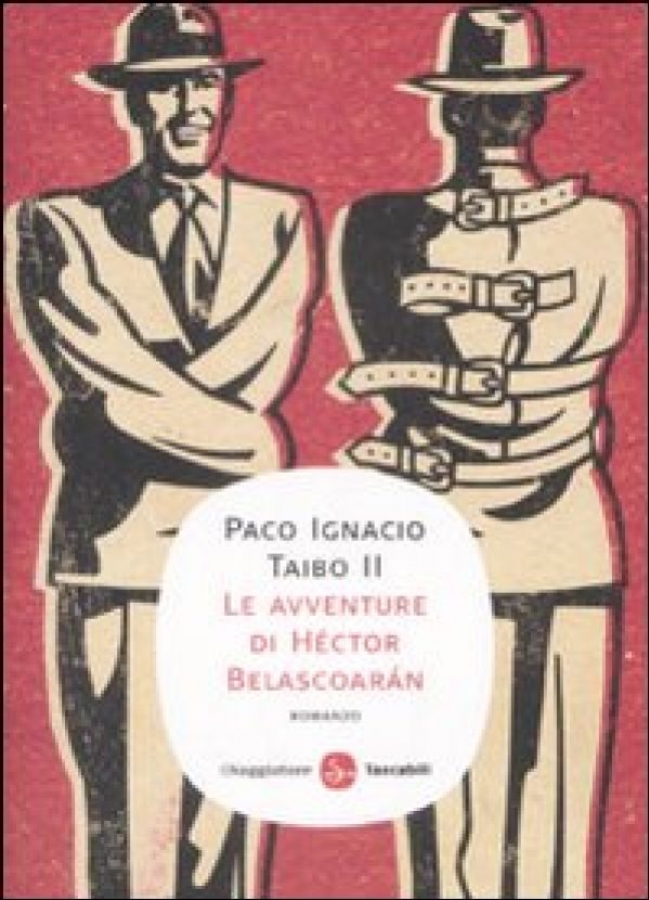
The Adventures of Héctor Belascoarán
Title of the original version reviewed: «Le avventure di Héctor Belascoaràn»
AI Translation Notice: This review was translated from the original Italian using artificial intelligence. Book quotes and excerpts are translated interpretations and will not match the author's original English phrasing or official published translations.
The book collects three novels featuring Héctor Belascoarán as their protagonist.
The first novel, Days of Combat (1986), recounts the protagonist’s life transformation: from a married engineer and corporate executive to a detective searching for clients and, on his own initiative, hunting down a serial strangler.
In reality, the hunt for the strangler is a way to find himself, to escape a life that had sunk
slowly into the oblivion of an accelerated race, a car race in which he competed without even knowing it, a marathon of assholes running the prescribed forty-two kilometers along roads that weren't even recently paved
.
It is ostensibly a "noir" novel, but in truth an introspective one—in some ways a journey of liberation from a bourgeois, respectable existence that had grown far too constricting.
And in the background, the true subject of the novels already emerges: Mexico, and Mexico City in particular—a violent city that "feeds on carrion."
In the second novel, The Ghost of Zapata (1992), both the writer and the protagonist have hit their stride.
The narrative pace has quickened, the prose has become taut and lean, and Héctor is now a detective taking on an unjust society where everyone, starting with the police, is corrupt and violent.
The protagonist is dragged against his will into three cases: searching for Emiliano Zapata, who is rumored to still be alive; investigating the murder of a high-ranking corporate executive in the midst of a bitter union dispute; and preventing a teenage girl from committing suicide.
And Héctor carries out these tasks
with the desire to believe anything, eager to see Zapata, who by now must have been ninety-seven, burst galloping onto the ring road atop a white horse, amid a hail of bullets
.
In the third novel, Some Clouds (1992), Héctor is resting on a Caribbean island when he spots his sister and realizes that
changes were coming and he was tired, listless, disheveled, unkempt, craving beers, boleros, and the sound of the ebb and flow of the waves.
He wanted his solitary palm tree, the sunsets, and the occasional round, good-natured cloud in the sky
.
His sense of justice proves stronger than his indolence, and he finds himself entangled in a story of syndicates, crime, and corrupt cops against whom he must fight like a lone warrior.
The reference point is undoubtedly Raymond Chandler, even if Héctor lacks Marlowe’s cynicism.
Above all, he plays the solitary, righteous detective unassumingly, almost by accident.
"Listen, old Paco," Héctor said, stubbing out his last Delicado in the tin ashtray, "I'm not really such a great detective.
The only certain thing is that, not knowing how to write stories, I butt into other people's.
Me alone, against the system—give me a break! I've been working on my aim for five years, and with a .38 I couldn't hit an elephant at ten meters.
I'm crippled, when it rains I limp, yesterday I found my first gray hairs, and I'm lonelier than a stray dog.
I get pissed off just like you do, it eats away at me thinking about what this nation has come to.
I'm as Mexican as anyone else
.
What do you say to that now? I'm a detective because I like people."
Why read it? The first novel is heavy going, but the other two are a pleasure to read.
And above all, one appreciates the protagonist’s civic passion—free of rhetoric, just like that of any Mexican.