J.M. Coetzee
Books by this author (3)
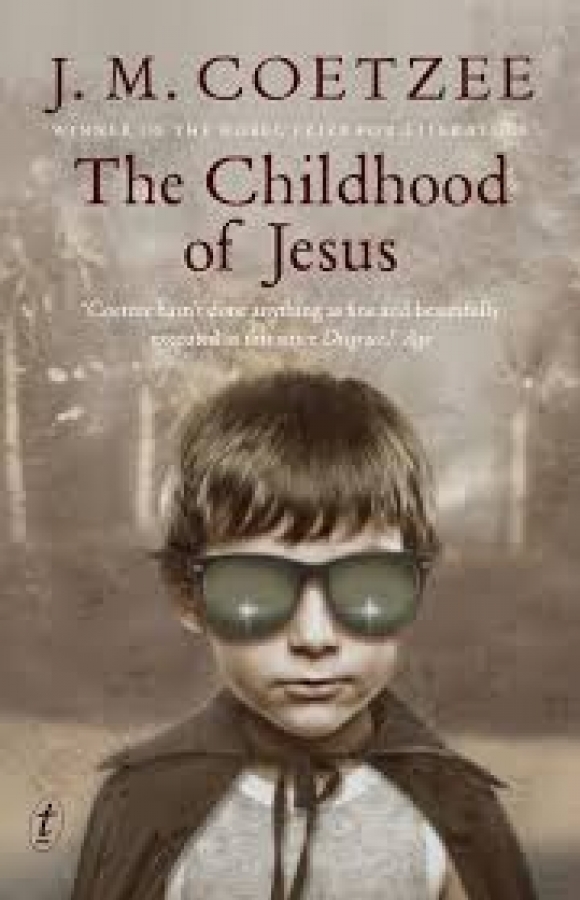
The Childhood of Jesus
In *Age of Iron* (among the reviews), the mother abandoned by her daughter and condemned to solitude cries out in despair, “let me go to myself, (...) it is a hard task, but I am learning.” In *Disgrace* (also among the reviews), the protagonist, a pompous intellectual, moves toward death: > lying on a plastic chair amid the stench of chicken feathers and rotting apples, he feels his interest in the world drain away drop by drop . And what if, instead, we refused to accept death, even if it assumes the shape of Paradise? An adult and a child find themselves in an imaginary world where kindness and friendship prevail, in which everything flows ever identical to itself, where everyone has forgotten their past. > Nothing is missing. The nothing that you think is missing is an illusion. You are living in an illusion. For the protagonist > this life is too placid for his taste, it lacks too much in ups and downs, in drama and tension, it is too much, in fact, like music on the radio. *Anodina*, “is that the Spanish word?” The story itself is nothing but a narrative. Our history is not real. What, then, is our life? A tale? In short, accepting Paradise can only be done by losing oneself. As Dante says in Canto XXXIII of *Paradiso*, > As he who seeing in a dream,/that after the dream the passion impressed/remains, and the other returns not to the mind,/such am I, for almost wholly ceases/my vision, and yet still distills/within my heart the sweetness born of it (lines 58–62). That is to say, only if I surrender to a mystical intuition of God can I dissolve into Paradise and attain a peace, serene and eternal, even if monotonous. Had I continued reading, perhaps I would have understood the role of the child (Jesus accompanying the incredulous Joseph?); I must confess that I abandoned the book by virtue of every reader’s right to drop a story if it is not to their liking. What troubled me was the abstractness of the dialogues and the repetitiveness of the plot. It almost seems as though the author were conversing with Saint Thomas or some other theologian, using the characters not as living subjects rich in emotion, but as feeble stand-ins for concepts. Then again, we are in Paradise. Coetzee has convinced us: with death, it is better to vanish into nothingness. Why not read it? Abstract, boring, and inconclusive.
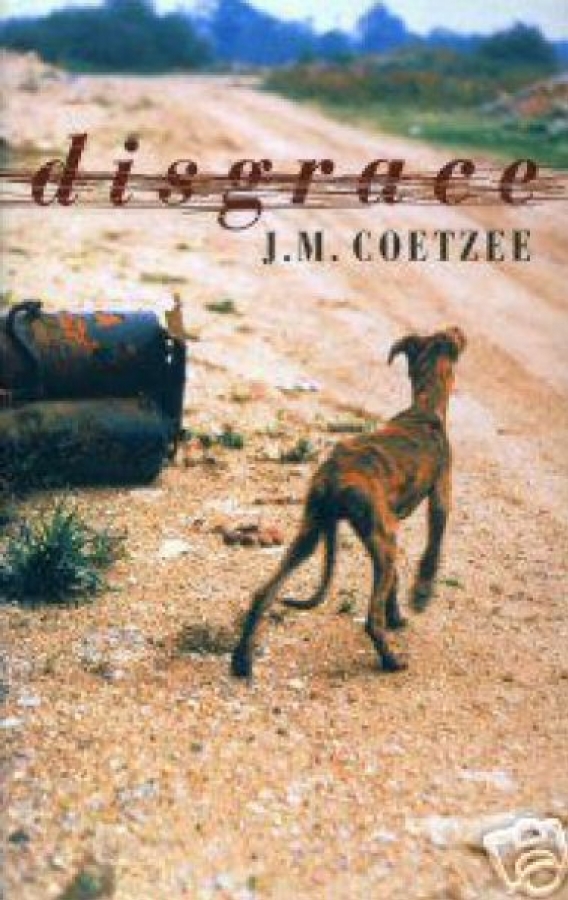
Disgrace
A literature professor is expelled from the university following a relationship—essentially sexual—with a female student. The man is over fifty and twice divorced. Accustomed to being courted by women, he now finds himself alone, reduced to seeking sex with prostitutes, and thus lets himself be drawn into the affair, in pursuit of his own vanity and his own eros. He moves to the countryside to stay with his daughter, who runs a smallholding and a dog shelter. He helps his daughter take her produce to market, meets a woman his own age who runs an animal clinic and puts surplus dogs to death, and works alongside Petrus, a Black man who helps his daughter run the farm. The man’s attitude, however, has not changed; his vanity continues to dominate even his relationship with his daughter, with whom he cannot achieve any genuine dialogue: neither recounting the events that led him to leave the university, nor understanding his daughter’s reasons for living in the country, so utterly isolated. An incident radically alters their lives: three Black men break into the house, ransack it, attempt to set the professor on fire, and rape his daughter. Even more shattering is the fact that the daughter does not report the crime and chooses, instead, to keep the child conceived through the assault and to marry Petrus to secure her existence in the countryside. The professor’s world dissolves—a world that had found its precise coordinates in the realm of imagination, poetry, and bourgeois conventions: as he had said at the beginning of the book when glossing a stanza by Wordsworth (the poet’s disappointment at the sight of Mont Blanc): > the great archetypes of the mind, the pure ideas, find themselves usurped by mere images that derive from the senses. Yet we cannot live every day in the world of pure ideas, sheltered from sense-experience... The question must be: How do we find a way for the two (imagination and reality) to coexist? Ideas of a narcissistic intellectual, to which his daughter replies that life is a concrete, simple matter. The man attempts to return to the city, but his former life has by now vanished. He therefore takes a room in the village near his daughter’s farm, works on a musical piece destined to center on the affair between Byron and his Ravenna mistress, Teresa, and helps run the animal clinic. The book draws to a close, bleakly, with the man’s decision to have a dog put down—a dog to which he had grown attached—because we must all make our way toward our end, toward death. It is a highly complex novel, one in which it is difficult to isolate a single narrative thread. Among the possible readings (the social fabric of South Africa, the clash between bourgeois European culture and the emerging values of the Black population, father-daughter relations, the acceptance of the codes of violence, animals and dogs in particular), the most compelling seems to me to be the theme of death and the awaiting of death. The former is addressed through the ordeal of the protagonist, who comes to terms with the passage of time: > he wanders aimlessly in the garden, a dreary feeling coming over him. It is not merely that he does not know what to do with himself. The events of the day before have shaken him to the core. The tremors, the weakness are merely the first, most superficial symptoms of shock. He has the sense that within him a vital organ has been bruised and abused, perhaps even his heart. For the first time he feels what it means to be an old man, tired in the bones, devoid of hope, devoid of desire, indifferent to the future. Sprawled on a plastic chair amid the stench of chicken feathers and rotting apples, he feels his interest in the world ebbing away from him drop by drop. It will take weeks, perhaps months before he is bled dry, but he is bleeding out. When all this is over, he will be like a fly enfolding itself in a web, brittle to the touch, lighter than a grain of rice, ready to drift away. The theme of waiting is embodied by Teresa, who spends her entire life waiting for the return of Byron, who has gone to Greece to die: > my Byron, she sings for the third time; and from somewhere within the caverns of the other world, a voice answers in song, wavering, disembodied, the voice of a ghost, the voice of Byron. Where are you? he sings, and then a word the woman did not want to hear: dry. It has dried up, the wellspring of all things. And finally, the harrowing conclusion of the novel, which epitomizes the protagonist’s despair, the end of life, of waiting: > bearing it (the dog) in his arms like a side of meat, he walks back into the surgery. I thought you wanted to save him for another week, Bev Shaw says: Are you giving him up? Yes, I am giving him up—or does the author, with the phrase *give up*, mean: "I surrender, I yield!"?
Age of iron
The novel is set in South Africa in the mid-1980s, during the era of apartheid. An elderly classics teacher learns that she has incurable cancer. She resolves to recount the final days of her life to her daughter, who left the country many years ago: > I tell you the story not so that you may take pity on me, but so that you may learn how things are. It would be easier, I know, if the story came from someone else, if it were a stranger’s voice resounding in your ears. But the fact is, there is no one else. I am alone, the only one writing. Do not pass it over, do not forgive easily. Read everything with a distant eye . This declaration by the protagonist encapsulates the novel’s multifaceted meanings: the events, and above all the companions, of the old woman’s final days, the loneliness and nostalgia for the past, the exile from her daughter. An alcoholic vagrant and a stray dog find shelter at the protagonist’s home; initially wary, but growing increasingly trusting, she takes them in, finding solace and friendship. Meanwhile, the plight of two Black youths draws the elderly teacher into the grueling living conditions of the Black population and, above all, into the brutal repression of the Afrikaner police. Upended by events that shatter a hitherto tranquil existence, the letter to her daughter changes in meaning: intended as a way to reinforce their bond, the woman instead finds herself swept into turmoil and uncertainty. Her love for her daughter grows more abstract and distant, while her feelings deepen toward those closest to her in suffering and in the face of death: the vagrant, the dog, and the two Black youths. And a plea for love rises from the old teacher: > and this long letter, I say it now, is a plea toward the sunset, toward the west (the daughter lives in the United States) for you to return to me. Come and hide your head in my lap as a child does, as you used to do. I cannot live without a child, I cannot die without a child. What I endure, in your absence, is grief. I produce pain. You are my pain. This is an accusation. Yes, I accuse you. I accuse you of having abandoned me . It is a powerful, ancestral novel, dominated by classical themes typical of Greek tragedy—those of Aeschylus and Sophocles. The relationship between mother and child is explored not in psychological terms, but by tracing it to an ineluctable destiny: the detachment of offspring from their parents. The daughter’s flight from South Africa begets the mother’s exile, her solitude, and with it the awareness that she will not be remembered after death > let me go from myself, let me go from you, letting go of a house still alive with memories: it is a difficult task, but I am learning . > Do not be afraid, says the protagonist, I will not seek you out. It is not my soul that will remain with you, but the spirit of my soul, the breath, the movement of the air around these words, the faintest turbulence traced in the air by the otherworldly passage of my pen across the page your fingers now hold . Why read it? It is not an easy read, not least because the author frequently opens philosophical digressions, but the novel’s cosmic depth and the evocative power of many of its pages are well worth the effort.