Finished reading on: February 27, 2020
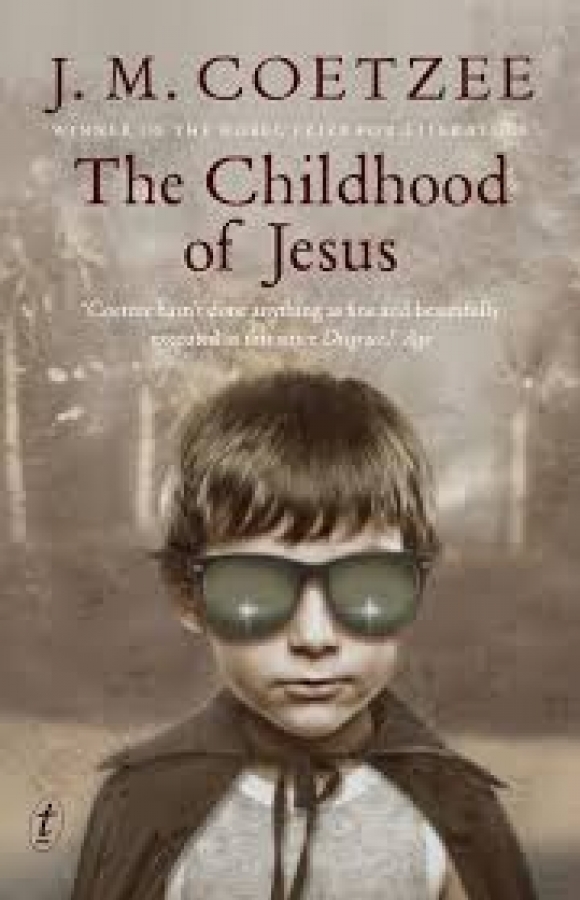
The Childhood of Jesus
Title of the original version reviewed: «The childhood of Jesus (L'infanzia di Gesù)»
AI Translation Notice: This review was translated from the original Italian using artificial intelligence. Book quotes and excerpts are translated interpretations and will not match the author's original English phrasing or official published translations.
In Age of Iron (among the reviews), the mother abandoned by her daughter and condemned to solitude cries out in despair, “let me go to myself, (...) it is a hard task, but I am learning.” In Disgrace (also among the reviews), the protagonist, a pompous intellectual, moves toward death:
lying on a plastic chair amid the stench of chicken feathers and rotting apples, he feels his interest in the world drain away drop by drop
. And what if, instead, we refused to accept death, even if it assumes the shape of Paradise? An adult and a child find themselves in an imaginary world where kindness and friendship prevail, in which everything flows ever identical to itself, where everyone has forgotten their past.
Nothing is missing. The nothing that you think is missing is an illusion. You are living in an illusion.
For the protagonist
this life is too placid for his taste, it lacks too much in ups and downs, in drama and tension, it is too much, in fact, like music on the radio.
Anodina, “is that the Spanish word?” The story itself is nothing but a narrative. Our history is not real. What, then, is our life? A tale? In short, accepting Paradise can only be done by losing oneself. As Dante says in Canto XXXIII of Paradiso,
As he who seeing in a dream,/that after the dream the passion impressed/remains, and the other returns not to the mind,/such am I, for almost wholly ceases/my vision, and yet still distills/within my heart the sweetness born of it
(lines 58–62). That is to say, only if I surrender to a mystical intuition of God can I dissolve into Paradise and attain a peace, serene and eternal, even if monotonous.
Had I continued reading, perhaps I would have understood the role of the child (Jesus accompanying the incredulous Joseph?); I must confess that I abandoned the book by virtue of every reader’s right to drop a story if it is not to their liking. What troubled me was the abstractness of the dialogues and the repetitiveness of the plot. It almost seems as though the author were conversing with Saint Thomas or some other theologian, using the characters not as living subjects rich in emotion, but as feeble stand-ins for concepts. Then again, we are in Paradise. Coetzee has convinced us: with death, it is better to vanish into nothingness.
Why not read it? Abstract, boring, and inconclusive.