Elena Ferrante
Books by this author (5)
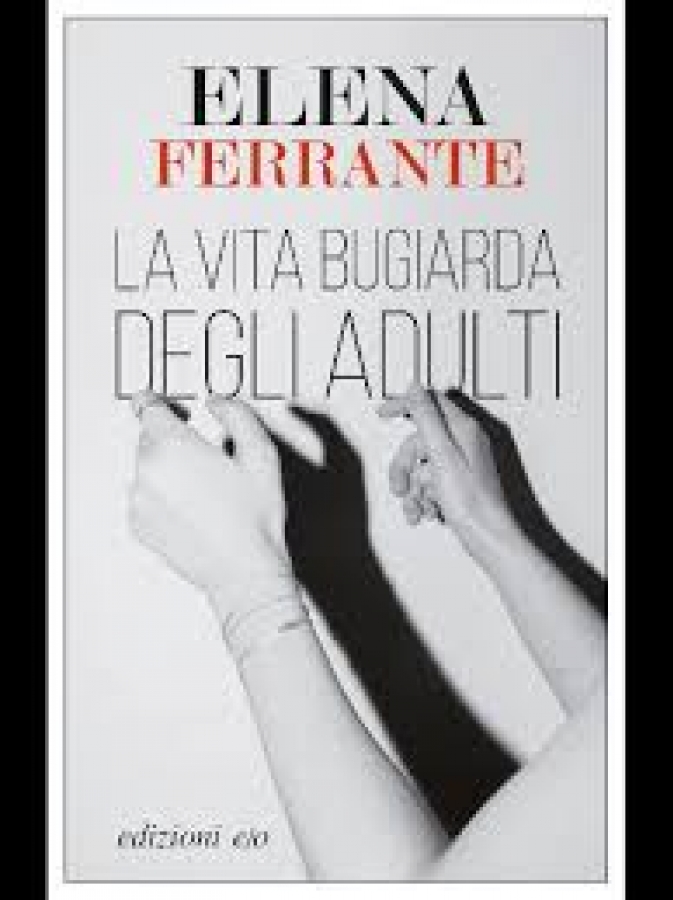
The Lying Life of Adults
Giovanna, the first-person narrator, is an adolescent living in an affluent neighborhood of Naples with educated, left-wing parents: her father a university professor, her mother a high school teacher and translator. The couple of friends they spend time with shares the very same traits: he, too, an academic, a habitual partner in heated debates with the father; she, a woman of high society, ever elegant and often sporting a splendid bracelet. Then there are their daughters, Giovanna's friends and confidantes. A fine bourgeois family, in short! The girl begins to falter at school and overhears a remark made by her father at the door. > adolescence has nothing to do with it: she's taking on the face of Vittoria. (...) That was how, at twelve, I learned from my father's voice, muffled by the effort to keep it low, that I was becoming like his sister, a woman in whom—I had heard him say for as long as I could remember—ugliness and malice were perfectly matched . An irrepressible desire arises in Giovanna to meet Aunt Vittoria, so hated by the father that her image had been excised from a family photograph. She wanted to know whether her father’s harsh words were merely the result of a momentary vexation, or whether he, so astute, had detected > the traits of a future defect of mine. (...) I wanted to understand whether my aunt was truly emerging through my body: the exceedingly thick eyebrows, the eyes too small and of a lusterless brown, (...) the short upper lip with a repulsive dark fuzz, (...) the sharp chin and the nose, ah the nose, the way it thrust gracelessly toward the mirror, (...) were these already features of Aunt Vittoria’s face, or mine and mine alone? (...) Was I myself, or the vanguard of my aunt, she in all her horror? Giovanna does not realize that the journey she is embarking on—getting to know her aunt and her world (the working-class neighborhoods of Naples)—will not merely confirm or disprove the roots of her presumed ugliness: it will be a descent toward the demolition of her parents, the loss of her mother, and the estrangement of her father. The parental figures, previously seen as an Olympus of perfection and models to be emulated, crumble to the point of dissolution. > What was happening, then, in the adult world, in the heads of perfectly reasonable people, in their bodies laden with knowledge? What reduced them to animals among the most untrustworthy, worse than reptiles? It is not the discovery of the sordid affair binding the parents to the couple of friends: the father having for years taken his colleague's wife as a mistress, while the colleague in turn carries on with Giovanna's mother; nor is it the murky history of the bracelet worn so ostentatiously by the father's mistress: having come by hazy means to Aunt Vittoria, who intended it as a gift for Giovanna, only for the father to present it to his lover. It is words that devastate the end of childhood: the time of adolescence ought to be slow, > made of great gray blocks and sudden swellings of green or red or purple. The blocks have no hours, days, months, years, and the seasons are uncertain, it is hot and cold, rainy and sunny. (...) The moment you search for words, that slowness turns into a vortex and the colors blur together like different fruits in a blender . And so we arrive at the heart of the matter: the theme of culture. Unlike Confucius, who regarded culture as the key to grasping "the sense of mutual humanity," Elena Ferrante appears to share my view: a good formal education, command of language, familiarity with books and culturally engaged circles, are a cage that imprisons feelings, submerging them beneath skillful semantic play, fostering pretense rather than sincerity. The trouble is that Giovanna, while recognizing in Aunt Vittoria the prodigious force of candor (hatred voiced without filters, intimacy, overflowing emotions, the authenticity of living), nevertheless falls in love with an intellectual, captivated by his words as much as by his appearance. Culture, a false chimera! One does not know humanity through thought; one grasps it through empathy. Fortunately, Aunt Vittoria bursts in to save her. > Did you hear that, Giannì? Here they call you a child. But are you a child? Then why do you get between Giuliana and her boyfriend? Answer me, instead of busting my balls over the bracelet. Are you worse than my brother? Tell me, I’m listening: are you more arrogant than your father? The book is a coming-of-age novel. It is intriguing at the beginning, stoking the reader’s anticipation of Aunt Vittoria: the expectation of a temperamental, visceral, and full-blooded character. Instead, this figure remains sidelined, occasionally summoned into the plot but never a protagonist. The narrative unfolds—or rather, tumbles—along a banal storyline and a fragile cast of characters. Failing to lean on plot and characterization, on the complexity of their bonds as in *My Brilliant Friend*, the writing reveals all its limitations: fluent, yet feeble, devoid of grit, as superficial as the story itself. Why read it? Those who fell in love with *My Brilliant Friend* cannot miss it.
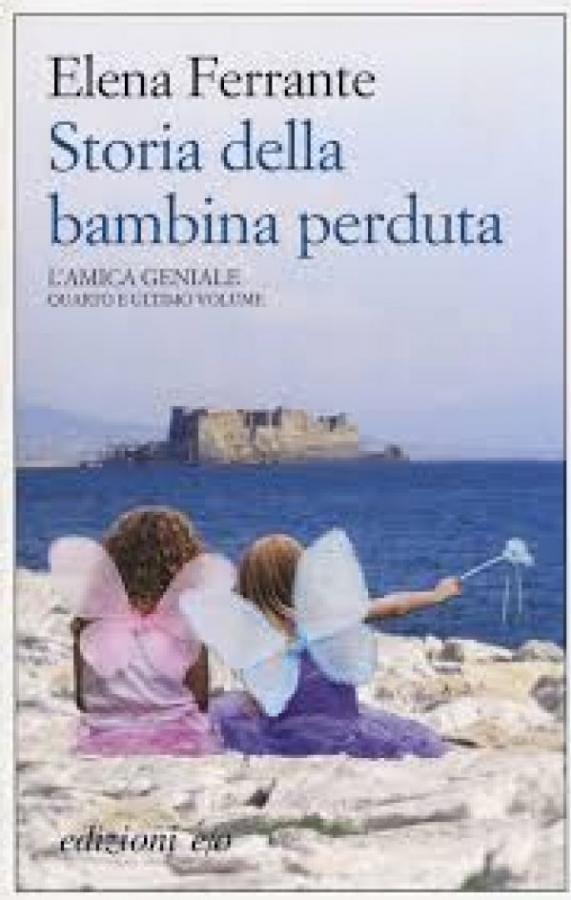
The Story of the Lost Child
The story of the friendship between Elena and Lila continues, its conclusion offering us the meaning of this long narrative: in vain do we attempt to bring clarity to the disorderly flow of events and feelings. In the previous book, we left Elena fleeing with Nino, abandoning a prosaic bourgeois life. For many pages—too many, even—Elena remains at the center: a separated mother and, above all, a mistress. To be close to Nino, Elena returns to Naples, dragging her two daughters along with her. She moves into a sunlit apartment on Via Tasso, far from the neighborhood, which she nonetheless frequents often. She fails to > recapture Lila immediately along with all the complications she brings with her or, worse, I allow myself to be caught up in the events of my own life because I dash them off with greater ease . Nino proves to be an evanescent man; with barefaced brazenness he refuses to leave his wife for Elena; he is selfish, vain, wildly ambitious, a natural-born betrayer. Can an intelligent, educated woman accept being the concubine of a scoundrel? > The more I traveled toward Milan, the more I discovered that, once Lila was set aside, I did not know how to give myself solidity except by modeling myself on Nino. I was incapable of being my own model. Without him, I no longer had a core from which to expand beyond the neighborhood and into the world; I was a heap of debris . The spell breaks; Elena catches Nino in a sordid embrace with the maid—the most bourgeois of betrayals. And she discovers that Nino is “nothing alien, then, but rather much that is foul.” She leaves the man and the bright home behind to go live in the neighborhood, right above Lila’s apartment. The narrative develops the friendship between the two women within an unusual context, that of family: both of their careers (Elena’s often taking her far away), five children, two of whom—Tina and Imma—are young girls of the same age, the former Lila’s daughter, the latter Elena’s, fathered by Nino. The story proceeds slowly, steeped in neighborhood affairs, petty domestic conflicts, and the conflicting emotions of the two friends, until suddenly a dramatic turn occurs: Tina vanishes. The “lost child” brings us back to *My Brilliant Friend*: Lila is once again at the center, and with her, Naples. It is not as one might expect. Lila’s grief remains ever in the background. It is true > Tina had become encysted inside her. (...) A way had to be found to set the child’s story flowing again . Yet Lila does so in her own way, setting out to discover Naples: putrefaction and splendor all at once. In what other city has a church (San Giovanni a Carbonara) been built over a ditch known as the Carbonara because the rotting corpses and severed limbs of men and beasts were dumped there? > I often had the impression that Lila used the past to normalize the present (...). In the Neapolitan things she recounted, there was always something ugly at the origin, something fractured, which later assumed the shape of a handsome building, a street, a monument, only to lose its memory and meaning, worsening, improving, worsening again, according to a flow inherently unpredictable, composed entirely of swells, dead calms, sudden downpours, waterfalls . Is life not, after all, a perpetual “dissolving of margins,” > a melting down of heterogeneous matter, a blurring and reshuffling ? Why, then, be surprised by Lila’s vanishing, by her decision to depart leaving behind no trace of herself, save for two fifty-year-old dolls sent to Elena one day? To be sure, Elena is left with the impression of having been deceived, of having been dragged wherever Lila wished. > All her life she had narrated a story of redemption, using my living body and my existence. (...) I have been writing for too long and I am weary; it grows ever harder to keep the thread of the narrative taut amid the chaos of the years, of events great and small, of moods. (...) Unlike in stories, real life, once past, leans out not toward clarity, but toward darkness. Once again, the author lingers far too long over a trite tale of betrayals, domestic trivialities, and social relationships. She seeks to delve into Elena’s soul to probe the reasons behind her submissiveness toward an overtly unfaithful lover, yet the narrative ends up bland, superficial, and dull. There is the life of the neighborhood; dramatic events unfold in succession, such as the earthquake, yet it all feels pasted on, devoid of any sociological analysis. There are Elena’s daughters, astonishingly adaptive to new environments and life changes, yet it defies belief that they could pass through childhood and adolescence entirely impervious to the domestic turmoil, to a mother perpetually occupied elsewhere, and to the neighborhood's endemic violence. The novel takes flight only when Naples enters the scene. It feels then as though one were reading Matilde Serao or Anna Maria Ortese—the great Neapolitan women writers. The credit belongs to Lila, a character capable of taking on a life of her own whenever she is not eclipsed by the excessively bourgeois and predictable Elena. Why read it? It is somewhat tedious, but it is worth reading to see how the grand saga ends.
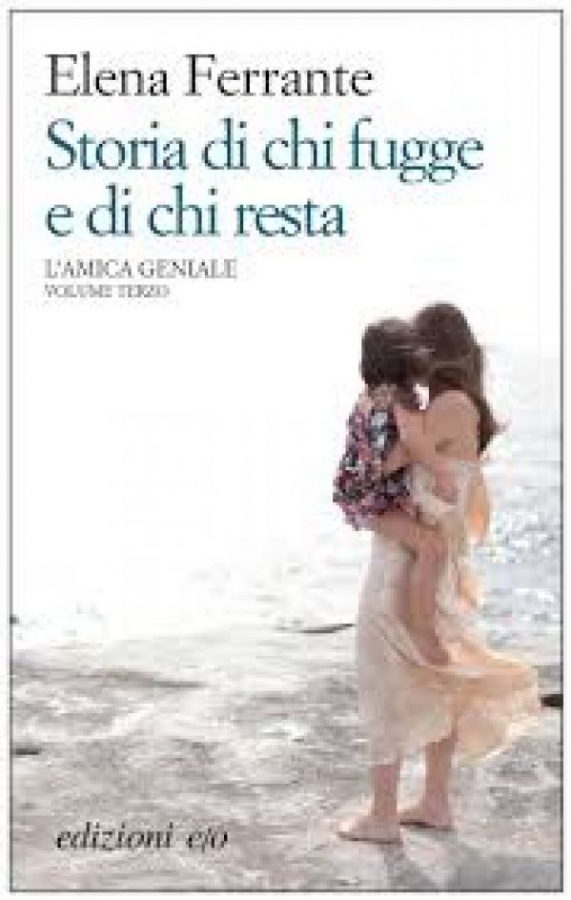
Those Who Leave and Those Who Stay
> To become. It was a verb that had always obsessed me (...). I wanted to become, even though I hadn't known what. And I had become, that was certain, but without an object, without a true passion, without a determined ambition. I had wanted to become something, that was the point, only because I feared that Lila would become who knows who and I would be left behind. My becoming was a becoming in her wake. I had to start becoming again, but for myself, as an adult, outside of her . This long quotation captures the essence of this third volume in the story of a friendship, that between Elena and Lila. The former has reached > a land of good reasons, governed by rules (...) that gave meaning to everything : already a successful writer, married to a young, brilliant professor, > always guided by a higher order that, while having a familial rather than divine origin, nonetheless gave him the certainty of being on the side of truth and justice. Yet beneath a veneer of bourgeois—albeit left-wing—achievements, a deep and intimate dissatisfaction lurks within Elena. Her visits to the neighborhood are always greeted with deference and admiration, even if tinged with an envious acrimony toward someone who has abandoned her roots; but how to explain the cost of this extraordinary social climb, that > since the age of six I have been a slave to letters and numbers, that my mood depends on the success of their combinations, that this joy of having done well is rare, unstable, lasting an hour, an afternoon, a night? For much of its length, the novel follows a predictable path, with Elena as the judicious, self-assured woman and Lila in her role as the tormented, unfortunate friend. The lengthy account of the misadventures of the “brilliant friend” (Lila), her illness—undoubtedly psychosomatic in origin—and Elena's decisive intervention seem to confirm the predictable roles between the two friends. And the reader expects new literary triumphs for Elena, an intense life from an intellectual and political standpoint, the pursuit of social advancement: none of this comes to pass. Slowly, but inexorably, Elena retreats into an opaque bourgeois life. A mother of two young girls, it seemed to her that daily chores bore witness to her maturity as a woman, > that becoming like the mothers of the neighborhood was not a threat, but the natural order of things. It’s fine like this. I told myself . That a subtle malaise lies beneath this quiet family life is shown not so much by the arid marital relations, accepted with resignation, as by the loss of that authenticity which had sustained Elena as a young writer. And it once again falls to Lila to tell her the truth, as has always been the case. After reading her friend's second book, Lila hurls her rage in her face: > don't make me read anything anymore, (...) the disgusting face of things was not enough to write a novel: without imagination it didn't look like a real face, but a mask . And it is precisely this judgment, inexorable and cruel, through which Lila asserts her “unrivaled power,” that drives Elena to a disruptive act. She meets Nino, the man yearned for in her adolescence and stolen away by her friend; she begins an extramarital affair with him that culminates in fleeing her family. At the news, Lila > began to scream. (...) Why did you study so much? What the fuck was the point of imagining that you would enjoy a wonderful life for me, too? I was wrong, you're an idiot . Yet wasn't Nino the very man who had brought Lila close to self-annihilation? But then, Elena wonders after an intense day of lovemaking with her lover, “we weren't doing, but redoing.” One might hastily say that Lila's verdict on Elena's book applies to this third volume as well. The narrative has lost its vigor; it lingers pointlessly on the clichés of the 1960s, on facile observations regarding the female condition, and on fragile, predictable psychological insights. Lila's figure recedes into the background and, consequently, the novel loses its originality; Elena comes across as a bored, inconclusive, petty-bourgeois woman; the other characters are vacuous figures, beginning with Nino—a capricious and irresponsible lover, for whom the love affair with Elena is a “repetition,” as Elena herself acknowledges. The only truly compelling scene in the book is the one set in a drawing room in Posillipo: the Solaras, neighborhood bosses who have grown rich, celebrate their mother's sixtieth birthday in their luxurious apartment. *Napoletanità* returns to breathe life into the narration, drawing all the characters back into the life of the neighborhood. Ultimately, this lack of energy is reflected in the writing—still fluid, but tired and prosaic. Why read it? To see how it ends.

The Story of a New Name
Elena continues the story of her friendship with Lila. The first book, *My Brilliant Friend*, had ended with Lila’s marriage to Stefano, the wealthy grocer. > I wanted to sink back into the neighborhood, to be as I had been. I wanted to throw away studying, the notebooks crammed with exercises. (...) What I could become outside Lila’s shadow counted for nothing. What was I compared to her in her wedding dress, to her in the convertible, the blue pillbox hat and the pastel suit? This reflection of Elena’s does not halt a trajectory that leads the two young women to drift apart and continually seek each other out. What is life without Lila for Elena? > Time settles down and the salient facts slip along the thread of the years like suitcases on an airport conveyor belt; you take them, you put them on the page, and it’s done. (...) With her I didn't want to have real relations, just hello, generic phrases. (...) On the one hand I said enough, on the other I grew depressed at the thought of not being part of her life, of her way of inventing it . Elena continues her studies, passes her classical high school exit exams with flying colors, attends the Scuola Normale in Pisa, graduates, writes a novel, becomes an author. All this culture is nothing more than a mask: > I learned to control my voice and gestures. (...) I brought my Neapolitan accent under control as much as possible. (...) At school I had learned to make people believe that I knew a great deal . And above all, Elena found herself “sterilized by study,” bringing under control her feelings, anxieties, and her very boldness. In search of the “best disguise,” upon reading some of Lila’s notebooks she realizes that > the mask worn so well (...) was almost face. Suddenly I became aware of that almost . (...) Behind the almost I seemed to see how things stood. I was afraid > . Beneath the apparent conquest of freedom lies hidden, for Elena, the loss of an authentic life. For Lila, however, her unhappy marital and romantic tribulations lead to a life full of diverse and reckless adventures > , to an effective conquest of her autonomy as an individual and a woman. Lila realizes immediately that the marriage was a mistake: Stefano turns out to be an insensitive, vulgar, and even violent man. The young woman tries desperately to rebel and then to accept married life, even though it is so false and devoid of love. During a summer vacation she encounters Nino, the young intellectual with whom Elena is also infatuated. If for the latter her love for the young man is still an adolescent crush, for Lila it is an overwhelming affair in which physical attraction is intertwined with the desire for cultural elevation. She gets pregnant, is abandoned by Nino, and commits what is madness in the eyes of the neighborhood: running away, living on her own with her child, and working—she, once wealthy and pampered—as a laborer in a sausage factory. Elena visits her friend at the factory, sees the sordid work environment, and is disgusted by the stench of fat that (her friend) carried on her > . She would like to tell her about her own success; instead, she discovers that in the evening, after putting the child to sleep, Lila studies programming languages: they did exercises with flowcharts, they trained to strip the world of the superfluous, they schematized everyday actions according to only two values: zero and one. Obscure words in the squalid room, whispered so as not to wake Rinuccio. I understood that I had arrived there full of pride (...) but she (...) was reacting by effectively explaining to me that I had won nothing, that in the world there was nothing to win, (...) and that time simply slipped away meaningless, and it was good only to see each other from time to time to hear the mad sound of one's brain echoing inside the mad sound of the other's brain". Elena’s cultural ascent, her cultivated and artificial Italian that suppresses the dishonorable dialect of childhood, her educated and sophisticated friends act as a sort of solvent that distills the narrative; the Neapolitan milieu, the vitality of the neighborhood, the authenticity of life disappear gradually yet decisively. It is a net loss for the narrative, all the more so because the author lingers for about 100 pages in a meticulous and long-winded account of the two girls’ summer vacation and the story of falling in love with Nino. It is an adolescent regression, unredeemed by the final part of the book: Elena’s integration into university life in Pisa and, more broadly, into the upper-middle class; Lila’s struggle to live her love for Nino fully; Lila’s resignation and subsequent escape; and, finally, the intense closing pages. The writing—elegant, fluid, flawless—sustains the entire narrative, which is all too often verbose and redundant. Substance and originality are lent by the implied yet potent critique of formal education as a site of normalization and masking. Why read it? The two protagonists captivate; the narrative style redeems a plot that is slow and at times sluggish.
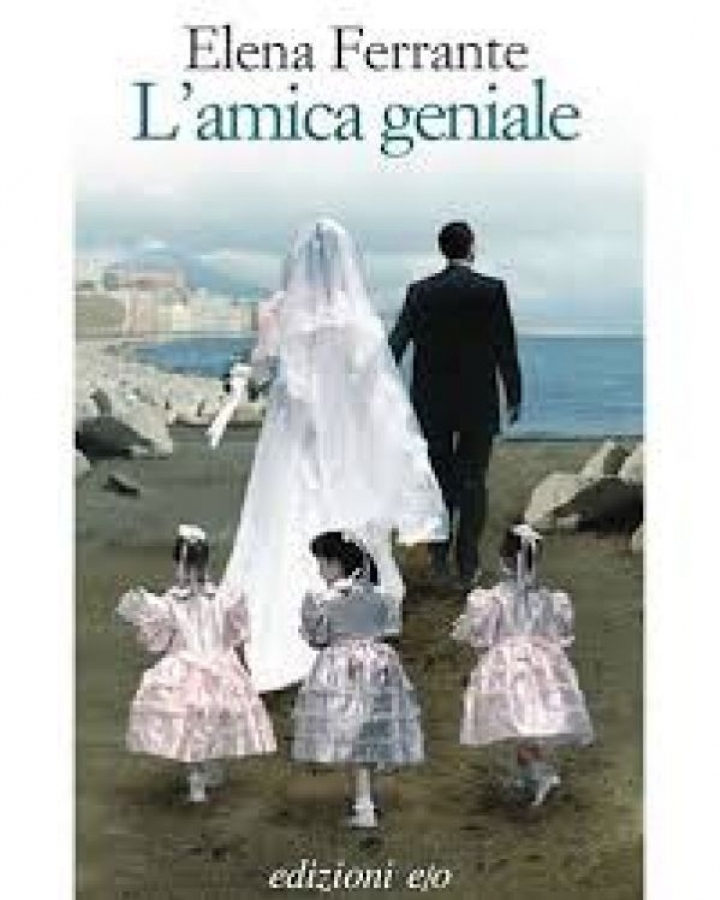
My Brilliant Friend
For much of the novel, the brilliant friend seems to be Lila; she is intelligent, capable of mastering any subject (even Latin) without attending school; she is brave, creative, enterprising; with adolescence, she also blossoms into a stunning young woman. Elena, the first-person narrator and co-protagonist alongside Lila, has been enthralled by her since elementary school, yearning to resemble her, both in body and mind. > I became fixated on Lila, who had very thin, agile legs, and was always moving them, kicking even when she sat next to the teacher (...) I decided that I had to model myself on that girl, never lose sight of her, even if she got annoyed and pushed me away. (...) I trained myself to accept Lila's superiority in everything with good grace, and even her bullying . Through Elena's words, we follow—with a touch of envy—the childhood and adolescence of the two friends and their many peers in a working-class neighborhood of Naples: violent, cruel, yet vital and authentic. Is the novel, then, the narrative of a friendship between Lila and Elena, and with it, of a social milieu? Toward the end of the book, we realize the theme is something else entirely: the author speaks of detachment from one's origins as a consequence of education, of opening up to new cultural and linguistic horizons. When Lila, still an adolescent, marries the neighborhood's wealthy grocer, securing a position in the eyes of the local community, the two friends share a clarifying conversation—for themselves, and for the reader as well. Elena is excelling in high school and declares, with “a nervous little laugh,” that she will abandon her studies once she earns her diploma. Lila replies, curt and resolute: > you're my brilliant friend, you have to be the best of them all, boys and girls (...) you must study always . In that moment, Elena realizes how they had ended up “in two different worlds,” despite living in the same neighborhood, despite having shared the same childhood. Elena had drawn from Lila the drive to study, but schooling had become her own personal wealth. > I had grown up with those boys and girls (our peers in the neighborhood), I considered their behavior normal, their violent language was my own. With them, I couldn't use anything I learned every day; I had to restrain myself, somehow demean myself. (...) Yet that very celebration (her friend's wedding) confirmed that Lila—the only person I still felt was indispensable despite our diverging lives—no longer belonged to us, and with her gone, any mediation between me and those young people (...) had run dry. The story of Lila and Elena’s friendship provides the occasion for a rare reflection. In common sentiment, schooling is always seen as performing a positive role, of emancipation and spiritual uplift. It undoubtedly is, one hopes, yet too often we overlook how education alienates us from our world of origin, causing us to lose our anthropological roots and squandering values and outlooks that are not always entirely negative. What will remain of Naples in a society that demands complete homogenization? Moreover, change is difficult and tormented for the person undergoing it. Elena, in fact, does not feel superior to her friend or to her peers; quite the opposite, she experiences this detachment with surprise and anguish, struggling to attain an awareness that she has long denied to herself. Her romantic entanglements reflect this very inner conflict: she is in love with Nino, another brilliant high school student, yet she gets engaged to Antonio, a decent young man, but alas, so ignorant. Why, above all, hadn't I stopped to say to Nino stay, come to the reception (...) let's talk among ourselves, let's dig ourselves a den to keep us out of this way Pasquale drives, out of his vulgarity, out of the violent tones of Carmela and Enzo, and even—yes, even—of Antonio? " The theme of detachment is not tackled through a faux-narrative approach that is in truth sociological and prescriptive. The author develops a multifaceted cast of characters, each delineated with effectiveness and psychological depth. Likewise, the neighborhood is described with vibrancy and emotional investment, while never concealing its insular, stagnant, and violent nature. Judgments are not handed down from the heights of an assumed social and cultural superiority, nor does the prose adopt justifying or populist tones. The literary merits—the characters, Lila in particular, the setting, and the plain, elegant prose—make one forgiving of the narrative’s weaknesses: a slow, at times repetitive pace, and a plot left hanging, perhaps to herald future volumes. Yet serialized novels ought to conclude with an atmosphere of suspense, rather than merely an ellipsis. Why read it? Lila’s figure is fascinating, the writing refined and elegant.