Finished reading on: December 28, 2019
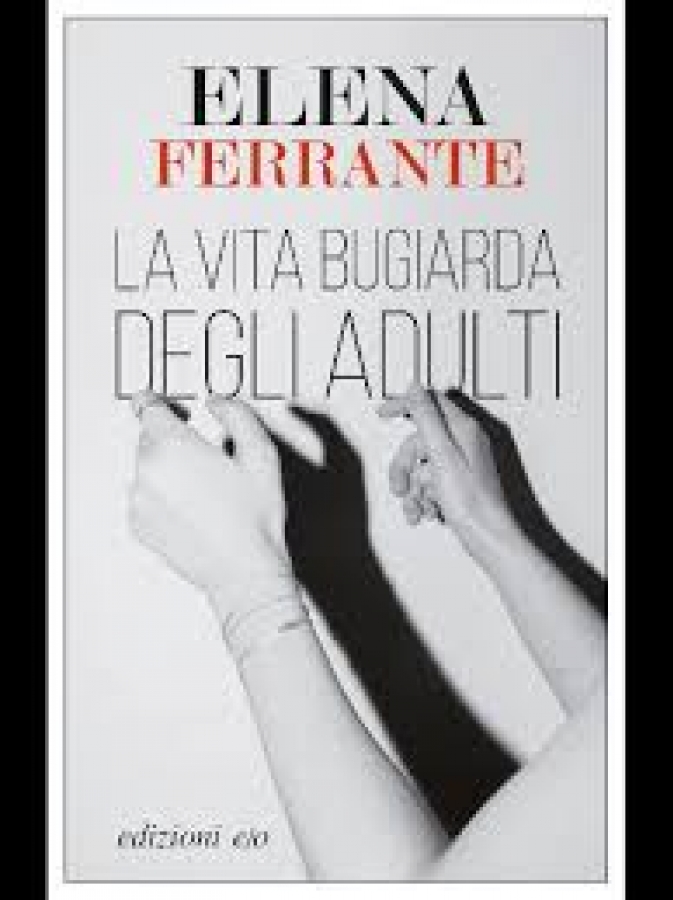
The Lying Life of Adults
Title of the original version reviewed: «La vita bugiarda degli adulti»
AI Translation Notice: This review was translated from the original Italian using artificial intelligence. Book quotes and excerpts are translated interpretations and will not match the author's original English phrasing or official published translations.
Giovanna, the first-person narrator, is an adolescent living in an affluent neighborhood of Naples with educated, left-wing parents: her father a university professor, her mother a high school teacher and translator. The couple of friends they spend time with shares the very same traits: he, too, an academic, a habitual partner in heated debates with the father; she, a woman of high society, ever elegant and often sporting a splendid bracelet. Then there are their daughters, Giovanna's friends and confidantes. A fine bourgeois family, in short! The girl begins to falter at school and overhears a remark made by her father at the door.
adolescence has nothing to do with it: she's taking on the face of Vittoria. (...) That was how, at twelve, I learned from my father's voice, muffled by the effort to keep it low, that I was becoming like his sister, a woman in whom—I had heard him say for as long as I could remember—ugliness and malice were perfectly matched
. An irrepressible desire arises in Giovanna to meet Aunt Vittoria, so hated by the father that her image had been excised from a family photograph. She wanted to know whether her father’s harsh words were merely the result of a momentary vexation, or whether he, so astute, had detected
the traits of a future defect of mine. (...) I wanted to understand whether my aunt was truly emerging through my body: the exceedingly thick eyebrows, the eyes too small and of a lusterless brown, (...) the short upper lip with a repulsive dark fuzz, (...) the sharp chin and the nose, ah the nose, the way it thrust gracelessly toward the mirror, (...) were these already features of Aunt Vittoria’s face, or mine and mine alone? (...) Was I myself, or the vanguard of my aunt, she in all her horror?
Giovanna does not realize that the journey she is embarking on—getting to know her aunt and her world (the working-class neighborhoods of Naples)—will not merely confirm or disprove the roots of her presumed ugliness: it will be a descent toward the demolition of her parents, the loss of her mother, and the estrangement of her father. The parental figures, previously seen as an Olympus of perfection and models to be emulated, crumble to the point of dissolution.
What was happening, then, in the adult world, in the heads of perfectly reasonable people, in their bodies laden with knowledge? What reduced them to animals among the most untrustworthy, worse than reptiles?
It is not the discovery of the sordid affair binding the parents to the couple of friends: the father having for years taken his colleague's wife as a mistress, while the colleague in turn carries on with Giovanna's mother; nor is it the murky history of the bracelet worn so ostentatiously by the father's mistress: having come by hazy means to Aunt Vittoria, who intended it as a gift for Giovanna, only for the father to present it to his lover. It is words that devastate the end of childhood: the time of adolescence ought to be slow,
made of great gray blocks and sudden swellings of green or red or purple. The blocks have no hours, days, months, years, and the seasons are uncertain, it is hot and cold, rainy and sunny. (...) The moment you search for words, that slowness turns into a vortex and the colors blur together like different fruits in a blender
.
And so we arrive at the heart of the matter: the theme of culture. Unlike Confucius, who regarded culture as the key to grasping "the sense of mutual humanity," Elena Ferrante appears to share my view: a good formal education, command of language, familiarity with books and culturally engaged circles, are a cage that imprisons feelings, submerging them beneath skillful semantic play, fostering pretense rather than sincerity. The trouble is that Giovanna, while recognizing in Aunt Vittoria the prodigious force of candor (hatred voiced without filters, intimacy, overflowing emotions, the authenticity of living), nevertheless falls in love with an intellectual, captivated by his words as much as by his appearance. Culture, a false chimera! One does not know humanity through thought; one grasps it through empathy. Fortunately, Aunt Vittoria bursts in to save her.
Did you hear that, Giannì? Here they call you a child. But are you a child? Then why do you get between Giuliana and her boyfriend? Answer me, instead of busting my balls over the bracelet. Are you worse than my brother? Tell me, I’m listening: are you more arrogant than your father?
The book is a coming-of-age novel. It is intriguing at the beginning, stoking the reader’s anticipation of Aunt Vittoria: the expectation of a temperamental, visceral, and full-blooded character. Instead, this figure remains sidelined, occasionally summoned into the plot but never a protagonist. The narrative unfolds—or rather, tumbles—along a banal storyline and a fragile cast of characters. Failing to lean on plot and characterization, on the complexity of their bonds as in My Brilliant Friend, the writing reveals all its limitations: fluent, yet feeble, devoid of grit, as superficial as the story itself.
Why read it? Those who fell in love with My Brilliant Friend cannot miss it.