Ming
Books by this author (2)
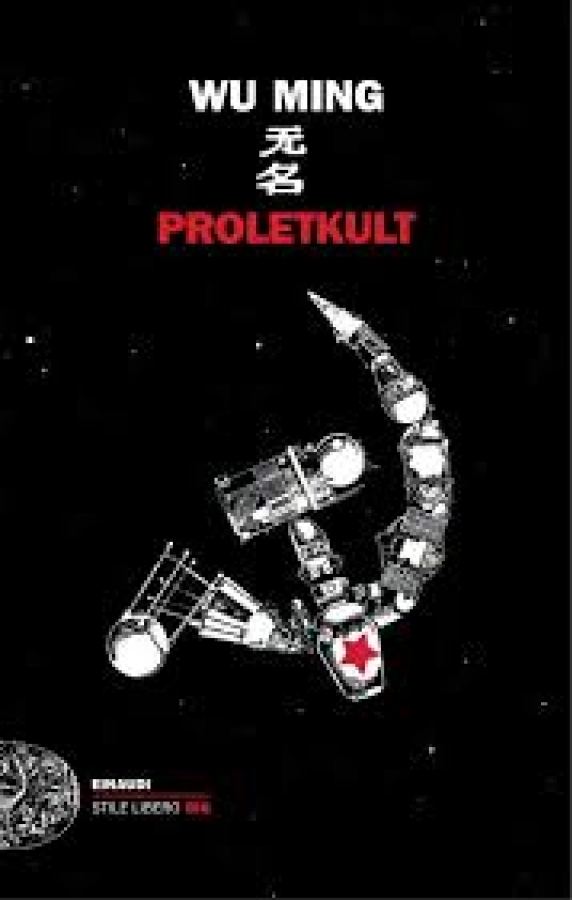
Proletkult
In 1906, Aleksandr Bogdanov, the pseudonym of Bolshevik revolutionary Aleksandr Malinovsky, wrote *Red Star*, a science-fiction novel in which real socialism had been fully realized on the planet Mars. With exceptional prophetic insight, he imagines that the new society modeled on Marxist utopia had not proved immune to imperialism, seeking to colonize Earth after exterminating its population. Leonid, the protagonist of *Red Star*, opposes the project and is banished to Earth as punishment, ending up in an asylum. The Wu Ming collective envisions a possible sequel. Denni, Leonid’s frail daughter, descends to Earth to search for her father and goes straight to Bogdanov, who, besides being a writer, is a philosopher and a scientist. The man finds himself facing a > strange girl who looks like a boy. Impeccably white, perfect teeth. Very small, well-shaped ears. Pale, perhaps overly so. The year is 1927, and Bogdanov has shut himself away in his clinic, wanting no further involvement in perilous affairs amid the first Stalinist purges. He takes refuge behind fiction: drawing on the hallucinations of poor Leonid, he invented a science-fiction story, setting it on Mars because it is the Red Planet. From here, the novel could take any number of directions: a nostalgically ideological work about an utopia—the communist one—that can only be built on another planet; Denni's search for her father across an Earth ravaged by wars, repression, and famine; Bogdanov's realization that Leonid was not mad and that his book mirrored an actual society. This last path would have been the most compelling, leading toward the unsettling visions of Philip K. Dick. Instead, Wu Ming wander between historical digressions and a tenuous plot, unsupported by narrative twists or vivid depictions of settings and characters. It is regrettable that in 2018 these talented writers remain entangled in the disappointments of an unrealized world revolution, spellbound by figures that have vanished after a century of history. The Wu Ming collective consists of five writers: often they succeed in blending their voices, producing a narrative that is cohesive from both a historical and literary standpoint (see the review of *L'Armata dei Sonnambuli* on this site). Here, the operation falls flat, perhaps because the events and characters are emotionally and politically too close to us compared to those depicted in *L'Armata dei Sonnambuli*, a tale set during the French Revolution. The novel's sole virtue is that it prompts us to read *Red Star*. Why not read it? Boring.
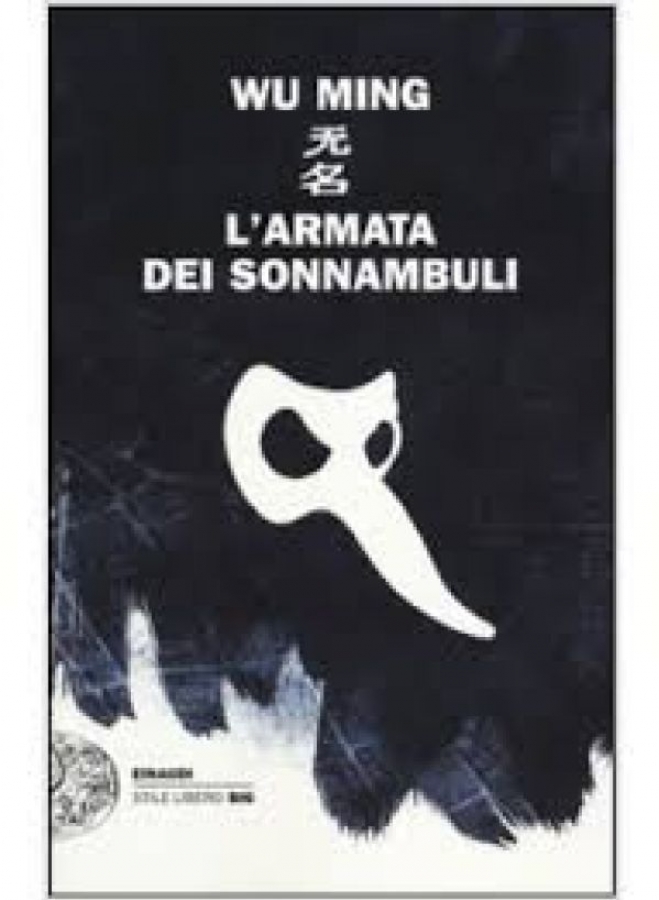
The Army of Sleepwalkers
The context is the French Revolution. > Revolution is like those decks of playing cards where kings, queens, and jacks are split down the middle, one right side up and the other upside down, head up and head down; you turn and spin the card, but not a damn thing changes, the king standing upright is forever tied to the inverted one, as if sneering mockingly at him, as if whispering from below: I am you headed for ruin! Enjoy it while you can, because the world turns upside down . In this whirl the people—call them the masses, class consciousness, or the «flea-ridden mob»—are the ones who believe in a new world, where they envision themselves as protagonists only to find themselves used by power, like a collective sleepwalker. The revolution, in short, is a «Grand Parody». To recount it, the authors trace four narrative threads, initially distinct and ultimately brought together into one. The first consists of the story of Marie, a woman of the > famished and shit-smeared people, yet standing tall, bloodthirsty, an enormous dragon of fremendous beauty . In this way, the authors are able to speak of the sans-culottes and, at the same time, of the role played by women in the French Revolution: a role often overlooked, yet vital to that great upheaval and to the history of female emancipation. It was the first time women’s rights were clearly articulated. To give voice to the people and their protagonists, the authors invent a language, displaying creativity and great literary mastery. The writing is a blend of Bolognese dialectal forms and syntactic and linguistic structures that evoke the style of Beppe Fenoglio. It is without doubt the most captivating and least predictable part of the novel. The second narrative strand follows the fortunes of an Italian *commedia dellʼarte* actor: Leo, who realizes that during the revolution, the real theater is reality itself. > How would it have been possible to return to reciting an old script within the confines of a hall, when theater had become history beneath the sky of France? . And indeed, Leo becomes «both actor and spectator at once», transforming into Scaramouche, an avenger and fighter for freedom. The third thread deals with animal magnetism, a scientific theory and practice widespread in the eighteenth century. It posits that there is a universal fluid coursing through all living beings. Harnessing it would allow one to cure illnesses and ailments, working for the good. Yet can magnetism be used to pursue evil? To subjugate other men, turning them into automatons, a sort of «army of sleepwalkers»? This is what the novel’s third protagonist, Dr. DʼAmblanc, discovers. Like all scientists, he «seeks not justice, but the confirmation of a hypothesis», and this leads him to sacrifice the life of a boy under his care, merely to verify whether magnetism could be employed for sinister ends. Finally, there is the section most deeply steeped in philosophical and psychoanalytic references: the asylum, the upside-down world par excellence. > The ward of the insane was a parody of a city district... everything that happens in here is a parody of the world out there... in short order, passing from mouth to mouth, news transmuted into wild rumors, as the alienated enriched them with their anxieties and bent them to the tortuousness of their indecipherable codes... studying the delirium of those who live openly in the Grand Parody can help us understand those who, seemingly saner, sink into it without being aware of it . In the development of its four narrative lines, the novel proceeds slowly and tortuously. It is demanding yet stimulating, rich in compelling scenes and food for thought. At a certain point, the narrative accelerates, turning into adventure, plot twists, and sudden shifts in direction. It becomes an easier read, but grows predictable, assimilating into the many modern novels that mix suspense with the paranormal. It falls to the reader to discover the unexpected conclusion. We can only say that power is overcome by humanity at its most fragile: a woman by now resigned to squalor and alcoholism. Yet the people advance; will they ultimately emerge victorious? It is a major historical novel, well documented, capable of recounting an epochal episode of our history in an engaging manner. The idea of telling the French Revolution from multiple perspectives is not merely an effective literary device. It makes it possible to address universal and contemporary themes, such as: the question of how far the people are a mob and how far a conscious force for transformation; the relations between men and women which, even in a time of great upheaval, are swiftly reined back into the former’s dominance over the latter; science as progress for the good of humanity and as an instrument of oppression; madness as the laying bare of the paradoxes of normalcy; political and social struggle transformed into performance, into theater. The novel’s limitation lies in its characters: the realm of feelings and interpersonal relationships is lacking, with the result that the protagonists turn out to be stereotypes, emblematic figures of a philosophy of history rather than living, autonomous characters. The creativity, which shines through above all in the prose, is placed at the service of an intellectualist approach. Why read it? A superb historical novel, a reflection on the contemporary world, captivating prose. It reads very well.