Finished reading on: September 16, 2024
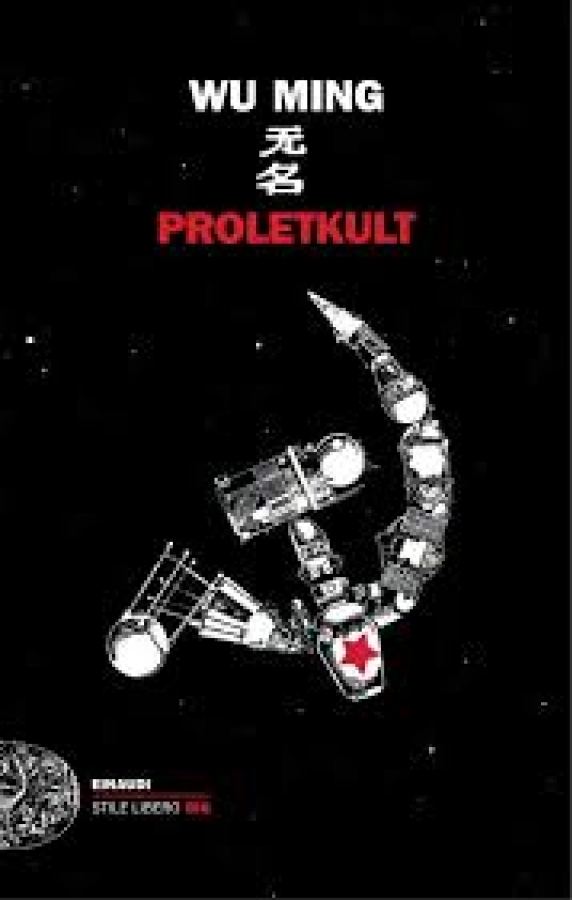
Proletkult
AI Translation Notice: This review was translated from the original Italian using artificial intelligence. Book quotes and excerpts are translated interpretations and will not match the author's original English phrasing or official published translations.
In 1906, Aleksandr Bogdanov, the pseudonym of Bolshevik revolutionary Aleksandr Malinovsky, wrote Red Star, a science-fiction novel in which real socialism had been fully realized on the planet Mars. With exceptional prophetic insight, he imagines that the new society modeled on Marxist utopia had not proved immune to imperialism, seeking to colonize Earth after exterminating its population. Leonid, the protagonist of Red Star, opposes the project and is banished to Earth as punishment, ending up in an asylum. The Wu Ming collective envisions a possible sequel. Denni, Leonid’s frail daughter, descends to Earth to search for her father and goes straight to Bogdanov, who, besides being a writer, is a philosopher and a scientist. The man finds himself facing a
strange girl who looks like a boy. Impeccably white, perfect teeth. Very small, well-shaped ears. Pale, perhaps overly so. The year is 1927, and Bogdanov has shut himself away in his clinic, wanting no further involvement in perilous affairs amid the first Stalinist purges. He takes refuge behind fiction: drawing on the hallucinations of poor Leonid, he invented a science-fiction story, setting it on Mars because it is the Red Planet. From here, the novel could take any number of directions: a nostalgically ideological work about an utopia—the communist one—that can only be built on another planet; Denni's search for her father across an Earth ravaged by wars, repression, and famine; Bogdanov's realization that Leonid was not mad and that his book mirrored an actual society. This last path would have been the most compelling, leading toward the unsettling visions of Philip K. Dick. Instead, Wu Ming wander between historical digressions and a tenuous plot, unsupported by narrative twists or vivid depictions of settings and characters. It is regrettable that in 2018 these talented writers remain entangled in the disappointments of an unrealized world revolution, spellbound by figures that have vanished after a century of history.
The Wu Ming collective consists of five writers: often they succeed in blending their voices, producing a narrative that is cohesive from both a historical and literary standpoint (see the review of L'Armata dei Sonnambuli on this site). Here, the operation falls flat, perhaps because the events and characters are emotionally and politically too close to us compared to those depicted in L'Armata dei Sonnambuli, a tale set during the French Revolution. The novel's sole virtue is that it prompts us to read Red Star.
Why not read it? Boring.