The Family of Pascual Duarte
Cela's long tale is a pervasive novel, fearsome and pitiful at the same time; one might wish to see it as a fresco of an ancestral peasant society dominated by violence, or consider it "a clear vision of man's vulnerability," as stated in the motivation for the Nobel Prize awarded to the Spanish writer in 1989. In reality, Pascual Duarte is not a victim; he is, quite simply, a murderer: > blood seems to be the relish to the bread of your life , Lola, his first wife, tells him, confessing that she has a lover. To be sure, in the long letter written in prison prior to his execution, Pascual attempts to demonstrate how he was dragged along by destiny; in the long, rambling account of how he came to murder three people (his sister's lover, his mother, and Don González, > distinguished patrician to whom he mischievously dedicates this confession of sorts), sentences recur such as: I tried to postpone > the collision that was bound to happen nonetheless, fatal as diseases and fires, as sunsets and death, because nothing could prevent it. or: > had my condition as a man allowed me to forgive, I would have forgiven, but the world is made as it is made and wanting to go against the current is not possible. After being released from prison, where he was serving the sentence for his first crime, Pascual goes so far as to accuse the leniency of the law of having dragged him > toward a worse evil. Better it would have been to stay in prison! Mad impostor or fragile soul, shaped by an unhappy childhood, by the agony > of not being able to escape evil while within us rots this charnel house of hopes stillborn.... If we take as true what Pascual tells us, we must lean toward his innocence, not before the law, but before Divine Justice: a brutal father, > tall and massive as a boulder , a mother, > tall and thin, (...) skittish and violent ; both devoid of any moral principle and of any restraint on their instincts; and then, a simpleton brother and a sister who soon abandons the home to become a prostitute; and what of Lola, who insults him, telling him he was no man, he was just like his simpleton brother. There are the dead children, one due to a restless mare and the other to the freezing wind of Castile. Pascual harbors within himself a hatred that relentlessly erupts into a bloodthirsty fury; a monster from which it is useless to escape. > I began to run; and the shadow ran too. I stopped; and the shadow stopped as well. I raised my eyes to the firmament: there was not a single cloud across its entire arc. The shadow continued to accompany me, step by step, all the way home...(...) I would have liked to put the earth between my shadow and myself, between my name and myself, between my blood and myself, this self from which, were one to strip away the shadow and the memory, the name and the blood, so little would remain.... In the Hindu conception, every individual has their own "karma," a kind of supra-temporality of being that upon death does not follow the fate of the body but passes from one life form to another in the eternal cycle of rebirths. Pascual's karma is a bloodthirsty inclination; this is the shadow that pursues him. Pushing the interpretation, one might say that underlying the narrative lies a metaphysical vision, a timeless pessimism regarding humanity. If we bring this condition into the present, if we think of the genocide in Gaza, the massacres in Ukraine, the countless conflicts across the world, Pascual's story does not remain confined to his personal tragic plight, but constitutes a kind of apocalyptic prophecy for all of humankind. As Sebastiano Vassalli writes in *3012: The Year of the Prophet* (see the review on this site), men > began slitting each other's throats with such enthusiasm that no natural or supernatural force could have stopped them. (...) Amen . Built around a clever literary device—a kind of rambling confession rediscovered by a mere transcriber—the novel possesses a seemingly disorganized plot, owing to the flow of overlapping memories and the lengthy interruptions in writing by the imprisoned Pascual; in truth, the narrative is handled exceedingly well, suffering, perhaps, from a lack of plot twists, if one excludes the dramatic murder of his mother. I do not know whether it is deliberate or an oversight: nowhere is the assassination of Don González recounted. The writing is effective, alternating tight dialogues with expansive, evocative descriptions of the settings and deep insights into the protagonist-narrator's state of mind. The other characters are supporting players. Why read it? It is a punch to the gut.
Family dancing
The central theme of the story is the family, viewed by Leavitt as a closed, central nucleus in which relationships among members are vitiated by convictions and hypocrisies. A family reunion is organized, serving, however, as an occasion for each to expect roles and behaviors from the other that often bear no relation to the individual’s true desires. Not even the discovery of one of the family members’ homosexuality manages to break this pattern, as the gay condition is subsumed within the roles and rules of the bourgeois family. David Leavitt has often been regarded as the writer of homosexuality. In truth, he is the chronicler of the bourgeois family in an open society, which accepts anything provided it is reabsorbed into established frameworks. The elegant and effective prose cannot conceal the passage of time on this story, now dated against the neoconservative wave that has restored to homosexuality its status as an otherness and a threat to the family. Why not read it? Because it is predictable and stale.
Fyodor M. Dostoevsky
The essay is a brief biography of Dostoevsky, accompanied by an in-depth examination of a series of events, figures, and literary works that had a significant impact on the writer’s life. It is a «sort of study guide» that can serve anyone needing to study the author and gain a general framework of the relationships between his life, context, and literary output.
The Ferocity
The book won the 2015 Strega Prize and was framed by many reviews as a sort of Italian-style *Buddenbrooks*: one would expect a fine novel with a pronounced social dimension. Nothing of the sort. It is a dreadful novel, poorly written, intimist-existential, reflecting a perception of reality typical of the 1990s. Bored by the plot, disgusted by the narrative style, I stopped reading at page 237 and can therefore recount the plot only up to a certain point. It begins with the suicide of Clara, the spoiled and eccentric scion of a social-climbing entrepreneurial family from Bari: a scheming and greedy father, a typical Southern building contractor; an absentee mother, placidly satisfied with the affluence they have achieved, and three siblings; an established physician, a twenty-year-old well on her way to becoming just as spoiled as her sister, and Michele, the son of one of the father’s mistresses who died during childbirth. The bond between Clara and Michele is particularly intense, owing also to the young man’s fragility, who finds in his sister—so self-assured—a pillar of support and perhaps an object of love. The novel seeks above all to delve into this relationship, doing so through constant temporal leaps, from the present (Clara dead) to the past, with the young suicide victim still cast as a vivacious girl with an unbridled sex life. Revolving around Clara and Michele, across these different temporal dimensions, are the other family members, all seemingly indifferent to the terrible tragedy that has occurred or to the increasingly morbid nature of the relationship between the two youths. Perhaps because > we are not ourselves, (...) we are driven by forces of which we are unaware, we act without knowing why, we say things whose motive is unknown, crimes without guilt and deaths without apparent cause . Our lives repeat themselves according to the cycle of the seasons, with an inevitability we would like to attribute solely to nature, yet which belongs to us as well. > Startled by the motorbike, the lizard plunged into the blades of grass. It vanished among the branches, tearing in its flight the web of the jumping spider, which, having reassembled the image of the reptile through its eight eyes, had managed to avoid the impact. The spider scurried. The dry, parched ground registered the information, superimposing it onto the alphabet of ants crossing paths, breaking, bifurcating, and then recombining a line that was never the same. The law they obeyed shifted within them, confirming itself in the law of every kindred creature; it received fresh impulses from the depths of the anthill, and further still, from the tremendous force that changes the face of the seasons . It is certainly neither a social novel nor a psychological tale aiming to probe feelings and motivations. The author operates on a metaphysical plane, rooted in the deeply southern conviction of the immutability of the human being and of the socio-political context. Hence, perhaps, the title: *La Ferocia*. Still, a narrative rhythm could have been provided! An intelligible plot! What worsens the literary outcome is the minimalist imprint, reflected in an exaggerated reliance on full stops and the near-total absence of semicolons and colons. In this manner, it is difficult not to splinter the prose, rendering it ponderous and unintelligible. An example: > Michele returned to his room. He made to lie down on the bed. He stopped. From right to left. The nightstand. The wardrobe. He looked around with a worried expression. The half-open window. His heartbeat quickened. Stay calm. She can’t have jumped out of the window already. He sat down on the edge of the bed. And so on and so forth; now one understands why I gave up reading. Why not read it? It is a bad, boring, and dated novel.
The Feast of the Goat
What are the mechanisms that uphold a dictatorship? Vargas Llosa sets out from history, from real protagonists and events, to investigate the dark allure of the despot, and he does so starting from a cruel character in whom the peculiarities of tyranny have been distilled, stripped of the smokescreen of ideologies and good manners. We read from the Treccani Encyclopedia that Trujillo ruled the Dominican Republic from 1930 to 1961 > through dictatorial methods until his death, thanks to his control over the armed forces, that exercised (directly or through members of his family) over the national economy, and the systematic resort to terrorist methods against his opponents ; and, I would add, through the backing of the United States and the Church, who saw him as a bulwark against communism. We are in the final phase: the regime’s atrocities have driven the United States and the Church to abandon Trujillo, strangling the small country with sanctions and isolating the dictator internationally. There are three narrative strands, running in parallel and later intertwining, always circling the baneful figure of Trujillo. Urania, a successful young woman living in New York, returns to Santo Domingo to visit her aging father, confined to bed in an almost vegetative state. For many pages we do not comprehend so much rancor toward her father; we only know that Urania > had not managed to overcome the insurmountable revulsion, the disgust men inspired in her... you had never wanted to get treatment . In the second narrative strand, the setting is where Trujillo will be assassinated and where the conspirators anxiously wait (first called executioners, then patriots): they are a heterogeneous group of figures, driven by revenge or by revulsion toward a cruel regime; they were once beneficiaries of the dictator and remain bound to him by a love-hate relationship: a > paralysis, the numbing of the will, of reason and free will that that contemptible character—dapper to the point of ridicule, with his fluting little voice and hypnotist's eyes—exercised over Dominicans, rich or poor, learned or unlettered, friends or foes . His assassination is a catharsis, a deliverance from a tragic spell, rather than a political act. And finally, we find ourselves before Trujillo and his court: the depraved, sadistic sons, the greedy and thousand-times-betrayed wife, the puppet president, the police chief—the perpetrator of the most heinous tortures and crimes—the cunning pettifogger, and many others. All live in perpetual dread: it is the Chief’s habit to dismiss them, expropriate their wealth, cast them into prison, have them killed, on a mere whim, to assert his power over life and death. And they submit; if they fall from grace, they yearn to return to the tyrant's good graces, ready for anything, like Urania's father, formerly an esteemed senate president and then cast aside without explanation. The country is falling apart, inflation and poverty run rampant, the regime is fracturing, yet just hours before his assassination, Trujillo is concerned with only one thing: he is unable to use "the part of the body I will not name" (Patrizia Valduga *La tentazione*). The narrative unfolds slowly, at times verbosely, until one reaches several splendid chapters, for which alone the book is worth reading. The conspiracy hinges on the commander of the Armed Forces, who was supposed to intervene swiftly and decisively upon news of Trujillo's death. Instead, he stalls, temporizes, > plunged into that kind of hypnosis, he thought that perhaps his indolence was due to the fact that, although the Chief's body was dead, his soul, his spirit, or whatever it was called, continued to hold him in thrall . And like the conspirators of July 25, 1943, when the Grand Council of Fascism effectively ousted Mussolini, our conspirator slips into the quicksand of torment. Next, we follow the puppet president in his seizure of power, > a defenseless little man who wrote verses and seemed of so little consequence in this world of real men with pistols and submachine guns , and, allowing for the obvious differences, the mind turns to Dino Grandi or to Pietro Badoglio himself, accomplices to the Fascist dictatorship yet ultimately its gravediggers. And finally, in the last and dramatic chapter, we understand the depth of Urania's bitterness. While still a young girl, her father sold her to the dictator simply to regain the Chief’s favor. And he, > taking her by the arm, threw her down beside him. (...) That mass of flesh crushed her, suffocated her against the mattress. (...) But the suffocation did not prevent her from feeling the roughness of that hand, of those fingers exploring, groping, and forcing their way into her . Many words can be used to describe a tyranny, yet it is epitomized in its most ancestral and brutal manifestation: rape. I am not aware whether there exists a great novel on the Fascist dictatorship capable of probing the dark fascination of tyranny as Vargas Llosa has done. Were such a narrative to exist, it would bring out of the shadows the lavish court that surrounded the dictator: his double-breasted blackshirts, the illustrious heirs of the liberal class, the magniloquent and craven intellectuals—either naive or merely pandering—the cowardly, complaisant generals, and the many women whom Mussolini used and cast aside, or dragged with him to his death. If I were the ANPI, the National Association of Italian Partisans, I would entrust Vargas Llosa with the task of giving us such a fresco, to answer the question: > who was it? (...) Whose fault is it? And all those who died, poor souls? (...) I saw them die, it was all useless... he felt like foolishly bursting into tears (Mario Tobino *Il clandestino*, see review on this site). Masterfully translated, the novel is nevertheless too long, and in particular the extensive reliance on dialogues—often soliloquies—burdens the narrative; it fails to enchant or nourish the imagination, remaining somewhat cold and detached. The writer stands at a distance from the reality of the Dominican Republic; he is a spectator to a drama, interested in investigating the mechanisms of cruelty and dominion without allowing himself to become involved, driven instead by a barely concealed irony. This approach prevents the reader from truly feeling the weight of the characters' dramatic and harrowing ordeals, the tragedy of a nation. Why read it? A profound inquiry into tyranny.
Sons and Fathers
The book comprises three novels spanning the entirety of the 1990s: *Luce del nord* from 1991, *Colpa di nessuno* from 1995, and *L’amico d’infanzia* from 1999, finished only a few months before the author’s death. All three novels revolve around a male protagonist, set against the backdrop of the Roman petite bourgeoisie and a Rome undergoing profound transformation. In *Luce del nord*, Angelo has long lived in New York, far from his family, his brother, and his mother. One day, he receives a letter from his brother, Ferruccio, who tells him of a strange dream: he is gravely wounded, and Angelo urges him to run away, to flee, as though he had faced grave danger. A few days after the dream, he learns that his brother has died. He thus decides to return to Rome, but pretends to be a friend of Angelo's, Cesare. The novel unfolds around this deception, which allows Angelo to infiltrate his brother’s life and grasp all its squalor, amid financial hardships, professional disappointments, and marital betrayals. Indeed, he becomes the lover of Ferruccio's wife, who despises Angelo yet learns to love Cesare. Angelo also reconnects with his father and grows attached to his brother’s son. The story seems to move toward a happy ending, when Angelo decides once more to flee and return to the United States, where, to gain acceptance, he begins inventing other stories anew. It is a novel of perpetual flight, wherein America represents a dream of freedom and individualism. In *Colpa di nessuno*, perhaps the most socially conscious novel of the three, the point of departure is the protagonist's need—a squalid door-to-door insurance salesman—to pick up the threads of his life: > it is time to take down the streamers, gather the paper ribbons and carnival masks, and throw everything into the basket of past celebrations . Paolo, the protagonist, meets Laura in the United States, and once she becomes pregnant, they marry and return together to Italy. To make a living, Paolo takes a job as a salesman for Italo, his father-in-law. He thus enters his wife’s family, comprised of his mother-in-law Ida, a greedy and dismal woman; Laura’s sister, Silvana; and her husband, Daniele, a violent, right-wing man. Paolo leads a squalid existence in which his marriage progressively falls apart, to the point where, one day, he discovers that his wife is cheating on him. The embrace of fatuous, crude, and vulgar values brings about Paolo's steady decline, which is repeatedly underscored by his father, a man of another generation. There is no real conflict between son and father, as the title given to this collection of novels might suggest; political, social, and intergenerational conflicts have vanished, replaced by resignation and individualism. In reality, all the characters suffer, in one way or another, from the crisis of Italian society in the 1990s, and it is precisely this theme of the decay of relationships and values that appears to define the novel. An old man he meets urges him to always remain alone. > Already now, friendship and solidarity are called complicity and omertà. Never trust anyone, never give in. It is no longer time to be together. You must never have to say we; that would already be a sign of yielding And then the author inserts an intensely evocative autobiographical note > When I was little, I believed the world was a kind of carousel made solely to amuse me. But now what dragon’s mouth have I wandered into, what sort of figures are these before me that no longer amuse me, two-bit little monsters, capable of everything and of nothing? . A crime—the murder of Italo, of which everyone believes Paolo to be guilty—becomes the cathartic element that opens the protagonist's eyes. Paolo realizes the sterility and squalor of his life, of this acquired family that drags greed and violence in its wake, as well as the malice of his wife, Laura. The novel concludes with a cry of despair and hatred. > When I think of the future, Laura, I imagine it as a vast, crowded square, where people scream and laugh. There will be men and women from all corners of the world, in clothes bought in New York, Rome, Sarajevo, Jerusalem, and Mogadishu. People of all races and origins, crossing paths and contaminating each other with history. Each with the other's story, infected with the world. Only the two of us will not be there, Laura. We, with our tangled feelings, were unable to give anything to the present, so let alone to the future. We are two specks of spit from the past that somehow ended up here. But our son, yes, he will be there. I hope he crosses the entire square, and that a roar laden with hatred accompanies him always and never leaves him, that he feeds and grows on all their malice. I will leave him to corrode them with their own teeth . *L’amico d’infanzia* is the most intense and profound novel of the three, almost premonitory of approaching death. Fausto's story is narrated by his journalist friend. It is the story of a failure. The two had been friends since childhood in a neighborhood on the outskirts of Rome and later drifted apart: Fausto began scraping a living through odd jobs, eventually ending up as a real estate salesman for a company that buys public housing on the cheap to flip it at higher prices, evicting the tenants. It is a squalid job that Fausto accepted to scrape together money so that his son, who lives far away with his mother in Milan, could study abroad. The story takes a tragic turn when Fausto, in a fit of rage, bludgeons his boss to death after being denied a loan. What follows is Fausto’s descent into hell: he lives as a vagrant, hunted by the police, yet precisely at the height of his despair he finds solidarity and help among the destitute. In the end, in a moment of lucid madness, he blows up the real estate company’s offices and is fatally wounded. Fausto's story overwhelms his friend as well, leaving him drained of energy. The narrator-friend acknowledges that “there was not the wretchedness of a single seed in the great tornado that shattered our lives,” leaving behind only vast misery and extreme existential pain. The novel ends with a profound reflection on life and death. Confronted with Fausto's death, the narrator remains bewildered by the thought > that in reality we like and hate one another solely based on the contingency of a moment and closes the novel with this stanza: “but we were born to be here / and for a while we managed / and it is this that our dry / mouths now want to sing.” Reviews emphasize above all the social hallmarks of the three novels: the 1990s, the urban and cultural decay of Italy. In truth, it seems to me that the three novels (and especially the last one) revolve around existential despair and the search, often disillusioned, for hope. The very setting of the final novel, the decay of the Roman periphery, drifts gradually toward a surreal context where everything is possible, even the most incredible occurrences: an elephant strolling through the streets of Rome, a hooded crow colonizing the city to forage, a child learning to play soccer in an empty stadium, a new life represented by the child expected by Elena, the great love of Fausto's life, the solidarity of the victim's own wife, the school principal who has become a hermit on the outskirts of Rome—all of these demonstrate that within the underbelly of urban life there still exist positive energies capable of transforming such a degraded reality.
Daughters of a New Era
Rudi, the naive and dreamy husband of Kathe, one of the protagonists, encapsulates the novel's overall meaning in a poem: > against the light I saw/that the bridge has fallen/and the faint light/I have now lost/and I surrender myself/to the current that carries me . Four young women are lifelong friends; they fall in love, marry, some of them become mothers, are widowed or divorced—in short, they lead an apparently normal life in Germany between 1919 and 1945. They live through the economic and social crisis of the post-WWI era, hyperinflation, the political turmoil of the Weimar Republic (with the suppression of the Communists by the Social Democrats), the rise of Nazism, racial purity laws (with the reporting of infants born with deformities), the gradual yet inexorable marginalization of the Jews leading up to the Shoah, and the catastrophe of the Second World War. How is it possible to lead a normal life in the face of such dramatic events? > But what was left to do now, if not retreat into the private sphere? The world was no longer an enchanting place . (thinks Bunge, the spendthrift father of Ida, another protagonist). And indeed, the novel develops the stories of Henny, Kathe, Lina, and Ida from a deeply intimist perspective, only superficially grazed by the horrific events that affected the German people. Henny and Kathe have been friends since childhood and mutually decide to pursue careers as midwives, bringing children into the world precisely when one knows not what to expect from the future (a metaphor?). While Henny pursues the idea of family, Kathe makes different choices. The former marries young after becoming pregnant, has a daughter, loses her husband, and marries another, with whom she has another child, only to discover that her second husband was an informant for the Nazis; Kathe does not want children, is a communist, and urges her husband to become politically active, thereby upending both their lives. Ida, on the other hand, was born and raised in luxury; her father, on the brink of bankruptcy, marries her off to a wealthy and powerful banker, condemning her to unhappiness that is only partially redeemed by a long love affair with a handsome Chinese man. Lina soon discovers she is a lesbian and moves in with her partner, in a situation that grows increasingly precarious because homosexuality is condemned by the Nazi regime. There are many other characters, but even from this brief overview of the protagonists one can deduce the fragility of the entire narrative. It is true that war intrudes upon peace and that people strive to the very end to live in indifference; one does not expect *War and Peace*, but one might have expected a plot and character analysis capable of capturing the deep wounds of the human soul when confronted with danger and horror. Peace awaiting war creates a kind of suspension, and people cling desperately to the private sphere, to pale sentiments, customs, friendships, and familial affection. Two splendid novels immediately come to mind: Alba de Céspedes's *There's No Turning Back*, with its young women secluded yet sheltered within a boarding school, and *The Makioka Sisters* by the Japanese writer Tanizaki, a work in which the minute depiction of a 1930s Japanese family serves as a critique of inert familism and, at the same time, of aggressive, warmongering imperialism, so distant from the common sentiment of the people. There is none of this in our novel, so much so that Germany's dramatic events seem merely an excuse to inject some vigor into a plot that would be far too flat and mundane if set in a context of normalcy. It is the beginning of a trilogy, which we leave to other readers. The narrative structure and the writing also warrant a negative verdict. The four young women's stories are developed in parallel through brief paragraphs within a chronological chapter framework. Consequently, the narrative is muddled, making it difficult for the reader to grasp the overarching story, and the plot ultimately proves verbose and repetitive. Too many characters contribute to compromising overall clarity. The writing, in turn, is flat, reliant on short sentences and dialogue; descriptions of the setting (Hamburg) and the social and political context are sorely lacking. Why avoid reading it? Pointless, poorly written, and distasteful, considering what happened in Germany between the two wars.
The Son of the Red Corsair
The Son of the Red Corsair > was a handsome young man, (...) of exceedingly elegant form that bespoke the great lord, with jet-black, fiery eyes, a black moustache, and very pale skin . One would expect a new Black Corsair. Yet such is not the case: first, because the son of the Red Corsair frequently distances himself from the pirates, even paying them out of his own pocket to prevent them from sacking conquered cities—confirming a notion widespread among the buccaneers, namely that the counts of Ventimiglia (the Black, Red, and Green Corsairs) were always “amateur corsairs”; second, because the son of the Red Corsair does not seek revenge, but merely wishes to find his sister, even though she is held by the Marquis of Montelimar, the very man who killed the Red Corsair and now keeps his daughter captive. The relentless hatred of the Black Corsair is missing. And this is why the exploits of the son of the Red Corsair lack the tension of the great novels of the Caribbean cycle: *The Black Corsair*, *The Queen of the Caribbean*, *Jolanda, the Daughter of the Black Corsair*. The classic ingredients of Salgari’s narrative structure are all present: the duels, the equatorial rainforest, the naval battles, the sieges of Spanish fortresses. What is missing is the sense of these adventures, the anticipation of something dark and brooding—the true source of the author’s astonishing narrative rhythm. The book’s peculiarity lies elsewhere. In Salgari, we invariably find sidekicks flanking the protagonist, often helping to humanize him and introduce elements of levity. Here, the system is inverted: the son of the Red Corsair remains in the background, while ostensibly supporting figures take center stage. The first part of the novel takes place on the island of Santo Domingo. Our heroes are pursued by the Spanish and by “exceedingly ferocious” hounds. The setting is at once terrifying and wondrous: thickets of vegetation, marshes, and deadly quicksands alternate with islets, boasting > splendid clumps of rhododendrons, over ten meters high, (...) clusters of purple flowers, (...) magnificent palms crowned by parasols of immensely long palmate leaves, cascading elegantly with spathes of an iridescent violet edged in purple, and clusters of fruit that resembled green apples . In this unreal nature, described with a few grammatical lapses (*parasole* being an invariable noun), the son of the Red Corsair comes across a buccaneer who appears quite savage. He lives by hunting and inhabits a > wretched dwelling made of crudely woven branches and a few poles . Aided by wine and conversation with a European gentleman, the buccaneer reveals, “with dilated eyes, his face bathed in sweat,” his terrible secret: > I must drown distant memories! Ah, the sad fate that has struck me down! (...) Well, such is this terrible life, if one falls prey to an evil genius . Thus we learn that the buccaneer was a nobleman of France, who dishonored his ancestors’ coat of arms and fled to America. Can the Count of Ventimiglia restore him to his former rank? It is no longer possible, > everything is past, everything has been forgotten. I killed two wild pigs, down there on the edge of the marshes... that is my trade. The buccaneer leads the son of the Red Corsair to safety, who then discovers that his sister has been taken to Panama. We move on to the wealthy Spanish cities of Central America’s western coast. The chases, clashes, and sieges are repetitive, almost formulaic. An exception is the duel between the son of the Red Corsair and a hitman, a skilled swordsman hired to kill the Count of Ventimiglia. Deluded fool! The bandit “crouched down completely, almost curling into a ball.” It was his secret move: the hundred-pistole strike. The count’s sword caught him in the throat, sinking in several centimeters. > He stood almost upright for a moment, arms outstretched, then tumbled heavily into the sands, murmuring: I am finished . In this section of the novel as well, the real protagonist is a supporting character: a Gascon—a drunkard, a chatterbox, always ready to throw punches, yet capable of resolving the direst predicaments through his cunning and brazen audacity. The band of buccaneers is on the verge of being captured by the Spanish in the city of Panama. Whereupon the Gascon, instead of fleeing, steps forward and tells the guards he was there to serenade his > splendid Catalan girl, you know, with two eyes that sparkle like stars and... a sweet little mouth, my dear sirs, enough to turn the head even of the Lord President of the Royal Audiencia . On another occasion, he poses as a Castilian nobleman, the Count of Alcalá, laden with titles and names, and even manages to obtain horses, provisions, and muskets—naturally, to make his escape. It is one of the rare instances where Salgari departs from adventurous, imaginative, or shadowy storytelling to invent an amusing, witty character, a sort of Harlequin. The story naturally has a happy ending, yet a feeble and hurried one. Despite not knowing him, the sister, still a young girl, embraces her brother and flees with him. Yet she had never seen him before! She feels the pull of the blood tie: a somewhat shallow explanation. Even more so is another fact: once the son of the Red Corsair is captured, it is the Marquis of Montelimar himself who leads him to his sister. A true gentleman! What remains of the gloomy saga of *The Black Corsair*? Very little, merely the trappings! By the end of this lengthy novel, Salgari seems more preoccupied with convincing the reader that what he recounts is true, not invented, than with lending rhythm to the tale. The entire narrative frays; the author himself realizes he has dragged it out too far and for too long. Why skip it? It is dull, and that is surprising for Salgari.
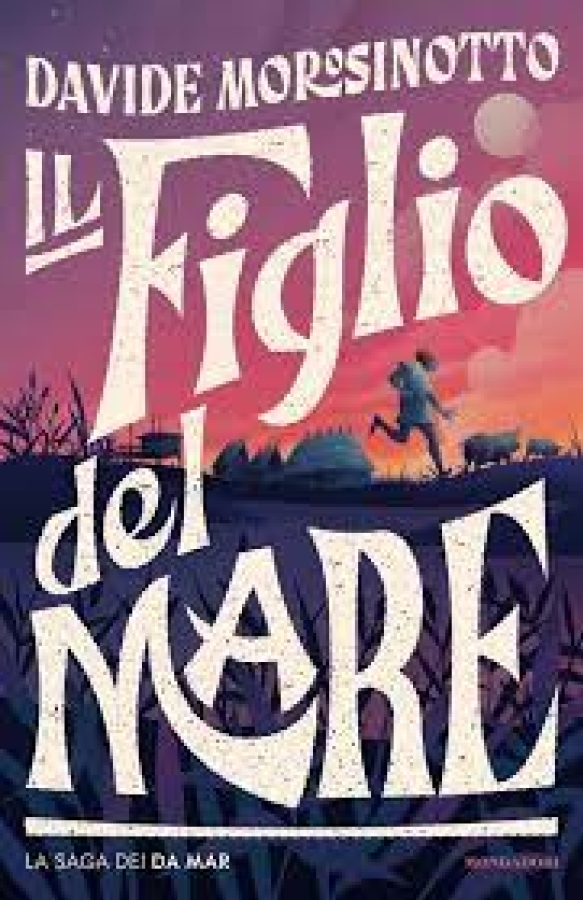
The Son of the Sea
Let us imagine that in a world—our own—imprisoned in a crystallized social structure, an extraordinary event occurs, upending established arrangements and enabling the destitute to climb the social ladder. Perhaps a revolution is possible only in the wake of a war or a natural disaster. With a tenuous narrative, this novel introduces the theme of change, setting it in an era far removed from our own: 452 AD, when the Huns invaded Italy. We find ourselves in Atesis, modern-day Este, a town then lapped by the Adige River, which shifted its course in 589 following a catastrophic flood. It is a sluggish town, dominated by a powerful Roman family and local notables, the so-called *curiales*. Pietro is a strapping, red-haired lad who works as a swineherd; a hulking fourteen-year-old, timid, withdrawn, illiterate, born of a single night of passion between his mother and a barbarian "who came from the sea, from the lands that lie beyond the great water." Having foolishly humored the curiosity of Giustina, the master's pretty, restless daughter, Pietro earns himself a sound thrashing—just punishment for daring to speak to the girl: a swineherd you are and a swineherd you shall remain; better to consort with the buxom Galla, a commoner like yourself! Everything changes with the arrival of the Huns, received with dread as ferocious, invincible warriors: > they appeared very tall and robust, with compact physiques (...), their steeds had foam frothing at their mouths and eyes full of madness . In reality, toward Pietro and Giustina, who find themselves held captive together, they do not behave as abominably as one might expect: they spare their lives and allow them to return home, where Pietro will fight valiantly in the epic, futile battle to save Atesis. The town is sacked, the countryside is overrun by barbarians and bandits, food and shelter are gone; there is nothing left to do but flee and seek refuge in the lagoons, where the Huns dare not venture for fear of pestilence. They set out on a perilous journey, alone, brutalized by fear and starvation: two teenage boys, Pietro and Tito; a girl accustomed to the comforts and protections of an affluent household, Giustina; and an old black mare. There is little point in following them across the plains and canals leading to the Venetian lagoons: the narrative is trite; it foreshadows *The Adventures of Tom Sawyer* without possessing any of its pace or suspense, gradually devolving into a cloying tale, rife with implausibilities, and thoroughly detached from its historical and natural setting. "There is no journey longer than the one that brings you home," the author declares in the Acknowledgments. After numerous novels set around the globe, Morosinotto turns his attention to his native soil, embarking on a saga that presumably intends to trace the fortunes of Pietro and Giustina—and their heirs?—in the founding of the future, magnificent Venice. Well, he might have applied greater care, rather than relying on timeless adolescent clichés (are we so certain that teenagers in 500 AD were just like our own?) and striving instead to cultivate an atmosphere rooted in the marshy wetlands of the lagoons. One must grudgingly concede that war serves as an effective device for pacing: the defense of Atesis, with its skirmishes and plot twists, engages the reader, evoking an *Iliad* in miniature. The prose flows lightly and smoothly, free of rough edges: an agreeable read, yet one that contributes to the sense of hurried superficiality permeating the novel. I would highlight a stylistic idiosyncrasy: across nearly four hundred pages, the punctuation consists solely of periods and commas; there is only a single colon, and not a single semicolon. A display of virtuosity à la Cesare Pavese, a nod to the journalistic style so in vogue, or pandering to an adolescent readership presumed unaccustomed to articulate syntax? Why not read it? It is trite and dull.
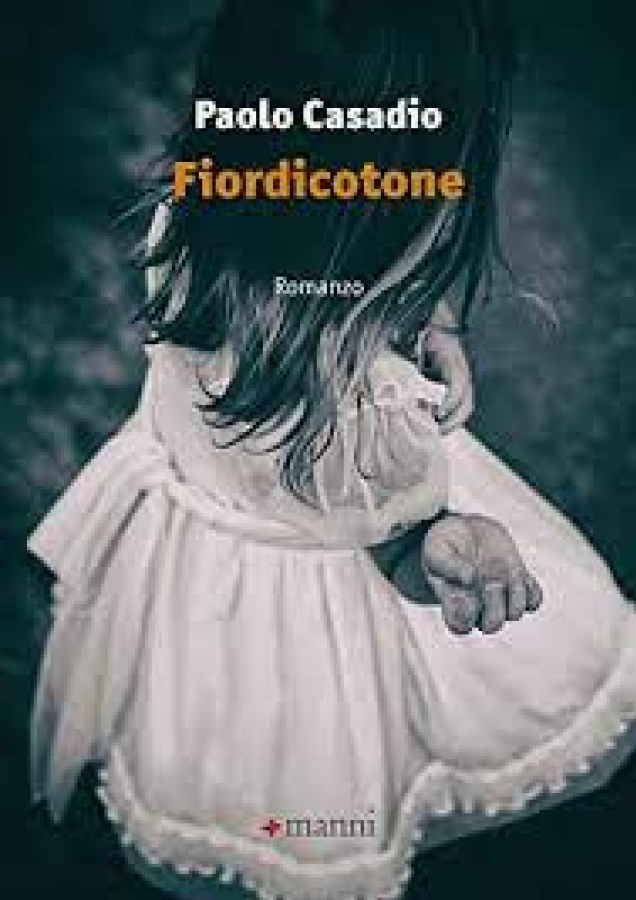
Cotton Flower
On December 15, 1943, the Jewish De Fano family was arrested and sent into internment: Omero, «the gentle bookbinder», the elementary school teacher Alma, her mother, and little Velia, the couple's daughter, an albino child nicknamed Fiordicotone. In the chaos of the roundup, the girl was hidden beneath a man's black cape, thereby surviving. Omero and the elderly mother were immediately put to death, while Alma was set aside for the SS officers for their sexual diversion. «Do whatever they ask of you, if only to save your life», her mother had told her, «naked among other stripped women». Yet if placing her body at the service of her tormentors had preserved her life, the experience had profoundly wounded her spirit. Looking into the mirror after the liberation, Alma > could not recognize herself. She had unbuttoned tunic and shirt and looked at herself. A perfect, desirable body. She saw herself colorless, her eyes worn out, her face faded and lifeless. In that body she once loved so much, she caught the sadness, the anguish of a solitude continuously abused . It was from this dual suffering, as an internee and as a prostitute, from the heaps of the dead and the humiliation endured ( > the sour taste in her mouth, on her skin the wretched, lingering scent of violence ) that there grew in Alma the perception that no afterwards existed, > for that hell was so bottomless and devoid of dignity as to leave no room for hope. Nothing was left. Only Fiordicotone. As is to be expected, the book recounts the search for the daughter: the initial shelter in Switzerland, the journey through a ruined Italy as far as Lugo, the discovery that the girl was no longer in the town, the struggles to learn where she was, and finally the encounter with Velia. An old blind woman's omen hung constantly over Alma: «You will find her, and when you have found her, you will return to the shadows». Like Alma, the reader too fails to understand the words, obscure as the oracles of the Sibyl. What does it mean to return to the shadows? We discover throughout the narrative that Alma cast no shadow; she was like a ghost, corporeal yet insubstantial, soulless. Alma «was the prisoner of a tattooed number», had no hope, and did not believe there was a future for her daughter. In tones perhaps overly melodramatic, yet keeping us suspended in anxious anticipation, the author carries us through to the conclusion. In an earlier novel (*Il bambino del treno*, reviewed on this site), Paolo Casadio took as his starting point a true event, set in a precise location: a small, now-abandoned station on the Faenza–Florence railway line. Both the setting and the historical episode provided a concrete anchor for the narrative; along with the elegant style, they contributed to the novel's success. In *Fiordicotone*, Casadio disperses his focus across too many themes, from the existential drama of the internees to the search for the daughter. The unifying thread is not so much the story or the protagonist, but an aura of death, of ghosts hovering from the past, running the risk of slipping into «fantasy» (one need only consider the image of the shadow, frankly overstated) or, more nobly, into the evanescent, abstract register of much of Mario Luzi's poetry. In attempting to say too much, the author neglects the setting of Lugo di Romagna, the characters, and in particular the reconstruction of the ambiguities, the craven compromises, and the petty, well-intentioned subterfuges of so many people who nevertheless acquiesced to the horrific aims of the Nazi regime: consider, for instance, the figure of the *maresciallo*. The frequent resort to full stops, with the resulting verbless sentences, fragments the narrative and undermines the elegance of the prose: a detrimental legacy of the prevailing journalistic style. Why read it? It reads very well and is interesting from a historical perspective.
Red Leaves
For William Faulkner, the short story is akin to poetry, "almost every word must be the right one"; and indeed, the narrative is dense, hermetic, rich in symbolism, and difficult to interpret. As in *Red Leaves*, the very choice of title raises numerous questions: what does it signify? For some commentators, the writer intended to refer to the cycle of the seasons, thereby emphasizing that what suffocates and destroys the Negro people is a natural destiny. The red leaves are said to express an existential, cosmic condition, as in Giuseppe Ungaretti’s poem addressed to the soldiers of the First World War: "Like leaves on trees in autumn." A great Indian chief has died; as tribal tradition dictates, those who served him in life (the dog, the horse, and his Negro slave) must follow him into the grave. Two Indians head to the slave quarters to retrieve the man. What disgusts them is the stench of the bodies, a revolting smell. The Negroes > seemed to be suspended as upon something remote, inscrutable. (...) They were like the roots of a great uptorn tree, the earth momentarily sheared away from the contorted, thick, fusty maze of its outraged and despairing life. From what the two men say, we learn that slavery is a burden, the fruit of the pure Indian people’s contamination by the white man. Born of a mixed marriage between an Indian and a white woman, the deceased himself had been to Europe and returned with several objects whose utility he did not understand; among them, a pair of red slippers; whenever his son tries to put them on, he falls into an unconscious state. What does this mean? Perhaps because > this world (...) is being ruined by white men. We got along fine for years and years, before the white men whooped us into using negroes. In the old days the old men sat in the shade and ate parched corn and venison slowly over the fire, and smoked and talked about honor and big things; and now what do we do? Contamination does not break the absurd ritual of death, as if to say that white, technological, and advanced society reinforces ancestral customs rather than evolving them toward civilized forms. It is mere corruption in an immobile society; it is not progress. Faulkner’s reflection does not concern only the American South, which, at least from what we know, seems trapped in nostalgia for the past; consider certain phenomena that strike us as inexplicable—femicide, infibulation, brutal exploitation—so widespread in our advanced Europe, despite proclaimed laws and values. Only individual acts of Resistance can overcome corruption and generate new visions and moral rules. Paradoxically, this is what the victim in our story does. The Negro, destined to follow his master into the grave, flees into the forest and, when captured, fights for life until the very end: he amputates an arm to survive the bite of a venomous snake; he accepts water on the brink of death. > It’s just that I didn't want to die, he said. Then he said again, it’s just that I didn’t want to die, in a quiet tone, of slow, faint wonderment, as if it were something which, until the words had formed themselves, he had not known, or not known the depth and measure of his desire . The death endured, without resignation yet with equanimity, bears witness to a moral strength absent in the story’s other characters, corrupted by white society while trapped in ancestral rituals. > The Negro was still about to step, his knee raised and bent, his head up as if he were looking into the teeth of a millrace. The pupils of his eyes were wild and cold, like a horse’s . Ralph Ellison, the first great African American writer, said that Faulkner > has actually explored the nature of man. (...) Faulkner, more than most men, was aware of human strength as well as man's weakness. He knew that understanding and overcoming fear was a large part of a writer's reason for being. Faulkner’s narrative is imbued with a strong ethical tension, a desperate quest for human goodness, for that which is deepest in the human being. He pursues this aim within his world, the American South, where everything in reality seems static and violent; yet what he narrates concerns us all; and quoting Ungaretti once again, one could say: "I seek an innocent country." At the center of his writing is the word, not the plot or the characters; and this is precisely its limitation, at least in the short stories: it is difficult to understand, it must be read too many times to grasp its manifold meanings, it demands too much imagination to interpret. Why not read it? It is difficult to interpret and, in fact, boring.

For whom the bell tolls
The novel is set in Spain during the Civil War and unfolds over the course of a few days. Jordan, an American, is dispatched behind enemy lines to blow up a bridge in support of an offensive by the Republican army. To carry out this mission, he makes contact with a band of guerrillas, among whom he meets Maria, with whom he falls in love. The group is led by Pablo, who clashes with Jordan, and Pilar, a fiercely strong and energetic woman. Despite internal friction, the group accomplishes the mission and Jordan destroys the bridge, but is killed during the escape. The novel’s true theme seems to be the futility of war, its inherent cruelty, manifested on both sides of the front. Powerfully tragic are the pages describing the capture of a town by Pablo’s band and the slaughter of the Fascists: one by one, they emerge from the church where they have been imprisoned and are forced to pass between the ranks of villagers and partisans, only to be hurled into a ravine. At first the crowd hesitates, but soon hatred and bloodshed take over. The same cruelty is pursued by the Fascists in the murder of a group of partisans who are decapitated. The anticipation of the final assault, the presence within the partisan group of a boy still very young who, shortly before dying, defends the integrity of a Communist party leader whose son has taken refuge in Russia, and the tragic impossibility of Jordan’s band to intervene and help represent magnificent moments in the novel that, more than any others, convey the cruelty of war. Yet war is not only cruel, it is also futile; moreover, it is senseless, and it always ends in death: > whether one is afraid or not, death is difficult to accept: there is no sweetness in its acceptance . The characters are caught in a machine whose futility and absurdity they grasp, yet from which they cannot break free. The destruction of the bridge is utterly pointless, as Franco’s army is aware of the Republican attack and possesses superior air power, thus making it highly probable that they will repel the offensive. Jordan tries to warn the Republican army commander, but bureaucracy, mistrust, and infighting prevent the message from arriving in time. And Jordan knows that «he will still have to destroy the bridge». Except for Pablo, who is a murderer, all the other characters are conscious of this cruelty: from old Anselmo, who does not want to kill yet finds himself forced to do so, to Jordan, who reads the letters of a slain soldier, making it starkly evident that he was a young man, with his own loved ones, likewise swept up in a senseless civil war. War overwhelms personal feelings as well. One must not dwell on loved ones or newly found love; the absurdity lies in Jordan, at the point of death and having had to leave Maria behind, deeming himself fortunate to have lived his final days with Maria’s love. Hemingway’s style is highly articulated, more effective in its descriptions than in its dialogue, which at times proves repetitive and tedious.
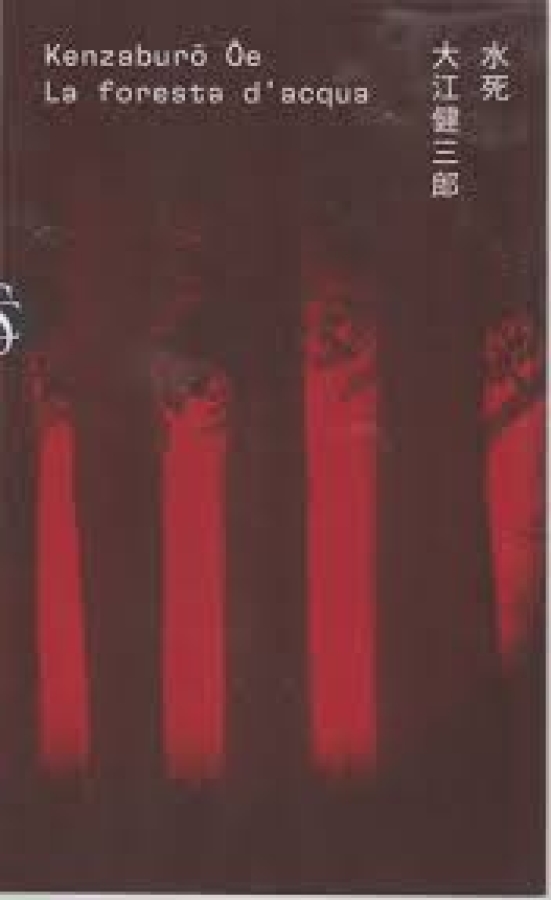
The Water Forest
A renowned septuagenarian writer, Choko Kogito, returns to his childhood home to examine the suitcase where documents said to reveal the reasons behind his father's suicide are supposedly hidden. We find ourselves in a forest on the banks of the waters where his father drowned on a stormy evening. Choko visits the memorial commissioned by his mother to commemorate the tragic event. > A large, rounded stone protruded from the bare earth, resembling a fragment of a meteorite. When I drew closer and tried to get a better look -- it also bore a likeness to a strange, sea-green cluster of vegetation -- I noticed that it carried an inscription of merely five lines. (...) > You did not prepare Kogii to climb into the forest/ And as though caught by the river's current you will never return./ In Tokyo during the dry season/ Memories surface in my mind in reverse/ From old age back to the years of childhood . The first two lines were written by his mother, urging Choko to prepare for death, but also to ready his son—her grandson, burdened with a severe disability—for the end of life. This is an initial leitmotif running through the entire novel: the contemplation of Death, the desperate clinging to life that manifests as the > lack of the courage needed to attempt writing his "final work" and upend his entire oeuvre. The remaining lines, composed by the writer himself, signal the other theme, likewise characteristic of old age: journeying back to the years of childhood, confronting the figure of the father, interrogating the manifold facets of Memory. Other novels come to mind, such as Salvatore Satta’s *The Day of Judgment* or Christine Dwyer Hickey’s splendid *The Cold Eye of Heaven* (see the reviews on this site). Kenzaburo does not wish to write an "I-novel," where the subject stands at the very center of the narrative, ceaselessly speaking of himself, reducing setting, events, and other people to a mere "mirroring ego." To avoid lapsing into the narcissistic ego so pervasive in our time, Kenzaburo resorts to accounts related by others and to theatrical representations, casting the writer as an astonished, admiring spectator. As in Dante, the protagonist-narrator remains in the background, overshadowed by characters and events. This preamble sidelines the plot, which nevertheless exists and will burst forth toward the end of the novel. Choko wants to recount his father's drowning, which he witnessed helplessly as a child. Why did his father kill himself? And why did Kogii, the imaginary friend, lure him toward the waters? What does memory hold? At first, everything seems distinct; then, everything blurs and vanishes between imagination and reality. > All at once I saw dozens of silvery dace before me, (...) and beneath that school of fish, enveloped in the silt of the dark riverbed, I had the distinct impression of catching sight of a large, naked body.... my father! His character gently floated, cradled by the underwater current. And there I was, watching him, trying to mimic his movements. (...) I took an index card and wrote: "I love my father desperately." The suitcase contains no clues to decipher his father’s suicide; Choko sinks into depression, withdraws into himself, mistreats his son, and might even kill himself. What saves him is a young actress, Unaiko, who involves him in the scriptwriting of an episode dating back to the mid-nineteenth century: a peasant revolt led by a woman, a rebellion bloodily suppressed, with the woman subjected to a gang rape before being executed. It seems an "innocuous" historical incident to commemorate, until Unaiko decides to declare during the performance that as a child she was repeatedly raped by her uncle, a powerful official, and that the entire matter was silenced. A scandal looms, the hypocrisy of Japanese society is laid bare, reality bursts onto the stage, and Choko is saved. It is difficult to summarize this complex novel in a review. Alongside the themes already noted, there are many others: the physical decline of the man and the writer, reminiscent of Thomas Mann's *Death in Venice* (see the review on this site); disability, and thus the burden of having a "different" child; the cathartic role of theater, which also enables the demystification of one of the seminal texts of modern Japanese literature, Natsume Sōseki's *The Heart of Things* [*Kokoro*] (review on this site); the magical allure of nature, a quintessential Japanese motif; and finally, the social and cultural transformations of contemporary Japan, still suspended between tradition and modernity. Many topics are present—perhaps too many. The reader presses forward, losing themselves in the meanders of the narrative, at once fascinated and fatigued. To his father, who was speaking to him of the *Great Dictionary of Chinese Characters*, the adolescent Kenzaburo Choko replied: > if all words are in a dictionary, then it will no longer be possible to find new ones, and there won't be any fun left! With an elegant, fluid style, drawing upon deft technical and stylistic devices, the writer explores numerous modes of expression, from epistolary exchanges to theater, from music to oneiric lyricism. It is a broad narrative keyboard (with a lexical one impossible to pin down), in which Kenzaburo indulges all too frequently, ultimately weighing down and protracting the tale, causing the central core to be lost from view. As the author himself observes, they seem like "fragments," as though the unity of Being were no longer attainable. Why read it? It is a stream of consciousness with an unobtrusive "I."
Maybe Esther
The narrator-protagonist sets off from Berlin on a long journey through the countries to the east of Germany, across that vast geopolitical space where everything seems to have taken place unbeknownst to us Western Europeans. First, she visits the grand German Historical Museum in Berlin with her daughter (a visit I recommend to everyone), and in the area dedicated to the Shoah, her daughter asks her: > where are we here on this panel, Mama? (...) I would have liked to add that we did not appear in that image at all . Yet that is not true, and it is perhaps for this reason that she seeks to trace back her family tree: Jewish, partly Polish and partly Russian, victim of dramatic upheavals: the collapse of great empires, the Russian Civil War, the rebirth and partition of Poland, Nazism and Stalinism with their massacres, slaughters, ghettos, concentration camps, millions of dead; and worse still, the loss of one's own language and one's own history. And indeed the author skips, “in an odd and clumsy way, like the needle on a record that has reached its end.” Names and pet names follow one another along the family tree, and it is futile to identify and remember them; the confusion is perhaps intentional. Certain passages of the narrative leave a lasting impression, such as the genocide at Babi Yar, not least through the words of the great poet Yevgeny Yevtushenko (“Every old man shot here/me. Every child shot here/me”). In general, people, events, places, and words are like “lost scripts,” inscriptions found by chance that one tries to decipher, without even understanding which alphabet they belong to. > I realized that I had arrived too late, that knowledge had been lost, and I lacked the strength to recover it; I had lingered, with my birth and in general; it was not a fault, it was just too late . But does it make sense, then, to search for one's roots? Or does that “naturally” used by the author at the opening of the story serve to > underline the senselessness of her journey, (...) as if that disappearance and that nothingness were natural or even obvious phenomena . In Warsaw, the author believed she had found the house where her family had lived, only to discover it was another one, now destroyed. > During the night I couldn't sleep, I dreamed of the sauna, the ghetto, naked bodies twisted in death or pleasure, I dreamed of difference, men and women, (...) I don't know whether I was ever among my own people and who my people are, these ruins around us and inside us, and the transition from one language to another that I undertake in order to be on both sides, to be at once me or not-me, (...) in German language is feminine, in Russian it is masculine, what have I done with this exchange? It is a difficult book due to its disorderly plot, as if it were an assemblage of anecdotes, places, and characters crowding the mind without finding an order, a rational arrangement. It is as if memory loomed over and overwhelmed the protagonist; the images are too powerful, the pain too intense. > Knife blades emerge from the wall and move a short distance from the body. They hang somewhere, (...) and you describe them from a theoretical perspective, (...) but you cannot convey that terror, nor the horror of their presence, because to convey it means acknowledging it and granting it access. So terrible are these things. Granted, the family history is exceptional, but one wonders whether it truly makes sense to lift the lid on the past—what does it lead to, if not tears and delirium? The novel closes with an emblematic episode. > When I found myself in front of the house that was supposed to be mine, (...) an elderly lady (...) said to me—or was it perhaps a reprimand?—I've run into you a bit too often around here lately! And in astonishment I replied that I hadn't been there in years. That doesn't count for anything, she said . It is a splendid metaphor for the dark fascination of remembrance. Why read it? It is difficult, yet elegant and refined. It offers a narrative reflection of a history and culture unknown to us
The Fortress of Solitude
The novel is set in the “Negro” neighborhoods of New York. The narrative style proceeds “in little hops,” making for heavy reading. It is difficult to pass judgment because I cannot muster the concentration needed to follow an apparently nonexistent plot and difficult writing, even translated into Italian.
Francesca and Nunziata
Francesca and Nunziata are two women upon whom chance bestowed a shared object of love: pasta making. The novel chronicles the story of a family of Neapolitan pasta makers and their evolution from simple craftsmen into industrialists. The story begins shortly before the Expedition of the Thousand and the fall of the Bourbons. Francesca’s grandfather produces the finest pasta in Naples, enlisting his numerous offspring in the work. This is the most evocative part of the narrative, owing also to the use of Neapolitan in the dialogue. Exquisite are the scenes of the *fusillare* at work and their reception of the machine destined to replace their labor: > “Girls, girls, get your bundles ready, get your bundles ready!” Disdainful, the *fusillare* ostentatiously feigned ignorance of the intricate workings of that cumbersome contraption, but the women of the household paused beside it with delight, and the little girls gathered around it in celebration And the grandfather would sing, “Gold and diamonds has the Sultan, but I hold your braids in these hands of mine.” That was the time when > the great ranks of his family, accustomed to sacrifice, industrious and spirited, had always drawn serene happiness from every small thing, but that was the time of their fullest joy . The narrative resumes much later with Francesca, by now a major entrepreneur, a wealthy and powerful woman. As an act of thanksgiving for the recovery of one of her daughters, Francesca adopts Nunziata, a poor orphan girl. Nunziata is the only one among Francesca’s numerous children to work in the pasta factory, thus acquiring the art of pasta making from early childhood. > She hasn’t grown much, Francesca thought, she has stayed small, but she has ironclad health, and besides, she is a worker, she is just like me . Yet Nunziata is a spirited, sensual young woman: she is left pregnant by her adoptive brother, the handsome and cultured Federico. Francesca decides to marry her off to cover up the scandal, and as she bids her farewell, asks what gift she desires: > a *ruotolo* of gold, a diamond parure... And Nunziata had summoned her courage and raised her eyes to answer her. For a moment their gazes met: I want two presses for making macaroni > . In the third part of the novel, Nunziata has become a successful entrepreneur, while Francesca has suffered a series of financial misfortunes that have brought her to ruin. Nunziata’s days, in their rhythm of sunshine and anxieties, sorrows and songs, bore the distinct mark of tireless industriousness, of sacrifice without neglect, just like Francesca’s. Yet in their unfolding they were cheerier and more fortunate, and in their slow unwinding more fulfilled. It brightened her life and helped her endure: *tressette* > . Nunziata is an independent, unconventional woman, sustained by an atavistic desire to live, even off life’s smallest things. Her lovers, alongside her deep bond with Federico’s family—now fallen into destitution—place her in stark conflict with her children. Nunziata’s personal decline, opposed and isolated, is emblematic of the end of a civilization: Naples disappears, submerged beneath a blight that would dry up the working lifeblood of a proud, skilled craftsmanship and erase the vital importance of experience and expertise. The book is a grand fresco that can be read from many vantage points: a hymn to a Southern vitality too often forgotten, the history of Naples and its squandered opportunities, the evolution of an industry from manual labor to mechanization, the role of families and of women. Such a complex narrative rests not so much on its characters and plot as on a lush, captivating style, all while remaining firmly anchored in the storytelling. Beyond the first part—the most authentic and exhilarating—there are some truly magnificent pages, such as the description of the luncheon offered by Francesca. Red and yellow, arranged in quiet rows, gently withered by the fire, muted in the tone of their colors, the stuffed peppers retained glistening oils within their weakened veins, within the wrinkles of their wilting flesh, and slackened, limp and almost sensual, their splits offering a glimpse into the secret of the filling and the eyes of the black olives.” And then the final touch: “The two men of faith went off to eat them in the seclusion of the pine grove... and so in the dark, only the stone eyes of a malevolent Hercules, noseless and handless, knew the carnality of the meal.” Why read it? It is a hymn to Naples, to industry, to women, and to the Italian language.
Frankenstein in Baghdad
An old junk dealer, a drunkard and charlatan, stitches together a corpse from the fragments of bodies torn apart by bombs—so frequent in Baghdad during the American occupation in 2005 and 2006. An old woman lives in contemplation of a painting of Saint George, who, in her eyes, has promised the return of her son, missing for twenty-five years in the Iran-Iraq War. Hasib, a young hotel security guard, is killed in an explosion triggered by a Sudanese suicide bomber. It is impossible to piece his body back together, and his family is left to weep over an empty coffin, as so often happens in Baghdad today. Yet the young man’s soul takes possession of the corpse reconstructed by the junk dealer, breathing new life into it. Is this the doing of Saint George, seeking by these means to fulfill the pledge made to the old woman, deceiving her for a greater good? Or > each member of the family dreamed something about Hasib, and those dreams, assembled and intertwined, contemplated one another, (...) giving birth to Hasib’s dream body. (...) And some of them went too far in their dreaming, pushing the tangled, compact skein of dreams with their own hands far away, farther than family, friends, relatives, and neighbors combined could have imagined, to a place that would never have crossed their minds ? Superstition, imagination, and lies are merely facets of history that one ultimately comes to believe, > forgetting that they were merely lies turned true at some point in the past . Be that as it may, a new being, dubbed the “Whatsitsname,” comes to life, stalking the streets of a Baghdad neighborhood; and we follow him along his trajectory: at first an avenger, determined to > mete out exemplary punishment, (...) for the innocents who have no support other than their own souls striving to defend themselves against death ; in the end a murderer, who kills simply to remain alive, replacing decaying parts (a hand, an eye, toes...) with fresh ones. > That was his only justification. He did not want to decompose and vanish. (...) This was why he clung to life, perhaps more than the others—those who surrendered theirs, their lives, and pieces of their bodies, just like that, out of fear . The Whatsitsname has much to tell; he harbors the memories of all who provided pieces of their bodies, yet the only person who listens to him is the old woman, who believes him to be the ghost of her lost son. Yet even she cannot comprehend him; she is weary, it is time for bed. > “Why don’t you rest, my son? Shall I lay out a small mattress for you in the courtyard?” she said, putting an end to his long, sprawling monologue. He felt he truly wanted (...) to lie down on the thin cotton mattress, gazing at the square of sky and counting the stars until falling asleep. But that life was not granted to him . Summarized thus, the novel might seem a cross between a macabre tale and a metaphysical parable, an allegory of today’s existential condition, in Iraq as elsewhere: the only way to reassemble one’s fragmented existence, both individual and collective, is to plunder parts from others, in an endless vicious circle that can sustain itself only through perpetual looting. Fortunately, around this main narrative thread unfold other subplots, leaving the reader unsure whether they are mere background color or the book’s true subject: the neighborhood life and its denizens; the tribulations of a brilliant young journalist ground down by the machineries of power, women, and easy money; a shadowy intelligence department that relies on astrologers and necromancers to divine the bombings that soak the city in blood and unmask their perpetrators; and finally the author himself, the accidental chronicler of a pervasive fear, of > an image that shifted and multiplied according to the number of heads resting on pillows in the night, anxious and alert . Numerous characters and diverse situations alternate and overlap, all rendered with an ironic and paradoxical touch, effectively turning the entire novel into a vast metaphor for power and for how > there are laws that operate only under specific circumstances, and when something occurs that obeys these laws, man is astounded and claims it to be an absurdity, a superstition, or, at best, a miracle . Delicate, elegant, light yet far from superficial, steeped in nostalgia and affection for Baghdad, the novel is near perfect; it lacks only narrative pace. The story unfolds slowly, fragmenting into too many episodes and characters, confusing the reader and depriving the work both of narrative surprises and of the psychological depth that would have lent substance to its protagonists. Why read it? It is an absorbing read despite confronting a harrowing reality.
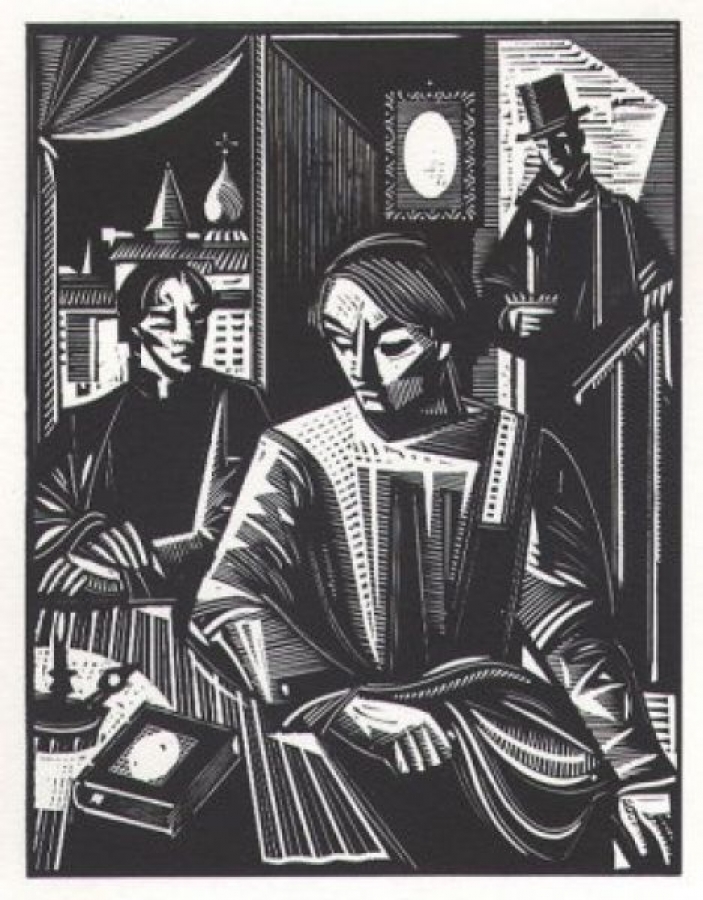
The Brothers Karamazov
The novel is set in a Russian provincial town and deals with the events surrounding the Karamazov family and the complex relationships between the father and his sons. The narrative can be divided into three fundamental parts. In the first part, the profiles of the main characters are outlined through a succession of dramatic events, in which the sons' feelings toward their father are revealed (contempt and hatred, but also the awareness of being "cut from the same cloth"), and thereby the complex, contradictory temperaments of the protagonists: Dmitri, impulsive and "animalistic," yet also swept away by passion and love; Ivan, cynical and reflective, yet also anguished by a profound sense of guilt and despair (over the suffering of humanity and the consciousness of being like his father); Alyosha, good and gentle, yet in a sense a bystander to the dramatic events and himself gripped by a sensuality inherited from his father; and finally the old Karamazov's illegitimate son, Smerdyakov, who embodies all the pain, the sense of injustice, and the hatred also present in the brothers, but in an "animalistic" and therefore unrestrained dimension. The first part of the novel, the richest in themes and resonances, depicts the philosophical and religious world of the narrative, in the extensive treatment of Father Zosima (his worldview, his death, and the disillusionment over the rapid decomposition of his corpse), and then in the dialogue between Ivan and Alyosha (the chapters *Rebellion* and *The Grand Inquisitor*). In the second part, the events leading to the murder of old Karamazov and the arrest of Dmitri are depicted. These are the most fragile chapters of the book, centered primarily on the figure of Dmitri and on two female characters: Katerina Ivanovna (Dmitri's fiancée, who nevertheless loves Ivan) and Grushenka, the woman who provides the ostensible motive for the crime (Dmitri loves Grushenka, who is in turn coveted by old Karamazov). The second part concludes with the mutual acknowledgment of love between Dmitri and Grushenka. The third part describes the trial, with the closing arguments of the prosecutor and the defense counsel. Yet the true focus of this part lies in the encounter between Ivan and Smerdyakov, and in the latter’s accusation against Ivan: Smerdyakov murdered old Karamazov because he felt sanctioned by Ivan’s departure. In truth, Ivan is the real instigator of the crime. This revelation gives rise to Ivan's descent into madness and, in a sense, to Katerina's decision to present in court a letter from Dmitri foreshadowing the murder, which will form the basis of the conviction. Critics typically speak of two levels on which the characters should be "read": the empirical and the metaphysical. In truth, one should also distinguish between the metaphysical-religious level and the metaphysical-philosophical one. From the "empirical" point of view, the rhythm of the narrative rests essentially on dialogue between the characters and is embodied in the theme of the contradiction between rationality and irrationality: the characters appear driven by two conflicting forces, yet are continually brought back to a "destiny" grounded in the intrinsic nature (in their genetic code, as one might say today) of the individual. This is the plight of the Karamazov brothers: they hate and despise their father, or take pity on him (in Alyosha's case), but in every instance they are forged from the very same nature, to which they are irremediably bound. This ineluctability of their nature is clear to Ivan (and lies at the root of his madness); it is conspicuous in Dmitri and Smerdyakov, yet it also surfaces in Alyosha, for instance in his dealings with young Kolya. As Ivan says in a conversation with Alyosha: > why lie to oneself, when all men live like this and perhaps cannot live otherwise? Are you asking me this on account of what I said just now, that one reptile will inevitably devour the other? Allow me then, in that case, to ask you a question: do you believe me capable, like Dmitri, of shedding Aesop's blood—that is, of killing him? . The second level is the religious one, which is deeply intertwined with the theme of suffering and its compatibility with the existence of God. As Ivan says to Alyosha in the chapter *Rebellion*: > if all must suffer in order to purchase eternal harmony with suffering, what have children to do with it?... I do not want harmony; I do not want it out of love for humanity... It is not that I do not accept God, Alyosha: I simply, most respectfully, return Him the ticket. If the sufferings of children have gone to replenish the sum of suffering needed to pay for the truth, I declare right now that no truth is worth such a price . There is no certainty in faith; Alyosha himself doubts the very moment he witnesses the decomposition of Father Zosima’s body, and, above all, God cannot be justified if such suffering exists in the world. The third level is the philosophical one, bound to the rise of modern man. It is in the chapter of *The Grand Inquisitor* that the conflict is articulated between Christ's sacrifice to grant men freedom of judgment and the desire of the Church (and thus of any Institution) to keep men in a state of tutelage. Thus speaks the Grand Inquisitor: > what fault is it of the weak soul if it lacks the strength to receive such terrible gifts?... And if there is a mystery, we too had the right to preach mystery and teach men that it is not the free choice of their hearts that matters, nor even love, but mystery, to which they must bow blindly, even against their conscience. And so we have done. We have corrected Thy work and founded it upon miracle, mystery, and authority . The link between the three levels (empirical, religious, and philosophical) is forged by Ivan's assertion that everything is possible for man: this articulates a concept of the "man without limits" that lies at the root of all the novel's events, its philosophical framework, and the contradictions present within the characters and the spirit that animates the book.

Freedom
Among the possible meanings of the word *Freedom*, one defines it as > being able or having the opportunity to do what one wants without being restricted by something or someone (Collins Dictionary). The characters in this novel have always lived poised between the “set of possibilities” and events (what used to be called destiny), which push inexorably toward a specific direction in life. There are no externally imposed constraints; rather, it is the very nature of things that leads down one path rather than another. And life is made up of the complexity of interpersonal structures, of conformism, and of the pursuit of realizing ideas that are often theoretical and generic. The story unfolds between the Reagan and Obama presidencies, set within an increasingly frightened American middle class, riddled with divisions, moral and political dilemmas, and a burgeoning awareness of the nation’s decline. As in all good bourgeois stories, it begins with a triangle: Walter, an earnest young man brimming with environmentalist ideals, loves Patty, a star basketball player who feels rejected, on account of this passion, by her politically prominent, establishment family. Patty, in turn, is drawn to Richard, a musician and Walter’s close friend. Patty and Richard take a car trip together to join Walter, and for Patty it becomes a missed opportunity: Richard, a consummate womanizer, refuses to sleep with his best friend’s fiancée. The bond between Patty and Richard feeds on regret. > in all these years, (Patty) had treasured the memory of their little trip, had kept it locked in a deep interior space, letting it age like wine, so that, symbolically, what might have happened between them remained alive and grew older with the two of them . Within Richard there grew “envy of his friend for his unwitting possession of his wife.” Walter and Patty’s marriage drags on wearily (“they could not live together, but could not imagine living apart”), until a vacation by Patty and Richard in Walter’s beloved old lake house, set in a stunning natural landscape, precipitates events: the two sleep together. Walter cannot accept being betrayed by his best friend: the couple separates, doing so just as Walter finally realizes he cannot pursue abstract environmental ideals with the money of American capitalism. And it is precisely from the breakdown of false interpersonal relationships and the undoing of vague ideals that Patty and Richard find each other again and can rebuild the family. In truth, the book is not confined to these three characters; it also involves the younger (Walter and Patty’s children) and older generations, chronicling the histories of their families of origin. There are also numerous forays into the political and social issues that have characterized America in recent decades; the author is particularly invested in environmental themes, which are also framed as an emblem of the hypocrisy and vacuity of much of the bourgeoisie. The message seems invariably the same: it is impossible to change the world; we must learn to live with ourselves and our problems. Emblematic in this regard is the final chapter. Walter has retreated into nature, finding his life’s mission in the defense of migratory birds, particularly against a domestic cat prone to murderous rampages. This stance puts him in conflict with the small middle-class community bordering the nature reserve. The tensions are resolved when Patty returns; she nurtures social ties with the neighbors (the conformism of the American bourgeoisie) and eventually brings Walter back to New York, back to the family. At that point, the organization managing the reserve erects a dividing wall between the natural habitat where the migratory birds nest and the small community. Is the world, then, composed of countless walls, within which each person seeks their own freedom? And does true freedom perhaps lie in that other possible meaning of the word *Freedom*: “the condition of being able to move around,” even within separate worlds? The book’s greatest strength undoubtedly lies in its style—marked by tight, highly effective dialogue—and in the depth of its psychological and existential exploration of the characters and their mutual relationships. The narrative pacing is slow, and the story unfolds sluggishly. Overall, it is dominated by that intellectualized, erudite, yet often evanescent approach typical of many contemporary American writers. Why read it? It is interesting, but recommended only to a very patient reader.
Freedom from Fear and other writings
San Suu was born in 1945, two years before the assassination of her father, founder of independent Burma and national hero. This biographical detail is essential to understanding this collection of essays, speeches, letters, and interviews, published between 1984 and 1994. Aims and prose vary, circumstances change, yet San Suu’s concern always shines through: to understand her father’s legacy, > to communicate what she has understood and to apply it to the problems of her own country . The essay that lends its title to the collection (*Freedom from Fear*) must not mislead: San Suu is not a moral philosopher, a sort of modern holy figure; she is, first and foremost, a political persona, characterized by a strong and prevailing ethical dimension. When the Burmese dissident calls for liberation from fear and corruption, she intends to assert > the firm conviction in the sanctity of ethical principles combined with a historical vision: despite setbacks, the human condition is placed on an ultimate path of spiritual and material progress . In a recent speech at the International Women’s Forum, San Suu defined politics as > the means to change society, and the change must be effective, not symbolic. And how effective it is depends on how correctly we evaluate the needs of the people and the country (quoted in *La Stampa*, 9 December 2014). That this is a long-pondered reflection emerges from a key essay included in the collection (*Quest for Democracy*). In it she affirms that > the true measure of the justice of a system is the amount of protection it guarantees to the weakest. Where there is no justice there cannot be a secure peace . We are speaking, therefore, of social justice, certainly not of abstract concepts belonging to the realm of philosophy and religion. To properly interpret San Suu’s thought, one must read the insightful analysis the author provides of intellectual life in Burma and India during colonialism. It is impossible to summarize such a complex essay: suffice it to say, in short, that the comparison with India allows San Suu to advance a severe critique of Burmese culture, of Buddhism itself, a “monolithic religion (...) with inflexible barriers”; to identify the sources of the regime’s consensus not so much in repression as in ethnic differences and chauvinism against Chinese and Indian communities; and to clarify how her inspirations are Gandhi and, above all, Nehru, her true spiritual father: a great politician, therefore, is her touchstone. If one does not stop at the vacuous, banal words of *Freedom from Fear* (but why does it lend its title to the collection?), one realizes that San Suu has no intention of locking herself within the spiritualist and Buddhist persona that the West would like to assign to her; she wants to be judged by what she manages to achieve for her country. To those urging her to leave Burma, > I replied that I would do nothing from abroad, and that if I wished to commit myself to a political movement, I would have to do so from within the country . Having read the entire collection, one asks oneself: has San Suu truly reckoned with her father? The answer is no. The daughter, San Suu, continues to idealize the father figure, without asking herself why the dictatorship originated in an army forged by her father: a man educated in monasteries, yet trained militarily and politically by the Japanese. As often happens, filial love compromises the lucidity and detachment that are, in any case, necessary in a political figure. Why not read it? It is dull, perhaps pointless. fragmentary, repetitive, and prolix.

From the Land of Green Ghosts (The Boy Who Spoke to the Wind)
I have always wondered why Italian editions do not retain the original title. It often conveys the sense of the book far better, as in the case of *From the Land of Green Ghosts*, which became, who knows why, *Il ragazzo che parlava col vento*. The title "from the land of green ghosts" neatly encapsulates the autobiography of one who, to save himself, had to forfeit his own identity through detachment from the spirits of an ancestral world made of lush fruits, rice paddies, forests, water, birds, and animals. Then again, misunderstanding must be this novel's destiny, if in his preface John Casey himself—Pascal's savior, mentor, and friend—offers this definition: > this is less a book of politics and history than a spiritual autobiography, in which, uniquely, (Pascal) writes from the perspective of a member of a Bronze Age tribal society, recently opened to the outside world, and at the same time of someone who ultimately managed to receive a Western education at a famous English university . Truly an arrogant and reductive assessment for someone who endured terrible atrocities, witnessing the material and social destruction of Burma! The novel is divided into three parts. The first part, "Tribal Idyll," depicts a tribal, agrarian world on the fringes of the great forests. > We were Padaung, we were Catholic, and we seemed to live in a world of our own, with our ceremonies and traditions. We had no sense that anything different could break in. The feeling of being safe showed me that we were living in paradise . The author describes for us, as meticulously as an anthropologist, the customs, way of life, and natural environment of the Padaung, even detailing, with a wealth of particulars curious to us, the food and the manner of cooking it. We discover ancestor worship, the formidable authority of the elders, and the spiritualistic and magical elements that characterize every moment of life. Even though Catholic—and the same holds true for Buddhists—the tribe jealously continues to preserve its traditions, all while observing the precepts of the new religion. His paternal grandmother's tales permeate Pascal's childhood: they are grim stories, like all folklore of peasant societies, yet in them animals, particularly birds, seal the fate of men. One day, the young Pascal catches an owl and wishes to cook it, but his grandmother tells him to speak to it and release it, so that one day he might call upon it for help. > Years later, when I was in the greatest danger, that memory became fraught with meaning for me . Through his involvement with the parish, Pascal receives an initial education and develops a passion for learning. He leaves the village to attend first a seminary, then university. He becomes a student, which places him in the most dynamic and politicized segment of Burmese society. Toward the regime—authoritarian, cruel, mendacious, and corrupt—Pascal has yet to take a stand. There is no political consciousness, and even the grief over the imprisonment and death of his girlfriend does not seem to translate into a deliberate taking of sides. Yet he is a student, and therefore an enemy of the regime. He must flee and hide in the jungle. The second part, "Revolution and Struggle," recounts Pascal’s experiences among the rebels, who have entrenched themselves in the border areas between Burma and Thailand. Through Pascal’s pen, we witness countless atrocities; suffice it to say that Burmese soldiers advance through minefields—laid, moreover, by themselves—by herding beaten, terrorized, and starving civilians ahead of them, clearing a path through bodies torn apart by explosions. Such is the cruelty that even > the animals and birds, which regularly drank from the river, fled, leaving only the human beings trapped in a fit of madness . The third part, "Rescue," recounts how Pascal managed to escape to Thailand and reach England, where he would become a professor of English literature. The story has a happy ending, yet there is a disturbing revelation. In Cambridge, at a dinner party at the home of English friends, he learns that he was singled out for rescue because years earlier his hosts had attended a circus performance of "giraffe women"—Padaung women with elongated necks adorned with metal rings; in short, Western man delights in preserving specimens of rare and endangered species. Yet is Pascal aware of this? No, because as the closing lines tell us, by now his dreams are > images all jumbled together, the elements overlapping. Snow might fall on the jungles, or palm trees grow on the Alps. The visions are often blurred by mist . It is a long novel, dominated by a flat narrative style incapable of conveying sensations and emotions. It is as if he were a reporter investigating, describing, filing an account. While the facts undeniably speak for themselves, it is not the writing that grips us; it is the history of Burma itself. It is no coincidence that the narrative engages the reader in the second part, as the tempo accelerates and the episodes of war and violence cannot fail to shatter us. Yet even here, the narrating "I" and protagonist, Pascal, appears almost as a bystander, a social scientist. Could it be that the author is forced to write in a language not his own? Or is this apparent detachment a psychological shield to survive, to defend against memory, against a destructive existential grief? Why skip it? The book is worth reading only if one harbors a deep interest in the landscape and history of Burma.
The Late Mattia Pascal
Mattia Pascal lives in a provincial town and has found himself, almost by chance, married, poor, and working as a librarian. He suffers from the stagnation of his existence and is terrified by the idea of living “thus, always, until death, without any change, ever…”. Seeking a momentary escape, he flees to Monte Carlo, where he gambles at the casino and wins a substantial sum. He then discovers that in his hometown the unrecognizable body of a suicide victim has been found, presumed to be him, Mattia. This is the most felicitous part of the novel: briskly paced, ironic, rich in well-crafted portraits and an effective depiction of provincial life and the milieu of casino gamblers. Upon the news of his presumed death, Mattia decides to disappear, to become another man, freed from all ties to the past, > with my conscience made virgin and transparent once more, and the vigilant spirit of my new self . This is, however, an illusion, for within deceit he cannot live authentically. He becomes fully aware of this when he falls in love with a woman to whom he cannot declare himself. In truth, Pirandello is not so much interested in the drama of Mattia Pascal the man as in the paradox of a character who has managed to deceive even death. Is life not perhaps an immense mystery, Pirandello asks himself, and “all this mystery does not exist outside of us, but only within us,” and > what if death did not exist, but were merely the extinction of the wretched feeling we have of it ? In the second part of the novel, the author loses interest in the study of characters and situations, which become increasingly predictable and mundane, focusing instead on his cherished theme: life as an illusion, as a hall of mirrors reflecting consciousness—a consciousness that is, moreover, false and deceitful—of the self. The narrative pace becomes slow and repetitive, the dialogues are in many instances redundant, and the book loses the freshness and originality of its opening pages. The conclusion of the novel comes as no surprise. Trapped within a web of lies, Mattia Pascal decides to stage a second suicide—that is, to die once again—and return to being Mattia Pascal. Yet his wife has remarried, rightly believing herself a widow; thus Mattia Pascal, even having returned to “real” life, must continue to live in deceit and falsehood. He is now, irrevocably, the Late Mattia Pascal. The desire to “evaporate,” as the Japanese say, is one of the never truly voiced aspirations of every human being. Can one retrace one's steps? Can one live another life? Pirandello seems to answer in the negative, not because he believes that what matters are the authentic relationships we maintain with people and with the environment in which we live, but because he is convinced that everything is an illusion and a deception. This is the theme of Pirandello’s major plays, which, from a stylistic standpoint, hinge on the dialectic between characters—an extraordinarily effective device for unveiling the lie in which we live. Transferred to the novel, this approach renders it ponderous, diminishing the pleasure of the reading experience. Why read it? The momentum and irony of the novel’s first part compensate for the sluggishness of the second.
The Funeral of Aunt Stana
“If this were, for instance, a Hemingway story, by the second paragraph its protagonist would already be shooting fascists, (...) a nurse would have fallen in love with him (...). Naturally, she would be a woman so wonderful and caring that she would die along with the baby during childbirth, if only to save him from the monotony of family life. (...) However, I am not Hemingway. Looking at things realistically, for the most part I am merely an extra in my own story.” The narrator—such a nonentity that we are not even told her name—is a young woman who spends her time glued to the TV, binge-watching her beloved shows. How do the Japanese manage to barricade themselves inside; don’t they have mothers? And hers forces our protagonist to abandon her cozy, protective den to attend the funeral of Aunt Stana, who choked to death on a chicken bone. She finds herself thrust into ancestral, corroded family ties in the village of her childhood, where adolescent dynamics—long repressed or simply buried in the deepest recesses of the soul—resurface. The narrative is caustically ironic and yet so violent that it repeatedly forces the narrator to pause “and take a breath of fresh air.” The relatives are extreme figures, caricatures of the archetypes found in every family: the overbearing and the submissive personalities, the mutual hatred and contempt calcified over decades, the rote repetition of habits and gestures, the vulgar greed over a prospective inheritance. And at the center of it all is she, the narrator, invisible, just as when “the bus drivers would drive right past me without stopping, even when I stood in the middle of the station, even waving my hand at them.” Events rapidly escalate. A torrential downpour sweeps everything away, dragging our protagonist into a ditch of mud where she might finally rot in peace; though, knowing her luck, archaeological excavations will likely exhume her centuries later: “there’s simply no way people will ever leave you in peace!” That is, until a stroke of fortune lands her a thick roll of euros hidden inside an overcoat. “At that moment, a brilliant idea flashed through my mind. I’d love to tell you all about it in detail, but unfortunately I don’t have the time. The hill above me is about to vanish in a terrible explosion, and right now I don’t much feel like sticking around for the show. I have to leave at once. If I don't hurry, everything could easily turn to dust.” The novel is set in Bosnia, yet the backdrop could easily be Japan, Italy, or anywhere else in the world. Both the allure and the limitation of many Eastern European writers lie in the universality of their stories. As in László Krasznahorkai’s *The Melancholy of Resistance* and Elvira Mujčić’s *La buona condotta* (see the reviews on this site), here too the author operates within an ahistorical, surreal, and Kafkaesque dimension. If, on the one hand, the reader sees themselves reflected in the narrative (who among us hasn't attended a funeral among complete strangers for relatives?), on the other, one fails to sense the tragedy of a nation like Bosnia and Herzegovina—torn for years by religious, linguistic, and national divides, perpetually teetering on the brink of civil war. Or is this an escape from a harsh, harrowing reality that frees the writer to tell extraordinary tales, as the author suggests in the afterword? From a narrative standpoint, the prose flows smoothly within a well-constructed plot, even if it ultimately grows repetitive and predictable. While it is true that the narrator is merely an “extra,” the story becomes far more compelling precisely when she steps forward, offering evocative windows into her life and oneiric departures—glimpses into her personality that are all too brief. Why read it? For its biting, surreal dissection of the family unit.
Fire
The book is part of a series that explores social and civic issues through the lens of noir. In this case, the backdrop is the Camorra. Leonardo is a businessman colluding with organized crime. Seeking revenge for a slight, he attempts to kill someone under the protection of a powerful clan boss and is subsequently forced to go on the run, accompanied by his daughter, who remains entirely unaware of her father's true line of work. He takes temporary refuge in a holiday resort in Salento. In parallel, another story unfolds: Lu is a troubled youth sent by his father for a few days to stay with relatives, also in Salento, near the resort where Leonardo and his daughter are staying. A romance begins between Lu and the daughter, Cecilia. Meanwhile, in an effort to protect himself, Leonardo makes contact with another clan boss, a bitter enemy of the first mobster. As Leonardo sinks ever deeper into criminal complicity—to the extent of taking part in an arson attempt on a forest near the resort—Cecilia gradually comes to understand the true nature of her father, whom she had always believed to be an honest man. The Camorristi kidnap Leonardo and Cecilia, but Lu's intervention saves the girl, and love allows the young man to achieve an emotional balance he had previously lacked. The novel weaves together multiple themes: the crime narrative intertwined with the nexus between business and the Camorra, youth social alienation, parental absenteeism—parents perpetually consumed by their own problems and emotionally distant from their children—and the environment as an arena for the assertion of power (indeed, the motives for burning down a forest are inexplicable, save for those linked to prestige and organized crime’s pursuit of visibility). The narrative unfolds with a certain lightness, using irony without ever becoming heavy-handed. The result is an enjoyable, engaging read, further bolstered by an effective, fast-paced style. Why read it? It is a book that tackles crucial themes of social relevance in an accessible, engaging manner.
Friendly fire
Eyal, Yirmy’s son, was killed during his military service by his own comrades, who mistook him for a wanted Palestinian. Amotz, Yirmy’s brother-in-law, in breaking the news of his son’s death, inadvertently uses a cruel term: Eyal was killed by friendly fire. This is the premise of the narrative, which gets underway from the moment Daniela, Yirmy’s sister-in-law, departs for Africa, where her brother-in-law has sought refuge and where her sister died. From this point onward, the novel unfolds along two parallel trajectories: Daniela’s journey to Africa and the life of Amotz, alone, in Israel. Daniela wants to know where her sister died, and in some way she is undertaking a journey of liberation from grief and death. Yet she also wants to understand why her brother-in-law, now in his seventies, chooses to live in Africa. The landscape, the animals, and the people form the backdrop of an ongoing dialogue between Daniela and Yirmy, in which familial themes (the sister, Yirmy’s quest to uncover the true circumstances of his son’s death) overlap with broader issues linked to the condition of Israel and the peculiarities of a religion—Judaism—so unyielding and severe. If it is possible to come to terms with the death of one’s loved ones, it is far more difficult to serenely overcome the existential anguish of an entire people. And so, the only recourse is flight to a distant continent: I came, Yirmy says, > to take a break from my people, from Jews in general and from Israelis in particular “everything that oppresses me slips away without philosophies and arguments.” Meanwhile Amotz, head of an engineering design firm, must find a solution to strange noises emanating from the elevator shaft of an apartment building: is it a technical issue, or is there something mysterious, unfathomable, arising from a country blithely living on the edge of a precipice? *Friendly Fire* addresses many themes, perhaps too many: death, family, religion, the destiny of a people, flight from it all. The underlying thread is the notion that the true threat comes not from without (for instance, from the Palestinians), but from within—from a people, the Jews, who have always wandered without ever wishing to integrate with others. The book does not intend to be an indictment of Israel, even if the passages concerning the Bible are undeniably critical; rather, it constitutes an expression of profound existential suffering. The Israeli people today are like that elephant paraded around as an attraction because of its gigantic eye. > Daniela feels her heart ache at the sight of its suffering, as though it were a relative. And in that iris flecked with blue, yellow, and green looking at her with sadness, a drop gathers that gradually turns into a tear, followed by another, and the weeping of that mute, and perhaps even grateful, animal shakes Daniela to the core, as if in that moment the desire that brought her to Africa during the festival of Hanukkah were finally fulfilled . *Friendly Fire* expresses the suffering of a people and its inability to break free from its condition. The flaw of the book, however, is that the theme unfolds sluggishly, almost smothered by words that seem to serve only to conceal and dissipate it. The phrasing is pleasant, but the sluggishness, the lack of narrative drive, and the monotonous reliance on the device of parallel plots are all factors that render the book verbose and tedious. Why not read it? It is a rambling, ponderous tale despite the author’s seasoned skill. The reader gets lost in an infinity of words.
Fire on Naples
The subject of the novel is Naples: “a corpse in an advanced state of decomposition.” Diego Ventre is a brilliant and refined lawyer, but in reality a Camorrista. He learns from a volcanologist that an eruption will destroy a large part of the city. Diego sees in this catastrophe the opportunity to renew Naples, to halt its decline, but he also realizes that enormous profits can be made. He keeps the news secret and begins a series of speculative operations. Meanwhile, he falls in love with Luce, the daughter of a prominent aristocratic family. A courtship begins, through which Diego can display all his classical learning and refined tastes. This does not prevent him from continuing his criminal activities, spinning business schemes, corrupting, and threatening. Naples is destroyed by the fury of nature; Diego and Luce marry, but on their very wedding day Luce discovers that she has married a violent mafioso. She flees, is captured by Diego’s enemy, and raped multiple times as an act of defilement; yet at the very moment of the rape Diego arrives, kills his rival, and points his gun at the young woman’s chest. Does he want to kill her according to a mafia code that cannot tolerate one’s woman having belonged to another man, or is it merely a protective gesture? We will never know, for at that very moment Diego is killed by his brother. The author draws upon an idea from Curzio Malaparte in *The Skin* (the eruption of Vesuvius as the destruction and creation of a new Naples), but this motif remains merely in the background. In truth, the entire novel unfolds around Diego—a villain, yet one ultimately admired, and an instrument for an aestheticizing indulgence in the beauty and ugliness of Naples. The weakness of the plot, the shallow character analysis, the perpetual invocations of an unreal city made solely of monuments, the protagonist’s pedantic and inconclusive soliloquies: these are all factors that reduce the narrative to a sequence of images, of sketches. As the author wrote regarding Naples, > it is a novel without a story, a novel without chapters. The words seem assembled at random, without a true before and without the hope of an after . Why not read it? It is pointless.
Outside an Evident Destiny
The setting is an American town in Navajo territory. Jim, half-Indian and half-white, returns to his hometown only to become embroiled in a series of murders committed by an avenging shadow, unleashed by an Indian ancestor to exact vengeance for a massacre perpetrated by adventurers. It is a return to the past—both the distant one and the more immediate past tied to Jim’s childhood and his choice to leave his hometown behind. The book’s conclusion is partly predictable—the culprits of both yesterday and today meet their punishment—and partly bitter, as Jim must sacrifice himself, taking his own life to halt the vengeful fury of the shadow, which is his own shadow. The story is overly New Age, as is its style. Yet the narrative pace remains brisk, making for an enjoyable and compelling read.