Finished reading on: October 02, 2010
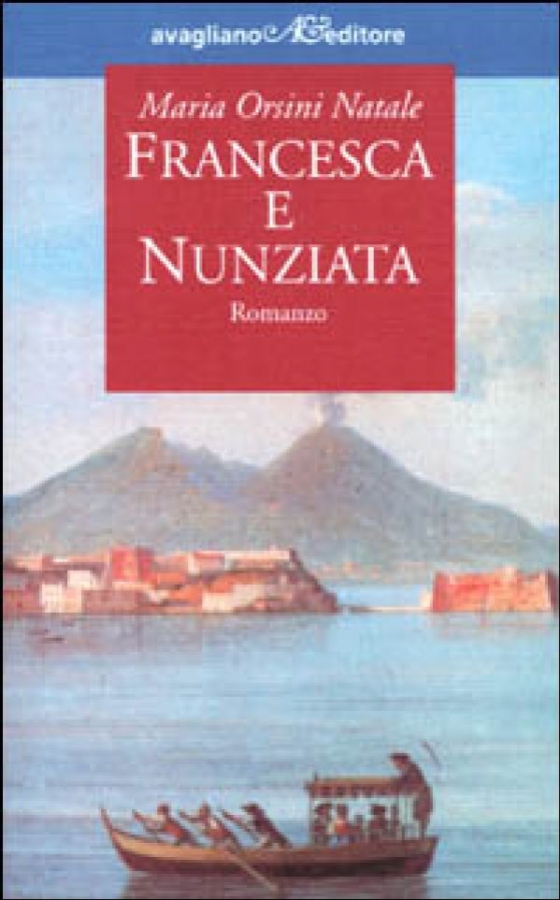
Francesca and Nunziata
Title of the original version reviewed: «Francesca e Nunziata»
AI Translation Notice: This review was translated from the original Italian using artificial intelligence. Book quotes and excerpts are translated interpretations and will not match the author's original English phrasing or official published translations.
Francesca and Nunziata are two women upon whom chance bestowed a shared object of love: pasta making.
The novel chronicles the story of a family of Neapolitan pasta makers and their evolution from simple craftsmen into industrialists.
The story begins shortly before the Expedition of the Thousand and the fall of the Bourbons.
Francesca’s grandfather produces the finest pasta in Naples, enlisting his numerous offspring in the work.
This is the most evocative part of the narrative, owing also to the use of Neapolitan in the dialogue.
Exquisite are the scenes of the fusillare at work and their reception of the machine destined to replace their labor:
“Girls, girls, get your bundles ready, get your bundles ready!” Disdainful, the fusillare ostentatiously feigned ignorance of the intricate workings of that cumbersome contraption, but the women of the household paused beside it with delight, and the little girls gathered around it in celebration
And the grandfather would sing, “Gold and diamonds has the Sultan, but I hold your braids in these hands of mine.”
That was the time when
the great ranks of his family, accustomed to sacrifice, industrious and spirited, had always drawn serene happiness from every small thing, but that was the time of their fullest joy
.
The narrative resumes much later with Francesca, by now a major entrepreneur, a wealthy and powerful woman.
As an act of thanksgiving for the recovery of one of her daughters, Francesca adopts Nunziata, a poor orphan girl.
Nunziata is the only one among Francesca’s numerous children to work in the pasta factory, thus acquiring the art of pasta making from early childhood.
She hasn’t grown much, Francesca thought, she has stayed small, but she has ironclad health, and besides, she is a worker, she is just like me
.
Yet Nunziata is a spirited, sensual young woman: she is left pregnant by her adoptive brother, the handsome and cultured Federico.
Francesca decides to marry her off to cover up the scandal, and as she bids her farewell, asks what gift she desires:
a ruotolo of gold, a diamond parure...
And Nunziata had summoned her courage and raised her eyes to answer her.
For a moment their gazes met:
I want two presses for making macaroni
.
In the third part of the novel, Nunziata has become a successful entrepreneur, while Francesca has suffered a series of financial misfortunes that have brought her to ruin.
Nunziata’s days, in their rhythm of sunshine and anxieties, sorrows and songs, bore the distinct mark of tireless industriousness, of sacrifice without neglect, just like Francesca’s.
Yet in their unfolding they were cheerier and more fortunate, and in their slow unwinding more fulfilled.
It brightened her life and helped her endure: tressette
.
Nunziata is an independent, unconventional woman, sustained by an atavistic desire to live, even off life’s smallest things.
Her lovers, alongside her deep bond with Federico’s family—now fallen into destitution—place her in stark conflict with her children.
Nunziata’s personal decline, opposed and isolated, is emblematic of the end of a civilization: Naples disappears, submerged beneath a
blight that would dry up the working lifeblood of a proud, skilled craftsmanship and erase the vital importance of experience and expertise.
The book is a grand fresco that can be read from many vantage points: a hymn to a Southern vitality too often forgotten, the history of Naples and its squandered opportunities, the evolution of an industry from manual labor to mechanization, the role of families and of women.
Such a complex narrative rests not so much on its characters and plot as on a lush, captivating style, all while remaining firmly anchored in the storytelling.
Beyond the first part—the most authentic and exhilarating—there are some truly magnificent pages, such as the description of the luncheon offered by Francesca.
Red and yellow, arranged in quiet rows, gently withered by the fire, muted in the tone of their colors, the stuffed peppers retained glistening oils within their weakened veins, within the wrinkles of their wilting flesh, and slackened, limp and almost sensual, their splits offering a glimpse into the secret of the filling and the eyes of the black olives.”
And then the final touch: “The two men of faith went off to eat them in the seclusion of the pine grove...
and so in the dark, only the stone eyes of a malevolent Hercules, noseless and handless, knew the carnality of the meal.”
Why read it? It is a hymn to Naples, to industry, to women, and to the Italian language.