Finished reading on: February 08, 2009
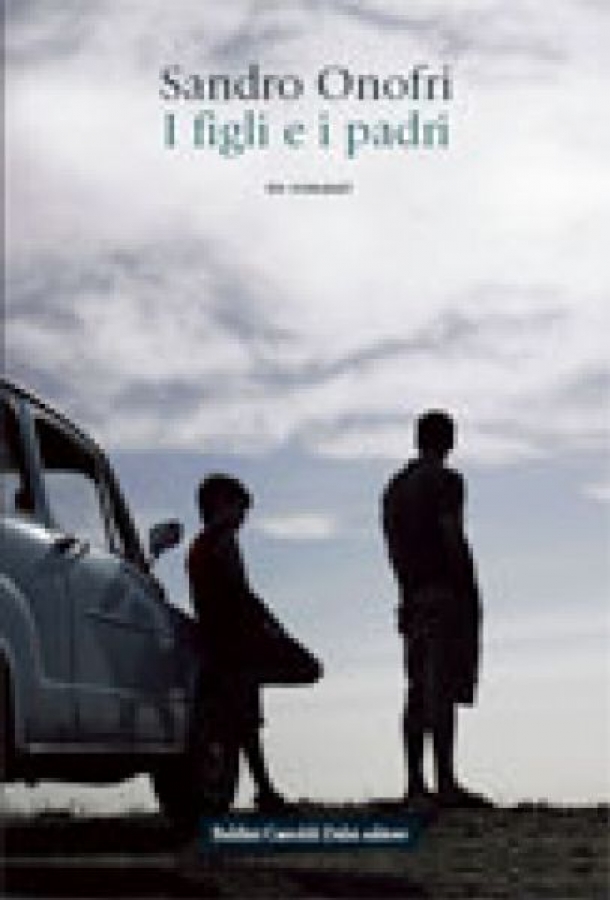
Sons and Fathers
Title of the original version reviewed: «I figli e i padri»
AI Translation Notice: This review was translated from the original Italian using artificial intelligence. Book quotes and excerpts are translated interpretations and will not match the author's original English phrasing or official published translations.
The book comprises three novels spanning the entirety of the 1990s: Luce del nord from 1991, Colpa di nessuno from 1995, and L’amico d’infanzia from 1999, finished only a few months before the author’s death.
All three novels revolve around a male protagonist, set against the backdrop of the Roman petite bourgeoisie and a Rome undergoing profound transformation.
In Luce del nord, Angelo has long lived in New York, far from his family, his brother, and his mother.
One day, he receives a letter from his brother, Ferruccio, who tells him of a strange dream: he is gravely wounded, and Angelo urges him to run away, to flee, as though he had faced grave danger.
A few days after the dream, he learns that his brother has died.
He thus decides to return to Rome, but pretends to be a friend of Angelo's, Cesare.
The novel unfolds around this deception, which allows Angelo to infiltrate his brother’s life and grasp all its squalor, amid financial hardships, professional disappointments, and marital betrayals.
Indeed, he becomes the lover of Ferruccio's wife, who despises Angelo yet learns to love Cesare.
Angelo also reconnects with his father and grows attached to his brother’s son.
The story seems to move toward a happy ending, when Angelo decides once more to flee and return to the United States, where, to gain acceptance, he begins inventing other stories anew.
It is a novel of perpetual flight, wherein America represents a dream of freedom and individualism.
In Colpa di nessuno, perhaps the most socially conscious novel of the three, the point of departure is the protagonist's need—a squalid door-to-door insurance salesman—to pick up the threads of his life:
it is time to take down the streamers, gather the paper ribbons and carnival masks, and throw everything into the basket of past celebrations
.
Paolo, the protagonist, meets Laura in the United States, and once she becomes pregnant, they marry and return together to Italy.
To make a living, Paolo takes a job as a salesman for Italo, his father-in-law.
He thus enters his wife’s family, comprised of his mother-in-law Ida, a greedy and dismal woman; Laura’s sister, Silvana; and her husband, Daniele, a violent, right-wing man.
Paolo leads a squalid existence in which his marriage progressively falls apart, to the point where, one day, he discovers that his wife is cheating on him.
The embrace of fatuous, crude, and vulgar values brings about Paolo's steady decline, which is repeatedly underscored by his father, a man of another generation.
There is no real conflict between son and father, as the title given to this collection of novels might suggest; political, social, and intergenerational conflicts have vanished, replaced by resignation and individualism.
In reality, all the characters suffer, in one way or another, from the crisis of Italian society in the 1990s, and it is precisely this theme of the decay of relationships and values that appears to define the novel.
An old man he meets urges him to always remain alone.
Already now, friendship and solidarity are called complicity and omertà.
Never trust anyone, never give in.
It is no longer time to be together.
You must never have to say we; that would already be a sign of yielding
And then the author inserts an intensely evocative autobiographical note
When I was little, I believed the world was a kind of carousel made solely to amuse me.
But now what dragon’s mouth have I wandered into, what sort of figures are these before me that no longer amuse me, two-bit little monsters, capable of everything and of nothing?
.
A crime—the murder of Italo, of which everyone believes Paolo to be guilty—becomes the cathartic element that opens the protagonist's eyes.
Paolo realizes the sterility and squalor of his life, of this acquired family that drags greed and violence in its wake, as well as the malice of his wife, Laura.
The novel concludes with a cry of despair and hatred.
When I think of the future, Laura, I imagine it as a vast, crowded square, where people scream and laugh.
There will be men and women from all corners of the world, in clothes bought in New York, Rome, Sarajevo, Jerusalem, and Mogadishu.
People of all races and origins, crossing paths and contaminating each other with history.
Each with the other's story, infected with the world.
Only the two of us will not be there, Laura.
We, with our tangled feelings, were unable to give anything to the present, so let alone to the future.
We are two specks of spit from the past that somehow ended up here.
But our son, yes, he will be there.
I hope he crosses the entire square, and that a roar laden with hatred accompanies him always and never leaves him, that he feeds and grows on all their malice.
I will leave him to corrode them with their own teeth
.
L’amico d’infanzia is the most intense and profound novel of the three, almost premonitory of approaching death.
Fausto's story is narrated by his journalist friend.
It is the story of a failure.
The two had been friends since childhood in a neighborhood on the outskirts of Rome and later drifted apart: Fausto began scraping a living through odd jobs, eventually ending up as a real estate salesman for a company that buys public housing on the cheap to flip it at higher prices, evicting the tenants.
It is a squalid job that Fausto accepted to scrape together money so that his son, who lives far away with his mother in Milan, could study abroad.
The story takes a tragic turn when Fausto, in a fit of rage, bludgeons his boss to death after being denied a loan.
What follows is Fausto’s descent into hell: he lives as a vagrant, hunted by the police, yet precisely at the height of his despair he finds solidarity and help among the destitute.
In the end, in a moment of lucid madness, he blows up the real estate company’s offices and is fatally wounded.
Fausto's story overwhelms his friend as well, leaving him drained of energy.
The narrator-friend acknowledges that “there was not the wretchedness of a single seed in the great tornado that shattered our lives,” leaving behind only vast misery and extreme existential pain.
The novel ends with a profound reflection on life and death.
Confronted with Fausto's death, the narrator remains bewildered by the thought
that in reality we like and hate one another solely based on the contingency of a moment
and closes the novel with this stanza: “but we were born to be here / and for a while we managed / and it is this that our dry / mouths now want to sing.”
Reviews emphasize above all the social hallmarks of the three novels: the 1990s, the urban and cultural decay of Italy.
In truth, it seems to me that the three novels (and especially the last one) revolve around existential despair and the search, often disillusioned, for hope.
The very setting of the final novel, the decay of the Roman periphery, drifts gradually toward a surreal context where everything is possible, even the most incredible occurrences: an elephant strolling through the streets of Rome, a hooded crow colonizing the city to forage, a child learning to play soccer in an empty stadium, a new life represented by the child expected by Elena, the great love of Fausto's life, the solidarity of the victim's own wife, the school principal who has become a hermit on the outskirts of Rome—all of these demonstrate that within the underbelly of urban life there still exist positive energies capable of transforming such a degraded reality.