Finished reading on: August 14, 2022
Cotton Flower
Title of the original version reviewed: «Fiordicotone»
AI Translation Notice: This review was translated from the original Italian using artificial intelligence. Book quotes and excerpts are translated interpretations and will not match the author's original English phrasing or official published translations.
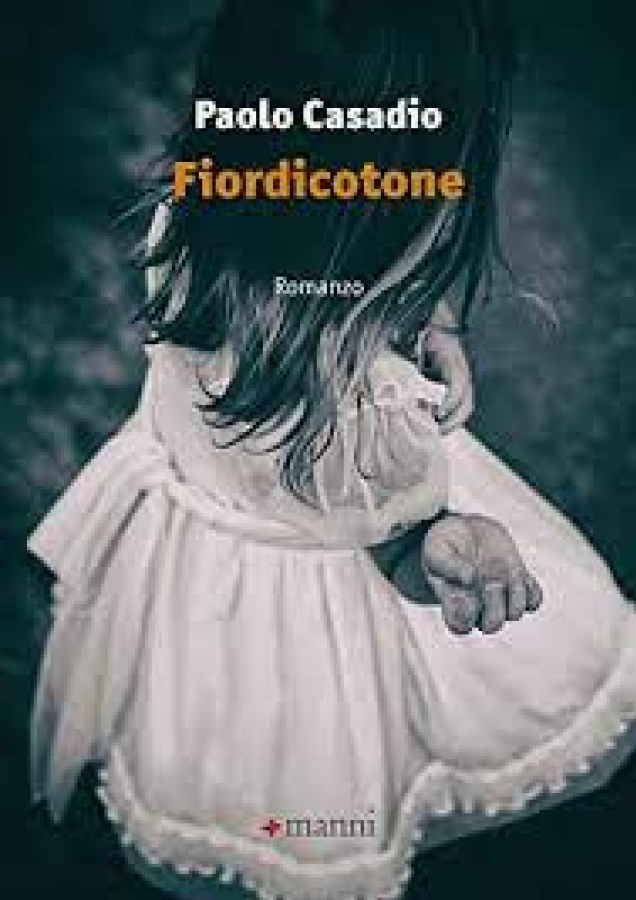
On December 15, 1943, the Jewish De Fano family was arrested and sent into internment: Omero, «the gentle bookbinder», the elementary school teacher Alma, her mother, and little Velia, the couple's daughter, an albino child nicknamed Fiordicotone. In the chaos of the roundup, the girl was hidden beneath a man's black cape, thereby surviving. Omero and the elderly mother were immediately put to death, while Alma was set aside for the SS officers for their sexual diversion. «Do whatever they ask of you, if only to save your life», her mother had told her, «naked among other stripped women». Yet if placing her body at the service of her tormentors had preserved her life, the experience had profoundly wounded her spirit. Looking into the mirror after the liberation, Alma
could not recognize herself. She had unbuttoned tunic and shirt and looked at herself. A perfect, desirable body. She saw herself colorless, her eyes worn out, her face faded and lifeless. In that body she once loved so much, she caught the sadness, the anguish of a solitude continuously abused
. It was from this dual suffering, as an internee and as a prostitute, from the heaps of the dead and the humiliation endured (
the sour taste in her mouth, on her skin the wretched, lingering scent of violence
) that there grew in Alma the perception that no afterwards existed,
for that hell was so bottomless and devoid of dignity as to leave no room for hope. Nothing was left. Only Fiordicotone.
As is to be expected, the book recounts the search for the daughter: the initial shelter in Switzerland, the journey through a ruined Italy as far as Lugo, the discovery that the girl was no longer in the town, the struggles to learn where she was, and finally the encounter with Velia. An old blind woman's omen hung constantly over Alma: «You will find her, and when you have found her, you will return to the shadows». Like Alma, the reader too fails to understand the words, obscure as the oracles of the Sibyl. What does it mean to return to the shadows? We discover throughout the narrative that Alma cast no shadow; she was like a ghost, corporeal yet insubstantial, soulless. Alma «was the prisoner of a tattooed number», had no hope, and did not believe there was a future for her daughter. In tones perhaps overly melodramatic, yet keeping us suspended in anxious anticipation, the author carries us through to the conclusion.
In an earlier novel (Il bambino del treno, reviewed on this site), Paolo Casadio took as his starting point a true event, set in a precise location: a small, now-abandoned station on the Faenza–Florence railway line. Both the setting and the historical episode provided a concrete anchor for the narrative; along with the elegant style, they contributed to the novel's success. In Fiordicotone, Casadio disperses his focus across too many themes, from the existential drama of the internees to the search for the daughter. The unifying thread is not so much the story or the protagonist, but an aura of death, of ghosts hovering from the past, running the risk of slipping into «fantasy» (one need only consider the image of the shadow, frankly overstated) or, more nobly, into the evanescent, abstract register of much of Mario Luzi's poetry. In attempting to say too much, the author neglects the setting of Lugo di Romagna, the characters, and in particular the reconstruction of the ambiguities, the craven compromises, and the petty, well-intentioned subterfuges of so many people who nevertheless acquiesced to the horrific aims of the Nazi regime: consider, for instance, the figure of the maresciallo. The frequent resort to full stops, with the resulting verbless sentences, fragments the narrative and undermines the elegance of the prose: a detrimental legacy of the prevailing journalistic style.
Why read it? It reads very well and is interesting from a historical perspective.