Paolo Casadio
Books by this author (3)
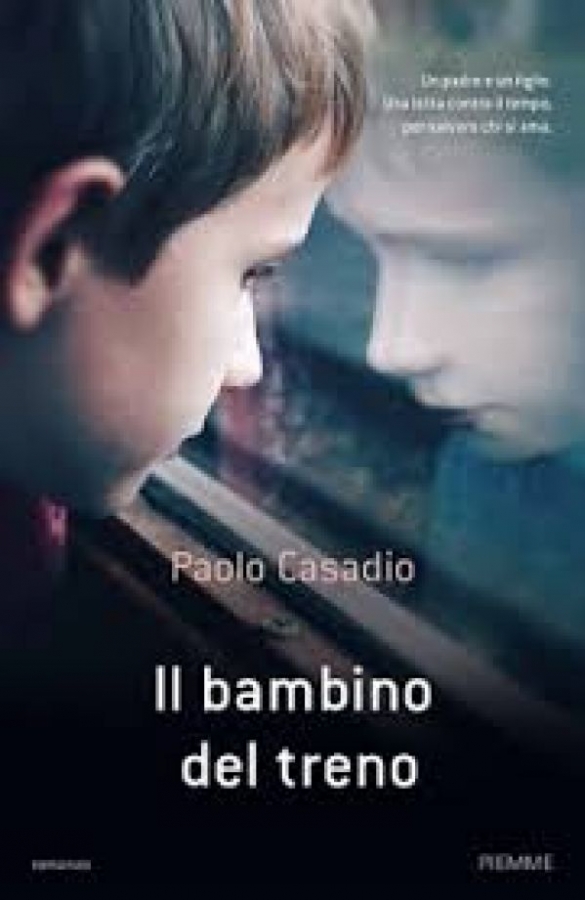
The Boy on the Train
All too often we forget the importance of places for our lives, for the shaping of our feelings, for the transmission of an individual and collective memory. As Paolo Casadio observes, walls, objects, and landscapes have the task of bearing witness to the past, of making it outlive ourselves, even if > walls know, but they can never say anything, only bear such a heavy burden in their mute immobility . At times they are not well-known or particularly distinguished sites; they are “non-places,” like the decommissioned station of Fornello on the Florence–Faenza railway line. It is with a “knot of anguish” that Lucia, wife of Giovannino, the new stationmaster, observes it: > that place overlooking the viaduct, that opening of trees and broom around the station, that drop behind the building which could conceal a fissure or a torrent, those marl stratifications that surfaced powerfully amid the garrigue, reflected back to her the image of an exile, the feeling of an invincible hostility . These are the years between 1935 and 1943, and yet, perhaps out of some dark premonition and a naturally fearful disposition, Giovannino experiences this isolation as a shield against the outside world. > Mount Castelpotente watched over the valley, and that mountain had stood there ever since the seabed had risen to form the Apennines. Nothing would happen. And nothing will ever happen, stationmaster. We, here, are forgotten. So spoke the blind man of Piandolci, like an ancient seer. Fornello and the small family—Lucia and Giovannino with the young Romeo—stand as a metaphor for Italian familism, for a life strategy that encloses everything within the realm of affection and familiar, unchanging surroundings; yet we know this to be an illusion, a vain and dangerous hope. With a slow, dreamy rhythm, the novel traces little Romeo’s childhood: the mountain environment, the village school with teachers and classmates unimaginable to us city dwellers, the relationships with peasant families, distant in space yet close in heart. It is a wondrous world for a child, where the few dangers fall within the eternal order of things and events. Nature is ultimately a friend, even when the blizzard rages, or the fields, paths, and houses are buried under snow. Everything changes when the most terrible tragedy of the Second World War bursts onto the scene: the deportation of the Jews. A train laden with poor souls destined for death halts for a night at the small Fornello station. They are permitted to disembark, sleep, and take refreshment with Lucia and Giovannino. Romeo befriends a little girl: a childish infatuation that could have a tragic outcome. > He does not yet know it, but nothing, after all, has any meaning other than what we assign to it, since everything disappears. He has truly grown up, the experience having served as a kind of initiatory ordeal: he has entered the land of loss and regret, and there is nothing more adult than grasping their irremediability and their meaning. And meaning, in that December of 1943, is truly difficult to find . It is a novel about childhood, underpinned by a haunting question for us adults: is it possible to be children? No, if even in an isolated Apennine village a child cannot grow up in peace. It would seem that the blame for this existential unhappiness lies entirely with an outside world gone mad, that it is the responsibility of others, against whom familial affection, friendships, and a benign nature are utterly powerless. Is this truly so? We cannot reveal the ending; we can say, along with the author, that we are all powerless > to alter the course of things, to neutralize the hostile relentlessness of fate, which so often turns into unappealable verdicts . And nothing remains but > the embrace, involvement, meager consolation, (...) communion in sorrow. The fundamental merit of the novel lies in its writing—perhaps somewhat unfashionable in its classicizing Italian, yet so elegant and refined as to satisfy a nostalgia for fine language. What is lacking, unfortunately, is the plot: the narrative pacing unfolds without surprises, except in the final pages: a long wait that is not redeemed by the characters, who are too sketchily drawn, nor by the description of the Apennine setting; and this latter proves a bitter disappointment—the failure to convey the magical, ancient atmosphere of a landscape and a society that have now vanished. Why read it? Beautiful, even if a bit dull.
The Fourth Summer
Following an eventful journey and having lost her luggage, the young doctor Andrea Dalvina Zanardelli arrives in Ravenna to take up work at the Marina di Ravenna sanatorium, where "scrofulous" children from the orphanage are treated. The year is 1943. Dalvina comes from an affluent family on Lake Garda. Her very first encounter surprises her, when at the station she is asked whether she needs to go to Marina or to Abyssinia. Then there is this strange landscape, so distant from her idea of the sea: > a sort of swamp, a pool of rippled water that one sensed was barely deeper than a puddle, and which are called "valli" (or piallasse), like those in her mountains. From the outset, she felt its charm, a > wild charm, (...) burdened by the toil of poor folk, (...) the camaraderie among the sailors, the respectful silence with which they greeted one another while puffing on clay pipes, and because of all this (...) she felt rather at home. For her, the lovely girl *with apricot-coloured hair*, little was needed: > her character demanded frankness, authenticity, for she felt she belonged to simple stories. And so she immediately took to the sanatorium, > the absolute radiance of the place, the ceaseless breaking of the waves, the briny taste clinging to the flesh, (... the orderly simplicity of the rooms and the quiet diligence of the nuns, bearing peculiar names such as Leopola, Nolasca, Zoefe, Benespera, Galizia: a community of religious women devoted to Saint Dalmazia, yet always and above all women, with their secrets and their loves, not necessarily directed solely to Christ. Over the span of a few months, a "simple" story unfolds—a microhistory set against the grand history sweeping across Italy, from the Allied landing to Mussolini's downfall and the German invasion. Up until 8 September 1943, the author recounts these events through the madness of the sanatorium’s previous physician, who was removed and institutionalized because he believes himself to be Benito Mussolini: a deft metaphor for the folly that dragged our country into war. Then, at a certain point, it is no longer possible to hide behind the incurable rhetorical delusions of a poor madman: > the word "bombing" had just entered, with all its disruptive force, into the organized routine of the sanatorium. What had seemed stable and everlasting now wavered, was no more, and by any measure of logic no guarantee, no immunity could be foreseen. For just a while longer, we readers hope to remain immune to the war, able to follow Dalvina as she discovers herself, her body yearning for love, and her maternal side, which binds her inextricably to a poor scrofulous boy—not out of pity, but because > she felt those whispers creep into her flesh, cross barriers and defenses, and reawaken an intimate, indecipherable unease that made her start, and certainly not because of the mysterious origin of the words. Yet destiny looms over us all, its meaning difficult to discern because it pays no heed to Love and Hope: > bombs are hardly obedient, nor are they intelligent. They go wherever they please. (...) Yearning to dream. And so who knows, perhaps she had made up this whole fable of nuns, sea, and children. Her children. These are Dalvina's final thoughts. And had everything remained a dream, might she have been saved? Paolo Casadio possesses the ability to take small, real facts—the fruit of meticulous archival research—and build stories that invariably feature an enchanted "Setting", steeped in mystery and magic. In his debut novel, *Il bambino del treno*, it is a small station along the Faenza–Florence railway line that serves as the backdrop to a true event. In the subsequent *Fiordicotone*, the setting is Lugo di Romagna, although this narrative effort is less successful than the former because the author scatters his focus across too many themes and departs from his smooth, elegant prose—Casadio's quintessential virtue (see the reviews on this site). Here, by contrast, the Romagnol author is at his best: the reconstruction of Marina di Ravenna's atmosphere, so different from what it is today, evokes in the reader indecipherable, fairy-tale sensations, and it is easy to imagine how captivating it must have been for an educated girl from the North; the nuns' personalities are portrayed with affectionate irony, and we seem to see them right before our eyes, in their feminine passions and their nonetheless steadfast faith; and what of the "scrofulous" children, growing increasingly unruly and lively as their health improves (thanks also to the herbs of the pine woods); and then that gem of the delusional patient who believes himself to be Mussolini, amusing yet realistic. Perhaps the only shortcoming concerns the figure of Dalvina, drawn with insufficient psychological depth and constantly relying on hints of past wounds, which remain unresolved and prevent us from fully grasping her personality. And finally, we readers are left disappointed, having expected a happy ending. Why read it? It is a wonderful novel, an enjoyable and compelling read.
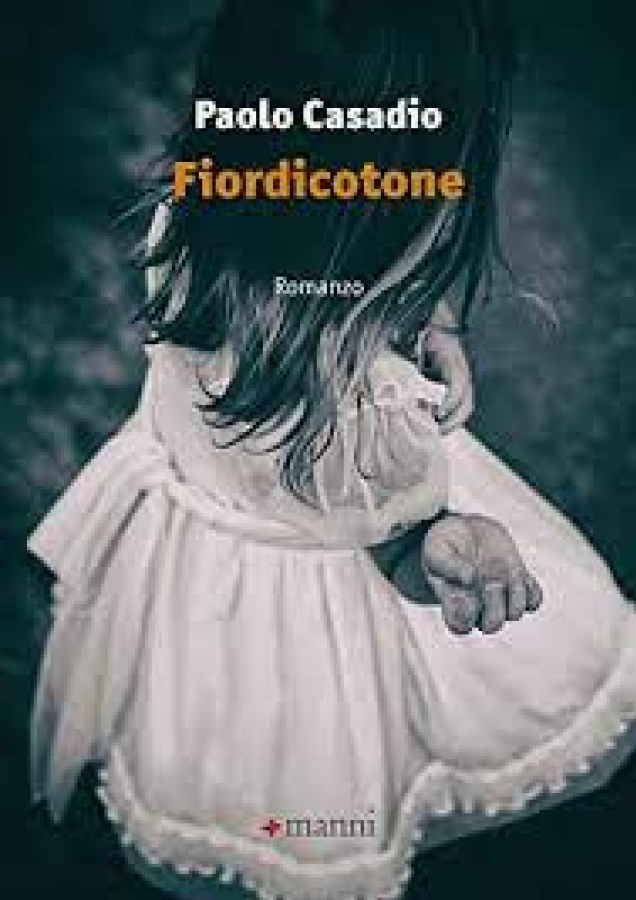
Cotton Flower
On December 15, 1943, the Jewish De Fano family was arrested and sent into internment: Omero, «the gentle bookbinder», the elementary school teacher Alma, her mother, and little Velia, the couple's daughter, an albino child nicknamed Fiordicotone. In the chaos of the roundup, the girl was hidden beneath a man's black cape, thereby surviving. Omero and the elderly mother were immediately put to death, while Alma was set aside for the SS officers for their sexual diversion. «Do whatever they ask of you, if only to save your life», her mother had told her, «naked among other stripped women». Yet if placing her body at the service of her tormentors had preserved her life, the experience had profoundly wounded her spirit. Looking into the mirror after the liberation, Alma > could not recognize herself. She had unbuttoned tunic and shirt and looked at herself. A perfect, desirable body. She saw herself colorless, her eyes worn out, her face faded and lifeless. In that body she once loved so much, she caught the sadness, the anguish of a solitude continuously abused . It was from this dual suffering, as an internee and as a prostitute, from the heaps of the dead and the humiliation endured ( > the sour taste in her mouth, on her skin the wretched, lingering scent of violence ) that there grew in Alma the perception that no afterwards existed, > for that hell was so bottomless and devoid of dignity as to leave no room for hope. Nothing was left. Only Fiordicotone. As is to be expected, the book recounts the search for the daughter: the initial shelter in Switzerland, the journey through a ruined Italy as far as Lugo, the discovery that the girl was no longer in the town, the struggles to learn where she was, and finally the encounter with Velia. An old blind woman's omen hung constantly over Alma: «You will find her, and when you have found her, you will return to the shadows». Like Alma, the reader too fails to understand the words, obscure as the oracles of the Sibyl. What does it mean to return to the shadows? We discover throughout the narrative that Alma cast no shadow; she was like a ghost, corporeal yet insubstantial, soulless. Alma «was the prisoner of a tattooed number», had no hope, and did not believe there was a future for her daughter. In tones perhaps overly melodramatic, yet keeping us suspended in anxious anticipation, the author carries us through to the conclusion. In an earlier novel (*Il bambino del treno*, reviewed on this site), Paolo Casadio took as his starting point a true event, set in a precise location: a small, now-abandoned station on the Faenza–Florence railway line. Both the setting and the historical episode provided a concrete anchor for the narrative; along with the elegant style, they contributed to the novel's success. In *Fiordicotone*, Casadio disperses his focus across too many themes, from the existential drama of the internees to the search for the daughter. The unifying thread is not so much the story or the protagonist, but an aura of death, of ghosts hovering from the past, running the risk of slipping into «fantasy» (one need only consider the image of the shadow, frankly overstated) or, more nobly, into the evanescent, abstract register of much of Mario Luzi's poetry. In attempting to say too much, the author neglects the setting of Lugo di Romagna, the characters, and in particular the reconstruction of the ambiguities, the craven compromises, and the petty, well-intentioned subterfuges of so many people who nevertheless acquiesced to the horrific aims of the Nazi regime: consider, for instance, the figure of the *maresciallo*. The frequent resort to full stops, with the resulting verbless sentences, fragments the narrative and undermines the elegance of the prose: a detrimental legacy of the prevailing journalistic style. Why read it? It reads very well and is interesting from a historical perspective.