Finished reading on: May 03, 2023
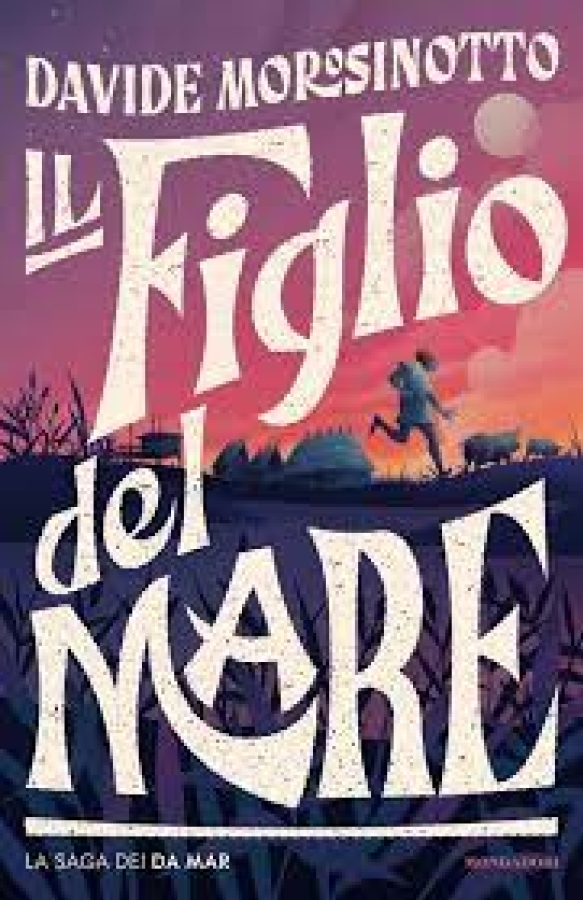
The Son of the Sea
Title of the original version reviewed: «Il figlio del Mare»
AI Translation Notice: This review was translated from the original Italian using artificial intelligence. Book quotes and excerpts are translated interpretations and will not match the author's original English phrasing or official published translations.
Let us imagine that in a world—our own—imprisoned in a crystallized social structure, an extraordinary event occurs, upending established arrangements and enabling the destitute to climb the social ladder. Perhaps a revolution is possible only in the wake of a war or a natural disaster. With a tenuous narrative, this novel introduces the theme of change, setting it in an era far removed from our own: 452 AD, when the Huns invaded Italy. We find ourselves in Atesis, modern-day Este, a town then lapped by the Adige River, which shifted its course in 589 following a catastrophic flood. It is a sluggish town, dominated by a powerful Roman family and local notables, the so-called curiales. Pietro is a strapping, red-haired lad who works as a swineherd; a hulking fourteen-year-old, timid, withdrawn, illiterate, born of a single night of passion between his mother and a barbarian "who came from the sea, from the lands that lie beyond the great water." Having foolishly humored the curiosity of Giustina, the master's pretty, restless daughter, Pietro earns himself a sound thrashing—just punishment for daring to speak to the girl: a swineherd you are and a swineherd you shall remain; better to consort with the buxom Galla, a commoner like yourself! Everything changes with the arrival of the Huns, received with dread as ferocious, invincible warriors:
they appeared very tall and robust, with compact physiques (...), their steeds had foam frothing at their mouths and eyes full of madness
. In reality, toward Pietro and Giustina, who find themselves held captive together, they do not behave as abominably as one might expect: they spare their lives and allow them to return home, where Pietro will fight valiantly in the epic, futile battle to save Atesis. The town is sacked, the countryside is overrun by barbarians and bandits, food and shelter are gone; there is nothing left to do but flee and seek refuge in the lagoons, where the Huns dare not venture for fear of pestilence. They set out on a perilous journey, alone, brutalized by fear and starvation: two teenage boys, Pietro and Tito; a girl accustomed to the comforts and protections of an affluent household, Giustina; and an old black mare. There is little point in following them across the plains and canals leading to the Venetian lagoons: the narrative is trite; it foreshadows The Adventures of Tom Sawyer without possessing any of its pace or suspense, gradually devolving into a cloying tale, rife with implausibilities, and thoroughly detached from its historical and natural setting.
"There is no journey longer than the one that brings you home," the author declares in the Acknowledgments. After numerous novels set around the globe, Morosinotto turns his attention to his native soil, embarking on a saga that presumably intends to trace the fortunes of Pietro and Giustina—and their heirs?—in the founding of the future, magnificent Venice. Well, he might have applied greater care, rather than relying on timeless adolescent clichés (are we so certain that teenagers in 500 AD were just like our own?) and striving instead to cultivate an atmosphere rooted in the marshy wetlands of the lagoons. One must grudgingly concede that war serves as an effective device for pacing: the defense of Atesis, with its skirmishes and plot twists, engages the reader, evoking an Iliad in miniature.
The prose flows lightly and smoothly, free of rough edges: an agreeable read, yet one that contributes to the sense of hurried superficiality permeating the novel. I would highlight a stylistic idiosyncrasy: across nearly four hundred pages, the punctuation consists solely of periods and commas; there is only a single colon, and not a single semicolon. A display of virtuosity à la Cesare Pavese, a nod to the journalistic style so in vogue, or pandering to an adolescent readership presumed unaccustomed to articulate syntax?
Why not read it? It is trite and dull.