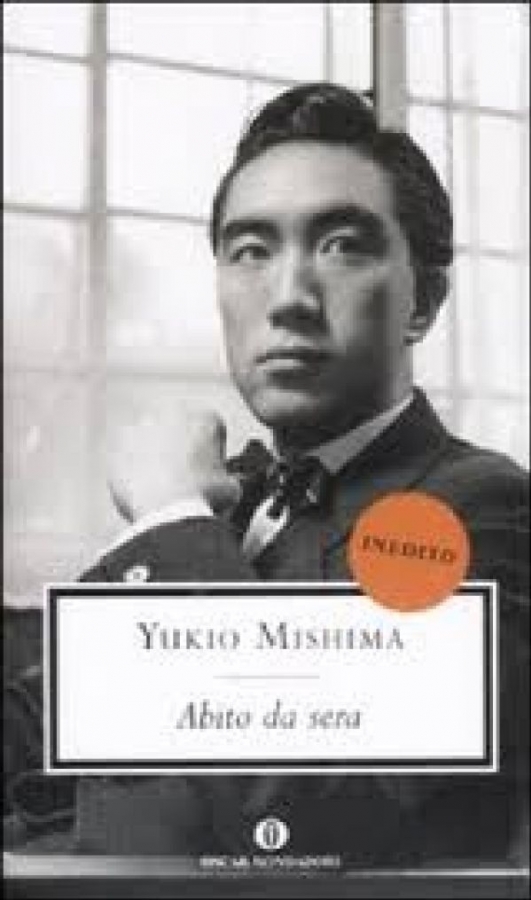
Evening dress
The novel is set in 1960s Japan, when the upper and middle bourgeoisie is becoming Americanized, flirting with Western customs, eager to forge international ties. Ayako is the daughter of a minor yet rising pharmaceutical entrepreneur: she has “amiable” features. > Over those features, even with fashionable makeup, hovered harmony and freshness, and her face, by no means plump, gave the impression that something inner was rising to the surface Ha un carattere pacato, composto e razionale, > but Ayako was by no means obtuse; it was merely that she lacked an inclination toward momentary enthusiasms and toward exaggerating passions . The young woman frequents a fashionable riding club, where she meets Lady Takigawa, the widow of a high-ranking Japanese bureaucrat. Through a stratagem, the woman introduces her to her son, Toshio, whom she herself describes as > egocentric, selfish, stubborn, caustic—in short, a young lion . And yet Toshio has an entirely different self-image: a kind of robot, rigid and somehow other-directed by his mother. An arranged marriage is brokered, readily accepted by the two young people, partly because they are fond of each other and partly out of obedience to their parents’ wishes. The honeymoon strengthens their bond, which evolves from mere mutual liking into passion, genuine love. It would thus seem a lovely fairy tale, upon which Lady Takigawa intrudes, insinuating an alleged betrayal by Toshio—an insinuation that devastates Ayako. Yet who is Lady Takigawa? She is what used to be called a “merry” widow: wealthy and powerful, she has an immense love for high society, receptions, and social networking. Behind a tender, affectionate face hides an “innocent malice, (...) an unpleasant woman,” a split personality. One evening, the young couple is invited to a reception by Lady Takigawa. Yet right at the threshold, Toshio discovers the unbelievable lie and decides to rebel, refusing to go to his mother’s; Ayako tries to object, but then obeys her husband and follows him to eat at a modest diner. It is a scandal; offended, humiliated, and filled with rage, Lady Takigawa demands that they divorce, accusing her daughter-in-law of showing her a lack of respect. How is the matter resolved? Certainly not by telling the scheming mother-in-law where to go, nor by shrugging one’s shoulders and going about one’s business. We are in a world of conventions as well as interests; Lady Takigawa is wealthy and powerful. Toshio visits a princess of the Imperial Court, asking whether she might be accompanied by his mother on a trip abroad. > In that sort of conversation, Toshio was on his home turf, playing a game the youth of today could never imitate The princess knows full well the reasons for the visit, but > her countenance remained imperturbable, tinged with a tender understanding, enchanting as a dawn sky, then in a clear and decisive tone , she accedes to the young man’s request, on one condition alone: the two youths must show toward Lady Takigawa > a sincere tenderness, (...) asking forgiveness with grace, even should his mother deem it unacceptable . In short, conventions must always be respected, even if deception has been used to circumvent them. The narrative lends itself to multiple interpretations. What is clear is that the two young people undergo a transformation: though both belonging to a social class dominated by form, before marriage they were frank, sincere youths; to survive, they too become mere “semblances,” altered by anxiety and fear. > Perhaps marriage was a school where one is taught the lie of life , for one must > foresee the reactions of the outside world from every angle, as if the doors on all sides of a room, previously hermetically sealed, had been thrown wide open . On the other hand, there is no alternative for poor Ayako, > she could have become a little bird flying away, entrusting its shadow to that plain, but there was an emptiness there and it frightened her, not even a tree branch on which to rest her wings . The story is elegant and subtle, yet superficial: many windows open onto the protagonists that one would like to see explored in greater depth, but they remain mere glimpses; the author hurries off at once toward something else. Absorbed by his critique of Japanese society and its frantic Americanization, the author neglects those parts of the novel that most captivate the reader: how social conventions erode authenticity and the carefree joy of living. Why read it? It is read with great pleasure, for its narrative style and because one grows immediately fond of Ayako.

Accabadora
Maria is a *fillus de anima*, > that is what they call children born twice, of the poverty of one woman (who gives them away) and the barrenness of another (who welcomes and raises them). In our case, Maria has been “adopted” by Tzia Bonaria, an elderly widow. The novel’s first part, the most accomplished, recounts Maria’s childhood and adolescence, and in particular her gradual acquaintance with her adoptive mother—a woman always dressed in black, austere, reserved, who ostensibly earns her living as a seamstress. Tzia Bonaria provides the child with relative comfort, ensures her education, and above all constructs a fragile normality around Maria, behaving “as though the child had been born of her own womb.” For Maria, this filial bond and the acceptance of belonging to two families is a gradual conquest, one that accustoms her to being the focus of public attention, to accepting anomalous situations, and to shaping her own life independently. Her ability to confront the unspeakability of the world and of human nature collides, however, with a jarring and unsettling discovery. Tzia Bonaria is an *accadabora*—that is, a woman who grants a sweet death (euthanasia) to those who ask for it. In a dramatic confrontation, Maria, “with the tearless sob of a strangled beast,” demands that the elderly widow explain “this necessary thing,” the dispensing of a sweet death. And Tzia Bonaria’s justification is startling, lying far beyond Maria’s comprehension. > I learned on my own, says Tzia Bonaria, that children need both the slap and the caress, the breast, and the feast-day wine, and whatever they need, whenever they need it. I had my part to play, too, and I played it.... I was the last mother some ever saw.... When the time comes, Maria, you will discover things about yourself that you do not yet know . The young woman cannot bear the thought of living with a woman who dispenses death and flees far from Sardinia, finding employment with a family in Turin. This marks the second part of the novel, an interlude that also serves as a turning point—albeit a rather obscure one—in the narrative arc. One of the boys entrusted to her care as a governess is a taciturn, hostile, domineering adolescent; yet Maria’s habit of reckoning with the indescribable allows her to unlock the young man’s inner life and uncover a dreadful secret: the boy suffered sexual abuse in his childhood. Sharing so horrific a truth leads to love, for the bond between individuals is never stronger than when it rests upon the profoundest mysteries of the human soul. In the third part of the novel, Maria returns to Sardinia to attend to Tzia Bonaria in her slow agony. The narrative moves gradually, yet also sluggishly, toward the epilogue, without, however, delivering the resolution one ought to expect. Why does Tzia Bonaria die a moment before Maria is about to perform the euthanasia? Is a sweet death a threshold we cannot cross? Something we ultimately cannot accept? In addressing so complex a theme, there was a risk of drifting into redundant prose, fraught with parenthetical digressions and overwrought passages. The author, instead, has navigated the subject with a light, restrained, at times ironic style, relying on vivid character sketches and vignettes typical of rural Sardinian life. The novel’s first part is undoubtedly the finest, both in its prose and its dramatic structure. The storytelling builds in intensity as it approaches the final scene: the clarifying confrontation between Maria and Tzia Bonaria. In the subsequent parts, the narration becomes bloated, forfeiting that spareness and levity that had characterized the preceding pages. The narrative thread itself splinters and dissolves, depriving the reader of a clear sightline toward the conclusion, which disappoints all the more for this very reason. Why read it? The subject is compelling, the prose engaging.
L'Adalgisa
Il libro è costituito da 10 racconti, che sono altrettanto bozzetti della vita della borghesia milanese degli anni ʼ30. Il tratto comune è una lieve ironia di una società soddisfatta di sè stessa, attenta ai soldi, ai buoni matrimoni, alle occasioni mondane, ma anche alla cultura tecnica, «allʼingegnere». Le scene della vita lombarda sono, poi, lʼoccasione per Gadda per una esplosione di parole, modi di dire, neologismi, sovrapposizioni di forme dialettali a italianismi, che confonde il lettore, il quale perde, spesso, il senso del racconto ma anche il filo del discorso. Sembra, quasi, che lo scrittore abbia lavorato in piena libertà con il linguaggio ed è, quindi, impossibile riferirsi ad una trama, a personaggi, ad episodi, ma la lettura si perde in una serie di impressioni, alcune felici, molte noiose e ripetitive. In uno dei racconti più briosi ( > *Quando il Girolamo ha smesso...*) Gadda racconta le vicende di una onorata ditta che fallisce in quanto ha dato i soldi ad un finanziere creativo: “per levar di tasca, a certi bamboloni con la bocca aperta, lʼanima di quei quattro ruspi o ovverosia sudati risparmi che gli son costati una vita; per spennarli a modino, sti cocchi di mamma, senza gli abbino a strillar troppo forte, e arrivare a farli finalmente contenti dʼun bellʼuscio chiuso, sigillato in piena regola dallʼautorità giudiziaria, per raggiungere questa suprema meta del credito e dellʼattività creditizia, si può bene ingegnarsi adoperare una Croce, la Patria, poi, neanche a parlarne”. In un bozzetto felicissimo sulle abitudini della borghesia milanese (*I ritagli di tempo*), lʼautore racconta il sonnellino durante la lettura del giornale: “bello è il vedere un ingegnere Caviggioni seduto, e quieto, una volta tanto, onninamente immemore del 263.890 e delle filettature normali (dei bulloni Withworth): seduto, dico, anzi nobilmente abbandonato sulla poltroncina del sabato, in attitudine pregustante, indi poco di poi assaporante”. In un altro racconto (*Un concerto di centoventi professori*), viene tratteggiata con benevole sarcasmo lʼabitudine a frequentare il teatro, dove > la società musogonica della città industre, aja di laboriosi pupilli, dopo le molte buone opere, sʼaduna a purgare le sue indigestioncelle farisaiche, i suoi peccatuzzi stitici, col porger orecchio a quegli altri peccati, un pò più cipperimerli per fortuna, di Luigi Dallapiccola e di Igor Strawinski . Perché non leggerlo? Singoli frammenti sono anche deliziosi, ma per gustarli bisogna soffrire per 284 pagine.

The Adolescent
Arkady Dolgoruky, the first-person narrator, is the natural son of Versilov, > a cold and proud man, haughty and negligent toward me, who..., having fathered me and abandoned me among strangers, not only did not know me at all, but never even repented of it . Arkady suffers deeply from his father’s indifference, not least because the latter has taken his mother with him and reduced the young man to a state of acute social distress, as his status as an illegitimate son is known to all. > I was like an outcast... and I had decided to renounce them all and withdraw once and for all into my own life . What draws the young man, who has now completed his secondary studies, out of his isolation is a letter from Versilov inviting him to Petersburg. The first part of the novel recounts Arkady’s encounter with the complex and elusive figure of his father: a fraught relationship, also because > that man was nothing but my dream, the dream of my childhood years. Thus I had invented him myself, whereas in reality he proved to be different, fallen so far below my fantasy . Yet Versilov is not the sole center of Arkady’s life. The young man finds himself caught within a veritable “enigma,” woven of characters, relationships, and events, amid which he feels ill at ease with his rigid, solitary, and proud disposition. Much to his regret, he must acknowledge that people have multiple faces, that interpersonal relationships are often ambiguous, and that there is a “sacrosanct axiom” in Pushkin’s famous verse: “dearer to me than base truth / is the deception that transfigures us.” In the second part of the novel, Arkady appears to have accepted this reality. He leads a dissipated life, devoted to gambling, drinking, and women, while neglecting his mother and sister, whom he has only just met. This might be an ordinary phase in an adolescent’s life, were it not for the fact that Arkady carries a terrible secret: sewn into his coat is a document in which Katerina Nikolaevna, Versilov’s former lover, formulated a plan to have her father declared legally incompetent—a wealthy, elderly prince to whom, moreover, Arkady is deeply attached. The discovery of this document would prompt the prince to disinherit his daughter and would favor the aspirations of Arkady’s half-sister, who wishes to marry the old aristocrat. To complicate matters, Arkady is in love with Katerina and cannot bear to betray her. Furthermore, he is fond of his half-sister, fascinated by her intellect and strong character. Everyone suspects that the young man possesses the document, and so they cajole him with words and gestures that the naive Arkady misinterprets as genuine acts of friendship and even love. It is difficult to navigate this web of intrigue, especially when one lacks a clear perception of good and evil and when people are neither clearly wicked nor purely virtuous. What reigns is “the soul of a spider”—namely, that man > can cherish in his soul the loftiest ideal alongside the greatest baseness, and all in perfectly good faith . Yet Arkady too is seized by “ignominious thoughts”—for instance, using the document in his possession to win Katerina’s love. > Where, then, had all of this come from, already so prepared? And this, because I had the soul of a spider! It means that everything had sprouted long ago and lay in my corrupt heart, lay in my desire . And it is precisely Arkady’s weakness, his yielding to the pull of evil, that precipitates the crisis in the third part of the novel. The young man is himself duped by criminals who secretly steal the document from him and attempt to blackmail Katerina. To his horror, the youth later discovers that they are in league with Versilov.. Versilov’s split personality confronts the young man as a “broken image,” all the more so after an intense, long-awaited conversation in which Versilov had professed to his son his love for Arkady’s mother, only to subsequently send Katerina a formal marriage proposal. Who, then, is his father really? Perhaps merely a man driven by whim, by unchecked vanity, Arkady thinks. The disillusionment with the father figure is complete. Arkady is no longer an adolescent. *The Adolescent* is the author’s most contemporary novel. Several elements contribute to this: the modernity of the father-son relationship, the Pirandellian theme of duplicity, the detective-story elements of the plot, which is full of twists and turns and frequently leaves the reader in suspense as to what will follow. The book’s greatest merit lies precisely in its tight pacing, which leaves little room for philosophical disquisitions, as is so often the case in the author’s other novels. Beyond Dostoevsky’s well-known skill in constructing dialogue, what is striking is the author’s ability to mirror duplicity in the very structure of the sentence: for example, chapters unfailingly close with the image of a contradiction, of an ‘other,’ delineated in just a few sparse strokes. Why read it? It is one of Dostoevsky’s finest novels, insufficiently appreciated perhaps because it does not foreground philosophical and religious themes.

Adwa
The publisher presents the book as a novel with two voices, “that of a father and a daughter.” This summary is certainly accurate. Adua fled Somalia to escape an authoritarian father and to fulfill a dream: to work in cinema and become a famous actress. In reality, she managed to make only one film—a pornographic one. Twenty years later, she finds herself a mature woman, an “Old Lira,” as the new immigrants call “the women of the diaspora.” Partly out of compassion and partly for companionship, she marries an immigrant who > hung around drunk in many parts of Rome (...). But it was in Piazza dei Cinquecento (...) in that square that Italy had dedicated to soldiers who died in East Africa, that I concocted a papier-mâché love . Born to a strong and courageous woman, Asha the Daredevil, with a happy nomadic childhood among goats and camels, a sad adolescence in Magalo and Mogadishu, a desolate and mundane life in Rome—what has become of Adua’s dreams? > I wanted to be free to run in the wind. (...) I felt that the big city would devour all my purity, all my dreams . The author offers us glimpses of Adua’s life, but in truth she continually speaks of her disappointments, of her struggle to survive, nevertheless. Zoppe, the father, lives in another era, during Fascism and the ruthless colonialism of the Italians. He collaborates with the latter as a translator, makes himself a servant, witnesses the atrocities, the abuses, the racist and contemptuous conduct of our compatriots, in Italy as in Somalia. Here too, the narrative is made of slices of existence, important not so much for what they say as for what remains beneath the surface: self-contempt and, at the same time, the betrayed fascination with Italy and its language. Zoppe is nevertheless a traditionalist, who does not hesitate to subject his daughters to infibulation, because > afterwards there will only be the happiness of being pure, finally sealed as God commands . He is an authoritarian father; he disapproves of and disdains his daughter's aspirations, cynically and cruelly intent on severing the memory of Adua's mother, who died giving birth to her. > But enough, stop naming her. That woman is nothing, she is just a mistake . The two stories, Adua’s and Zoppe’s, run largely in parallel, like two straight lines that never meet—not because their lives unfold in different times and contexts, but because father and daughter do not speak to each other; they are too distant, both lacking the ability to express their love. > I like Rome in summer, especially its evening light at dusk; it is warm, and even the seagulls become gentler, making you want to hug them. They are the masters of the piazzas, but here you are, little elephant, and they dare not. Away, stay away from Piazza Santa Maria sopra Minerva! I feel safe near you. Here I am in Magalo, at home . Adua’s words “dissolve and are lost.” Look at the nigger, talking to herself”. And Zoppe walks through Fascist Rome and “the vision was still there to comfort him (...) The trees... the dome of Saint Peter’s... then the wisteria in bloom... the scent of the women... the walking sorbets... the martial tread of the soldiers... the rustle of rainbow skirts... their hopes painted blue > . This is what binds father and daughter: the love for Rome. Scego narrates a great deal about Somalia; the reader strongly perceives the desire to return ideally to the homeland, to reclaim the language, its sounds, and its imagery. Yet the novel speaks above all of a betrayal, of an Italy, a city—Rome—a language, and a history that, like beloved women too beautiful to be conquered, reject the courtships and overtures of the new Italians. I must say I was often tempted to abandon reading, and I carried on to the end solely out of sympathy and esteem for the author. It is difficult to write two parallel stories, but even more so if one relies on flashbacks,” dreamlike digressions, and trailing, opaque sentences. Without a plot to bring order to it all, a great confusion emerges, a crowding of thoughts and images that makes reading laborious. In this novel, Scego loses the gentle irony and subtle elegance that distinguish her writing. Perhaps she demanded too much of her abilities; a missed opportunity. Why not read it? It is confused and, in the end, tedious.

The Adventures of Tom Sawyer
Tom Sawyer is a young boy who lives with his aunt in a small rural town on the banks of the Mississippi. Mark Twain introduces him in this way: > he got back home barely in season to help Jim, the small colored boy, saw next-day's wood and split the kindlings before supper—at least he was there in time to tell his adventures to Jim while Jim did three-fourths of the work. (...) If he had been a great and wise philosopher, like the writer of this book, he would now have comprehended that Work consists of whatever a body is obliged to do, and that Play consists of whatever a body is not obliged to do. Tom is not clear on this distinction and takes a carefree, unencumbered life as serious business, swinging from melancholia—which prompts him to wish he could die temporarily, just to make himself missed—to a fantasy world in which he dreams of being a pirate or an outlaw. And so, with his faithful friends, especially the vagrant Huckleberry Finn, known as Huck, he embarks on a series of exploits, from the pirate life on an island in the middle of the river to wandering through the graveyard at night, witnessing a murder, all the way to setting off in search of treasures surely hidden by bands of robbers. This dizzying flurry of activity does not prevent Tom from courting Becky, a girl from a respectable family, who also finds herself drawn into Tom's reckless escapades. There is no point in recounting the plot, at times convoluted and commonplace yet never dull: it is far more interesting to dwell on two peculiarities of the novel. The first is the rural setting; with gentle and affectionate irony, Mark Twain depicts the school, dominated by the schoolmaster's authoritarianism; the church gatherings with the preacher's tedious and moralizing sermons; and the hilarious ritual of Examination Day, when the best pupils present an essay of their own before the entire community. One can smile, as Mark Twain does, at the ornate English, laden with words that most people likely do not understand, at the puritanical and sanctimonious values, at education imposed by sheer force; nevertheless, a strong communal spirit emerges, seeming to transcend even class divisions. It is a white society, placid in its values, with a single, clear boundary: discrimination against Black people, who remain in the background even as they sustain the small town's agricultural economy; one can sympathize with the vagrant Huck, but not with the servant Jim. The other compelling aspect lies in Tom's powers of fabulation. Unlike the protagonists of other coming-of-age novels, Gian Burrasca or Jim from *Treasure Island* (see the reviews of *Il giornalino di Gian Burrasca* and *Treasure Island* on this site), what surprises is Tom's dialectic: how he manages his aunt, capitalizing on her naive affection; how he cajoles his friends, talking them into adventures and overcoming their reluctance; how he persuades Becky to follow him into dangerous and intimate situations, paradoxical for such a prudish society. And when Mark Twain remarks that he can stop at writing the story of a Boy, because > the story could not go much further without becoming the history of a Man. (...) When one writes of juveniles, he must stop where he best can , he perhaps means that Tom's innocent cunning would turn into a guilty capacity for deceit, as so often happens among adults. In Twain's imaginative world, it is better to keep playing with the petty subterfuges of adolescence. Beyond the character and the plot, the literary merit of *Tom Sawyer* resides in its writing—attentive to detail, magically realist, subtly ironic. Take as an example this passage, which describes Tom's awakening on the island of the imaginary pirates: > when Tom awoke at dawn, he wondered where he was. (...) Now, far off in the trees a bird called; another answered; now the distant strokes of a woodchopper were heard. (...) A little green worm came crawling over a soft leaf, lifting two-thirds of its body into the air from time to time and “sniffing around,” (...) then proceeding again, (...) and when the worm approached him, of its own accord, he sat still as a stone, (...) then (...) when it began a journey across him, his heart was all glad. (...) Now a procession of ants appeared from who knows where. (...) A brown-spotted ladybug climbed the dizzying height of a blade of grass (...) and Tom bent down close and said, > Ladybug, ladybug, fly away home, your house is on fire, your children are alone. These are wonders of a world inhabited at night by spirits, and Nature still seems endowed with a soul. And what of the description of the school, punctuated by that repetitive “showing off” (in Italian, *ostentare* or *vantarsi*)? All the teachers “put on airs”
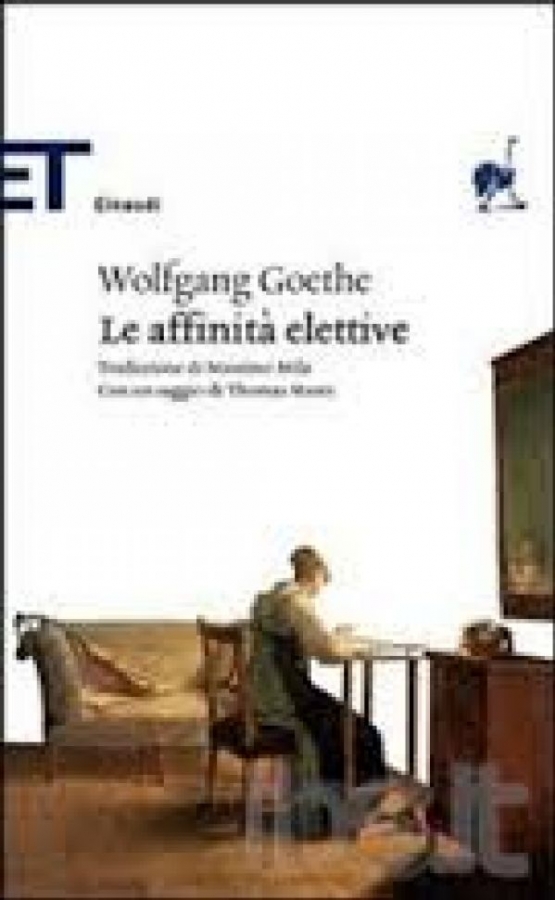
Elective Affinities
In early nineteenth-century Germany, Eduard and Charlotte are two wealthy landowners. Though they loved each other in their youth, they married late in life, after both had been widowed. They possess differing temperaments that seem to complement each other perfectly: Eduard is “in the prime of manhood,” impetuous, generous, but superficial and at times reckless; Charlotte is reflective, patient, and prudent in managing both household and estate. Life flows serenely, as they enjoy “undisturbed the happiness finally attained,” until two guests arrive. The Captain, a friend of Eduard’s, is a poised man of vast experience who places his skills as a planner, engineer, and organizer at their disposal. He cannot help but find himself in tune with Charlotte. Ottilie, Charlotte’s niece, is a graceful, sensitive, introverted, and seemingly quiet young woman. The boyish quality within Eduard cannot fail to resonate with Ottilie’s youth. And very soon > the secret attraction and the power of imagination asserted their rights over reality , with such overwhelming force that in the dark, during the couple’s most intimate moments, > it was none other than Ottilie whom Eduard held in his arms; the phantom of the Captain hovered near or far before Charlotte’s soul, and thus they entwined, the absent and the present, in an exquisite mingling of voluptuous excitement . Seizing the opportunity of the Captain’s departure, Charlotte wisely proposes sending Ottilie to a boarding school, but Eduard abruptly leaves the estate, seemingly relinquishing the happiness of loving the young woman. The two women remain together in an apparent calm, yet without returning to “a full and open harmony.” The marital crisis might be resolved, with a new bond, by the birth of a child, who nevertheless has Ottilie’s eyes and the Captain’s features. It is the physical proof of adultery, having indeed been conceived on that very night when, making love, the spouses were thinking of their respective beloveds. Affection and care for the child bring Charlotte and Ottilie back together: > everything seems to follow its usual course, as happens even in the most extraordinary circumstances, when everything is at stake, yet one still continues to live as if nothing were amiss . New characters enter the scene, such as a talented young architect who lavishes attention on Ottilie. Daily life is disrupted by Charlotte’s lively daughter—cheerful, tumultuous, even excessively so. The two women complete the projects already initiated by the Captain: the rearrangement of the vast park, the merging of several ponds into a lake, the construction of a new dwelling on a magnificent scenic viewpoint, and the restoration of the parish church. The pursuit of perfection pervades the characters’ actions, even driving them to recreate famous paintings through *tableaux vivants*, in which Ottilie commands admiration. Charlotte, out of affection for Ottilie or a secret desire to reunite with the Captain, would be willing to accept divorce and Eduard’s union with Ottilie. Yet it is the girl who refuses, making an entirely spiritual choice, though only seemingly resolute. In this part of the novel, the external narrator is joined by the young woman’s diary: brief entries alternating moral maxims and romantic reflections with the manifestation of the profound yearning of a youthful heart in love. And it is Eduard’s reckless impetuosity that precipitates such a fragile situation. He surprises Ottilie by the lakeside on an autumn evening; the two lovers embrace and > for the first time they kissed openly, freely, and parted with painful effort . The girl remains “troubled and agitated.” To return to the manor, she commits the imprudence of using the boat, despite having the child with her. Through a series of accidental circumstances, the child falls into the water and drowns. At this point, the narrative reaches its inexorable denouement. Ottilie, despite an outward serenity and expressions of diligent expiation, starves herself to death. Goethe, who was by no means religious, closes the novel with a sort of sanctification of the girl, likely indicating her spiritualization—Ottilie’s death as moral elevation. Thomas Mann defined the novel as > the clearest fusion of Eros and Logos, of sensuality and morality, of immediacy and reflection... a German work of the highest moral culture . Ottilie’s death by starvation would express > the obedience rendered to the law of the spirit, paying its tribute, with virile tragedy, to the ethical norm . *Elective Affinities* would thus be “a spiritual construction,” a philosophical text in the form of a novel, a sort of manifesto of Germany’s “moralizing mission,” its “imperious instinct.” Perhaps Merkel had read *Elective Affinities* all too closely when demanding that we Italians do our homework: she personifies Germany’s didactic intent toward the pleasure-seeking Mediterranean peoples. Without detracting in the least from the great writer, Mann’s interpretation freezes the book in the past, as a testament to the history of German thought, overshadowing what still makes it so modern: “the story of the magical attraction” between kindred souls that shatters friendship, mutual esteem, the most sacred institutions—such as marriage—and the orderly, elegant world we desperately strive to build. And Ottilie, taking everything too seriously, falls victim to the superficiality and selfishness of some, like Eduard, and the tedious wisdom of others, like Charlotte, who, often through excessive self-assurance, fail to grasp in time the tragedy of fragile, sensitive souls like Ottilie. Alongside the characters, another protagonist is the landscape. Within it, and in the continuous attempt to reshape it according to human design, the contradiction between present and past is expressed. The present seeks to confer upon everything a more harmonious and rational order; the past returns to us the spontaneity of nature, which also serves as a vessel for transmitting memories. By bestowing a new and more fitting arrangement upon the cemetery, Charlotte unwittingly offends the reverence felt for the departed, as relatives were accustomed to visiting them buried in different spots, however haphazardly scattered across the churchyard. It is as though the notion of time were lost, and with it memory, so inextricably bound to familiar places and their traditional disorder. The novel’s limitation lies in its frequent philosophical and moral dissertations. Particularly in the second half of the narrative, after Eduard has abandoned the house, these digressions weigh down and fragment the reading, breaking up the overall unity and marring both the narrative pace and the psychological depth of the characters. Even Goethe failed to construct the perfect work. Why read it? The story and the characters remain remarkably modern, if one allows oneself to be captivated by the plot.
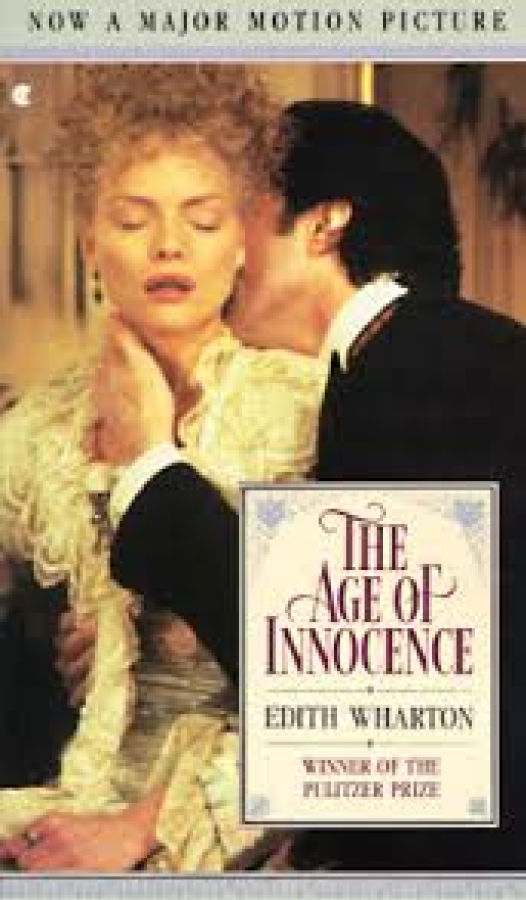
The Age of Innocence
The novel is set in New York at the end of the nineteenth century, when the old New York elite, with its oppressive social rituals, was overwhelmed by a new, upwardly mobile bourgeoisie—prejudiced and aggressive; it reacted by trying to ignore the changes, > until they crashed down upon them. What mattered was preserving the "traditional pleasantness" of social life. It is no coincidence that the tale opens with opening night at the Opera, meticulously described by the author: the arrangement of families in the boxes according to a rigid social hierarchy, the placement of individuals within them respecting family roles, the elegant gowns in the latest Parisian fashion, the hushed gossip that must cease when the solo is sung; an aristocratic atmosphere steeped in American Puritanism, and therefore superior to the frivolous European world. Amidst a crowd of minor characters, the three protagonists appear from the very beginning. Archer is a young lawyer with a passion for literature and a history of typical bourgeois transgressions (a mistress, perhaps a few young ladies), yet well aware that he must make a "good marriage." Reckless reading leads him to make nonconformist statements ( > women ought to be free—as free as we are ), but > he was a quiet young man endowed with strong self-control. Adherence to the discipline of a small society had become almost a second nature to him. Yet a restlessness stirred within him, leading him to feel as > though he were being buried alive under his future. Still at the Opera, in the family box in an unobtrusive position, as rigid etiquette dictates, sits the very young May, who > that very afternoon had allowed him to think there was on her part "an inclination" (the official New York phrase for a girl to declare an interest) ; a consummate representative of wholesome American society, who > would probably go through life facing each experience to the best of her ability, but never anticipating what was to happen by so much as a fleeting glance. Perhaps this heedlessness was what gave her eyes that innocence, and her face the semblance of a type rather than a person. Beside May is > a slim young woman, (...) with brown hair curling in thick locks around her temples, held by a narrow band of diamonds, (...) with a dark blue velvet skirt gathered beneath the bust by a belt with a broad, old-fashioned buckle. Her unusual carriage and attire catch Archer's attention: she is "poor Ellen Olenska," May's cousin, who has returned to America after separating from a Polish nobleman. Being taken in by the family is one thing, but displaying her in public, on opening night at the Opera, before all of New York's foremost families! From this opening scene, so voluptuously baroque, the story branches out: Archer is drawn to the mysterious and intoxicating Countess Olenska, who represents to him the promise of a different life, glimpsed through literature and now attainable through falling in love with the beautiful, melancholic Ellen. If we look beyond the haze of reverie, we discern that the figure of Ellen > had built up within him a kind of sanctuary where she reigned enthroned among his secret thoughts and desires. Little by little, this image became the scene of his real life, of his every rational activity. (...) Outside of this, on the stage of his actual life, he moved with a growing sense of unreality and inadequacy, blundering against family prejudices and traditional viewpoints, much like a madman colliding with the furniture of his own room. And yet, he imprisons himself in a bourgeois existence: he advances his marriage to May, counsels Ellen against seeking a divorce from her husband, leads an ordinary life beside an affectionate and understanding young wife, frequenting New York's customary social venues and fulfilling his duties to May's family. Slowly and silently, a muted curtain of protection forms around him: officially, no one knows of Archer's infatuation with Ellen—a burgeoning love marked by petty lies, abrupt business trips, and fleeting, supposedly clandestine meetings, as happens with all lovers. Then, all at once, May comes out into the open, having previously been eclipsed by the vitality of the splendid Countess Olenska; in a conversation made of insinuations, of truths half-spoken and withheld, May preempts Archer's irreparable confession by declaring that she is expecting a child and that, bold and cynical, she has used this still-uncertain pregnancy to induce Ellen to leave America. Innocent May has revealed herself to be an astute wife—not because she possesses any singular intelligence, but because she adhered to the well-worn patterns of the society to which she belongs. At a farewell reception for Countess Olenska (for appearances must always be kept!), Archer realizes that everyone knew about the affair and acted in solidarity to avert the scandal of a separation: in old New York, everything must proceed > without bloodshed: the way of people who dreaded scandal more than disease, who placed decency above courage. And on the other hand, Archer too shared these values, even if > he seemed to be witnessing the scene in a state of strange weightlessness, as if floating somewhere between the chandelier and the ceiling, nothing astonishing him so much as his own share (as a spectator) in what was happening. Written after the First World War, *The Age of Innocence* recounts the end of an era, narrating the loss of innocence of the American bourgeoisie. If in Alcott's books (see the reviews of *Little Women* and *Good Wives* on this site) the family is woman's natural destination, thus giving concrete form to her social role, in Wharton's novel marriage is a cage, a place of renunciation and duty. From this perspective, Countess Olenska is the longed-for figure, capable of living outside convention, like a butterfly flitting from flower to flower. This interpretation, emphasized by Martin Scorsese's 1993 film, does not encompass the tale's truest meaning. We must look from Archer's vantage point and from Wharton's conservative vision. In her introduction, Sarah Blackwood notes that two alternative endings to the book have been discovered. In both, the marriage is dissolved and Archer is able to go and live in Paris with the beautiful Countess Olenska. Why did the author decide that Archer should instead retreat into a flat bourgeois life, into the social and marital duties of old New York? The novel's primary theme is the weight of social rules, whose strength lies in their internalization within the conscience; they are a prison that charts our destiny, beyond our "secret thoughts and desires." And as occurred with Archer, nothing is left to us but to live in fantasy, to anchor ourselves to dreams and imagination, creating a parallel reality in our minds. Ever-renewed Don Quixotes of Cervantes or Quichottes of Rushdie (see the reviews on this site), we move about, lost and imprisoned in a world we would wish to be different, until, like Archer, we adapt, settled into a quiet life. How long can we keep doing so? Wealthy, influential, and surrounded by artists during her life in Paris, Wharton was also passionately devoted to being an "interior designer"; this accounts for the detailed descriptions of interiors and attire—veritable theatrical stagings, already cinematic, so rich in imagery, resonance, and symbols. It is a meticulous, seemingly realistic prose that radiates a dreamy, suspended, and evanescent charm. Whether Wharton ever knew Joyce or Proust I cannot say; yet behind the superficial nineteenth-century patina, we are clearly in the presence of an innovative narrative, an anti-novel. The lexicon is rich, with a distinctly American stamp, coupled with an articulate and refined syntactic structure; without question, fine English! Why read it? Archer is an interesting and modern figure, splendidly baroque.
Age of iron
The novel is set in South Africa in the mid-1980s, during the era of apartheid. An elderly classics teacher learns that she has incurable cancer. She resolves to recount the final days of her life to her daughter, who left the country many years ago: > I tell you the story not so that you may take pity on me, but so that you may learn how things are. It would be easier, I know, if the story came from someone else, if it were a stranger’s voice resounding in your ears. But the fact is, there is no one else. I am alone, the only one writing. Do not pass it over, do not forgive easily. Read everything with a distant eye . This declaration by the protagonist encapsulates the novel’s multifaceted meanings: the events, and above all the companions, of the old woman’s final days, the loneliness and nostalgia for the past, the exile from her daughter. An alcoholic vagrant and a stray dog find shelter at the protagonist’s home; initially wary, but growing increasingly trusting, she takes them in, finding solace and friendship. Meanwhile, the plight of two Black youths draws the elderly teacher into the grueling living conditions of the Black population and, above all, into the brutal repression of the Afrikaner police. Upended by events that shatter a hitherto tranquil existence, the letter to her daughter changes in meaning: intended as a way to reinforce their bond, the woman instead finds herself swept into turmoil and uncertainty. Her love for her daughter grows more abstract and distant, while her feelings deepen toward those closest to her in suffering and in the face of death: the vagrant, the dog, and the two Black youths. And a plea for love rises from the old teacher: > and this long letter, I say it now, is a plea toward the sunset, toward the west (the daughter lives in the United States) for you to return to me. Come and hide your head in my lap as a child does, as you used to do. I cannot live without a child, I cannot die without a child. What I endure, in your absence, is grief. I produce pain. You are my pain. This is an accusation. Yes, I accuse you. I accuse you of having abandoned me . It is a powerful, ancestral novel, dominated by classical themes typical of Greek tragedy—those of Aeschylus and Sophocles. The relationship between mother and child is explored not in psychological terms, but by tracing it to an ineluctable destiny: the detachment of offspring from their parents. The daughter’s flight from South Africa begets the mother’s exile, her solitude, and with it the awareness that she will not be remembered after death > let me go from myself, let me go from you, letting go of a house still alive with memories: it is a difficult task, but I am learning . > Do not be afraid, says the protagonist, I will not seek you out. It is not my soul that will remain with you, but the spirit of my soul, the breath, the movement of the air around these words, the faintest turbulence traced in the air by the otherworldly passage of my pen across the page your fingers now hold . Why read it? It is not an easy read, not least because the author frequently opens philosophical digressions, but the novel’s cosmic depth and the evocative power of many of its pages are well worth the effort.
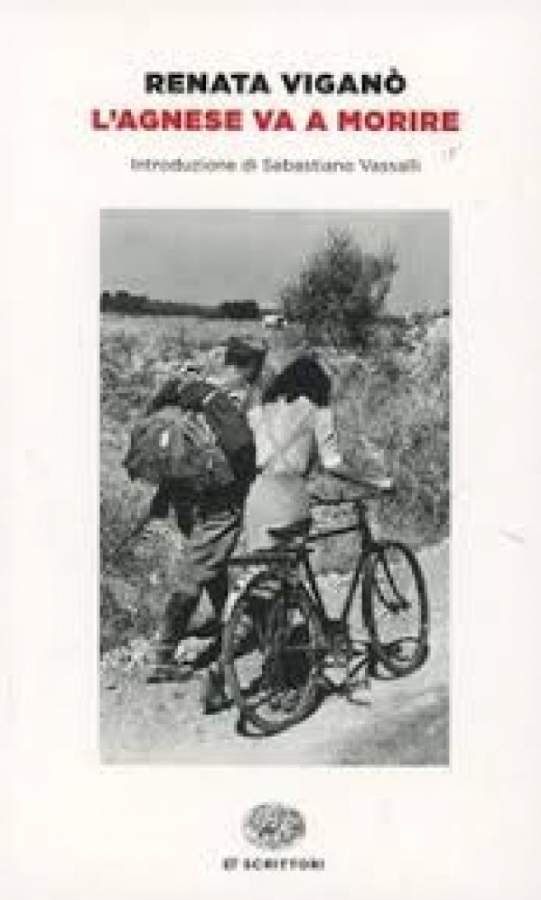
Agnese Goes to Her Death
The novel chronicles the Resistance in the Valli di Comacchio, between the mainland and the wetlands. Unlike the great works on the war of liberation (1943–1945), typically set in the mountains, *LʼAgnese va a morire* tells of the lowland partisan war, where > the Germans did not know that among those men and women, wandering through the snow, many, almost all of them, were partisans. Couriers dispatched with orders hidden in their shoes, leaders heading to meetings in peasant barns, commanders preparing actions where no one expected them. (...) A fire without flame or smoke: a markless fire. The Germans and the fascists walked right over it, noticing only when they were burned. The lowlands, and in particular the marshland environment, form the backdrop to Agnese’s story: a fat, old woman, who until then had been an industrious washerwoman and a rough peasant. > One September evening, Agnese, returning home from the washhouse with a heap of wet laundry on her wheelbarrow, met a soldier on the cart path. (...) His shoes were torn, and his toes could be seen, dirty, the color of mud . Without hesitation, Agnese gives him shelter and later shows him the escape route when the Germans arrive. With this seemingly obvious act, Agnese embarks on a human and political journey that takes her from > a mature, composed yet ruthless hatred towards the Germans, (...) towards the subservient fascists , to becoming > truly responsible for incomprehensible actions and unforeseen decisions . At first, she is asked to carry a parcel and she replies: “if I’m capable”; then she becomes the coordinator of the couriers while securing a safe hideout for the brigade command; finally, she is forced to make solitary, swift, and perilous choices involving the lives of many partisans. All this would remain an abstract tale were it not admirably embedded in the marshland setting and in the conditions of struggle and survival that defined it. Across the seasons, from spring to winter, living conditions grow increasingly harsh, mirrored by an escalating clash between partisans and Germans. > They moved by boat through the green canal, slimy as a slug. On either side the reeds stood tall, yet cast no shade: the sun pierced through the straight, bare stalks as if through an iron grating, burning on the water, on the floating weeds that resembled dead grass snakes. (...) It is a magnificent place, the Commander said, the reeds provide neither greenery nor shade, but they conceal. (...) Agnese knew that sound of the marsh at night: a dull hum, an isolated cry . The partisan detachment has taken refuge in an isolated hut in the wetlands, and here > toward evening they would sing, their voices low so that no one might hear them, and their song would seem little more than the rustling of the reeds... (...) The couriers brought bread, wine, orders, and circulars to the camp... . With winter and the mounting pressure from the Germans, > away, away from the house, away from the prison, prisoners still of that dark, roiled water, choked with weeds and mud, yet already bound for land, where one could breathe one's own air, clean air, not just the breath of the comrade beside you, and where one walked not across a few feet of flooring, but forward, along a road, an embankment, a field, forward toward the world of free men . Hemmed in between the Germans and the Allies, fleeing a hostile and intolerable environment, the partisans go to die, > if only to reach the shore, to be out of the water, to set foot upon ground that did not shake . Agnese dreams of her husband, who died during deportation to Germany: > It’s hard, isn’t it? I know you can’t take any more. But it isn’t time to let go yet, Agnese. (...) Agnese saw him open the door to the cold of the staircase, truly felt that wave of cold against her face. Then she realized it wasn’t Palita (her husband), and behind him was another, and another, and another. The last one quietly closed the door. After so many men as protagonists of the Resistance, here at last is a woman, and certainly not an intellectual! If only for doing justice to women’s contribution to the partisan struggle, the novel deserves a prominent place in the literature of the war of liberation. Yet one must not be confined by this single interpretive lens: the novel contains numerous characters, countless episodes of civilian and combatant life, and an intense narrative pace punctuated by dramatic twists, not least the final one. Criticism has regarded it as a neorealist novel; yet if one allows oneself to be captivated by the writing, particularly the descriptions of the marshland environment, it becomes evident that the narrative possesses a lyrical, even oneiric undertone. One might think of it as a dreamed epic, a modern *Iliad*, dense with myth and heroic figures: precisely what we need. The style is lean, marked by an adroit use of punctuation: the short, concise sentences do not fragment the narrative, but rather lend it communicative power, bolstered as they are by a richness of adjectives and the use of brief, succinct dialogue. Why read it? A masterpiece of substance and style!
All Our Names
The protagonist is a young Ethiopian; the adolescent longing to leave his remote village behind drives him to choose a purpose and a city: to become a great writer in Kampala, which, despite being the capital of Uganda, like him «belonged to no one and no one could claim it». It is therefore a non-place, where the young man hides, forgets, or simply abandons the twenty-five names by which he was called in his village. In Kampala, he meets his friend. > Isaac and I became friends the way two stray dogs find each other following the same trail every day in search of food and companionship . Both are unversed in urban life, but Isaac projects confidence and takes the protagonist under his protective wing—naive, fragile, and too much of a dreamer to survive on his own in a violent and chaotic metropolis. Having no names left, Isaac gives the boy several nicknames (no fewer than thirteen), all tied to his air of an intellectual and a man of letters. At first, the two young men frequent the university campus, a kind of "oasis > in a country increasingly torn apart by clashes between opposing factions, which soon culminate in dictatorship and repression. If students were initially allowed to voice dissent, demonstrations are subsequently banned and smothered in blood. For the protagonist, the situation is particularly dire because he is a foreigner; Isaac must step in repeatedly to save him and hide him in safe places. The political struggle has degenerated into gang warfare. Isaac, growing ever more mysterious due to the life he leads and the company he keeps, enters the service of a clan leader. The protagonist watches in horror as violence, executions by firing squad, and outright massacres unfold. Yet above all, he is appalled by his friend’s transformation: from a slightly provocative, somewhat playful young man, Isaac reveals himself to be a cynical killer, a skilled manipulator of men, an unscrupulous opportunist, perhaps even a double-dealer. But who is Isaac, really? What do we know of him, of his past? The situation deteriorates rapidly, and Isaac provides the protagonist with a passport and a plane ticket to flee to the United States. In doing so, he also gives him a name: his own. The young man, now Isaac, holds a temporary visa as a political refugee and is monitored by social services, in particular by a young caseworker, Helen. A love affair begins, but can one truly love someone whose past remains unknown? During their troubled relationship, Isaac asks what he can do for her: yes, I told her, promise me you won’t disappear one day > . Yet so it will be, because this is the fate of migrants, placeless and nameless: all they can say, promising to return one day, is that no one will ever have loved each other more than we did. For the sake of clarity, the plot has been presented according to a possible logical sequence: first the events in Uganda, then the love affair in America. In truth, the author does not construct the novel this way; the narrative unfolds through two parallel storylines: in the first, the narrator is the protagonist and the subject is his friendship with Isaac; in the second, the narrator is Helen, recounting her relationship with the protagonist. Only in the final lines do the two narratives intersect, when we discover that the phrase the false Isaac utters to Helen at the moment of parting was written by the real Isaac on a slip of paper for the protagonist. One is left to wonder whether the love for Helen is cut from the same cloth as the friendship between the real Isaac and the false one: extraordinary bonds in an age when relationships between human beings are like those of two men who meet unexpectedly in the middle of a desert after traveling so long they have begun to believe the world is uninhabited > .. Yet what does this strange novel mean? It conveys a sense of rootlessness, that special loneliness that comes from having nothing that is truly yours«, which drives Helen to search Isaac’s room to »seek proof of his existence > . This rootlessness possesses a dark allure of its own because it offers us a world weightless«, allowing one to confront a reality that »breaks you into pieces slowly« and to overcome the fear of »what comes next. It is an interesting book. It is, however, marred by an excess of intellectualism, discernible in many passages of the novel and in its overarching design: the reliance on two parallel narratives fragments the story, weighing it down needlessly and causing it to lose both narrative momentum and emotional tension. The almost Pirandellian interplay of the two Isaacs is pushed to an exaggerated degree, yet fails to surprise the reader upon discovering that Helen’s Isaac is not the real Isaac. The author sought to pack too much substance into a storyline and its characters, when it would have been enough to narrate them in their spontaneity, in their real lives as migrants of the world". Why not read it? It is boring.
All the Pretty Horses (Wild Horses)
Two boys, sixteen-year-old Grady and seventeen-year-old Rawlins, rest on their saddle blankets after dismounting their horses. > The night was cold and clear and the sparks rising from the fire spread warmth and reddish glows among the stars. They could hear the trucks out on the highway and they could see the lights of the town reflected far in the desert fifteen miles to the north. What do you think you’ll do? Rawlins asked. I don’t know. Nothing , Grady replied. After three hundred pages—some of them arduous reading—to the same question (“where is your country?”), Grady answers: “I don’t know. I don’t know where it is. (...) He touched the horse with his spurs and moved on. He rode while the sun turned his face copper-colored and the reddish wind blew from the west across the evening plain and the small desert birds sang among the dry ferns; horse and rider advanced and their long shadows moved together as the shadow of a single being. They passed and paled into the evening plain, toward the world to come > There is nowhere to stop; nothing remains but to keep moving, with only two certainties: the horses and the great untamed plain. The novel recounts the adventure of an adolescent. profoundly alone and in search of himself across the vast expanses of a West now overtaken by modern American society. We are like the Comanches were two hundred years ago. We don’t know what will show itself come daylight. We don’t even know what color it will be > . So his father told him, almost as if urging Grady to leave, perhaps to flee. And the boy embarks on a long journey on horseback, together with Rawlins. They strike out into the great expanses toward Mexico, into a swarm of stars, so that they rode not under but among them (...), like thieves newly loosed in that electric black, like young thieves in a luminous garden, ill-equipped against the cold and ten thousand worlds to choose from > . Along the way they encounter Blevins, a thirteen-year-old boy on horseback, solitary, perhaps on the run. They realize he may be a source of trouble: he is impulsive, stubborn, devoid of judgment, still a child. They take him in, and after feeding him, Blevins began to take off his clothes and walk naked across the grass, and, passing by the horses, plunged into the water. (...) The horses watched him > . The kid gets drunk and lets his horse get stolen by a group of Mexicans; he then drags the two friends into an attempt to recover the animal, and the whole thing ends in a shootout and a pursuit, from which Grady and Rawlins barely escape, nonetheless losing all trace of Blevins. The two young men seem to find a safe haven and employment at a large hacienda > ; Grady earns esteem for his exceptional skills as a breaker of wild horses; he also meets the master’s daughter, with whom he has a love affair. It is a situation fraught with peril: a poor cowboy in love with a wealthy heiress. And indeed, Grady and Rawlins are arrested by the Mexican police and accused of being accomplices to Blevins, whom they meet again in prison and who has allegedly killed a man. During the transfer from the police station to the prison, Blevins is killed; in the horrific Mexican penitentiary, the two young men are attacked and stabbed, and only the intervention of the aunt of the girl Grady has fallen in love with saves them from the hell they have landed in. It would seem that we have reached the end of the adventure, but Grady insists on getting the horses back, and consequently the novel concludes with a gunfight in which the young man reclaims the animals. Then again, what is more beautiful and more true than a horse? That night he dreamed of horses in a high plain where the spring rains had made the grass and the wildflowers grow and the flowers spread all blue and yellow as far as he could see in the dream he was among the running horses and in the dream he himself could run with the horses (...) and they ran he and the horses together out on the high ground where the earth resonated under the galloping hooves (...) in a resonance that was like a music..." It is a circular story, one in which the plot lacks any genuine development, continually folding back on itself—namely, onto the figure of Grady, his loneliness and despair. The characters are sketched superficially; in some instances, they are incomprehensible. If one wishes to appreciate the novel, one must focus on the contrast between the austerity of the dialogues between Grady and Rawlins—spare, minimalist, and precisely for that reason expressive of their existential condition—and the descriptions of the horses and the magical landscapes of the great wild plain. Yet a level of minute detail consistently predominates, encumbering the narrative and wearying the reader. As for the disquisitions on Mexican history, let us draw a charitable veil over them. Why not read it? It is prolix, overlong, and rambling.

Alma
Questo romanzo riporta la mente ad un altro libro, apparentemente così lontano nel tempo e nei contenuti: *Le Confessioni d'un italiano* di Ippolito Nievo (vedi la recensione in questo sito). Come per Alma, il grande racconto di Nievo è una storia d'amore, che prende le mosse dall'infanzia in quella terra marginale che è il Nord Est dell'Italia. Carlino, il protagonista narrato da Nievo, è innamorato della bella cugina Pisana, che solo nel punto di morte riconoscerà di averlo sempre amato, così Alma rincorre Vili, quel > bambino magro, gli occhi neri e una frangia scura da teppisti , che ha fatto irruzione inspiegabilmente in una famiglia in strano e incerto equilibrio, portandosi via l'attenzione del padre. E come per i protagonisti delle *Confessioni*, la vita di Alma > è sempre stata immersa fino al collo nelle questioni che il passato o la memoria e perfino le ossa sotto terra proiettavano nel presente, e lei non aveva fatto altro che camminare sul filo di una ragnatela sforzandosi di evitare le trappole della Storia, quando invece ci stava camminando sopra. Se, però, la storia d'amore di Nievo si sviluppa dentro la grande e gloriosa cavalcata del Risorgimento, quella di Alma è segnata e travolta dalle tragiche vicende del «di là», quel mondo sconosciuto oltre Vienna e Trieste, quelle terre sempre rimosse dall'immaginario collettivo, il dissolvimento della Jugoslavia tra il 1991 e il 1995, e oggi la guerra in Ucraina. Alma vive ormai da molti anni a Roma, apprezzata giornalista, ricercata dagli uomini per quel fascino che hanno quelli «di là», ma non può confessare, perché non sarebbe capita, che > solo un esule da quei mondi è in grado di suscitare in lei qualcosa di simile a un innamoramento. L'occasione per tornare «di là» è la morte di suo padre che le ha lasciato «una scatola», in cui dovrebbero esserci i segreti della sua famiglia, insieme con quelli della grande Storia. L'attende confuse combinazioni di sensazioni in cui presente e passato si mescolano insieme, ma non c'è mai il futuro: la nostalgia per i nonni materni, per la bella e solida casa mitteleuropea; la villetta sul Carso dove sono andati a abitare i genitori, per stare lontani dai nonni e dalla buona borghesia; gli arrivi e le partenze improvvise del padre, sempre coinvolto nelle grandi vicende; la madre anch'essa distante perché sempre occupata nella «Città dei Matti»; i bagni e i giochi sulla riviera di Barcola; e poi i morti, gli stupri, le stragi delle guerre balcaniche, immortalate dalle foto di Vili: > una fossa piccola, una fossa enorme, una fossa con dei corpi, il viso di una ragazza tenuta per i capelli. Scoprirà che nella scatola non c'è niente d'importante, come nel grande romanzo di Kenzaburo Oe (*La foresta d'acqua*, vedi la recensione in questo sito). Ciò che troverà sarà lo svelamento del mistero di Vili: fotografo delle stragi perpetrate dai serbi per dare testimonianza dei crimini commessi durante le guerre balcaniche. Se questa rivelazione potrà dare sollievo all'animo di Alma, non sarò possibile ritrovare l'amore per chi ha sempre amato. > I loro destini si sono incrociati, pensa Alma. e questo è tanto, i tentativi di fuga non contano. (...) Si guardano. E' così sexy, pensano. La solitudine e le incomprensioni, tutto l'amore e tutti quei morti, (...) quei loro teneri anni, e anche tutti quei pensieri sul caos delle loro vite lontane. Ci sono romanzi che vogliono dire troppo, che mescolano grandi affreschi della storia con le vite familiari, senza però riuscire a approfondire a sufficienza le diverse dimensioni dell'esistenza; e tutto resta in superficie. La relazione privilegiata del padre con Vili (quelle passeggiate insieme che escludevano Alma) non è analizzata nei suoi risvolti psicologici ed emotivi: è come il contenuto della scatola che non dice nulla di intimo. Lo stesso legame tra Alma e Vili, che attraversa tanti anni della loro vita, è trattato con spicchi d'esistenza, certamente meglio nella seconda parte del romanzo, nella Belgrado sotto la guerra, ma mai portato fino in fondo. Chi era Vili, una comparsa della Storia, obbligata, come dice lui stesso, > a essere uno che mente, un falsario, un vigliacco, ad alzare il calice a brindisi disgustandosi illudendomi che così avrei salvato qualcuno? E perché Alma perde sempre l'occasione per rompere il guscio entro cui si appaga Vili? Perché non li dice semplicemente che l'ama e lo porta con sé a Roma, lontano da «di là»? O c'è un mistero indicibile (la rigidezza degli affetti familiari, le stragi e le morti, il mondo dei Matti) che impedisce di dispiegare il senso di umanità reciproca? Troppe domande rimaste senza risposta! Sotto il profilo stilistico il romanzo si avvia faticosamente per salire di livello nella seconda parte, quella della guerra, senza dubbio la migliore. Il continuo avanti e indietro nel tempo e nello spazio confonde il lettore che deve di continuo riprendere le fila della narrazione. E' vero che il flusso dei ricordi e delle sensazioni non ha tempo, e tutto ritorna senza mai andare avanti, ma è pur vero che non seguire una sequenza disorienta il lettore, lo confonde inutilmente. La scrittura è di alta qualità, nei dialoghi così come nelle descrizioni: manca tuttavia di mordente, non lascia il segno, anche per l'uso di un italiano standard, scolastico sotto il profilo lessicale. Perché leggerlo? Interessante la sovrapposizione della Storia con le vicende familiari.This novel brings to mind another book, seemingly so distant in time and content: Ippolito Nievo’s *Le Confessioni d'un italiano* (see the review on this site). As with Alma, Nievo’s great narrative is a love story that has its roots in childhood, in that marginal territory that is northeastern Italy. Carlino, the protagonist recounted by Nievo, is in love with his beautiful cousin Pisana, who will only on her deathbed acknowledge having always loved him; just so, Alma pursues Vili, that > skinny boy, with black eyes and a dark, hoodlum fringe , who inexplicably burst into a family balanced on a strange and precarious equilibrium, capturing her father’s attention. And as with the protagonists of the *Confessioni*, Alma’s life > had always been immersed up to her neck in the issues that the past or memory and even the bones beneath the earth projected into the present, and she had done nothing but walk a spiderweb's thread, striving to avoid the traps of History, when in fact she was walking right over them. Yet, if Nievo’s love story unfolds within the grand and glorious sweep of the Risorgimento, Alma’s is marked and overwhelmed by the tragic events of "over there"—that unknown world beyond Vienna and Trieste, those lands perpetually banished from the collective imagination, the dissolution of Yugoslavia between 1991 and 1995, and today the war in Ukraine. Alma has now lived for many years in Rome, an esteemed journalist, sought after by men for that fascination possessed by those from "over there," but she cannot confess, because she would not be understood, that > only an exile from those worlds can awaken in her something akin to falling in love. The occasion to return "over there" is the death of her father, who has left her "a box" that is supposed to contain the secrets of her family, together with those of grand History. A tangled combination of sensations awaits her, where present and past blur together, but the future never appears: nostalgia for her maternal grandparents, for the handsome, solid Central European house; the small villa on the Karst where her parents went to live to get away from the grandparents and the respectable bourgeoisie; the sudden arrivals and departures of her father, always embroiled in grand events; her mother, likewise distant, forever busy in the "City of the Mad"; swimming and games on the Barcola seafront; and then the dead, the rapes, the massacres of the Balkan wars, immortalized by Vili's photographs: > a small pit, an enormous pit, a pit with bodies, the face of a girl held by her hair. She will discover that there is nothing of importance in the box, as in Kenzaburo Oe's great novel (*La foresta d'acqua*, see the review on this site). What she finds instead is the unveiling of Vili's mystery: a photographer of the massacres perpetrated by the Serbs, to bear witness to the crimes committed during the Balkan wars. If this revelation may bring relief to Alma's spirit, it will not be possible to rekindle love for the one she has always loved. > Their destinies crossed, Alma thinks. and that is a great deal, the attempts to escape do not count. (...) They look at each other. It's so sexy, they think. The loneliness and the misunderstandings, all the love and all those dead, (...) those tender years of theirs, and all those thoughts, too, about the chaos of their distant lives. There are novels that strive to say too much, blending grand historical canvases with family lives, without, however, managing to delve sufficiently into the diverse dimensions of existence; and everything remains on the surface. The father’s privileged relationship with Vili (those walks together that excluded Alma) is not analyzed in its psychological and emotional ramifications: it is like the contents of the box, which reveals nothing intimate. The bond between Alma and Vili itself, spanning so many years of their lives, is treated through fragments of existence—certainly better in the novel's second part, in Belgrade under the war, but never pursued to its ultimate depth. Who was Vili—an extra in History, forced, as he himself says, > to be someone who lies, a forger, a coward, raising a glass in toasts with disgust, deluding myself that I was saving someone this way? And why does Alma constantly miss the opportunity to break through the shell in which Vili is content? Why doesn't she simply tell him that she loves him and take him with her to Rome, far away from "over there"? Or is there an unspeakable mystery (the stiffness of family affections, the massacres and deaths, the world of the Mad) that prevents the unfolding of their mutual sense of humanity? Too many questions left unanswered! Stylistically, the novel gets off to a labored start, only to elevate its register in the second part—that of the war—which is undoubtedly the finest. The constant shifting back and forth in time and space confuses the reader, who must continually pick up the narrative thread. While it is true that the flow of memories and sensations is timeless, and everything recurs without ever moving forward, it is equally true that failing to follow a sequence disorients the reader, causing unnecessary confusion. The prose is of high quality, in the dialogue as well as in the descriptions; yet it lacks bite, leaves no lasting impression, owing also to the use of a standard Italian that is lexically textbook. Why read it? The intertwining of History and family fortunes is compelling.

Almarina
> I will never be able to tell if it is Naples or if it is me. (...) Or if it is truly the sight of that ugly tenement on the other side of the gate, the swelling yellow wave, the domes beneath the clouds, architraves too heavy for a woman alone to bear. If reality is made of unreachable terraces, unreachable powers as they describe them... . With this opening, the reader is led to believe they are getting a foretaste of the surreal world of Anna Maria Ortese (see *Il mare non bagna Napoli* and *Il Cardillo Addolorato* > ); instead, one is confronted with a love story suspended in midair, swept away by a stream of consciousness that is unchecked precisely because it is entirely interior. A fifty-year-old mathematics teacher, Elisabetta Maiorano teaches in the juvenile prison of Nisida. Whoever crosses the threshold of a prison knows (and if they do not know it, they feel it) that they are crossing over to another side, irreconcilable with the promise made to us as children: that life would not be frightening, and we would never be left alone. Prison, instead, is fear and loneliness > . But is being incarcerated, living within a daily routine at once repetitive and protective, what creates a sense of isolation, or is it rather the recollections of a lifetime, the hopes and disillusions, the mistaken choices, and the misunderstood loves? Following the relentless outpouring of the protagonist-narrator, one begins to think that prison is merely a lockpick to unleash her interior world—and to indulge in self-pity: the unloved husband, the child desperately sought through artificial insemination and then through adoption requests, the tedium of teaching, advancing old age. We take these dossiers and store them in the furthest archive of memory, and then we hide the key. Our hope, I believe, is that on that day, now far off, when they have served their full sentence, this key will return to their hands, and from the flung-open archives blank sheets of paper with no more ink on them will take flight, immaculate, like laundry hung out on the terraces > . But if for the inmate—of whom the protagonist ostensibly speaks—there is the light of normal life, how can a person imprisoned within herself escape her own prosaic and mournful existence? Only if Love breaks in. I became attached to Almarina like that, while we were looking at the sea, and I told her that my husband was a magnificent swimmer. (...) I don't know how to swim, she told me, then.«Reading Valeria Parrella brings to mind Alda Merini, when she writes»and perhaps I will tear from the roots/the repressed hope of love,/I will remember that the fruit of every/human limit is absence of memory,/I will plunge entirely into becoming...". In both authors, one is in the presence of a restless and insatiable quest for a Love that allows memory to be removed, or at least suspended. Prison, much like the asylum for Merini, is a metaphor for the prison of the human soul, a moment of stillness, a place of unexpected encounters. Every page of Parrella's is a cameo, akin to a brief and intense poetic composition. But whereas in Merini the lyricism, speaking of oneself, the hinted-at sentiments, the lexical preciousness are in their proper place because they are typical of a sonnet, especially according to traditional Italian poetry, in Parrella these stylistic and narrative traits compromise the overall narrative, strip momentum from the story, desiccate the characters—particularly that of Almarina, who is, in fact, incomprehensible. The self-mirroring 'I' is ill-suited to the novel, which nonetheless requires a plot. Why not read it? An elegant outpouring, yet detached from a narrative structure.
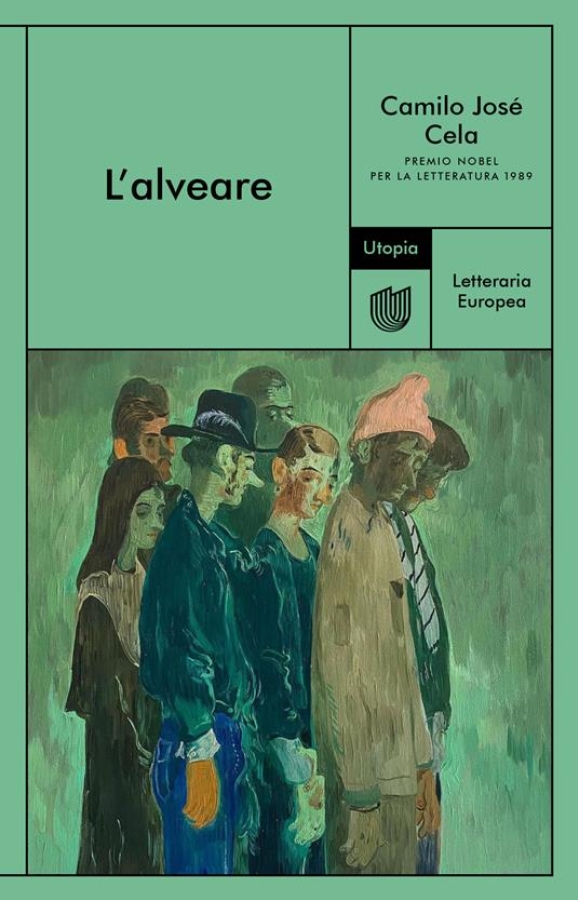
The Hive
The novel is set in Madrid during World War II: it is a period of deep economic crisis, marked by widespread squalor and a sense of "hopeless waiting"—the expectation of generic change paired with resigned pessimism. Dona Visi is happy because her daughter has found a fiancé, > someone studying for a position as a notary , her husband > tosses and turns between the sheets, > Fine, hold off on ringing the church bells. (...) Let's wait and see how it turns out , and her husband knows full well, having run into his daughter prostituting herself. Madrid is a city where everyone > walks aimlessly, with hands in empty pockets -- pockets that, at times, are not even warm -- with empty heads, empty eyes, and in their hearts, without anyone being able to explain it, a deep, implacable void. (...) Night falls (...) over the city's strange heart. Thousands of men sleep wrapped around their women, without thinking of the harsh, cruel day that perhaps lies in wait for them, like a wildcat, in just a few hours. Hundreds upon hundreds of students lapse into solitary vice. And a few dozen girls wait -- what are they waiting for, my God? Why do you deceive them so? -- their minds full of golden dreams.... If *The Family of Pascual Duarte* > (see the review on this site) revolves around a character dominated by a bloodthirsty disposition, by an irresistible fate, here we have a series of episodes, anecdotes, and figures in a disordered succession that makes it difficult to trace a unifying thread. On the other hand, what is the point of delving into the story of Elvira, already a weary prostitute, or that of Celestino, who talks to himself, or of understanding better who > the neighborhood poet really is, (who) has red cheekbones and sometimes, when the mood strikes, faints in the Café and has to be carried to the restroom. They are numerous figures, physical and thus contextualized, yet also allegorical of a human condition; and it is futile to dwell on them, so similar is their fate. If two reference points are really to be found, they can be identified in Dona Rosa and Martín. The former > comes and goes between the tables of the Café, bumping into customers with her enormous backside , at the center of a kaleidoscope of the defeated and the resigned, > with their elbows on the old, crusty marble of the tables, (...) once funerary slabs (a magnificent image of a world where everything has crumbled). And she, the formidable tavern-keeper, > pats her belly (...) Move along, move along.... Everyone in their place. (...) The hairs of her mustache twitched defiantly, solemnly, like the antennae of a cricket in love and full of pride. Martín is a young intellectual who survives on a few newspaper articles, on meals provided by his sister—who sets something aside for him without her husband's knowledge—and on the generosity of a brothel madam, who allows him to sleep in a warm bed beside a young prostitute. > He feels the young woman's hair on his face, feels her naked body beneath the sheets, feels her breath which, at times, is slightly raspy, almost imperceptibly so , and he recites a melancholy poem to her, dreams of being hired by the Social Security Institute, of visiting his mother's grave, and does not even realize that the Francoist police are searching for him. > Martín, out of a vague premonition, does not want to hurry..... It is true that we are in 1940s Spain, but isn't this hopeless waiting" perhaps the very sentiment pervading us right now, in the face of announcements of dramatic turning points (peace in Ukraine, the end of the genocide in Gaza), only to find ourselves repeatedly trapped in the most brutal paralysis? Are we not like the characters of this hive, a metaphor for our own condition? We would not feel so close to Cela's narrative had the author not relied on a dry, essential, and intense style, so distant from the convolutions of contemporary Spanish writers such as Cercas, Marías, and Aramburu (see the numerous reviews of their novels on this site). Cela's prose, steeped in raw magical realism, recalls Grazia Deledda's *Canne al Vento* (see the review on this site). The novel's limitation lies precisely in the dispersal of its many anecdotes, in the disorientation of the narrative—elements that make it difficult to navigate the reading and assign it an overarching meaning. One must simply surrender to it, without searching for a cohesive plot. Why read it? Splendid prose, a metaphor for our current condition

The Palestinian Lover
Can a love story bridge the ineluctable chasm between two peoples? The novel answers this perhaps overly naive question in the negative. And it does so by retracing a bewildering affair: the relationship between Golda Meir, an authoritative Israeli prime minister in the early 1970s, and Albert Pharaon, scion of a wealthy Palestinian family. The book traces the history of the nascent State of Israel from 1917 (the year of the Balfour Declaration, in which the British Empire declared itself in favor of the establishment “in Palestine of a national home for the Jewish people”) through the 1948 war, as a result of which the State of Israel was founded and the exile of over seven hundred thousand Palestinians began. The novel’s opening is remarkably evocative. On one side is Golda, still a young woman, in the kibbutz. The Zionist ideal of a demanding, communal life is admirably epitomized in the vigor and courage of the young Golda: > so luminous, so self-assured and confident, an olive tree flourishing in a barren land . On the other side is Albert, an “exquisitely cultured man of the world” for whom “nothing in social life is enticing enough to tear him away from his sweet idleness.” If Golda personifies the unstoppable force of an idea, fueled by despair and the memory of persecutions, Albert effectively represents a landowning caste who watch the Jewish immigration with stunned disbelief, confounded by their mad determination to forge a state, and are above all alarmed by socialist ideology, which might nurture “strange aspirations” among the perpetually exploited Palestinian peasants. Disparate as they are, Golda and Albert meet, feel drawn to one another, and carry on a clandestine, intensely carnal affair for several years. At the root of their relationship, however, lies a misunderstanding. For Albert, their bond is logical and possible. The fact that one is Palestinian and the other Jewish presents no obstacle to someone who has always lived in a land where numerous communities coexisted without friction. For Golda, the barrier of nationality is insurmountable. In a conversation decisive for the future of their relationship, when Albert urges her to acknowledge that Jews will have to live alongside Palestinians, Golda shouts in fury: > we came here so we would no longer depend on anyone, do you understand? There is no other us but us . The sacred tenets of Zionism (“becoming masters of our own destiny”) prove stronger than any love. And so the two lovers > throw themselves upon each other, collide, clutch desperately, surrendered to an irresistible urge to tear one another apart, so that nothing remains of them or of their impossible relationship . The love story between Golda and Albert stands as a metaphor for the tragic fortunes of two peoples. The most evocative part of the novel is the section leading up to Golda and Albert’s encounter. Up to this point, the narrative remains open to unpredictable developments. The reader expects the author to delve into Golda’s personality: wife, mother, lover of many men, vigorous idealist, political figure, leader of her people. Was the affair with Albert merely the diversion of an intensely sensual woman, or did it answer, instead, an unconscious need to break free from the cultural and social molds of her Jewish identity? Were there contradictions within Golda’s world, or merely the whims of a woman of power? Through Albert, could Golda have been the “Prince Charming” who cast the Palestinian people “into modernity like shrimp into boiling water,” yet paving the way for eventual coexistence? The narrative abandons this potential trajectory, perhaps for lack of documentation or out of reluctance to strain historical reality too far. Instead, it focuses on the figure of Albert—languid, indolent, and inconsequential. And this is a pity, for the narrative loses its allure, turning into the chronicle of a man’s decline whose ending was already written in the preface, in his very character. Why not read it? It is a fragile narrative: it adds nothing to our understanding of the Israeli-Palestinian conflict, and it lacks intrigue because it fails to probe the central figure, that of Golda.

American Pastoral
The book is divided into three chapters, each possessing its own distinct identity. In the first, bearing the evocative title *Paradise Remembered*, the narrator is the writer himself. The idol of his youth is Seymour Levov, “the Swede”: handsome, blond, athletic, a formidable sportsman. The memory of his feats epitomizes a golden era where harmony triumphs. Now in his sixties, the writer is invited to lunch by Seymour under a pretext. The meeting turns out to be mundane and pointless; later, however, at a reunion of old classmates, the writer learns that Seymour was suffering from cancer and had been shattered by the actions of his daughter, who had bombed a general store, killing a bystander. > The gentle man with his delicate ways of dealing with conflict and contradiction, the confident former athlete, responsive and resourceful in any fair-minded struggle with fair-minded foes, is up against a foe who is not fair-minded, a devil rising out of the human feelings, and he is overwhelmed. He learns to live behind a mask . The writer decides to write a book about Seymour, even as he wonders—with a deeply autobiographical undertone—whether the man inside the man is ultimately knowable, whether he is a “jar you cannot open.” Yet does the story he writes conform to reality, or is it merely the author's invention? In the two subsequent chapters, the writer shifts to a third-person narrative. In the second chapter, titled *The Fall*, the dramatic story of Merry is recounted: Seymour’s stuttering daughter who, at sixteen, vanishes after committing a heinous crime, sinking ever deeper into hiding and self-destruction. At the root of the daughter’s conduct lies a hatred for her parents, their orderly home, their life built on bourgeois values—and, by extension, for American society itself. Yet how could > his daughter be so blind as to want to destroy the very system that had granted her family so many opportunities for success? To destroy her capitalist parents as though their wealth were anything other than the product of the steadfast labor of three generations? . Is Merry, then, an inexplicable anomaly? In truth, in the final chapter, *Paradise Lost*—which largely details a dinner party among the Levovs and their friends (a dinner that concludes tragically with the stabbing of Seymour’s father)—it becomes evident that the “moral disease” afflicts not merely the girl, but an entire society in which > what was supposed to exist did not exist. Deviance prevailed. You cannot stop it. Undeniably, what was not supposed to happen had happened, and what was supposed to happen had not. The old system that created order no longer works. All it has left behind is fear and dismay, now concealed by nothing . The themes of this undoubtedly formidable book are essentially two: generational relations and, above all, the agony of a parent who views himself as blameless, who wishes to protect his family and cannot fathom why a daughter so cherished grew up so estranged from his world; and the unraveling of a society built by immigrants who toiled tirelessly to integrate and be embraced as successful citizens, only to watch the foundational values of social cohesion disintegrate. Seymour’s ordeal is that of a father, but it is also the tragedy of the American pastoral. Roth’s narrative structure is exceptionally rich and intricate. It relies neither on a lavish surplus of adjectives, as with Updike, nor on the expansive periodization of Bellow (all chroniclers of the crisis of American society). It is precisely this syntactic framework that constitutes Roth’s strength, yet also proves to be his weakness: the sentences are often overly convoluted, making for an exhausting read and fostering a redundancy of phrasing and, above all, of syntactic constructions. A greater frugality would certainly have served the book’s otherwise compelling themes far better. Why pass on it? It is deeply demanding, particularly the third chapter. It should be taken in small doses.
American Rust
Paul Krugman, the American Nobel laureate in economics, begins his recent book (*End This Depression Now!*) by recalling how unemployment is "an immense human disaster," not only because of the resulting financial hardships, but because the effects on one's dignity, self-respect, and sense of control over one's life can be devastating. One no longer feels like a protagonist, and a profound malaise sets in—born, as the author of *American Rust* puts it, "from the pain of watching the world change without you." With this novel, the author sets out to do precisely this: to narrate the deindustrialization of a steel town through the eyes of its victims—not so much the workers who found themselves unemployed, but rather their children, who have lost the social and psychological anchor their fathers once possessed. The novel's protagonists are two young men, Isaac and Poe. The former, intelligent and a dreamer, is the son of a retired technician who, after working for decades in steel mills, is now confined to a wheelchair following a severe industrial accident. Isaac has given up his aspirations (he would like to become an astrophysicist) to care for his father, while his sister, equally intellectually gifted, severed ties with the past, leaving town to become a successful lawyer. Poe, by contrast, was once a local hero, a football star, but has been reduced to scraping by at the expense of his mother—an impoverished woman who lives in a trailer and supports the household through precarious employment at a small tailor's shop. The setting is the decline of an industrial town, painted by the author in somber tones yet devoid of nostalgia, with descriptions that highlight the ruin of mills and buildings alongside nature's reclamation of a space no longer dominated by man. > The mill had been a small city... now it stood like an ancient ruin, its structures overwhelmed by wild vines.... tracks of deer and coyote crossed the grounds: there were only the human signs of occasional squatters . A theme dear to American literature—including contemporary writing—resurfaces: the myth of the wilderness, of a rural society where man finds for himself, in total freedom and autonomy, the means of survival. Isaac steals his father's savings and decides to run away to pursue his dreams, finally free from the past. Before departing, he meets with Poe, his best friend, who once saved his life by thwarting a suicide attempt. They decide to spend one last night together in an abandoned mill. There, however, they run into a gang of thugs, whom Poe provokes with his customary recklessness. To save his friend, who is in danger of being murdered or severely beaten, Isaac kills one of the assailants. The two young men take flight. Poe is accused of the murder, while Isaac flees on foot toward California. The paths of the two young men diverge, each unaware of the other's fate, yet both endure the violence of a disintegrating society. Poe experiences the ruthless law of prison, which does not tolerate anyone failing to belong to a gang, and for this he is assaulted and left on the brink of death. Isaac, naive and fragile, suffers the violence of the road: he is deceived, robbed, and forced in turn to steal to survive. All Poe would have to do is tell the truth—that it was Isaac who killed the man—yet he refuses, feeling guilty for what occurred and, above all, knowing that his friend would never survive prison life. Isaac, in turn, realizes that flight is not the answer: he must return and confess to the crime, and, above all, he must live where his roots lie. Friendship is the central theme of the book: it is, indeed, the profound bond that unites the two young men, as well as the novel's secondary characters, shielding them from the unraveling of society. Why does Poe not choose to turn his friend in rather than endure the brutality of prison? Why does Isaac return to surrender himself when he could escape to California? From the standpoint of dominant economic rationality (grounded in the pursuit of self-interest), their behavior is irrational, inexplicable; yet it is, instead, the primal force that holds society together. Delving deep into the impact of economic decline on human relationships, the author probes the inner workings of the human mind during a phase of social disintegration, finding a solid foundation in the bonds between individuals. Yet does this offer us hope for the future? The narrative is driven forward through a literary device. Each of the protagonists tells their own story across dedicated chapters, whose sequence apparently follows no order but seems random. Consequently, only the reader possesses knowledge of the overarching plot and must construct an overall picture for themselves. This approach, undoubtedly refined from a literary standpoint, asks too much of the reader. Left without a guide, one gets lost in the characters' analyses, which are often a bit too intellectualized and introspective. Everything remains as if suspended, merely sketched, failing to grip the reader, failing to captivate. Moreover, the novel is deficient in action, meaning that only the psychological introspection of the characters and the examination of their relationships could offer points of interest. Yet this is precisely what remains unresolved, as the exploration of the mind's inner workings appears endless, lacking any definitive development. If the author does not wish to be all-pervasive and intrusive like the great Dostoevsky, he fails—or refuses—to untangle the narrative threads and bring them to a resolution, as the Russian master does so brilliantly. Consequently, the sluggishness and thinness of the plot render the novel tedious and ponderous. Why not read it? It is boring.
A Connecticut Yankee in King Arthur's Court
The book is a moralistic fable. A nineteenth-century industrialist finds himself hurled into King Arthur’s court. He attempts to introduce an industrial, capitalist culture, which the author regards as vastly superior—because more rational and efficient—to that prevailing in the Middle Ages. The attempt fails miserably due to the opposition of the Church and an enchantment by the wizard Merlin that casts the protagonist into a deep sleep. The story aspires to be entertaining, yet proves tedious and pedantic.
My Brilliant Friend
For much of the novel, the brilliant friend seems to be Lila; she is intelligent, capable of mastering any subject (even Latin) without attending school; she is brave, creative, enterprising; with adolescence, she also blossoms into a stunning young woman. Elena, the first-person narrator and co-protagonist alongside Lila, has been enthralled by her since elementary school, yearning to resemble her, both in body and mind. > I became fixated on Lila, who had very thin, agile legs, and was always moving them, kicking even when she sat next to the teacher (...) I decided that I had to model myself on that girl, never lose sight of her, even if she got annoyed and pushed me away. (...) I trained myself to accept Lila's superiority in everything with good grace, and even her bullying . Through Elena's words, we follow—with a touch of envy—the childhood and adolescence of the two friends and their many peers in a working-class neighborhood of Naples: violent, cruel, yet vital and authentic. Is the novel, then, the narrative of a friendship between Lila and Elena, and with it, of a social milieu? Toward the end of the book, we realize the theme is something else entirely: the author speaks of detachment from one's origins as a consequence of education, of opening up to new cultural and linguistic horizons. When Lila, still an adolescent, marries the neighborhood's wealthy grocer, securing a position in the eyes of the local community, the two friends share a clarifying conversation—for themselves, and for the reader as well. Elena is excelling in high school and declares, with “a nervous little laugh,” that she will abandon her studies once she earns her diploma. Lila replies, curt and resolute: > you're my brilliant friend, you have to be the best of them all, boys and girls (...) you must study always . In that moment, Elena realizes how they had ended up “in two different worlds,” despite living in the same neighborhood, despite having shared the same childhood. Elena had drawn from Lila the drive to study, but schooling had become her own personal wealth. > I had grown up with those boys and girls (our peers in the neighborhood), I considered their behavior normal, their violent language was my own. With them, I couldn't use anything I learned every day; I had to restrain myself, somehow demean myself. (...) Yet that very celebration (her friend's wedding) confirmed that Lila—the only person I still felt was indispensable despite our diverging lives—no longer belonged to us, and with her gone, any mediation between me and those young people (...) had run dry. The story of Lila and Elena’s friendship provides the occasion for a rare reflection. In common sentiment, schooling is always seen as performing a positive role, of emancipation and spiritual uplift. It undoubtedly is, one hopes, yet too often we overlook how education alienates us from our world of origin, causing us to lose our anthropological roots and squandering values and outlooks that are not always entirely negative. What will remain of Naples in a society that demands complete homogenization? Moreover, change is difficult and tormented for the person undergoing it. Elena, in fact, does not feel superior to her friend or to her peers; quite the opposite, she experiences this detachment with surprise and anguish, struggling to attain an awareness that she has long denied to herself. Her romantic entanglements reflect this very inner conflict: she is in love with Nino, another brilliant high school student, yet she gets engaged to Antonio, a decent young man, but alas, so ignorant. Why, above all, hadn't I stopped to say to Nino stay, come to the reception (...) let's talk among ourselves, let's dig ourselves a den to keep us out of this way Pasquale drives, out of his vulgarity, out of the violent tones of Carmela and Enzo, and even—yes, even—of Antonio? " The theme of detachment is not tackled through a faux-narrative approach that is in truth sociological and prescriptive. The author develops a multifaceted cast of characters, each delineated with effectiveness and psychological depth. Likewise, the neighborhood is described with vibrancy and emotional investment, while never concealing its insular, stagnant, and violent nature. Judgments are not handed down from the heights of an assumed social and cultural superiority, nor does the prose adopt justifying or populist tones. The literary merits—the characters, Lila in particular, the setting, and the plain, elegant prose—make one forgiving of the narrative’s weaknesses: a slow, at times repetitive pace, and a plot left hanging, perhaps to herald future volumes. Yet serialized novels ought to conclude with an atmosphere of suspense, rather than merely an ellipsis. Why read it? Lila’s figure is fascinating, the writing refined and elegant.
Surrendered Love
In an earlier novel, *The Golden Cangue*, the protagonist fails to escape the mechanisms of her family and descends into madness, bringing ruin upon herself and those around her. In the first of the two stories in this book, *Love in a Fallen City*, Liusu is likewise despised by her relatives, but seizes the opportunity of a chance encounter to escape a house that > had something of a dwelling of fairies and spirits: here, the slow passing of a day was like the lapse of a thousand years in the world. Yet spending a thousand years here was roughly like a single day, because all the days were equally monotonous and senseless . And it is boredom, not passion, that drives her—watchful and almost reluctant—to enter into a liaison with a Westernized Chinese man, a figure of dubious repute: wealthy, cultured, and refined, yet hostile to marriage. From the outset, Liusu knows full well that binding herself to this man means becoming his concubine. While yielding to her lover’s flatteries, she thinks to herself: > if I were a thoroughly respectable woman, you would not have noticed me at all. Yet she smiled, tilted her head toward him, and said, You want me to be a respectable woman in front of others, but not with you . With consummate skill, the author guides us through the unraveling of a relationship in which > both [were] too busy talking about love; where could they find the time to truly love each other? . The conclusion is a foregone one: the wealthy lover accommodates Liusu in a grand, empty house, where she will await his visits like a quintessential concubine. What overturns this destiny is the war. The Japanese bomb Hong Kong, and amid the battered city, the man resolves to marry Liusu. > Hong Kong’s fall had sealed her victory. Yet in this unreasonable world, who could ever tell cause from effect? Who could know? And had an entire city fallen merely so that she might triumph? In the second story, *Red Rose, White Rose* > , the author ponders whether transgression and respectability can coexist within the same personality. Zhenbao is a rational and meticulous sort, through and through the perfect modern Chinese man. Having started out on the right foot from the very beginning, (...) he now held an excellent position in a renowned foreign textile firm > Everything seems beyond reproach: the university-educated wife from a good family, the little daughter for whom funds have already been set aside for college tuition, the devoted care shown toward his mother and siblings, his dedication to work, and his benevolence toward friends. Yet is that truly the case? From the story, we learn that Zhenbao had an intense, fulfilling affair with a married woman. When his lover, genuinely enamored, confesses the adultery to her husband, Zhenbao abandons her because he realizes the scandal would ruin him. Merely crossing paths with the woman many years later is enough to unhinge him and shatter his drab bourgeois existence: he frequents prostitutes, succumbs to drink and gambling, neglects his work, beats his wife. And you. Are you well?, she asked. As he searched for the right words to summarize the perfect happiness of his life in a few simple sentences, Zhenbao raised his head and saw his own face in the mirror to the driver’s right. (...) Suddenly, however, he began to tremble in earnest and saw in the mirror that tears were streaming down his cheeks. He himself did not understand why. In that sort of encounter, it is always she who weeps, not he. (...) Far from consoling him, she fell silent for a long time, then said: Isn’t this your stop? > The author probes the ambiguity of the human soul through a markedly Western lens. While the opening of the first story still evokes the traditional Chinese family, the remainder of the tale could easily be set in any European city. The thematic core and the very prose of the second story echo much of Western literature, from which the author drew extensively. There is little originality. What continues to captivate the reader is Zhang’s mastery in navigating chiaroscuro and plumbing the depths of the human psyche, particularly the female heart. Jiaorui and Zhenbao are in bed: the woman realizes that the man intends to leave her. Lifting her swollen, flushed face, Jiaorui stared at him, then sprang to her feet, almost astonished herself to have been reduced to such a state. (...) She dried her eyes with her handkerchief, blew her nose, and walked out. (...) In his sleep, it seemed to him that someone had lain down on top of him, weeping. (...) He realized Jiaorui had returned. (...) The warmth of that womanly body enveloped him like a down quilt lined with silk, imparting a pleasant, intensely sensual warmth. When Zhenbao was fully awake, Jiaorui slipped away without a word, nor did he utter a sound". Why read it? They are short tales, the prose is fluid and graceful, and certain pages are remarkably evocative.
Murdered Love
Imagine something akin to Anna Premoli’s novel (*Ti prego lasciati odiare*): a love story, delicate, mildly ironic, woven from brisk dialogue and youthful musings. It could be a tender fairy tale, were it not set in Jordan—which, for most women, is > an oppressive prison, its atmosphere rendered all the more fraught by the risk of dying at the hands of one’s own relatives. Jordan is my home. I love its rugged beauty, its sweeping history. Yet, perhaps, I may never return there again . There can be no happy ending to an impossible love story in a society where > a woman who breaks any of the rules she is expected to respect is not afforded the luxury of forgiveness . As readers, we foresee the novel’s tragic conclusion from the very beginning. This breeds a mounting anxiety, which prevents us from fully losing ourselves in and savoring the beautiful friendship between Norma and Delia. Though belonging to different faiths, they grew up together sharing the same dreams of freedom and emancipation from an age-old female condition. > Our parents insinuated into daily life the idea that men were superior to women. We were not enslaved with whip and chains, but rather persuaded by centuries-old words and teachings to place ourselves in that condition of our own free will . While their mothers believed in "the Arab way of life," Norma and Dalia conform to the oppressive customs of tradition out of fear. Yet > fear can be overcome.... and so, sooner or later, things will have to change . To carve out their own space of freedom, the two young women devise a business venture: hairdressing, a typically feminine occupation that poses no threat to tradition, a sort of holding pattern awaiting the arranged marriage to which they are inexorably destined. Once left in the shop by whichever brother is "on duty," tasked with chaperoning them, Norma and Delia feel free to talk, to share confidences, to read women’s magazines, to dream. This haven in an "insidious sea of religious rules" is upended by the arrival of a young man, who forces them "to behave as we should not have." On the other hand, > were we to rely on subterfuge and deceit to get what we wanted, and let a suburban beauty salon, a hotbed of gossip, define the boundaries of our lives—boundaries that could have been so much broader? Could we risk our necks for a love story? . The two girls have no doubts, even knowing that Delia, a Muslim, can never marry the young man, because he is Catholic. The rules of Jordanian society prohibit marriages between people of different faiths. They know the risks they run. By seeing a young man without her father’s permission, the girl dishonors her family, and her relatives are permitted to punish her with death. Yet we are not faced with just another tale of star-crossed lovers forbidden to love. Norma and Delia reject their inexorable destiny. > Although it had all amounted to little more than some pastries and a coffee, the taste of that ordinary freedom was too delicious to surrender. We had traveled only a few kilometers, yet we had entered another world . As the narrative draws closer to its tragic denouement—Delia’s murder at her father’s hands—the writing style shifts, imperceptibly at first. The increasingly reckless encounters between Delia and the young man are still recounted with apparent lightness, which nevertheless fails to mask the girls' fear and anguish. Then, all at once, the narrative becomes dense and dramatic. With the death of her friend, Norma grows up in an instant. She realizes that her ties to Jordan and its traditions have died with Delia. Yet, as she flees her homeland, she grasps, as never before, her mother’s profound sorrow, the barrier > she had erected to protect her soul from the harshness of life... the surviving remnants of that unique, independent person . Refusing to be trapped by pity for her mother, even while feeling closer to her than ever, makes Norma free as a person, even before being free as a woman. The novel can be read from many perspectives: a sociological and anthropological portrait of Jordan, a country that conceals a cruel, pervasive tribal tradition beneath a veneer of modernity; an impassioned indictment of the widespread acceptance of honor killings and, more broadly, of the condition of women in Arab countries; the chronicle of a sweet friendship, of a shattered bond; a *Bildungsroman*, a painful path toward adulthood. When Norma heeds her mother’s prudent advice—to apologize to Delia’s father, the very man who killed her friend—the girl cynically embraces the lie, recognizing that only through subterfuge and deception can a woman survive. Does she risk deluding herself, as her mother did, "glimpsing ghosts of lost opportunities in her heart," or does she open herself to a new life, truly free and autonomous? Is fleeing Jordan enough to be recognized as a person? Why read it? A novel that is ironic and light at first, then, in its final pages, intense and dramatic. A book that prompts deep reflection on the female condition.
Aniko
The Nenets are a people of just over 40,000 individuals, settled in the northeastern part of the Ural region: their economy is fundamentally based on reindeer herding. Like many young Nenets, Aniko left to study far from her homeland: first at a boarding school in the nearest town, then further away still, to study geology at the university. She assimilated Russian language and culture to the point of forgetting her origins. She must return to her aging father because news has reached her of the death of her mother and little sister, killed by a wolf dubbed Lame Devil. The return is marked first by revulsion ( > when her father was now close to her: she involuntarily took a step back: he gave off a stench of alcohol, smoke, and filth ), then she slowly reclaims the language and customs, and finally the remembrance of her lost childhood returns: «Evening had fallen; together with her mother, she had lit a fire near the» chum > . She played with her rag dolls that had bird beaks instead of faces. Mother was busy sewing a new jaguska for one of the dolls. For an instant Aniko thought she truly saw her mother's concentrated face again. But once that instant had passed, however hard she tried, she could no longer redraw her features in her memories. They had vanished, perhaps forever . She is confused; until then, «she had done nothing but try to live». Must she accept the reproach-laden invitation of Aleska, her childhood friend, to stay in order to improve the conditions of the Nenets? Or should she let herself be submerged by the spell of the tundra and of an ancestral, motionless, and seemingly harmonious society? It is this that attracts Pavel, a young non-Nenets geologist, prompting him to want to stay, to abandon «the usual ordinary thoughts» and «suddenly discover oneself to be more mature, sincere, and good!» We do not know what Aniko will do; she leaves the tundra, but will she return one day? What will become of her? Aniko is a slight character, and her story is too tenuous to convey the contradictory feelings of a young woman poised between affection for her father—alone now, yet sheltered by the village—and the desire to be part of a society rich in cultural and professional stimuli. Abstracted from the specific setting, and were we to substitute Russian with English, Aniko’s state of waiting and nostalgia is the condition of many young people today. Yet this was not the writer’s purpose: deeply bound to her land, the author leads us into a world of serene concord where men, dogs, reindeer, and even wolves live «in a stillness of inexhaustible joy», as Ungaretti put it when speaking of his birthplace, Alexandria, Egypt. Think of the reindeer Temujko, who was suckled by Aniko’s mother and continually returns to her mistress’s grave; of the dog Buro, the old father’s faithful friend; and of how the father accepts with sorrowful resignation his daughter's abandonment, perhaps definitive. And what of Lame Devil? The description of the wolf, of his loneliness and bitterness, opens the entire tale and leaves its mark on some of the novel's finest pages. Nenets society seems perfect in its centuries-old harmony, but it is not so. As Pavel says to Aniko, > the nenets are confused. Outwardly they appear calm. imperturbable as ever, but I know they are uneasy. They wonder what their future will be like, where their children will end up. (...) And if we don't help them now... And what if the entire story were a fable—and, like any fable, fit for all latitudes—as well as a metaphor for our wretched Italy, a summons to free ourselves from passivity? The writing is melodious and fluid, like the story itself: sweet and graceful, evocative and naturalistic at once when describing the tundra and its inhabitants; concise and effective in dialogue, in the timeless conversation among the Nenets, yet contracted whenever Aniko speaks, as if mirroring the agony of the life choices she must confront, despite herself. The plot is weak in its narrative pacing (it seems as though nothing happens), but the prose is splendid, with assonances resonating from other languages. Why read it? Sweet and graceful.

Dead Souls
> Blessed is the writer who, leaving aside characters that are tedious, repulsive, striking in their sorrowful reality, approaches characters that reveal the highest qualities of man..... > Sublime, universal poet they proclaim him.... > far different is the fate of the writer who dares evoke into the light all that is forever before our eyes, yet which indifferent eyes do not perceive: the entire tremendous, galling sediment of petty things that entangle our lives, all the depth of the cold, fragmentary, everyday characters with which our earthly journey teems, at times bitter and tedious .Gogol develops a caustic yet buoyant analysis of the society of his time, with an inspiration that makes him unique among the great nineteenth-century realist writers, such as Zola, Flaubert, and Verga. Gogol’s stroke of genius lies in bringing to light the squalor and vacuity of his contemporaries by confronting them with an implausible premise. The protagonist of the novel, the prosaic Chichikov ( > neither too young nor too old, neither too stout nor too slender, neither too elevated nor too humble ) travels through the vast Russian provinces proposing to purchase dead serfs (hence the title of the novel), on whom the landowners continue to pay a tax. And what is paradoxical is that not only do the landowners accept the transaction, but institutions and polite society itself fail to perceive the absurdity and immorality of this commerce. Far different are the obstacles the protagonist must encounter along his way! His visits to the landowners force him to endure the idiosyncrasies, at times eccentric but often irksome, of diverse dispositions and lifestyles: the vain, vacuous landlord; the sanctimonious yet covetous old spinster; the wheeling-and-dealing proprietor; the drunkard prone even to violence. It is a panoramic procession of characters and settings that enables the author to sketch, with a few deft strokes, the petty yet profligate life of the Russian petty and middle landowning class. While the characters are delineated with irony and verve, the depiction of the villages is sociological, even if Gogol is entirely devoid of any indignation regarding the condition of the peasantry. When scandal subsequently erupts in the small provincial town where Chichikov is staying, our protagonist is overwhelmed by gossip, conjectures, and false accusations that have nothing to do with the swindle he is perpetrating, yet which compel him to flee. Yet like all Russians, Chichikov too loves the speed of the carriage bearing him swiftly along the road, surrendering to a sense of exhilaration and abandon. > It is as though an unknown power swept you up on its wing, and you fly, and everything flies... Is it not thus that you too, Russia, like a spirited, uncatchable troika, fly away? With Chichikov’s departure concludes the first part of the book, the only one completed and approved by the author. The overall design of the work envisioned two further parts, of which the second has reached us incomplete, while the third was destroyed by Gogol himself. Reading the second part reveals clearly how the fundamental theme of the entire work was meant to be the journey: a kind of aimless reportage, devoid of moral designs, with no other interest than that of capturing, in its immediacy, the very flow of life. And Gogol remarks, with a Pirandellian inflection, > the reader must not be exasperated with the author if the characters who have appeared so far have not met with his favor: the fault lies with Chichikov; here he is the absolute master, and wherever it pleases him, we too must drag ourselves . Gogol’s ability to portray the characters and bourgeois milieux of Russian society constitutes the primary virtue of the novel. From a reading of it, however, there emerges a sense of superficiality and incompleteness, as though the writing still demanded refinement and further depth. Why read it? It is a timely novel (especially for Italy), in that it recounts the ease with which a vacuous and superficial society accepts any circumstance, however implausible and improbable.
Barefoot Souls
The story opens with Ercole and his little brother Luca on the roof of a shopping mall, with the police yelling at them to come down. From the narrative, we learn that Ercole is fifteen years old, living with his older sister Asia and an absent father who takes whatever work comes his way and frequently gets into trouble. Ercole knows full well that Asia «was strong, yes, brave, but not indestructible. Tied to me, but not with me». When his sister informs him that she is moving in with her boyfriend, Ercole realizes that «mothers contain. Everything. Brothers and sisters accompany». On an old bicycle, he sets off to find his mother in a small mountain village. He gets a flat tire, has to hitch a ride, must ask for money for a train ticket, and when he arrives at the village where his mother lives, finds it difficult to locate her home because she lives in an isolated house. Stubborn and brave, Ercole faces every obstacle and overcomes his fears, yet cannot vanquish the monsters within. He cannot bring himself to ask his mother the questions he longs to ask. > Why did you leave, exactly? (...) Why don’t you ask me if I missed you? (...) That’s just how things are, Ercole. And there’s nothing you can do about it Asia used to say. Then comes a turning point. > Hanging from a spike on the outer wall was an American football helmet, yellow, with the number ten in red . It belongs to Luca, his six-year-old brother. > Life is a billiard ball; every collision makes it change direction; and if you are strong and lucky enough, you can go anywhere . Now Ercole has someone to care for, to protect, even from the world of adults. And when, at Luca's birthday, the boy's father's friends try to get the little child drunk without the mother defending him, it is Ercole who steps in and whisks his little brother to safety. Boldly conquering his fear, he gets behind the wheel of a car. The police surprise him. > Would they have believed me if I had explained what had happened, that I was doing it for Luca? Would they have believed me or the adults? (...) And if they had believed me, where would they have sent Luca? Into whose custody would they have placed him? (...) I heard Obi-Wan's voice whispering to me: use the Force, Luke. Follow your instincts. I heard the cracks crumble and the monsters emerge from the walls. I shifted into first gear. I slammed the gas pedal to the floor. And I fled. If in nineteenth-century novels the adolescent becomes an adult by braving increasingly perilous trials, thereby winning their autonomy from grownups, today the youth always remains somehow tethered to the help of adults. Consider the contrast between Stevenson's *Treasure Island*, where Jim faces perils alone—from the tempest to the pirate Silver—and the story of Harry Potter, who overcomes evil thanks to the salvific role of the arch-wizard Dumbledore (see the reviews on this site: *Treasure Island* and *Harry Potter & the Philosopher's Stone*). In *Anime scalze*, magic happily does not come into play; yet fifteen-year-old Ercole manages not to slide «from confusion to despair» because he finds solid footholds in his older sister Asia and his girlfriend Viola, his peer and yet so steadfast and determined. Woven into the primary narrative thread—that of the *Bildungsroman*—are other ingredients: the fragility and emotional distance of adults, bottling up feelings and refusing to seek help, abandonment, love as a lifeline; too many overlapping themes that are never explored in depth, as though the author wished to touch upon every conceivable facet of adolescent malaise. Coupled with frequent nuggets of wisdom, this narrative dispersion often renders the tale verbose and predictable. A weakness of the narrative lies in its literary style. Unlike the novels co-authored with Marco Magnone (see the reviews on this site of *Berlin* and *Il lato oscuro della Luna*), it lacks narrative pace, the final pages aside; the prose is also frequently prosaic, stripped of context because Turin remains distant in its post-industrial desolation, while the frequent resort to clipped, terse dialogue feels like a lifeline thrown to a narrative struggling to move forward, rather than an effective device to express incommunicability. Why read it? It is a smooth read and examines youth malaise.

Anna Karenina
The novel relates two parallel storylines originating in Kitty’s refusal to marry Levin, favoring the handsome and dashing officer Vronsky. From this act of vanity and levity, immediately undone by Vronsky falling in love with Anna Karenina, Levin’s trajectory begins: his love for the countryside, his rapprochement with Kitty culminating in marriage and the discovery of faith; while Anna’s sorrowful tale unfolds—her affair with Vronsky, the abandonment of her husband, their life together abroad, in the country, and in Moscow, down to her tragic suicide. We are faced with an «official» plot, which would perhaps seek to express Tolstoy’s own thought and message: only an adherence to religious values and Russia’s traditional customs can save man and the nation, whereas vanity and hypocrisy, typical traits of the aristocracy, can lead to nothing other than personal destruction and the moral and social unraveling of a people. The generous, profound Levin finds in the responsibilities of marriage, family, and estate management the answer to his social and existential inquiries. It is not new production techniques, economic theories, or philosophers that provide him this answer; rather, life itself has granted him revelation through the consciousness of good and evil. > I have not acquired knowledge, but it was given to me... because I, by my own strength alone, could not have attained it . The elegant and cultivated Anna, by contrast, having failed to honor ties with the traditional religious and social sentiments of Russia, is driven, in spite of herself, to despair: > how many things, (when I was a child) that seemed beautiful and unattainable to me in those days now seem wretched! And what I possessed then is now lost forever . Yet the contradiction between reason, which leads to death, and faith, which leads to life, persists up to the final moments of Anna’s life: > Yes, everything disturbs me, torments me. Reason is given to us to free ourselves from what torments us. Therefore, I must rid myself of it. Why not put out the light, if one no longer wishes to see anything, if looking at things arouses nothing but aversion?....suddenly the darkness that now enveloped everything for her was pierced and life appeared to her for an instant with all its bright past joys... Lord, forgive me everything! she uttered once more, feeling the impossibility of struggling. The muzhik, muttering something, worked on the foundations . As the novel unfolds, the character of Anna Karenina assumes an autonomous life, one that transcends the author's own aims and endows her with qualities starkly distinct from those demanded by the official plot. It is almost as though Tolstoy falls in love with his own creation, unable to confine her within the role originally conceived. At first, it is clear that Anna is a hollow and vain figure, fully conforming to the false standards of the Russian aristocracy; gradually, however, the complexity of this character deepens as she pursues absolute love and an authentic life, far beyond the hypocrisies of society. Anna is tormented by a profound sense of guilt over abandoning her husband and, above all, her son; yet she senses she is not guilty, for she wishes only to «live her life» in a sincere and genuine manner. From this perspective, she cannot simply be defined as a romantic figure, since the love affair is significant but ultimately serves as the catalyst for a deeper spiritual yearning: the resolve to live out her freedom without hypocrisy and false conventions. Anna Karenina is a tragic character who destroys herself and those around her, as though driven by a demon (the dream of the old muzhik) and by a destiny that surpasses her own will. Over the course of the novel, a kind of «reversal» takes place—a profound shift in perspective that leads to the elevation of Anna’s character, outwardly fragile and culpable, over the duller and flatter Levin and Karenin.
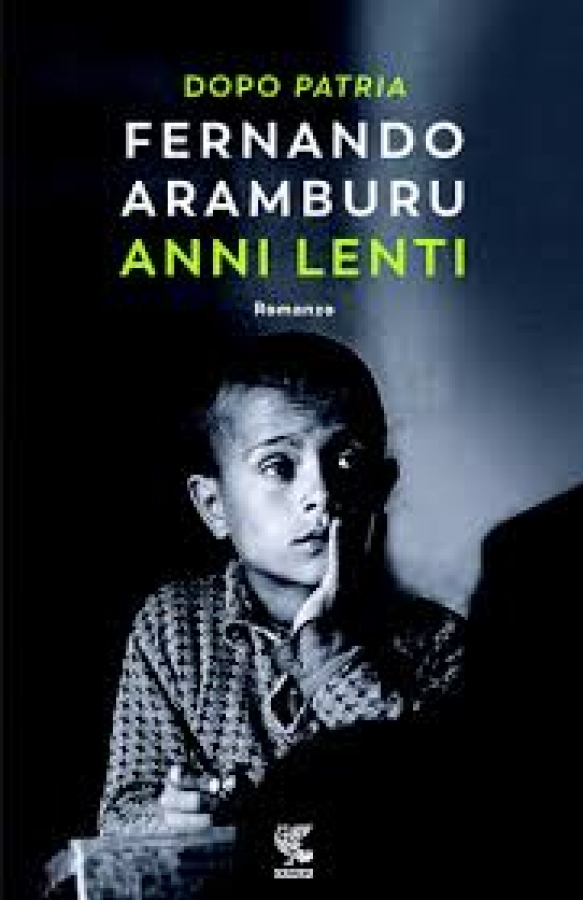
Slow Years
In *Patria*, the author confronts with forceful tones the psychological and existential consequences of the civil war that bloodied the Basque Country from 1968 to 2011 (see the review on this site). With *Slow Years*, Aramburu tackles the same themes, yet with placid, almost dreamlike accents. Then again, > when I pause to review my memories of those years (those of Franco's Spain), an old feeling of slowness returns to me. (...) I am tempted, at least in certain stretches of the novel, to make an effort to convey through a deliberately slow style that sensation of historical stagnation. To give this impression of a history > that dragged on sluggishly , the author imagines that an “informant” provides him with the raw materials to construct a novel, even > if it becomes necessary to stray from the informant's testimony, so be it. Literature first, then, if any room remains, the truth. And so a person, now grown up, recounts to Aramburu his childhood living with relatives in San Sebastián. He, > a little Navarrese shit , as his cousin Julen greets him, finds himself living in a Basque family: an authoritarian, abrupt aunt; a melancholic, absent uncle; an ugly, fat female cousin who sleeps around with all the boys; and Julen, who upon seeing him cry consoles him by mocking him: > if you were Basque you wouldn't cry. Have you ever seen iron weep? But, since you are a soft-boiled Navarrese, what happens happens. Strong, swaggering, self-confident, spoiled by his mother, Julen recalls Joxe Mari from *Patria* and, indeed, his story shares many similar traits: he joins ETA, is forced to flee to France, but, unlike Joxe, Julen cannot endure the loneliness and hardships of underground life; he betrays the organization and returns to San Sebastián, bringing shame upon his family. All of this is depicted through the eyes of a child, who does not fully grasp the dangers surrounding these events and their impact on his aunt and uncle's family. It is true, a shiver of fear ran through him whenever he saw the Guardia Civil pass by, but > those mustaches, do you remember them? Those hard stares, the batons and helmets, the weapons that my adolescent imagination struggled to conceive of outside cowboy-and-Indian movies. In the child’s imagination everything blurs together, creating something like a commedia dell'arte where comical or frightening figures bustle about within the same surreal, comedic atmosphere. Consider the fat cousin who, having fallen pregnant, is forced to marry the village idiot, himself obese and misshapen. Or the grotesquely solemn figure of the parish priest, assertive in inciting young men to join ETA, yet trembling when at risk of arrest. And yet, the subtle, amusing account of the child informant fails to bring peace, to permit reconciliation, even forty years later. The novel concludes with a bitter recollection by the author. On a bus, he runs into Julen’s father, but turns away. > They infected me with hatred. (...) I would like to ask his forgiveness, but he is dead. There are many ways to speak of a country's tragedies, the lacerations of a community, and the grief of people who were scarred by those events. In this novel, Aramburu does so with a reckless approach, perpetually teetering on the thin line between the comic and the dramatic; what emerges is a sense of narrative inadequacy that deepens as one delves further into the tale, where one would expect it to evolve toward a greater depth of exposition and judgment. Perhaps Aramburu chose the wrong informant—what could a child do? He could do nothing but defend his childhood behind a fantastical vision, as if everything were that game of plastic cyclists, the child informant's only toy, which > move forward in turns, by as many spaces as indicated by the die. Aramburu consistently displays remarkable narrative inventiveness. If in *Patria* it was the shifting of the narrator mid-stride (from “I” to “she” within the same sentence), here it is instead the pairing of the child's account with a sort of working outline by the writer on how to develop the novel: the plot, the setting, the deeper explorations, the words. These are “notes” that gradually overshadow the narrative, losing their character as a reflection on himself and the writer's craft to become increasingly another tale altogether, silencing the child's own. At first, this literary device is intriguing because of its novelty, but it eventually proves repetitive, disrupting the linear development of the story. Why read it? Enjoyable, yet in the end the story fades away.
The Year of the Death of Ricardo Reis
Ricardo Reis is one of the many names under which Fernando Pessoa, the greatest Portuguese writer of the twentieth century, signed his works. The author imagines that a Ricardo Reis, after sixteen years spent in Brazil, returns to Lisbon in the very year of Pessoa’s death, 1935. It is pointless to seek a plot in the novel; as in Joyce’s *Ulysses*, the real subject of the narrative is the wanderings through 1930s Lisbon and the succession of thoughts on reality and on oneself: thoughts that never find an adequate expression in words. > Over the stark nudity of truth the diaphanous cloak of fantasy, the maxim seems clear, clear, neat and definitive, even a child will be capable of understanding it and repeating it in an exam without making a mistake, but this same child would understand and repeat with equal conviction a new sentence, Over the stark nudity of fantasy the diaphanous cloak of truth, and this sentence, yes, gives far more food for thought, and to imagine with relish, fantasy solid and nude, truth barely diaphanous, if overturned maxims became laws, what a world we would make of them, it is a miracle that men do not go mad every time they open their mouths to speak . In this deft literary inversion through which the certainty of reality turns into vagueness and imagination gains the upper hand, the novel’s fundamental theme is revealed: it is no longer possible to “read” the world, the interior one any more than the external context. Ricardo Reis walks through Lisbon as though in a labyrinth, unable to find an exit. He is partly “a spectator of the spectacle of the world” and partly overwhelmed by his own thoughts: it is not he > who is thinking these thoughts, nor one of those innumerable selves living inside him, perhaps it is thought itself that is thinking, or simply thinking, while he watches, surprised at the unravelling of a thread leading him through unknown streets and corridors... But is it Ricardo Reis who is confused, or is it reality itself that becomes representation rather than truth? The book’s most compelling pages concern the protagonist’s journey to Fátima and the description of a sort of war simulation staged by Salazar’s dictatorial regime: an urge to partake in the great slaughter of the 1930s (the Spanish Civil War and subsequently the world conflict). Faced with the shameless exploitation of hopes for a cure, with the petty and grand commerce surrounding the shrine, religion turns into superstition, an occasion for revelry, a contempt for spirituality. In the same way, the military parades, the celebrations of victories that never occurred, the false reports, the propaganda are the unsettling parody of a moral and physical disaster looming over Europe. The protagonist seeks, without much conviction, solid anchors for his life, both inner and political, but it is all in vain: > time drags on like a slow, viscous wave, a paste of liquid glass on whose surface lie myriads of sparkles that catch the eye and deflect meaning, while deep down the tawny and unsettling core shows through, an engine in motion (...) Ricardo Reis lacks a guide dog, a walking stick, a light ahead, for this world and this Lisbon are a dark fog where north and south, east and west are lost, where the only open path leads downward, and if a man lets himself go he plunges straight down, a dummy with neither legs nor head . It is hardly surprising, then, that when Pessoa’s ghost visits the protagonist, Ricardo Reis decides to follow him into the world of the dead, where reading is the first faculty to be lost. “Here (in Lisbon), where the sea has ended and the earth awaits.” Many interpretations can be offered for the novel: the narration of a progression toward death; the desire to evoke a Lisbon now vanished; the contrast between a yearned-for and idealized love (the figure of Marcenda, a notary’s daughter) and a sensual and concrete love (the liaison with the chambermaid Lídia); the subtle irony aimed at Portuguese society; and yet further meanings. The unifying thread of so many explanations is the shattering of the European conscience, aware and terrified yet inert and cowardly before the disaster toward which it moves, as though dragged along by an indecipherable and unstoppable fate. > We have all had a father and a mother, but we are children of chance and necessity, whatever this phrase may mean, Ricardo Reis thought it, let him clarify it . In reading the novel, one encounters sentences that are exceptional from a literary standpoint. One cannot help but feel envious, and captivated, by the following passage. > Only a vague inconsequential sorrow lingers a while at the door of my soul and after gazing at me for a moment passes on, smiling at nothing, he murmured (Ricardo Reis). Yet on the whole, the narrative style is cumbersome and tedious. The phrasing is complex, with frequent shifts of subject; the sentences are long, dominated by commas; the punctuation does not aid the reader; reflections, often philosophical in nature, prevail over plot, characters, and descriptions. There is a total absence of dialogue, which might otherwise lend breath and vitality to the narration. It is a *Ulysses* in which there is no Mr Bloom. Why not read it? It is tedious and prolix.

The Ring Finger
While in ancient Egypt embalming was practiced to preserve the deceased for eternity, the Shinto worldview and a certain measure of fetishism lead, in Japan, to the preservation and safekeeping of objects and living beings that are important in one's life. The novel speaks of a "specimen," and the technique employed is perhaps akin to that used for the wet preservation of fluid specimens using formaldehyde. In any case, the method is not explained in the book, perhaps to maintain a magical and mysterious atmosphere. This long preamble was necessary to frame the story. The protagonist is a young woman who left her job at a soft-drink bottling plant following a workplace accident: the gear of a machine severed the tip of her ring finger, > an image haunted me; that seashell-shaped piece of flesh, pink as a cherry petal, tender as the pulp of a ripe fruit, falling in slow motion into the iced soda, only to settle at the bottom, floating among the bubbles, (...) I had lost a part of my body. She goes to work in the city, in a semi-abandoned building. Here, Mr. Deshimaru prepares and keeps specimens of all kinds. > Everything about him was impeccable. The color of his skin, his hair, the shape of his ears, the length of his arms and legs, the line of his shoulders, his voice were all perfectly harmonious. (...) The sun's rays enveloped his white coat, sketching an aura of light around it. One day, Mr. Deshimaru puts new shoes on her and orders her to always wear them; then he undresses her, leaving the shoes on, and they make love. > He neatly unbuttoned my blouse from the top down and unzipped my flared skirt. (...) In the end, I found myself naked. I was wearing only the black leather shoes. (...) He held me tight in his large arms—not in a tender embrace to savor the sensation of our bodies—as if he wanted to press all of me flush against him. (...) I had the feeling of having been transformed into a specimen incorporated into him. From here, the story is a slow slide toward the inevitable question: > couldn't I entrust myself to you and become one of your specimens too? (...) The preserving fluid must have been warm and still. It was not cold and fizzy like the soda. It would have completely enveloped the ring finger, from the tip to the edge down to the faintest lines of the fingertip, while the cork stopper would have shielded it from dust and external noises. The story is disturbing if viewed as a realistic narrative; it becomes sustainable if considered as a metaphor for the deprivation of a part of the body. Having watched a small ring finger detach and vanish created a profound wound in the young woman's psyche. It is as if we were inside a dream, in which a kind of shaman, shadowy and luminous at once, draws the girl to himself, offering her a world that is protective and claustrophobic. Becoming a "specimen" is a way of escaping reality. The writing is limpid and simple, reflecting well the young woman's disorientation; pleasant and fluid, the style contributes to an overarching sense of implausibility that not even the eccentricity of Japanese culture can overcome. Everything remains on the surface; there is no psychological depth in a tale in which only physical contours and objects are delineated in detail, thereby acquiring a semblance of reality. The story flows far too linearly. Why not read it? It is simply too implausible.
Apartment in Istanbul
The protagonist is a German woman in her forties who lives in Turkey and runs a bookshop specializing in crime fiction. She describes herself this way: > I have a double chin, orange hair, a mobile phone (an older model, though), and a circle of friends on antidepressants. I am always nervous, but I don't know why . Saddened and disheartened following an argument with her boyfriend, she sets out to find an apartment to buy. Among those brought to her attention, she attempts to view one that happens to be illegally occupied. In trying to see it, the protagonist—impulsive and quick-tempered—clashes with the tenant, who refuses to let her inspect the premises. As chance would have it, the tenant is murdered: thus begins a detective story in which the protagonist, partly because she is a suspect and above all because she enjoys playing detective, sets out to find the killer. It must be said that, as a noir, it is hardly compelling, particularly because it lacks twists and turns and everything feels rather predictable. Far more interesting is the sketch of a woman poised between two such disparate societies: the German one (where “people are always in a foul mood, unhappy, and dissatisfied”) and the Turkish one, where > the interiors of the houses and the windowpanes are polished to a shine, but the balconies and streets are so filthy as to disgust anyone who sets foot there . What the protagonist wants is clear—after all, where else could a woman live, if not in a Mediterranean city, when she prefers “a new apartment rather than another man” entering her life? The book possesses one undeniable virtue: offering the prospective tourist a list of Istanbul's most interesting neighborhoods. The protagonist is sketched with hurried, superficial strokes, almost deliberately avoiding any psychological or sociological depth. Life moves quickly, and there is no time to understand why one lives in Istanbul rather than Berlin, why one prefers living alone—with the pleasure of playing detective—over having a husband and the friendships typical of a middle-aged progressive German woman, such as having > peroxide-blonde friends who lived in residential complexes with swimming pools, complained about snoring husbands, wore silver ballet flats, and voted for the Social Democrats . Why read it? It is an enjoyable read, but the narrative is evanescent and flimsy. A translator's labor must cost very little indeed to justify publishing such a predictable book in Italian.
The Army of the Lost Rivers
The novel is set in Friuli in 1944 and deals with an event that actually occurred. In that year, the Germans relocated an army of Cossacks to Friuli, who had sided with Hitler under the illusion that they could defeat the Bolsheviks, their historic enemies. They were a people who had wandered across Europe with women and children in search of a land, spurred by the promise of a victorious return to their places of origin, amid the great rivers of European Russia. The narrative revolves around the figure of a woman, Marta. She arrived in the village with her fiancé and his sister, Anita. Yet she is soon left alone, as her fiancé is dispatched to the Russian border and never returns. Marta lives with a wealthy Jewish widow of Slavic descent, who had fled Russia following anti-Semitic persecutions and sought refuge in a remote village in Friuli. Life unfolds in an apparent serenity, which is shattered by a German raid that sweeps away the Jewish woman and, along with her, a group of Gypsies who were camping with their caravan near the village. Marta is left alone with Anita, who is expecting a child, and an old Gypsy who by chance had escaped. Marta is a strong woman who always looks to the future, confronting adversity with great courage. A young man arrives from the Russian front, Ivos, with whom she has a brief relationship, soon cut short by his decision to join the partisans. Alone in a large villa, Marta, Anita, and the old Gypsy live in a state of suspension, of waiting, striving to lead a normal life amidst an increasingly precarious and dramatic situation. At this point, the Cossacks arrive, overturning village life both materially (first looting, then installing themselves in the houses) and socially, introducing their own customs and forging ties with the locals. In truth, the Friulians seem to accept the arrival of the invaders, not least because they feel united with them by the longing for land and for a definitive resolution to centuries-old suffering. A family comes to live in Marta’s house (a woman, a youth, and a twelve-year-old boy), alongside the two commanders of the Cossack detachment: Gavrila and Urvan. With the latter, Marta embarks on a romantic relationship which, in her mind, might culminate in an escape to America to build a life together. In this section of the novel, the tone is light yet melancholy: the Cossacks are capable of both enjoying themselves and entertaining others, but they carry a profound longing for their native land, their customs, and their traditions. > In Urvan’s soul, deep, deep within, the ghosts of those archaic customs still wandered, like a faded, bleached memory whose roots lay in times worn away and undone for centuries. He had the sensation of having landed who knows where, and of being awaited behind the wall by dark, unpredictable events . Both the Cossacks and the local people delude themselves into believing they can continue living > inside the house, a place set apart from the world, like an unmoored ship gliding across a sea devoid of change and storms . At a certain point, the situation unravels. The embattled peace between Cossacks and partisans turns into open warfare. A sequence of bloody, gratuitously cruel episodes begins. In truth, there is no reason to fight, yet it is as if the fragile bond of coexistence between the two peoples had shattered. The Cossacks, who until then had respected the women and local customs, begin committing acts of violence and murder without even knowing why; it is as though the hope of a safe haven, of a homeland, had vanished. > But above all, it was the mental homeland that had vanished, that order of thought through which a man always felt, within them, to be in a familiar and reassuring place . At a certain point, the Cossacks decide to march again and return to their homeland. It will be a tragic exodus, as many will perish from hardship and disease, others in clashes with the partisans, while the last among them will commit collective suicide to avoid being repatriated to Russia, where certain death awaits them. Marta is left alone once more, yet the novel moves toward a natural conclusion, for the world must go on. Anita’s child is born, and Marta is reunited with Ivos and resolves to live with him: true happiness may remain elusive, but with courage, the struggle to survive will begin anew. The novel develops along two themes: one social and collective, the other more intimate and familial. The social theme, which renders this novel so timely, concerns the encounter between two peoples, framed, however, within the notion that we are forever shipwrecked: > humanity had reached a point where, increasingly, there would be entire populations without a homeland, nomads driven from their lands, crucified by painful circumstances offering no way out, propelled forward by armies and wars . Faced with this resurgence of barbarism, the author finds no socio-political solution, seeking it instead in the strength of intimate and familial bonds, and above all in womanhood. Marta embodies the mother-earth, the figure capable of fostering coexistence. > She was a simple, even elementary woman, who around her, as always, could see nothing but men, only men, all resembling one another, speaking different languages, harboring different thoughts, yet all battered by war and misfortune, all lost in the disorder and darkness of the world . The narrative pace is slow, at times excessively so, yet it is the writing that sustains the reading. One is captivated and enthralled by a calm, expansive prose that manages to draw a sort of mist, a veil over the cruelty of destiny: after all, that is what the characters themselves desire. As the author stated, > I like to view things from afar, to describe events as though they were already history or legend . Why read it? The story is compelling, the book is exquisitely written, and above all, it is a timely novel that speaks of the encounter between two peoples and the inexorable power of our shared belonging to the human race.
The Army of Sleepwalkers
The context is the French Revolution. > Revolution is like those decks of playing cards where kings, queens, and jacks are split down the middle, one right side up and the other upside down, head up and head down; you turn and spin the card, but not a damn thing changes, the king standing upright is forever tied to the inverted one, as if sneering mockingly at him, as if whispering from below: I am you headed for ruin! Enjoy it while you can, because the world turns upside down . In this whirl the people—call them the masses, class consciousness, or the «flea-ridden mob»—are the ones who believe in a new world, where they envision themselves as protagonists only to find themselves used by power, like a collective sleepwalker. The revolution, in short, is a «Grand Parody». To recount it, the authors trace four narrative threads, initially distinct and ultimately brought together into one. The first consists of the story of Marie, a woman of the > famished and shit-smeared people, yet standing tall, bloodthirsty, an enormous dragon of fremendous beauty . In this way, the authors are able to speak of the sans-culottes and, at the same time, of the role played by women in the French Revolution: a role often overlooked, yet vital to that great upheaval and to the history of female emancipation. It was the first time women’s rights were clearly articulated. To give voice to the people and their protagonists, the authors invent a language, displaying creativity and great literary mastery. The writing is a blend of Bolognese dialectal forms and syntactic and linguistic structures that evoke the style of Beppe Fenoglio. It is without doubt the most captivating and least predictable part of the novel. The second narrative strand follows the fortunes of an Italian *commedia dellʼarte* actor: Leo, who realizes that during the revolution, the real theater is reality itself. > How would it have been possible to return to reciting an old script within the confines of a hall, when theater had become history beneath the sky of France? . And indeed, Leo becomes «both actor and spectator at once», transforming into Scaramouche, an avenger and fighter for freedom. The third thread deals with animal magnetism, a scientific theory and practice widespread in the eighteenth century. It posits that there is a universal fluid coursing through all living beings. Harnessing it would allow one to cure illnesses and ailments, working for the good. Yet can magnetism be used to pursue evil? To subjugate other men, turning them into automatons, a sort of «army of sleepwalkers»? This is what the novel’s third protagonist, Dr. DʼAmblanc, discovers. Like all scientists, he «seeks not justice, but the confirmation of a hypothesis», and this leads him to sacrifice the life of a boy under his care, merely to verify whether magnetism could be employed for sinister ends. Finally, there is the section most deeply steeped in philosophical and psychoanalytic references: the asylum, the upside-down world par excellence. > The ward of the insane was a parody of a city district... everything that happens in here is a parody of the world out there... in short order, passing from mouth to mouth, news transmuted into wild rumors, as the alienated enriched them with their anxieties and bent them to the tortuousness of their indecipherable codes... studying the delirium of those who live openly in the Grand Parody can help us understand those who, seemingly saner, sink into it without being aware of it . In the development of its four narrative lines, the novel proceeds slowly and tortuously. It is demanding yet stimulating, rich in compelling scenes and food for thought. At a certain point, the narrative accelerates, turning into adventure, plot twists, and sudden shifts in direction. It becomes an easier read, but grows predictable, assimilating into the many modern novels that mix suspense with the paranormal. It falls to the reader to discover the unexpected conclusion. We can only say that power is overcome by humanity at its most fragile: a woman by now resigned to squalor and alcoholism. Yet the people advance; will they ultimately emerge victorious? It is a major historical novel, well documented, capable of recounting an epochal episode of our history in an engaging manner. The idea of telling the French Revolution from multiple perspectives is not merely an effective literary device. It makes it possible to address universal and contemporary themes, such as: the question of how far the people are a mob and how far a conscious force for transformation; the relations between men and women which, even in a time of great upheaval, are swiftly reined back into the former’s dominance over the latter; science as progress for the good of humanity and as an instrument of oppression; madness as the laying bare of the paradoxes of normalcy; political and social struggle transformed into performance, into theater. The novel’s limitation lies in its characters: the realm of feelings and interpersonal relationships is lacking, with the result that the protagonists turn out to be stereotypes, emblematic figures of a philosophy of history rather than living, autonomous characters. The creativity, which shines through above all in the prose, is placed at the service of an intellectualist approach. Why read it? A superb historical novel, a reflection on the contemporary world, captivating prose. It reads very well.

A Girl Returned
> My mother from the sea died on the top bunk, on one of those nights. Looking at her, she did not seem ill, perhaps just a little greyer than usual. (...) At the funeral, the other mother accompanied me. PoorAdalgisa poorAdalgisa, she repeated, wringing her hands. But then they threw her out; her nylon stockings were all laddered and she couldn't attend the service in that state. This dream haunts the nights of the Arminuta, the “girl returned”: a thirteen-year-old sent back to her family of origin, to the “mother by necessity,” after spending her childhood with an aunt, the “mother from the sea.” Raised as an only child in an orderly, quiet home, she finds herself catapulted into a large, impoverished family, with uncouth and seemingly indifferent parents, loud brothers always ready for crude jokes, a slightly backward little brother, and an invasive younger sister, already adept at housework, who still wets herself. > Toward evening the older boys came home; one greeted me with a whistle, another didn’t even notice me. They rushed into the kitchen, elbowing their way through (...). They filled their plates amid splatters of sauce; at my corner, only a spongy meatball over a bit of sauce arrived. (...) My first parents remembered after dinner that there wasn't a bed for me in the house. Tonight you'll sleep with your sister, you're both skinny anyway, the father said . What nostalgia for her former life, for the “mother from the sea,” and what shame for such an ignorant, neglectful, and destitute family! Yet what remains inexplicable to the Arminuta are the reasons why she was sent back to her parents “by necessity,” and so hastily. Could the mother from the sea be ill? What if she had died in the meantime? With a troubled soul steeped in melancholy, the Arminuta ventures into a world unknown to her: she finds support in her eldest brother (her first love?), learns to help around the house, and, through subtle signs, discovers a gruff maternal love, even if she cannot accept it. > I had felt my mother's hand move across my back and come to a firm rest on my shoulder blade. I had drawn my head between my shoulders, like a fearful dog pleased by the first caress after a long abandonment. Yet soon I pulled away with an abrupt movement and stepped back a little. I was ashamed of her, of her chapped fingers, the faded mourning clothes she wore, the ignorance that escaped her lips with every word. I never ceased to be ashamed of her language, of that dialect that turned ridiculous whenever she made an effort to speak properly . It is her sister Adriana (“she wore skimpy clothes, dirty shoes, greasy hair”) who shatters the Arminuta’s bourgeois solitude, leading her to understand the emotional wealth born of sisterhood, of a friendship that draws strength from shared habit, from being cast into the world together, from saving each other through complicity. And it could only be Adriana who bluntly tells her the truth: the Arminuta was abandoned by the mother from the sea because the latter was expecting a child and there was no longer room for her, having been wanted only because they had been unable to conceive a child of their own. At the end of the novel, the Arminuta meets the mother from the sea once more, and from that encounter comes to understand herself: > like an improbable flower, grown in a small clod of earth clinging to the rock . There is one word that encapsulates this short novel: authenticity. One is genuine if one does not view the world through forms, rules, and appearances, but seeks deep feelings; one is genuine if culture, education, books, and knowledge acquired at school do not serve as a shield, but as a means to immerse oneself more fully into real life, to seek a mutual sense of humanity beyond divisions of class, ethnicity, religion, and gender; one is genuine if one is not ashamed of one's own language, yet refuses to retreat into a parochial and folkloric dimension. This echoes the theme already explored in Elena Ferrante’s novel (*My Brilliant Friend*), though here the pursuit of an authentic life unfolds within the family, in the relationship between daughter and mother, and among sisters. The question one might ask is this: why, in recent years, is there such a pressing need to return to the primordial wellsprings of Italian society—family and friendship? Why do we feel that culture is insufficient to teach us “resistance”? The plot is slender, and the characters are merely sketched rather than fully explored, beginning with the Arminuta, an improbable narrator. Its fundamental merit lies in the writing: banality and the style of television dramas are finally abandoned in favor of forging a new language, built on short yet unsplintered sentences, a measured blend of standard Italian with dialectal and regional terms, carrying ancient resonances deftly woven into modern syntax. Why read it? An engaging story, even if only sketched; writing that is both intriguing and pleasurable.

The Art of Joy
In the final pages of the book, Modesta, the novel’s protagonist, is accused by her son of never having loved him, > because you lived for everyone, always on the go, damn you, talking and acting familiar with everyone . And Modesta answers him indirectly a few pages later, confessing that “in my eager thirst for life, I ran too far ahead in my mind.” The account of Modesta’s life resembles a long, passionate sprint, devoid of a single moment of quiet, drawing instead ever-renewed vigor from the obstacles it encounters, from new friendships and loves, and from an extended family without boundaries, hierarchies, or defined roles. In the end, the reader is left weary and disoriented, overwhelmed by such sheer energy. The novel is set in Sicily, in Catania. Modesta is born in 1900, and the narrative traverses twentieth-century Italian history, with a keen focus on the fortunes of the Left: the socialist and communist parties. Raised in a destitute peasant family, Modesta is raped at the age of sixteen by a man who may be her father. Out of charity, she is taken into a convent. While this allows her to develop a passion for reading and study, she must endure the bigoted, hypocritical environment of the nuns and submit to rules that mortify intelligence and a fresh, inquisitive sexuality. She becomes the mother superior’s protégée, and through a series of fortuitous circumstances—seized by Modesta with remarkable cunning—she goes to live with an aristocratic family, the Brandifortis. Modesta is no Jane Austen heroine. She has no qualms about sweeping aside every obstacle in the way of her resolve > not to be a petty little woman. Like the princess I wanted to become, now she was truly a strong, willful woman, like a man . She murders the mother superior and the much-admired princess, marries the heir prince, despite his Down syndrome, and carries on two love affairs: with Carmine, the strong and overbearing estate bailiff, and Beatrice, the delicate and sweet little princess. Modesta embraces bisexuality joyously and without guilt, just as she is determined to become the mistress of her own destiny. On the other hand, in the background there always lingers the “ancient fear” of misery—both material and moral—stemming from her peasant roots. > I must not forget... the past, but rather always remember all of it, so as to keep it under control and turn it into strength against the new encounters that were surely lying in wait for me . Still very young, Modesta is already at the pinnacle of Catanian society, censured for her transgressive lifestyle, yet respected for her abilities and erudition. She could stop there. > But even now, as I write, the sun is setting, someone is knocking at the door, a car is waiting at the gate . Her encounter with Carlo, a northern physician steeped in socialist ideals, sweeps Modesta into the world of ideologies, abstract aspirations, and grand illusions. For the earthy, carnal Modesta, there is too much moralizing in Carlo, even if the protagonist appreciates his consistency and rectitude. Far more fraught, by contrast, is her relationship with Joice, herself a restless figure, weighed down by feelings of guilt she attempts to overcome through psychoanalysis. The romantic bond between Modesta and Joice is punctuated by the latter’s suicide attempts, by biting and spiteful arguments in which Joice accuses her friend of superficiality, reproaching her for a joyous, overflowing sensuality that makes no distinction between men and women, between casual lovers and deeper relationships. > Ah, Joice, what good was so much intelligence, so much science, if you failed to chip away at even a millimeter of the vice of guilt? Fortunately, there are the sea, the sun, long swims, and “a crowd of exceptional children,” whom Modesta welcomes with affection, heedless of their birth or family ties. Imposing an abrupt rupture on a romance that had grown stale, overly steeped in intellectualisms and recriminations, prison irrupts. Modesta is arrested, accused of financing and aiding the communists, and locked away in prison. In her cell she meets Nina, and it is a return to a joyous love, made of kisses and caresses, at once affectionate and sensual. With Nina, Modesta can once again abandon herself > to life, always without fear.... I would like to follow her... and keep dreaming..., but murmurs of voices, clatter of trains, the dull roar of crowded mobs tear away from my future and invade the room, pinning me to the armchair . The fall of fascism and the post-war era overwhelm Modesta. The Communist Party seeks to capitalize on her charm and capabilities, yet her ideas do not align with > that engaging, democratic smile... meant to reassure public opinion... One cannot suddenly talk of free love, abortion, divorce; one must proceed by degrees, as Comrade Giorgio (Amendola) says . Modesta is too transgressive for the bourgeois respectability of the Communist Party. Politics proves to be a disappointment, though hardly a surprise. The true novelty, which unsettles the protagonist, is her apprehension toward the young. Modesta discovers that the children, once so beloved, have grown into adults who accuse her, demanding justifications for their lives and asking why they were raised in such an unconventional way. They feel embarrassed by Modesta’s lifestyle; they do not understand it. And > to my astonishment I, too, realize that I fear their judgment . Meeting a new love—Marco, formerly Nina’s partner—gives her the strength to recount her extraordinary life, explaining to herself and to her countless “children” the reasons behind such a joyful eagerness to live. The novel was written between 1967 and 1976, when Goliarda was in her forties. It is a > journey backward into the subterranean woods of memories seemingly forgotten, which, once brought back to light, reorganized, and cleared of mold and crusts, reveal mosaics of gleaming gems for the understanding of one's own life and that of others . It is a sort of Freudian psychoanalysis, in which autobiographical elements intermingle with an imagined world—partly a transposition of the deepest traits of Goliarda’s character, and partly a chronicle of nostalgias and expectations: the large family, the children, the land of Sicily. As Domenico Scarpa observed, > this novel is a continuous victory over fear and uncertainty . Storytelling did not seem to have brought serenity to Goliarda, given that the events of the following years led the writer to a desperate and self-destructive act: the theft of jewelry from a friend, imprisonment, disgrace, and poverty. Perhaps there is too much egocentrism in Goliarda, so much so that the character system resembles the solar system, with a central star (Modesta) and countless planets (the characters) that possess no life of their own other than that which radiates from the center. Goliarda’s world is complex and intricate, yet the figures populating it are mere creations, fragments of an existential and psychological terrain that belongs exclusively to the author. The narrative structure rests fundamentally on dialogues between Modesta and the other characters: dialogues in which the context, the narrative function, and at times even the participants themselves are not entirely clear. They resemble extended soliloquies more than anything else, giving the impression that there is only ever one interlocutor: the protagonist. Because it also lacks a well-defined plot, reading it becomes arduous, and reaching the conclusion requires considerable effort. The publisher Feltrinelli refused to publish the book at the time, asking the author—who declined—to cut it back and make it less rambling and prolix. Its resounding success outside Italy somewhat ridiculed the publishing house’s stern verdict. Yet today, as the novelty of Modesta’s transgressiveness fades, that earlier assessment undoubtedly appears correct. Why read it? If one arms oneself with courage and patience, Modesta’s restless hunger for life delivers a jolt of energy in a contemporary world that is so gray and monotonous.
Artemisia and the Colors of the Stars
There are artists who remain forever pinned to an idea we hold of them, one that prevents us from truly appreciating them. Consider Dino Campana, the mad poet, and how his poetry was reduced to his presumed madness, casting his stylistic qualities and sources of inspiration into the background (see the review on this site of *La notte della cometa* by Sebastiano Vassalli). The same happened to Artemisia Gentileschi, a painter who lived between 1593 and 1653. Although she produced some fifty paintings and achieved fame throughout Europe, the memory of this great artist remains inextricably linked to the rape and subsequent trial she underwent in 1612. > Yet none of this will be enough to make my worth shine in the eyes of the world. Like a curse I bear upon me, for everyone—collectors and biographers alike—I will always be the paintress of scandal, rape, and revenge. Thus the author of this novel imagines Artemisia reflecting on her life, when she is already an established woman, well integrated into the society of her time. In Artemisia, that refrain they sang to her outside the courtroom, acquitted of all guilt, constantly resurfaces, > amid winking smirks, lewd propositions, merciless jeers, (...) *Paintress, lady painter, take this brush and warm it in your cunt.* And how could it be otherwise when we admire her Judiths, struck by the ferocious realism of the images: the first painting (*Judith Slaying Holofernes* from 1612), in which the biblical episode is transformed into a depiction of the wronged woman’s revenge, and the second from the end of her life (*Judith and Her Maidservant with the Head of Holofernes* from 1650), in which the two women flee with the man’s head after decapitating him. How deep the wound in an abused woman, that it surfaces even after so many years! The luxury of denial is not granted to woman, as Teju Cole observes in *Open City* (see the review on this site). All the more so when the rape was abetted by her father Orazio, who used his beautiful young daughter to curry favor with the powerful and forge business ties; and even more so when, in lodging the complaint that permanently disgraced his daughter, the father did not seek to punish the rapist, but intended to recover a painting the rapist had stolen: a painting whose conception the father claimed as his own, but which was in fact by the twenty-year-old Artemisia. We speak of the first Judith, through which Artemisia took eternal revenge upon man and embodied female solidarity against male society. Thus triply betrayed by her father, Artemisia suffered trial and disgrace in a papal Rome that was corrupt, violent, and lustful. In the novel, Artemisia is no weeping victim; she is a strong, clear-eyed young woman who knows that a woman must fight alone. She defends, desperately and proudly, her future as a painter, acutely aware of her worth. When she returns home after undergoing torture, the insolence of men does not trouble her (she is used to it!); she is concerned instead with her hands, with whether she will still be able to paint. While the first part of the novel recounts the intrigue surrounding Artemisia's ordeal, in the second part, set in Naples in 1648, Artemisia is by now an established woman, and it is difficult to find in the narrative the dramatic tension that characterized the first half. In truth, no significant events occur; the narrative moves along placidly, though Artemisia's restlessness continually surfaces—her inclination toward violent, scandalous, and sordid scenes typical of Naples' plebeian quarters, contrasting with the overt opulence of the Spanish rulers, far from the fine portraits painted for illustrious men, ever sinking into the mire of suffering. We may wish to look beyond the Judiths, yet it is always they who dominate our vision of Artemisia. It is difficult to discern a clear narrative thread in a plot woven from too many episodes loosely bound by the story’s development. The temporal leap itself and the shift in setting—first Rome, then Naples—do not aid the unity of the tale. The novel’s virtue lies, rather, in certain environmental descriptions; scenes rendered in vivid colors, coarse language, and subtle irony, traits reminiscent of Boccaccio that turn the narrative almost into a social novel. One senses the influence of the great post-war Neapolitan writers, such as Domenico Rea (see the reviews of *Spaccanapoli* and *Ninfa plebea* on this site). To give a sense of Raffaele Messina’s style, one might take as an example one of the finest passages in the novel: “At the Tavern of the Fountain,” where the patrons insinuate that it was the father himself who deflowered his daughter. > Tossed out like that, onto that rough board soaked in animal fat, the hypothesis seized the attention of every patron in the room. The dice, thrown amid ceaseless blasphemies, died away inside the overturned mug; the cards, laid face up on the table or still face down, ceased passing from hand to hand. (...) > You Jew of an innkeeper, give us yer take! (...) With a steaming dish of farro soup and pork rinds held aloft in his right hand, he turned slowly toward his interlocutor and answered with a ruddy smile: Fucking is as sweet as drinking wine. Whose hole it may be, or from what vine, is no host's concern, but a lawyer's quibble! > . The prose flows smoothly, interspersed with deft citations from the transcripts of the rape trial or from Artemisia’s own letters; digressions that lend veracity and color to the narrative, though within a typically contemporary style that occasionally slips into journalistic mannerisms, such as the overuse of the period” and the resulting verbless sentence. Why read it? For its fine descriptions of the setting.

Article 353 of the Penal Code
"A vulgar case of fraud, Your Honor, nothing more." Kermeur stands before the judge: he has confessed to killing a businessman, Antoine Lazenec. "We saw him sprout up like a mushroom at the foot of a tree," but in a quiet little town, lacking both ideas and jobs, > when someone like him arrives with such a determined expression on his face, (...) there is something about him that feels like an outstretched hand pulling our very soul out of us, with all those ideas of change, with all those grand schemes . People fall for it, starting with the mayor; the retiree Kermeur invests his severance pay, enthralled by the adventurer Lazenec's dreams of wealth. The beauty of it is that the swindler does not leave town after it has become blatantly obvious that the grand plans will never materialize, that he has pocketed the money, after the mayor has committed suicide; no, he stays right there, flaunting his lavish lifestyle, peddling optimism and falsehoods: > a man like that, Your Honor, a man like that, I realized later: if you don't make him disappear yourself, he will never disappear. He will come back . This is the motive for the murder: a poor man, ruined by a swindler, wound himself up like "an electric battery" and finally exploded, ridding himself and the entire town of a vainglorious scoundrel. What need is there for a lengthy interrogation? That is what we ask ourselves as well. In reality, the narrative is a slow soliloquy, in which Kermeur, the narrating "I," speaks with the "mirroring I," embodied by a laconic judge. It is like the mirror over the mantelpiece, before which the protagonist is accustomed to spending long hours. > And not because I want to see what is reflected in it, I told the judge, but I can't help myself, from staring at it I find myself tangled, as it were, in the thickness of the glass, my brain caught by the fog that could be mistaken for any hellish morning when the sun tries in vain to reflect within it, but made pale, as it were, or deceived by the opaque grain of the mirror . We thus learn the entirety of the retiree's life: his wife's abandonment, the raising of his son, from childhood to an adolescence prematurely marked by run-ins with the law, nostalgia for work and his few friends, a passion for fishing, and the setting of an Atlantic coastal town, where it seemed that > the pines and the ferns and the thick grass of the dunes (...) were in on a secret and whispered against me, beside me, proud to inhabit their peculiar world, a world without sentences and without malicious thoughts . It is, in short, the anatomy of a depression. There is nothing worse than expecting one thing and finding oneself confronted with another. Picking up the book, one hoped for a detective plot or an adroitly told provincial tale; instead, we ran headlong into a rambling spill of words—well-written, it must be said, at times offering intriguing insights, such as when the author observes that "a child is not programmed to feel compassion for you," a truth that we parents should keep firmly in mind! And yet, a sparkling, spirited style is not enough to save us; we are far removed from *Doctor Zhivago*, my dear Viel. The relentless succession of sentences, the lack of action, the excessive introspection, the overindulgent self-narration are all elements that render the novel utterly tedious and pedantic. Why not read it? It is unbearable.

Ascension
In Greek mythology, Sisyphus is condemned for eternity to push an enormous boulder up to the summit, only to watch it roll back down into the valley and then be forced to haul it to the top once again. For Albert Camus, the myth of Sisyphus shows us how > the struggle itself toward the heights is enough to fill a man's heart. (...) At this subtle moment, when man turns back toward his life, a new Sisyphus returning to his rock, (...) he contemplates that series of unrelated actions which have become his destiny, created by him, brought together under the gaze of memory and soon sealed by death (*The Myth of Sisyphus* in *Opere*, Bompiani, pages 318–9). Viewed in this light, the myth of Sisyphus can serve as the interpretive key to a novel that would be simplistic to define merely as science fiction. Harold, a reclusive and solitary man, has been missing for many years when his brother learns that he has been hospitalized for evident mental disorders; he also discovers letters Harold wrote to his niece, recounting a mountain that mysteriously appeared in the sky, and its exploration by an expedition of scientists, including Harold. > I have wondered at times why I addressed these letters to you, Hattie, what this experience has to do with you. (...) At first, I told myself the letters were little more than a chronicle, a record of events that would allow me to process them at some deeper, subconscious level. (...) That is false. (...) I spent my life hiding from myself, denying my past, concealing my identity beneath new challenges and new mysteries. As Camus perceived, the thirst for knowledge and the flight from oneself are inextricably intertwined. The team of scientists comprises diverse competencies, some scientific, all within the natural sciences, an experienced mountaineer, and several military personnel. An exception is the presence of an anthropologist, whose necessity remains unclear. After being flown by helicopter to base camp, the ascent toward the mountain's summit begins. The climb entails the classic perils of high-altitude mountaineering: ferocious winds and subzero temperatures, ice and snow avalanches, ravines and crevasses. The explorers are also attacked by tentacled monsters and afflicted by paranormal phenomena, such as the collapse of temporal dimensions: a few hours can turn into months, the past and the future overlap with the future in the mind. The narrative is replete with adventure, plot twists, and Harold’s memories, as he painstakingly manages—or seems to manage—to free himself from guilt and achieve self-forgiveness. Only two men reach the summit: Harold, now physically broken, and Bettan, the mountain guide. In a sunlit environment above the clouds, surprisingly sheltered from the winds, the anthropologist appears. He is not a man; he is a Superior Being (God, perhaps?) and their expedition has been an experiment ( > I felt my entire existence shrink to the size of a rat cage ); an experiment to test the capabilities of human beings. It is by the will of the Superior Being that the ape became a hominid, then Homo sapiens, and was ultimately bestowed with the gift of Reason. The Superior Being has always intervened; now the time has come to make another leap—who will be the fortunate one? It can only be Bettan; our Harold is, deep down, a weakling. No sooner had the Superior Being placed the miraculous stone upon his chest than his body > began to glow, first with a deep blue, like that of the ocean, then yellow as the sun. (...) A surge of energy erupted from him like thunder. (...) It is done, said the Superior Being, (...) Welcome, “Other Man,” to the new era of humanity. And precisely at that moment of transformation, Bettan shoots himself in the head, killing himself, crying out: > I am the master of my fate, (...) I am the captain of my soul. The Superior Being retreats in dejection—forever, we hope. Adam preferred to leave the Garden of Eden to be free. Certain angels rebelled against God, choosing eternal damnation over being the applauding courtiers of divinity. In the novel, it is imagined that Harold's letters sparked widespread debate among the public and critics: a confused and delirious work; confirmation of a global conspiracy; an account of a phenomenon plausible from the perspective of theoretical physics; genuine clues pointing to the presence of real people who vanished without a trace; the oneiric construct of an anguished man seeking to metabolize his own guilt. It is difficult to say which of these interpretations is correct: perhaps a little of each. And this is precisely the novel’s shortcoming: attempting to say too much instead of humbly being a good science-fiction novel. The prose is straightforward and readable; a subject of such complexity would have required a more evocative writing style, capable of stirring impressions and fantasy in the reader—a language akin to Paul Lynch's in *Prophet Song* (see the review on this site). The plot is muddled, the result of striving to blend the adventure genre with psychological introspection, alongside excessive intrusions by the author into Einsteinian physics and metaphysics more broadly. Why read it? It is interesting, but do not expect a science-fiction novel.
Ask the Dust
The third book of the Bandini saga represents a further transition, both in terms of narrative content and stylistic and expressive aspects. Arturo is in Los Angeles, where he scrapes by, trying to write and get his short stories published. At the outset, the novel retains the defining elements of its predecessor: a strong predominance of imagination, a narrative rhythm still grounded in subjective expression, and a style characterized by strong lyrical accents rich in evocative power. Arturo falls in love with Camilla, a Mexican girl who works in a bar, and embarks on a tormented love affair marked by verbal clashes, written notes from Arturo, and an outing to the seashore, during which the young man fails to translate his feelings into sexual consummation, despite the girl’s expectations. Arturo still lives in a sort of delirium, swinging between phases of exaltation and depressive states. However, an episode occurs (imagined or real?) that seems to mark the turning point in the novel’s narrative and stylistic structure: a woman seeks Arturo out to pursue a romantic affair with him. From this moment on, his relationship with Camilla is inverted: the girl turns to Arturo for help and confesses that she is in love with another man, who nevertheless does not want her. Arturo accepts the situation, not least because he has realized that Camilla is using drugs and he wishes to help her. A complex relationship unfolds, through which Arturo matures, coming of age as an adult. The young man wants to take her to a house by the sea, but Camilla flees and vanishes into the desert: > across the desert was an utter indifference, the rhythm of night and another day, and yet the secret intimacy of these hills, their mystery, secret and comforting, made death of no great importance. You could die, but the desert would hide the secret of your death, it would remain after you, to cover your memory with ageless wind and heat and cold…. I carried the book a hundred paces into the desert, toward the southeast. With all my strength I threw it far out there in the direction she had gone. Then I went to the car, started the engine, and drove back toward Los Angeles . Coming to grips with the reality of emotions, rather than merely the delirium of his own aspirations and fantasies, spurs Arturo’s transition from youth to adulthood. The style also evolves in this direction. It preserves its richness of language, with a sentence structure and a choice of words particularly attuned to phonetic qualities and the evocative power of rhythm. The style, however, becomes leaner, less lyrical and redundant; the narrative structure is distinguished by dialogues, previously virtually absent due to the lack of characters of significant weight.

Murder in the Central Committee
The novel chronicles the investigation of a private detective following the murder of the Secretary of the Spanish Communist Party during a meeting of the Central Committee. The narrative unfolds slowly, blending markedly disparate styles and narrative content: a succession of continuous "parentheses" on life in Madrid and the tribulations of the leftist milieu, with a sentence structure reminiscent of *The Pianist* and thus tedious and prolix; a Raymond Chandler-esque approach, particularly in the more action-driven scenes, where the protagonist is pursued, captured, and beaten by secret service operatives; and an articulation closer to the British mystery when the protagonist ultimately unmasks the killer. The overlapping of styles and the predominance of themes tied to the existential and political dilemmas of the Left make the book bad, tedious, and ponderous. It is, therefore, a dated novel that offers little stimulation regarding contemporary issues (or so one hopes!).

Killing Commendatore
Following his separation from his wife, a modest painter of commissioned portraits undertakes a journey across Japan. In a motel, he comes close to strangling a girl whose name he does not even know. > Just pretend, she had told me. But would I be able to get away with so little, was I sure?. (...) Because it obeyed an inner impulse of my own...(...) That was what truly frightened me, in the depths of my consciousness As in other novels by the author (see on this site the reviews of *Kafka on the Shore* and *Norwegian Wood*), an intricate journey into consciousness begins from a traumatic event on the brink of the abyss, during which the plot and characters dissolve into an oneiric and metaphysical world. This time, at the core of the reflection lies the function of art, conceived as an “implicit, secret, incomprehensible sign,” capable of allowing us to “slip through the narrow aperture that separates nothingness from reality.” Weary of wandering, the protagonist finds refuge in the mountain home belonging to the father of a friend—the great artist Amada Tomohiko. The residence is abandoned because the elderly painter has been admitted to a care facility for the aged. In the attic, the protagonist discovers a painting, *Killing Commendatore*, depicting a homicide inspired by a scene from Mozart’s *Don Giovanni*. Although Tomohiko had adopted the traditional Japanese style—seemingly ill-suited to expressing intense emotions—the painting depicts a bloody duel: a young man brutally slays an old man, the Commendatore, before the stunned gaze of a lady in an elegant white dress and a coarse, vulgar man, while the head of a mysterious witness emerges from a trapdoor. I have paused to describe this painting because it is from this very work that the novel’s various narrative threads branch out. It is as though we were faced with a succession of metaphors in which the signs of the painting, from the scene itself to the physical spaces, manifest within the plot and characters. As is typical of Haruki, many implausible, indecipherable, and heavily symbolic events occur: so many and of such nature that the reader, and alongside him the modest painter, finds himself trapped in a snare of metaphors. How can one return to reality and find oneself? The scene in the painting must come to life: before Tomohiko—demented yet alert—the protagonist slays the elderly Commendatore, escapes through the trapdoor, journeys through a narrow, pitch-black passage, is aided by the white lady from the painting (the Blue Fairy or Beatrice?), saves himself, and emerges from a mysterious hole near a small Buddhist temple. A Dantean journey? Perhaps, yet the conclusion is not Paradise; it is the prosaic life of a modest painter. Perhaps the protagonist has freed himself from his own guilt by bringing balance to his existence, even if life remains like “a tightrope walker's wire.” This extremely long and muddled novel seems like the testament of an author who was unable to restrain himself. One has to wonder whether Haruki had a clear sense from the beginning of where he wanted to go, or if instead the world of ideas took over, causing the characters to evolve without ever truly defining themselves—remaining suspended in limbo—while events piled up just as they occurred to the author's mind, without purpose or direction. Throughout the narrative, the style remains invariably precise and detailed, as though the author sought to chronicle something that has precious little reality to it: a nineteenth-century-style novel of an oneiric vision. This contradiction emerges clearly in the way the author describes the work of the protagonist painter: meticulous, attentive, almost photographic; yet all his works remain unfinished, and their very inconclusiveness constitutes their allure. The narrative is underscored by the sound of opera and classical music—a paradoxical choice, considering how orderly and rational such music is, and therefore hardly congenial to a confused mind like the author's. Why not read it? It is extremely long and boring.

The Attack
> How to accept remaining blind in order to be happy, how to turn one's back on oneself without facing one's own negation?... non does not restore grace to a rose by transplanting it into a pot, one denatures it; one believes one is embellishing the living room, yet in truth one does nothing but disfigure one's own garden . Amin, an Arab Israeli, is a brilliant surgeon, happily integrated into Tel Aviv's polite society. After a devastating bombing of a restaurant, in which numerous civilians die, among them many children, Amin discovers that the suicide bomber is his wife, Sihem, the woman who > cradled my tenderest years, adorned my plans with glittering garlands, filled my soul with gentle presences. I no longer find anything of her in me, nor even in my memories . How is it possible that his wife is a homicidal fanatic? For a few pages, the novel seems to take an intimate turn: the secrets concealed within marital relationships. Then, the narrative reclaims a more existential and social direction. Amin wants to know who persuaded his wife, certain that Sihem was brainwashed by someone. He journeys to the Occupied Territories, into the midst of the war between Palestine and Israel, which he had desperately sought to escape. As a terrorist tells him, > the good doctor lives beside a war, he just doesn't want to hear about it. He thinks his wife shouldn't worry about it either.... Well, the good doctor is wrong . Amin's dreams shatter against the ruthless realization that his wife acted of her own accord, because > she must have harboured hatred within herself all along, even before knowing me..... she carried inside her a wound so foul and atrocious that she was ashamed to confide it to me; the only way to be rid of it was to destroy herself along with it . Yet perhaps, far more rationally, the truth lies in what Sihem writes in her farewell letter: > what use is happiness when it is not shared. No child is safe without a homeland . The journey into the Occupied Territories is also, for Amin, a return to childhood, to his people. The narrative does not tell us whether Amin too becomes aware of his people's tragedy; we only know that he dies—accidentally or deliberately?—in a slaughter perpetrated by an Israeli drone to eliminate a religious leader. With great narrative skill, the novel opens and closes with the slaughter in which the protagonist meets his death. According to some critics, Amin's death, inexplicable within the plot of the story, serves as a metaphor for an endless conflict and the destruction of a people: the Palestinians. It is an overly simplistic interpretation for a complex novel, one that refuses to take a side, neither against nor in favour of the two warring peoples. This assessment is confirmed by the positive portrayal of certain Israeli characters, such as Amin's tender female friend, and the alternation of colloquial language with poetic and, for long stretches, sermonizing prose. The narrative pace is tight, the dialogue dense and effective, the Israeli milieu and its characters convincingly depicted. What jars, instead, are the political soliloquies, such as those of the religious leader and the terrorist chief, which ring false and conventional. The Palestinian setting likewise feels artificial. It is evident that the author feels far more at ease in an urban, Western-style environment. Why read it? It is a gripping read.
Waiting by the Sea
The impetus to read Biamonti came to me from a poem by Montale: *Riviere*. In this masterpiece, the Ligurian landscape serves as the occasion for memories, for regret, and also for new dreams. And Pietrabruna, too—the village perched between mountains and sea to which the protagonist returns—evokes conflicting emotions: > the hills trembled in contact with the vault of the sky, shaken by a dense, luminous blue. Yet there were lands that turned their backs to the sun, despondent (as a boy they had made him dream). The rays descended from the peaks without touching them. Lands in perpetual yearning . Edoardo is a ship captain who returns to his home, awaiting a new berth. Welcoming him are > landslides clinging to the hillside and olive groves inside luminous chasms... sea light (that) welded itself to the summits, to the ridges, all the way to Pietrabruna : a village always the same, «yet where was life, outside the sabre-slashes of the sky, outside the wind?». Waiting for him, too, is Clara, who for years has been waiting for Edoardo to settle down. Theirs is an unusual love between a rootless man (like so many sailors) and a woman who is only seemingly placid and resigned: > in her sinuous, bony face, of an irregular sweetness, restlessness and reverie harmonized . Clara is the quintessential Ligurian woman, forced to be independent, and remains throughout the novel a mysterious, inscrutable, multifaceted character. Edoardo, on the other hand, is straightforward: behind financial troubles, he conceals the urge to flee. And indeed, he accepts a perilous assignment. He must deliver a cargo of weapons to Bosnia. He finds himself in command of an old tub. Soon enough, the voyage turns out to be a trap, as they lose contact with the shipowner, and upon reaching their destination, Edoardo is forced to seek out the buyers alone, amidst snipers and clashes between rival factions. The Bosnian village may resemble Pietrabruna, yet «the hills with their white ridge were shadow blue where the sun did not strike». And the woman, too, whom he meets and accompanies, could be Clara, but she had «light, distant eyes... the marks of a withered sweetness». Could the Bosnian village, left unnamed, be the inverted mirror of Pietrabruna, and Edoardo’s journey, therefore, have taken place not across geographical space, but within his own soul? It is one interpretation, as the novel remains suspended in a final, hermetic reflection by Edoardo: > in every land lies the seed of death, it is plain to see in broad daylight..... there are bursts of sunlight on hanging lands . Biamonti possesses a markedly lyrical style of writing, better suited to poetry than to prose. When describing the landscapes and figures of his native Liguria, his style often finds a felicitous balance between narrative movement and the quest for words and consonances. The first part of the novel holds a remarkable charm, especially for anyone enamored of Liguria; in the second part, the writer loses momentum and harmony: one senses that he is out of his element. Then again, current events and history are not the author’s true concerns; he is instead entirely devoted to delving into his own world, into the relationship between the luminosity of the landscape and the torments of the conscience. Why read it? It is a splendid read, though one should not expect a compelling narrative plot.
The Actor
Mario Soldati was defined as “the first, great media-man of Italian culture” (Aldo Grasso in *Corriere della Sera*, 2016). Indeed, he was a novelist, journalist, screenwriter, film director, and television author. His numerous novels (reviews can be read on this site: *A cena con il Commendatore*, *Lo smeraldo*, and *El Paseo dei Gracia*) reflect his vast experience as a cinematic author, both in style and in narrative content. For Soldati, each of us wears a mask, even without realizing it, because the disguise is part of our deepest consciousness; consequently, our relationships with others are ambiguous, often full of futile deceptions; we like to live as if in a dream, as though we were in a soap opera. In short, we live in a bubble. Unlike his other tales, this novel stems from an episode in the writer’s life that could well be real. Soldati, the narrator, meets an old friend, a modest actor whom he has not seen for many years. Enzo is in dire financial straits because his wife continues to lose substantial sums at the casino: he asks Soldati for work. Our writer attempts to find him a role in a television series, though the moment is hardly favorable as new executives have replaced the old ones with whom Soldati enjoyed an excellent rapport. To inform his friend of what he is doing, he travels to Bordighera, where Enzo lives with his wife. In doing so, Soldati finds himself ensnared in an intricate and ambiguous family dynamic: Enzo’s wife, once a beautiful woman, now obese and infirm, is jealous of her husband, whom she suspects of cheating on her with their maid; Giovanna, the maid, dominates both Enzo and his wife through her mysterious, seductive allure; and finally Enzo, who convincingly claims to love his wife yet plays the role of the unfaithful husband, blatantly attempting to conquer the elusive Giovanna, thereby exasperating his wife and driving her toward killing the maid. Why does Enzo pretend to betray his wife with Giovanna? And why do the others play along with the roles Enzo assigns them, as if on a theatrical stage, never interrupting this cruel and false soap opera? > Every man is, always, a bit of an actor,. (...) every human being must, sometimes, to feel alive, be able to imagine themselves a little . This novel met with great success upon its publication in 1970 and won the Premio Campiello that same year. In truth, the story is dull and trite; especially if approached from a psychological standpoint: the quality of the narrative falls far below that of Soldati’s other novels. What remain are the splendid descriptions, cinematic in their detail and colors. An example: > Giovanna is small, slender, sturdy, dark-haired. A strange, narrow face: dark, close-set eyes, thin and unpainted lips: a face with a closed, motionless, unfeeling expression, as if carved of stone. (...) She wore an amaranth velvet suit, rather vulgar in its elegance, and very loud. (...) She gazed at herself for a long time, admiring her reflection, pacing back and forth like a model, pulling and smoothing the jacket of the suit over her buttocks, turning once more to glance back over her shoulder. Why not read it? It pains one to say it: it is boring.
Augustus: a Novel
John Williams wrote three widely acclaimed novels: *Butcher's Crossing* in 1960, *Stoner* in 1965, and this biography of Augustus in 1972 (with this entry, all of his books have now been reviewed on this site). Williams is an exceptionally talented writer who continually reinvents his style, adapting it to the story and the characters. In this case, the author constructs the plot through letters written by various figures; Augustus himself intervenes in the first person only at the very end, allowing us to grasp key turning points—both political and personal—of his life from differing perspectives. It is an exquisite literary device, yet one that fragments the narrative and assumes the reader is already familiar, at least in broad strokes, with the complex events that led first to the Principate and later to the accession of Tiberius. Who was Octavian, later Augustus, in truth? When his great-uncle Caesar dies, naming him his heir, Octavian is an eighteen-year-old youth: he learns the news in Greece, where he is staying with his friends Maecenas, Agrippa, and Salvidienus Rufus. In his journal, the latter recounts how Octavian voices his uncertainties regarding the true loyalty of Caesar's legions and, turning to his companions, states that he will share his fears only with the three of them, > who are truly my friends, (...) a cold sorrow had settled upon him and pulled him away from us . It is as if the young Octavian had realized that youth was over and that upon him fell the grave burden of ending the civil wars and securing peace and prosperity for Rome: to accomplish this, he must become a shrewd and ruthless politician, relegating personal affection to the background and exploiting everything and everyone, even his oldest friends and his beloved daughter Julia. Paraphrasing the myth of Orpheus and Eurydice, Horace recounts Octavian's destiny. > His love was not a woman; his Eurydice was knowledge, a dream of the world, to which he sang his song. But the world of light that was his dream of knowledge was destroyed by a civil war; (...) and his dream vanished, as if evaporating, into the darkness of time and circumstance. He saw the world, and understood that he was alone, fatherless, propertyless, hopeless, without dreams..... It was only then that the gods gave him their golden lyre, and allowed him to play not as they willed, but as he himself desired . It is a magnificent synthesis of Octavian's destiny, elevating him to a singular and immortal role in history, pursuing an end to which everything is subordinated—even Julia's happiness. And it is here that we, too, venture into the darkness of the human soul. With a stroke of literary genius, Williams introduces Julia's journal on the island of Ponza, where she has been exiled. Julia’s sorrowful, resigned account is preceded by the gossip surrounding her dissolute life, almost as if to justify her father's dreadful decision. Yet one cannot help but feel sympathy for this still-young woman, who was forced to marry Agrippa, a man far older than she, and later the unsettling Tiberius. It may well be true that her father exiled her for her immoral conduct to spare her execution for treason against the state; what is certain is that Augustus's cold, cruel severity contrasts starkly with Julia’s gentle melancholy. These are exquisite pages that alone justify reading the novel: the fading of memories, rendered useless and bearing only grief, juxtaposed against the precision in the account of the encounter between Octavian and Julia, father and daughter. > His face was gaunt, and there were lines of weariness around his pale eyes; but in the uncertain light of the room, the face could have been that of the man I remembered from my childhood . Julia learns that the conspiracy has been uncovered by Tiberius, and her father can do nothing other than condemn her to safeguard his authority. > My child, he said, this has nothing to do with love. He turned away from me again and picked up some papers on the desk. (...) I have not seen my father since. I understand that he will (no longer) speak my name . The elegance of the prose, the fictionalized yet masterly reconstruction of events that remain obscure to historians, the lexical richness, and the ability to capture the idiosyncrasies of the various figures (from Mark Antony to Cicero down to the minor players) are literary merits that dazzle the reader. In many reviews it is compared to Robert Graves's *I, Claudius*; yet it is an entirely different matter. Flitting superficially across the history and the dramatis personae, Williams fails to convey passion and mystery; the novel ends up being as detached and rigid as we imagine Octavian Augustus to have been. Why read it? It demands some effort, but Julia's diary is truly beautiful.
The Adventures of Cipollino
> Cipollino was the son of Cipollone and had seven brothers. (...) Decent folk, it must be said right away, though rather unlucky. What do you expect, when you are born an onion, tears come with the territory . Thus begins the book. In a few simple words, the author introduces the protagonist—Cipollino himself—the world of the novel, where the characters are fruit and vegetables, and the gentle irony that characterizes the entire tale. There are no humans, nor the typical figures of peasant life; with a stroke of genius, the author develops the narrative around the very foods we are constantly urged to eat in childhood and do so reluctantly. In this way, Rodari subverts the question: no moralizing for children; instead, the hated food becomes the protagonist of incredible, magnificent stories, offering an occasion to reflect upon freedom. What do Cipollino and these other extraordinary characters tell us? Freedom means fighting for an authentic life, free of superficial pretenses—a life in which what truly matters are friends, rather than social hierarchies, conventions, or deference to power. It is an invitation to be oneself, yet without affectation, leaving the child—and us adults—the pleasure of pure enjoyment. The story takes off from an act of abuse: Sor Zucchina has built himself a tiny house, where > the right hand is in the kitchen, the left hand is in the cellar, the legs are in the bedroom, and the head sticks out of the roof . Pomodoro wants to confiscate the little house, claiming it was built on the land of the Countess Cherries. Cipollino rebels, and from there the plot unfolds: the village folk (Mister Uvetta, Fagiolino, Pero Pera, and others) hide the little house with Sor Mirtillo, who "lived in a chestnut burr" and had posted a sign inviting the > gentlemen thieves, before entering kindly ring the bell . The narrative then introduces us to the Cherry Castle, where Ciliegino lives, a lonely and melancholic boy because, as Rodari writes, "oh, what an awful affliction it is to have no company." Cipollino and Ciliegino become friends—one among the lowliest of vegetables, the other among the most delectable of fruits. So much for social barriers! Together they fight to free their friends, who have since been thrown into prison, to save Sor Zucchina’s little house, and to defeat the story’s villains—yet without bitterness, almost with commiseration. The adventures are many, and they do not always turn out well. There are two minor characters who, more than others, highlight Rodari’s subtlety. Sor Pisello is the quintessential pettifogger, fearful and servile. Despite having been rescued by Cipollino, he betrays our friends to curry favor with the authorities: is he the archetypal Italian intellectual, ever ready to turn his coat depending on the whims of the powerful? Mister Carotino is a famous detective who, naturally, never uncovers a single thing. Whatever Mister Carotino says is repeated, yet amplified, by his faithful hound, Segugio; for instance: > We are in danger—Carotino noted, without batting an eye, reaching for his butterfly net—We are in great, great danger—echoed the dog . If we think of the police investigations in our own country, which often lead to nothing while generating an immense clamor, perhaps Rodari intended to demystify the police apparatus, as if to say: do not be afraid, they are all just like Carotino! In the end, the good triumph, but above all, the world is turned on its head. > Events rush headlong and we let them rush: days tumble one upon the other like sheets from a calendar, weeks pass seven by seven, and we have no time to see anything at all, just like when at the cinema the projector goes wild, and no sooner does it slow down enough for us to finally see what is happening than everything has changed. With Rodari, it is easy to fall into the trap of hunting for hidden meanings in his characters and stories; yet one is inexorably driven in this direction because the world he depicts is all too similar to our own, all too often mirroring the mechanisms of our society—absurdly oppressive and unjust. Could the world be anything other than a vast matryoshka doll, in which every social and ethical distortion is replicated across all tiers of nature? What pulls us back from this bitter conclusion, reminding us that we are before a splendid children’s tale, is the narrative style: elegant, witty, seemingly simple, light yet profound. Words are Rodari’s true magic, so much so that only by being read aloud does the story acquire its full charm and its true meaning: a flight of imagination, of fantasy where anything is possible, where even onions have a soul. Why read it? Thought-provoking, delightful, intoxicating.
The Adventures of Héctor Belascoarán
The book collects three novels featuring Héctor Belascoarán as their protagonist. The first novel, *Days of Combat* (1986), recounts the protagonist’s life transformation: from a married engineer and corporate executive to a detective searching for clients and, on his own initiative, hunting down a serial strangler. In reality, the hunt for the strangler is a way to find himself, to escape a life that had sunk > slowly into the oblivion of an accelerated race, a car race in which he competed without even knowing it, a marathon of assholes running the prescribed forty-two kilometers along roads that weren't even recently paved . It is ostensibly a "noir" novel, but in truth an introspective one—in some ways a journey of liberation from a bourgeois, respectable existence that had grown far too constricting. And in the background, the true subject of the novels already emerges: Mexico, and Mexico City in particular—a violent city that "feeds on carrion." In the second novel, *The Ghost of Zapata* (1992), both the writer and the protagonist have hit their stride. The narrative pace has quickened, the prose has become taut and lean, and Héctor is now a detective taking on an unjust society where everyone, starting with the police, is corrupt and violent. The protagonist is dragged against his will into three cases: searching for Emiliano Zapata, who is rumored to still be alive; investigating the murder of a high-ranking corporate executive in the midst of a bitter union dispute; and preventing a teenage girl from committing suicide. And Héctor carries out these tasks > with the desire to believe anything, eager to see Zapata, who by now must have been ninety-seven, burst galloping onto the ring road atop a white horse, amid a hail of bullets . In the third novel, *Some Clouds* (1992), Héctor is resting on a Caribbean island when he spots his sister and realizes that > changes were coming and he was tired, listless, disheveled, unkempt, craving beers, boleros, and the sound of the ebb and flow of the waves. He wanted his solitary palm tree, the sunsets, and the occasional round, good-natured cloud in the sky . His sense of justice proves stronger than his indolence, and he finds himself entangled in a story of syndicates, crime, and corrupt cops against whom he must fight like a lone warrior. The reference point is undoubtedly Raymond Chandler, even if Héctor lacks Marlowe’s cynicism. Above all, he plays the solitary, righteous detective unassumingly, almost by accident. > "Listen, old Paco," Héctor said, stubbing out his last Delicado in the tin ashtray, "I'm not really such a great detective. The only certain thing is that, not knowing how to write stories, I butt into other people's. Me alone, against the system—give me a break! I've been working on my aim for five years, and with a .38 I couldn't hit an elephant at ten meters. I'm crippled, when it rains I limp, yesterday I found my first gray hairs, and I'm lonelier than a stray dog. I get pissed off just like you do, it eats away at me thinking about what this nation has come to. I'm as Mexican as anyone else . What do you say to that now? I'm a detective because I like people." Why read it? The first novel is heavy going, but the other two are a pleasure to read. And above all, one appreciates the protagonist’s civic passion—free of rhetoric, just like that of any Mexican.
The Adventures of Pinocchio
As soon as one begins reading Collodi’s book, the mind immediately turns to a masterpiece: Gianni Rodari’s *The Adventures of Cipollino*. To our sensibilities, Pinocchio’s tale feels moralistic, with an underlying theme seemingly remote from us: > today (though too late!) I have had to convince myself that to earn an honest penny one must know how to make it, either through the work of one's own hands or the wits of one's own head , so says the Parrot to Pinocchio in the Field of Miracles. How much more amusing and captivating is Rodari’s novel, which speaks of freedom, of the struggle against the powerful, of daring imagination! And yet, looking more closely, one realizes that *The Adventures of Pinocchio* and *The Adventures of Cipollino* address the very same subject: the world is upside down, and it must be set back on its feet, onto the right path. It is evident that Collodi’s tale is a *Bildungsroman*: a child, thick-headed enough to be a puppet, learns from life how to become an adult, discerning good from evil. Yet all the characters are truly singular, beginning with Geppetto, the generous and solicitous father. who wishes to fashion a "fine puppet" in order to > travel the world, to earn myself a crust of bread and a glass of wine , and rightly the hidden "little voice" comments: "Bravo, Polendina!". And what of the Fairy "with the azure hair", the loving, sorrowful mother! Why does she not help Pinocchio, leaving him instead in the dark wood, at the mercy of the assassins? Pinocchio faces his ordeals alone—ordeals he himself brings about through his refusal to abide by social norms: instead of going to school, he goes off with the puppeteer; driven by greed, he allows himself to be duped by the Fox and the Cat; he forgets Geppetto in his destitution; he promises to be diligent only to forget it all to run with the other scamps; and thus he lands in prison, narrowly escapes being fried in a pan, and eventually lets himself be hoodwinked into going to the Land of Toys, turning into a donkey. What is it that redeems him? Good deeds. When the fierce dog Alidoro, who had chased him in order to devour him, is about to drown, after a moment's hesitation Pinocchio saves him: for indeed, > his father had told him many a time that one never loses by doing a good deed . And then, as if by magic, the various characters, the animals themselves, reveal themselves to be generous and obliging. When Pinocchio, searching for Geppetto, is swallowed by the terrible Dogfish, and there in the depths of the enormous stomach finds his "dear papa", it is a Tuna who helps them escape the mouth of the great beast: and > Pinocchio (...) planted a most affectionate kiss upon its mouth. At this display of spontaneous, heartfelt tenderness, the poor Tuna, unaccustomed to such things, was so moved that (...) he plunged his head back under the water and vanished . How it came about that Carlo Lorenzini, the real Collodi, > an implacable provincial, mythically lazy, moody and unpredictable , decided to write *The Adventures of Pinocchio* is a question best left to scholars. Perhaps because, as he wrote in the sketch *A Letter to Fanfulla*, "being born Tuscan is a misfortune that can happen to anyone." And it is precisely this provincial Tuscan character that breathes life and modernity into a novel that would otherwise be prudish and dull. Far removed from lofty, formal Italian, the language infuses the tale with vigor and brio: Pinocchio is a rogue, evoking every child in the world—their yearning for play and amusement, their naive openness to others, their reluctance to be hemmed in by the tedious social rules of adults. All of this makes the tale of Pinocchio timeless, transcending its nineteenth-century setting. Why read it? It is the story of the child we once were.

Adventures Among the Redskins
The novel, published under the pseudonym Guido Landucci, is an adaptation of one of the earliest Western-genre tales, written in 1837: *Nick of the Woods: A Tale of Kentucky* by Robert Montgomery Bird. Perhaps for this reason, the novel exhibits several unique traits compared to Salgari’s typical approach. The author’s traditional formula is as follows: a hero, often defrauded of his wealth and social standing, is flanked by supporting characters whose role is to lighten the protagonist's profile, which is most often rigid and unyielding. At times, the author introduces disconcerting and ambiguous elements: as in *La Stella dell'Araucanìa*, where a nobleman turns cannibal through his contact with savages, corroborating the dark side inherent in each of us, even the civilized. In *Avventure fra le pellirosse*, the paradigm shifts: a secondary character reveals himself to be the protagonist, while the narrative—dense with dialogue, as usual—is interspersed with accounts of gruesome, bloody massacres perpetrated by redskins; an element in stark contrast with Salgari’s naive anti-colonialism, which routinely championed oppressed peoples. Let us turn to the plot. Two young people, Rodolfo and Mary, arrive in Texas in search of gold: they have been stripped of the inheritance of an exceedingly wealthy uncle, whose will was contested by the guardian of a young boy named as heir. From the outset, it is evident that the two youths have no grasp of the perils awaiting them: a vast, desolate prairie that turns into dense thickets near the Pecos River—a river that must be crossed if one hopes to reach the areas rumored to harbor gold. Joining the expedition are other characters worth noting: Telie, a young woman desperate to find her father who was abducted by Indians, and Morton the Bloodthirsty, accompanied by his inseparable little dog. He is a Quaker, regarded as “the most inoffensive man on the plain,” armed with an ancient, “almost” ruined rifle and a knife that “had probably never left its sheath to slay an Indian.” Roaming the plains alongside the savage redskins is Scibellok, believed by the Indians to be an infernal spirit: he kills them by crushing their skulls, leaving a cross carved into their chests as his signature mark. We find ourselves squarely in the territory of the classic English Gothic novel! Rodolfo is a valiant youth, yet utterly incapable of leading the small party; indeed, after various misadventures, the two girls, Mary and Telie, are kidnapped by the Indians. In an attempt to rescue them, Rodolfo is taken prisoner as well. At this juncture, we discover that Telie’s father has become an Indian chief and, worse still, is in the pay of the treacherous guardian: the latter intends to marry Mary and murder Rodolfo, since the genuine will names the two youths as the rightful heirs. Morton, too, is captured. > The Black Vulture is not accustomed to sparing his prisoners. I love slaughter, and I do not disdain drinking the blood of white men. (...) Morton (...) had been seized by a nervous trembling so violent that he could no longer stand on his feet. Whether it was the shock, fatigue, or something else, the trembling had turned into a convulsive seizure . The Black Vulture believes Morton to be a great sorcerer capable of leading him to Scibellok, the exterminator of the redskins. Do you want to know the ending? I will not spoil the surprise; suffice it to say that it all concludes with a happy ending. The novel is a miscellany, effectively blending Salgari’s style—typically rational and mechanistic—with Montgomery Bird’s redundant, brooding Gothicism. Morton is the protagonist, and in his figure pacifism and hatred, communal belonging and isolation, strength and fragility converge: conflicting sentiments that cannot coexist for long, foreshadowing a terrifying and harrowing end. There is also a peculiar sidekick: a little white dog—a novelty for Salgari—the faithful companion of a recluse and an extraordinary guide across the vast prairie. Furthermore, all the ingredients that make Salgari so beloved are present: the relentless succession of adventures, the surprises, the cliffhanger chapter endings heralding further action, the compulsive urge to read on. The Italian author does not linger; he charges straight ahead with his brisk, gripping narrative pace. Why read it? It is not entirely Salgari’s own creation, but it is masterfully adapted and an absolute pleasure to read.