Ailing Zhang
Books by this author (2)
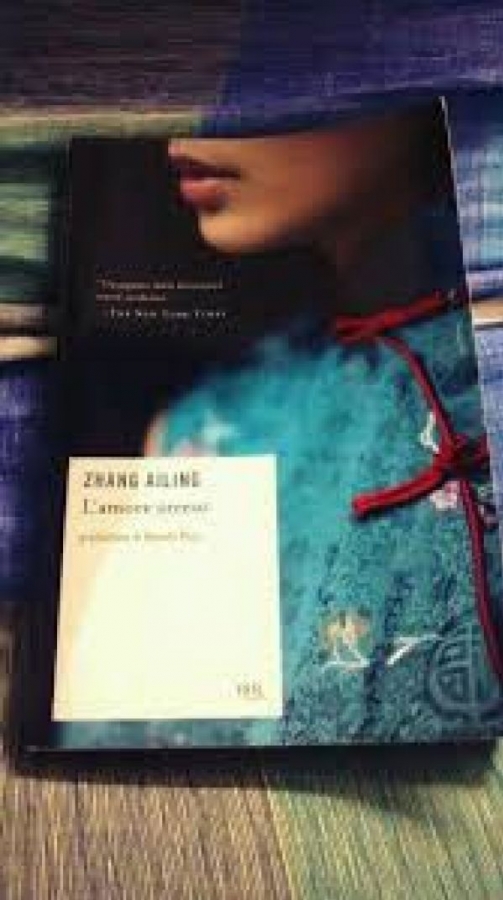
Surrendered Love
In an earlier novel, *The Golden Cangue*, the protagonist fails to escape the mechanisms of her family and descends into madness, bringing ruin upon herself and those around her. In the first of the two stories in this book, *Love in a Fallen City*, Liusu is likewise despised by her relatives, but seizes the opportunity of a chance encounter to escape a house that > had something of a dwelling of fairies and spirits: here, the slow passing of a day was like the lapse of a thousand years in the world. Yet spending a thousand years here was roughly like a single day, because all the days were equally monotonous and senseless . And it is boredom, not passion, that drives her—watchful and almost reluctant—to enter into a liaison with a Westernized Chinese man, a figure of dubious repute: wealthy, cultured, and refined, yet hostile to marriage. From the outset, Liusu knows full well that binding herself to this man means becoming his concubine. While yielding to her lover’s flatteries, she thinks to herself: > if I were a thoroughly respectable woman, you would not have noticed me at all. Yet she smiled, tilted her head toward him, and said, You want me to be a respectable woman in front of others, but not with you . With consummate skill, the author guides us through the unraveling of a relationship in which > both [were] too busy talking about love; where could they find the time to truly love each other? . The conclusion is a foregone one: the wealthy lover accommodates Liusu in a grand, empty house, where she will await his visits like a quintessential concubine. What overturns this destiny is the war. The Japanese bomb Hong Kong, and amid the battered city, the man resolves to marry Liusu. > Hong Kong’s fall had sealed her victory. Yet in this unreasonable world, who could ever tell cause from effect? Who could know? And had an entire city fallen merely so that she might triumph? In the second story, *Red Rose, White Rose* > , the author ponders whether transgression and respectability can coexist within the same personality. Zhenbao is a rational and meticulous sort, through and through the perfect modern Chinese man. Having started out on the right foot from the very beginning, (...) he now held an excellent position in a renowned foreign textile firm > Everything seems beyond reproach: the university-educated wife from a good family, the little daughter for whom funds have already been set aside for college tuition, the devoted care shown toward his mother and siblings, his dedication to work, and his benevolence toward friends. Yet is that truly the case? From the story, we learn that Zhenbao had an intense, fulfilling affair with a married woman. When his lover, genuinely enamored, confesses the adultery to her husband, Zhenbao abandons her because he realizes the scandal would ruin him. Merely crossing paths with the woman many years later is enough to unhinge him and shatter his drab bourgeois existence: he frequents prostitutes, succumbs to drink and gambling, neglects his work, beats his wife. And you. Are you well?, she asked. As he searched for the right words to summarize the perfect happiness of his life in a few simple sentences, Zhenbao raised his head and saw his own face in the mirror to the driver’s right. (...) Suddenly, however, he began to tremble in earnest and saw in the mirror that tears were streaming down his cheeks. He himself did not understand why. In that sort of encounter, it is always she who weeps, not he. (...) Far from consoling him, she fell silent for a long time, then said: Isn’t this your stop? > The author probes the ambiguity of the human soul through a markedly Western lens. While the opening of the first story still evokes the traditional Chinese family, the remainder of the tale could easily be set in any European city. The thematic core and the very prose of the second story echo much of Western literature, from which the author drew extensively. There is little originality. What continues to captivate the reader is Zhang’s mastery in navigating chiaroscuro and plumbing the depths of the human psyche, particularly the female heart. Jiaorui and Zhenbao are in bed: the woman realizes that the man intends to leave her. Lifting her swollen, flushed face, Jiaorui stared at him, then sprang to her feet, almost astonished herself to have been reduced to such a state. (...) She dried her eyes with her handkerchief, blew her nose, and walked out. (...) In his sleep, it seemed to him that someone had lain down on top of him, weeping. (...) He realized Jiaorui had returned. (...) The warmth of that womanly body enveloped him like a down quilt lined with silk, imparting a pleasant, intensely sensual warmth. When Zhenbao was fully awake, Jiaorui slipped away without a word, nor did he utter a sound". Why read it? They are short tales, the prose is fluid and graceful, and certain pages are remarkably evocative.
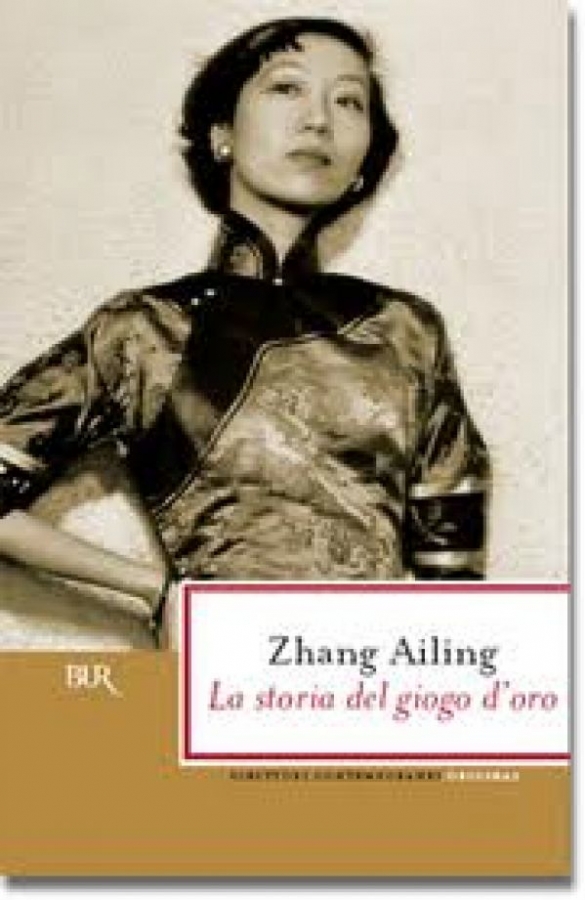
The Story of the Golden Yoke
The novel is set in Shanghai between 1911, the fall of the Chinese empire, and the late 1930s, just prior to the Japanese occupation. Traditional China is unraveling; the centuries-old certainties underpinning the families at the apex of the social hierarchy—the imperial bureaucracy and the vast landed estates—are collapsing. It is a prolonged transitional period, in many respects akin to the one we are experiencing today. Against this backdrop, the author tackles a universal theme: the madness spawned by familial rules and relationships, the devastating effect of the "redundancy of artificial appearances." Cao Qiqiao comes from a family of shopkeepers and has married the "second elder brother" of a high-ranking, albeit declining, house. In doing so, she has made a social leap, becoming the "Second Sister-in-law," but she has entered a > great clan, where the older generations use their prestige to oppress others, and the younger ones are like wolves and tigers . Qiqiao is well aware of being despised for her inferior background; she must tend to a husband disabled since birth, with whom she has shared sporadic moments of intimacy; she hates her own brother, who traded her away in exchange for a handsome dowry and relentlessly pesters her for money. She is alone, feels like a captive, akin to > a butterfly specimen inside a glass case, dazzling and desolate . She harbors a profound resentment, which vents itself in malice and gossip meant to harm her sisters-in-law, "young ladies from honored and respectable families." She anxiously awaits the moment she can come into her inheritance and become wealthy. Yet she is shortchanged by the "Old Master," the head of the family, who favors male heirs over females and factors her humble social origins into the division of the estate. Qiqiao retreats into her home, guarding the assets she inherited and raising her children. Her self-hatred—born of a bitter fate and the failure to seize the few opportunities that came her way—translates into a burgeoning madness. > It seemed to her that before her eyes was a veil of frozen pearls, which a gust of hot wind pressed against her face; then the wind passed, sweeping the veil away with it, and before she could catch her breath, the wind blew once more, enveloping her entirely—head and face—one gust cold, one hot . Growing ever more vicious and violent, she seeks solace and oblivion in opium. Her lucid madness is destructive, both to herself and to those around her: her daughter, whose prospects of marriage she destroys and whom she turns into an opium addict; her son, weak and corrupted, subjugated to his mother's despotic will; her daughter-in-law, despised, abused, alienated from her husband, and forced to retrace Qiqiao's own wretched existence; even the son's concubine, though elevated to the status of wife, cannot endure the familial atmosphere and kills herself. > Qiqiao lies dozing on the opium couch. For more than thirty years she has worn this golden yoke around her neck; she has used its heavy corners to strike down several people, and those who did not die now live only half-lives. (...) Feeling the jade bracelet on her wrist, she pushes it up her bony arm, now thin as a matchstick, until it reaches her armpit, and then slides it back down again. She can hardly believe she had plump, rounded arms in her youth. (...) They are all ghosts—ghosts from decades ago, ghosts that were never born... What is truth? What is a lie? The theme of madness within enclosed domestic walls is a well-trodden subject in literature. Were it not for the Chinese context, the story would not be particularly innovative. The depiction of the rigid and ruthless hierarchy of the great Chinese clans evolves rapidly: the characters move with greater freedom and could make their own choices, as tradition has by now grown frail. And herein lies the drama. Qiqiao, her children, and the other minor figures could forge lives of their own, but they do not—out of indolence, resignation, and a self-destructive urge. It is as though the author were critiquing her own social milieu, the upper-middle class of Shanghai, offering a characteristically Western novel that allows no sheltering behind the constraints of custom. Yet Zhang Ailing is not so severe; she favors "nuanced contrast," achieving it through description: the use of color, the interplay of moonlight and shadow, and interiors cluttered with now-useless objects evoke an existential desolation, a sense of an irrevocable and therefore universal destiny. It is not merely Chinese society, but the human condition at large. > Bluish shadows on the floor, and bluish shadows on the canopy ceiling, and even her feet are steeped in that deadly shadow. (...) Outside the window hung that bizarre, hair-raising moon, a glittering little white sun set against a black lacquer sky. (...) Such an expansive room, crammed with chests and trunks, mattresses, bedding, among which she would surely find a sheet to hang herself from. (...) She was afraid of this moon, yet lacked the courage to turn on the light . Why read it? A brief tale, captivating in its narrative style.