Finished reading on: January 18, 2015
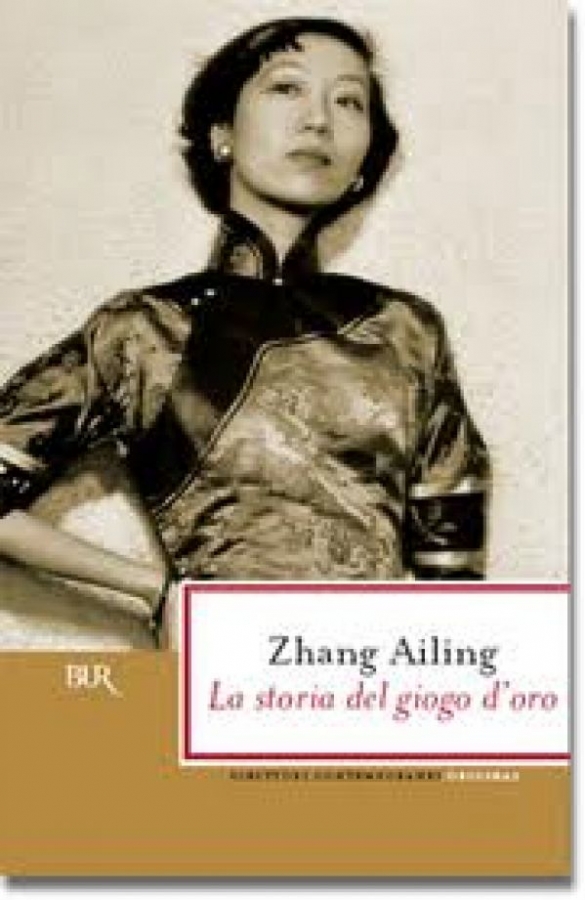
The Story of the Golden Yoke
Title of the original version reviewed: «La storia del giogo d'oro»
AI Translation Notice: This review was translated from the original Italian using artificial intelligence. Book quotes and excerpts are translated interpretations and will not match the author's original English phrasing or official published translations.
The novel is set in Shanghai between 1911, the fall of the Chinese empire, and the late 1930s, just prior to the Japanese occupation.
Traditional China is unraveling; the centuries-old certainties underpinning the families at the apex of the social hierarchy—the imperial bureaucracy and the vast landed estates—are collapsing.
It is a prolonged transitional period, in many respects akin to the one we are experiencing today.
Against this backdrop, the author tackles a universal theme: the madness spawned by familial rules and relationships, the devastating effect of the "redundancy of artificial appearances."
Cao Qiqiao comes from a family of shopkeepers and has married the "second elder brother" of a high-ranking, albeit declining, house.
In doing so, she has made a social leap, becoming the "Second Sister-in-law," but she has entered a
great clan, where the older generations use their prestige to oppress others, and the younger ones are like wolves and tigers
.
Qiqiao is well aware of being despised for her inferior background; she must tend to a husband disabled since birth, with whom she has shared sporadic moments of intimacy; she hates her own brother, who traded her away in exchange for a handsome dowry and relentlessly pesters her for money.
She is alone, feels like a captive, akin to
a butterfly specimen inside a glass case, dazzling and desolate
.
She harbors a profound resentment, which vents itself in malice and gossip meant to harm her sisters-in-law, "young ladies from honored and respectable families."
She anxiously awaits the moment she can come into her inheritance and become wealthy.
Yet she is shortchanged by the "Old Master," the head of the family, who favors male heirs over females and factors her humble social origins into the division of the estate.
Qiqiao retreats into her home, guarding the assets she inherited and raising her children.
Her self-hatred—born of a bitter fate and the failure to seize the few opportunities that came her way—translates into a burgeoning madness.
It seemed to her that before her eyes was a veil of frozen pearls, which a gust of hot wind pressed against her face; then the wind passed, sweeping the veil away with it, and before she could catch her breath, the wind blew once more, enveloping her entirely—head and face—one gust cold, one hot
.
Growing ever more vicious and violent, she seeks solace and oblivion in opium.
Her lucid madness is destructive, both to herself and to those around her: her daughter, whose prospects of marriage she destroys and whom she turns into an opium addict; her son, weak and corrupted, subjugated to his mother's despotic will; her daughter-in-law, despised, abused, alienated from her husband, and forced to retrace Qiqiao's own wretched existence; even the son's concubine, though elevated to the status of wife, cannot endure the familial atmosphere and kills herself.
Qiqiao lies dozing on the opium couch.
For more than thirty years she has worn this golden yoke around her neck; she has used its heavy corners to strike down several people, and those who did not die now live only half-lives.
(...) Feeling the jade bracelet on her wrist, she pushes it up her bony arm, now thin as a matchstick, until it reaches her armpit, and then slides it back down again.
She can hardly believe she had plump, rounded arms in her youth.
(...) They are all ghosts—ghosts from decades ago, ghosts that were never born...
What is truth? What is a lie?
The theme of madness within enclosed domestic walls is a well-trodden subject in literature.
Were it not for the Chinese context, the story would not be particularly innovative.
The depiction of the rigid and ruthless hierarchy of the great Chinese clans evolves rapidly: the characters move with greater freedom and could make their own choices, as tradition has by now grown frail.
And herein lies the drama.
Qiqiao, her children, and the other minor figures could forge lives of their own, but they do not—out of indolence, resignation, and a self-destructive urge.
It is as though the author were critiquing her own social milieu, the upper-middle class of Shanghai, offering a characteristically Western novel that allows no sheltering behind the constraints of custom.
Yet Zhang Ailing is not so severe; she favors "nuanced contrast," achieving it through description: the use of color, the interplay of moonlight and shadow, and interiors cluttered with now-useless objects evoke an existential desolation, a sense of an irrevocable and therefore universal destiny.
It is not merely Chinese society, but the human condition at large.
Bluish shadows on the floor, and bluish shadows on the canopy ceiling, and even her feet are steeped in that deadly shadow.
(...) Outside the window hung that bizarre, hair-raising moon, a glittering little white sun set against a black lacquer sky.
(...) Such an expansive room, crammed with chests and trunks, mattresses, bedding, among which she would surely find a sheet to hang herself from.
(...) She was afraid of this moon, yet lacked the courage to turn on the light
.
Why read it? A brief tale, captivating in its narrative style.