Finished reading on: July 05, 2015
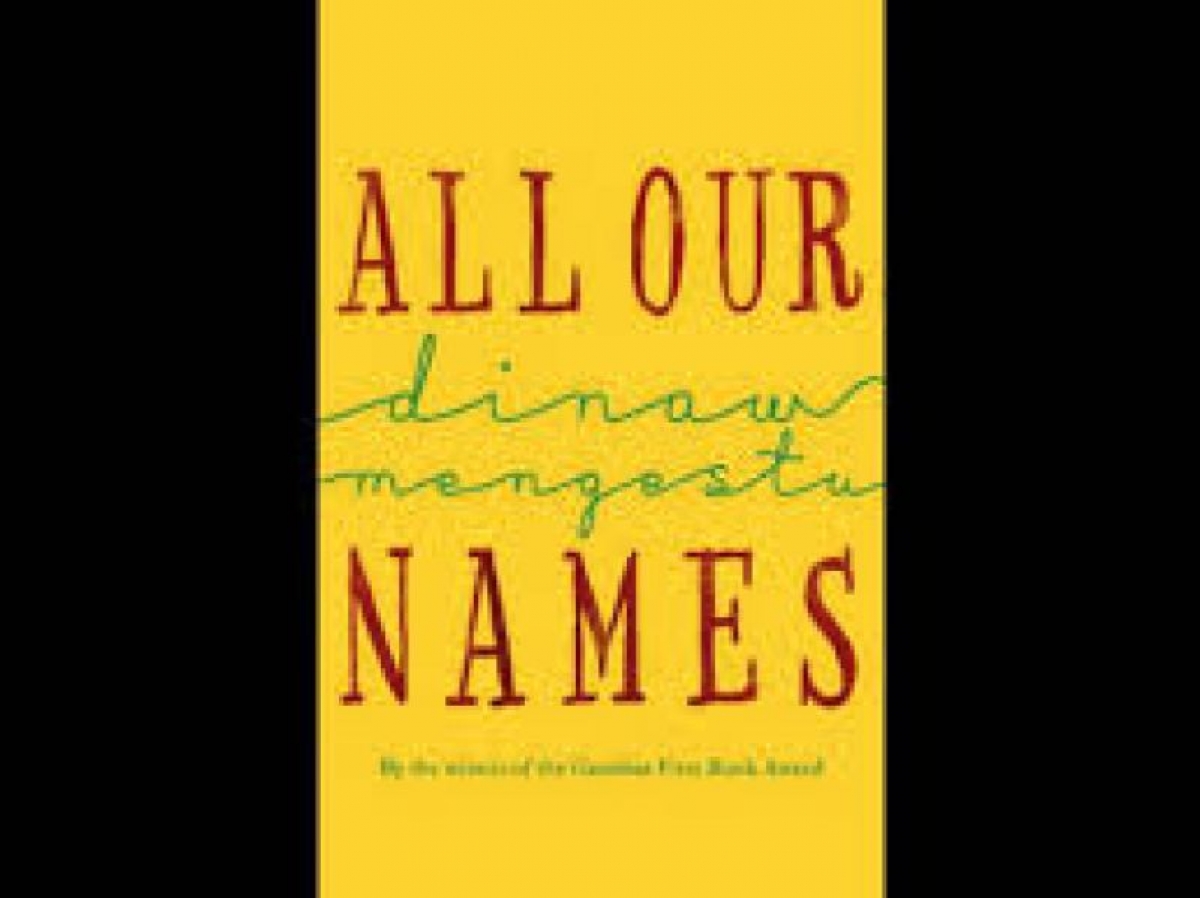
All Our Names
AI Translation Notice: This review was translated from the original Italian using artificial intelligence. Book quotes and excerpts are translated interpretations and will not match the author's original English phrasing or official published translations.
The protagonist is a young Ethiopian; the adolescent longing to leave his remote village behind drives him to choose a purpose and a city: to become a great writer in Kampala, which, despite being the capital of Uganda, like him «belonged to no one and no one could claim it».
It is therefore a non-place, where the young man hides, forgets, or simply abandons the twenty-five names by which he was called in his village.
In Kampala, he meets his friend.
Isaac and I became friends the way two stray dogs find each other following the same trail every day in search of food and companionship
.
Both are unversed in urban life, but Isaac projects confidence and takes the protagonist under his protective wing—naive, fragile, and too much of a dreamer to survive on his own in a violent and chaotic metropolis.
Having no names left, Isaac gives the boy several nicknames (no fewer than thirteen), all tied to his air of an intellectual and a man of letters.
At first, the two young men frequent the university campus, a kind of "oasis
in a country increasingly torn apart by clashes between opposing factions, which soon culminate in dictatorship and repression.
If students were initially allowed to voice dissent, demonstrations are subsequently banned and smothered in blood.
For the protagonist, the situation is particularly dire because he is a foreigner; Isaac must step in repeatedly to save him and hide him in safe places.
The political struggle has degenerated into gang warfare.
Isaac, growing ever more mysterious due to the life he leads and the company he keeps, enters the service of a clan leader.
The protagonist watches in horror as violence, executions by firing squad, and outright massacres unfold.
Yet above all, he is appalled by his friend’s transformation: from a slightly provocative, somewhat playful young man, Isaac reveals himself to be a cynical killer, a skilled manipulator of men, an unscrupulous opportunist, perhaps even a double-dealer.
But who is Isaac, really? What do we know of him, of his past? The situation deteriorates rapidly, and Isaac provides the protagonist with a passport and a plane ticket to flee to the United States.
In doing so, he also gives him a name: his own.
The young man, now Isaac, holds a temporary visa as a political refugee and is monitored by social services, in particular by a young caseworker, Helen.
A love affair begins, but can one truly love someone whose past remains unknown? During their troubled relationship, Isaac asks what he can do for her:
yes, I told her, promise me you won’t disappear one day
.
Yet so it will be, because this is the fate of migrants, placeless and nameless: all they can say, promising to return one day, is that
no one will ever have loved each other more than we did.
For the sake of clarity, the plot has been presented according to a possible logical sequence: first the events in Uganda, then the love affair in America.
In truth, the author does not construct the novel this way; the narrative unfolds through two parallel storylines: in the first, the narrator is the protagonist and the subject is his friendship with Isaac; in the second, the narrator is Helen, recounting her relationship with the protagonist.
Only in the final lines do the two narratives intersect, when we discover that the phrase the false Isaac utters to Helen at the moment of parting was written by the real Isaac on a slip of paper for the protagonist.
One is left to wonder whether the love for Helen is cut from the same cloth as the friendship between the real Isaac and the false one: extraordinary bonds in an age when relationships between human beings are like those of
two men who meet unexpectedly in the middle of a desert after traveling so long they have begun to believe the world is uninhabited
..
Yet what does this strange novel mean? It conveys a sense of rootlessness, that
special loneliness that comes from having nothing that is truly yours«, which drives Helen to search Isaac’s room to »seek proof of his existence
.
This rootlessness possesses a dark allure of its own because it offers us a world
weightless«, allowing one to confront a reality that »breaks you into pieces slowly« and to overcome the fear of »what comes next.
It is an interesting book.
It is, however, marred by an excess of intellectualism, discernible in many passages of the novel and in its overarching design: the reliance on two parallel narratives fragments the story, weighing it down needlessly and causing it to lose both narrative momentum and emotional tension.
The almost Pirandellian interplay of the two Isaacs is pushed to an exaggerated degree, yet fails to surprise the reader upon discovering that Helen’s Isaac is not the real Isaac.
The author sought to pack too much substance into a storyline and its characters, when it would have been enough to narrate them in their spontaneity, in their real lives as
migrants of the world".
Why not read it? It is boring.