Yukio Mishima
Books by this author (1)
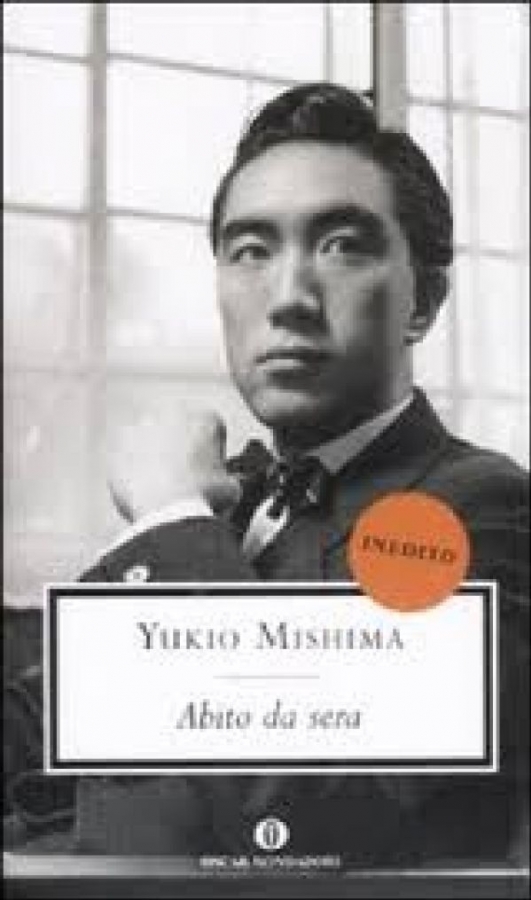
Evening dress
The novel is set in 1960s Japan, when the upper and middle bourgeoisie is becoming Americanized, flirting with Western customs, eager to forge international ties. Ayako is the daughter of a minor yet rising pharmaceutical entrepreneur: she has “amiable” features. > Over those features, even with fashionable makeup, hovered harmony and freshness, and her face, by no means plump, gave the impression that something inner was rising to the surface Ha un carattere pacato, composto e razionale, > but Ayako was by no means obtuse; it was merely that she lacked an inclination toward momentary enthusiasms and toward exaggerating passions . The young woman frequents a fashionable riding club, where she meets Lady Takigawa, the widow of a high-ranking Japanese bureaucrat. Through a stratagem, the woman introduces her to her son, Toshio, whom she herself describes as > egocentric, selfish, stubborn, caustic—in short, a young lion . And yet Toshio has an entirely different self-image: a kind of robot, rigid and somehow other-directed by his mother. An arranged marriage is brokered, readily accepted by the two young people, partly because they are fond of each other and partly out of obedience to their parents’ wishes. The honeymoon strengthens their bond, which evolves from mere mutual liking into passion, genuine love. It would thus seem a lovely fairy tale, upon which Lady Takigawa intrudes, insinuating an alleged betrayal by Toshio—an insinuation that devastates Ayako. Yet who is Lady Takigawa? She is what used to be called a “merry” widow: wealthy and powerful, she has an immense love for high society, receptions, and social networking. Behind a tender, affectionate face hides an “innocent malice, (...) an unpleasant woman,” a split personality. One evening, the young couple is invited to a reception by Lady Takigawa. Yet right at the threshold, Toshio discovers the unbelievable lie and decides to rebel, refusing to go to his mother’s; Ayako tries to object, but then obeys her husband and follows him to eat at a modest diner. It is a scandal; offended, humiliated, and filled with rage, Lady Takigawa demands that they divorce, accusing her daughter-in-law of showing her a lack of respect. How is the matter resolved? Certainly not by telling the scheming mother-in-law where to go, nor by shrugging one’s shoulders and going about one’s business. We are in a world of conventions as well as interests; Lady Takigawa is wealthy and powerful. Toshio visits a princess of the Imperial Court, asking whether she might be accompanied by his mother on a trip abroad. > In that sort of conversation, Toshio was on his home turf, playing a game the youth of today could never imitate The princess knows full well the reasons for the visit, but > her countenance remained imperturbable, tinged with a tender understanding, enchanting as a dawn sky, then in a clear and decisive tone , she accedes to the young man’s request, on one condition alone: the two youths must show toward Lady Takigawa > a sincere tenderness, (...) asking forgiveness with grace, even should his mother deem it unacceptable . In short, conventions must always be respected, even if deception has been used to circumvent them. The narrative lends itself to multiple interpretations. What is clear is that the two young people undergo a transformation: though both belonging to a social class dominated by form, before marriage they were frank, sincere youths; to survive, they too become mere “semblances,” altered by anxiety and fear. > Perhaps marriage was a school where one is taught the lie of life , for one must > foresee the reactions of the outside world from every angle, as if the doors on all sides of a room, previously hermetically sealed, had been thrown wide open . On the other hand, there is no alternative for poor Ayako, > she could have become a little bird flying away, entrusting its shadow to that plain, but there was an emptiness there and it frightened her, not even a tree branch on which to rest her wings . The story is elegant and subtle, yet superficial: many windows open onto the protagonists that one would like to see explored in greater depth, but they remain mere glimpses; the author hurries off at once toward something else. Absorbed by his critique of Japanese society and its frantic Americanization, the author neglects those parts of the novel that most captivate the reader: how social conventions erode authenticity and the carefree joy of living. Why read it? It is read with great pleasure, for its narrative style and because one grows immediately fond of Ayako.