Finished reading on: December 04, 2022
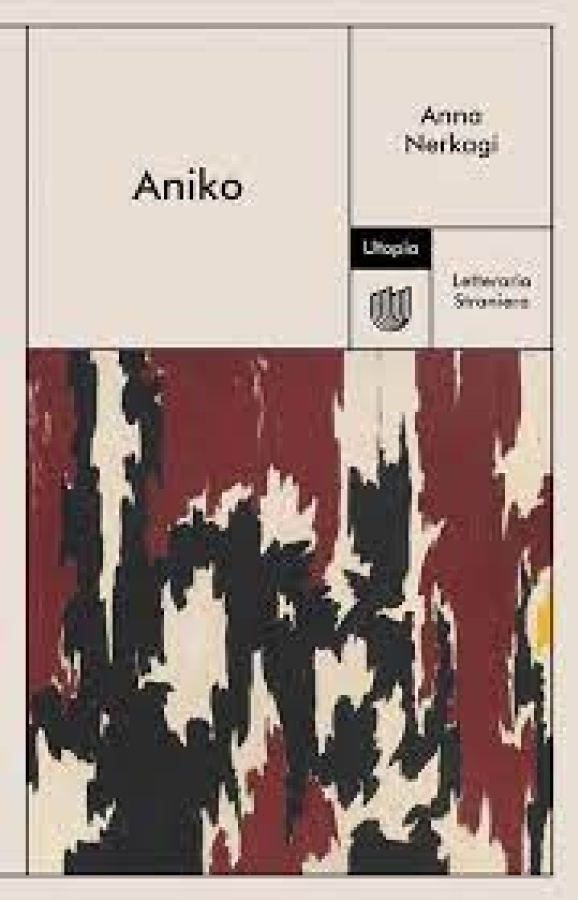
Aniko
AI Translation Notice: This review was translated from the original Italian using artificial intelligence. Book quotes and excerpts are translated interpretations and will not match the author's original English phrasing or official published translations.
The Nenets are a people of just over 40,000 individuals, settled in the northeastern part of the Ural region: their economy is fundamentally based on reindeer herding. Like many young Nenets, Aniko left to study far from her homeland: first at a boarding school in the nearest town, then further away still, to study geology at the university. She assimilated Russian language and culture to the point of forgetting her origins. She must return to her aging father because news has reached her of the death of her mother and little sister, killed by a wolf dubbed Lame Devil. The return is marked first by revulsion (
when her father was now close to her: she involuntarily took a step back: he gave off a stench of alcohol, smoke, and filth
), then she slowly reclaims the language and customs, and finally the remembrance of her lost childhood returns: «Evening had fallen; together with her mother, she had lit a fire near the» chum
. She played with her rag dolls that had bird beaks instead of faces. Mother was busy sewing a new jaguska for one of the dolls. For an instant Aniko thought she truly saw her mother's concentrated face again. But once that instant had passed, however hard she tried, she could no longer redraw her features in her memories. They had vanished, perhaps forever
. She is confused; until then, «she had done nothing but try to live». Must she accept the reproach-laden invitation of Aleska, her childhood friend, to stay in order to improve the conditions of the Nenets? Or should she let herself be submerged by the spell of the tundra and of an ancestral, motionless, and seemingly harmonious society? It is this that attracts Pavel, a young non-Nenets geologist, prompting him to want to stay, to abandon «the usual ordinary thoughts» and «suddenly discover oneself to be more mature, sincere, and good!» We do not know what Aniko will do; she leaves the tundra, but will she return one day? What will become of her?
Aniko is a slight character, and her story is too tenuous to convey the contradictory feelings of a young woman poised between affection for her father—alone now, yet sheltered by the village—and the desire to be part of a society rich in cultural and professional stimuli. Abstracted from the specific setting, and were we to substitute Russian with English, Aniko’s state of waiting and nostalgia is the condition of many young people today. Yet this was not the writer’s purpose: deeply bound to her land, the author leads us into a world of serene concord where men, dogs, reindeer, and even wolves live «in a stillness of inexhaustible joy», as Ungaretti put it when speaking of his birthplace, Alexandria, Egypt. Think of the reindeer Temujko, who was suckled by Aniko’s mother and continually returns to her mistress’s grave; of the dog Buro, the old father’s faithful friend; and of how the father accepts with sorrowful resignation his daughter's abandonment, perhaps definitive. And what of Lame Devil? The description of the wolf, of his loneliness and bitterness, opens the entire tale and leaves its mark on some of the novel's finest pages. Nenets society seems perfect in its centuries-old harmony, but it is not so. As Pavel says to Aniko,
the nenets are confused. Outwardly they appear calm. imperturbable as ever, but I know they are uneasy. They wonder what their future will be like, where their children will end up. (...) And if we don't help them now...
And what if the entire story were a fable—and, like any fable, fit for all latitudes—as well as a metaphor for our wretched Italy, a summons to free ourselves from passivity?
The writing is melodious and fluid, like the story itself: sweet and graceful, evocative and naturalistic at once when describing the tundra and its inhabitants; concise and effective in dialogue, in the timeless conversation among the Nenets, yet contracted whenever Aniko speaks, as if mirroring the agony of the life choices she must confront, despite herself. The plot is weak in its narrative pacing (it seems as though nothing happens), but the prose is splendid, with assonances resonating from other languages.
Why read it? Sweet and graceful.