Finished reading on: April 05, 2010
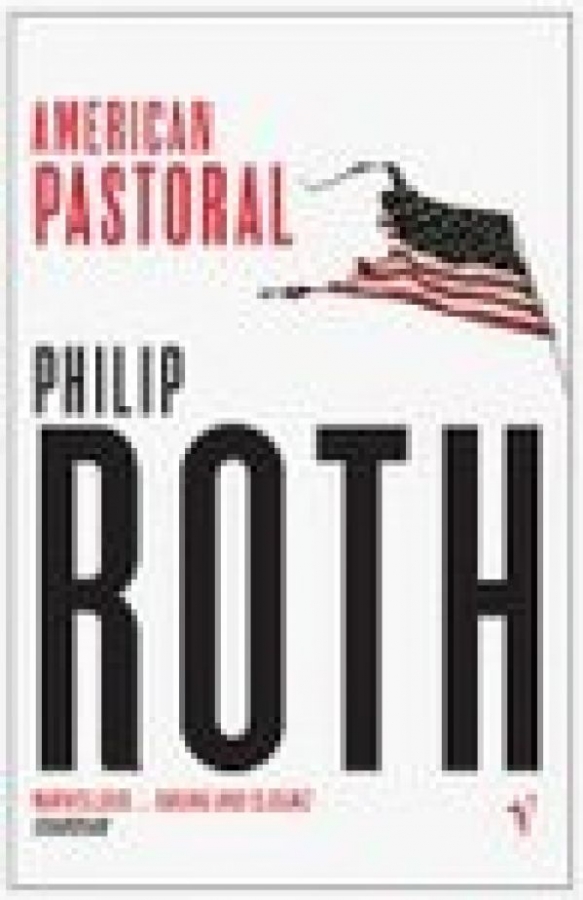
American Pastoral
AI Translation Notice: This review was translated from the original Italian using artificial intelligence. Book quotes and excerpts are translated interpretations and will not match the author's original English phrasing or official published translations.
The book is divided into three chapters, each possessing its own distinct identity.
In the first, bearing the evocative title Paradise Remembered, the narrator is the writer himself.
The idol of his youth is Seymour Levov, “the Swede”: handsome, blond, athletic, a formidable sportsman.
The memory of his feats epitomizes a golden era where harmony triumphs.
Now in his sixties, the writer is invited to lunch by Seymour under a pretext.
The meeting turns out to be mundane and pointless; later, however, at a reunion of old classmates, the writer learns that Seymour was suffering from cancer and had been shattered by the actions of his daughter, who had bombed a general store, killing a bystander.
The gentle man with his delicate ways of dealing with conflict and contradiction, the confident former athlete, responsive and resourceful in any fair-minded struggle with fair-minded foes, is up against a foe who is not fair-minded, a devil rising out of the human feelings, and he is overwhelmed.
He learns to live behind a mask
.
The writer decides to write a book about Seymour, even as he wonders—with a deeply autobiographical undertone—whether the man inside the man is ultimately knowable, whether he is a “jar you cannot open.”
Yet does the story he writes conform to reality, or is it merely the author's invention? In the two subsequent chapters, the writer shifts to a third-person narrative.
In the second chapter, titled The Fall, the dramatic story of Merry is recounted: Seymour’s stuttering daughter who, at sixteen, vanishes after committing a heinous crime, sinking ever deeper into hiding and self-destruction.
At the root of the daughter’s conduct lies a hatred for her parents, their orderly home, their life built on bourgeois values—and, by extension, for American society itself.
Yet how could
his daughter be so blind as to want to destroy the very system that had granted her family so many opportunities for success? To destroy her capitalist parents as though their wealth were anything other than the product of the steadfast labor of three generations?
.
Is Merry, then, an inexplicable anomaly? In truth, in the final chapter, Paradise Lost—which largely details a dinner party among the Levovs and their friends (a dinner that concludes tragically with the stabbing of Seymour’s father)—it becomes evident that the “moral disease” afflicts not merely the girl, but an entire society in which
what was supposed to exist did not exist.
Deviance prevailed.
You cannot stop it.
Undeniably, what was not supposed to happen had happened, and what was supposed to happen had not.
The old system that created order no longer works.
All it has left behind is fear and dismay, now concealed by nothing
.
The themes of this undoubtedly formidable book are essentially two: generational relations and, above all, the agony of a parent who views himself as blameless, who wishes to protect his family and cannot fathom why a daughter so cherished grew up so estranged from his world; and the unraveling of a society built by immigrants who toiled tirelessly to integrate and be embraced as successful citizens, only to watch the foundational values of social cohesion disintegrate.
Seymour’s ordeal is that of a father, but it is also the tragedy of the American pastoral.
Roth’s narrative structure is exceptionally rich and intricate.
It relies neither on a lavish surplus of adjectives, as with Updike, nor on the expansive periodization of Bellow (all chroniclers of the crisis of American society).
It is precisely this syntactic framework that constitutes Roth’s strength, yet also proves to be his weakness: the sentences are often overly convoluted, making for an exhausting read and fostering a redundancy of phrasing and, above all, of syntactic constructions.
A greater frugality would certainly have served the book’s otherwise compelling themes far better.
Why pass on it? It is deeply demanding, particularly the third chapter.
It should be taken in small doses.