Philip Roth
Books by this author (3)
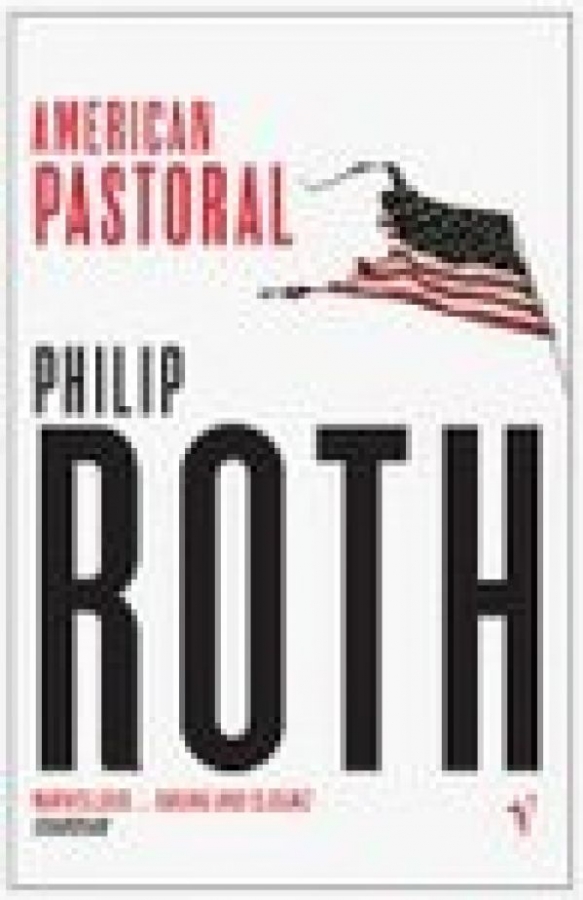
American Pastoral
The book is divided into three chapters, each possessing its own distinct identity. In the first, bearing the evocative title *Paradise Remembered*, the narrator is the writer himself. The idol of his youth is Seymour Levov, “the Swede”: handsome, blond, athletic, a formidable sportsman. The memory of his feats epitomizes a golden era where harmony triumphs. Now in his sixties, the writer is invited to lunch by Seymour under a pretext. The meeting turns out to be mundane and pointless; later, however, at a reunion of old classmates, the writer learns that Seymour was suffering from cancer and had been shattered by the actions of his daughter, who had bombed a general store, killing a bystander. > The gentle man with his delicate ways of dealing with conflict and contradiction, the confident former athlete, responsive and resourceful in any fair-minded struggle with fair-minded foes, is up against a foe who is not fair-minded, a devil rising out of the human feelings, and he is overwhelmed. He learns to live behind a mask . The writer decides to write a book about Seymour, even as he wonders—with a deeply autobiographical undertone—whether the man inside the man is ultimately knowable, whether he is a “jar you cannot open.” Yet does the story he writes conform to reality, or is it merely the author's invention? In the two subsequent chapters, the writer shifts to a third-person narrative. In the second chapter, titled *The Fall*, the dramatic story of Merry is recounted: Seymour’s stuttering daughter who, at sixteen, vanishes after committing a heinous crime, sinking ever deeper into hiding and self-destruction. At the root of the daughter’s conduct lies a hatred for her parents, their orderly home, their life built on bourgeois values—and, by extension, for American society itself. Yet how could > his daughter be so blind as to want to destroy the very system that had granted her family so many opportunities for success? To destroy her capitalist parents as though their wealth were anything other than the product of the steadfast labor of three generations? . Is Merry, then, an inexplicable anomaly? In truth, in the final chapter, *Paradise Lost*—which largely details a dinner party among the Levovs and their friends (a dinner that concludes tragically with the stabbing of Seymour’s father)—it becomes evident that the “moral disease” afflicts not merely the girl, but an entire society in which > what was supposed to exist did not exist. Deviance prevailed. You cannot stop it. Undeniably, what was not supposed to happen had happened, and what was supposed to happen had not. The old system that created order no longer works. All it has left behind is fear and dismay, now concealed by nothing . The themes of this undoubtedly formidable book are essentially two: generational relations and, above all, the agony of a parent who views himself as blameless, who wishes to protect his family and cannot fathom why a daughter so cherished grew up so estranged from his world; and the unraveling of a society built by immigrants who toiled tirelessly to integrate and be embraced as successful citizens, only to watch the foundational values of social cohesion disintegrate. Seymour’s ordeal is that of a father, but it is also the tragedy of the American pastoral. Roth’s narrative structure is exceptionally rich and intricate. It relies neither on a lavish surplus of adjectives, as with Updike, nor on the expansive periodization of Bellow (all chroniclers of the crisis of American society). It is precisely this syntactic framework that constitutes Roth’s strength, yet also proves to be his weakness: the sentences are often overly convoluted, making for an exhausting read and fostering a redundancy of phrasing and, above all, of syntactic constructions. A greater frugality would certainly have served the book’s otherwise compelling themes far better. Why pass on it? It is deeply demanding, particularly the third chapter. It should be taken in small doses.
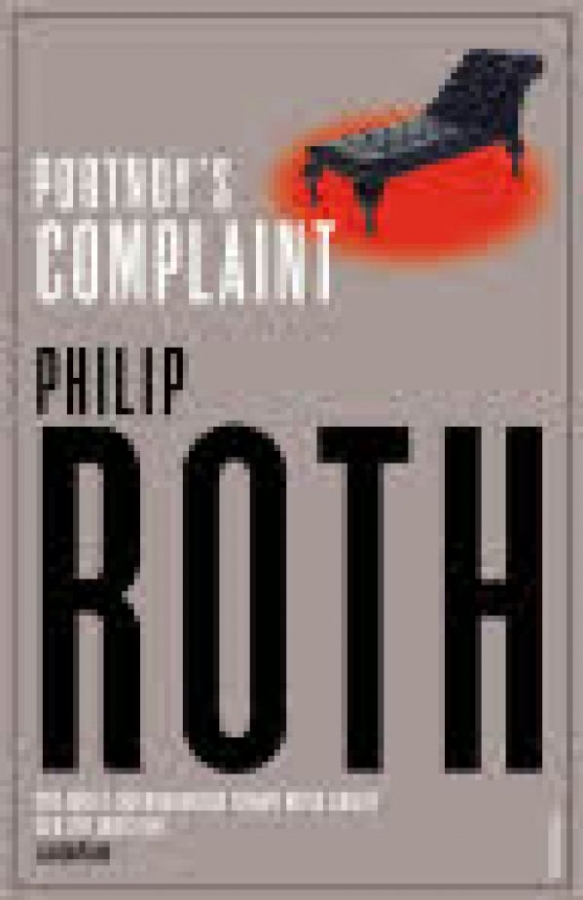
Portnoy's Complaint
How is it that a young man from a respectable Jewish family, enjoying an esteemed social standing, seeks out the most sordid and depraved sex instead of marrying young women from good bourgeois society, “with whom to raise intelligent, loving, and sturdy children”? > Dignity, Well-being, Love, Industry, Knowledge, Trust, Decency, High Principles, Compassion! Why the hell do I chase sensational sex? How can I lose myself in something so simple, so stupid, as cunt? The book is a long, entertaining, and hysterical monologue in which the protagonist retraces the events of his life, only ostensibly in a psychoanalytic quest for the origins of his inclinations (voyeurism, fetishism, autoeroticism, oral intercourse), but in reality to assert, to himself and to others, that his was the rightest path in life. To convey the sense of a narrative that defies easy summary or comprehension unless one plunges into its whirlwind prose, overflowing with words and idioms, one might quote a passage in which the protagonist explains why he did not marry one of the good, bourgeois girls he dated. > Well, there was her ostentatious, recurring school slang, to begin with. It was simply unbearable... And then there were her friends' nicknames: there were the friends themselves! Poody and Pip and Peddle... And then my slang caused her distress. The first time I said fuck in her presence (in the presence of her friend Pebble, with her Peter Pan collar and her tight-fitting cardigans, and tanned like an Indian from so much tennis at the Chevy Chase Club), such a look of agony passed over the countenance of the Pilgrim Fathers' heiress that you would have thought I had just branded the four letters into her flesh. Why, she asked so plaintively once we were alone, why must I be so clumsy? What possible pleasure does it give me to be so ill-mannered? What on earth did I prove? Why do you have to be so pus-y? “Where this word,” the protagonist explains, “stands for a ‘disposition to be disagreeable.’” > In bed? Nothing fun, no acrobatics or daring attempts; the way we did it the first time was the way we kept on doing it, I assaulted and she surrendered . If one considers that “ostentatious, recurring school slang” is the rough translation of an untranslatable English phrase such as “cutesy-wootsy boarding school argot,” and that to mean tight-fitting he uses the neologism “cablestitch,” one gets a clear idea of the novel’s prose, which hinges entirely on adjectives and slang expressions. The syntactic structure unfolds without order (like thoughts chasing one another), and the English vocabulary is frequently qualified by the verbal turns of American Judaism. It is an exhilarating read, though the book must be taken in all in one breath. Otherwise, one risks getting lost in the disordered succession of tales and characters. Beyond the obvious vocation for sensational sex, as the author calls it, the overarching thread of the novel can be identified in rules—and the need to break them. > What else, I ask you, were all those dietary prohibitions and rules you started out with (from an early age), what else if not to give us little Jewish children the habit of being repressed? Practice, darling, practice, practice, practice. Inhibition doesn’t grow on trees, you know; it takes patience, it demands concentration, it requires attentive, self-sacrificing parents and an obedient child dedicated to hard work, so as to produce in just a few short years a truly inhibited, tight-assed human being . It is evident that this revulsion toward rules has its roots in Jewish society, toward which the author directs a caustic critique, even if, deep down, one rich in affection and nostalgia. It is no accident that the protagonist’s flight ends precisely in Israel, as if in search of tradition and steadfast roots. The theme of prohibitions is nonetheless a subject of universal significance, considering the incessant appeal to moral codes and behavioral norms made by self-styled, and often hypocritical, spiritual and religious authorities. Why read it? It is an entertaining novel, but it must be experienced through an excellent translation.
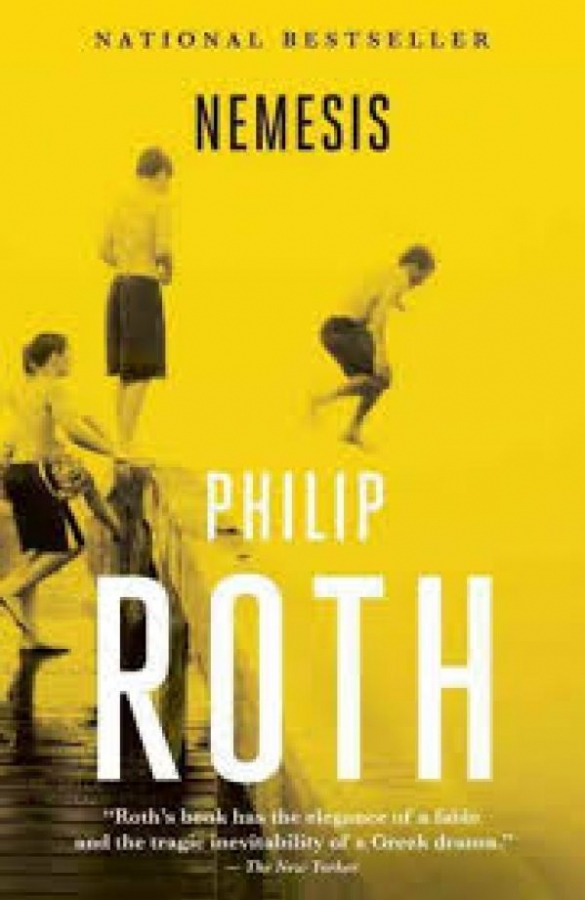
Nemesis
In Greek mythology, Nemesis is the goddess of just and fatal retribution for unpunished transgressions. How many times have we thought that illnesses, accidents, misfortunes were fateful events that had to originate in some guilt? We inevitably have to find someone to blame in a tragedy; we cannot accept that what happens is not a necessity, that it lacks a reason; we refuse to admit that God > is the echo of all our vain crying. (...) He who knows the before and the after and the reasons for everything, and yet unfortunately cannot tell them to us for this single, so futile reason!: that He does not exist (Sebastiano Vassalli *La Chimera*). Philip Roth addresses this, and he does so by recounting the polio epidemic that swept through an American city in 1944, at the height of the Second World War. > Because this was a real war, too, a war of slaughter, ruin, loss, and grief, war with the casualties of a war, war upon the children of Newark . Bucky Cantor is a very young athletic director, a javelin champion, a solid and strong young man; he was kept from going to war by a severe visual defect. Motherless, abandoned by his father, he was raised by his maternal grandfather with a devotion to hard work, moral values, and an outsized sense of responsibility. He is a summer supervisor. With the schools closed, his duty is to look after the boys and girls of Newark’s Jewish neighborhood, and he does so with great commitment, coaching them in sports, training them in team games, and teaching them loyalty and determination. His qualities are widely recognized by both the pupils and their families. An epidemic of polio, then incurable and without a vaccine, spreads across the neighborhoods and begins striking even the children entrusted to Bucky’s supervision. The polio cases, some severe and fatal, multiply, and the young man cannot comprehend the reasons behind the calamity: he is shattered, convinced that he is not doing enough, yet he strives to maintain his composure and convey it to the children. His girlfriend is spending the summer at a camp on the shores of a lake. She has secured him a post as a swimming instructor, a discipline in which Bucky excels. Why not leave a city tainted by polio and instead spend the summer in a safe, idyllic setting alongside the woman he loves? Bucky hesitates; already burdened by guilt for not having been drafted, he is loath to abandon his boys, but ultimately he accepts. Yet he cannot escape guilt (which guilt?). A few days after his arrival, the first cases of polio break out at the camp; is he, then, the contagion bearer? Does the responsibility lie with him for the children who died or were severely disabled under his watch in Newark? Did he bring the terrible pestilence to the camp? He must serve his just punishment; and he will do so with stubborn resolve, forgiving himself nothing: he too contracts polio, remains crippled for the rest of his life, rejects the devotion of his girlfriend—who loves him regardless—and condemns himself to a solitary existence. > He smiled (...) with a smile closely resembling a pained wince, indicating fatigue and not joy. There was no light in him. What was missing was the energy and the competence that had once been at the center of his character. And certainly his athletic component was completely gone. It was not merely that an arm and a leg were useless. His original personality, all that vital purposefulness that would have struck you the moment you met him, seemed torn away as well. It is a tale that is read in a single breath: the prose is fluid, the narrative tempo pressing despite the philosophical digressions. Roth skillfully succeeds in tracing the protagonist’s trajectory: everything is already written in his fate, in the sins of his father, and yet for the reader it comes as a surprise to realize how futile it is to struggle, and how virtue counts for nothing when an invisible hand, a cruel God, pulls the strings of our lives. Are we, then, not free? Roth attempts to salvage this in the final chapter, through the confrontation between Bucky and another young man also disabled by polio, who nevertheless managed to lead a normal, happy life. Unfortunately, it is a somewhat tacked-on, redundant, and prolix chapter: a misstep in the narration, an effort to offer, at all costs, a conclusion that is not entirely bleak. The novel closes with a mesmerizing description of Bucky throwing the javelin—an exaltation of the beauty of an athlete’s motion, but also the melancholic acknowledgment of a gesture no longer possible: a breathtaking stylistic gem. Why read it? It reads exceptionally well and prompts profound reflection on good and evil.