Finished reading on: May 30, 2022
Giulio Einaudi
2019
123
Italiano
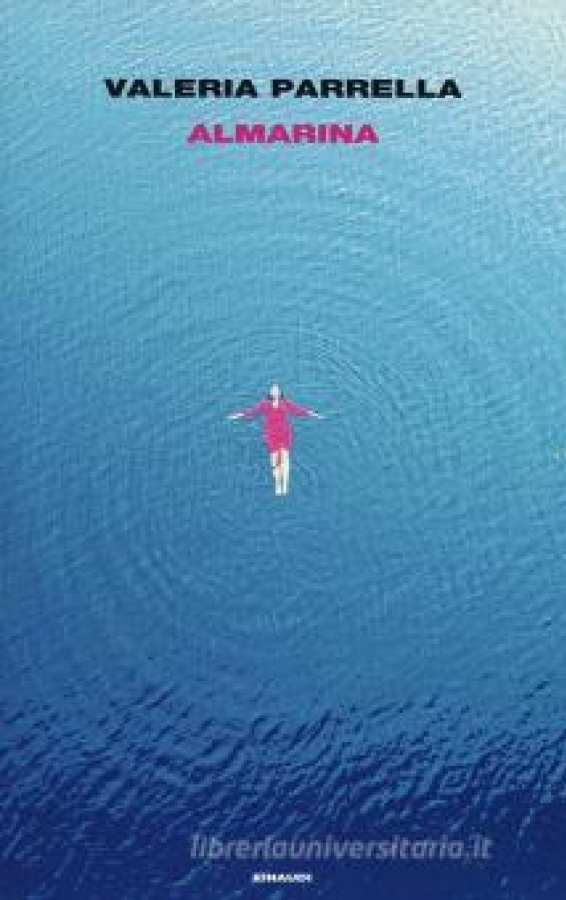
Almarina
AI Translation Notice: This review was translated from the original Italian using artificial intelligence. Book quotes and excerpts are translated interpretations and will not match the author's original English phrasing or official published translations.
I will never be able to tell if it is Naples or if it is me. (...) Or if it is truly the sight of that ugly tenement on the other side of the gate, the swelling yellow wave, the domes beneath the clouds, architraves too heavy for a woman alone to bear. If reality is made of unreachable terraces, unreachable powers as they describe them...
. With this opening, the reader is led to believe they are getting a foretaste of the surreal world of Anna Maria Ortese (see Il mare non bagna Napoli and Il Cardillo Addolorato
); instead, one is confronted with a love story suspended in midair, swept away by a stream of consciousness that is unchecked precisely because it is entirely interior. A fifty-year-old mathematics teacher, Elisabetta Maiorano teaches in the juvenile prison of Nisida.
Whoever crosses the threshold of a prison knows (and if they do not know it, they feel it) that they are crossing over to another side, irreconcilable with the promise made to us as children: that life would not be frightening, and we would never be left alone. Prison, instead, is fear and loneliness
. But is being incarcerated, living within a daily routine at once repetitive and protective, what creates a sense of isolation, or is it rather the recollections of a lifetime, the hopes and disillusions, the mistaken choices, and the misunderstood loves? Following the relentless outpouring of the protagonist-narrator, one begins to think that prison is merely a lockpick to unleash her interior world—and to indulge in self-pity: the unloved husband, the child desperately sought through artificial insemination and then through adoption requests, the tedium of teaching, advancing old age.
We take these dossiers and store them in the furthest archive of memory, and then we hide the key. Our hope, I believe, is that on that day, now far off, when they have served their full sentence, this key will return to their hands, and from the flung-open archives blank sheets of paper with no more ink on them will take flight, immaculate, like laundry hung out on the terraces
. But if for the inmate—of whom the protagonist ostensibly speaks—there is the light of normal life, how can a person imprisoned within herself escape her own prosaic and mournful existence? Only if Love breaks in.
I became attached to Almarina like that, while we were looking at the sea, and I told her that my husband was a magnificent swimmer. (...) I don't know how to swim, she told me, then.«Reading Valeria Parrella brings to mind Alda Merini, when she writes»and perhaps I will tear from the roots/the repressed hope of love,/I will remember that the fruit of every/human limit is absence of memory,/I will plunge entirely into becoming...". In both authors, one is in the presence of a restless and insatiable quest for a Love that allows memory to be removed, or at least suspended. Prison, much like the asylum for Merini, is a metaphor for the prison of the human soul, a moment of stillness, a place of unexpected encounters. Every page of Parrella's is a cameo, akin to a brief and intense poetic composition. But whereas in Merini the lyricism, speaking of oneself, the hinted-at sentiments, the lexical preciousness are in their proper place because they are typical of a sonnet, especially according to traditional Italian poetry, in Parrella these stylistic and narrative traits compromise the overall narrative, strip momentum from the story, desiccate the characters—particularly that of Almarina, who is, in fact, incomprehensible. The self-mirroring 'I' is ill-suited to the novel, which nonetheless requires a plot.
Why not read it? An elegant outpouring, yet detached from a narrative structure.