Finished reading on: February 09, 2025
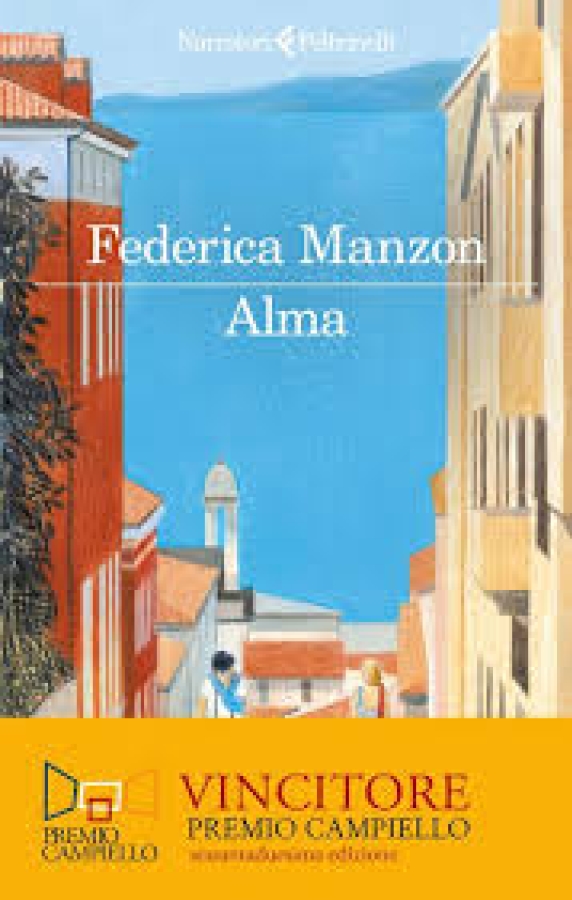
Alma
AI Translation Notice: This review was translated from the original Italian using artificial intelligence. Book quotes and excerpts are translated interpretations and will not match the author's original English phrasing or official published translations.
Questo romanzo riporta la mente ad un altro libro, apparentemente così lontano nel tempo e nei contenuti: Le Confessioni d'un italiano di Ippolito Nievo (vedi la recensione in questo sito). Come per Alma, il grande racconto di Nievo è una storia d'amore, che prende le mosse dall'infanzia in quella terra marginale che è il Nord Est dell'Italia. Carlino, il protagonista narrato da Nievo, è innamorato della bella cugina Pisana, che solo nel punto di morte riconoscerà di averlo sempre amato, così Alma rincorre Vili, quel
bambino magro, gli occhi neri e una frangia scura da teppisti
, che ha fatto irruzione inspiegabilmente in una famiglia in strano e incerto equilibrio, portandosi via l'attenzione del padre. E come per i protagonisti delle Confessioni, la vita di Alma
è sempre stata immersa fino al collo nelle questioni che il passato o la memoria e perfino le ossa sotto terra proiettavano nel presente, e lei non aveva fatto altro che camminare sul filo di una ragnatela sforzandosi di evitare le trappole della Storia, quando invece ci stava camminando sopra. Se, però, la storia d'amore di Nievo si sviluppa dentro la grande e gloriosa cavalcata del Risorgimento, quella di Alma è segnata e travolta dalle tragiche vicende del «di là», quel mondo sconosciuto oltre Vienna e Trieste, quelle terre sempre rimosse dall'immaginario collettivo, il dissolvimento della Jugoslavia tra il 1991 e il 1995, e oggi la guerra in Ucraina. Alma vive ormai da molti anni a Roma, apprezzata giornalista, ricercata dagli uomini per quel fascino che hanno quelli «di là», ma non può confessare, perché non sarebbe capita, che
solo un esule da quei mondi è in grado di suscitare in lei qualcosa di simile a un innamoramento. L'occasione per tornare «di là» è la morte di suo padre che le ha lasciato «una scatola», in cui dovrebbero esserci i segreti della sua famiglia, insieme con quelli della grande Storia. L'attende confuse combinazioni di sensazioni in cui presente e passato si mescolano insieme, ma non c'è mai il futuro: la nostalgia per i nonni materni, per la bella e solida casa mitteleuropea; la villetta sul Carso dove sono andati a abitare i genitori, per stare lontani dai nonni e dalla buona borghesia; gli arrivi e le partenze improvvise del padre, sempre coinvolto nelle grandi vicende; la madre anch'essa distante perché sempre occupata nella «Città dei Matti»; i bagni e i giochi sulla riviera di Barcola; e poi i morti, gli stupri, le stragi delle guerre balcaniche, immortalate dalle foto di Vili:
una fossa piccola, una fossa enorme, una fossa con dei corpi, il viso di una ragazza tenuta per i capelli. Scoprirà che nella scatola non c'è niente d'importante, come nel grande romanzo di Kenzaburo Oe (La foresta d'acqua, vedi la recensione in questo sito). Ciò che troverà sarà lo svelamento del mistero di Vili: fotografo delle stragi perpetrate dai serbi per dare testimonianza dei crimini commessi durante le guerre balcaniche. Se questa rivelazione potrà dare sollievo all'animo di Alma, non sarò possibile ritrovare l'amore per chi ha sempre amato.
I loro destini si sono incrociati, pensa Alma. e questo è tanto, i tentativi di fuga non contano. (...) Si guardano. E' così sexy, pensano. La solitudine e le incomprensioni, tutto l'amore e tutti quei morti, (...) quei loro teneri anni, e anche tutti quei pensieri sul caos delle loro vite lontane.
Ci sono romanzi che vogliono dire troppo, che mescolano grandi affreschi della storia con le vite familiari, senza però riuscire a approfondire a sufficienza le diverse dimensioni dell'esistenza; e tutto resta in superficie. La relazione privilegiata del padre con Vili (quelle passeggiate insieme che escludevano Alma) non è analizzata nei suoi risvolti psicologici ed emotivi: è come il contenuto della scatola che non dice nulla di intimo. Lo stesso legame tra Alma e Vili, che attraversa tanti anni della loro vita, è trattato con spicchi d'esistenza, certamente meglio nella seconda parte del romanzo, nella Belgrado sotto la guerra, ma mai portato fino in fondo. Chi era Vili, una comparsa della Storia, obbligata, come dice lui stesso,
a essere uno che mente, un falsario, un vigliacco, ad alzare il calice a brindisi disgustandosi illudendomi che così avrei salvato qualcuno? E perché Alma perde sempre l'occasione per rompere il guscio entro cui si appaga Vili? Perché non li dice semplicemente che l'ama e lo porta con sé a Roma, lontano da «di là»? O c'è un mistero indicibile (la rigidezza degli affetti familiari, le stragi e le morti, il mondo dei Matti) che impedisce di dispiegare il senso di umanità reciproca? Troppe domande rimaste senza risposta!
Sotto il profilo stilistico il romanzo si avvia faticosamente per salire di livello nella seconda parte, quella della guerra, senza dubbio la migliore. Il continuo avanti e indietro nel tempo e nello spazio confonde il lettore che deve di continuo riprendere le fila della narrazione. E' vero che il flusso dei ricordi e delle sensazioni non ha tempo, e tutto ritorna senza mai andare avanti, ma è pur vero che non seguire una sequenza disorienta il lettore, lo confonde inutilmente. La scrittura è di alta qualità, nei dialoghi così come nelle descrizioni: manca tuttavia di mordente, non lascia il segno, anche per l'uso di un italiano standard, scolastico sotto il profilo lessicale.
Perché leggerlo? Interessante la sovrapposizione della Storia con le vicende familiari.This novel brings to mind another book, seemingly so distant in time and content: Ippolito Nievo’s Le Confessioni d'un italiano (see the review on this site). As with Alma, Nievo’s great narrative is a love story that has its roots in childhood, in that marginal territory that is northeastern Italy. Carlino, the protagonist recounted by Nievo, is in love with his beautiful cousin Pisana, who will only on her deathbed acknowledge having always loved him; just so, Alma pursues Vili, that
skinny boy, with black eyes and a dark, hoodlum fringe
, who inexplicably burst into a family balanced on a strange and precarious equilibrium, capturing her father’s attention. And as with the protagonists of the Confessioni, Alma’s life
had always been immersed up to her neck in the issues that the past or memory and even the bones beneath the earth projected into the present, and she had done nothing but walk a spiderweb's thread, striving to avoid the traps of History, when in fact she was walking right over them. Yet, if Nievo’s love story unfolds within the grand and glorious sweep of the Risorgimento, Alma’s is marked and overwhelmed by the tragic events of "over there"—that unknown world beyond Vienna and Trieste, those lands perpetually banished from the collective imagination, the dissolution of Yugoslavia between 1991 and 1995, and today the war in Ukraine. Alma has now lived for many years in Rome, an esteemed journalist, sought after by men for that fascination possessed by those from "over there," but she cannot confess, because she would not be understood, that
only an exile from those worlds can awaken in her something akin to falling in love. The occasion to return "over there" is the death of her father, who has left her "a box" that is supposed to contain the secrets of her family, together with those of grand History. A tangled combination of sensations awaits her, where present and past blur together, but the future never appears: nostalgia for her maternal grandparents, for the handsome, solid Central European house; the small villa on the Karst where her parents went to live to get away from the grandparents and the respectable bourgeoisie; the sudden arrivals and departures of her father, always embroiled in grand events; her mother, likewise distant, forever busy in the "City of the Mad"; swimming and games on the Barcola seafront; and then the dead, the rapes, the massacres of the Balkan wars, immortalized by Vili's photographs:
a small pit, an enormous pit, a pit with bodies, the face of a girl held by her hair. She will discover that there is nothing of importance in the box, as in Kenzaburo Oe's great novel (La foresta d'acqua, see the review on this site). What she finds instead is the unveiling of Vili's mystery: a photographer of the massacres perpetrated by the Serbs, to bear witness to the crimes committed during the Balkan wars. If this revelation may bring relief to Alma's spirit, it will not be possible to rekindle love for the one she has always loved.
Their destinies crossed, Alma thinks. and that is a great deal, the attempts to escape do not count. (...) They look at each other. It's so sexy, they think. The loneliness and the misunderstandings, all the love and all those dead, (...) those tender years of theirs, and all those thoughts, too, about the chaos of their distant lives.
There are novels that strive to say too much, blending grand historical canvases with family lives, without, however, managing to delve sufficiently into the diverse dimensions of existence; and everything remains on the surface. The father’s privileged relationship with Vili (those walks together that excluded Alma) is not analyzed in its psychological and emotional ramifications: it is like the contents of the box, which reveals nothing intimate. The bond between Alma and Vili itself, spanning so many years of their lives, is treated through fragments of existence—certainly better in the novel's second part, in Belgrade under the war, but never pursued to its ultimate depth. Who was Vili—an extra in History, forced, as he himself says,
to be someone who lies, a forger, a coward, raising a glass in toasts with disgust, deluding myself that I was saving someone this way? And why does Alma constantly miss the opportunity to break through the shell in which Vili is content? Why doesn't she simply tell him that she loves him and take him with her to Rome, far away from "over there"? Or is there an unspeakable mystery (the stiffness of family affections, the massacres and deaths, the world of the Mad) that prevents the unfolding of their mutual sense of humanity? Too many questions left unanswered!
Stylistically, the novel gets off to a labored start, only to elevate its register in the second part—that of the war—which is undoubtedly the finest. The constant shifting back and forth in time and space confuses the reader, who must continually pick up the narrative thread. While it is true that the flow of memories and sensations is timeless, and everything recurs without ever moving forward, it is equally true that failing to follow a sequence disorients the reader, causing unnecessary confusion. The prose is of high quality, in the dialogue as well as in the descriptions; yet it lacks bite, leaves no lasting impression, owing also to the use of a standard Italian that is lexically textbook.
Why read it? The intertwining of History and family fortunes is compelling.