Finished reading on: August 01, 2024
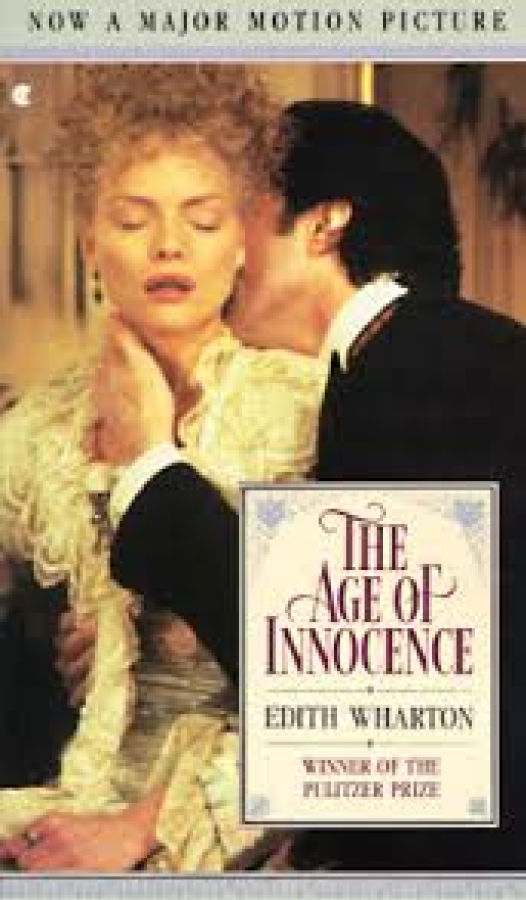
The Age of Innocence
Title of the original version reviewed: «The age of Innocence (l'età dell'innocenza)»
AI Translation Notice: This review was translated from the original Italian using artificial intelligence. Book quotes and excerpts are translated interpretations and will not match the author's original English phrasing or official published translations.
The novel is set in New York at the end of the nineteenth century, when the old New York elite, with its oppressive social rituals, was overwhelmed by a new, upwardly mobile bourgeoisie—prejudiced and aggressive; it reacted by trying to ignore the changes,
until they crashed down upon them. What mattered was preserving the "traditional pleasantness" of social life. It is no coincidence that the tale opens with opening night at the Opera, meticulously described by the author: the arrangement of families in the boxes according to a rigid social hierarchy, the placement of individuals within them respecting family roles, the elegant gowns in the latest Parisian fashion, the hushed gossip that must cease when the solo is sung; an aristocratic atmosphere steeped in American Puritanism, and therefore superior to the frivolous European world. Amidst a crowd of minor characters, the three protagonists appear from the very beginning. Archer is a young lawyer with a passion for literature and a history of typical bourgeois transgressions (a mistress, perhaps a few young ladies), yet well aware that he must make a "good marriage." Reckless reading leads him to make nonconformist statements (
women ought to be free—as free as we are
), but
he was a quiet young man endowed with strong self-control. Adherence to the discipline of a small society had become almost a second nature to him. Yet a restlessness stirred within him, leading him to feel as
though he were being buried alive under his future. Still at the Opera, in the family box in an unobtrusive position, as rigid etiquette dictates, sits the very young May, who
that very afternoon had allowed him to think there was on her part "an inclination" (the official New York phrase for a girl to declare an interest)
; a consummate representative of wholesome American society, who
would probably go through life facing each experience to the best of her ability, but never anticipating what was to happen by so much as a fleeting glance. Perhaps this heedlessness was what gave her eyes that innocence, and her face the semblance of a type rather than a person. Beside May is
a slim young woman, (...) with brown hair curling in thick locks around her temples, held by a narrow band of diamonds, (...) with a dark blue velvet skirt gathered beneath the bust by a belt with a broad, old-fashioned buckle. Her unusual carriage and attire catch Archer's attention: she is "poor Ellen Olenska," May's cousin, who has returned to America after separating from a Polish nobleman. Being taken in by the family is one thing, but displaying her in public, on opening night at the Opera, before all of New York's foremost families! From this opening scene, so voluptuously baroque, the story branches out: Archer is drawn to the mysterious and intoxicating Countess Olenska, who represents to him the promise of a different life, glimpsed through literature and now attainable through falling in love with the beautiful, melancholic Ellen. If we look beyond the haze of reverie, we discern that the figure of Ellen
had built up within him a kind of sanctuary where she reigned enthroned among his secret thoughts and desires. Little by little, this image became the scene of his real life, of his every rational activity. (...) Outside of this, on the stage of his actual life, he moved with a growing sense of unreality and inadequacy, blundering against family prejudices and traditional viewpoints, much like a madman colliding with the furniture of his own room. And yet, he imprisons himself in a bourgeois existence: he advances his marriage to May, counsels Ellen against seeking a divorce from her husband, leads an ordinary life beside an affectionate and understanding young wife, frequenting New York's customary social venues and fulfilling his duties to May's family. Slowly and silently, a muted curtain of protection forms around him: officially, no one knows of Archer's infatuation with Ellen—a burgeoning love marked by petty lies, abrupt business trips, and fleeting, supposedly clandestine meetings, as happens with all lovers. Then, all at once, May comes out into the open, having previously been eclipsed by the vitality of the splendid Countess Olenska; in a conversation made of insinuations, of truths half-spoken and withheld, May preempts Archer's irreparable confession by declaring that she is expecting a child and that, bold and cynical, she has used this still-uncertain pregnancy to induce Ellen to leave America. Innocent May has revealed herself to be an astute wife—not because she possesses any singular intelligence, but because she adhered to the well-worn patterns of the society to which she belongs. At a farewell reception for Countess Olenska (for appearances must always be kept!), Archer realizes that everyone knew about the affair and acted in solidarity to avert the scandal of a separation: in old New York, everything must proceed
without bloodshed: the way of people who dreaded scandal more than disease, who placed decency above courage. And on the other hand, Archer too shared these values, even if
he seemed to be witnessing the scene in a state of strange weightlessness, as if floating somewhere between the chandelier and the ceiling, nothing astonishing him so much as his own share (as a spectator) in what was happening.
Written after the First World War, The Age of Innocence recounts the end of an era, narrating the loss of innocence of the American bourgeoisie. If in Alcott's books (see the reviews of Little Women and Good Wives on this site) the family is woman's natural destination, thus giving concrete form to her social role, in Wharton's novel marriage is a cage, a place of renunciation and duty. From this perspective, Countess Olenska is the longed-for figure, capable of living outside convention, like a butterfly flitting from flower to flower. This interpretation, emphasized by Martin Scorsese's 1993 film, does not encompass the tale's truest meaning. We must look from Archer's vantage point and from Wharton's conservative vision. In her introduction, Sarah Blackwood notes that two alternative endings to the book have been discovered. In both, the marriage is dissolved and Archer is able to go and live in Paris with the beautiful Countess Olenska. Why did the author decide that Archer should instead retreat into a flat bourgeois life, into the social and marital duties of old New York? The novel's primary theme is the weight of social rules, whose strength lies in their internalization within the conscience; they are a prison that charts our destiny, beyond our "secret thoughts and desires." And as occurred with Archer, nothing is left to us but to live in fantasy, to anchor ourselves to dreams and imagination, creating a parallel reality in our minds. Ever-renewed Don Quixotes of Cervantes or Quichottes of Rushdie (see the reviews on this site), we move about, lost and imprisoned in a world we would wish to be different, until, like Archer, we adapt, settled into a quiet life. How long can we keep doing so?
Wealthy, influential, and surrounded by artists during her life in Paris, Wharton was also passionately devoted to being an "interior designer"; this accounts for the detailed descriptions of interiors and attire—veritable theatrical stagings, already cinematic, so rich in imagery, resonance, and symbols. It is a meticulous, seemingly realistic prose that radiates a dreamy, suspended, and evanescent charm. Whether Wharton ever knew Joyce or Proust I cannot say; yet behind the superficial nineteenth-century patina, we are clearly in the presence of an innovative narrative, an anti-novel. The lexicon is rich, with a distinctly American stamp, coupled with an articulate and refined syntactic structure; without question, fine English!
Why read it? Archer is an interesting and modern figure, splendidly baroque.