Nikolaj
Books by this author (1)
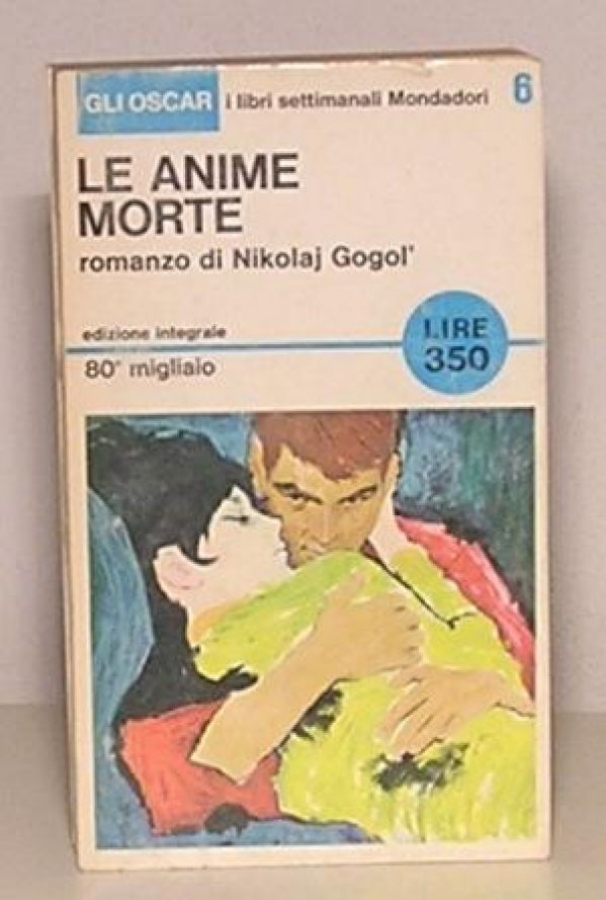
Dead Souls
> Blessed is the writer who, leaving aside characters that are tedious, repulsive, striking in their sorrowful reality, approaches characters that reveal the highest qualities of man..... > Sublime, universal poet they proclaim him.... > far different is the fate of the writer who dares evoke into the light all that is forever before our eyes, yet which indifferent eyes do not perceive: the entire tremendous, galling sediment of petty things that entangle our lives, all the depth of the cold, fragmentary, everyday characters with which our earthly journey teems, at times bitter and tedious .Gogol develops a caustic yet buoyant analysis of the society of his time, with an inspiration that makes him unique among the great nineteenth-century realist writers, such as Zola, Flaubert, and Verga. Gogol’s stroke of genius lies in bringing to light the squalor and vacuity of his contemporaries by confronting them with an implausible premise. The protagonist of the novel, the prosaic Chichikov ( > neither too young nor too old, neither too stout nor too slender, neither too elevated nor too humble ) travels through the vast Russian provinces proposing to purchase dead serfs (hence the title of the novel), on whom the landowners continue to pay a tax. And what is paradoxical is that not only do the landowners accept the transaction, but institutions and polite society itself fail to perceive the absurdity and immorality of this commerce. Far different are the obstacles the protagonist must encounter along his way! His visits to the landowners force him to endure the idiosyncrasies, at times eccentric but often irksome, of diverse dispositions and lifestyles: the vain, vacuous landlord; the sanctimonious yet covetous old spinster; the wheeling-and-dealing proprietor; the drunkard prone even to violence. It is a panoramic procession of characters and settings that enables the author to sketch, with a few deft strokes, the petty yet profligate life of the Russian petty and middle landowning class. While the characters are delineated with irony and verve, the depiction of the villages is sociological, even if Gogol is entirely devoid of any indignation regarding the condition of the peasantry. When scandal subsequently erupts in the small provincial town where Chichikov is staying, our protagonist is overwhelmed by gossip, conjectures, and false accusations that have nothing to do with the swindle he is perpetrating, yet which compel him to flee. Yet like all Russians, Chichikov too loves the speed of the carriage bearing him swiftly along the road, surrendering to a sense of exhilaration and abandon. > It is as though an unknown power swept you up on its wing, and you fly, and everything flies... Is it not thus that you too, Russia, like a spirited, uncatchable troika, fly away? With Chichikov’s departure concludes the first part of the book, the only one completed and approved by the author. The overall design of the work envisioned two further parts, of which the second has reached us incomplete, while the third was destroyed by Gogol himself. Reading the second part reveals clearly how the fundamental theme of the entire work was meant to be the journey: a kind of aimless reportage, devoid of moral designs, with no other interest than that of capturing, in its immediacy, the very flow of life. And Gogol remarks, with a Pirandellian inflection, > the reader must not be exasperated with the author if the characters who have appeared so far have not met with his favor: the fault lies with Chichikov; here he is the absolute master, and wherever it pleases him, we too must drag ourselves . Gogol’s ability to portray the characters and bourgeois milieux of Russian society constitutes the primary virtue of the novel. From a reading of it, however, there emerges a sense of superficiality and incompleteness, as though the writing still demanded refinement and further depth. Why read it? It is a timely novel (especially for Italy), in that it recounts the ease with which a vacuous and superficial society accepts any circumstance, however implausible and improbable.