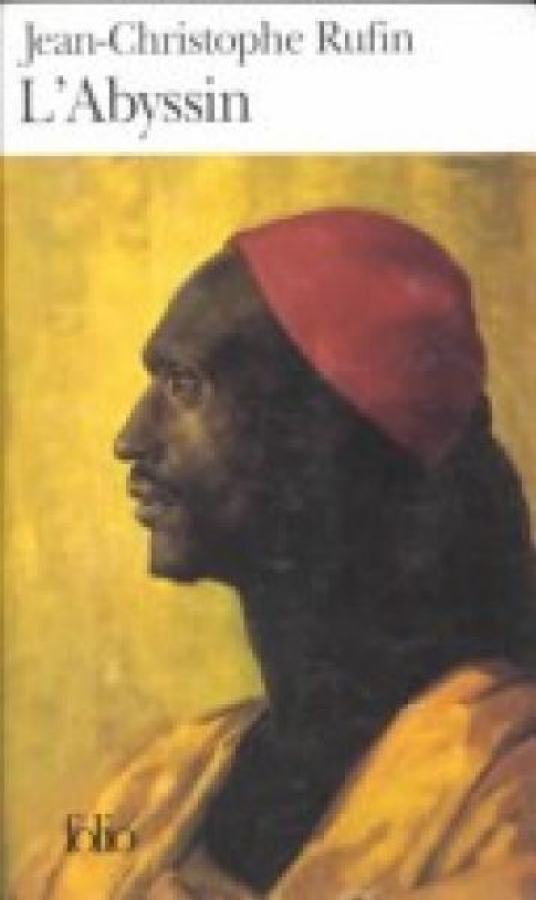
The Abyssinian
The novel is set in the late seventeenth century, during the reign of Louis XIV, and recounts the exploits of a Frenchman, Poncet, who journeys to Abyssinia on an expedition mounted by the Jesuits to restore ties with the empire fifty years after the expulsion of Catholic priests. The protagonist is an adventurous young man who commits himself to this enterprise out of love for the daughter of th

The Saint-Fiacre Affair
Maigret returns to the village where he grew up, as an elderly countess has died and he suspects she was murdered. All the figures of a potentially sordid affair are present: the countess’s young lover, the playboy son living the high life, a young parish priest who perhaps knows more than he lets on, and so forth. What emerges is a portrait of a provincial milieu, sketched, in truth, in a super

The Heroine of Port Arthur
Emilio Salgari was exceptionally swift at fashioning stories around events that gripped the public imagination; he did so by blending a certain exoticism with wars and romantic intrigues. Such had been the case with *La capitana del Yucatan* and *Le Stragi delle Filippine* (see the reviews on this site), and so it is in this novel, published under a pseudonym in 1904. The backdrop is the Russo-Jap

The Idiot
The novel pivots on the figure of Prince Myshkin, who returns to Russia after an extended stay in Switzerland, where he was treated for "idiocy"—that is, mental illness. The protagonist’s trajectory unfolds within a setting crowded with characters, from the somber Rogozhin (virtually the personification of evil) to a succession of opportunists and nihilists, through to two female characters (Nast
L'immensa distrazione
> Ettore Manfredini, nonostante fosse appena morto, (…) ebbe la netta sensazione di svegliarsi. (…) Ora che acquisiva una strana dimestichezza, (…) per la prima volta dal suo risveglio, intravedeva qualche spezzone della sua vita mortale come se fosse estraneo a sé stesso e potesse assistersi nell’atto del trapasso. (…) Morire, si disse a quel punto Ettore Manfredini, è come diventare un narratore
The Shadow of the Wind
The setting is Barcelona during Franco's Spain, in the 1950s. The son of a bookseller is taken by his father (a dealer in antiquarian and rare books) to the Cemetery of Forgotten Books, a repository for all those volumes no one will ever seek out. Here, the boy picks up a novel by a Spanish author. Reading it draws him into a sequence of events that unfolds across his youth, in a sort of parall

The Order
The novel’s settings are the Finnish winter and spring, while the historical context is the war between the White forces, fighting to defend the country’s independence, and the Red forces, intent on extending the communist revolution to Finland as well. War, intertwined with a wild and pristine natural world, forms the backdrop to the ordeal of an imprisoned woman and her interactions with the ju

The Watchmaker of Brest
In his splendid biography of Matteo Ricci (*The Memory Palace of Matteo Ricci*, published in Italy by Adelphi), Jonathan D. Spence recounts how the Jesuit missionary won over the Chinese mandarins with the gift of clocks brought from Europe. What astonished the Confucian elite was the exquisite mechanics of seventeenth-century Europe and the notion that time could be dissected into infinitely smal
The Last Lombard
It is a historical novel set in the year 900, during the disintegration of the Lombard world. The protagonist, Arechi, is educated at the papal court, later becomes a powerful lord of Cividale, and returns to the papal court as guardian of the papal throne. He leads a life of crime and intrigue, only to repent on his deathbed. The book is insipid. There is no characterization of the characters

The Sentimental Man
An opera singer recounts a dream in which he relived a love affair: several years earlier, in Madrid, he had met and spent time with a couple—the wife of a prominent businessman and her male companion. The singer had fallen in love with the woman, whose husband later killed himself out of despair. While writing down the contents of the dream, news reaches him of the accidental death of his forme
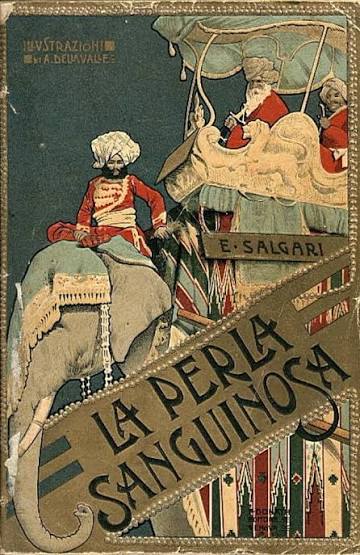
The Bloody Pearl
Although he went by the moniker "Captain Salgari," the Veronese writer never actually traveled; for his novels, he relied on the numerous accounts of explorers and geographers who brought back to Europe tales of hitherto unknown worlds—accounts that blended reliable reports with fanciful inventions, steeped in a burgeoning racism. Our author was always deft at promptly seizing upon "the trend," ch
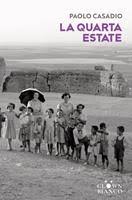
The Fourth Summer
Following an eventful journey and having lost her luggage, the young doctor Andrea Dalvina Zanardelli arrives in Ravenna to take up work at the Marina di Ravenna sanatorium, where "scrofulous" children from the orphanage are treated. The year is 1943. Dalvina comes from an affluent family on Lake Garda. Her very first encounter surprises her, when at the station she is asked whether she needs to g

Lineage and Blood
In fifteenth-century Transylvania, > there is a story fording rivers, flying through leafy woods, and snagging on the lips of passersby. A tale that horrifies, (...) an immortal creature of violent hunger, thirsty for blood, seemingly roams the countryside. (...) For two months, a comet has been furrowing the sky like a knife wound from which drips the blood of creation. It is Dracula—not the

The Eternal Virgin
The author imagines a former schoolmate, now a film producer, proposing that he write the screenplay for a film based on *Michael Kohlhaas*, an 1810 novella by Heinrich von Kleist. The plot lends itself to a theme particularly dear to Kenzaburo Oe: that of freedom and rebellion against the abuses of Power. Set in the sixteenth century, Von Kleist's novella recounts the story of a horse dealer who
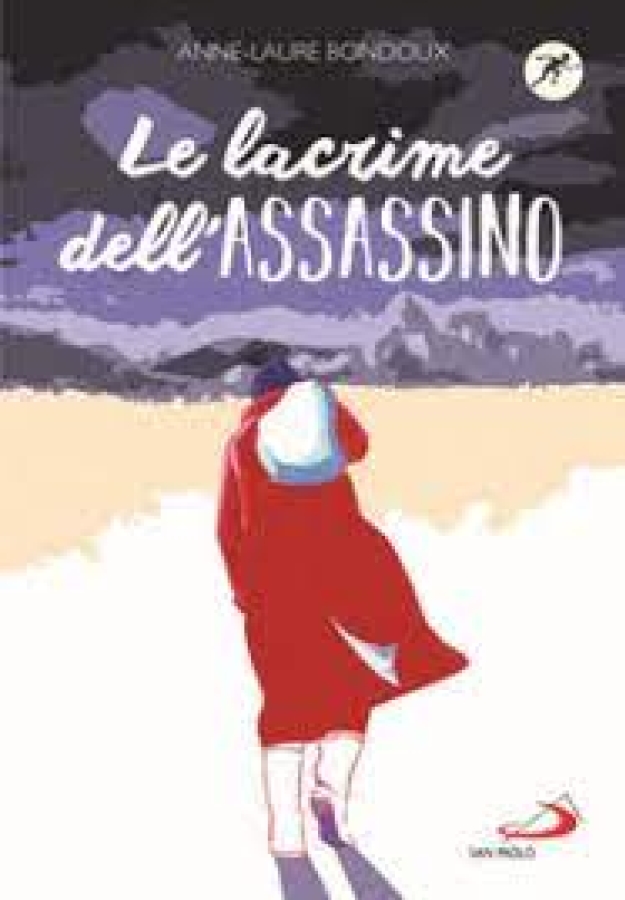
The Killer's Tears
Children are increasingly the innocent victims of war, violence, and death. One need only consider what we are witnessing today, in Ukraine and Palestine. For a child who has seen their parents murdered, is it still possible to rebuild a life? And can one forge a relationship with the killer capable of saving his soul? This novel is aimed at adolescents, yet it tackles weighty themes—unfortunately

The Thief and the Dogs
The novel depicts the gradual exhaustion of a man who, upon his release from prison, finds himself abandoned by the most significant figures in his life (his wife, his daughter, and his friend) and pursues an impossible revenge. It is a psychological and introspective journey (a sort of inward retreat) during which the protagonist fails even to perceive the love of those around him (the woman who

The Lantern of Diogenes
This is a narrative that can be divided into two parts. In the first, the author recounts his bicycle journey from Milan to the Romagna coast, although, in reality, he stops in the mountains of Modena. The second part depicts his stay in Bellaria. The first part is very fine and lively. One senses a feeling of escapism, of flight from the city and industrial society; the landscape, the inns, a
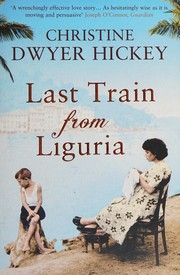
Last Train from Liguria
> È solo da quando sono arrivata qui che comprendo quanto poco conosca di Nonna, quanto raramente avevo veramente pensato alla sua vita. Ora, dovunque io vada penso a lei. La immagino seduta su questa panchina; fare la coda in quel negozio; passeggiare lungo questa strada all’ombra di questi alberi. (…) Mi chiedo come la mia riservata ed esile Nonna si sia abituata ad essere guardata tutto il temp

The Dark Side of the Moon
> Come to this wall if you hate your place/and face a taste of cosmic space/where no form of life can exist/and objects do nothing but fall (Joseph Brodsky, *The Berlin Wall Song*, 1983, from the special insert of *Internazionale*, 2019). This poem apt encapsulates the narrative under review, set in Berlin in 1975. It is no coincidence that the opening image is that of a bird falling, as if out o

White Nights
> I am a Dreamer... I have so little real life! In reality, I have lived moments such as these so rarely that I hope to make them live again in my dreams. I will dream of you all night, every week, every month, all year round.... This is how the first-person narrator expresses himself when, one night, he meets a weeping girl who also describes herself as a "dreamer." We will never learn his name;

Reading
The book aims to be a middle ground between a praise of books—that is, of reading—and the very meaning of reading. The author surveys numerous writers and texts to ultimately demonstrate how writing manages to portray, in differing ways, seemingly similar situations and contexts. Furthermore, reading is an introspective process through which people actively interpret the resonances emerging from

Leo the African
Set between the fifteenth and sixteenth centuries, the novel recounts the life of Hassan al-Wazzan, known as Leo Africanus. Forced to leave Granada following the Castilian conquest, the protagonist leads an adventurous life: first in Fez in North Africa, then in Cairo, and subsequently in Rome; he also undertakes numerous journeys, encountering widely disparate figures and milieus. As with all t
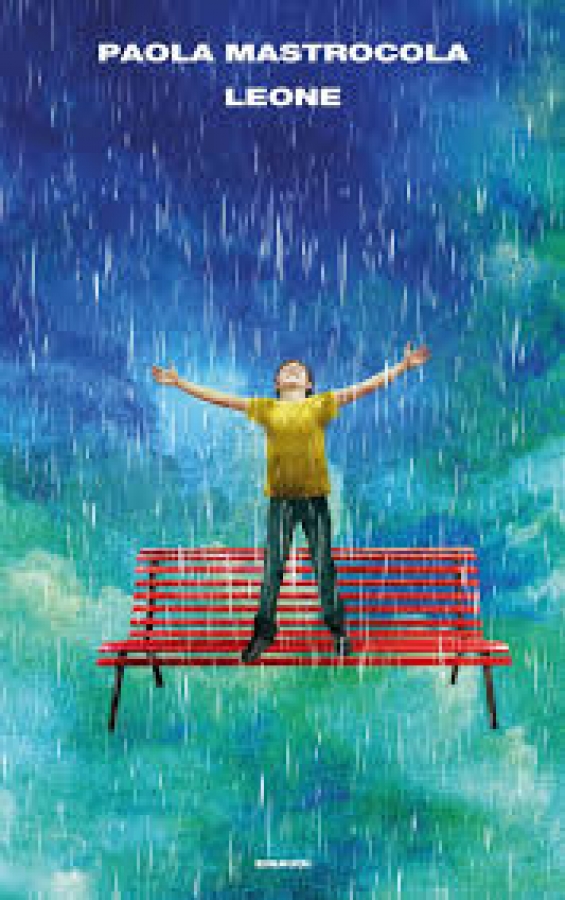
Lion
Social convention would have parents serve as the solid foundation of the family, and children as its fragile walls, in need of guidance and support. In this strange novel, that is not the case. Katia, a divorced mother, lives in uncertainty, > she felt somewhat on the border, between city and countryside, between the world as it had been and the new one just beginning. She was comfortable there
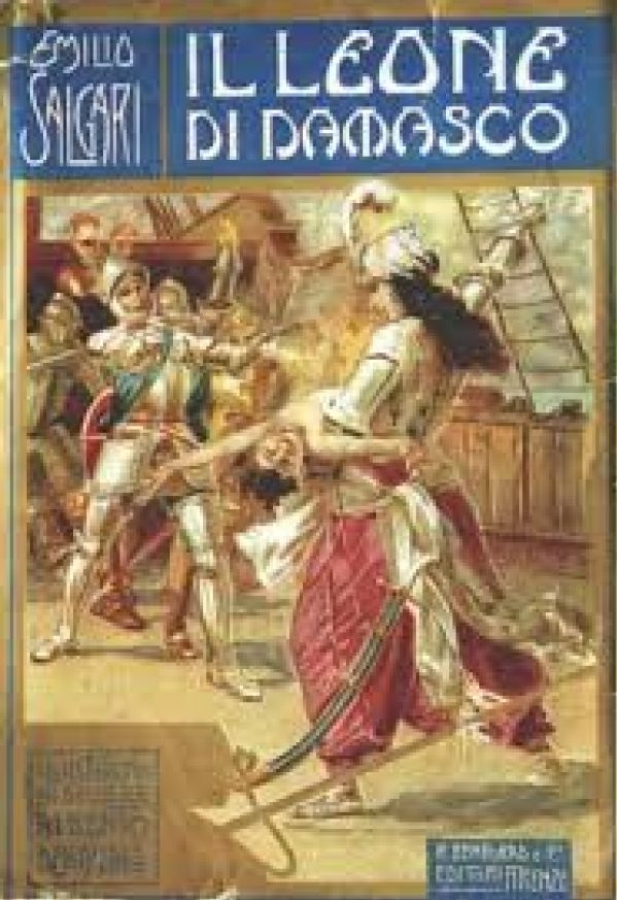
The Lion of Damascus
The novel is meant to be the sequel to *Capitan Tempesta*, a tale set in Famagusta in 1517 during the war between the Venetians and the Turks. The protagonist was a young noblewoman: a skilled swordswoman who, disguised as a man, had set out in search of her betrothed, abducted by the terrible Haradja. Salgari had succeeded in crafting a story full of allure, working upon gender ambiguity, vigor