Paola
Books by this author (2)
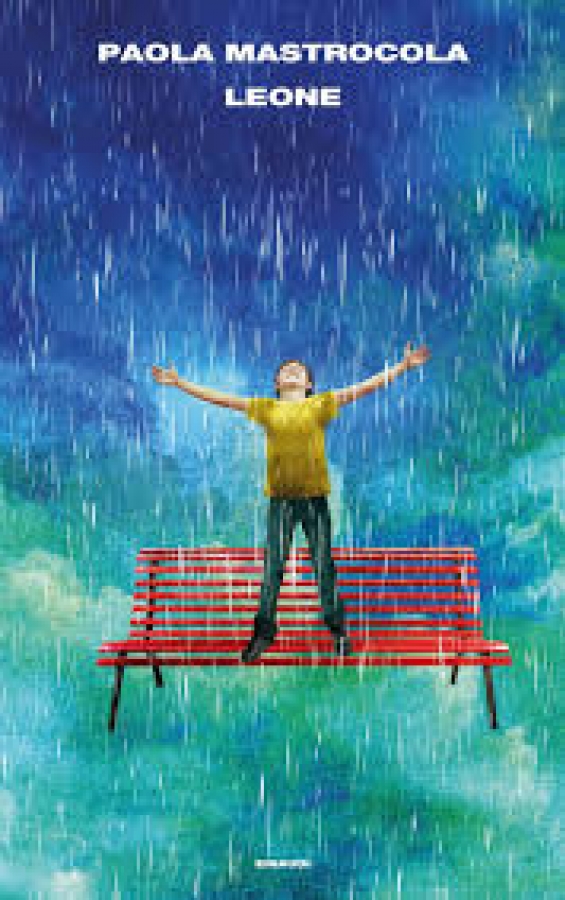
Lion
Social convention would have parents serve as the solid foundation of the family, and children as its fragile walls, in need of guidance and support. In this strange novel, that is not the case. Katia, a divorced mother, lives in uncertainty, > she felt somewhat on the border, between city and countryside, between the world as it had been and the new one just beginning. She was comfortable there, suspended halfway. (...) She had no great desires or hopes. It was merely the notion that perhaps, one fine day, things might take a different turn for her . Leone, on the other hand, a six-year-old boy, possesses an unshakable certainty: he prays, because he believes in Jesus, even if only in the form of a ceramic figurine. What harm is there in that? ask Katia’s friends, mildly incredulous and affectionately wry; yet the child heads in an unexpected direction—and, truth be told, an unconventional one in our falsely devout society. Katia is worried, racked with guilt; Leone of all people, so profoundly disoriented. > A child who seemed to have gotten lost in the middle of something, a wood at night during the age of dinosaurs. (...) At times he seems to her like an angel, stranded in their kitchen, trying to flutter about without a sky . Through a singular lens—the need to pray—the author explores the bond between mother and son. She > felt brimming with tenderness for this child who had come into her life just like that, without her ever having decided on it. Like a mushroom, a flower. (...) A flower might not have any passersby at all, if it happens to grow on a patch of land where no one ever walks. It can happen that a flower is born and no one ever sees it. And what about children? And Leone, who “moved diagonally rather than straight,” who tried to > exist as little as possible. (...) Exercises in nonexistence, one might say. (...) Jesus, please make them stop talking about me . The author avoids any potential psychological detours toward dissecting parent-child relationships; she has no interest in seizing upon the narrative to offer futile wisdom or banal insights: she chronicles the events gently, passing no judgment on the mother or the other adults. This is a virtue—one that might have led us to appreciate the tale had the author managed to impart narrative rhythm to the story, rather than allowing herself to drift into a slow, tedious progression. Perhaps realizing, at a certain point, that the narrative was fraying into nothingness, the author resorted to the miraculous, and even to a new deluge. Prayer becomes redemptive of humanity’s sins, and Leone a miniature, modern-day Jesus. Yet that is not quite it, because—further degrading the quality of the narrative—Mastrocola never commits herself, maintaining a hypocritical, pseudo-secular stance. The reader comes away embittered. It could have been an interesting story; it proved instead to be a cloying tale: if the intention was to demonstrate that there exists within us, from childhood onward, an innate yearning for the sacred, and that prayer is an intrinsic dimension of existence, this theological question is trivialized by a narrative far too inadequate for the subject's complexity. Compounding matters is the prose style: a repetitive writing built upon flat phrasing, marked by an excessive reliance on the full stop, by verbless complete sentences—in short, an approach that willingly slips into the simplistic vernacular of journalistic or television storytelling: there would be nothing wrong with this, were the novel supported by a compelling plot and by a penetrating, evocative analysis of characters and circumstances. Why not read it? It is pointless, and ultimately cloying.
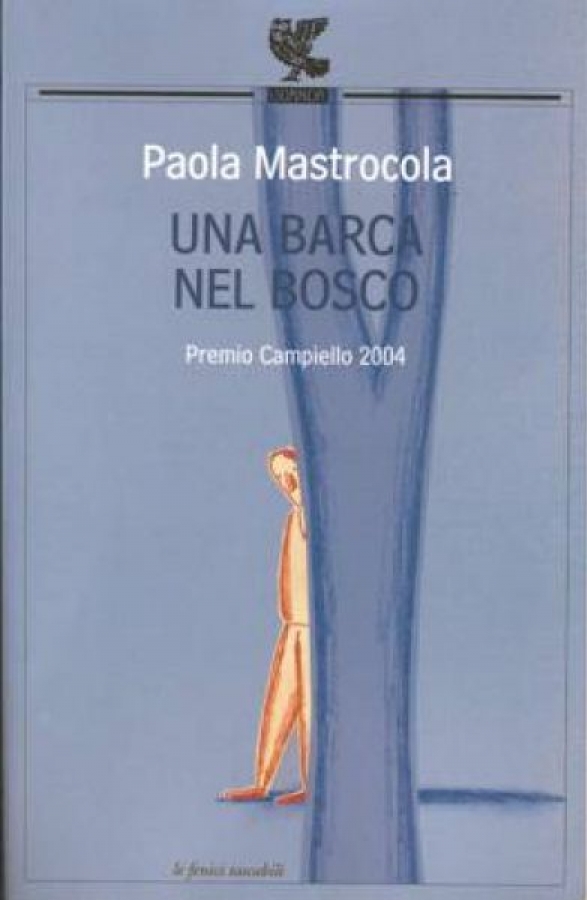
A Boat in the Woods
Gasparre lives on an island and is the son of a weigher. He excels at school, particularly in Latin, and moves to Turin with his mother to pursue his studies. At high school, he soon realizes that the teachers themselves demand conformity and integration, regarding him with apprehension as a student who is “too good.” Mediocrity is the hallmark of the school system, and Gasparre’s life is defined precisely by his fraught adjustment to this prevailing social value. Disillusioned, he earns a law degree but opens a bar, implicitly rejecting culture and formal education. Yet, in plants, he finds an outlet for his quest for freedom and self-expression, turning his home into a woodland. The opening of the book is thoroughly engaging: the young student’s experiences, the discovery of the school and the metropolis, the encounters with his peers, and the struggle to be accepted. It is a delicate telling of a story that could belong to any young person. The style is linear and simple, highly effective. Then the book veers toward the paradoxical, toward an escape into a New Age ethos—that of salvation through nature—which, though the author may not realize it, is itself a token of conformity. The style, too, grows heavier, and the rhythm becomes prolix.