Odyssey
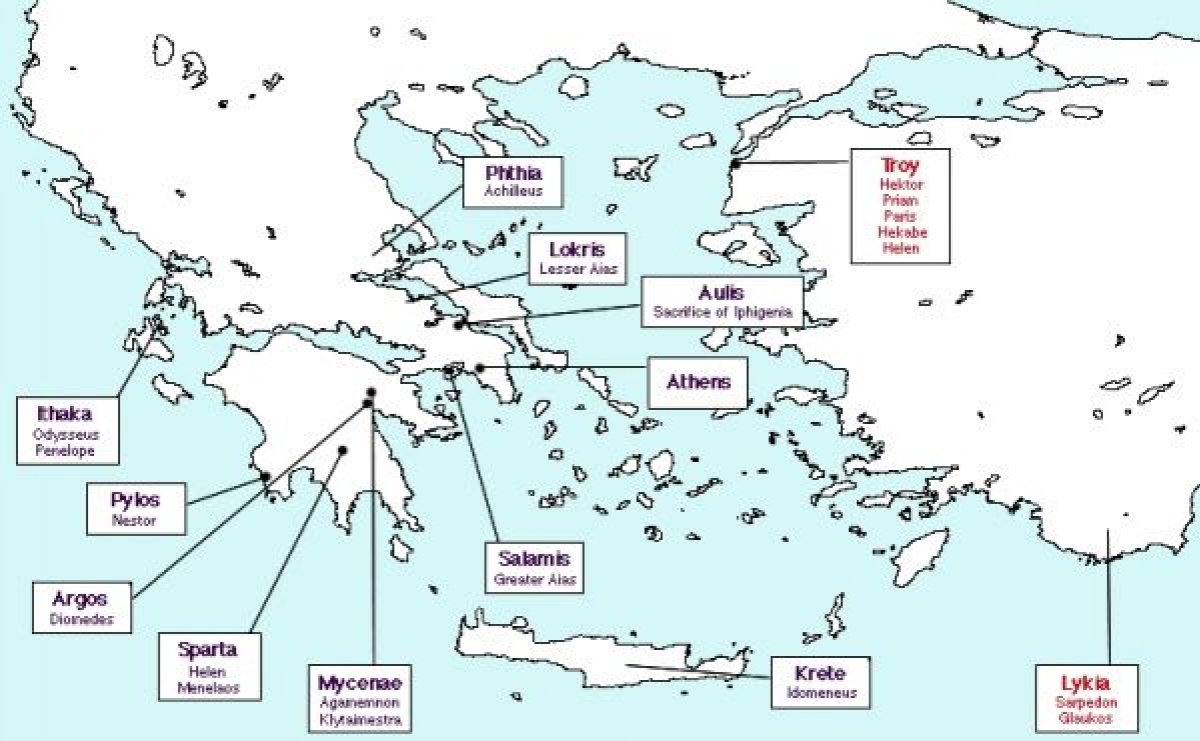
The book centers on Odysseus’s return to his home and is structured into four parts: the preamble, in which a council of the gods, on Athena’s proposal, resolves to allow Odysseus to resume his journey home by ordering Calypso to release the hero; the decision of Telemachus, Odysseus’s son, to rid himself of the suitors, who continue to frequent the palace and squander his father’s estate. After a futile appeal to the people to aid him in the struggle against the suitors, Telemachus journeys to other rulers to learn of his father’s fate and to discover whether it is possible to overcome the state of uncertainty in which he finds himself and give his mother in marriage, taking full possession of his inheritance; Odysseus’s journey to the Phaeacians, with the storm scene and the encounter with Nausicaa (the most beautiful pages of the poem) and the recounting of his adventures; the arrival home, the gradual unveiling of his identity, and the slaughter of the suitors. By many authors, the *Odyssey* is interpreted as the return of Ulysses (and thus of the traveler) and as an exaltation of his intelligence and cunning. In truth, it is a highly complex poem in which different narrative themes unfold and contrasting personalities are set against one another. A first theme is undoubtedly that of travel, and above all, of the sea. It is no coincidence that the most mesmerizing pages of the poem are those of Book V, which recounts the storm and the shipwreck of Odysseus: > A towering wave surged down upon him, with terrible fury, and sent the raft spinning round. Far from the raft he was hurled, and the rudder slipped from his hands: clean down the middle snapped the mast beneath the horrific blast of clashing winds, and far off into the sea fell sail and yardarm. Long did he remain submerged, unable to rise swiftly to the surface beneath the onslaught of the mighty wave... at last he surfaced, spewing from his mouth the bitter brine that streamed in rivulets from his head . > To the castaway, and more generally to the guest, shelter and hospitality must ever be offered : so speaks Nausicaa to her handmaidens in Book VI: > Halt, handmaidens: whither do you flee at the sight of a man? Do you take him perchance for an enemy?... Yet this is a wretched castaway who has come upon us, and we must tend to him: from Zeus come all strangers and beggars; and a gift, however small, is dear . The theme of hospitality is one of the dominant threads of the *Odyssey*, corresponding precisely to the collective feeling of a people of seafarers who are acutely aware of how quickly fortune, and wealth, can change. A second theme is constituted by the complex personality of Odysseus, well epitomized by Athena’s words in Book XIII: > Shrewd and cunning indeed would be he who could surpass you in all manner of deceit, even were it a god who encountered you. Audacious, fertile contriver, never sated with wiles, will you not even now, in your own homeland, cast aside your guile and those lying tales that have been dear to you since infancy? Come, let us speak no more of this, for we both well know the art of cunning . Ulysses is a consummate weaver of tales, and it is telling that his famous adventures are not related by the poet, but are recounted by Odysseus himself to the Phaeacians. Are they true occurrences or fairy-tale fabrications, like those he spins with such ease to the swineherd Eumaeus, to his wife, and to his own father? But who is Odysseus—a perpetual wanderer, a man by now accustomed only to fighting and traveling? It is extraordinary that at the very moment he reveals himself to Penelope, instead of embracing her and expressing his love, he must at once inform her of the prophet Tiresias’s prediction, according to which he is destined to leave Ithaca once more to undertake a new voyage and ultimately perish in the sea. There seem to be in Odysseus no feelings toward his son, his wife, and his father, who nevertheless suffered so deeply: the sole moment of genuine tenderness appears to be directed toward his mother, in the splendid verses of Book XI: > And thrice I sprang forward, my heart urging me to embrace her; thrice from my hands, like a shadow or a dream, she slipped away: a sharper agony pierced me to the core, and addressing her I spoke winged words: Mother mine, why do you flee when I yearn to hold you? . A third theme is represented by Telemachus and the intricate process through which, having grown up without a father, he is forced, in spite of himself, to become an adult. How different he is from his father!. He is full of uncertainty, of doubt, torn between love for his mother and the desire to reclaim his estate and his independence. The youth’s doubts render him a modern character, precisely because he is rich in intimate contradictions—the fruit of the conflict between his role (that of prince), his affection toward his mother, and the fact that he does not measure up to his father’s strength: he cannot string the bow! > By Zeus, not I... do hinder my mother’s marriage; indeed, I bid her marry whomsoever she pleases, and I offer her countless gifts. Yet I dare not drive her from the house against her will with a peremptory command: may a god forbid it! (Book XX), but then he must assert himself over his mother herself and finally become an adult: > Mother mine, as for the bow, no one among the Achaeans has more mastery over it than I... come, return to your chambers and attend to your own tasks, the loom and the distaff... Astonished, she returned to her chambers, keeping the prudent counsel of her son close to her heart (Book XXI). A fourth theme is embodied by the figure of Pallas Athena, who constitutes the true protagonist of the epic. Not only is Odysseus’s release from Calypso owed to the goddess, but above all, it is her constant counsel and guidance that allow Telemachus and Odysseus to act with due circumspection. We are not dealing with miraculous and incredible deeds (with marvels), but underlying the entire poem is the theme of intelligence and independence of judgment, personified precisely by Athena. In an article in *La Repubblica* of November 25, 2006, Book XXIII is commented upon, in which Penelope recognizes Odysseus. The woman seeks a secret sign to confirm that the man is truly Odysseus, for the waiting has been too long and she must be certain, > because Penelope believes in only one form of knowledge: that of secret signs, grounded in her own memory and that of Ulysses . To Telemachus, who accuses her of having "a heart harder than stone," Penelope replies: > My child, the heart within my breast is struck dumb: I can speak no word to him, nor question him, nor look him in the face. Yet if he is truly Odysseus returned to his homeland, oh, full well and easily shall we recognize one another: for we have secret signs between us, known to ourselves and to no one else . And when Odysseus gives her the sign (the bridal bed carved out of a great olive tree that cannot be moved because of its roots), Penelope recognizes her husband and "straightway her knees and heart gave way," and then both rediscover their former love: > and upon him fell an even greater urge to weep; he wept as he held close his bride, dear to his heart and faithful;... so longed-for was her husband to her gaze that she would not unloose her white arms from his neck .
Olives Included
We are in 1930s Italy, at the height of the Fascist era. In a small village on Lake Como, four good-for-nothings spend their time lingering in taverns and playing pranks. One day, as a favor to the village prostitute, they poison the pigeons that typically congregate in the squares and streets. One of these pigeons is given to an elderly woman, who dies from the poison. From this incident unfolds a whole sequence of events centered on the village *maresciallo*. He is the classic figure of the *carabiniere*: dutiful, stern yet pragmatic and sensible, attempting to resolve the locals' troubles by acting as a «benevolent paterfamilias». The narrative moves swiftly, buoyed by a lively, stripped-down style, weaving through somewhat absurd situations—such as a brother fretting that his skinny, pious sister might marry a friend endowed with exceptionally exaggerated sexual attributes—and singular characters, like the wife of the *podestà*, who believes herself to be three people in one and is constantly shifting personalities. The atmosphere evoked by the author is the familiar one handed down to us regarding Fascist Italy: an absurd regime, unloved yet endured, while at the same time paternalistic and condescending. The book’s greatest virtue is that it is a very smooth read, yet both characters and settings remain superficial and distant. The former verge on mere caricatures; the latter (Lake Como and village life) ultimately prove irrelevant. The deft narrative pacing fails to compensate for the vacuity of its content. Why not read it? Because it only makes sense to read it on a train, when one is thoroughly exhausted.
Oliver Twist
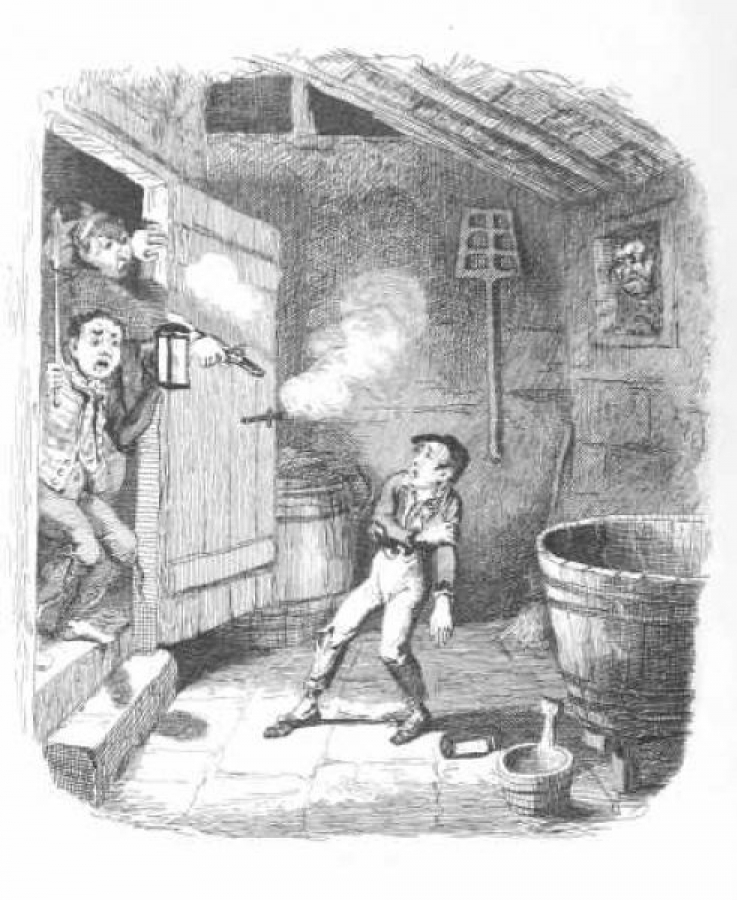
The setting is the England of the second half of the nineteenth century, marked by widespread poverty, rising criminality, and a bigoted bourgeoisie that was often hostile toward the poor. Oliver is a foundling who is first raised in a workhouse, only to be apprenticed (or handed over) to a family to learn a trade. There he suffers relentless abuse and consequently decides to flee, only to fall into the hands of a gang of criminals led by an avaricious and cruel Jew (Fagin), and by another character who is violent and paranoid. Oliver is forced to learn how to steal; during a burglary, however, he is wounded and taken in by a family who nurses him back to health, thereby introducing him to the kindness and generosity of the respectable middle class. There follows a series of adventures and an entanglement of characters, through which it is ultimately revealed that Oliver is the heir to a vast fortune and had been abducted by the Jew on behalf of his half-brother, who sought to prevent Oliver from claiming his lawful birthright. All ends well: the villains are punished, and Oliver can live happily with his new family. At a certain point in the novel, Dickens recalls how > it is the custom on the stage in all murderous melodramas to present comic scenes and dramatic scenes in regular alternation. Such changes appear absurd: but they are not so unusual as they seem at first sight. The transition in real life from a well-spread board to the deathbed, and from mourning weeds to holiday garments is no less incredible: only, there, we are actors rather than passive spectators, and that makes a vast difference . Life is thus an endless surprise, and the story of *Oliver Twist* seeks to portray the nineteenth-century journey of a hero in the era of massive urbanization. Yet there is nothing fantastical or truly adventurous in Dickens’s tale, save for a sequence of frequently maudlin episodes steeped in a facile moralism that sharply demarcates good from evil. In the first part of the novel, recounting the trials of young Oliver, the author still displays a subtle irony toward the English society of his day and a critique of the hypocritical approach to poverty that conceals contempt and cruelty beneath a veneer of charity and benevolence. Particularly effective in this regard is the scene where young Oliver, timid and awkward, appears before the workhouse board to be evaluated regarding his future placement. Dickens describes the various board members masterfully, revealing a lucid portrait of a bourgeoisie that views poverty as an innate predisposition toward wickedness and misfortune. Similarly, the author advances a social critique against the exploitation of child labor and the utter disregard for children's physical and intellectual needs. In the novel’s second half, the narrative lapses into melodrama, drawing a stark divide between the “world of good” (the middle-class gentry fueled by wholesome sentiments) and the “world of evil,” embodied by society’s underworld: the grasping Jew, the young prostitute who ultimately redeems herself, the brute, and the wicked half-brother. Oliver himself fades from view, while Fagin emerges as the pivotal figure, incessantly scheming in his pursuit of wealth and possession. The finest scenes are precisely those depicting the gang of criminals and their movements through the streets of London: a dark, filthy, decaying city where people dwell in windowless, dilapidated, foul-smelling tenements. In its richness and expressive power, the depiction of London recalls D’Annunzio’s poetry on the monstrous cities. Urbanization is viewed by Dickens as the community’s descent into an inhuman world, in contrast to the countryside, where one can live happily and serenely. It is hardly coincidental that Oliver and his companions ultimately abandon London to return to the small villages of rural England. The plot is predictable, an overbearing moralistic approach predominates, and the style is not always fluid—the sentence structure being frequently convoluted and redundant: all elements that render the novel scarcely enjoyable.

Beyond Babylon
The novel is a skein of narratives, set across different times and environments, yet traceable back to two family stories. Mar is the daughter of Miranda, an Argentine woman, and a Somali father she never knew. Zuhra is Somali, the daughter of Maryam and likewise of an unknown father. They grew up and live in Rome and are Italian, yet neither knows what her mother tongue truly is, both feeling somehow suspended between two identities. As Zuhra says > mama speaks to me in her mother tongue. A noble Somali where every vowel has meaning. In mama's mouth Somali turns to honey. In Somali I found the comfort of her womb, in Somali I heard the only lullabies she ever sang to me, in Somali I surely had my first dreams. But then, each time, in every conversation, word, sigh, the other mother peeks through. The vinegar Italian of neighborhood markets, the sweet Italian of radio hosts, the serious Italian of *lectiones magistrales*. The Italian that I write . Yet the theme of identity, and consequently of language, is not the novel's dominant subject. The book unfolds around the theme of suffering and the rediscovery of oneself. Mar is a young woman who has lost her lover to suicide, along with her child. She endures a difficult relationship with her mother, distant and absent, forever locked in her own grief: she was once the partner of one of the executioners, of those who tortured and murdered so many Argentines, perhaps even the woman's own brother. Zuhra, for her part, was raped as a child after being abandoned by her mother, who for years sought in alcohol a refuge from the social and human destruction of Somalia. The tragedy of their mothers thus hangs heavy over both young women. And it is only through the telling of the harrowing trials Miranda and Maryan had to endure that the thread of the relationship between mothers and daughters can be picked up again, allowing the latter to find a balance of their own. Yet a physical space was necessary, a meeting ground; and this is found in Tunis, in the Arabic language school, where people from so many different worlds gather to study a language that unites so many peoples: a new Esperanto? Will language be what carries us beyond Babel? This is a complex book. From a stylistic perspective, the literary device of parallel stories demands a careful reading, as picking up the narrative thread is not always effortless. The risk of a fragmented narrative is, however, offset by the author's ability to deploy different literary styles: from the idiom typical of young Romans to an expansive and evocative prose, more suited to stories set in the 1960s and 1970s. The style brings into sharp relief the generational divide between daughters and mothers, as well as between the latter and their families of origin. The themes addressed by the book are manifold: the burden and the richness of holding multiple identities, the strength of languages as instruments of growth and social cohesion, storytelling as liberation, existential suffering—especially that of women—and the despair of entire peoples. The novel's center of gravity remains, nevertheless, womanhood, forced to exist in a world of violence and abuse: industrious women, often standing in solidarity, yet all too frequently victims and instruments of male power. Why read it? The writing is remarkably effective, rich in resonance; the characters captivate, the settings—especially the Somali ones—stir profound emotions, and above all offer food for thought for us Italians: a series of exquisite fragments.
Beyond the River
Gee’s Bend is an arm of land, bordered on three sides by the Alabama River, where the water forms a sort of vast, arcing hairpin bend. To reach the nearest town, the "Benders" must undertake an hour-and-a-half drive or a fifteen-minute ferry ride—had the ferry not been abolished in the 1960s by the county sheriff with the following unassailable reasoning: > we didn’t close the ferry because they were black, (...) we closed it because they forgot they were black . Gee’s Bend is a unique enclave: all its residents are descendants of the sixteen slaves who settled this strip of land in 1816; geographical isolation and the land's meager appeal allowed the small community to remain untainted by the momentous social and political upheavals that marked American history: the Civil War, racial segregation, the Great Depression, Martin Luther King’s freedom movement. Even when the latter drew them in, holding them up as a paradigm of the exploitation of the African American people, the "Benders" went "over the river," as the great Black leader urged them, fought for him, and grieved his death, but then returned to their land, because > for a woman of color, descended from slaves, (...) the river begs to be crossed, and at the same time bars the way . Yet today this small community, now dwindled to a few hundred survivors, risks vanishing. The project of a new ferry will shatter its isolation once and for all. Moehringer deftly captures this moment, narrating it through the eyes and mind of a small woman of Gee’s Bend. > Mary is made entirely of circles. Her body is round, her face is round, her river is round. In Mary Lee’s world everything is round, because only at the end of something, of a century, of a story, of a sentence, does one truly understand its beginning. (...) She has spent her entire life in this timeless place. How did age manage to track her down? Through Mary Lee, Moehringer retraces the history of Gee’s Bend, interweaving social events with episodes from the woman’s life. It is a gentle, melancholic narrative: there are moments of revolt, there is immense endurance, yet the whole is steeped in resigned benevolence; and this not merely because Mary Lee > is a kind person (... if I can’t laugh and joke with you, if I can’t be nice and friendly, we might as well leave it alone) , but because > a lifetime ago Mary Lee counted on the river to protect her from those who were anything but friendly. (...) Her river is a strong brown God, (...) Eternal, Silent, Gives life, and takes it without hesitation. It is the force that shaped Mary Lee’s world. (...) There are people who spend their lives fighting against what limits them. Mary Lee was baptized in the water that limits her. To her it is a gift, and for what she has been given she gives thanks. This long story brings to mind a great Italian novel: *The Mill on the Po*. As in Riccardo Bacchelli’s book, here too the subject is the humble, the victims, and it is approached just as the conservative Catholic Bacchelli approached it: with nostalgia, as if to say life was better then, when one was isolated, schooling was out of reach, poverty reigned, and one suffered the abuses of white people, but at least one lived sheltered by the great river (here the Alabama, there the Po), in a tranquil, timeless existence. But history marches on, my dear Moehringer, and the exploitation of Black people, of peasants, of the "wretched of the earth" cannot simply be a trite occasion for folklore, for winning an undeserved Pulitzer Prize with a Hollywood-style tale. Why not read it? Trite; better *The Mill on the Po*.
The Shadow of the Hills
The novel opens with a dream. The protagonist, Stefano, who is also the first-person narrator, is taken hunting by his friend Francesco among the hills of his native Piedmont. The woods are a composite of «cascades and pyramids of assembled nightingales», a paradise of happiness; and then, suddenly, the > treetops were mounds of tiny, corroded, greenish skulls, chiming sinisterly against one another by the millions . The dream foreshadows the overarching meaning of the novel, which unfolds between memory and present life, between violence experienced and imagined on the one hand and the «tangle of everyday things» on the other. > I must force myself to remember. I must try, because these memories lie buried, in bristling confusion and separated from me. I was fine, normal and cheerful and aggressive as long as I managed to live outside of myself . The country house is a significant touchstone for the protagonist, both for the nature surrounding it and for the terrible events that befell him in his youth: the death of his grandfather, the killing of a German soldier, his participation in the partisan resistance. Stefano now lives in Rome, a successful man, but a growing restlessness has prevented him from marrying, and he drags out a monotonous relationship with his now-former fiancée. The decision to visit the old country house together, where his stern father still lives, seems capable of rekindling their relationship, but the weight of memory is too overpowering. > I grew up among the dead, Lu, and I was able to put them aside, to place them far off, by dint of hoping for peace, for the shared and long-awaited victory... And today, it is only right that I return to scrutinize them at my side.... Don't be frightened, Lu, everything will carry on as before anyway, as it always has, even us! even through our own fault! . The return to the places of his youth is futile. «Perhaps, the author concludes, we shall have to submit to an eternal resignation». It is an illusion to hope that returning to the past might bring deliverance from the nightmares born of memory and the disillusionment of youthful hopes and desires: only living «in the humble dawn of each day», devoid of plans and dreams, can offer a measure of peace. It is a deeply pessimistic novel, wherein the writing achieves its finest expression precisely when it assumes lyrical and evocative tones, as in the depiction of the hills and the narration of dreams. In the background loom the momentous events of the post-war era (the bewilderment following the collapse of fascism, the Resistance, the failure to enact the anticipated changes), but what truly interests the author is conveying a sense of existential anguish, and he succeeds precisely through language, through a masterly command of adjectives and punctuation. When, conversely, he turns to sketching characters and constructing dialogue, one witnesses a faltering in the narrative rhythm, which turns monotonous and redundant. Why not read it? Certain passages are remarkably fine and address a highly topical theme: the disillusionment of contemporary Italy. On the whole, however, the novel proves tedious and prolix.
One of us and Home, sweet home
These are two short stories which, as is customary for Fante, are set within the milieu of the typical Italian family. In the first story, a telegram arrives announcing the death of a cousin, a boy who had been a childhood playmate of Mike, one of the family’s many brothers. A deeply humorous scene unfolds: while the mother weeps for the grief of her sister, who has lost a son, the boys fight over the telegram to the point of tearing it to pieces, thereby opening a dispute over how the cousin died and when the funeral will be held. The scene shifts to the funeral, attended by the mother, Mike, and his younger brother, the narrator. What strikes the boys is that the uncle does not weep for the death of his son, whereas all the relatives, particularly the women, unleash a flurry of wailing and shrieks. Mike, in particular, is afraid to approach his uncle, fearing that his resemblance to the dead cousin might make him the target of resentment. Yet it is precisely the sight of Mike—of what his own son might have been—that breaches the solitude of grief and moves the uncle to tears: > they sat there. Mike greedily sipped a milkshake, and Uncle Frank sat opposite him, his face in his hands, large tears sliding down his cheeks and dropping onto the table as he watched Mike and his milkshake . In the second story, Jimmy returns to his parents' home, which he had left after a stormy quarrel with his father. Once again, the portrait of a classic Italian family emerges: the mother has prepared a fine dinner with the sweets Jimmy loves, hoping that all will go well, without fights or arguments; the father pretends to have forgotten, unemployed, heading off to the tavern after dinner as he does every evening; the siblings greet their older brother enthusiastically, yet inevitably settle back into the everyday routine from which Jimmy now feels alienated. The conclusion cannot be otherwise: > I’ll get up and throw away the cigarette, and I’ll want to be with her (his girlfriend), not here, in this goddamned insignificant town forgotten by God . The stories, particularly the first, are very fine. The style is quintessentially Fante’s: elegant, tender, and effortlessly fluid.
Open City
When walking the streets of a city > every decision, where to turn, how long to linger lost in thought before an abandoned building, was of no consequence, and for this reason was a sign of freedom. I traversed the city’s neighborhoods as though I had to measure them with my stride, and the subway stations served as recurring motifs of my unending wandering . The protagonist and narrator of this novel is a young psychiatrist of Nigerian descent, the child of a mixed couple: an African father and a European mother. He spends much of his free time wandering the streets of New York. > The walks fulfilled a need: they were an escape from the strictly regimented mental environment of work, and once I discovered them as therapy, they became normal, and I forgot what life had been like before I began walking . Wandering the city on foot is a grand metaphor. It is a toponymic itinerary, a geographical discovery, and as such “a regime of competence and perfection.” At the same time, it is a journey into the labyrinth of the mind. Like the urban plan of a city, the human mind is a network of logical intersections, a rational model within which, however, we move in leaps. An image, a snatch of conversation, a chance encounter is enough to carry us “far away,” to other images, to memories, to the depths of the unconscious toward an "I" > never fully explored and unlocked. The novel can be read on three levels. First and foremost, it is an account of the protagonist’s urban wanderings. Moving aimlessly, he encounters places meticulously described in their history and urban function; they are also, and above all, watersheds between neighborhoods and unpredictable turning points in his journey on foot. Walking allows one to upend the rational model, since one is not constrained to follow traffic arteries, inadvertently leading to unexpected quarters of the city—historically significant, yet long forgotten in the consciousness of its inhabitants. The improvisation and slowness of walking also allow for encounters with others. Many are casual encounters, while others involve habitual acquaintances, yet always met by chance. In any case, they offer the opportunity to hear others’ lives narrated: their memories, their aspirations, and the ideas that animate their existence. Our protagonist does not like to speak; he prefers to listen, yet he does so without curiosity, almost as if fulfilling his psychiatric vocation even outside of work. The city then yields unexpected discoveries that bring us to the novel’s second level of interpretation: the genocides perpetrated by Western man. It is incredible, but in Manhattan itself, at the very center of global capitalism, there are sites that recall the slaughter of indigenous peoples, just as entire neighborhoods of skyscrapers and apartment buildings were erected over a burial ground where slaves were interred—those who died during the crossings from Africa or perished just after arriving in America. For all its pomposity, the West does not even respect the veneration of the dead! The city thus expresses a cosmic wound, a universal sorrow, latent and concealed within the consciousness of contemporary man. Aimless roaming also stirs remembrances, ushering us to the narrative’s third level: childhood, with the brief and intense bond with his maternal grandmother, his father’s funeral, the military academy where the young protagonist completed his education before moving to the United States. It is Nigeria resurfacing, with its spiritualism so distant from Western culture. Yet above all, it is the unresolved relationship with his mother, who carries a deep wound: she is the product of a rape, for which she blames her own mother, the maternal grandmother, and her native land, Belgium. Pursuing the labyrinth of the mind, the protagonist has thus arrived at a dark juncture: his mother’s existential grief, which prevented her from truly loving her son. Have we reached the conclusion of this journey into the unconscious? Is there something else the protagonist refuses to acknowledge and accept? In his peregrinations along the city streets, the protagonist happens to meet the sister of a childhood friend. It is she who recognizes him and speaks to him. They exchange the customary pleasantries of people who have not seen each other in a long time, between individuals whose relationship was superficial and slight. The friend invites the protagonist to a party at her boyfriend’s home. While looking out from the terrace at the countless lights of Manhattan, the friend pulls the protagonist aside and reminds him that, when she was fifteen years old and I was a year younger..... I had forced myself into her... afterward, she said, in the weeks that followed, in the months and years that followed, I had acted as if I knew nothing, I had even forgotten her to the point of not recognizing her when we met again, and never tried to acknowledge what I had done... but it was not so for her, she said, the pleasure of denial had not been possible for her". > Each of us must, at some level, take oneself as the yardstick of normality, must assume that the mansion of one's own mind is not, cannot be, entirely opaque to him To myself, I am always the hero > and so, what does it mean when, in someone else's version, I am the villain? The novel concludes with a highly evocative metaphor. The Statue of Liberty is what all immigrants see upon arriving in New York. Yet against this great statue hundreds of birds crash, driven by the currents and the wind. A precise system of statistics records each death: species, number, date, and weather conditions. With scientific precision, an attempt is made to bring rationality to a cosmic and existential phenomenon that encapsulates the destiny of each of us: as an emigrant people and as an individual in search of himself. We are faced with a complex book, difficult in its content, intellectually rich yet lacking in vigor, in some ways cryptic and prolix. What sustains a nonexistent narrative plot and an equally fragile system of characters is the prose: an English that is elegant, delicate, sophisticated, and simple all at once. It is read with pleasure, yet one gets lost in the narrative dispersion and in the obsessive effort to give voice to too many topics and reflections. Why not read it? Too long and verbose. One loses oneself.

Opinions of a Clown
Hans is a young man from a wealthy and influential family who works as a clown and has been left by his girlfriend, Maria. A devout Catholic, the young woman could no longer live with Hans, who is fiercely critical of religion and, more broadly, of bourgeois respectability, and who cannot stand the Catholic circle Maria frequents. Hans turns to drink and finds himself jobless, alone in his flat, attempting to reach out to his friends, his father, and his brother. Met only with rejection, he decides to take to the streets to beg, strumming a guitar and singing liturgical hymns. The novel is heavily rooted in post-war Germany and, from this perspective, distinctly dated. Yet one theme remains universal: the rejection of a hypocritical and disingenuous society that refuses to accept the truth or tolerate any challenge to prevailing social codes. How can one react: with nothingness. > You tried to comfort yourself with Fredebeul’s stale left-wing cynicism: in vain. In vain will you have tried to get angry at Blothert’s stale right-wing cynicism. There is a fine word: nothing. Think of nothing. Not of the Kanzler or the katholon; think of the clown weeping in the bathtub, of the coffee dripping onto his slippers . The theme of nothingness is the novel's central thread, finding its origin in the figure of Henriette—the sister sent to the front to die, the young man’s profound wound, a bereavement never reconciled. Henriette would often detach herself, thinking of nothing, and remark that it was wonderful. Thus, the clown performances become a way of detaching oneself, of viewing the world from the vantage point of nothingness. The time spent in the bathtub, the waiting for the telephone to ring, the mask, and the vagrancy are all avenues through which the author pursues nothingness, thereby separating himself from a world—politico-social, but also personal—that he refuses to accept and that strikes him as monstrous in its vacuity. The narrative pace is swift, interweaving intimate introspections with conversations that are invariably broken off and disappointing. In some ways it recalls that of Javier Marías, with the difference that the caustic vein is far sharper, leaving no room for a gentle, reassuring irony. The narrative arc would seem to lead toward the protagonist's suicide; instead, he finds solace and survival in the clown’s mask, for only behind a mask can one live in a society ruled by opportunism and bourgeois respectability.
Greek Lessons
In the first canto of the *Paradiso*, Dante uses the word “trasumanar” to denote that transcending of human limits without which it would be impossible to contemplate God in all His power; then, as we read this cantica, we discover that the journey through the various Heavens will be a transformation of sight and hearing, so as to endure the light and sounds of the Empyrean. But what if, instead, reconciliation with oneself and with others took place along an inverse path, through silence and blindness? Since childhood, for the protagonist of this novel > the most mundane sentence revealed, with the transparency of crystal, perfections and imperfections, truth and deceit, beauty and ugliness. She felt ashamed of those sentences, which unraveled white as spiderwebs from her hands and her tongue. Divorce and the loss of custody of her son fling her into silence: > it is a cold, rarefied silence, like a shadow deprived of its own body, like the hollow trunk of a dead tree, like the dark space between one meteor and the next. The male protagonist, on the other hand, grew up in Germany and was diagnosed with the gradual, inexorable loss of his sight; he has returned to Korea, where he teaches Ancient Greek to a handful of students, among whom is our protagonist. Through the Greek language, the author seems to invoke Plato's Allegory of the Cave: in this famous allegory, the prisoners see nothing but shadows cast by the fire onto the wall of the cave facing them, believing these visions to be real objects, just as they take the echoes from passersby outside the prison to be real. Were these prisoners to leave the cave, they would discover that those objects and voices were mere illusions; we are condemned to an eternal obfuscation by our senses, philosophy will not save us, and reconciliation will not be attained through sight and hearing, through Dante's noble senses. The encounter will occur only when we entrust ourselves to the other senses, just as our protagonists seem to do: > with eyes closed, he brushes his cheek against her face, (...) kisses her mouth. The wet hair behind her ears, the eyebrows. Like a faint response coming from afar, the cold fingers brush his eyebrows and vanish. (...) Hearts and lips touching, united and eternally separate. How often have I thought that our enormous, complex brain is a superstructure weighing down on human relationships like a boulder; that animals are happier in their naive immediacy. Perhaps this is what this novel means to say, placing Plato’s language at its core and recounting the strange story of a woman and a man who will ultimately love each other without speaking or seeing one another. Or perhaps it is simply too difficult for us Westerners to understand a novel from a culture and language so distant from our own. It is probable that the author intended to say something else, but this is what I seemed to grasp. Han Kang has enjoyed massive editorial promotion since winning the Nobel Prize. Reading this short novel, one cannot help but wonder whether this fame is due to actual literary quality or rather to an exotic taste, to the desire to discover an as yet unfamiliar country such as Korea. This question arises naturally in light of the lack of distribution of the novels of László Krasznahorkai**, of far greater depth and quality. (see the review of *The Melancholy of Resistance* on this site).** **Why not read it? Extremely difficult to understand.**
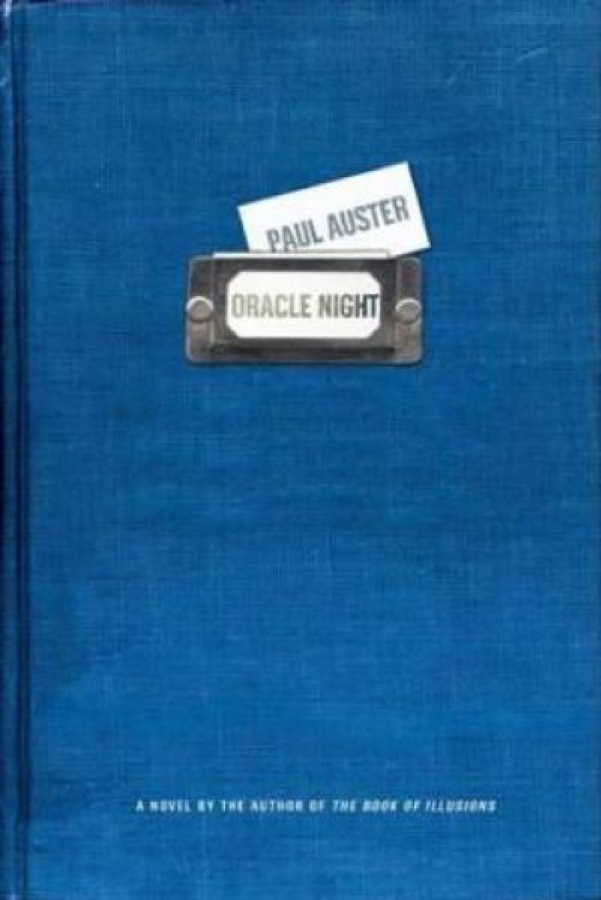
Oracle Night
The protagonist is a writer slowly emerging from a serious illness. On his daily walks, he enters a stationery shop, run by a Chinese man, and buys a notebook. He begins writing once more, but above all, a sequence of events is set in motion—some actually lived, others imagined and the product of illusions. Is the notebook magical? Does it possess the power to reveal what the writer had not previously realized? For example, the protagonist's wife is expecting a child, yet she does not seem happy: but is the child truly his own, or the result of an affair between his wife and an old family friend? The conclusion is not unequivocal, because reality is entirely an illusion, and it is always difficult, if not impossible, to know the truth. Like other novels by this author, the reading moves swiftly, aided on the one hand by a linear, elegant style, and on the other by a spare language that leaves no room for the use of difficult words. Yet a certain intellectualism always prevails, which in the long run makes the book heavy going.

The Ear of Kiev
In 1919, Kyiv was contested by multiple forces: Anton Denikin’s White Army, backed by the Entente, sought to overthrow the Bolsheviks; the Cossacks under the leadership of the *otaman* Symon Petliura fought for Ukraine's independence; the Red Army struggled to halt counter-revolutionary actions and repel Polish claims over Galicia. Although the novel is set in a specific historical moment, the narrative seems suspended in a timeless world, projected into a despotic reality dominated by disorder and violence—as though conflict, devastation, and crime were the inexorable, immutable hallmark of the borderlands between the West and Greater Russia. A bloody act initiates the tale: the very saber that had killed his father severs clean off the right ear of young Samson; an ear that the boy miraculously manages to retrieve and place inside a candy tin. Samson is frightened and disoriented; left alone, he manages to carry on in a city deprived of heating and food, where everyone’s life hangs by a thread amidst abuses and killings. At that moment, Kyiv is controlled by the Red Army, and it is astonishing how ordinary life persists, and how the new authorities strive to prosecute thefts and murders (even though the "investigators of old" are gone), expend energy taking a census of the population ("three hundred questioning the residents"), persevere in the meticulous bureaucracy of the Tsarist regime (yet paper is running out!), and ensure the supply of electricity, even as the firewood is nearly exhausted. > This is the cacophony of the revolution: too many weapons around, zero security, and a hundred times more bandits and robbers! (...) All that remains are the signatures on the official reports! It is precisely bureaucracy that saves young Samson, providing not only a daily meal, but also a purpose to his solitary life. He turns to the militia to protest the requisition of his furniture, particularly his father’s desk, where he had stored the candy tin containing his ear. The fine penmanship and lucid phrasing of his formal complaint lead to his hiring in the investigative department. And from here unfolds a thriller, as young Samson is determined to discover the perpetrators of an atrocious crime. The police investigation intertwines with a love story; a census worker comes to live with Samson, yet between them there is only a whisper from the young man, "Marry me"—a word timidly uttered while the young woman sleeps, or pretends to sleep. With a touch of irony, Kurkov writes how > the closeness, unhurried by any passion, breaks the loneliness of young Samson, who feels in his dreams like > an exhausted hero, (...) while a half-naked nymph watched over him. The skillful plot and nimble prose cannot conceal the weaknesses of the thriller, and above all do not spare the reader a sense of disappointment. From the title, one would expect the severed ear to be at the very center of the novel. Through the ear, by some miraculous phenomenon, young Samson can hear from afar, distinct and precise, the intrigues and dangers looming over him. Yet this conceit is never fully exploited; and this is because the author has no intention of resorting to magical elements, choosing instead to remain firmly rooted in a narrative realism, which in turn is laden with a "melancholy anticipation" of something that might alter Ukraine's destiny. Why read it? With gentle irony, it recounts the fraught, agonizing history of Ukraine.
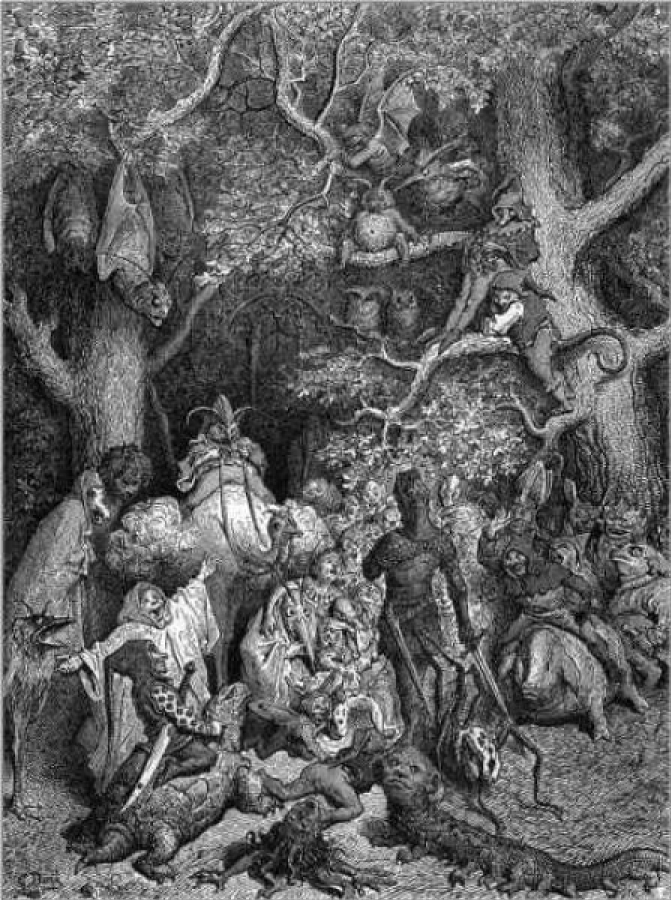
Orlando Furioso
The poem narrates the events of the war between Charlemagne and the Arabs, tracing the journey of Ruggiero, progenitor of the House of Este, toward the Christian faith and his allegiance to the Carolingian king. Alongside Ruggiero, the stories of the other characters unfold, weaving innumerable tales—some grafting onto the main plot, while others appear as seemingly random digressions. From reading the poem, an immensely enjoyable and engaging experience, several salient considerations emerge: its modernity. The relentless pace of the narrative, the closing of each Canto (leaving anticipation for what will follow in the next), the interweaving of diverse storylines (reminiscent of a soap opera), the delight in imagination and marvelous, incredible events (an extraordinary succession of special effects). *Orlando Furioso* stands as a precursor to the prevailing approach in literature and cinema, offering tangible proof of how narrative quality can evoke and construct scenes and settings within the mind—unlike contemporary cinema, which demands a passive spectator. A close reading of *Orlando Furioso* through a modern lens would provide valuable material for reflecting upon and re-evaluating contemporary literature and cinematic production; the pleasure of the imagination. In *Orlando Furioso*, critics have often detected an ironic stance on the author's part toward chivalric literature: the renowned Ariostean irony. In my view, however, what strikes one above all is the primacy of illusion and imagination. Throughout the poem (especially in the first thirty cantos), one senses how much the author relishes creating fantastical, paradoxical, and extraordinary situations. And it is precisely from this pursuit of delight (of writing as an escapism for oneself) that the freshness and originality of the entire work spring; woman and femininity. The true protagonists of the poem are women, who consistently exhibit a strong, distinctively feminine character. Consider the figures of the warrior women (Bradamante and Marfisa), who, despite far surpassing men on the battlefield, display a sense of care and affectionate feelings that are quintessentially feminine. Angelica’s very choice to marry an obscure shepherd over Orlando, driving the latter into madness, seems to underscore the contradiction between the depth of female sentiment and the underlying vacuity of male conduct (dominated by pride and a rigid code of honor). The author clearly takes the women’s side, often overtly, and at other times allowing his preference to emerge through the characterization and the flow of events; realism toward politics. One often speaks of Ariosto’s discretion in avoiding burdening the poem with his personal circumstances and ideas. Despite this reticence, it is evident that Ariosto held a realistic and melancholic—yet not cynical—view of the Italian situation, and specifically of the rulers' inability to resolve the country’s fragmentation and its resulting subjugation to foreign powers. In this sense, Ariosto’s perspective as a "public official" surfaces beyond the author’s explicit intentions, offering a glimpse of a figure of profound stature who, unlike Machiavelli, confronts the subject of politics with realism, yet also with profound civic passion. It is therefore likely that the characters and their fates also symbolize political ideas, thus embodying messages that remain to be deciphered. The literary style is exquisite, with verse clearly derived from Petrarch, yet undoubtedly more accessible to read. Perhaps it is precisely this harmonious rhythm that renders it at times somewhat repetitive, especially when the events and the narrative pace fail to hold the reader’s undivided attention.
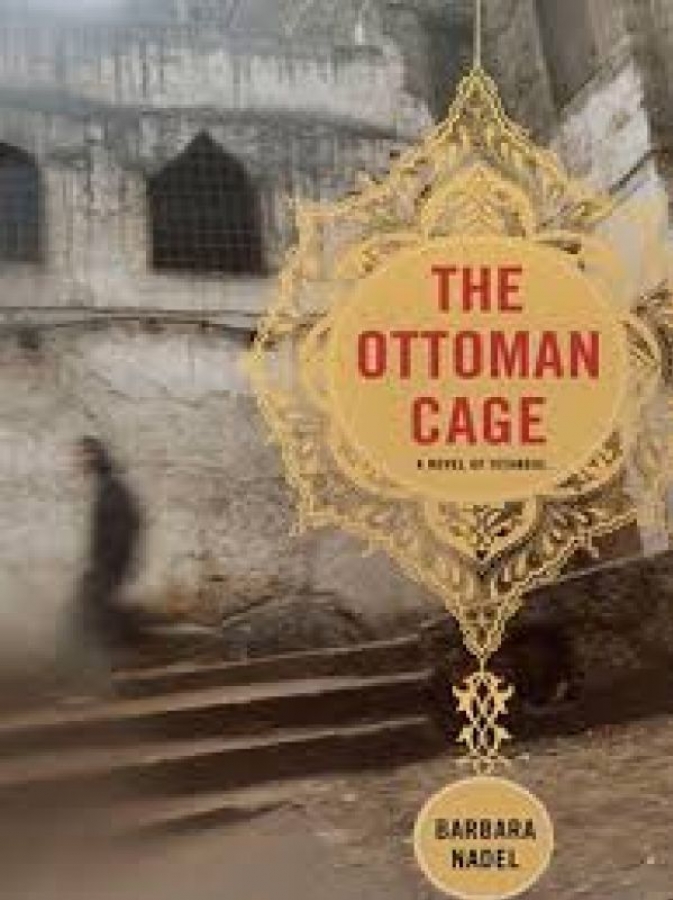
The Ottoman Cage: a novel of Istanbul
A body is found in an old, typically wooden building adjacent to the Topkapi Museum, in Istanbul. It is a young man, kept locked away for years, sedated by the constant use of drugs. He is uncircumcised, and the apartment’s tenant is described by the neighbors as a reserved Armenian gentleman. Everything points to a crime within the Armenian community, but > the inhabitants of Istanbul are not known for their predilection for simple things . A difficult investigation begins. Leading it is Inspector Ikmen: a typical modern Turk, secular, seemingly broad-minded, but in fact deeply attached to tradition. Devoted to his work and to frequenting bars at night, he neglects his large family and his sick wife. Despite her serious condition, he has left his father in her care, now ravaged by senile dementia. The coroner, and Ikmen’s best friend, is a well-to-do Armenian physician, while his primary colleague on the police force is Jewish. It is a mixture of communities that reflects the history of Istanbul, with the distinction that Armenians, owing to the 1915 genocide, are > somehow a special case, even compared to the other non-Turkish communities . This distinction is called distrust. Can an Armenian be trusted, even if he has been a friend and colleague for years? Or is it true, instead, that the bond among Armenians is stronger than friendship and the institutional role one holds? Alongside the investigation, which progresses through unexpected revelations, the novel deals with cooperation among people belonging to different cultures, histories, and religions. Only if institutional loyalty takes precedence over clan solidarity is there any guarantee that freedom can exist. As Ikmen says > we who have chosen to serve the law must put it first, ahead of our personal feelings , because as long as “there are men like us, the ‘others’ cannot really take control.” It is a well-crafted noir. The author unravels the clues with skill, albeit with a narrative pace devoid of suspense, at times tedious. Alongside the main plot, the personal affairs of the various protagonists unfold. In particular, the narrative lingers on the figure of Ikmen. His indifference toward his wife makes him genuinely unsympathetic, beyond the emblematic function the author seems to assign him: that of modern Turkey’s contradiction between East and West. The inclination to dwell on sexual perversions and the trite, predictable ending compromise the quality of a novel that is, in other respects, well written. Why read it? It is a good noir.
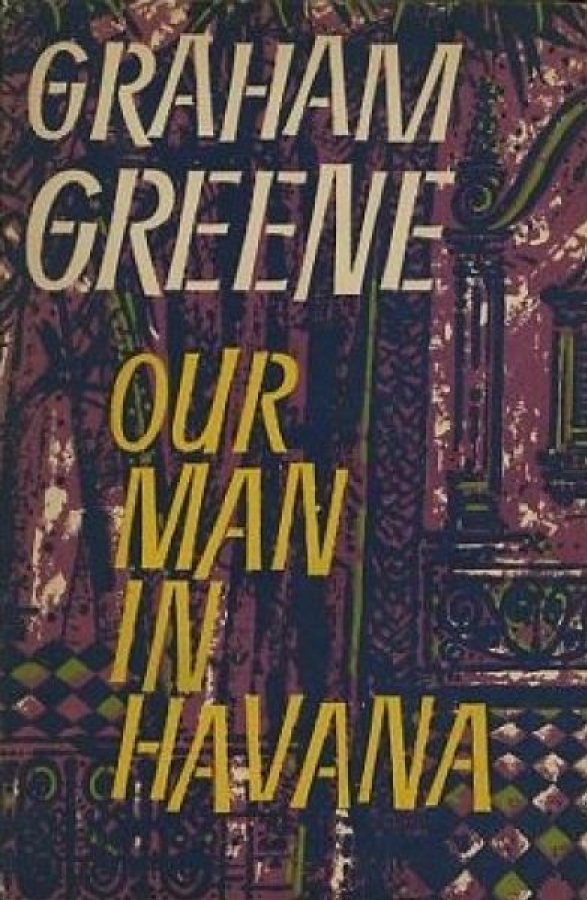
Our Man in Havana
The novel is set in Cuba in the period immediately preceding the revolution. The protagonist, a vacuum cleaner salesman (business is bad) and a widower with a fourteen-year-old daughter, is recruited by British intelligence as an agent in Havana. Enticed by the money, the protagonist fabricates a fictitious network of spies and invents a stream of reports, which are, of course, utterly false. Given the importance his operation assumes, London dispatches two agents to support him, among whom is Beatrice, with whom the protagonist falls in love. The narrative unfolds around this paradoxical premise, satirizing the machinery of espionage. Even when unmasked, the protagonist will be offered a position within the organization, as admitting a mistake is out of the question and, in any case, some grain of truth might still reside in the intelligence provided, blatantly fabricated though it is. Graham Greene himself placed this novel in the category of "entertainments," and this classification has undoubtedly influenced critics and readers in their interpretation of the book: a mockery of the world of espionage and an indictment, albeit framed as satire, of its tendency to distort reality (a remarkably timely subject). In truth, if one reads the novel outside this interpretive framework, other thematic layers emerge: the imaginary world forged by the protagonist (a web of spies and false reports) sets in motion a sequence of events, some of them tragic, that destroys the peace and the bonds of friendship that had defined his life. Furthermore, the latter acts by prioritizing familial devotion (providing his daughter with a prosperous future) over the demands of politics and the values of allegiance to one's country. What emerges is the contradiction between "genuine" values, formed by friendship and family ties, as opposed to "false" ones > , represented by a sense of belonging to abstract entities, such as the nation and ideologies. In the epilogue Beatrice, in truth the only genuinely positive character in the novel, explains to her superiors that even had she known, she would not have stopped the protagonist, because he was working for something important, not for someone's conviction about a global war that might never happen... and what does one's country mean anyway: a flag that someone invented two hundred years ago." The most significant limitation, which renders the label of "entertainment" appropriate, lies precisely in the figure of the protagonist, who seems not to realize what he has created, passively enduring events and leaving it to others to create and resolve problems. This is a passive attitude, which at times renders the novel monotonous and predictable. The style is highly effective, closely tied to dialogue, with a sentence structure displaying clear cinematic hallmarks: the English is classic.