
Kang Han
Books by this author (1)
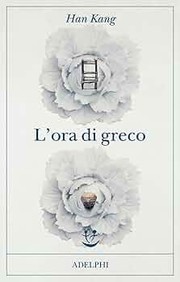
Greek Lessons
In the first canto of the *Paradiso*, Dante uses the word “trasumanar” to denote that transcending of human limits without which it would be impossible to contemplate God in all His power; then, as we read this cantica, we discover that the journey through the various Heavens will be a transformation of sight and hearing, so as to endure the light and sounds of the Empyrean. But what if, instead, reconciliation with oneself and with others took place along an inverse path, through silence and blindness? Since childhood, for the protagonist of this novel > the most mundane sentence revealed, with the transparency of crystal, perfections and imperfections, truth and deceit, beauty and ugliness. She felt ashamed of those sentences, which unraveled white as spiderwebs from her hands and her tongue. Divorce and the loss of custody of her son fling her into silence: > it is a cold, rarefied silence, like a shadow deprived of its own body, like the hollow trunk of a dead tree, like the dark space between one meteor and the next. The male protagonist, on the other hand, grew up in Germany and was diagnosed with the gradual, inexorable loss of his sight; he has returned to Korea, where he teaches Ancient Greek to a handful of students, among whom is our protagonist. Through the Greek language, the author seems to invoke Plato's Allegory of the Cave: in this famous allegory, the prisoners see nothing but shadows cast by the fire onto the wall of the cave facing them, believing these visions to be real objects, just as they take the echoes from passersby outside the prison to be real. Were these prisoners to leave the cave, they would discover that those objects and voices were mere illusions; we are condemned to an eternal obfuscation by our senses, philosophy will not save us, and reconciliation will not be attained through sight and hearing, through Dante's noble senses. The encounter will occur only when we entrust ourselves to the other senses, just as our protagonists seem to do: > with eyes closed, he brushes his cheek against her face, (...) kisses her mouth. The wet hair behind her ears, the eyebrows. Like a faint response coming from afar, the cold fingers brush his eyebrows and vanish. (...) Hearts and lips touching, united and eternally separate. How often have I thought that our enormous, complex brain is a superstructure weighing down on human relationships like a boulder; that animals are happier in their naive immediacy. Perhaps this is what this novel means to say, placing Plato’s language at its core and recounting the strange story of a woman and a man who will ultimately love each other without speaking or seeing one another. Or perhaps it is simply too difficult for us Westerners to understand a novel from a culture and language so distant from our own. It is probable that the author intended to say something else, but this is what I seemed to grasp. Han Kang has enjoyed massive editorial promotion since winning the Nobel Prize. Reading this short novel, one cannot help but wonder whether this fame is due to actual literary quality or rather to an exotic taste, to the desire to discover an as yet unfamiliar country such as Korea. This question arises naturally in light of the lack of distribution of the novels of László Krasznahorkai**, of far greater depth and quality. (see the review of *The Melancholy of Resistance* on this site).** **Why not read it? Extremely difficult to understand.**