Finished reading on: June 22, 2014
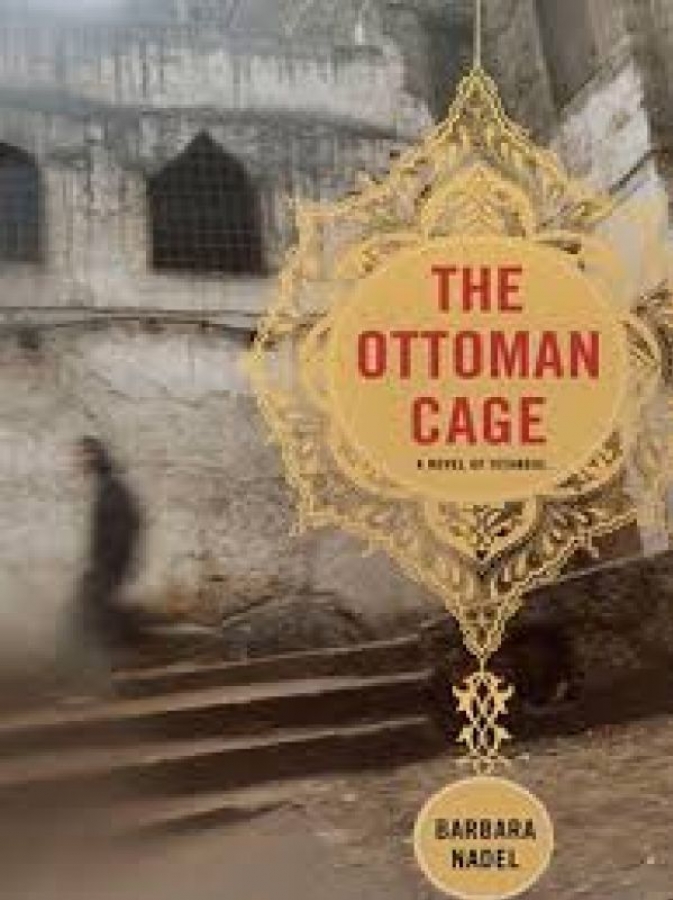
The Ottoman Cage: a novel of Istanbul
AI Translation Notice: This review was translated from the original Italian using artificial intelligence. Book quotes and excerpts are translated interpretations and will not match the author's original English phrasing or official published translations.
A body is found in an old, typically wooden building adjacent to the Topkapi Museum, in Istanbul.
It is a young man, kept locked away for years, sedated by the constant use of drugs.
He is uncircumcised, and the apartment’s tenant is described by the neighbors as a reserved Armenian gentleman.
Everything points to a crime within the Armenian community, but
the inhabitants of Istanbul are not known for their predilection for simple things
.
A difficult investigation begins.
Leading it is Inspector Ikmen: a typical modern Turk, secular, seemingly broad-minded, but in fact deeply attached to tradition.
Devoted to his work and to frequenting bars at night, he neglects his large family and his sick wife.
Despite her serious condition, he has left his father in her care, now ravaged by senile dementia.
The coroner, and Ikmen’s best friend, is a well-to-do Armenian physician, while his primary colleague on the police force is Jewish.
It is a mixture of communities that reflects the history of Istanbul, with the distinction that Armenians, owing to the 1915 genocide, are
somehow a special case, even compared to the other non-Turkish communities
.
This distinction is called distrust.
Can an Armenian be trusted, even if he has been a friend and colleague for years? Or is it true, instead, that the bond among Armenians is stronger than friendship and the institutional role one holds? Alongside the investigation, which progresses through unexpected revelations, the novel deals with cooperation among people belonging to different cultures, histories, and religions.
Only if institutional loyalty takes precedence over clan solidarity is there any guarantee that freedom can exist.
As Ikmen says
we who have chosen to serve the law must put it first, ahead of our personal feelings
, because as long as “there are men like us, the ‘others’ cannot really take control.”
It is a well-crafted noir.
The author unravels the clues with skill, albeit with a narrative pace devoid of suspense, at times tedious.
Alongside the main plot, the personal affairs of the various protagonists unfold.
In particular, the narrative lingers on the figure of Ikmen.
His indifference toward his wife makes him genuinely unsympathetic, beyond the emblematic function the author seems to assign him: that of modern Turkey’s contradiction between East and West.
The inclination to dwell on sexual perversions and the trite, predictable ending compromise the quality of a novel that is, in other respects, well written.
Why read it? It is a good noir.