Finished reading on: May 26, 2006
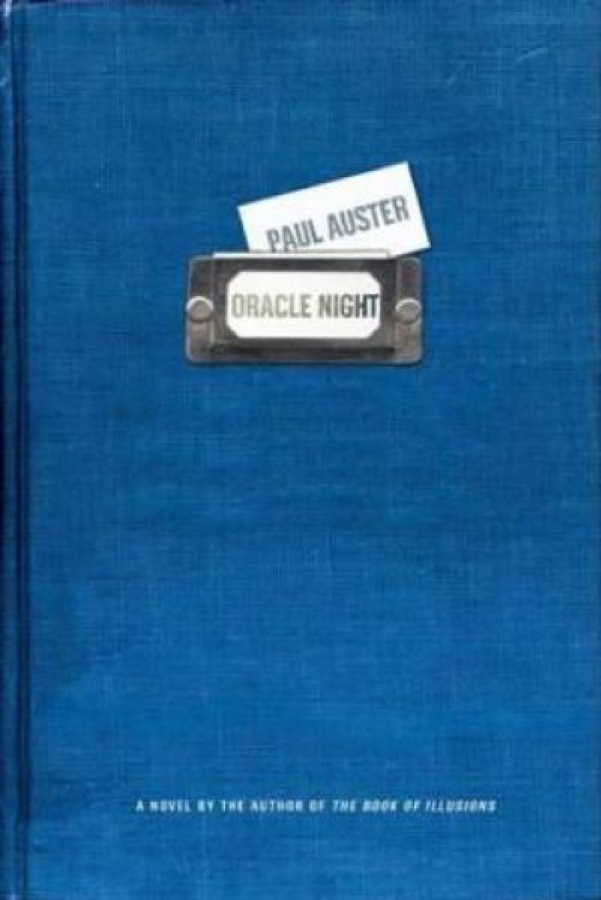
Oracle Night
AI Translation Notice: This review was translated from the original Italian using artificial intelligence. Book quotes and excerpts are translated interpretations and will not match the author's original English phrasing or official published translations.
The protagonist is a writer slowly emerging from a serious illness.
On his daily walks, he enters a stationery shop, run by a Chinese man, and buys a notebook.
He begins writing once more, but above all, a sequence of events is set in motion—some actually lived, others imagined and the product of illusions.
Is the notebook magical? Does it possess the power to reveal what the writer had not previously realized? For example, the protagonist's wife is expecting a child, yet she does not seem happy: but is the child truly his own, or the result of an affair between his wife and an old family friend? The conclusion is not unequivocal, because reality is entirely an illusion, and it is always difficult, if not impossible, to know the truth.
Like other novels by this author, the reading moves swiftly, aided on the one hand by a linear, elegant style, and on the other by a spare language that leaves no room for the use of difficult words.
Yet a certain intellectualism always prevails, which in the long run makes the book heavy going.