Paul Auster
Books by this author (4)
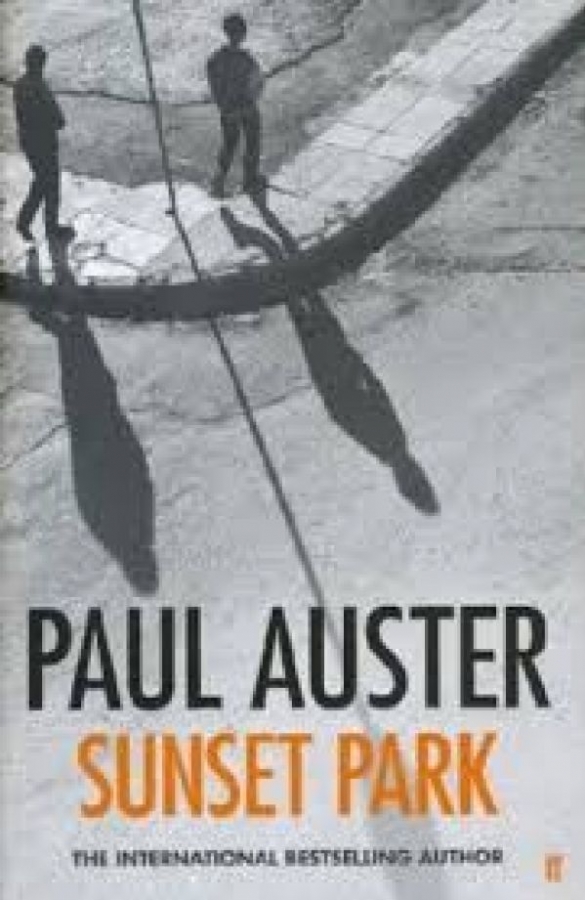
Sunset Park
Morris Heller, the protagonist’s father, is on an airplane watching an old Hollywood film (*The Best Years of Our Lives*), which deals with soldiers returning home from the Second World War and having to rebuild their lives; and what an old friend, a well-known writer, once told him comes to mind: > the idea he is toying with is to write an essay about things that do not happen, about the unlived lives, the unbought wars, the shadow world that runs parallel to the world we take to be real, the unsaid and the undone, the unremembered. A hazardous territory, perhaps, but it might be worth exploring . Miles Heller, Morris’s son, has a passion for photographing the belongings abandoned by those forced to vacate their homes in haste following an eviction notice. He has no plans, no hopes; “piece by piece” he has reduced his desires to a bare minimum. Why does a young man in his twenties, once a brilliant student, lead such an empty life? He is fleeing from guilt, from an existential malaise he cannot bring himself to confess: he is convinced he killed his stepbrother by pushing him under a car. What drove him to disappear was an exchange he overheard between his father and his stepmother. > He is a brilliant boy, I admit it. But cold, fragile, desperate, it chills me to think about his future. (...) They were cutting him to pieces. Carving him up with the calm, efficient strokes of pathologists at an autopsy, talking about him as if he were already a dead man walking. (...) Perhaps the best thing for everyone would be to remove himself from their lives, to disappear . His suffering runs so deep that he cannot even open up to a young girl with whom he has fallen deeply in love. He met her by chance because both were reading *The Great Gatsby*, the emblematic novel of a forceful personality. For a few pages, we hope that Miles might find in love the resolution to his anguish, regain his serenity, and be happy. Yet he is forced to leave Florida in a frantic rush and return to New York, as he faces potential charges of statutory rape—his girlfriend has not yet reached the age of majority. He accepts an invitation from a friend (Bing Nathan), who repairs all kinds of objects in a sort of “Hospital for Broken Things” and has taken up residence in an abandoned house alongside two young women: Ellen and Alice. The narrative then shifts its focus to the stories of the other characters, just as it traces the lives of Miles’s parents: his father, his stepmother, and his mother. We discover that each of them harbors an inner suffering, an unsaid and an unremembered: something they are incapable of expressing, acknowledging, or admitting. As the narrative progresses, glimpses of light and prospects of hope seem to emerge: Miles gets in touch with his parents and finally confesses the reasons for his flight, seemingly freeing himself from his feelings of guilt. Then everything plummets once more. During the eviction of the squat by law enforcement, Miles lashes out, striking an officer. Facing prison, he could turn himself in, yet chooses flight instead. > He wonders if it is worth hoping for a future when there is no future, and from now on, he tells himself, he will stop hoping for anything and live only for today, this moment, this passing instant, the today that is here and not here, the now that is gone forever . Why? Perhaps we can never truly rid ourselves of the anguish within us; perhaps existence can only be endured by retreating into the mundanity of everyday life. As in much of Auster’s fiction, an intellectualist imprint prevails; behind the characters’ refined psychology emerges a sense of contrivance, as though they were mere extras in an abstract line of reasoning, sealed within the author’s mind and largely detached from the actual mechanics of life. Indeed, Miles, Bing, Ellen, Alice, and the rest are not the true subject of the tale: in the background lies New York, the cultured and refined milieu of intellectuals—an enclosure beyond which lies the real world, the one of which Auster either cannot or will not speak. The narrative style is marked by sprawling periods in which commas separate clauses that are grammatically complete in their own right. It flows like a river in spate, a relentless succession of words and syntactic structures; at first captivating and highlighting the author’s undeniable skill, but gradually growing tedious, turning the story into an extended soliloquy: is it Auster speaking? Is it an essay, or a novel? Why not read it? Beautiful at first, it ultimately turns dull.
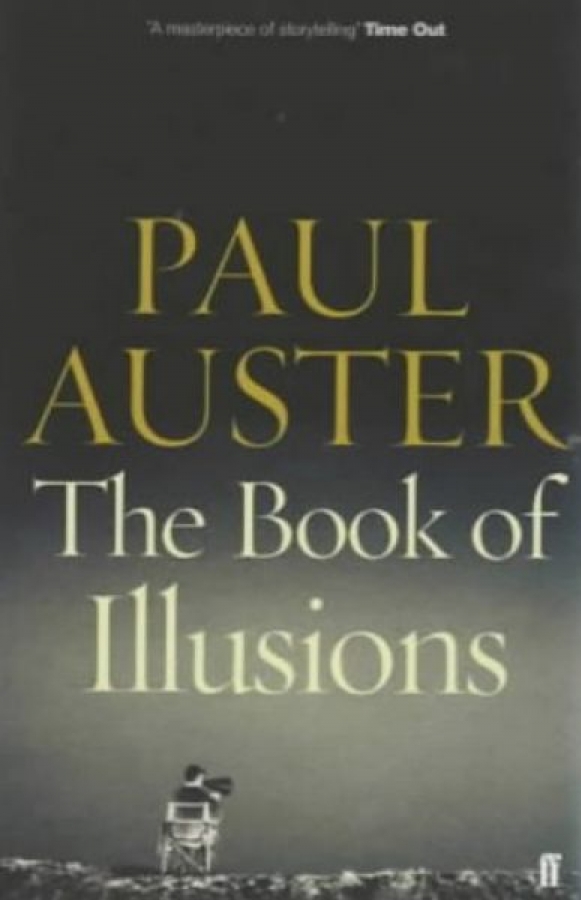
The Book of Illusions
The protagonist loses his wife and children in a plane crash. To escape despair, he writes the biography of a silent-film actor who had vanished without a trace. Tracked down by Alma, with whom he falls in love, he learns that the former actor lives on a farm, where he has continued to make films that he has resolved to destroy upon his death. The protagonist reaches the country house to witness the former actor's death, manages to watch one of the films that had been produced, and then stands by as a spectator to the fire that destroys the entirety of the cinematic works. The narrative concludes tragically with Alma’s death. It is a complex novel, in many respects intellectualized and erudite, unfolding through paradoxical events around two philosophical and existential themes: the world is entirely an illusion, where the boundary between what is real and what is fiction or the product of our imagination remains blurred; and destruction—death—is the arbitrary outcome of the illusion in which we live. The theme of illusion is personified by the former actor Hector: his origins are unknown, and he does everything to keep them obscure; he leads a double life in love that ends tragically; he is perpetually on the run, pretending to be someone else and fabricating situations until finally secluding himself in the countryside to produce cryptic films destined never to be shown in theaters. The theme of destruction, of tragedies overwhelming human lives, of inexplicable events, is embodied in the very plot of the book and in the protagonist's torments. > It is a book of fragments, a gathering of nostalgias and dreams only partially remembered . The book is very well written, in a pleasant and fluid style. Yet there is an intellectualist undercurrent that frequently renders the narrative pace cumbersome and redundant.
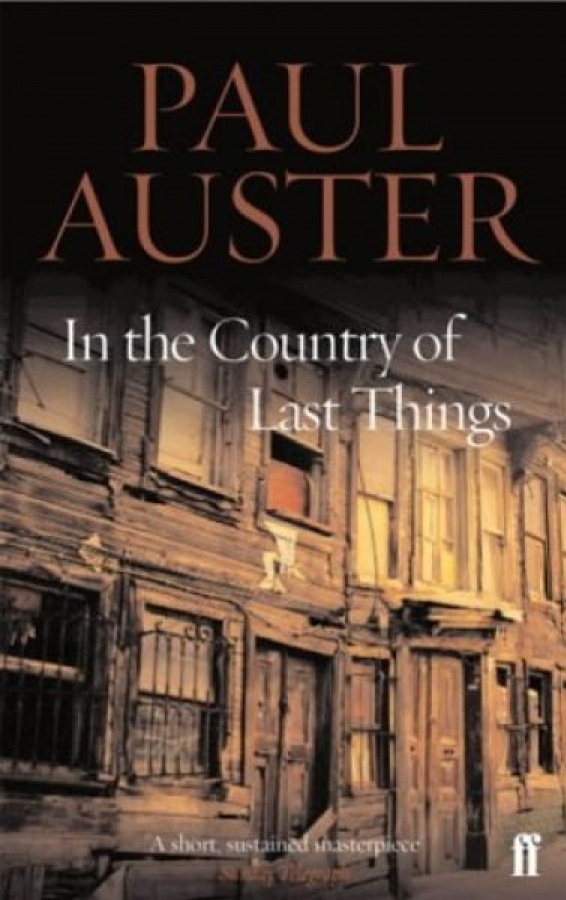
The invention of solitude
This is a book about memory, which is like > a place, a sequence of columns, cornices, porticoes. The body inside the mind, going from one place to another, and the sound of our footsteps as we walk, moving from one place to the next . The occasion to address memory arises from the death of the author’s father (the first part of the book): a man who had always lived a solitary life, not physically, but because he was somehow detached from everything taking place around him. The writer recounts his father’s life, evoking various episodes and tracing back as far as the murder of his grandfather by his father’s mother. What emerges is how memory constitutes an assemblage of fragments and images one strives to preserve: “the anecdote as a form of knowledge.” Can writing about a loved one bring them back to memory, enabling us to know them better and to know ourselves better? The book is also the search for a father never truly known to the depths of his being, the chronicle of a profound nostalgia, but also of a discovery. > The rampant, totally mystifying force of contradiction. I understand now that each fact is cancelled out by another fact, that each thought brings with it another and opposite thought. Impossible to say anything without reservation . Like all of Auster’s books, it is written in an elegant and lucid English, set within a paradoxical context that delves deep into emotions and states of mind, verging on philosophy.
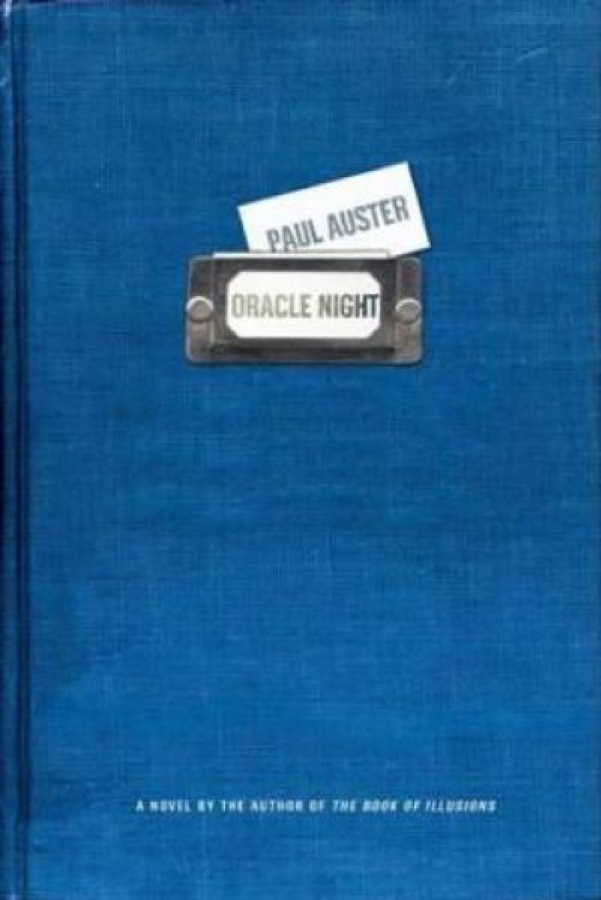
Oracle Night
The protagonist is a writer slowly emerging from a serious illness. On his daily walks, he enters a stationery shop, run by a Chinese man, and buys a notebook. He begins writing once more, but above all, a sequence of events is set in motion—some actually lived, others imagined and the product of illusions. Is the notebook magical? Does it possess the power to reveal what the writer had not previously realized? For example, the protagonist's wife is expecting a child, yet she does not seem happy: but is the child truly his own, or the result of an affair between his wife and an old family friend? The conclusion is not unequivocal, because reality is entirely an illusion, and it is always difficult, if not impossible, to know the truth. Like other novels by this author, the reading moves swiftly, aided on the one hand by a linear, elegant style, and on the other by a spare language that leaves no room for the use of difficult words. Yet a certain intellectualism always prevails, which in the long run makes the book heavy going.