John Fante
Books by this author (5)
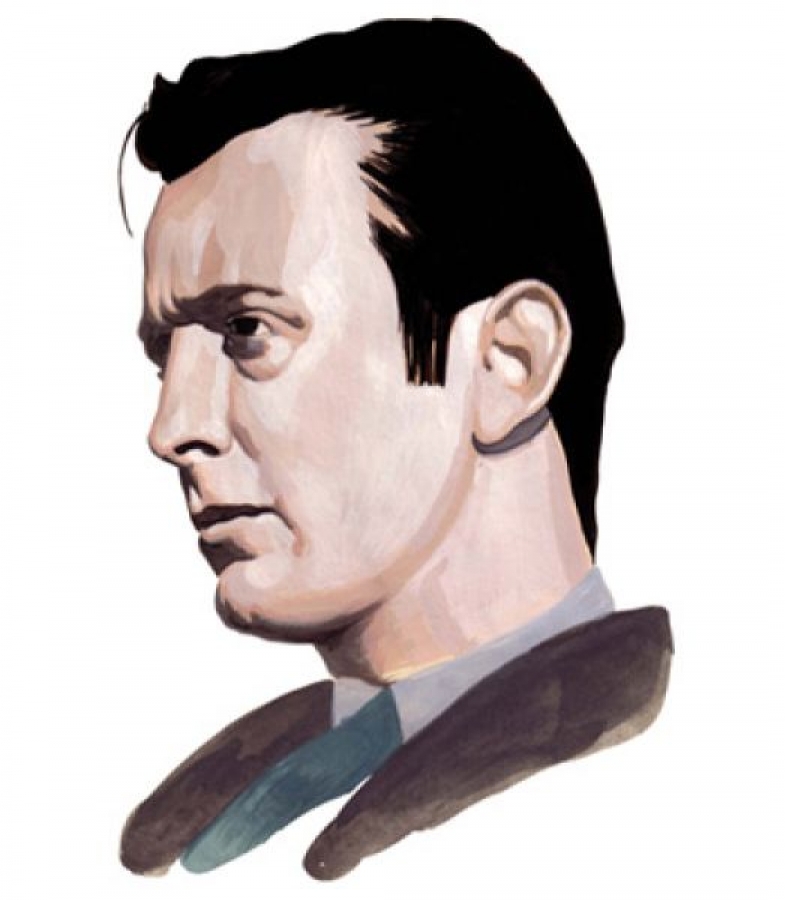
One of us and Home, sweet home
These are two short stories which, as is customary for Fante, are set within the milieu of the typical Italian family. In the first story, a telegram arrives announcing the death of a cousin, a boy who had been a childhood playmate of Mike, one of the family’s many brothers. A deeply humorous scene unfolds: while the mother weeps for the grief of her sister, who has lost a son, the boys fight over the telegram to the point of tearing it to pieces, thereby opening a dispute over how the cousin died and when the funeral will be held. The scene shifts to the funeral, attended by the mother, Mike, and his younger brother, the narrator. What strikes the boys is that the uncle does not weep for the death of his son, whereas all the relatives, particularly the women, unleash a flurry of wailing and shrieks. Mike, in particular, is afraid to approach his uncle, fearing that his resemblance to the dead cousin might make him the target of resentment. Yet it is precisely the sight of Mike—of what his own son might have been—that breaches the solitude of grief and moves the uncle to tears: > they sat there. Mike greedily sipped a milkshake, and Uncle Frank sat opposite him, his face in his hands, large tears sliding down his cheeks and dropping onto the table as he watched Mike and his milkshake . In the second story, Jimmy returns to his parents' home, which he had left after a stormy quarrel with his father. Once again, the portrait of a classic Italian family emerges: the mother has prepared a fine dinner with the sweets Jimmy loves, hoping that all will go well, without fights or arguments; the father pretends to have forgotten, unemployed, heading off to the tavern after dinner as he does every evening; the siblings greet their older brother enthusiastically, yet inevitably settle back into the everyday routine from which Jimmy now feels alienated. The conclusion cannot be otherwise: > I’ll get up and throw away the cigarette, and I’ll want to be with her (his girlfriend), not here, in this goddamned insignificant town forgotten by God . The stories, particularly the first, are very fine. The style is quintessentially Fante’s: elegant, tender, and effortlessly fluid.
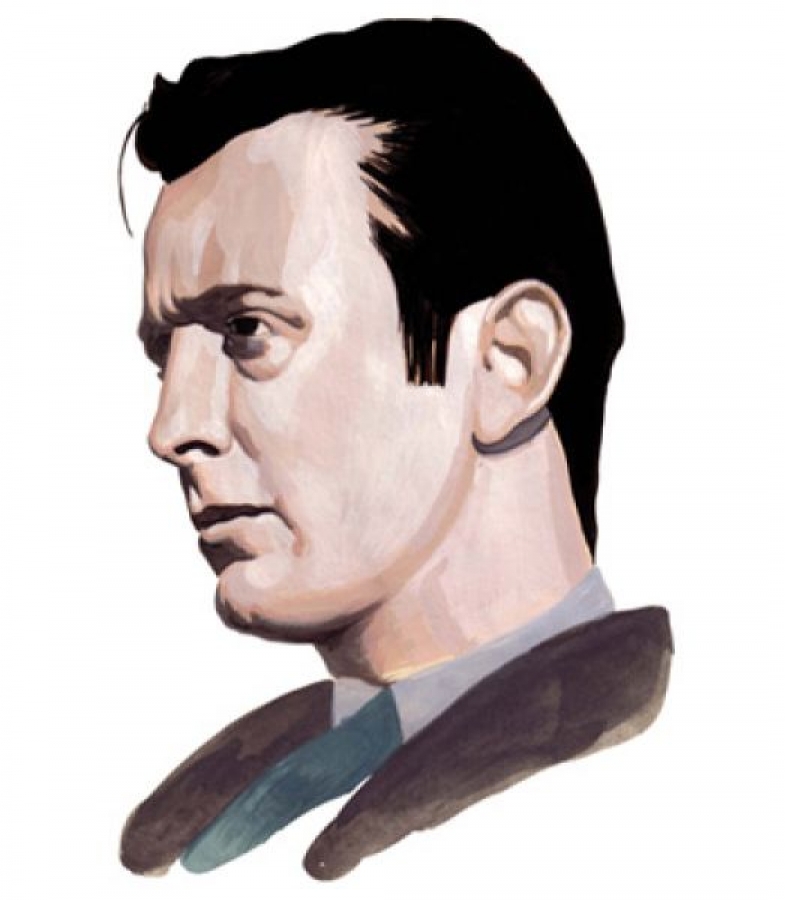
The road to Los Angeles
It is the second book of the Bandini saga. While the first book still revolves around the theme of the Italian family, rendered in a realistic style lacking in evocative resonance, this novel effectively abandons ethnic and folkloric references to chronicle the coming of age of an eighteen-year-old youth who reads voraciously and lives primarily through imagination and fantasy. The Italian family context is indeed present (the deeply religious mother and sister, an uncle who expects his nephew to shoulder his responsibilities), yet Arturo’s experiences are fundamentally those of any young man his age, compelled to reconcile labor—often grueling and alienating—with his own aspirations and dreams. The book’s first theme is rage, the urge to rebel against an unjust society, frequently expressed through acts of violence (superb is the scene where Arturo slaughters crabs, imagining himself an ancient knight), through diatribes against the Catholic religion, and in allusions to the great nineteenth-century philosophers. The second theme is the erotic realm, the pursuit of a connection with women, which inevitably passes through pornographic magazines and the solitude of his room. Truly extraordinary from a stylistic standpoint is the chapter in which the author recounts Arturo’s destruction of the photographs of the women he loves! The final theme, and perhaps the most important, is that of imagination—the dreams and fantasies bound up with Arturo’s ambitions, with his desire to feel like a great writer. And it is precisely the disappointment resulting from the reading of his first story that drives Arturo to flee his family and journey toward Los Angeles, and thus toward his own independence and maturity. Fante abandons the cold, realistic style that had characterized the first book, moving toward increasingly intense expressions and syntactic constructions, rich in evocative power. To the meaning of the word are added increasingly rich and nuanced "signs," generated by rhythm, phonetics, and the deployment of adjectives, often heightened by neologisms.
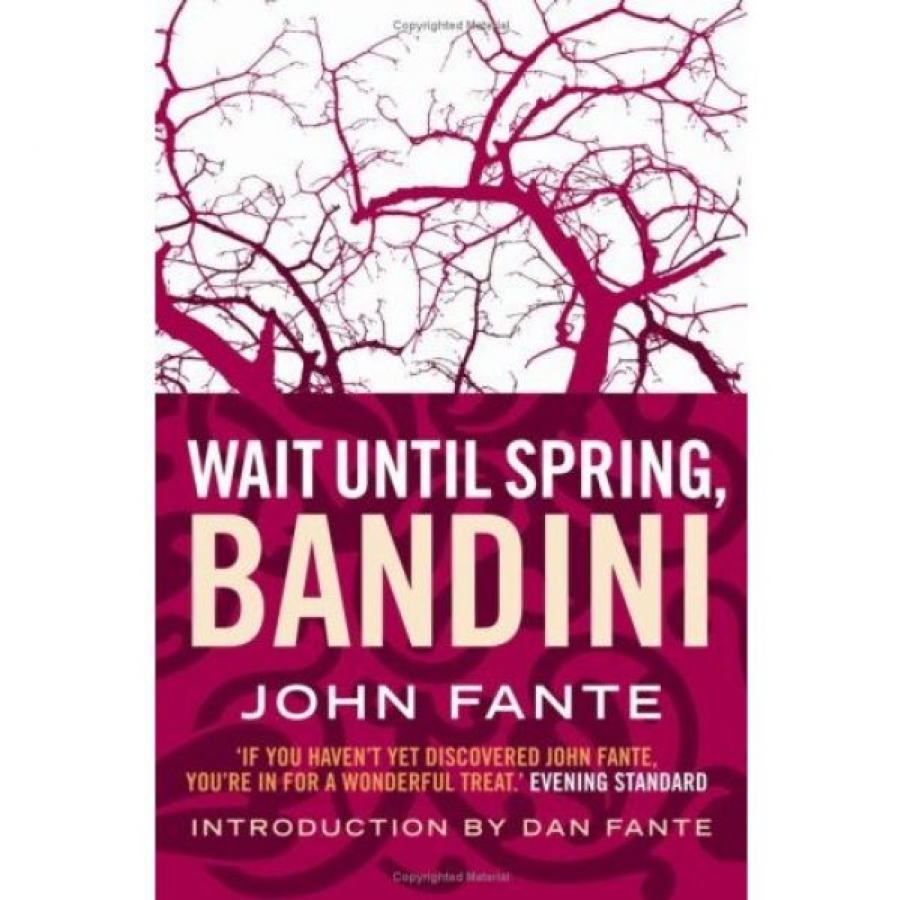
Wait until spring, Bandini
The story belongs to *The Bandini Quartet* saga, chronicling the fortunes of the Italian-American Bandini family, and of Arturo Bandini in particular. The setting is the family: a bricklayer father who is consequently unemployed during the long Colorado winters, a mother striving to maintain a sense of decency and a bare minimum of subsistence, and three sons, the eldest of whom, Arturo, must also shoulder the burden of his father’s frequent, drunken disappearances. In this already fraught domestic sphere, the father’s infidelity with a wealthy local woman triggers the mother’s breakdown; she sinks into prolonged bouts of depression and refuses to let her husband back into the home. It falls to Arturo to seek out his father and bring him back. The themes are those familiar to the author: family dynamics, the bond between son and parents, Catholic culture, and so forth. The narrative unfolds sluggishly, at times becoming tedious and verbose. The musical cadences that characterized the previous novel are absent here. Predictable tropes tied to Italian heritage and Catholicism often seem to dominate (for instance, guilt, recourse to confession, and rituals). The mother’s revolt—her defiance in the face of wounded dignity—emerges as a high point in the narrative and constitutes its finest pages. Another theme is Arturo’s coming-of-age, a journey inevitably accelerated by his mother’s fragility and his father’s absence.
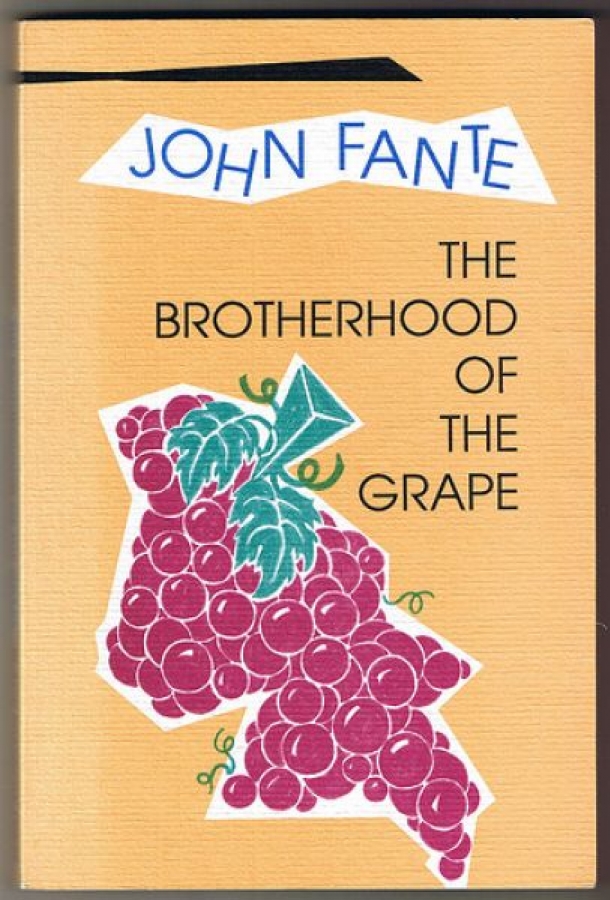
The Brotherhood of the Grape
Henry Molise is the son of a tyrannical, drunken father. Summoned by his siblings because their parents appear poised for divorce after yet another of the father’s abusive outbursts, Henry finds himself roped into helping his father build a small stone shed at an out-of-town motel. During the journey in the company of his father’s old friends and by working alongside him, Henry rediscovers, with horror, his own familial matrix and his affection for his father. The shed, scarcely finished, is destroyed by a windstorm, starkly demonstrating that the aging father, once a renowned and skilled craftsman, is no longer physically and intellectually capable of carrying out a job, however simple. At this point, the story hurtles to its crisis: the father falls ill, is hospitalized, and subsequently flees the hospital to die at the home of an old friend who owns a vineyard and produces excellent wine. The overarching threads of the book are fundamentally two: the familial context, from which Henry sought to escape, only to rediscover through this homecoming that he belongs to it indelibly. This familial context is composed not only of the characters (the mother, the siblings, the father’s friends and the barroom regulars, the neighbors who endure the father’s excesses), but also includes objects (above all, wine and food) and the memories of a childhood deeply shaped by Italian roots. *The Brotherhood of the Grape* is the setting of a series of primordial relations that forge profound bonds among men. Emblematic in this regard is the figure of Angelo Musso, a sublime winemaker deprived of speech, who represents a “Greek god” to the members of the brotherhood, and who, when Henry comes to retrieve his father to return him to the hospital, proclaims with wise fatalism: “it’s better to die drinking than to die of thirst” and “it’s better to die among friends than among doctors.” Evident here is a nostalgia for an ancient time in which the rhythm of life and the bonds between men were determined by an authentic wisdom; the relationship with the father, who shaped the lives of all his children without ever succeeding in fulfilling his desire to pass on his craft as an artisan. This is not merely a question of traditional bonds, forged of conflict and affection toward the paternal figure; the core of the narrative lies primarily in the trade of stone quarrying and masonry, handed down to the father by his parents. The children reject this trade, which has weighed heavily upon their lives. The father’s failure in his final endeavor exposes all his fragility and weakness, thereby reopening the relationship with his son, who rediscovers an affection and a bond with his parent, but also with his craft, which had been lost over time due to the presumed omnipotence of the paternal figure. The style recalls that of the great American writers, such as Faulkner and Chandler, yet it is grounded in the deliberate use of words, in their careful juxtaposition so as to articulate a poetic and musical rhythm. The meaning of the narrative emerges not so much from the plot, nor from character study and the description of settings, but above all from the sensations that arise from the sequence of words and sounds.
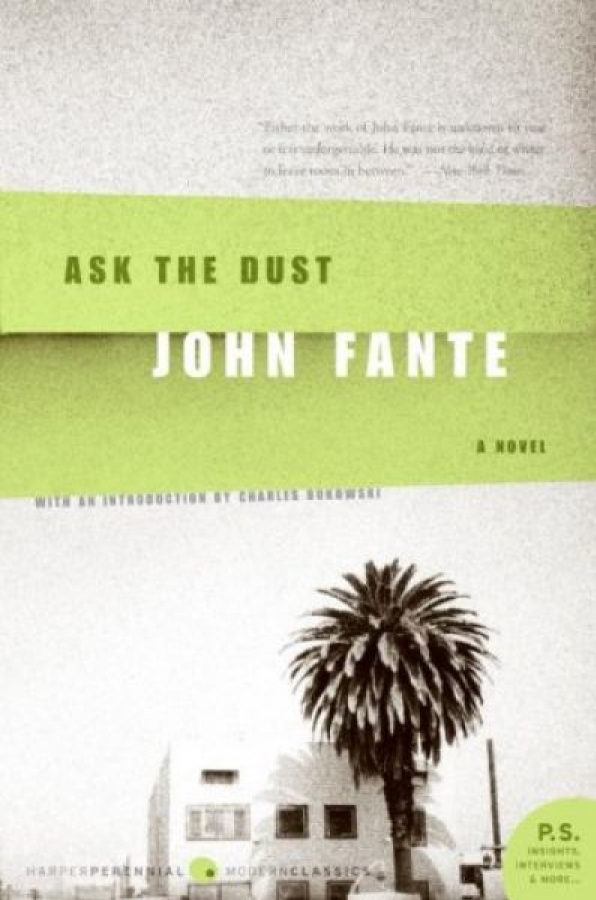
Ask the Dust
The third book of the Bandini saga represents a further transition, both in terms of narrative content and stylistic and expressive aspects. Arturo is in Los Angeles, where he scrapes by, trying to write and get his short stories published. At the outset, the novel retains the defining elements of its predecessor: a strong predominance of imagination, a narrative rhythm still grounded in subjective expression, and a style characterized by strong lyrical accents rich in evocative power. Arturo falls in love with Camilla, a Mexican girl who works in a bar, and embarks on a tormented love affair marked by verbal clashes, written notes from Arturo, and an outing to the seashore, during which the young man fails to translate his feelings into sexual consummation, despite the girl’s expectations. Arturo still lives in a sort of delirium, swinging between phases of exaltation and depressive states. However, an episode occurs (imagined or real?) that seems to mark the turning point in the novel’s narrative and stylistic structure: a woman seeks Arturo out to pursue a romantic affair with him. From this moment on, his relationship with Camilla is inverted: the girl turns to Arturo for help and confesses that she is in love with another man, who nevertheless does not want her. Arturo accepts the situation, not least because he has realized that Camilla is using drugs and he wishes to help her. A complex relationship unfolds, through which Arturo matures, coming of age as an adult. The young man wants to take her to a house by the sea, but Camilla flees and vanishes into the desert: > across the desert was an utter indifference, the rhythm of night and another day, and yet the secret intimacy of these hills, their mystery, secret and comforting, made death of no great importance. You could die, but the desert would hide the secret of your death, it would remain after you, to cover your memory with ageless wind and heat and cold…. I carried the book a hundred paces into the desert, toward the southeast. With all my strength I threw it far out there in the direction she had gone. Then I went to the car, started the engine, and drove back toward Los Angeles . Coming to grips with the reality of emotions, rather than merely the delirium of his own aspirations and fantasies, spurs Arturo’s transition from youth to adulthood. The style also evolves in this direction. It preserves its richness of language, with a sentence structure and a choice of words particularly attuned to phonetic qualities and the evocative power of rhythm. The style, however, becomes leaner, less lyrical and redundant; the narrative structure is distinguished by dialogues, previously virtually absent due to the lack of characters of significant weight.