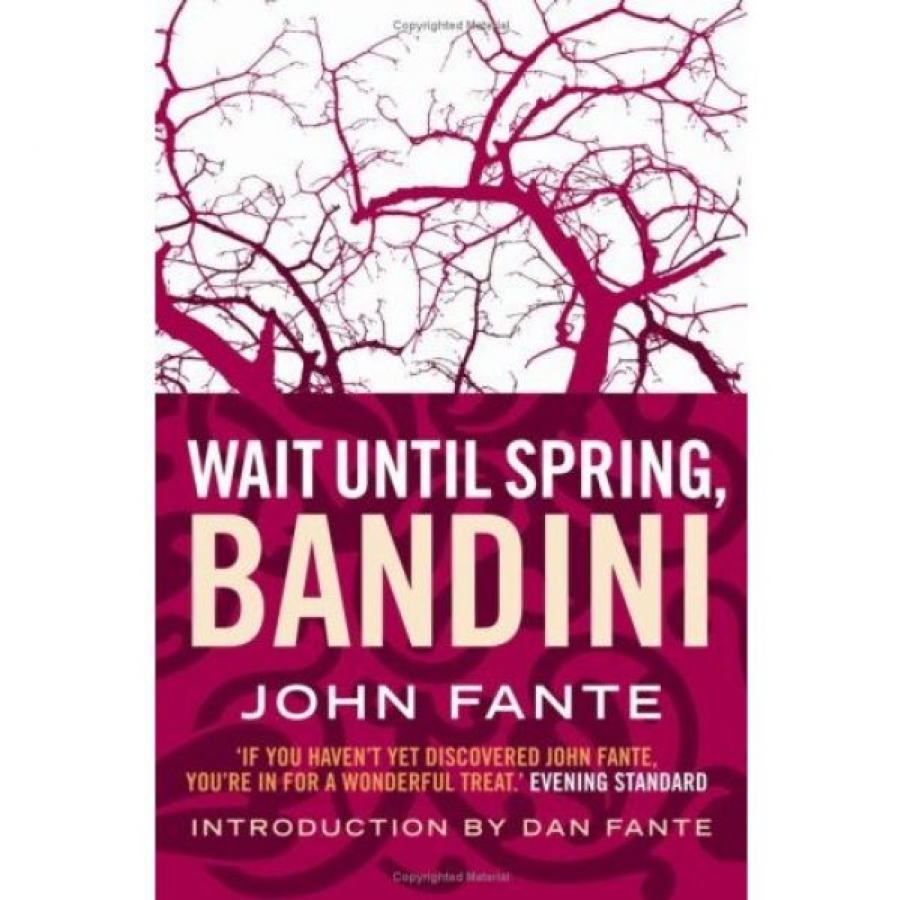
Finished reading on: August 20, 2005
Wait until spring, Bandini
AI Translation Notice: This review was translated from the original Italian using artificial intelligence. Book quotes and excerpts are translated interpretations and will not match the author's original English phrasing or official published translations.
The story belongs to The Bandini Quartet saga, chronicling the fortunes of the Italian-American Bandini family, and of Arturo Bandini in particular.
The setting is the family: a bricklayer father who is consequently unemployed during the long Colorado winters, a mother striving to maintain a sense of decency and a bare minimum of subsistence, and three sons, the eldest of whom, Arturo, must also shoulder the burden of his father’s frequent, drunken disappearances.
In this already fraught domestic sphere, the father’s infidelity with a wealthy local woman triggers the mother’s breakdown; she sinks into prolonged bouts of depression and refuses to let her husband back into the home.
It falls to Arturo to seek out his father and bring him back.
The themes are those familiar to the author: family dynamics, the bond between son and parents, Catholic culture, and so forth.
The narrative unfolds sluggishly, at times becoming tedious and verbose.
The musical cadences that characterized the previous novel are absent here.
Predictable tropes tied to Italian heritage and Catholicism often seem to dominate (for instance, guilt, recourse to confession, and rituals).
The mother’s revolt—her defiance in the face of wounded dignity—emerges as a high point in the narrative and constitutes its finest pages.
Another theme is Arturo’s coming-of-age, a journey inevitably accelerated by his mother’s fragility and his father’s absence.