Finished reading on: October 30, 2005
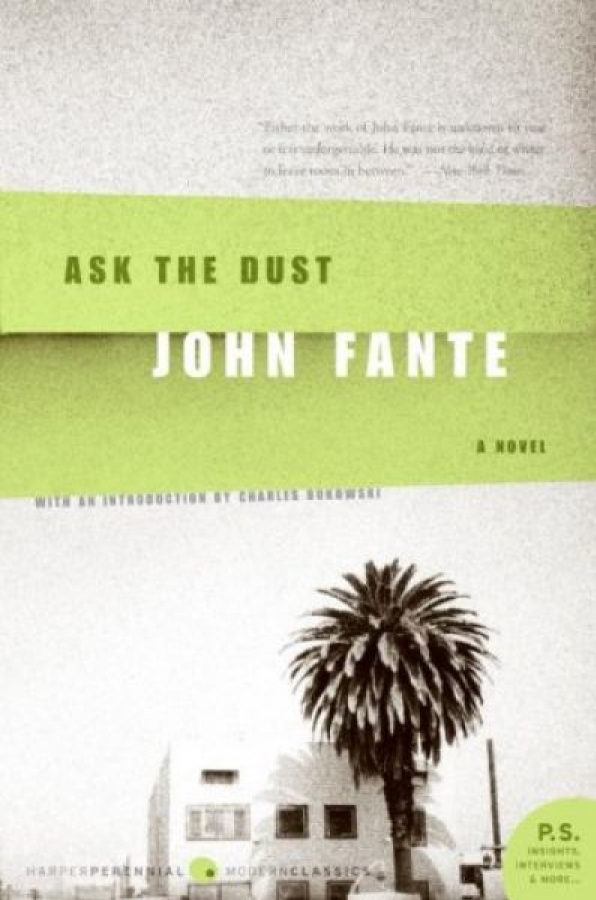
Ask the Dust
AI Translation Notice: This review was translated from the original Italian using artificial intelligence. Book quotes and excerpts are translated interpretations and will not match the author's original English phrasing or official published translations.
The third book of the Bandini saga represents a further transition, both in terms of narrative content and stylistic and expressive aspects.
Arturo is in Los Angeles, where he scrapes by, trying to write and get his short stories published.
At the outset, the novel retains the defining elements of its predecessor: a strong predominance of imagination, a narrative rhythm still grounded in subjective expression, and a style characterized by strong lyrical accents rich in evocative power.
Arturo falls in love with Camilla, a Mexican girl who works in a bar, and embarks on a tormented love affair marked by verbal clashes, written notes from Arturo, and an outing to the seashore, during which the young man fails to translate his feelings into sexual consummation, despite the girl’s expectations.
Arturo still lives in a sort of delirium, swinging between phases of exaltation and depressive states.
However, an episode occurs (imagined or real?) that seems to mark the turning point in the novel’s narrative and stylistic structure: a woman seeks Arturo out to pursue a romantic affair with him.
From this moment on, his relationship with Camilla is inverted: the girl turns to Arturo for help and confesses that she is in love with another man, who nevertheless does not want her.
Arturo accepts the situation, not least because he has realized that Camilla is using drugs and he wishes to help her.
A complex relationship unfolds, through which Arturo matures, coming of age as an adult.
The young man wants to take her to a house by the sea, but Camilla flees and vanishes into the desert:
across the desert was an utter indifference, the rhythm of night and another day, and yet the secret intimacy of these hills, their mystery, secret and comforting, made death of no great importance.
You could die, but the desert would hide the secret of your death, it would remain after you, to cover your memory with ageless wind and heat and cold….
I carried the book a hundred paces into the desert, toward the southeast.
With all my strength I threw it far out there in the direction she had gone.
Then I went to the car, started the engine, and drove back toward Los Angeles
.
Coming to grips with the reality of emotions, rather than merely the delirium of his own aspirations and fantasies, spurs Arturo’s transition from youth to adulthood.
The style also evolves in this direction.
It preserves its richness of language, with a sentence structure and a choice of words particularly attuned to phonetic qualities and the evocative power of rhythm.
The style, however, becomes leaner, less lyrical and redundant; the narrative structure is distinguished by dialogues, previously virtually absent due to the lack of characters of significant weight.