Finished reading on: July 10, 2005
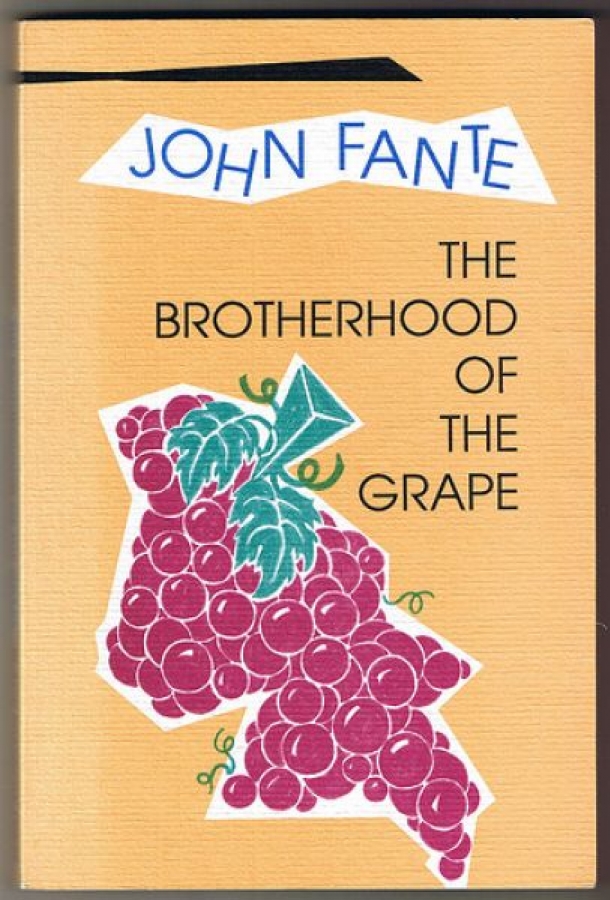
The Brotherhood of the Grape
AI Translation Notice: This review was translated from the original Italian using artificial intelligence. Book quotes and excerpts are translated interpretations and will not match the author's original English phrasing or official published translations.
Henry Molise is the son of a tyrannical, drunken father.
Summoned by his siblings because their parents appear poised for divorce after yet another of the father’s abusive outbursts, Henry finds himself roped into helping his father build a small stone shed at an out-of-town motel.
During the journey in the company of his father’s old friends and by working alongside him, Henry rediscovers, with horror, his own familial matrix and his affection for his father.
The shed, scarcely finished, is destroyed by a windstorm, starkly demonstrating that the aging father, once a renowned and skilled craftsman, is no longer physically and intellectually capable of carrying out a job, however simple.
At this point, the story hurtles to its crisis: the father falls ill, is hospitalized, and subsequently flees the hospital to die at the home of an old friend who owns a vineyard and produces excellent wine.
The overarching threads of the book are fundamentally two: the familial context, from which Henry sought to escape, only to rediscover through this homecoming that he belongs to it indelibly.
This familial context is composed not only of the characters (the mother, the siblings, the father’s friends and the barroom regulars, the neighbors who endure the father’s excesses), but also includes objects (above all, wine and food) and the memories of a childhood deeply shaped by Italian roots.
The Brotherhood of the Grape is the setting of a series of primordial relations that forge profound bonds among men.
Emblematic in this regard is the figure of Angelo Musso, a sublime winemaker deprived of speech, who represents a “Greek god” to the members of the brotherhood, and who, when Henry comes to retrieve his father to return him to the hospital, proclaims with wise fatalism: “it’s better to die drinking than to die of thirst” and “it’s better to die among friends than among doctors.”
Evident here is a nostalgia for an ancient time in which the rhythm of life and the bonds between men were determined by an authentic wisdom; the relationship with the father, who shaped the lives of all his children without ever succeeding in fulfilling his desire to pass on his craft as an artisan.
This is not merely a question of traditional bonds, forged of conflict and affection toward the paternal figure; the core of the narrative lies primarily in the trade of stone quarrying and masonry, handed down to the father by his parents.
The children reject this trade, which has weighed heavily upon their lives.
The father’s failure in his final endeavor exposes all his fragility and weakness, thereby reopening the relationship with his son, who rediscovers an affection and a bond with his parent, but also with his craft, which had been lost over time due to the presumed omnipotence of the paternal figure.
The style recalls that of the great American writers, such as Faulkner and Chandler, yet it is grounded in the deliberate use of words, in their careful juxtaposition so as to articulate a poetic and musical rhythm.
The meaning of the narrative emerges not so much from the plot, nor from character study and the description of settings, but above all from the sensations that arise from the sequence of words and sounds.