Finished reading on: March 11, 2016
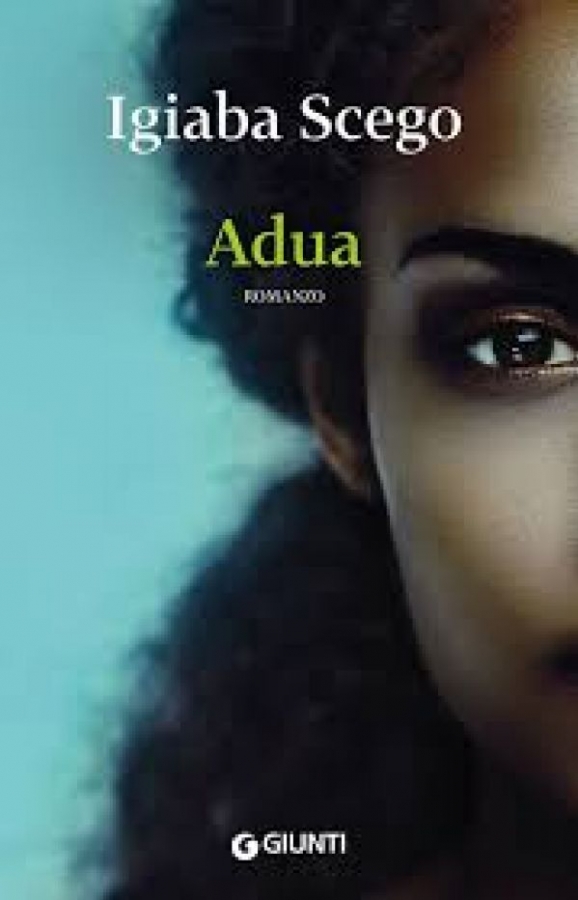
Adwa
Title of the original version reviewed: «Adua»
AI Translation Notice: This review was translated from the original Italian using artificial intelligence. Book quotes and excerpts are translated interpretations and will not match the author's original English phrasing or official published translations.
The publisher presents the book as a novel with two voices, “that of a father and a daughter.”
This summary is certainly accurate.
Adua fled Somalia to escape an authoritarian father and to fulfill a dream: to work in cinema and become a famous actress.
In reality, she managed to make only one film—a pornographic one.
Twenty years later, she finds herself a mature woman, an “Old Lira,” as the new immigrants call “the women of the diaspora.”
Partly out of compassion and partly for companionship, she marries an immigrant who
hung around drunk in many parts of Rome (...).
But it was in Piazza dei Cinquecento (...) in that square that Italy had dedicated to soldiers who died in East Africa, that I concocted a papier-mâché love
.
Born to a strong and courageous woman, Asha the Daredevil, with a happy nomadic childhood among goats and camels, a sad adolescence in Magalo and Mogadishu, a desolate and mundane life in Rome—what has become of Adua’s dreams?
I wanted to be free to run in the wind.
(...) I felt that the big city would devour all my purity, all my dreams
.
The author offers us glimpses of Adua’s life, but in truth she continually speaks of her disappointments, of her struggle to survive, nevertheless.
Zoppe, the father, lives in another era, during Fascism and the ruthless colonialism of the Italians.
He collaborates with the latter as a translator, makes himself a servant, witnesses the atrocities, the abuses, the racist and contemptuous conduct of our compatriots, in Italy as in Somalia.
Here too, the narrative is made of slices of existence, important not so much for what they say as for what remains beneath the surface: self-contempt and, at the same time, the betrayed fascination with Italy and its language.
Zoppe is nevertheless a traditionalist, who does not hesitate to subject his daughters to infibulation, because
afterwards there will only be the happiness of being pure, finally sealed as God commands
.
He is an authoritarian father; he disapproves of and disdains his daughter's aspirations, cynically and cruelly intent on severing the memory of Adua's mother, who died giving birth to her.
But enough, stop naming her.
That woman is nothing, she is just a mistake
.
The two stories, Adua’s and Zoppe’s, run largely in parallel, like two straight lines that never meet—not because their lives unfold in different times and contexts, but because father and daughter do not speak to each other; they are too distant, both lacking the ability to express their love.
I like Rome in summer, especially its evening light at dusk; it is warm, and even the seagulls become gentler, making you want to hug them.
They are the masters of the piazzas, but here you are, little elephant, and they dare not.
Away, stay away from Piazza Santa Maria sopra Minerva! I feel safe near you.
Here I am in Magalo, at home
.
Adua’s words “dissolve and are lost.”
Look at the nigger, talking to herself”.
And Zoppe walks through Fascist Rome and “the vision was still there to comfort him (...) The trees...
the dome of Saint Peter’s...
then the wisteria in bloom...
the scent of the women...
the walking sorbets...
the martial tread of the soldiers...
the rustle of rainbow skirts...
their hopes painted blue
.
This is what binds father and daughter: the love for Rome.
Scego narrates a great deal about Somalia; the reader strongly perceives the desire to return ideally to the homeland, to reclaim the language, its sounds, and its imagery.
Yet the novel speaks above all of a betrayal, of an Italy, a city—Rome—a language, and a history that, like beloved women too beautiful to be conquered, reject the courtships and overtures of the new Italians.
I must say I was often tempted to abandon reading, and I carried on to the end solely out of sympathy and esteem for the author.
It is difficult to write two parallel stories, but even more so if one relies on
flashbacks,” dreamlike digressions, and trailing, opaque sentences.
Without a plot to bring order to it all, a great confusion emerges, a crowding of thoughts and images that makes reading laborious.
In this novel, Scego loses the gentle irony and subtle elegance that distinguish her writing.
Perhaps she demanded too much of her abilities; a missed opportunity.
Why not read it? It is confused and, in the end, tedious.