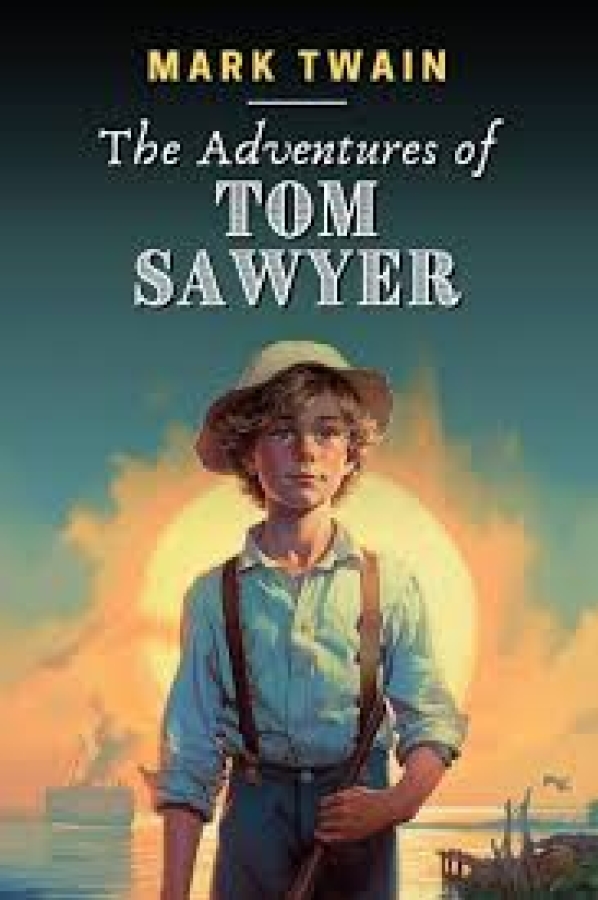
The Adventures of Tom Sawyer
Tom Sawyer is a young boy who lives with his aunt in a small rural town on the banks of the Mississippi. Mark Twain introduces him in this way: > he got back home barely in season to help Jim, the small colored boy, saw next-day's wood and split the kindlings before supper—at least he was there in time to tell his adventures to Jim while Jim did three-fourths of the work. (...) If he had been a great and wise philosopher, like the writer of this book, he would now have comprehended that Work consists of whatever a body is obliged to do, and that Play consists of whatever a body is not obliged to do. Tom is not clear on this distinction and takes a carefree, unencumbered life as serious business, swinging from melancholia—which prompts him to wish he could die temporarily, just to make himself missed—to a fantasy world in which he dreams of being a pirate or an outlaw. And so, with his faithful friends, especially the vagrant Huckleberry Finn, known as Huck, he embarks on a series of exploits, from the pirate life on an island in the middle of the river to wandering through the graveyard at night, witnessing a murder, all the way to setting off in search of treasures surely hidden by bands of robbers. This dizzying flurry of activity does not prevent Tom from courting Becky, a girl from a respectable family, who also finds herself drawn into Tom's reckless escapades. There is no point in recounting the plot, at times convoluted and commonplace yet never dull: it is far more interesting to dwell on two peculiarities of the novel. The first is the rural setting; with gentle and affectionate irony, Mark Twain depicts the school, dominated by the schoolmaster's authoritarianism; the church gatherings with the preacher's tedious and moralizing sermons; and the hilarious ritual of Examination Day, when the best pupils present an essay of their own before the entire community. One can smile, as Mark Twain does, at the ornate English, laden with words that most people likely do not understand, at the puritanical and sanctimonious values, at education imposed by sheer force; nevertheless, a strong communal spirit emerges, seeming to transcend even class divisions. It is a white society, placid in its values, with a single, clear boundary: discrimination against Black people, who remain in the background even as they sustain the small town's agricultural economy; one can sympathize with the vagrant Huck, but not with the servant Jim. The other compelling aspect lies in Tom's powers of fabulation. Unlike the protagonists of other coming-of-age novels, Gian Burrasca or Jim from *Treasure Island* (see the reviews of *Il giornalino di Gian Burrasca* and *Treasure Island* on this site), what surprises is Tom's dialectic: how he manages his aunt, capitalizing on her naive affection; how he cajoles his friends, talking them into adventures and overcoming their reluctance; how he persuades Becky to follow him into dangerous and intimate situations, paradoxical for such a prudish society. And when Mark Twain remarks that he can stop at writing the story of a Boy, because > the story could not go much further without becoming the history of a Man. (...) When one writes of juveniles, he must stop where he best can , he perhaps means that Tom's innocent cunning would turn into a guilty capacity for deceit, as so often happens among adults. In Twain's imaginative world, it is better to keep playing with the petty subterfuges of adolescence. Beyond the character and the plot, the literary merit of *Tom Sawyer* resides in its writing—attentive to detail, magically realist, subtly ironic. Take as an example this passage, which describes Tom's awakening on the island of the imaginary pirates: > when Tom awoke at dawn, he wondered where he was. (...) Now, far off in the trees a bird called; another answered; now the distant strokes of a woodchopper were heard. (...) A little green worm came crawling over a soft leaf, lifting two-thirds of its body into the air from time to time and “sniffing around,” (...) then proceeding again, (...) and when the worm approached him, of its own accord, he sat still as a stone, (...) then (...) when it began a journey across him, his heart was all glad. (...) Now a procession of ants appeared from who knows where. (...) A brown-spotted ladybug climbed the dizzying height of a blade of grass (...) and Tom bent down close and said, > Ladybug, ladybug, fly away home, your house is on fire, your children are alone. These are wonders of a world inhabited at night by spirits, and Nature still seems endowed with a soul. And what of the description of the school, punctuated by that repetitive “showing off” (in Italian, *ostentare* or *vantarsi*)? All the teachers “put on airs”
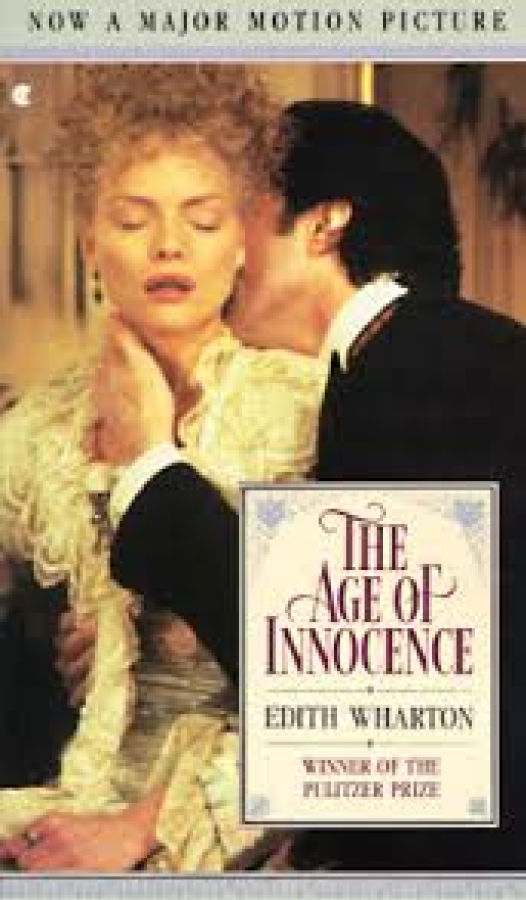
The Age of Innocence
The novel is set in New York at the end of the nineteenth century, when the old New York elite, with its oppressive social rituals, was overwhelmed by a new, upwardly mobile bourgeoisie—prejudiced and aggressive; it reacted by trying to ignore the changes, > until they crashed down upon them. What mattered was preserving the "traditional pleasantness" of social life. It is no coincidence that the tale opens with opening night at the Opera, meticulously described by the author: the arrangement of families in the boxes according to a rigid social hierarchy, the placement of individuals within them respecting family roles, the elegant gowns in the latest Parisian fashion, the hushed gossip that must cease when the solo is sung; an aristocratic atmosphere steeped in American Puritanism, and therefore superior to the frivolous European world. Amidst a crowd of minor characters, the three protagonists appear from the very beginning. Archer is a young lawyer with a passion for literature and a history of typical bourgeois transgressions (a mistress, perhaps a few young ladies), yet well aware that he must make a "good marriage." Reckless reading leads him to make nonconformist statements ( > women ought to be free—as free as we are ), but > he was a quiet young man endowed with strong self-control. Adherence to the discipline of a small society had become almost a second nature to him. Yet a restlessness stirred within him, leading him to feel as > though he were being buried alive under his future. Still at the Opera, in the family box in an unobtrusive position, as rigid etiquette dictates, sits the very young May, who > that very afternoon had allowed him to think there was on her part "an inclination" (the official New York phrase for a girl to declare an interest) ; a consummate representative of wholesome American society, who > would probably go through life facing each experience to the best of her ability, but never anticipating what was to happen by so much as a fleeting glance. Perhaps this heedlessness was what gave her eyes that innocence, and her face the semblance of a type rather than a person. Beside May is > a slim young woman, (...) with brown hair curling in thick locks around her temples, held by a narrow band of diamonds, (...) with a dark blue velvet skirt gathered beneath the bust by a belt with a broad, old-fashioned buckle. Her unusual carriage and attire catch Archer's attention: she is "poor Ellen Olenska," May's cousin, who has returned to America after separating from a Polish nobleman. Being taken in by the family is one thing, but displaying her in public, on opening night at the Opera, before all of New York's foremost families! From this opening scene, so voluptuously baroque, the story branches out: Archer is drawn to the mysterious and intoxicating Countess Olenska, who represents to him the promise of a different life, glimpsed through literature and now attainable through falling in love with the beautiful, melancholic Ellen. If we look beyond the haze of reverie, we discern that the figure of Ellen > had built up within him a kind of sanctuary where she reigned enthroned among his secret thoughts and desires. Little by little, this image became the scene of his real life, of his every rational activity. (...) Outside of this, on the stage of his actual life, he moved with a growing sense of unreality and inadequacy, blundering against family prejudices and traditional viewpoints, much like a madman colliding with the furniture of his own room. And yet, he imprisons himself in a bourgeois existence: he advances his marriage to May, counsels Ellen against seeking a divorce from her husband, leads an ordinary life beside an affectionate and understanding young wife, frequenting New York's customary social venues and fulfilling his duties to May's family. Slowly and silently, a muted curtain of protection forms around him: officially, no one knows of Archer's infatuation with Ellen—a burgeoning love marked by petty lies, abrupt business trips, and fleeting, supposedly clandestine meetings, as happens with all lovers. Then, all at once, May comes out into the open, having previously been eclipsed by the vitality of the splendid Countess Olenska; in a conversation made of insinuations, of truths half-spoken and withheld, May preempts Archer's irreparable confession by declaring that she is expecting a child and that, bold and cynical, she has used this still-uncertain pregnancy to induce Ellen to leave America. Innocent May has revealed herself to be an astute wife—not because she possesses any singular intelligence, but because she adhered to the well-worn patterns of the society to which she belongs. At a farewell reception for Countess Olenska (for appearances must always be kept!), Archer realizes that everyone knew about the affair and acted in solidarity to avert the scandal of a separation: in old New York, everything must proceed > without bloodshed: the way of people who dreaded scandal more than disease, who placed decency above courage. And on the other hand, Archer too shared these values, even if > he seemed to be witnessing the scene in a state of strange weightlessness, as if floating somewhere between the chandelier and the ceiling, nothing astonishing him so much as his own share (as a spectator) in what was happening. Written after the First World War, *The Age of Innocence* recounts the end of an era, narrating the loss of innocence of the American bourgeoisie. If in Alcott's books (see the reviews of *Little Women* and *Good Wives* on this site) the family is woman's natural destination, thus giving concrete form to her social role, in Wharton's novel marriage is a cage, a place of renunciation and duty. From this perspective, Countess Olenska is the longed-for figure, capable of living outside convention, like a butterfly flitting from flower to flower. This interpretation, emphasized by Martin Scorsese's 1993 film, does not encompass the tale's truest meaning. We must look from Archer's vantage point and from Wharton's conservative vision. In her introduction, Sarah Blackwood notes that two alternative endings to the book have been discovered. In both, the marriage is dissolved and Archer is able to go and live in Paris with the beautiful Countess Olenska. Why did the author decide that Archer should instead retreat into a flat bourgeois life, into the social and marital duties of old New York? The novel's primary theme is the weight of social rules, whose strength lies in their internalization within the conscience; they are a prison that charts our destiny, beyond our "secret thoughts and desires." And as occurred with Archer, nothing is left to us but to live in fantasy, to anchor ourselves to dreams and imagination, creating a parallel reality in our minds. Ever-renewed Don Quixotes of Cervantes or Quichottes of Rushdie (see the reviews on this site), we move about, lost and imprisoned in a world we would wish to be different, until, like Archer, we adapt, settled into a quiet life. How long can we keep doing so? Wealthy, influential, and surrounded by artists during her life in Paris, Wharton was also passionately devoted to being an "interior designer"; this accounts for the detailed descriptions of interiors and attire—veritable theatrical stagings, already cinematic, so rich in imagery, resonance, and symbols. It is a meticulous, seemingly realistic prose that radiates a dreamy, suspended, and evanescent charm. Whether Wharton ever knew Joyce or Proust I cannot say; yet behind the superficial nineteenth-century patina, we are clearly in the presence of an innovative narrative, an anti-novel. The lexicon is rich, with a distinctly American stamp, coupled with an articulate and refined syntactic structure; without question, fine English! Why read it? Archer is an interesting and modern figure, splendidly baroque.
Age of iron
The novel is set in South Africa in the mid-1980s, during the era of apartheid. An elderly classics teacher learns that she has incurable cancer. She resolves to recount the final days of her life to her daughter, who left the country many years ago: > I tell you the story not so that you may take pity on me, but so that you may learn how things are. It would be easier, I know, if the story came from someone else, if it were a stranger’s voice resounding in your ears. But the fact is, there is no one else. I am alone, the only one writing. Do not pass it over, do not forgive easily. Read everything with a distant eye . This declaration by the protagonist encapsulates the novel’s multifaceted meanings: the events, and above all the companions, of the old woman’s final days, the loneliness and nostalgia for the past, the exile from her daughter. An alcoholic vagrant and a stray dog find shelter at the protagonist’s home; initially wary, but growing increasingly trusting, she takes them in, finding solace and friendship. Meanwhile, the plight of two Black youths draws the elderly teacher into the grueling living conditions of the Black population and, above all, into the brutal repression of the Afrikaner police. Upended by events that shatter a hitherto tranquil existence, the letter to her daughter changes in meaning: intended as a way to reinforce their bond, the woman instead finds herself swept into turmoil and uncertainty. Her love for her daughter grows more abstract and distant, while her feelings deepen toward those closest to her in suffering and in the face of death: the vagrant, the dog, and the two Black youths. And a plea for love rises from the old teacher: > and this long letter, I say it now, is a plea toward the sunset, toward the west (the daughter lives in the United States) for you to return to me. Come and hide your head in my lap as a child does, as you used to do. I cannot live without a child, I cannot die without a child. What I endure, in your absence, is grief. I produce pain. You are my pain. This is an accusation. Yes, I accuse you. I accuse you of having abandoned me . It is a powerful, ancestral novel, dominated by classical themes typical of Greek tragedy—those of Aeschylus and Sophocles. The relationship between mother and child is explored not in psychological terms, but by tracing it to an ineluctable destiny: the detachment of offspring from their parents. The daughter’s flight from South Africa begets the mother’s exile, her solitude, and with it the awareness that she will not be remembered after death > let me go from myself, let me go from you, letting go of a house still alive with memories: it is a difficult task, but I am learning . > Do not be afraid, says the protagonist, I will not seek you out. It is not my soul that will remain with you, but the spirit of my soul, the breath, the movement of the air around these words, the faintest turbulence traced in the air by the otherworldly passage of my pen across the page your fingers now hold . Why read it? It is not an easy read, not least because the author frequently opens philosophical digressions, but the novel’s cosmic depth and the evocative power of many of its pages are well worth the effort.
All Our Names
The protagonist is a young Ethiopian; the adolescent longing to leave his remote village behind drives him to choose a purpose and a city: to become a great writer in Kampala, which, despite being the capital of Uganda, like him «belonged to no one and no one could claim it». It is therefore a non-place, where the young man hides, forgets, or simply abandons the twenty-five names by which he was called in his village. In Kampala, he meets his friend. > Isaac and I became friends the way two stray dogs find each other following the same trail every day in search of food and companionship . Both are unversed in urban life, but Isaac projects confidence and takes the protagonist under his protective wing—naive, fragile, and too much of a dreamer to survive on his own in a violent and chaotic metropolis. Having no names left, Isaac gives the boy several nicknames (no fewer than thirteen), all tied to his air of an intellectual and a man of letters. At first, the two young men frequent the university campus, a kind of "oasis > in a country increasingly torn apart by clashes between opposing factions, which soon culminate in dictatorship and repression. If students were initially allowed to voice dissent, demonstrations are subsequently banned and smothered in blood. For the protagonist, the situation is particularly dire because he is a foreigner; Isaac must step in repeatedly to save him and hide him in safe places. The political struggle has degenerated into gang warfare. Isaac, growing ever more mysterious due to the life he leads and the company he keeps, enters the service of a clan leader. The protagonist watches in horror as violence, executions by firing squad, and outright massacres unfold. Yet above all, he is appalled by his friend’s transformation: from a slightly provocative, somewhat playful young man, Isaac reveals himself to be a cynical killer, a skilled manipulator of men, an unscrupulous opportunist, perhaps even a double-dealer. But who is Isaac, really? What do we know of him, of his past? The situation deteriorates rapidly, and Isaac provides the protagonist with a passport and a plane ticket to flee to the United States. In doing so, he also gives him a name: his own. The young man, now Isaac, holds a temporary visa as a political refugee and is monitored by social services, in particular by a young caseworker, Helen. A love affair begins, but can one truly love someone whose past remains unknown? During their troubled relationship, Isaac asks what he can do for her: yes, I told her, promise me you won’t disappear one day > . Yet so it will be, because this is the fate of migrants, placeless and nameless: all they can say, promising to return one day, is that no one will ever have loved each other more than we did. For the sake of clarity, the plot has been presented according to a possible logical sequence: first the events in Uganda, then the love affair in America. In truth, the author does not construct the novel this way; the narrative unfolds through two parallel storylines: in the first, the narrator is the protagonist and the subject is his friendship with Isaac; in the second, the narrator is Helen, recounting her relationship with the protagonist. Only in the final lines do the two narratives intersect, when we discover that the phrase the false Isaac utters to Helen at the moment of parting was written by the real Isaac on a slip of paper for the protagonist. One is left to wonder whether the love for Helen is cut from the same cloth as the friendship between the real Isaac and the false one: extraordinary bonds in an age when relationships between human beings are like those of two men who meet unexpectedly in the middle of a desert after traveling so long they have begun to believe the world is uninhabited > .. Yet what does this strange novel mean? It conveys a sense of rootlessness, that special loneliness that comes from having nothing that is truly yours«, which drives Helen to search Isaac’s room to »seek proof of his existence > . This rootlessness possesses a dark allure of its own because it offers us a world weightless«, allowing one to confront a reality that »breaks you into pieces slowly« and to overcome the fear of »what comes next. It is an interesting book. It is, however, marred by an excess of intellectualism, discernible in many passages of the novel and in its overarching design: the reliance on two parallel narratives fragments the story, weighing it down needlessly and causing it to lose both narrative momentum and emotional tension. The almost Pirandellian interplay of the two Isaacs is pushed to an exaggerated degree, yet fails to surprise the reader upon discovering that Helen’s Isaac is not the real Isaac. The author sought to pack too much substance into a storyline and its characters, when it would have been enough to narrate them in their spontaneity, in their real lives as migrants of the world". Why not read it? It is boring.
All the Pretty Horses (Wild Horses)
Two boys, sixteen-year-old Grady and seventeen-year-old Rawlins, rest on their saddle blankets after dismounting their horses. > The night was cold and clear and the sparks rising from the fire spread warmth and reddish glows among the stars. They could hear the trucks out on the highway and they could see the lights of the town reflected far in the desert fifteen miles to the north. What do you think you’ll do? Rawlins asked. I don’t know. Nothing , Grady replied. After three hundred pages—some of them arduous reading—to the same question (“where is your country?”), Grady answers: “I don’t know. I don’t know where it is. (...) He touched the horse with his spurs and moved on. He rode while the sun turned his face copper-colored and the reddish wind blew from the west across the evening plain and the small desert birds sang among the dry ferns; horse and rider advanced and their long shadows moved together as the shadow of a single being. They passed and paled into the evening plain, toward the world to come > There is nowhere to stop; nothing remains but to keep moving, with only two certainties: the horses and the great untamed plain. The novel recounts the adventure of an adolescent. profoundly alone and in search of himself across the vast expanses of a West now overtaken by modern American society. We are like the Comanches were two hundred years ago. We don’t know what will show itself come daylight. We don’t even know what color it will be > . So his father told him, almost as if urging Grady to leave, perhaps to flee. And the boy embarks on a long journey on horseback, together with Rawlins. They strike out into the great expanses toward Mexico, into a swarm of stars, so that they rode not under but among them (...), like thieves newly loosed in that electric black, like young thieves in a luminous garden, ill-equipped against the cold and ten thousand worlds to choose from > . Along the way they encounter Blevins, a thirteen-year-old boy on horseback, solitary, perhaps on the run. They realize he may be a source of trouble: he is impulsive, stubborn, devoid of judgment, still a child. They take him in, and after feeding him, Blevins began to take off his clothes and walk naked across the grass, and, passing by the horses, plunged into the water. (...) The horses watched him > . The kid gets drunk and lets his horse get stolen by a group of Mexicans; he then drags the two friends into an attempt to recover the animal, and the whole thing ends in a shootout and a pursuit, from which Grady and Rawlins barely escape, nonetheless losing all trace of Blevins. The two young men seem to find a safe haven and employment at a large hacienda > ; Grady earns esteem for his exceptional skills as a breaker of wild horses; he also meets the master’s daughter, with whom he has a love affair. It is a situation fraught with peril: a poor cowboy in love with a wealthy heiress. And indeed, Grady and Rawlins are arrested by the Mexican police and accused of being accomplices to Blevins, whom they meet again in prison and who has allegedly killed a man. During the transfer from the police station to the prison, Blevins is killed; in the horrific Mexican penitentiary, the two young men are attacked and stabbed, and only the intervention of the aunt of the girl Grady has fallen in love with saves them from the hell they have landed in. It would seem that we have reached the end of the adventure, but Grady insists on getting the horses back, and consequently the novel concludes with a gunfight in which the young man reclaims the animals. Then again, what is more beautiful and more true than a horse? That night he dreamed of horses in a high plain where the spring rains had made the grass and the wildflowers grow and the flowers spread all blue and yellow as far as he could see in the dream he was among the running horses and in the dream he himself could run with the horses (...) and they ran he and the horses together out on the high ground where the earth resonated under the galloping hooves (...) in a resonance that was like a music..." It is a circular story, one in which the plot lacks any genuine development, continually folding back on itself—namely, onto the figure of Grady, his loneliness and despair. The characters are sketched superficially; in some instances, they are incomprehensible. If one wishes to appreciate the novel, one must focus on the contrast between the austerity of the dialogues between Grady and Rawlins—spare, minimalist, and precisely for that reason expressive of their existential condition—and the descriptions of the horses and the magical landscapes of the great wild plain. Yet a level of minute detail consistently predominates, encumbering the narrative and wearying the reader. As for the disquisitions on Mexican history, let us draw a charitable veil over them. Why not read it? It is prolix, overlong, and rambling.

American Pastoral
The book is divided into three chapters, each possessing its own distinct identity. In the first, bearing the evocative title *Paradise Remembered*, the narrator is the writer himself. The idol of his youth is Seymour Levov, “the Swede”: handsome, blond, athletic, a formidable sportsman. The memory of his feats epitomizes a golden era where harmony triumphs. Now in his sixties, the writer is invited to lunch by Seymour under a pretext. The meeting turns out to be mundane and pointless; later, however, at a reunion of old classmates, the writer learns that Seymour was suffering from cancer and had been shattered by the actions of his daughter, who had bombed a general store, killing a bystander. > The gentle man with his delicate ways of dealing with conflict and contradiction, the confident former athlete, responsive and resourceful in any fair-minded struggle with fair-minded foes, is up against a foe who is not fair-minded, a devil rising out of the human feelings, and he is overwhelmed. He learns to live behind a mask . The writer decides to write a book about Seymour, even as he wonders—with a deeply autobiographical undertone—whether the man inside the man is ultimately knowable, whether he is a “jar you cannot open.” Yet does the story he writes conform to reality, or is it merely the author's invention? In the two subsequent chapters, the writer shifts to a third-person narrative. In the second chapter, titled *The Fall*, the dramatic story of Merry is recounted: Seymour’s stuttering daughter who, at sixteen, vanishes after committing a heinous crime, sinking ever deeper into hiding and self-destruction. At the root of the daughter’s conduct lies a hatred for her parents, their orderly home, their life built on bourgeois values—and, by extension, for American society itself. Yet how could > his daughter be so blind as to want to destroy the very system that had granted her family so many opportunities for success? To destroy her capitalist parents as though their wealth were anything other than the product of the steadfast labor of three generations? . Is Merry, then, an inexplicable anomaly? In truth, in the final chapter, *Paradise Lost*—which largely details a dinner party among the Levovs and their friends (a dinner that concludes tragically with the stabbing of Seymour’s father)—it becomes evident that the “moral disease” afflicts not merely the girl, but an entire society in which > what was supposed to exist did not exist. Deviance prevailed. You cannot stop it. Undeniably, what was not supposed to happen had happened, and what was supposed to happen had not. The old system that created order no longer works. All it has left behind is fear and dismay, now concealed by nothing . The themes of this undoubtedly formidable book are essentially two: generational relations and, above all, the agony of a parent who views himself as blameless, who wishes to protect his family and cannot fathom why a daughter so cherished grew up so estranged from his world; and the unraveling of a society built by immigrants who toiled tirelessly to integrate and be embraced as successful citizens, only to watch the foundational values of social cohesion disintegrate. Seymour’s ordeal is that of a father, but it is also the tragedy of the American pastoral. Roth’s narrative structure is exceptionally rich and intricate. It relies neither on a lavish surplus of adjectives, as with Updike, nor on the expansive periodization of Bellow (all chroniclers of the crisis of American society). It is precisely this syntactic framework that constitutes Roth’s strength, yet also proves to be his weakness: the sentences are often overly convoluted, making for an exhausting read and fostering a redundancy of phrasing and, above all, of syntactic constructions. A greater frugality would certainly have served the book’s otherwise compelling themes far better. Why pass on it? It is deeply demanding, particularly the third chapter. It should be taken in small doses.
American Rust
Paul Krugman, the American Nobel laureate in economics, begins his recent book (*End This Depression Now!*) by recalling how unemployment is "an immense human disaster," not only because of the resulting financial hardships, but because the effects on one's dignity, self-respect, and sense of control over one's life can be devastating. One no longer feels like a protagonist, and a profound malaise sets in—born, as the author of *American Rust* puts it, "from the pain of watching the world change without you." With this novel, the author sets out to do precisely this: to narrate the deindustrialization of a steel town through the eyes of its victims—not so much the workers who found themselves unemployed, but rather their children, who have lost the social and psychological anchor their fathers once possessed. The novel's protagonists are two young men, Isaac and Poe. The former, intelligent and a dreamer, is the son of a retired technician who, after working for decades in steel mills, is now confined to a wheelchair following a severe industrial accident. Isaac has given up his aspirations (he would like to become an astrophysicist) to care for his father, while his sister, equally intellectually gifted, severed ties with the past, leaving town to become a successful lawyer. Poe, by contrast, was once a local hero, a football star, but has been reduced to scraping by at the expense of his mother—an impoverished woman who lives in a trailer and supports the household through precarious employment at a small tailor's shop. The setting is the decline of an industrial town, painted by the author in somber tones yet devoid of nostalgia, with descriptions that highlight the ruin of mills and buildings alongside nature's reclamation of a space no longer dominated by man. > The mill had been a small city... now it stood like an ancient ruin, its structures overwhelmed by wild vines.... tracks of deer and coyote crossed the grounds: there were only the human signs of occasional squatters . A theme dear to American literature—including contemporary writing—resurfaces: the myth of the wilderness, of a rural society where man finds for himself, in total freedom and autonomy, the means of survival. Isaac steals his father's savings and decides to run away to pursue his dreams, finally free from the past. Before departing, he meets with Poe, his best friend, who once saved his life by thwarting a suicide attempt. They decide to spend one last night together in an abandoned mill. There, however, they run into a gang of thugs, whom Poe provokes with his customary recklessness. To save his friend, who is in danger of being murdered or severely beaten, Isaac kills one of the assailants. The two young men take flight. Poe is accused of the murder, while Isaac flees on foot toward California. The paths of the two young men diverge, each unaware of the other's fate, yet both endure the violence of a disintegrating society. Poe experiences the ruthless law of prison, which does not tolerate anyone failing to belong to a gang, and for this he is assaulted and left on the brink of death. Isaac, naive and fragile, suffers the violence of the road: he is deceived, robbed, and forced in turn to steal to survive. All Poe would have to do is tell the truth—that it was Isaac who killed the man—yet he refuses, feeling guilty for what occurred and, above all, knowing that his friend would never survive prison life. Isaac, in turn, realizes that flight is not the answer: he must return and confess to the crime, and, above all, he must live where his roots lie. Friendship is the central theme of the book: it is, indeed, the profound bond that unites the two young men, as well as the novel's secondary characters, shielding them from the unraveling of society. Why does Poe not choose to turn his friend in rather than endure the brutality of prison? Why does Isaac return to surrender himself when he could escape to California? From the standpoint of dominant economic rationality (grounded in the pursuit of self-interest), their behavior is irrational, inexplicable; yet it is, instead, the primal force that holds society together. Delving deep into the impact of economic decline on human relationships, the author probes the inner workings of the human mind during a phase of social disintegration, finding a solid foundation in the bonds between individuals. Yet does this offer us hope for the future? The narrative is driven forward through a literary device. Each of the protagonists tells their own story across dedicated chapters, whose sequence apparently follows no order but seems random. Consequently, only the reader possesses knowledge of the overarching plot and must construct an overall picture for themselves. This approach, undoubtedly refined from a literary standpoint, asks too much of the reader. Left without a guide, one gets lost in the characters' analyses, which are often a bit too intellectualized and introspective. Everything remains as if suspended, merely sketched, failing to grip the reader, failing to captivate. Moreover, the novel is deficient in action, meaning that only the psychological introspection of the characters and the examination of their relationships could offer points of interest. Yet this is precisely what remains unresolved, as the exploration of the mind's inner workings appears endless, lacking any definitive development. If the author does not wish to be all-pervasive and intrusive like the great Dostoevsky, he fails—or refuses—to untangle the narrative threads and bring them to a resolution, as the Russian master does so brilliantly. Consequently, the sluggishness and thinness of the plot render the novel tedious and ponderous. Why not read it? It is boring.
Ask the Dust
The third book of the Bandini saga represents a further transition, both in terms of narrative content and stylistic and expressive aspects. Arturo is in Los Angeles, where he scrapes by, trying to write and get his short stories published. At the outset, the novel retains the defining elements of its predecessor: a strong predominance of imagination, a narrative rhythm still grounded in subjective expression, and a style characterized by strong lyrical accents rich in evocative power. Arturo falls in love with Camilla, a Mexican girl who works in a bar, and embarks on a tormented love affair marked by verbal clashes, written notes from Arturo, and an outing to the seashore, during which the young man fails to translate his feelings into sexual consummation, despite the girl’s expectations. Arturo still lives in a sort of delirium, swinging between phases of exaltation and depressive states. However, an episode occurs (imagined or real?) that seems to mark the turning point in the novel’s narrative and stylistic structure: a woman seeks Arturo out to pursue a romantic affair with him. From this moment on, his relationship with Camilla is inverted: the girl turns to Arturo for help and confesses that she is in love with another man, who nevertheless does not want her. Arturo accepts the situation, not least because he has realized that Camilla is using drugs and he wishes to help her. A complex relationship unfolds, through which Arturo matures, coming of age as an adult. The young man wants to take her to a house by the sea, but Camilla flees and vanishes into the desert: > across the desert was an utter indifference, the rhythm of night and another day, and yet the secret intimacy of these hills, their mystery, secret and comforting, made death of no great importance. You could die, but the desert would hide the secret of your death, it would remain after you, to cover your memory with ageless wind and heat and cold…. I carried the book a hundred paces into the desert, toward the southeast. With all my strength I threw it far out there in the direction she had gone. Then I went to the car, started the engine, and drove back toward Los Angeles . Coming to grips with the reality of emotions, rather than merely the delirium of his own aspirations and fantasies, spurs Arturo’s transition from youth to adulthood. The style also evolves in this direction. It preserves its richness of language, with a sentence structure and a choice of words particularly attuned to phonetic qualities and the evocative power of rhythm. The style, however, becomes leaner, less lyrical and redundant; the narrative structure is distinguished by dialogues, previously virtually absent due to the lack of characters of significant weight.
Benediction
Dad Lewis and his wife return from Denver > away from the mountains, back out onto the high plains: in the pastures an expanse of buffalo grass, sagebrush, weeds, and blue grama, in the cultivated fields wheat and cotton. On either side of the highway there were dirt country roads running in all directions under a pure blue sky. Holt is a small Colorado town like so many others, a place hardly worth identifying because it is the same everywhere, it is where normal life is lived, > the precious ordinary life: mundane stories, with nothing exceptional about them, stories that could belong to anyone, yet which hold within them love, familial affection, unhappiness, guilt, memories, and the expectation of Death. Dad has just learned he has only a few months left to live, due to lung cancer. We witness the man’s slow, inexorable physical decline. Through frequent flashbacks, the author offers glimpses of what now torments Dad. In the past, as the owner of a supermarket, he fired an employee who had stolen from him; Dad was unrelenting, cast from a single mold, offering no second chances—not even to the man’s wife, who had gone so far as to offer her own body to pay back what had been taken. The man killed himself, leaving his family in destitution. This unyielding attitude led to a rupture with his son. When he caught him, still an adolescent, wearing his older sister’s clothes, he beat him, terrified of scandal and rejecting his homosexuality; the boy ran away from home, leaving no trace behind. With his elder daughter as well, who has returned home to care for him, he was emotionally detached, stern, and distant. Now, he realizes he has never caressed his daughter. > I was too busy. I didn't pay attention. No, she said, You weren't. She put her hand on his cheek, now. Forgive me, he whispered. I missed out on so much. I could have done better. I have always loved you. He wants to see his son again, he waits for him, he longs to reach out to the woman to apologize, he wishes he could turn back time, but now the people of his life, those he has lost, are merely part of a terminal patient’s nightmares. While Dad’s inexorable journey toward Death is the central narrative, other lives revolve around it, all marked by suffering. > Every life passes through some kind of unhappiness, (...) but there is good as well. (...) There are only brief moments. And as in Kader Abdolah's *The Parrot Flew Over the IJssel* (see review on this site), the cycle of the seasons rolls across the Great Plains. > In autumn the days turned cold and the leaves fell from the trees and in winter the wind came down from the mountains and out on the high plains of Holt County there were night storms and three-day blizzards. The novel demonstrates how our lives slip by without us seizing the opportunities to show humanity toward others, to comprehend the suffering of those around us. To be sure, Dad displayed great moral integrity in refusing the advances of an attractive woman; but wouldn't it have been better had he accepted them, had he been more forgiving of himself? Even in our prosaic lives, so far removed from those of great men, we are constantly faced with choices, and these decisions concern our relationships with others. At the end of life, nothing remains but remembrance, yet Death dissolves even that. > If one does not die, one lives, so writes Salvatore Satta in *The Day of Judgment* (see review on this site). > And this truth, seemingly obvious, is instead heavy with consequences, for life transforms everything; nothing can withstand its implacable truth. (...) To know oneself, one must live out one's life to the very end, to the moment one is lowered into the grave. The fundamental strength of the book lies in its prose: crisp, spare, and mesmerizing all at once. Short sentences, taut dialogue, and sparse digressions on the setting follow in succession; the characters are not merely described, but reveal themselves, always wrapped in that aura of mystery, of the incomprehensible, that shadows us throughout our lives. If Dad reveals himself in Death, who are the others? It is a pity that the narrative rhythm, elsewhere so intense, is compromised by an ending of a melodramatic and frankly verbose register. Why read it? Splendid prose.
Between the assassinations
The book is a collection of short stories set in a town in South-Western India, Kittur. The author traverses the various corners of the city, its people, and its social life, like a modern-day Guy de Maupassant. Yet in truth, as an editor remarks when rejecting the stories, > your characters want absolutely nothing. They simply walk through richly described situations and think deeply. They walk through cows, trees, roosters, and think, and then walk through roosters, trees, and cows, and think a bit more. That is all. The narrative, in fact, unfolds between the realistic, stark, and often repetitive depiction of modern Indian society, and the pessimistic chronicle of an unalterable social and existential condition. Despite India’s intense economic dynamism, there is no real shift in the social fabric, in caste relations, in the mechanisms of power—ever dominated by corruption and abuse—nor in the lives of the characters, who, whenever they aspire to or believe they have attained even a modicum of social mobility, are thrust back into the immutable roles of a stratified society. All the stories are remarkably fine, but the most emblematic of the entire collection is *“Market and Maiden”*. Keshaya is a boy from the countryside looking for work in the city: “he is small, thin, dark-skinned, with huge eyes that wander dreamily.” Full of energy yet at the same time “capable of staring at the ceiling for hours,” the boy does not quite know what he wants, but remains captivated by the life of the tram conductor, who works outside, clinging perilously to the vehicle. He manages to secure this job and is thrilled because he rides to work on a bicycle given to him by his employer. It belonged to a former tram conductor, who now begs in the street after being crippled in an accident. One day, Keshaya falls, strikes his head, is fired, and finds himself wandering through the market like a madman, like a wild man. And everyone pretends not to recognize him, yet “he was the king of tram number 5,” cries the lame man, the only one standing by him, bound by the solidarity shared among the poor and the wretched. “That is the way of the world,” remarks the protagonist of another story, “and so it’s a rotten world.” And what can the writer do? If he does not wish to go mad, like another character in the book, he must convince himself that > every true word, as soon as it has been written, is like the full moon, in a day it vanishes and passes entirely into darkness. And this is the way of all things . What is truly remarkable in these stories is Adiga’s writing. It succeeds in transfiguring social realism into the anticipation, or the possibility, of an escape—wholly contemplative and interior—from the deterministic and inexorable forces of economics and sociology. In *“The Bunder”*, Abasi is a small-business owner, beleaguered by the corruption of public officials, who endures a profound inner conflict between the necessity of providing security for his family and the harrowing awareness that the manufacturing processes in his factory will inexorably lead the female laborers to blindness. What is to be done? He climbs onto the roof of his factory: > from here a man can see the limits of Kittur... and see the Arabian Sea stretching out from Kittur. The setting sun is shining above it. A ship is slowly leaving the harbor, sailing where the blue waters of the sea change color and turn a deep dark. And it is about to meet a broad swath of the brilliant setting sun, an oasis of pure light Will Abisa throw himself from the roof, or will he submit to the inexorable laws of economics? We are left in a state of suspense, of waiting, which forms the resolution to most of the stories. Why read it? Splendid stories, marvelous prose, and human and social narratives of powerful resonance.

Blood and Thunder
The book’s subtitle is “the epic story of Kit Carson and the conquest of the West.” Indeed, the book spans a very long period, from 1809, the year of Kit Carson’s birth, to his death in 1868. Even though the great scout lies at the heart of the book, in reality it features all the protagonists of those years who contributed to an exceedingly complex and multifaceted history, shaped by competing ambitions: the imperial dream of the United States aimed at conquering the entire continent from East to West at the expense of a weaker nation, Mexico; economic expansion toward territories whose wealth was often overstated; the American Civil War and the role played by Indigenous nations; the clash of cultures (North Americans, Mexicans, and Indians); and, finally, the heavy imprint of a Methodist vision intent on imposing its own rules without acknowledging particularities and cultural distinctions. At the core of the book, therefore, lies the American dream: the conviction of being inherently in the right, and consequently the inability to understand the indigenous peoples. The latter, accustomed to a nomadic society rooted in raiding, fail to realize that they are up against a new adversary—one quite different from the Spanish and the Mexicans, equipped with technological superiority and, above all, an obstinacy driven to see matters through to the bitter end. It is the Navajos who pay the heaviest price, despite having been one of the strongest and wealthiest Indian nations. They are destroyed: first by starvation, then by the long march toward a settlement intended to serve as an experiment in civilization, which proves instead to be an inhospitable wasteland where disease, poor harvests, and contaminated water deal a mortal blow to the Navajos. It is a chronicle of clashes and battles, of plunder and cruelty, laying bare a violent society on both sides. A curious code of conduct effectively binds Americans and Indians alike: an eye for an eye, a tooth for a tooth. In this context, Kit Carson—already a legend in his own lifetime—stands as an emblematic figure: a consummate scout gifted with both diplomatic and martial prowess, a commander, yet ultimately an executor who, against his own inclinations, is compelled by obedience and gratitude toward others to wage wars and endure conditions he does not himself condone. Deep down, he is frail, a weakness evident in his physique and his voice to such a degree that visitors who had read accounts of his life and exploits failed to recognize him when meeting him in person. He is a hero who becomes one in spite of himself, almost an artfully crafted figure within the American collective imagination. This persona served to open the conquest of the West to the American people and to rationalize the slaughter of the Indians. Like all heroes, he is also an antihero. The book is a compelling work. It appears historically well-documented, and while not a novel in the strict sense, the narrative possesses all its hallmarks. The overlapping of episodes, which develop in parallel before converging into a central storyline, likewise generates an atmosphere of suspense typical of a detective story or contemporary fiction. The approach is cinematic. Its most compelling aspect is the extensive reliance on the very diaries of those who took part in the events. For instance, a woman who followed the wagon train toward the conquest of Santa Fe, the capital of New Mexico, writes with scandalized outrage about a ball held in honor of the conquerors, where Mexican women appeared in low-cut, provocative gowns.
The Book of Illusions
The protagonist loses his wife and children in a plane crash. To escape despair, he writes the biography of a silent-film actor who had vanished without a trace. Tracked down by Alma, with whom he falls in love, he learns that the former actor lives on a farm, where he has continued to make films that he has resolved to destroy upon his death. The protagonist reaches the country house to witness the former actor's death, manages to watch one of the films that had been produced, and then stands by as a spectator to the fire that destroys the entirety of the cinematic works. The narrative concludes tragically with Alma’s death. It is a complex novel, in many respects intellectualized and erudite, unfolding through paradoxical events around two philosophical and existential themes: the world is entirely an illusion, where the boundary between what is real and what is fiction or the product of our imagination remains blurred; and destruction—death—is the arbitrary outcome of the illusion in which we live. The theme of illusion is personified by the former actor Hector: his origins are unknown, and he does everything to keep them obscure; he leads a double life in love that ends tragically; he is perpetually on the run, pretending to be someone else and fabricating situations until finally secluding himself in the countryside to produce cryptic films destined never to be shown in theaters. The theme of destruction, of tragedies overwhelming human lives, of inexplicable events, is embodied in the very plot of the book and in the protagonist's torments. > It is a book of fragments, a gathering of nostalgias and dreams only partially remembered . The book is very well written, in a pleasant and fluid style. Yet there is an intellectualist undercurrent that frequently renders the narrative pace cumbersome and redundant.
The Bottle Imp
*The Bottle Imp*, in Italian *Il diavoletto nella bottiglia*, is a short story that revolves around man’s ambiguous relationship with evil. Keawe, the protagonist, > was a poor man, brave and industrious; he could read and write like a schoolmaster, and was furthermore a first-rate sailor . One day, in San Francisco, he stops to admire a splendid house. When Keawe expresses his desire to possess such a home, the owner tells him that his entire fortune originated from a bottle in which an imp resides. Whoever purchases this bottle will have all their wishes granted. There are, however, drawbacks: one goes to hell if one dies while still in possession of the bottle, and it must always be sold at a price lower than its purchase cost. Keawe is torn, but ultimately agrees to buy the bottle for fifty dollars. His life swiftly undergoes a radical transformation: he becomes a wealthy man and can afford a magnificent home. He manages to sell the bottle and is thus able to live peacefully and happily, not least because he has since fallen in love with a young woman, Kokua, whom he intends to marry. One day, however, he discovers he has contracted leprosy and resolves to track down the bottle once more so that the imp may cure him. Thus begins a search that leads him to discover that the price of the bottle has been steadily falling, down to a mere two cents. Yet the bottle would then have to be bought for one cent—and how could it ever be sold afterwards, given that the cent is the smallest coin available? Keawe buys it nonetheless and marries Kokua, but finds no happiness, knowing that upon his death he will go to hell. Once she learns the terrible secret, Kokua decides to secretly purchase the bottle herself through an ingenious expedient: she travels to a French-held island where coins of lesser value than a cent are in circulation. Yielding to evil has created a sort of “reverse chain letter,” breeding further evil to the point where the two lovers become entangled in a paradoxical short-circuit, wherein the happiness of the one becomes the source of the other’s torment. Then, as in a fine fairy tale, comes the happy ending: Keawe manages to sell the bottle to a drunkard, ridding himself of it forever. The story mirrors the structure of a fable (the presentation of the initial situation, the hero confronting hardships until he successfully overcomes them) and also bears the hallmarks of a maritime yarn, unfolding as it does among ships and southern cities. The underlying concept, however, is the depiction of the trajectory of evil, played out entirely through its progressive loss of value. As if to say: the more one lives immersed in evil, the more one grows accustomed to it, to the point that the imp is worth less and less. Why read it? It is remarkably well written, if at times repetitive, but above all, the moral underpinning the tale remains profoundly relevant. In recent years, Italians have gradually accepted increasingly illegal, immoral, and vulgar behaviors, the cost of which drops ever lower because they have by now become part of the collective ethos. Beware! There is no end to the worst.

The Broken Window
Anyone who has read or seen *The Bone Collector* in the cinema is already familiar with the book's main characters. Lincoln Rhyme is a renowned criminologist who bases his investigative techniques on the rigorous and meticulous use of "physical" evidence, even the most insignificant. Despite having been left paralyzed following a shootout. Rhyme continues to collaborate with the police, assisted by a team of detectives and by Amelia Sachs, a close and capable collaborator as well as his life partner. Rhyme's cousin is accused of rape and murder. All the evidence points to his guilt. Rhyme is quickly convinced that the clues have been fabricated by a serial killer who "knows everything." In the course of the investigation, Rhyme and his team discover the existence of a massive private organization that collects, stores, and processes information on virtually everything, selling it to corporations (for market research, for instance) as well as to public and state institutions. It is a "Digital Big Brother," whose data is seemingly inaccessible, yet which the criminal has managed to exploit and even manipulate. The thriller is skillfully constructed, boasting a plot rich in twists and an unpredictable conclusion. The best part of the book is its depiction of the world of big data processing corporations. Rhyme’s team proves remarkably inexpert (perhaps excessively so, given they do not even know Excel) and ventures into this realm step by step, left stunned, fascinated, and alarmed. Rhyme himself is disconcerted: can access to such vast amounts of information truly supplant the method and intuition that must govern criminology? And the reader, too, begins to wonder. On the surface, possessing powerful databases and sophisticated data collection tools would appear to be a monumental achievement. But is it worth it if a criminal can exploit them to commit rape and murder with impunity? Is the availability of so much information—which even enables the prediction of events—truly helpful in tracking down killers, or do traditional, obsolete investigative methods remain more effective? The premise is intriguing, the prose concise and effective, the plot well-engineered, and the characters—especially Amelia Sachs—compelling; it is a pity that, as so often happens with thrillers, the novel's sheer length renders it wordy and meandering. Are these authors paid by word count, as Salgari once was? Why read it? It is a solid thriller, and the theme is compelling.
The Brotherhood of the Grape
Henry Molise is the son of a tyrannical, drunken father. Summoned by his siblings because their parents appear poised for divorce after yet another of the father’s abusive outbursts, Henry finds himself roped into helping his father build a small stone shed at an out-of-town motel. During the journey in the company of his father’s old friends and by working alongside him, Henry rediscovers, with horror, his own familial matrix and his affection for his father. The shed, scarcely finished, is destroyed by a windstorm, starkly demonstrating that the aging father, once a renowned and skilled craftsman, is no longer physically and intellectually capable of carrying out a job, however simple. At this point, the story hurtles to its crisis: the father falls ill, is hospitalized, and subsequently flees the hospital to die at the home of an old friend who owns a vineyard and produces excellent wine. The overarching threads of the book are fundamentally two: the familial context, from which Henry sought to escape, only to rediscover through this homecoming that he belongs to it indelibly. This familial context is composed not only of the characters (the mother, the siblings, the father’s friends and the barroom regulars, the neighbors who endure the father’s excesses), but also includes objects (above all, wine and food) and the memories of a childhood deeply shaped by Italian roots. *The Brotherhood of the Grape* is the setting of a series of primordial relations that forge profound bonds among men. Emblematic in this regard is the figure of Angelo Musso, a sublime winemaker deprived of speech, who represents a “Greek god” to the members of the brotherhood, and who, when Henry comes to retrieve his father to return him to the hospital, proclaims with wise fatalism: “it’s better to die drinking than to die of thirst” and “it’s better to die among friends than among doctors.” Evident here is a nostalgia for an ancient time in which the rhythm of life and the bonds between men were determined by an authentic wisdom; the relationship with the father, who shaped the lives of all his children without ever succeeding in fulfilling his desire to pass on his craft as an artisan. This is not merely a question of traditional bonds, forged of conflict and affection toward the paternal figure; the core of the narrative lies primarily in the trade of stone quarrying and masonry, handed down to the father by his parents. The children reject this trade, which has weighed heavily upon their lives. The father’s failure in his final endeavor exposes all his fragility and weakness, thereby reopening the relationship with his son, who rediscovers an affection and a bond with his parent, but also with his craft, which had been lost over time due to the presumed omnipotence of the paternal figure. The style recalls that of the great American writers, such as Faulkner and Chandler, yet it is grounded in the deliberate use of words, in their careful juxtaposition so as to articulate a poetic and musical rhythm. The meaning of the narrative emerges not so much from the plot, nor from character study and the description of settings, but above all from the sensations that arise from the sequence of words and sounds.

Butcher's Crossing
The year is 1873 and Butcherʼs Crossing is a Kansas town, in reality a small settlement of buffalo hunters. Andrews is a twenty-year-old youth; he has abandoned Boston for a vague notion of freedom. > Sometimes, after listening to the hushed voices in church and school, he would pass beyond the borders of Cambridge into the lands and woods lying to the southwest. There, in some solitary place, standing motionless upon bare ground, he felt his mind fill with the clear air and plunged into infinite space: the emptiness and constraint he felt were dissolved in the wild nature that surrounded him . The young man meets a hunter and allows himself to be drawn into a venture: to go beyond the Great Plains, into the mountains, where thousands of buffalo still graze. > He realized that the hunt was merely a stratagem, a deception practiced upon himself. (...) No business impelled him... he was going there for freedom . An odd team is assembled: Miller the leader, a paranoid hunter who kills buffalo for the sheer pleasure of it, and not merely out of greed; Schneider, a pragmatic and cynical man, tasked with skinning the beasts with Andrewsʼs help; and with them an old alcoholic madman, Charley Hoge. With this group, Andrews ventures into the Wild West—at once an adventure and a physical and spiritual transformation. They represent another vastness and another horizon, yet the young manʼs mind remains “full of the wonders he had known as a child.” Francine, a prostitute, tells him affectionately, smiling gently: > you will come back; but you wonʼt be the same. You wonʼt be so young; you will become like the others. Andrews looked at her, confused, and in his confusion cried out: I will only become myself . The stages of his transformation, from youth to adulthood, are marked by the different phases of the journey. First, they travel for many days across the Great Plains, and Andrews must accustom himself to the long hours on horseback in a flat and monotonous landscape: > he felt like the earth, identityless and formless (...), he sensed his body slowly becoming lean and strong: he thought at times that he was entering into a new body, or a real body, previously concealed by an unnatural softness, whiteness, and delicacy . The second phase consists of the buffalo hunt: the merciless slaughter, the beast skinned and butchered. > To Andrews, the entire business seemed like a dance, a dark minuet ; the endless slaughter like > a mechanism, an automation, (...) like a cold, senseless response to life. (...) He realized he was turning away not out of some womanish nausea at the blood, (...) but from the shock of seeing the buffalo, moments before proud and noble and full of dignity, now stripped and helpless, an inert piece of flesh. (...) Its being had been killed, and in that killing he felt the destruction of something within himself, and he was unable to face it . And finally, there is the long winter: the group finds itself trapped by snow until spring, freezing and completely isolated. > He came to accept the silence in which he lived, and no longer sought any meaning in it. (...) He vaguely recalled the comforts of his home in Boston; but that seemed unreal and distant, and of those thoughts there remained only faint ghosts of remembrance : a sort of alienation, a loss of consciousness and identity. The wilderness, inscrutable and indifferent, gets the better of the young manʼs dreams: it creates a hard man, incapable of affection, solitary and individualistic. And when the party finally returns to Butcherʼs Crossing, having lost their entire cargo of hides while crossing a swollen river, and when Miller and his men discover that the price of hides has collapsed, that their toil was for nothing, Andrews wonders what the meaning of it all was. Where had he been, and why? Nothing remains but to leave, to take to the road again, alone. > Even now, in the light of dawn, the town was like a small ruin; the light struck the edges of the buildings and made all the more evident a emptiness that was already there. (...) He did not know where he was going; but he knew that (the direction) would come to him later in the day. He rode on unhurriedly, and felt behind him the sun rising slowly and warming the air . One must not be deceived by the story, by the meticulous descriptions of the landscapes and the buffalo hunt: the subject of the narrative is not the Wild West. Nor are we dealing with a *Bildungsroman*, because Andrews has not truly become an adult—borne out by the fact that he abandons the woman, Francine, who welcomed him with love upon his return from the long journey. The subject of the novel is estrangement from the world: the sense of not belonging to anything, a solitary man in an incomprehensible world, devoid of friendships and values. If the great conquest of the West, the American myth, had been this, what would become of the values of community and freedom that nevertheless underpin American society? The novel does not speak of this, though it might seem to; the narrative unfolds within the authorʼs own consciousness, addressing the failed search for a balance between individuality and sociality. The story is very well written. The style is elegant, the sentences flow smoothly and pleasantly, and the documentary element is well integrated with the plot and characters. One senses, however, a pronounced intellectualized quality, something contrived—the product of research rather than a lived world, at least in its ideals. It speaks of wilderness, of men struggling against a hostile environment, but if one compares the novel to the works of Jack London, and in particular to that masterpiece *White Fang*, it becomes quite clear how John Williams is merely yet another intellectual, writing about himself and—why not?—about men and environments he knows only from books, because he has studied them. Why read it? Fine prose, superb descriptions of setting, admirably etched characters.

Canada
A teacher at the end of his career, married without children, with a wife who is an accountant by trade, decides to recount two pivotal events from his adolescence. Had he been—who knows?—an astronaut, a Silicon Valley adventurer, or simply a sensitive, and therefore fragile, person, he might have given us a tale less prosaic and intellectualized, yet rich in emotion and feeling; instead, the sprawling novel sets out to demonstrate how > the best thing to do in life, to survive, is to bear losses well. (...) the world changing around us does not care how I feel . The novel is divided into two parts. In the first, the setting is a small Montana town: an ordinary family, husband and wife, fifteen-year-old twins, a girl and a boy (our narrator-teacher). The father is strapping, amusing, the classic charmer: a former army officer who, after leaving the armed forces, chased far-fetched schemes, ending up in petty dealings skirting the edge of the law; the mother is slight, shy, introverted, and a dreamer. > The strange union of their ill-matched physical traits is always in my mind as one of the reasons for their tragic end: they were without question simply wrong for each other and should never have married . To the children, home seems normal, until the parents commit an incredible and unpredictable act: a bank robbery, following which they are arrested and sentenced to many years in prison. Why did they do it? What drove them to commit such an absurd act? Never mind the father, superficial and incurably optimistic, but why the mother, so sensible and on the verge of separating from her husband? > She might have felt not despair or terror or greater alienation (which would have been normal). But freedom. From all the forces that oppressed her. She might have concluded that this uncontrolled sensation came directly from the very qualities that isolated her. (...) This might have made her feel better than she had in a long time. The mother is undoubtedly the most interesting character in the novel, and it would have been worthwhile to investigate her further to grasp the full measure of her reckless act, which will lead her to suicide. Yet > my parents began to recede in my vision, as when you are sick and fever shrinks the world and stretches distances. My parents grew smaller and smaller until I was alone in the dimly lit kitchen, and they were on the verge of vanishing, almost disappearing . And indeed, in the novel's second part, the setting and circumstances are far removed from the still-adolescent world of the first. To escape the clutches of the authorities, a friend of the mother takes the boy to Canada, to a small town where her brother Arthur runs a hotel. Here, the narrative takes on an artificial cast, typical of a contrived armchair literary construct. The boy comes of age in short order (a coming-of-age novel?) and is drawn to the figure of Arthur: a cultured yet violent failed revolutionary who seems intent on assuming the role of mentor to the protagonist—a sort of *Great Gatsby*, a mysterious superhero, a failed and nonetheless arrogant intellectual. The friendship between Arthur and the boy ends abruptly when the youth becomes entangled in a murder. Arthur kills two people, and the boy is used, unbeknownst to him, to create a diversion and deceive the victims. And it is then that the protagonist realizes that the only possibility is to maintain life in a generally acceptable state, regardless of the borders crossed: like a puzzle, like a symphony, like > the game of chess, in which the individual competitors are part of a long, single enterprise that pursues a condition not of adversity or conflict, or defeat or even victory, but of an equilibrium underlying it all . It is a cynical and pessimistic conclusion, according to which, in order to survive—to avoid being overwhelmed and destroyed—one must not get involved; that is to say, one must not truly live. It is a dreadful novel, not merely due to its disproportionate length, but above all because it lacks tension, pace, and genuine psychological depth; the characters are stereotypes, mere pretexts for philosophical reflections that are, moreover, frequently impenetrable. The premise upon which the first part rests held real promise: an incomprehensible event upends everyone’s lives; parents can commit acts that alter their children’s lives, radically and for the worse. How often have we seen this happen! Yet the development of the idea disappoints through its absence of emotion, of real suffering. The second part is a series of clichés, of characters and settings that evoke literature rather than real life. What is Canada to the narrator-protagonist? An escape, an unreal country, the setting for his coming-of-age? We will never know, for the pointless digressions are far too numerous. Why not read it? It is long, prolix, tedious, and contrived.

Career Move
This is a short story in which two parallel narratives unfold. In the first, an aspiring screenwriter, forced to sell insurance for a living, desperately pursues a script reader to whom he has submitted his work. In the second, a poet, now famous and wealthy, is forced to endure futile meetings with publishing house staff and submit to demands for revisions to his poems. Regardless of the initial premise, the publishing world remains stupid, superficial, and arrogant, and the outcomes can be unpredictable: the aspiring screenwriter manages to have his work accepted in its entirety, whereas the renowned poet is forced to suffer alterations. The story might well have been interesting, but the style is so disjointed—riddled with constant narrative leaps and a spasmodic reliance on colloquialisms and neologisms—as to render the text arduous to read and, effectively, incomprehensible.
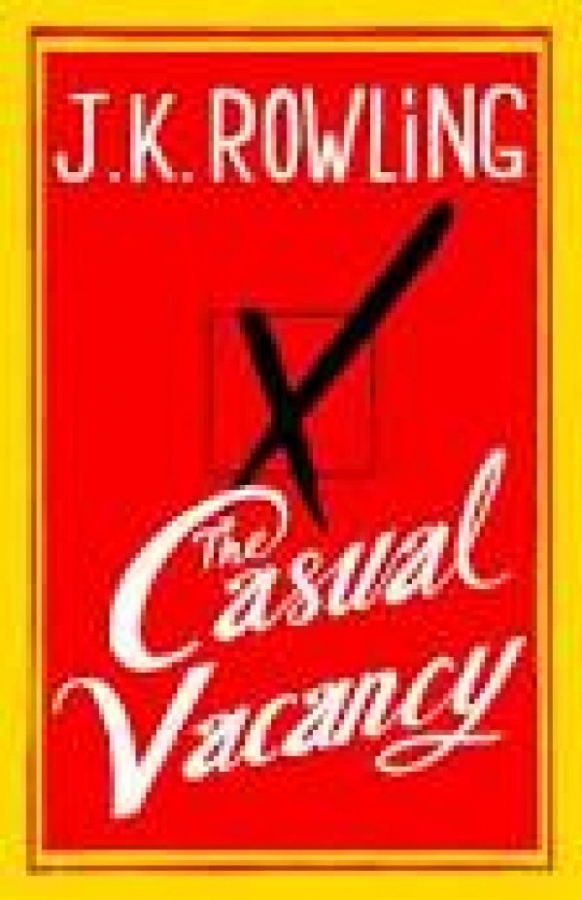
The Casual Vacancy
A successful author decides to abandon her genre to venture into other narrative territory. As often happens, this attempt turns out to be a resounding failure. Critics, however, have judged it very favorably: in the magazine *Internazionale*, the novel was awarded top marks, five stars. Did I fail to understand the book’s merits, or are publishing houses’ profit expectations dictating critical judgment? The core premise of the story is intriguing. We are in a small English town, perceived by its inhabitants as a «safe haven», where the respectable bourgeoisie believes it can live comfortably and peacefully, insulated from the problems of the modern world. A pity that, in the recent past, a major landowner sold a parcel of land upon which a council estate was built, whose social problems now negatively impact the town’s presumed well-being. Furthermore, an addiction treatment center is run on municipal property, with all the attendant disruptions that ensue. Well, the sudden death of a councillor—a man of deep social conscience and thus in favor of keeping the center—presents an opportunity to shift the majority on the town council, shut down the center, and transfer the council estate to the neighboring town, which might in turn be keen to alter its own political balance. A race ensues to claim the seat left vacant on the local council. One would have expected a narrative with a strong socio-political edge, replete with intrigue and potential plot twists. This is not the case. The story plods wearily along through the accounts of the various families involved: marital relations, parent-child dynamics, the school environment, and so forth. In the first part of the novel, the reader gets lost among the characters, all of whom seem to carry the same weight in the narrative structure. Later, the book becomes less tedious and more sharply delineated, as certain characters—mostly the «children»—post defamatory emails on the council’s website, not out of political motives, but to vent grudges and a desire for rebellion. It would have been an interesting idea, but this, too, peters out into nothing. Ultimately, the reader is left with a novelized version of *Desperate Housewives*, which wraps up—because every novel must come to an end—in a maudlin fashion, just enough to coax out a few cheap tears. The author writes very well, in prose that is at once elegant and modern. Even if one accepts the novel's psychological approach to social issues, it is baffling how generically such complex themes are handled, such as intergenerational relationships and youth in severely disadvantaged families. The weakest point is the narrative structure. First of all, the plot is scattered, fragmented, and devoid of action. How is it possible that such an experienced author was unable to give unity and momentum to the narrative? Secondly, the writer fails to establish a hierarchy of characters—key figures around whom the story can turn and through whom deeper psychological, existential, and social explorations might be developed. All the characters remain on the same footing, staying superficial and losing the reader across multiple narrative threads. Why not read it? It is tedious, banal, and pointlessly long.

Cat on a Hot Tin Roof (La gatta sul tetto che scotta)
The underlying theme is mendacity; the author develops this subject within the context of the family—the very social sphere that, more than any other, ought to foster mutual trust. For years, the members of this family have acted in apparent harmony; when, however, it is revealed that Big Daddy, the family patriarch and “authoritarian master-father,” is suffering from cancer, the impending death overwhelms the protagonists: does truth emerge from this sort of catharsis, or a new lie? As Tennessee Williams explains in the “Notes for the Designer,” the setting is the bed-sitting-room of a great plantation house in the Mississippi Delta; two bachelors, the former owners of the plantation, once lived in this room, and therefore > the room must evoke some ghosts; it is gently and poetically haunted by a relationship that must have involved a tenderness which was not common . It is the appropriate setting for a play > that deals with the deepest extremities of human emotion, and needs that softness as a background . The theatrical work unfolds in three acts. The protagonists of the first act are Brick, a former football player now turned alcoholic, and his wife, Margaret. The man refuses to have any relations with his wife after she betrayed him with his best friend—who died, perhaps by suicide, in the wake of the adultery. The loss of the only person who truly mattered to Brick has driven him to seek solace in alcohol. While Brick pursues the victimhood of “the charm of the defeated,” Margaret refuses to surrender: she is keenly aware that the family is about to fall apart, and she does not want her husband to forfeit his social and economic standing to his brother. Brick, deeply beloved by his parents, faces severe disadvantages regarding any inheritance: he is an alcoholic and, moreover, has not yet fathered any children, whereas his brother has six. In her long conversation with her husband—in truth a soliloquy—Margaret wonders what the victory of “a cat on a hot tin roof” might be: “Just staying on it, I guess, as long as she can...” but then adds that silence does not work, > locking the door and shutting oneself in a burning house in the hope of forgetting that the house is on fire . In the second act, we witness the confrontation between Big Daddy and Brick, between father and son. Here again, it is largely a soliloquy: Big Daddy does most of the talking, and we learn that this man—outwardly strong, resolute, and domineering—is consumed by disgust. > For all these goddam lies and liars that I’ve had to live with, and all this goddam hypocrisy I’ve lived with for all these forty years ; such is his disgust that at times he thinks it far better to have > a goddam blank (...) than all this crap that nature fills it with . Faced with this desperate confession, Brick replies that the conversation is > like all the others we’ve ever had together in our lives! It’s senseless, senseless, it’s, it’s painful (...) you don’t have a goddam thing to say to me! Brick’s passivity suddenly turns into fury when his father voices the suspicion that there was something more intimate than mere friendship between Brick and his friend; and then Brick, cowardly like all the weak, reveals to his father the truth that had hitherto been concealed from him: he has cancer and is dying. With Big Daddy’s desperate cry (“All liars, all liars... lying, dying, liars!”) the second act comes to an end. In the third act, the sons and daughters-in-law inform Big Daddy’s wife, who is also unaware, of her husband’s true condition; Brick’s brother attempts to persuade their mother to place all the estate in a trust, effectively cutting Brick out of the inheritance. Brick remains as detached as ever, while Margaret fights desperately, to the point of telling a blatant lie: she declares she is pregnant and can therefore give Big Daddy a grandchild. There are two versions of the third act. In the original draft, the author imagines the story concluding with Margaret’s declaration of love to Brick, to which he replies with elusive cruelty: “Wouldn’t it be funny if that was true!” In the second draft—the one staged, at the director’s behest—the author has Brick support his wife’s lie and accept Margaret’s unconditional love: “I admire you, Maggie” (says Brick), to which the woman replies: > what you need is someone to take care of you, gently, with love (...) and I can! I’m determined to do it, and nothing is more determined than a cat on a hot tin roof. Has death finally dispelled the veil of mendacity? In the first version, Tennessee Williams answers in the negative: not even the “black thing” that comes “uninvited” frees us from hypocrisy and mutual distrust; human relationships are burdened by an existential condition of emptiness, clogged with too many lies—we are doomed not to communicate. Certainly, this pessimistic vision cannot be dispelled by the conclusion proposed by the director, far too cloying and banal to ring true. Tennessee Williams offers an observation particularly useful for understanding the play: > some mystery should be left in the revelation of character in a play, just as a great deal of mystery is always left in the revelation of character in life, even in one’s own character to himself . And thus we must look at how the characters evolve throughout the story, bearing in mind that “the actors must be allowed freedom on the stage.” It is thus clear how Brick remains locked within his own world; Margaret’s personality, by contrast, emerges with increasing strength, as though she refuses to remain merely the wife of a broken man, standing ready instead to take the reins of the family. Death reveals the true character of the human being. The play is nearly flawless, which accounts for its great success. While the third act, in its final version, is bustling and populated by a large cast, the first two acts suffer from a certain static quality, barely mitigated by offstage background noises and the fleeting appearances of minor characters. On the page, the two acts come across as wordy and redundant; to be sure, that assessment might change under the light of theatrical performance. Why read it? It is a great theatrical work, and the figures of Brick and Margaret possess tremendous fascination; to truly appreciate it, one must experience it in the theatre.
The children's book
The novel is set in England between the late nineteenth and early twentieth centuries. It is the triumphant era of the bourgeoisie, which would come to a tragic end with the First World War. Technological and artistic innovation—including in the decorative arts and crafts—individual freedom and equality, the role of women and feminism, socialist and anarchist ideas: these are the defining hallmarks of this historical period, providing the backdrop to a profoundly contemporary theme: that of betrayed childhood. At the end of the nineteenth century, > children were different from children before and after. They were neither dolls nor miniature adults. They were not hidden away in nurseries, but were present at family dinners, where their developing characters were taken seriously and rationally discussed, during meals and on long country walks. And yet, at the same time, children in this world had their own separate, largely independent lives, as children. Parents found it hard to do in practice what they believed in theory that they should do, which was to love all the children equally . One should not, however, expect a conventional historical and social novel; it is in fact an intricate narrative in which different planes of storytelling, internal and external, intersect through the fairy tales written by one of the mothers of these large bourgeois families: Olive. Her seven children (who, as will emerge, are not all born of the same mother and father) are each the subject of a story. Yet here lies the first betrayal: the stories are not truly for them, but for the reading public, as Olive confesses at one point: > I don’t really like making up imaginary children. I get frightfully bored with their little quarrels and their innocence. But the readers have an insatiable desire for these clever little people having comical adventures . On the parents' part, there is no genuine attention paid to the children: their utopian ideas about education, about their children’s free will, about an affectionate and stimulating environment in which to bring up the young, are mere words masking a real indifference. And the children grow up regardless of their parents, gradually discovering the lies of their fathers and mothers, their subterfuges, and in some cases even their violence. They adapt by keeping the truth concealed, by not disturbing the prevailing hypocrisy, and by guarding family secrets. Each reacts differently: one takes refuge in the woods, cutting himself off from everyone; another skillfully conceals his true political beliefs; another vents his rage upon his father’s cherished possessions; another remains suspended, waiting, letting life simply roll by. There are also those who flee their parents’ ideological vagueness by pursuing concrete professions, such as medicine or stockbroking. The First World War brings a tragic end to many of the young protagonists' lives and leaves the survivors profoundly altered. Yet the war is merely the epilogue to a tragedy that had already found voice in Olive’s fantastical, almost psychoanalytic tales, all centered on underworld realms, as if foreshadowing life in the trenches. It happens sometimes that writers, even accomplished ones, measure themselves against narratives that vastly exceed their strength and skill. Such is the case with this book, which not only takes on too many themes (children and adults, the interrelated histories of several families, works of art and the emergence of modern museums, feminism, and many others besides) and too many characters, but above all proves redundant due to a rich, overwrought, and baroque prose. Too many words, too many topics, but little capacity to convey tension or foster readerly engagement. The narrative plot, much like the characters, feels contrived, monotonous, and in many instances predictable. Why not read it? It is prolix, and the labor of getting to the very end goes unrewarded by moments of high expressive power.
A coup d'état
This is a short story, set in Benin, describing several episodes of a coup d'état. The author finds himself in the African country and is captured, along with a Frenchman, by military forces whose allegiance—whether to the regular army or the putschists—remains unclear. Throughout the narrated events, a general confusion prevails regarding the origins of the coup, the roles played by the military forces, and the very figures encountered. A sense of frustration predominates in the author: he is interrogated, held in captivity without food or drink, struck, and then released with profuse apologies for the misunderstanding. It seems an unreal affair, as if fabricated, and precisely for this reason emblematic of a collective madness. It is Africa unraveling, and the author is its stunned, incredulous spectator. Why not read it? It is a story too slight to prove interesting and engaging.
Complete Shorter Fiction
The book brings together Oscar Wilde’s major short stories, in which the style is above all remarkable, particularly the sentence structure. The phrasing is not overly elaborate, favouring short sentences, but the juxtaposition of words (simple and close to everyday language) succeeds in lending poetic, and in certain cases elegiac, qualities to the writing. The result is a splendid English that recovers the essential nature of words through conversational rhythm. The content of the stories is generally fantastical and in many cases paradoxical: it draws upon the world of nature and the supernatural, which provide the setting and often supply the protagonists. On a first reading, a broadly moralistic approach seems to predominate, accompanied by a pursuit of the improbable and a nostalgia for the “goodness” of nature in contrast to human selfishness and pettiness. In reality, what emerges is a pervasive melancholy, almost a search for something lost (a remembrance of things past?), and a celebration of beauty. All the protagonists (people, animals, natural environments) are characterized by sublime physical traits and remarkable intellectual attributes: ugliness does not exist. Aesthetics thus prevails over ethics: a sort of exaltation of aestheticism. In this way, the theme of melancholy is also clarified: it is a nostalgia for lost beauty. Of particular interest is the story *The Portrait of Mr W. H.*, in which the author puts forward several hypotheses concerning the addressee of some of Shakespeare’s sonnets. To appreciate it fully, one would need a deeper familiarity with Shakespeare’s poetry and drama, but it is evident that here, too, one of the central themes is the love of beauty, which emerges from the protagonist’s conviction that the person described in the sonnets was a young actor who played the female roles in the tragedies. Shakespeare did not seek to flatter an eminent figure, but was writing solely out of love for someone who worked alongside him (undoubtedly less “highborn”) and with whom he shared a kindred sensibility.
The Confidential Agent
The novel is set in England, where a secret agent must negotiate the purchase of coal for his country at war. The book is dull, perhaps because it is not so different from Greene’s other adventure novels, and in any case it lacks the irony and narrative pace of *Our Man in Havana*.
Cosmopolis
Eric Packer is a brilliant young financier who loses and makes millions of dollars in a matter of seconds, speculating on currencies and the stock market. The novel chronicles a single day in which Eric travels across the city in his limousine, alternating between fleeting sexual encounters, hurried breakfasts, traffic jams caused by violent protests and the funeral of a music idol, a doctor's examination, and the constant monitoring of the yen's performance—a currency against which he is losing millions of dollars. If at first the narrative seems surreal and ironic in its aim to depict the absurd life of a young man of finance, at a certain point in the novel one realizes it is heading toward tragedy. In reality, Eric's own life, well shielded by bodyguards and his limousine, is threatened by a wave of attacks—some far-off—targeting figures in the financial world. As the day unfolds, the barriers—both psychological and physical—that separate the young millionaire from the violent world surrounding him begin to fall. Eric moves toward death (he will be killed), yet he almost seems to crave and seek it out to escape a life that might become burdensome and unbearable if he can no longer relish the thrill born from the pursuit of money. > He understood what he was missing, the predatory impulse, the sense of great excitement that guided him through his days, the pure and intense need to live . The novel's premise is undeniably brilliant and unfolds on multiple levels: the protagonist’s existential crisis (he wakes up longing to go to the barber like an ordinary man), the depiction of a chaotic and absurd city, the hurried human interactions typical of the business and information age, and ultimately death as an inescapable denouement. The plot as a whole, replete with baffling episodes and characters, along with an exceptionally demanding linguistic structure in terms of both vocabulary and syntax, conspires to make the reading experience cryptic and ponderous. The book is fittingly dedicated to Paul Auster, as the intellectual imprint of this author—a hallmark of many New York writers—predominates.
The Da Vinci Code
The novel is set in France and recounts the search for the Holy Grail—which purportedly points to the existence of a female apostle—and for a sect that has concealed and guarded this secret across the centuries, one of which Leonardo da Vinci was allegedly a member. Following the murder of the Louvre curator who was the custodian of the secret, his granddaughter and a scholar of medieval symbology set out in pursuit of the Holy Grail, while a high-ranking Opus Dei prelate is, in turn, hunting for the hidden secret. The novel enjoyed immense success, but it is, quite frankly, thoroughly dreadful from every perspective: the plot is tedious and implausible, narrative rhythm is nonexistent, and the prose is flat—opaque without being rich or complex. Why it could have achieved such widespread success remains a mystery. Despite my best efforts, I was unable to finish it.
David Copperfield
The novel recounts the life of David Copperfield, who, after a happy childhood with his mother and a nurse, is persecuted by his stepfather. He is sent to a harsh, authoritarian school and, upon the death of his mother, is forced to work in a factory while still a child. He is subsequently taken in by an aunt, who provides him with comfort, an education, and the means for an apprenticeship at a law office. Over time, the young David grows into manhood, working hard, marrying, and gradually establishing himself as a writer. Upon his wife’s death, he embarks on a long journey, which allows him to realize his love for a childhood friend (Agnes), whom he marries upon his return to England. The novel is rich in characters and situations (grotesque, melodramatic, emblematic of contemporary society and widespread social injustice, representative of a harsh and hypocritical morality), such that David’s fortunes intertwine with other subplots, all culminating in happy endings, yet often encumbering the narrative and rendering it prolix, rambling, and fragmentary. Individual episodes stand out more vividly than the overarching plot, while the heightened exaggeration of the characters, for good or ill, comes at the expense of substance and depth in the portrayal of the figures' emotions and distinct idiosyncrasies. In truth, everything revolves around David and his representation of reality; the throng of other characters and the settings themselves constitute «background noise» or a frame within which the imagination of both author and protagonist unfolds. *David Copperfield* has been defined as an autobiographical novel, but this is only partially true. In fact, it is a novel of nostalgia for childhood and of return to a paradise, constituted precisely by the serene maternal sphere and by the figure of Agnes, ever cherished and sought after for her very tranquility and steadfastness. What prevails is a reality interpreted through a melancholic imagination: all events are seen through the eyes of a child, who narrates an unreal England, embellished (even amid its suffering and injustice) by the trusting, idealized vision typical of childhood. From this perspective, it is emblematic, and particularly evocative, how the author conceptualizes the ideal place of refuge: it is a boat, inside which one feels safe even as the waves swell and the wind rises outside, in that it ensures an emotional equilibrium and a peace that are ultimately destroyed by the arrival of adult betrayal and passion, and, metaphorically, by a storm that claims both the betrayer and the betrayed. The style features an exceptionally rich vocabulary and is characterized by a sentence structure that is often difficult to follow. The frequent use of dialectal forms further increases the difficulty of the reading experience.
Dear Life (Getting Out Alive)
The book brings together fifteen stories, the last four of which > form a separate unit, autobiographical in feeling, sometimes even in fact . To make overall sense of stories that might otherwise be viewed as episodes of a female condition devoid of evolution and without outlets ( > too late to do anything else. When it could be worse, much worse ), one should perhaps start from the final story, *Dear Life*, which also lends its title to the entire collection. > I lived when I was young at the end of a long road, or a road that seemed long to me. Behind me, as I walked home from primary school, (...) lay the real town with its businesses and sidewalks and streetlights for when it got dark. (...) Marking the end of town were two bridges..... the road divided, one part of it heading south toward a hill (...) to become a proper highway, and the other running around old abandoned fields to turn west. This western road was my road . Reading this effective depiction of a childhood suspended between town and countryside, in that urban and social void that now characterizes our spaces, one's mind inevitably turns to a poem by Pasolini: > poor as a Colosseum cat, I lived in a borgata all lime and dust, far from city and countryside... that borough bare to the wind, not Roman, not Southern, not working-class, was life in its most current light.... bone of daily existence, pure, for being all too proximate, absolute for being all too miserably human (Pier Paolo Pasolini, *Il pianto della scavatrice*). Munro draws a clear and vivid portrait of how strange, perilous, and important our life can be, so dear to us; all this, however, not in the abstract, nor within a prevailing gender dimension (female sensibility contrasted with male indifference), but within the specific social and almost anthropological context in which we all live. Let us take, for example, a few stories. In *Amundsen*, the protagonist arrives in a small town to teach in a sanatorium for children and adolescents suffering from tuberculosis. “The world beyond the lake and the forest had vanished”; life is lived in isolation from external reality; small things prevail: the chill of the houses, the narrow road running through the woods and near the sawmill, the bar frequented by lumberjacks waiting to be called up for service. The relationship between the protagonist and the sanatorium’s director is predictable and prosaic, unfolding without clamor or enthusiasm in flat, modest, squalidly petty-bourgeois settings, ending in an obvious way, without any real reason. Yet it is precisely the banality of the affair and the cramped context of the small town that lead the protagonist to say: “nothing really changes when it comes to love.” In *Corrie*, into the routine of an apparently solid marriage bursts an old flame of the husband. The protagonist reacts by fleeing, takes the car and seeks refuge in the anonymity of the big city, in a squalid motel, eating and drinking in a restaurant where she wonders whether “any man, any old man, would think of hitting on her.” She returns home only to be told by her husband: > it’s not so much the person. It’s like a kind of atmosphere. It’s a scent , a desire for transgression. > What a mix of rage and admiration I could feel, facing his will to do it. All our life together came to an end . Here too, one would fail to grasp the entire affair if the story did not proceed from > a non-life, but survival (...) in whose arcane orgasm there is no other passion than for daily labor (Pasolini, *Ceneri di Gramsci*). In the story *In Sight of the Lake*, a woman suffering from Alzheimer’s goes in search of a specialist. She has been given an address in a small town; hesitant, frail, the woman wanders through the town, getting lost and asking passers-by—themselves uncertain—where the doctor's office might be. She arrives at a clinic, deserted and isolated: she tries to leave, to escape, but the door has become immensely heavy. > She opens her mouth to call for help but it seems no cry will come . Suddenly she is safe. It is the story of a woman who feels she is losing her memory, but why does this vanishing of consciousness take place in a squalid urban landscape, and not among glittering skyscrapers bursting with life, or in a gentle, wondrous meadow filled with flowers? A refined and elegant writer, Munro unfortunately loses herself in slight, inconclusive stories. The characters are ostensibly delineated, yet it is sheer literary technique; there is no real psychological depth: everything remains suspended. An overarching impression of fatigue prevails, of stories already written, rewritten in a masterful style, yet devoid of passion. Only in the final stories does narrative power resurface, but it is too late. Why not read it? It is slight, inconclusive, and dull.
Death at La Fenice
The book is set in Venice and is a detective novel. A renowned conductor dies in his dressing room during an opera performance. A police inspector investigates, naturally suspecting homicide. In the end, it turns out to be suicide. The conductor had abused his wife’s daughter, who, by administering antibiotic injections, renders him progressively deaf. Driven by despair, the conductor killed himself. As a mystery, it unfolds slowly and even tediously. The author attempts to depict life in Venice and the dynamics within the inspector’s family: yet it all unfolds superficially and laden with stereotypes, ultimately ringing false.

Dirty Love
The bottom line is very simple: a wasted talent. Remarkable stylistic skill is placed at the service of tedious stories devoid of narrative development, inconclusive and cynical relationship dramas: in short, an unbearable book. In *Listen Carefully as Our Options Have Changed*, Mark has discovered that his wife, Laura, is cheating on him: he knows because he hired a detective to tail her and has proof on a video, which he watches obsessively. He is a successful project manager and thus wants to approach the problem according to the rational tenets of project management. > No, the project of saving his marriage appears to have failed, and he is faced with a new objective. This is not unusual. Some projects collapse for various reasons. (...) In this case, there was simply a change of heart. Or, more accurately, a shift from concealing love’s troubles to displaying them, though Mark was forced to acknowledge them, wasn’t he? (...) There was the cold politeness toward his mother. (...) There was Laura’s habit of getting the detailed grocery instructions Mark gave her wrong, (...) to the point that he had to drop everything and go to the supermarket himself. (...) There was Laura’s habit of watching banal detective shows late at night, her eyes glued to the screen, vacant like a child’s. There was her mediocre cooking, her preference for frozen, heavily salted foods, and unremarkable dishes she was not ashamed to serve with ketchup. And now she was deceiving him, making a fool of him, and betraying him. Uprooting their home from its foundations and hurling shards of boiling glass into Mark’s blood, his brain, and his heart: and all this intense pain for what? For her? Look at her; what was he losing anyway? But that was a question that died before it was even fully thought, because he loved her . Mark fails to understand the reasons behind the failure of his marriage, even when numerous signs should tell him that it is his very own cold, rational approach that has driven Laura away. His habit of judging, evaluating, and treating the people around him as though they worked for him. He does not understand, but he is a stubborn man: > he would not throw his wife out of his house. (...) He would step back, take no action, and let things run their course. He would let his wife’s mistake resolve itself . Hypocritical forbearance is the sole means to make a relationship survive. This is also the outcome of another story: *Marla*. She is a woman no longer young, very fat, a drab bank clerk destined to remain an old maid. It seems an inescapable fate, until she meets Dennis, an equally obese man, affectionate and kind. It is unexpected love. The two move in together, and cohabitation reveals traits in the man that Marla dislikes: an obsessive fixation with order, a preference for a repetitive and mundane life, the risk of slipping into a tedious routine. What is more, the man does not want children. Leave him? But that’s marriage, my dear, her friends tell her; children will come later, even if the husband doesn’t want them (just deceive him about your fertile days so he won’t wear a condom!). Now well on his way toward squalor, Dubus tackles the third story (*The Bartender*): two young people marry full of enthusiasm, she gets pregnant, and he cannot resist sleeping with a curvaceous coworker—quite a bitch, truth be told. In the seventh month, the wife discovers the affair and risks miscarrying; miraculously, both she and the baby girl survive. > He walked over beside her bed and stood still. (...) Soon she would open her eyes, (...) eyes he did not deserve but hoped to earn, eyes of dark hope . At this point, I should have tackled *Dirty Love*. I confess: I could not bring myself to do it, so grating did the reading promise to be. From the story, it is useful to quote a sentence to convey Dubus’s remarkable ability to sustain long periods through a masterful use of words—a succession of impressions not underpinned by punctuation or the unfolding of content (events, character descriptions, feelings), but anchored in a carefully and skillfully calibrated syntax. In Italian, much of this writing is undoubtedly lost, and a great translator would be required; nonetheless, I shall try. > Now everything is lined up, her feelings and the music in her head, and all of it keeps making her feel as if she were moving forward, gliding silently on an airport moving walkway, that time she was on one, back in the past when she was little and her mother and father seemed happy, or at least laughed together a lot, her mother still pretty or at least looking it because she took care of herself, heavy but still sexy, though Devon never thought about these things, she only sensed them, as if she were lying in a soft bed surrounded by cool, deep pillows and the scent of something sweet was in the air, and that day the three of them were boarding a plane to Disney World where everything was realer than real could ever be . Why not read it? Monotonous, ponderous, even superficial at times.

Disgrace
A literature professor is expelled from the university following a relationship—essentially sexual—with a female student. The man is over fifty and twice divorced. Accustomed to being courted by women, he now finds himself alone, reduced to seeking sex with prostitutes, and thus lets himself be drawn into the affair, in pursuit of his own vanity and his own eros. He moves to the countryside to stay with his daughter, who runs a smallholding and a dog shelter. He helps his daughter take her produce to market, meets a woman his own age who runs an animal clinic and puts surplus dogs to death, and works alongside Petrus, a Black man who helps his daughter run the farm. The man’s attitude, however, has not changed; his vanity continues to dominate even his relationship with his daughter, with whom he cannot achieve any genuine dialogue: neither recounting the events that led him to leave the university, nor understanding his daughter’s reasons for living in the country, so utterly isolated. An incident radically alters their lives: three Black men break into the house, ransack it, attempt to set the professor on fire, and rape his daughter. Even more shattering is the fact that the daughter does not report the crime and chooses, instead, to keep the child conceived through the assault and to marry Petrus to secure her existence in the countryside. The professor’s world dissolves—a world that had found its precise coordinates in the realm of imagination, poetry, and bourgeois conventions: as he had said at the beginning of the book when glossing a stanza by Wordsworth (the poet’s disappointment at the sight of Mont Blanc): > the great archetypes of the mind, the pure ideas, find themselves usurped by mere images that derive from the senses. Yet we cannot live every day in the world of pure ideas, sheltered from sense-experience... The question must be: How do we find a way for the two (imagination and reality) to coexist? Ideas of a narcissistic intellectual, to which his daughter replies that life is a concrete, simple matter. The man attempts to return to the city, but his former life has by now vanished. He therefore takes a room in the village near his daughter’s farm, works on a musical piece destined to center on the affair between Byron and his Ravenna mistress, Teresa, and helps run the animal clinic. The book draws to a close, bleakly, with the man’s decision to have a dog put down—a dog to which he had grown attached—because we must all make our way toward our end, toward death. It is a highly complex novel, one in which it is difficult to isolate a single narrative thread. Among the possible readings (the social fabric of South Africa, the clash between bourgeois European culture and the emerging values of the Black population, father-daughter relations, the acceptance of the codes of violence, animals and dogs in particular), the most compelling seems to me to be the theme of death and the awaiting of death. The former is addressed through the ordeal of the protagonist, who comes to terms with the passage of time: > he wanders aimlessly in the garden, a dreary feeling coming over him. It is not merely that he does not know what to do with himself. The events of the day before have shaken him to the core. The tremors, the weakness are merely the first, most superficial symptoms of shock. He has the sense that within him a vital organ has been bruised and abused, perhaps even his heart. For the first time he feels what it means to be an old man, tired in the bones, devoid of hope, devoid of desire, indifferent to the future. Sprawled on a plastic chair amid the stench of chicken feathers and rotting apples, he feels his interest in the world ebbing away from him drop by drop. It will take weeks, perhaps months before he is bled dry, but he is bleeding out. When all this is over, he will be like a fly enfolding itself in a web, brittle to the touch, lighter than a grain of rice, ready to drift away. The theme of waiting is embodied by Teresa, who spends her entire life waiting for the return of Byron, who has gone to Greece to die: > my Byron, she sings for the third time; and from somewhere within the caverns of the other world, a voice answers in song, wavering, disembodied, the voice of a ghost, the voice of Byron. Where are you? he sings, and then a word the woman did not want to hear: dry. It has dried up, the wellspring of all things. And finally, the harrowing conclusion of the novel, which epitomizes the protagonist’s despair, the end of life, of waiting: > bearing it (the dog) in his arms like a side of meat, he walks back into the surgery. I thought you wanted to save him for another week, Bev Shaw says: Are you giving him up? Yes, I am giving him up—or does the author, with the phrase *give up*, mean: "I surrender, I yield!"?

Disguises
*Disguises*—in Italian, *travestimenti*—is a short story centered on the theme of disguise as an ambiguous game leading to the distortion of reality and of the self. Henry, a ten-year-old boy, is orphaned and goes to live with his aunt, a former actress. The boy is made to undergo an evening ritual in which the two dress up and perform the roles inherent to their assumed appearances. It is a game that turns unsettling when the aunt forces the boy to dress as a girl and, met with her nephew's resistance, displays an authoritarian and aggressive temperament. As was to be expected, the boy makes friends and meets a girl his own age who invites him to her house. Henry is no longer a child; he is becoming an adolescent, and his aunt's inclinations grow increasingly intolerable. The aunt throws a costume party, and the story culminates in a crescendo of illusions, masquerades, and scenes either real or merely imagined, at a gathering where it is difficult to tell who is doing what: > now it came back to him, if you are dressed as someone else pretending to be them, you take the blame for what they have done, or for what you do being them... or that you did? It is a muddled story, tangling together several themes: disguise as play, the forging of identity in adolescence, and a conception of reality as illusion—an impression created by one's own senses rather than an objectively existing world. There are too many psychological and philosophical motifs for the story to remain intelligible; it seems merely an occasion to experiment with new subjects and cement stylistic virtuosity. Why not read it? It is difficult to read, inconclusive, and weighed down with literary preciousness.

Dreams in a time of war
Thiongʼo is a Kenyan writer, and in this book he recounts his youth in 1950s Kenya, torn apart by ruthless British repression. It is not a political or historical text, although references to figures and events in the history of the African nation are numerous. > Despite my dashed hopes, the events, even the arrival of British battalions, were largely abstract, happening in a misty land as far away as a story in a distant setting alternating between dreams and nightmares . And indeed, amid dramatic events and social upheavals, the young Thiongʼo pursues a stubborn desire for schooling and education, leading him from the seemingly sealed fate of a peasant to that of a writer. This is the profound core of the book: it is possible to keep dreams alive even in times of war. Thiongʼo was born into a typical Kikuyu family. His father is a small landowner with four wives and many children. The portrayal of this community, with its multitude of brothers and sisters, is the finest part of the book. The author offers a vivid, affectionate representation, rich in memory and steeped in nostalgia. It is a happy childhood anchored by a cornerstone, his mother, who wishes for her son to “always seek the best, whatever the difficulties and obstacles.” And it is by listening to peasant tales and songs that the child “begins to hear the music in words,” the magic of choice, arrangement, cadence—everything that makes a story so beautiful and endures so long in memory. Thiongʼo falls in love with words, both written and spoken, and from that moment on, his destiny is sealed. Family upheavals and national events leave a deep mark on the boy’s adolescence: his mother is repudiated by his father, the extended family disintegrates, and British repression brings death, injustice, and devastation. The educational path itself is fraught with obstacles, as schools must often shut down or conform to British dictates, which oppose the cultural advancement of the local population. In spite of everything, the boy masters English, even having to learn it from an absurd textbook describing two Oxford boys discovering London. He knows everything about the British capital and little to nothing about his own country! He devours the great classics of English and world literature, memorizes *Treasure Island*, and it is precisely thanks to this passion for Stevenson’s great novel that he brilliantly passes the entrance exam for secondary school. He is admitted to one of the finest educational institutions in Kenya. The entire community shares in the boy’s triumph, contributing collectively to pay his tuition and provide the young Thiongʼo with the necessary school kit. Indeed, everyone knows full well that > in our times, education and schooling are the path to bettering men and women . The narrative unfolds unevenly. The portrayal of childhood, of the large paternal family, as well as several observations on the school environment, are lively and engaging. The author holds them vividly in his memory and relishes returning to them. When he shifts to recounting the events of the nation—the independence struggle, the British repression—even when narrating dramatic episodes in which he was personally involved, the prose turns cold, resembling a historian’s report, a bystander’s chronicle. The narrative grows ponderous, loses its vitality, and leaves the reader bewildered by events and figures far removed from their familiarity. Nor, on the other hand, does a clear picture emerge of the events leading to independence, for everything remains fragmented, ill-defined, as though the author himself were incapable of reconstructing his country’s history. The English is textbook-like, elegant and precise, yet—at least on the surface—concedes nothing, in either vocabulary or syntactic construction, to the author’s native tongue. And this, too, contributes to an overarching impression of sterility and abstraction. Why read it? The first part of the book offers a highly interesting and intriguing glimpse into Kikuyu society.
The Enchantress of Florence
We are in the East, in the magical empire of Akbar the Great. > If the war-torn world was a hard truth, then Sikri (the capital of the empire) was a splendid lie . It is a magical world where the mystery of the great sovereign "enchants all the earth, and the future, and all of eternity." Into this wondrous land arrives a traveler hailing from the West, who calls himself Mogor dellʼAmore. He enchants the sovereign and the entire court with tales of an incredible city, Florence: > for him knowledge was of no use, except to remind him of what should never be forgotten: that sorcery requires no potions, familiar spirits, or magic wands. Language made of silver words is enough for enchantment . Mogor dellʼAmore tells of three young Florentines: one of them leaves his native city in search of adventure and becomes a great general in the Ottoman army. In a war against the Persians, he meets a princess who becomes his bride. With this woman he returns to Florence to become the captain of its army. This princess is "the enchantress of Florence," who uses her magical powers to bewitch the entire city. Yet the boundary between sorcery and enchantment is exceedingly tenuous, and soon superstition is unleashed against the woman. What a contrast between the magical world of Sikri and the paltriness of Florence! The princess flees to the New World, but > her magic was no longer strong enough to help withstand temporal forces, just as it was not powerful enough to alter the geography of the earth. No middle passage was found, and she found herself trapped in the new world until she chose to die . Yet even the magical world of Sikri must vanish to yield to the force of reality. > I have returned home after all (said the princess to the great emperor), you allowed me to return, and so here I am, at the end of my journey. End until you are not, said the great regulator of the universe, my love, until you do not exist . Everything can exist within the imagination, even beyond time; nothing can survive in reality. With an imagistic and baroque style, the author narrates an incredible, entirely fictional tale that nonetheless, beneath the tone of a fairy tale, develops three arguments: a) the East is superior to the West, insofar as the East gives expression to the wealth of the imagination; b) fantasy is an enchanted realm that allows one to achieve perfection; c) the movement of history from East to West (from Sikri to Florence, and ultimately to the New World) corresponds to a slow, inexorable decline of civilization. The individual words and the phrasing captivate the reader, yet the events are too implausible and, at the same time, excessively real to enthrall and convince. The digressions—which appear to stem more from a brand of literary narcissism than from the requirements of the plot—encumber the novel, rendering it prolix. Why not read it? Certain pages are delightful, the premise of the book is intriguing, yet it is too fragmented and long-winded to make the overall reading experience genuinely compelling.
Enduring Love
Like much of McEwan’s fiction, we are confronted at the outset with an extraordinary event (in this case, the death of a person falling from a hot-air balloon) that brings profound upheaval to a life that seemed quiet and settled: the couple’s relationship enters a crisis, an undercurrent of paranoia and instability emerges within the protagonist, and his professional choices are called into question. And up to a point, the novel follows this trajectory, with some truly fine and effective pages on the breakdown of the marital bond; it almost seems as though everything the protagonist endures (in particular, his harassment at the hands of a religious fanatic) were a figment of his imagination, the result of an increasingly pronounced depressive and paranoid spiral. The protagonist discovers himself to be different from who he thought he was. Then, just as the story seems to have reached an impasse, a happy ending emerges—almost worthy of a detective story—but along with it comes the reader’s disappointment. McEwan writes very well, in an English that is simple, fluid, and yet richly expressive: individual pages are remarkable, the whole somewhat less so.

Family dancing
The central theme of the story is the family, viewed by Leavitt as a closed, central nucleus in which relationships among members are vitiated by convictions and hypocrisies. A family reunion is organized, serving, however, as an occasion for each to expect roles and behaviors from the other that often bear no relation to the individual’s true desires. Not even the discovery of one of the family members’ homosexuality manages to break this pattern, as the gay condition is subsumed within the roles and rules of the bourgeois family. David Leavitt has often been regarded as the writer of homosexuality. In truth, he is the chronicler of the bourgeois family in an open society, which accepts anything provided it is reabsorbed into established frameworks. The elegant and effective prose cannot conceal the passage of time on this story, now dated against the neoconservative wave that has restored to homosexuality its status as an otherness and a threat to the family. Why not read it? Because it is predictable and stale.
Red Leaves
For William Faulkner, the short story is akin to poetry, "almost every word must be the right one"; and indeed, the narrative is dense, hermetic, rich in symbolism, and difficult to interpret. As in *Red Leaves*, the very choice of title raises numerous questions: what does it signify? For some commentators, the writer intended to refer to the cycle of the seasons, thereby emphasizing that what suffocates and destroys the Negro people is a natural destiny. The red leaves are said to express an existential, cosmic condition, as in Giuseppe Ungaretti’s poem addressed to the soldiers of the First World War: "Like leaves on trees in autumn." A great Indian chief has died; as tribal tradition dictates, those who served him in life (the dog, the horse, and his Negro slave) must follow him into the grave. Two Indians head to the slave quarters to retrieve the man. What disgusts them is the stench of the bodies, a revolting smell. The Negroes > seemed to be suspended as upon something remote, inscrutable. (...) They were like the roots of a great uptorn tree, the earth momentarily sheared away from the contorted, thick, fusty maze of its outraged and despairing life. From what the two men say, we learn that slavery is a burden, the fruit of the pure Indian people’s contamination by the white man. Born of a mixed marriage between an Indian and a white woman, the deceased himself had been to Europe and returned with several objects whose utility he did not understand; among them, a pair of red slippers; whenever his son tries to put them on, he falls into an unconscious state. What does this mean? Perhaps because > this world (...) is being ruined by white men. We got along fine for years and years, before the white men whooped us into using negroes. In the old days the old men sat in the shade and ate parched corn and venison slowly over the fire, and smoked and talked about honor and big things; and now what do we do? Contamination does not break the absurd ritual of death, as if to say that white, technological, and advanced society reinforces ancestral customs rather than evolving them toward civilized forms. It is mere corruption in an immobile society; it is not progress. Faulkner’s reflection does not concern only the American South, which, at least from what we know, seems trapped in nostalgia for the past; consider certain phenomena that strike us as inexplicable—femicide, infibulation, brutal exploitation—so widespread in our advanced Europe, despite proclaimed laws and values. Only individual acts of Resistance can overcome corruption and generate new visions and moral rules. Paradoxically, this is what the victim in our story does. The Negro, destined to follow his master into the grave, flees into the forest and, when captured, fights for life until the very end: he amputates an arm to survive the bite of a venomous snake; he accepts water on the brink of death. > It’s just that I didn't want to die, he said. Then he said again, it’s just that I didn’t want to die, in a quiet tone, of slow, faint wonderment, as if it were something which, until the words had formed themselves, he had not known, or not known the depth and measure of his desire . The death endured, without resignation yet with equanimity, bears witness to a moral strength absent in the story’s other characters, corrupted by white society while trapped in ancestral rituals. > The Negro was still about to step, his knee raised and bent, his head up as if he were looking into the teeth of a millrace. The pupils of his eyes were wild and cold, like a horse’s . Ralph Ellison, the first great African American writer, said that Faulkner > has actually explored the nature of man. (...) Faulkner, more than most men, was aware of human strength as well as man's weakness. He knew that understanding and overcoming fear was a large part of a writer's reason for being. Faulkner’s narrative is imbued with a strong ethical tension, a desperate quest for human goodness, for that which is deepest in the human being. He pursues this aim within his world, the American South, where everything in reality seems static and violent; yet what he narrates concerns us all; and quoting Ungaretti once again, one could say: "I seek an innocent country." At the center of his writing is the word, not the plot or the characters; and this is precisely its limitation, at least in the short stories: it is difficult to understand, it must be read too many times to grasp its manifold meanings, it demands too much imagination to interpret. Why not read it? It is difficult to interpret and, in fact, boring.

For whom the bell tolls
The novel is set in Spain during the Civil War and unfolds over the course of a few days. Jordan, an American, is dispatched behind enemy lines to blow up a bridge in support of an offensive by the Republican army. To carry out this mission, he makes contact with a band of guerrillas, among whom he meets Maria, with whom he falls in love. The group is led by Pablo, who clashes with Jordan, and Pilar, a fiercely strong and energetic woman. Despite internal friction, the group accomplishes the mission and Jordan destroys the bridge, but is killed during the escape. The novel’s true theme seems to be the futility of war, its inherent cruelty, manifested on both sides of the front. Powerfully tragic are the pages describing the capture of a town by Pablo’s band and the slaughter of the Fascists: one by one, they emerge from the church where they have been imprisoned and are forced to pass between the ranks of villagers and partisans, only to be hurled into a ravine. At first the crowd hesitates, but soon hatred and bloodshed take over. The same cruelty is pursued by the Fascists in the murder of a group of partisans who are decapitated. The anticipation of the final assault, the presence within the partisan group of a boy still very young who, shortly before dying, defends the integrity of a Communist party leader whose son has taken refuge in Russia, and the tragic impossibility of Jordan’s band to intervene and help represent magnificent moments in the novel that, more than any others, convey the cruelty of war. Yet war is not only cruel, it is also futile; moreover, it is senseless, and it always ends in death: > whether one is afraid or not, death is difficult to accept: there is no sweetness in its acceptance . The characters are caught in a machine whose futility and absurdity they grasp, yet from which they cannot break free. The destruction of the bridge is utterly pointless, as Franco’s army is aware of the Republican attack and possesses superior air power, thus making it highly probable that they will repel the offensive. Jordan tries to warn the Republican army commander, but bureaucracy, mistrust, and infighting prevent the message from arriving in time. And Jordan knows that «he will still have to destroy the bridge». Except for Pablo, who is a murderer, all the other characters are conscious of this cruelty: from old Anselmo, who does not want to kill yet finds himself forced to do so, to Jordan, who reads the letters of a slain soldier, making it starkly evident that he was a young man, with his own loved ones, likewise swept up in a senseless civil war. War overwhelms personal feelings as well. One must not dwell on loved ones or newly found love; the absurdity lies in Jordan, at the point of death and having had to leave Maria behind, deeming himself fortunate to have lived his final days with Maria’s love. Hemingway’s style is highly articulated, more effective in its descriptions than in its dialogue, which at times proves repetitive and tedious.

Freedom
Among the possible meanings of the word *Freedom*, one defines it as > being able or having the opportunity to do what one wants without being restricted by something or someone (Collins Dictionary). The characters in this novel have always lived poised between the “set of possibilities” and events (what used to be called destiny), which push inexorably toward a specific direction in life. There are no externally imposed constraints; rather, it is the very nature of things that leads down one path rather than another. And life is made up of the complexity of interpersonal structures, of conformism, and of the pursuit of realizing ideas that are often theoretical and generic. The story unfolds between the Reagan and Obama presidencies, set within an increasingly frightened American middle class, riddled with divisions, moral and political dilemmas, and a burgeoning awareness of the nation’s decline. As in all good bourgeois stories, it begins with a triangle: Walter, an earnest young man brimming with environmentalist ideals, loves Patty, a star basketball player who feels rejected, on account of this passion, by her politically prominent, establishment family. Patty, in turn, is drawn to Richard, a musician and Walter’s close friend. Patty and Richard take a car trip together to join Walter, and for Patty it becomes a missed opportunity: Richard, a consummate womanizer, refuses to sleep with his best friend’s fiancée. The bond between Patty and Richard feeds on regret. > in all these years, (Patty) had treasured the memory of their little trip, had kept it locked in a deep interior space, letting it age like wine, so that, symbolically, what might have happened between them remained alive and grew older with the two of them . Within Richard there grew “envy of his friend for his unwitting possession of his wife.” Walter and Patty’s marriage drags on wearily (“they could not live together, but could not imagine living apart”), until a vacation by Patty and Richard in Walter’s beloved old lake house, set in a stunning natural landscape, precipitates events: the two sleep together. Walter cannot accept being betrayed by his best friend: the couple separates, doing so just as Walter finally realizes he cannot pursue abstract environmental ideals with the money of American capitalism. And it is precisely from the breakdown of false interpersonal relationships and the undoing of vague ideals that Patty and Richard find each other again and can rebuild the family. In truth, the book is not confined to these three characters; it also involves the younger (Walter and Patty’s children) and older generations, chronicling the histories of their families of origin. There are also numerous forays into the political and social issues that have characterized America in recent decades; the author is particularly invested in environmental themes, which are also framed as an emblem of the hypocrisy and vacuity of much of the bourgeoisie. The message seems invariably the same: it is impossible to change the world; we must learn to live with ourselves and our problems. Emblematic in this regard is the final chapter. Walter has retreated into nature, finding his life’s mission in the defense of migratory birds, particularly against a domestic cat prone to murderous rampages. This stance puts him in conflict with the small middle-class community bordering the nature reserve. The tensions are resolved when Patty returns; she nurtures social ties with the neighbors (the conformism of the American bourgeoisie) and eventually brings Walter back to New York, back to the family. At that point, the organization managing the reserve erects a dividing wall between the natural habitat where the migratory birds nest and the small community. Is the world, then, composed of countless walls, within which each person seeks their own freedom? And does true freedom perhaps lie in that other possible meaning of the word *Freedom*: “the condition of being able to move around,” even within separate worlds? The book’s greatest strength undoubtedly lies in its style—marked by tight, highly effective dialogue—and in the depth of its psychological and existential exploration of the characters and their mutual relationships. The narrative pacing is slow, and the story unfolds sluggishly. Overall, it is dominated by that intellectualized, erudite, yet often evanescent approach typical of many contemporary American writers. Why read it? It is interesting, but recommended only to a very patient reader.
Freedom from Fear and other writings
San Suu was born in 1945, two years before the assassination of her father, founder of independent Burma and national hero. This biographical detail is essential to understanding this collection of essays, speeches, letters, and interviews, published between 1984 and 1994. Aims and prose vary, circumstances change, yet San Suu’s concern always shines through: to understand her father’s legacy, > to communicate what she has understood and to apply it to the problems of her own country . The essay that lends its title to the collection (*Freedom from Fear*) must not mislead: San Suu is not a moral philosopher, a sort of modern holy figure; she is, first and foremost, a political persona, characterized by a strong and prevailing ethical dimension. When the Burmese dissident calls for liberation from fear and corruption, she intends to assert > the firm conviction in the sanctity of ethical principles combined with a historical vision: despite setbacks, the human condition is placed on an ultimate path of spiritual and material progress . In a recent speech at the International Women’s Forum, San Suu defined politics as > the means to change society, and the change must be effective, not symbolic. And how effective it is depends on how correctly we evaluate the needs of the people and the country (quoted in *La Stampa*, 9 December 2014). That this is a long-pondered reflection emerges from a key essay included in the collection (*Quest for Democracy*). In it she affirms that > the true measure of the justice of a system is the amount of protection it guarantees to the weakest. Where there is no justice there cannot be a secure peace . We are speaking, therefore, of social justice, certainly not of abstract concepts belonging to the realm of philosophy and religion. To properly interpret San Suu’s thought, one must read the insightful analysis the author provides of intellectual life in Burma and India during colonialism. It is impossible to summarize such a complex essay: suffice it to say, in short, that the comparison with India allows San Suu to advance a severe critique of Burmese culture, of Buddhism itself, a “monolithic religion (...) with inflexible barriers”; to identify the sources of the regime’s consensus not so much in repression as in ethnic differences and chauvinism against Chinese and Indian communities; and to clarify how her inspirations are Gandhi and, above all, Nehru, her true spiritual father: a great politician, therefore, is her touchstone. If one does not stop at the vacuous, banal words of *Freedom from Fear* (but why does it lend its title to the collection?), one realizes that San Suu has no intention of locking herself within the spiritualist and Buddhist persona that the West would like to assign to her; she wants to be judged by what she manages to achieve for her country. To those urging her to leave Burma, > I replied that I would do nothing from abroad, and that if I wished to commit myself to a political movement, I would have to do so from within the country . Having read the entire collection, one asks oneself: has San Suu truly reckoned with her father? The answer is no. The daughter, San Suu, continues to idealize the father figure, without asking herself why the dictatorship originated in an army forged by her father: a man educated in monasteries, yet trained militarily and politically by the Japanese. As often happens, filial love compromises the lucidity and detachment that are, in any case, necessary in a political figure. Why not read it? It is dull, perhaps pointless. fragmentary, repetitive, and prolix.

From the Land of Green Ghosts (The Boy Who Spoke to the Wind)
I have always wondered why Italian editions do not retain the original title. It often conveys the sense of the book far better, as in the case of *From the Land of Green Ghosts*, which became, who knows why, *Il ragazzo che parlava col vento*. The title "from the land of green ghosts" neatly encapsulates the autobiography of one who, to save himself, had to forfeit his own identity through detachment from the spirits of an ancestral world made of lush fruits, rice paddies, forests, water, birds, and animals. Then again, misunderstanding must be this novel's destiny, if in his preface John Casey himself—Pascal's savior, mentor, and friend—offers this definition: > this is less a book of politics and history than a spiritual autobiography, in which, uniquely, (Pascal) writes from the perspective of a member of a Bronze Age tribal society, recently opened to the outside world, and at the same time of someone who ultimately managed to receive a Western education at a famous English university . Truly an arrogant and reductive assessment for someone who endured terrible atrocities, witnessing the material and social destruction of Burma! The novel is divided into three parts. The first part, "Tribal Idyll," depicts a tribal, agrarian world on the fringes of the great forests. > We were Padaung, we were Catholic, and we seemed to live in a world of our own, with our ceremonies and traditions. We had no sense that anything different could break in. The feeling of being safe showed me that we were living in paradise . The author describes for us, as meticulously as an anthropologist, the customs, way of life, and natural environment of the Padaung, even detailing, with a wealth of particulars curious to us, the food and the manner of cooking it. We discover ancestor worship, the formidable authority of the elders, and the spiritualistic and magical elements that characterize every moment of life. Even though Catholic—and the same holds true for Buddhists—the tribe jealously continues to preserve its traditions, all while observing the precepts of the new religion. His paternal grandmother's tales permeate Pascal's childhood: they are grim stories, like all folklore of peasant societies, yet in them animals, particularly birds, seal the fate of men. One day, the young Pascal catches an owl and wishes to cook it, but his grandmother tells him to speak to it and release it, so that one day he might call upon it for help. > Years later, when I was in the greatest danger, that memory became fraught with meaning for me . Through his involvement with the parish, Pascal receives an initial education and develops a passion for learning. He leaves the village to attend first a seminary, then university. He becomes a student, which places him in the most dynamic and politicized segment of Burmese society. Toward the regime—authoritarian, cruel, mendacious, and corrupt—Pascal has yet to take a stand. There is no political consciousness, and even the grief over the imprisonment and death of his girlfriend does not seem to translate into a deliberate taking of sides. Yet he is a student, and therefore an enemy of the regime. He must flee and hide in the jungle. The second part, "Revolution and Struggle," recounts Pascal’s experiences among the rebels, who have entrenched themselves in the border areas between Burma and Thailand. Through Pascal’s pen, we witness countless atrocities; suffice it to say that Burmese soldiers advance through minefields—laid, moreover, by themselves—by herding beaten, terrorized, and starving civilians ahead of them, clearing a path through bodies torn apart by explosions. Such is the cruelty that even > the animals and birds, which regularly drank from the river, fled, leaving only the human beings trapped in a fit of madness . The third part, "Rescue," recounts how Pascal managed to escape to Thailand and reach England, where he would become a professor of English literature. The story has a happy ending, yet there is a disturbing revelation. In Cambridge, at a dinner party at the home of English friends, he learns that he was singled out for rescue because years earlier his hosts had attended a circus performance of "giraffe women"—Padaung women with elongated necks adorned with metal rings; in short, Western man delights in preserving specimens of rare and endangered species. Yet is Pascal aware of this? No, because as the closing lines tell us, by now his dreams are > images all jumbled together, the elements overlapping. Snow might fall on the jungles, or palm trees grow on the Alps. The visions are often blurred by mist . It is a long novel, dominated by a flat narrative style incapable of conveying sensations and emotions. It is as if he were a reporter investigating, describing, filing an account. While the facts undeniably speak for themselves, it is not the writing that grips us; it is the history of Burma itself. It is no coincidence that the narrative engages the reader in the second part, as the tempo accelerates and the episodes of war and violence cannot fail to shatter us. Yet even here, the narrating "I" and protagonist, Pascal, appears almost as a bystander, a social scientist. Could it be that the author is forced to write in a language not his own? Or is this apparent detachment a psychological shield to survive, to defend against memory, against a destructive existential grief? Why skip it? The book is worth reading only if one harbors a deep interest in the landscape and history of Burma.
Girl with a Pearl Earring
The book is set in seventeenth-century Holland and recounts the story of a young maid who becomes, first, a painter's assistant and then the subject of a portrait. Layered together are the young woman’s intimate personal story (her family, her working environment, her betrothal, and the blandishments of a wealthy merchant), the depiction of the milieu, and the execution of a portrait, complete with the interplay of light and shadow and the construction of colors. Another theme is the painter’s obsession, which subordinates everything (even the girl’s honor) to the demands of his art. It was a major commercial success, but in all honesty it strikes me as a modest book: one finds neither an incisive analysis of the characters’ emotions, nor a compelling depiction of the setting (which lingers in the background without truly defining the work), nor does the creation of the artwork take center stage, along with the transition from religious painting to portraiture, in which real figures emerge. The style possesses the merit of being very simple and clear, but the narrative pacing unfolds monotonously, devoid of tension.

The given day
We are in Boston in 1919, at the close of the First World War. The novel's protagonists are Danny, a police officer from a traditional white family whose patriarch is a high-ranking official in the police department, and Luther, a Black man who could have been a formidable baseball player, but, because he is Black, must resign himself to menial jobs. This is, therefore, a deeply stratified American society, one in which the relations between social classes and different ethnic groups are clearly demarcated. Both protagonists feel ill at ease within this rigid social framework. Danny lives in the Italian neighborhood and is drawn to the social and ideological upheavals that characterize the years immediately following the end of the Second World War. At first, it is mere curiosity, but he soon finds himself increasingly involved. He is sent to infiltrate anarchist and Bolshevik groups as an informant, only to discover that they are simply demanding a more just society.. Meanwhile, he attends meetings of police officers demanding fairer wages and less grueling working conditions. He soon becomes their leader. Luther, in turn, is forced to flee his hometown—leaving behind a wife and child—after killing some criminals. He arrives in Boston and finds work with Danny’s father’s family: he is blackmailed by a corrupt cop who attempts to implicate him in fabricating evidence to frame the Black community for subversive activities. As this brief synopsis shows, the plot is remarkably intricate and packed with twists and turns, in the vein of the best American thrillers. It culminates dramatically with the Boston Police Strike of 1919, which leaves the city at the mercy of criminals, petty thugs, and subversives for two days. Danny emerges defeated: as the leader of the striking officers, he is accused of inciting his colleagues to abandon their posts (in reality, it was political machinations that left the city abandoned). At the beginning of the novel, Danny believes that this world belongs to men like his father (hierarchical, authoritarian, convinced that everyone must know their place), but he comes to realize that this is neither a genuine nor a just world. > - I'll tell you, Luther, it’s been a terrible year-. Luther thought back on his own year and it made him laugh, really laugh.- What-, Danny said, Luther gave him his hand:- you and me together- What do you think you do, Danny replied, when everything you have done in your life turns out to be a damn lie? Build a new life. I guess Luther replied. The most compelling aspect of the book is that a social issue—such as the great Boston Police Strike of 1919 and the birth of the American labor movement—is framed within the conventions of a thriller, making the narrative gripping and fast-paced. Like all American thrillers, it ultimately proves verbose, redundant, and even muddled. Many of its narrative threads get lost in the sheer mountain of pages, and the colloquial, distinctly American style fails to sustain the momentum, being far better suited to delivering plot twists than to exploring character and circumstance in depth. Everything is left far too unresolved. Why read it? The historical context is intriguing for us Europeans, who are unfamiliar with American history.
The God of Small Things
The narrative unfolds around an Indian family of the Greek-Syrian faith and takes place in a dimension that is, in some sense, timeless. The point of departure—and also of arrival—is the death of a young girl, Sophie Mol, who arrives in India with her mother to meet her father and drowns in the river during a boat trip with her cousins, the twins Rahel and Estha. This episode forms the watershed between an atmosphere of serenity and the devastation of the family, most notably the separation of the two twins. The almost symbiotic bond between Rahel and Estha is one of the book’s central themes, though more apparent than real. Indeed, none of the characters are analyzed or explored in depth; rather, they remain on the surface, at times in an exaggerated, almost caricatural form. The true protagonists of the book are “the things,” the environment surrounding the characters, in particular the river. The final chapter of the book is titled *The Cost of Living*: the anguish and precariousness that can be endured only through an attachment to small things: > Even later, on the thirteen nights that followed this one, instinctively they stuck to the Small Things. The Big Things ever lurked inside. They knew that there was nowhere for them to go. They had nothing. No future. So they stuck to the small things . The river, the flora, the insects, the birds, a boat, an abandoned house are the small things to cling to, shifting in shape and color according to one’s mood. In this sense, the small things do not reflect the human soul, its feelings and sensations; rather, they take on a life of their own in a dimension alien to Western culture, born as they are of despair. > He was exasperated because he didn't know what that look meant. He put it down to some sort of indifference, some sort of despair. He didn't know that in some places, like the country that Rahel came from, various kinds of despair competed for primacy. And that personal despair could never be desperate enough. That something happened when personal turmoil dropped by at the roadside shrine of the vast, violent, circling, driving, ridiculous, insane, unfeasible, public turmoil of a nation. That Big God howled like a hot wind, and demanded obeisance. Then Small God (cozy and contained, private and limited) came away cauterized, laughing numbly at his own temerity. Inured by the confirmation of his own inconsequence, he grew resilient and truly indifferent . The style and narrative rhythm oscillate between two extreme poles: a slow and at times muddled progression, with a lush prose occasionally reminiscent of Rushdie (without ever reaching that author’s almost D’Annunzian baroque); and sudden accelerations with a more concise sentence structure (especially in dialogue), as though conveying the author’s haste to make up for the time spent in the preceding pages. Is this style deliberate? It is difficult to say, but it undoubtedly leaves an impression of fragmentation and dispersion that weighs the book down and renders it less accessible, at least on a first reading. Undoubtedly splendid, however, are the descriptions of nature, especially for their attentiveness to its living elements: the insects and the birds.
The Golden Notebook
It is the mid-1950s in England. Anna is a writer living off the royalties of her successful novel, set in Africa during the Second World War. Divorced after a brief, loveless marriage, she is the mother of a young daughter and a friend to Molly, who is likewise divorced from an immensely wealthy man and the mother of a twenty-year-old son. "Free women," independent, shouldering the burden of raising their children, yet destined for loneliness and relationships with men incapable of meeting women's needs: > women's emotions are still geared to a kind of society that no longer exists. My deep emotions, the truest ones, are about my relationships with men. One man. But I don't live that kind of life, and I know few women who do. I ought to be like a man, care more for work than for people; I ought to put my work before everything, and take men as they come, or find an ordinary but well-off man for financial support, but I won't do it, I can't be like that . Anna can no longer write and turns to a psychoanalyst, who advises her to keep a diary. *The Golden Notebook* consists of four notebooks: the black one, concerning Anna the writer; the red, for politics (Anna is a member of the British Communist Party); the yellow, for stories outside of real experience; and the blue, which attempts to be a genuine diary. A spiral unfolds in which reality blurs with imagination, a sort of descent into the depths of consciousness. It all unfolds unexpectedly, because > the things that are important in life advance furtively, by surprise; one doesn't expect them, they take no shape in the mind. They are recognized when they appear, that is how it is . The book becomes a sort of box which, when opened, > instead of beautiful things, there is a mass of fragments and pieces. Not a whole thing, broken into fragments, but little pieces from everywhere, from all over the world.... seeing the mass of horrible fragments was so painful that I could not look, and I closed the box . But what is so terrible within consciousness? The dissolution of human bonds, the pain that inexorably marks relationships between individuals, the chaos of a world hurtling toward destruction, and hence loneliness within chaos, from which the only possible remedy seems to be the aridification of emotion—erecting a defense against the destruction of human relationships, against their reduction purely to the forces "of property, money, and power." Anna’s is an existential and cosmic suffering that cannot but lead to madness. Yet at the end of the journey, Anna realizes that salvation is anchored in the deepest bonds: those of affection and care. At the climax of a deeply fraught passage, a simple sentence offers the alternative to death: "I can hear Janet (Anna’s daughter) coming up the stairs." It is a highly complex novel, philosophically as well, open to many readings: the exhaustion of hope for the future, of the grand ideologies; the culmination of a political and literary trajectory asserting female independence—one that began with Jane Austen's heroines and ends in Anna's profound solitude, where, in a passage unquestionably shocking for the era in which the book was written, she declares that she prefers masturbation to sex with men incapable of love; the theme of psychoanalysis and thus the discovery of one's unconscious; literature as imagination, but also as a search for self, as memory and nostalgia. What makes the book timely is its reflection on the repercussions of a world in destruction upon individual consciousness, the author’s ability to grasp how the absence of a broader hope has a devastating impact on human relationships themselves: one cannot be saved by retreating into the domestic sphere, nor, however, can one rely on outworn ideologies. The narrative is sustained by an elegant prose style, pleasurable to read. The multi-layered structure of the tale would have required a tremendous ability to maintain a compact narrative architecture, which instead fragmented and dissolved. That very intellectual richness, while often offering compelling food for thought, does not favor the frugality and concision of the narrative. Why not read it? A few pages hold up well, but the overall reading proves ponderous and prolix.
The Good Earth
The book is the saga of a Chinese peasant family who, from a state of abject poverty, becomes exceedingly wealthy following the discovery of a hoard of jewels, all of which are invested in the purchase of land. The protagonist is Wang Lung, an impoverished peasant who marries the maidservant of a great and powerful family. The bride, O-lan, is a plain, taciturn woman, yet tenacious and a tireless worker. She proves to be the peasant's true fortune, as much for her capacity for labor as for her wisdom and common sense. Forced to abandon their land following a severe famine, the couple moves to the city, where they lead a life of bitter hardship. During an uprising, O-lan, drawing on her experience as a servant, uncovers a hidden cache of jewels and gives them to her husband, keeping only two pearls for herself. Thus begins the fortune of Wang Lung, who betrays his wife by taking a new bride and relegating the woman to a subordinate status. O-lan’s illness and subsequent death bring home to her husband her profound importance, leaving him to feel her absence deeply. The book closes somberly with the sons’ decision to sell the land, bringing to an end a family cycle that had made the earth its steadfast anchor. The true subject of the book is the land, and consequently the quintessential peasant yearning to possess as much of it as possible. Another central figure is O-lan, who embodies the traditional role of women, along with their familial and social function. And it is precisely the examination of this character—who never mounts any genuine rebellion against her husband—that exposes the author’s conservative outlook, revealing her inability to offer a realistic, unvarnished reading of the female condition in Chinese society, or to chart a path toward emancipation that could nonetheless have been identified, even if at the cost of some strain on historical reality. Likewise, the other characters, both male and female, operate entirely within established social conventions, with the sole exception of one son who chooses the path of revolution over the quiet life of a landowner. There is no aspiration toward change, and everything is reduced to a complacently sentimental fatalism. The most compelling pages of the book are the opening ones (Wang Lung going to claim his bride-to-be from the powerful household) and the depiction of urban life, with the contrast between city and countryside, the impact of early social revolutions, and the presence of foreigners. Thereafter, the narrative turns maudlin, submerged in an often cloying pietism. While the opening seems driven by an ambition to provide a portrait—however raw and realistic—of rural Chinese life (with faint echoes of Zola’s *Earth*), this subsequently dissolves into an apologetic approach that relegates the Chinese setting to mere backdrop. The pacing of the book remains consistently effective, making for a swift and effortless read; the language is rich at the outset, drawing on the lexicon proper to peasant existence, only to thin out into an increasingly impersonal and detached English. The prose thus accentuates the drift toward a narrative that grows steadily less incisive and alive.
The Grand Sophy
Georgette Heyer was one of the most popular twentieth-century English writers. *The Grand Sophy*, recently translated into Italian, chronicles the intrusion of an independent, daring, and willful young woman into a traditional family of the English upper nobility at the beginning of the nineteenth century. The novel opens with Sir Horace’s unexpected request to his sister, the mild-mannered Lady Ombersley, to host his seventeen-year-old daughter, Sophy, for several months. The reader is immediately introduced to the cast of characters and to the circumstances from which the narrative unfolds: the two eldest children, the authoritarian and short-tempered Charles and the “so typically English” Cecilia, a female figure straight out of Jane Austen; the family’s financial ruin following Lord Ombersley’s gambling debts; and the providential inheritance bequeathed to Charles, which has cast him in the role of head of the family, fostering an atmosphere of subservience and reverent dread among his brothers and numerous sisters. Then there are the impending marriages. Charles has engaged himself to Miss Wraxton, unquestionably of high breeding and moral standing, yet detested by the Ombersleys for her patent intention to impose order on a household management she considers far too lax and permissive. Cecilia has accepted Lord Charlbury’s suit, yet has become infatuated with a handsome, penniless young poet. Lady Ombersley’s anxieties are thus manifold; she initially attempts to resist her brother’s insistent pleas, but ultimately agrees to take Sophy in, expecting a timid adolescent eager to be welcomed into the warmth of a home, having been orphaned of her mother as a young child and raised by a father, Sir Horace, who was perpetually on the road. She is consequently left stunned and somewhat alarmed when, accompanied by a mountain of luggage, a greyhound, a small monkey, and a splendid black horse, there appears an imposing girl—not pretty, but > built on generous lines, tall, with a fine bosom, an intensely lively countenance, and a wealth of rich brown hair under one of the most dashing hats her cousins (the numerous young Ombersleys) had ever seen . Her appearance reveals the girl’s character: impatient of rules, stubborn, capricious, and generous all at once, but above all > Sophy could not see anyone in trouble without instantly wishing to discover the cause, and, if possible, to set it right . This attitude cannot fail to bring her into conflict with Charles, by now accustomed to commanding. The girl causes a scandal (driving unchaperoned through London in a racing carriage!), flouts his directives, and openly challenges his betrothed, a sanctimonious busybody. Above all, however, Sophy schemes to make people happy, brushing aside the dictates and conventions of polite society. Yet, as so often happens, strong personalities relish encountering minds capable of defying them, and gradually Charles falls in love with Sophy. Could it be that the girl had been maneuvering from the very outset to conquer her sullen and difficult cousin? The plot is the novel’s greatest strength: unexpected twists, brisk dialogue, and Sophy’s subtle machinations coming to fruition in the teeth of adversity, malicious gossip, and the opposition of Miss Wraxton—virtually the only character who makes a pitiful attempt to thwart her. One senses that quintessential self-critical complacency of English culture, which views itself as rigid and conventional in contrast to Continental culture, imagined conversely as nonconformist and free. It is a trope reflected in the overly schematic portrait of Sophy—monotonously self-consistent, far too assured and mature for her years—and in the profiling of the other characters, so formal and predictable. Cecilia and Charles are the exceptions. The former asserts her complete independence—unprompted, in this instance, by her exuberant cousin—the moment she declares that she does not love Charlbury, but intends to marry the dreamy, handsome poet. Yet it will ultimately be Sophy who plays precisely upon the girl’s ingrained English values—her regard for propriety and respectability—to lead her back to desiring her original betrothed. Charles, on the other hand, represents the synthesis. While it is true that he is mindful of society’s rules and conventions, there resides within him that Elizabethan vigor that underpinned the British Empire. He is, after all, the hero, and one is left to wonder whether it will be he who changes Sophy, molding her into the noblewoman her rank naturally calls her to be. The scene in which Charles and Sophy declare their love is so thoroughly dominated by him that it raises the apprehension that Sophy’s future may simply be to yield to the conformism that surrounds her. Why read it? The plot is full of twists—somewhat predictable, perhaps, but thoroughly entertaining.
The Great Gatsby
As I set out to read this novel, my mind raced at once to another great book: *Reading Lolita in Tehran* by Azar Nafisi. The author imagines *The Great Gatsby* being put on trial; it stands accused of being the emblematic expression of bourgeois society, of a vacuous and amoral world in which all that matters is self-fulfillment. Over the course of the imaginary trial, one comes to understand that the true theme of Fitzgerald’s novel is entirely different: it speaks of the failure of a dream. Nafisi writes: > dreams.... they are perfect, ideal, complete in themselves. How can you impose them on a constantly changing, imperfect, and incomplete reality? (...) Gatsby wanted to fulfill a dream by retracing the past, and in the end he discovered that the past was dead, the present a disgrace, and there was no future. Was this not similar to our revolution, which had imposed itself in the name of our collective past and destroyed our lives in the name of a dream? These are considerations that would lead us far afield; it is better to turn to the narrative itself. In the rampant New York society of the 1920s, a young man mysteriously appears: seemingly wealthy, he lives in a splendid mansion where he hosts magnificent, crowded receptions; his conversation and his manners are exquisite and formal, so much so that he is thought to have studied at Oxford. Who is he? Where does he come from? What is the source of so much wealth? The most disparate, fantastical rumors spread about him, all imbued with a suspicious fascination with his past. Only the young Nick, the narrator of the great Gatsby’s story, grows fond of the man, because > it was an extraordinary gift for hope, a readiness for love, such as I had never found in any other person and likely never will . One arrives at an acquaintance with Gatsby leisurely, during a party that, in the sum of its constituent elements (narrative pace, dialogue, situations, characters), recalls the volume *The Guermantes Way* from Proust’s masterpiece, *In Search of Lost Time*; but when we suddenly meet Gatsby, the prevailing mediocrity vanishes in an instant. > He smiled understandingly. (...) It was one of those rare smiles that possess a quality of eternal reassurance. (...) It faced, or seemed to face, the whole eternal world for an instant, and then concentrated on you with an irresistible benevolence toward you. It understood you as you wished to be understood, believed in you as you would have liked to believe in yourself. Could the true theme of the novel not be a great friendship—that between Nick and Gatsby? Slowly the story unfolds. Gatsby once had a love affair with Daisy; he left her to fight in the Great War, and also because he was poor and knew he could not aspire to a wealthy young woman. He returned after five years, determined to find his old love again; he is convinced he can win her back, not least because he now has the money to do so. > No amount of fire or ice can challenge what a man has kept hidden in the mysteries of his own heart . Nick’s words, filtered through affection and imagination, lead us to the encounter between Gatsby and Daisy. > He knew that when he kissed this girl, and forever bound his unswerving visions to Daisy’s perishable breath, his soul would never again waver like the mind of God. So he waited, (...) then kissed her. At the touch of his lips she blossomed for him like a flower and the union was complete. (...) I was reminded of something, an elusive rhythm, a fragment of whispers heard somewhere long ago. For a moment a phrase tried to take shape and my lips parted like a mute’s, as though there were no more breath in them than a startled wisp of air. But they made no sound, and what I had almost remembered was incommunicable forever . Such romantic love cannot have a happy ending! Daisy is a shallow young woman; after viewing Gatsby’s vast wardrobe, she begins to weep bitterly: > they are such magnificent shirts, (...) I’ve never seen such beautiful ones before . Gatsby must pay > a high price for living too long with a single dream . He is killed in his garden: > a new world, material without being real, where poor ghosts, breathing dreams like air, drifted aimlessly about... like those white, fantastic figures gliding toward him through formless trees . To understand the great Gatsby, one must begin with the narrator. In his “more vulnerable years,” the young Nick received this advice from his father: > whenever you feel like criticizing anyone, remember that not everyone has had the advantages that you’ve had . Nick interpreted this guidance as a reason to avoid passing judgment, to be merely a spectator; yet he is, in fact, an impassioned young man in search of an ideal; and thus the great Gatsby is the personification of the dream of a young man, reserved by nature, visionary in heart. Through the great Gatsby, he elevates himself above mediocrity, committing himself to the very end in a bond with someone and something. The great Gatsby is a myth, he is the future, he is what we long to be. If the great Gatsby is the product of Nick’s imagination, it is only fitting that the narrative should not be a mere chronicle, but rather rest upon an evanescent, unreal, evocative prose. The plot is mundane, the dialogues are elegant yet often predictable, the characters are stereotypes, serving solely to throw Gatsby into relief. Why, then, such fascination? What captivates us in reading, what leads us into the mysteries of our own hearts and allows us to dream, is the narrative style, the words, the architecture of the sentences: a literary masterpiece. Why read it? Splendid!
Half of a yellow sun
The book is set in Nigeria between 1960 and 1970 and is divided into two parts: the early 1960s in a Nigeria newly emerged from British colonial rule, marked by an apparent social tranquility; the late 1960s in Biafra (in southeastern Nigeria), where the predominantly Catholic Igbo fought an ill-fated war of independence against northern Nigeria, dominated by other ethnic groups that were predominantly Muslim. The narrative opens with the arrival of one of the protagonists, Ugwu, at the home of Odenigbo, a mathematics professor harboring fiery revolutionary ideas, anti-Western sentiments, and an impassioned defense of African identity. Ugwu is still a boy, yet he displays a keen intellectual ambition and deep devotion to his master. Two sisters then enter the scene, Olanna and Kainene, daughters of a wealthy and powerful family, strikingly different from one another: the former gorgeous, educated, and irremediably in love with Odenigbo, captivated by his intellect and culture; the latter pragmatic and entrepreneurial, who soon falls in love with Richard, a young Englishman who has arrived in Nigeria to write a book on African society. The novel is skillfully constructed around the impact of dramatic events (war, violence, and famine) on the relationships among the various characters and on their struggle to survive and salvage a sense of normalcy in their lives. The first part of the novel frames the characters' experiences within a society intensely stratified in social terms and still dominated by British culture. The two sisters, educated in London, react differently to the corruption of their milieu. Olanna moves in with Odenigbo into the academic world, brimming with ideals and often inconclusive debates about the country's future and its independence from the Western world. Kainene, on the other hand, embraces the rules of the business world, embarking on an entrepreneurial career with cynical boldness. A severe rift opens between the two sisters. Olanna discovers that Odenigbo has slept with another woman, fathering a daughter with her, and out of fury has a brief affair with Richard. The estrangement between the sisters is subsequently accompanied by Olanna's decision—both incomprehensible and courageous—to adopt the child born of the union between her husband and the other woman. The second part of the novel follows the protagonists amidst a war that grows more cruel and violent with each passing day. Gradually, poverty and destitution take hold, family structures shatter, the baseline of respect that ought to govern human relations dissolves, and everything—even body and soul—becomes currency for sheer survival. The protagonists themselves take part in episodes of extreme violence: Olanna is caught in a massacre, narrowly escaping only to discover during her flight that a woman is carrying her own daughter's severed head; Ugwu, conscripted into the army, is drawn into a gang rape; Odenigbo collapses psychologically, turning to alcohol and betraying his wife. Kainene and Richard, who seem more insulated from the terror of the war, watch powerlessly as one of their servants is slaughtered: the decapitated body stumbles forward before collapsing to the ground. The protagonists do not truly live; rather, life sweeps them along, and in the end they find themselves as though > in a candlelit room, where things are seen in shadow, only by half-glimmers of light . It is difficult to summarize the events of the book's second half, as the narrative often seems to lose its central thread, fracturing into distinct episodes and a multitude of characters. What remains striking, however, is the contrast between the dramatic gravity of the events and the serenity of the narration. It is as though the protagonists were moving through a dream, a nightmare from which they are certain they will awaken, returning to the world that dissolved with the war. The violence that engulfed them leads them to repress the horrific episodes they experienced, driving them to forgive even transgressions, mutual betrayals, abandonments, and acts of cowardice. “There are some things that are so unforgivable that they make other things easily forgivable.” Bonds are formed that shatter traditional social stratifications, such as the deep friendship between Olanna and Ugwu. Certainties dissolve, as do Odenigbo's; new allegiances are forged, such as Richard's devotion to the Igbo people; the struggle persists through entrepreneurial drive placed at the service of the community, as in the case of Kainene, who meets her death trying to secure vital food and medicine for her refugee camp. This sense of impermanence, of incredulity, stems not so much from the plot and dialogue as from the prose itself—never overwrought or emphatic, but consistently quiet, composed, and measured. The author's gaze is fundamentally introspective, reflecting how the protagonists witness and experience external events. In this light, the tragedy of Biafra becomes a universal one, which could be set anywhere people are overtaken by war and violence: Bosnia, Rwanda, and today the Horn of Africa and Pakistan. Can one remain oneself in the face of collective catastrophe? The novel offers no simple affirmative answer, but points instead to the resilience of each individual and the conditions in which each must endure the tragedy. Despite its length, the book is a deeply compelling read, both for its prose style and the emotional depth it explores: there is no forced psychological inquiry or striving for dramatic effect; the author simply describes, leaving it to the words, the characters, and the events to convey the tragedy of an entire people. A certain fragmentation nonetheless emerges, stemming from the overlapping of events and characters. Why read it? Because it depicts a tragedy that could unfold anywhere in the world: it portrays how easily one can be consumed by violence.
Harry Potter & the Philosopher's Stone
Harry Potter lives with his aunt and uncle, a prosaic bourgeois family who hate, above all, that > anyone speak of anything that shouldn't be, no matter if it is in a dream or even a cartoon, (...) it might be a dangerous idea . As in the fairy tale of Cinderella, Harry is treated dreadfully by his aunt and uncle, the butt of his cousin's stupid and brutal pranks; in short, he is a victim, orphaned by parents considered eccentric and better left unmentioned. Strange letters begin to arrive: they invite Harry to a boarding school for witches and wizards. His uncle destroys the mail, but it keeps on coming; he then flees with the family to unreachable places; all in vain, as mysteriously the mail arrives everywhere. He must accept that his nephew has been admitted to a school where they teach "what shouldn't be"; he must even accompany him to platform "nine and three-quarters," the track that isn't there. The first part of the book is built entirely on paradox, between what is real and what could be, what we often wish were so and experience through fantasy. It is the best part of the novel. From that point on, we follow Harry to his peculiar school, where the magical arts and the secrets of witches are taught, but where the mechanisms of any boarding school are at work: rivalries, friendships, discipline and how to break it, strict teachers, indulgent ones, the likable and the unlikable. The boarding school, a dark castle, conceals a mystery: a three-headed dog guards a Philosopher's Stone, the possession of which grants immortality and bestows powers capable of conquering the world. Harry suspects that a teacher wants to seize it to hand it over to Voldemort, the Lord of Evil, whose name no one dares utter, so great is the fear. Adventures, perils, and acts of courage test Harry and his circle of friends; in the end, there is a twist, with a direct confrontation between Harry and Voldemort. How did the boy manage to resist the force of evil? > If there is one thing Voldemort cannot understand, it is love. He did not understand that love as powerful as your mother's for you would leave its own mark , giving Harry protection forever. And again, > only one who wanted to find the Stone, find it, but not use it, would be able to get it . The author skillfully blends magical and adventurous elements with an environment familiar to adolescents, namely school. The narrative pace is not as intense and surprising as one would expect, not least because one remains aware that the danger is merely apparent and will always resolve for the best. The salvific role of the super-wizard Dumbledore flattens Harry's autonomy, excessively aided by forces and figures far above him. The book fails to fully become a *Bildungsroman*, in that the young protagonist never fully matures into adulthood. If one compares *Harry Potter* with *Treasure Island*, the difference between Jim and Harry is striking: the setting is always exceptional, but the former emerges a man, while the latter remains an adolescent, subordinate to the adults. Is this perhaps why youngsters read *Harry Potter* and not Stevenson's great book? Because they can cling to the illusion that someone or something will always help them in life? The chief virtue of Rowling's novel is the writing: elegant, clear, effective, grammatically flawless. The book could easily be used to teach the most demanding forms of the English language. Why read it? Beautiful English
Herzog
What an ordeal! It is an extremely tedious book, so steeped in intellectualisms as to make one lose both the sense and the direction of the reading. Herzog, a scholar of Romanticism, has been left by his second wife. He enters a phase of physical and psychological delirium, wanders between New York and Chicago, and imagines carrying on a correspondence with figures from his life, as well as with scholars and men of letters. In the end, he retreats to his country house and lapses into absolute silence: “at this time he had no messages for anyone. Nothing. Not a single word.” The book’s final sentence encapsulates its profound meaning: a verbosity that conceals the loss of meaning. For 340 pages (for 13. 600 lines) the author sustains an entirely fragmented narrative, devoid of narrative rhythm, yet brimming with adjectives and “parentheses.” Postmodernism engulfs both the philosophical and the personal plane of the book: everything is muddled, and there is neither a metaphysics nor a certainty to anchor oneself to. It is not marriage, which is a source of betrayal and misery (the figure of Madeleine); it is not romantic relationships outside marriage (Ramona, who nevertheless expects an ongoing relationship); it is not cities, by now reduced to mere rendezvous spots and places of rest; above all, it is not philosophy and literature, which often constitute a useless ornament and a cumbersome superstructure. Perhaps children and the family of origin are the only bonds that matter in a world confused and fractured in its unity. > The drama of this stage of human evolution seems to be... the age of a special comedy....perhaps the revenge taken by numbers, by the species on our impulses of narcissism (as well as on our demand for freedom) is inevitable. In this realm of multitudes, self-consciousness tends to reveal us to ourselves as monsters . In the preface to the book, Malcolm Bradbury underscores two important aspects of *Herzog*. The book was published in 1964, and its narrative style and sentence syntax opened a literary strand that is dominant today: the dissolution of the novel's structure. Many modern writers (think of Paul Auster himself) are deeply influenced by Saul Bellow. The novel no longer possesses completeness and unity, but is instead an assemblage of “zig-zags” reflecting the fragmentation and contradiction that dominate the individual, self-consciousness, and society. With the novel, one does not seek to provide a verisimilar representation of the world, but pursues, as Saul Bellow said in his Stockholm Nobel lecture, “a hut in which the spirit takes shelter.” The second aspect is the philosophical one. Herzog quarrels with modern thought and moves through the realm of ideas. His internal turmoil is primarily due to an existential anguish that finds no answer in a world dominated by metropolises, the masses, science, and organized power.
The House of Doctor Dee
The book depicts a parallel narrative set across different historical periods. The protagonist inherits a house that once belonged to an Elizabethan-era alchemist (the setting is London). The story of this figure is thus evoked, overlapping with the narrative of the protagonist's gradual discovery of the house (or of himself). The style is verbose and tedious, devoid of the slightest narrative pace..

The house of sleep
The theme of sleep purports to be the book’s unifying thread, to the point that the novel is divided into parts corresponding to the various stages of sleep. In reality, it is a device—perhaps overly intellectual—to tell the story of the love between Robert and Sarah. We find ourselves in a university hall of residence. Sarah suffers from a sleep disorder that leads her to confuse dreams with reality. At their first meeting, Robert tells her he has just lost a cat to which he was deeply attached. Sarah dreams that Robert has lost a twin sister, Cleo, who does not actually exist. And it is upon this misunderstanding, originating in Sarah’s secret—her sleep disorder—that their relationship takes root: > as she left, they looked directly into each other's eyes for the first time; and something happened then, some connection was made, just for a moment . Their relationship is built on confidences, which > ranged freely over feelings, friendship, families and gender, shared intimacies and self-revelations which became deeper and more frequent as the objects themselves grew larger and more complex . The relationship between Robert and Sarah cannot, however, develop into a true romantic affair, partly because Sarah is a lesbian and partly due to Robert’s inability to translate his feelings into romantic advances. Their story remains in limbo until Sarah’s and Robert’s paths diverge: their university years come to an end, and when Sarah terminates a relationship with a woman, Robert realizes he is incapable of seizing this opportunity to translate his affection for his friend into a sexual relationship. At this point, the plot (in truth, the narrative constantly jumps between past and present, complicating the reading experience) shifts into the future, when the university residence has been converted into a sleep clinic—as it turns out, run by Sarah’s first lover, a paranoid man convinced that his mission in life is to find a way not to sleep. This is the least convincing section of the book, which seems to slide into a thriller, peppered with superficial musings on psychological science and references to analogies between dreams, fantasy, and cinema. The finest pages are those chronicling the life of Sarah, now a schoolteacher, in some way haunted by her sleep disorder—with which she has come to terms—and ever waiting for Robert, the only person with whom she knows she is truly in tune. Only towards the end of the novel is it revealed that Robert has undergone gender reassignment (because he understood his true nature, or out of love for Sarah?), becoming Cleo, a physician specializing in sleep disorders. And, like any thriller, everything is resolved, and Cleo can finally reveal herself to Sarah. The book’s primary virtue is the prose: pleasant, brilliant, and fluid. Its chief flaw is the inconclusiveness of the events and the characters: everything remains superficial, creating a palpable disconnect between the narrative structure of a thriller and the unmistakable ambition to deliver something more. What, exactly? It is impossible to say. Why read it? The individual pages read exceptionally well; the story as a whole disappoints.

How to Get Filthy Rich in Rising Asia
The novel presents itself in the form of a manual. The author envisions teaching how to become rich in Asia, a continent in profound transformation. > Why persist in reading the much-lauded, yet so tedious, foreign novels... if not out of a desire to understand those distant countries that, because of globalization, increasingly affect your life? What is this desire of yours, in its essence, if not a quest for self-learning? . The chapter titles and their sequence mirror the crucial stages of an ascent up the social ladder. For each of which the author offers the proper instructions: leave the countryside and move to the city, get an education even at the expense of family members, avoid falling in love and pursuing ideals, learn the ropes of business from a master and then discard him without scruple, be prepared for violence, make deals with criminality, bribe bureaucrats and the military, resort to debt without fear. > Going into debt is a way for the small to become big, for the big to become enormous, a glorious abstraction, the promise of tomorrow today, yes, a liberation from time..... going into debt is to be immortal . A splendid definition of rampant capitalism! In short, it takes a great deal of work, but one must also be ruthless, open to fraud. It is equally true that at each of these stages there are alternatives. Life is a constant fork in the road between what one has become and what one might have been. For instance, one could have helped one’s parents and siblings more by giving up an education; one could have followed the girl one went on to love, vainly, for an entire lifetime; or one could have stayed closer to one’s wife and son so as not to lose them, not to let them become strangers. A gently ironic and seemingly light style guides the reader along the protagonist’s peregrinations as he marches toward wealth with resolve yet with an inward sorrow, as if compelled by destiny, by an irresistible force. This is Asia—tumultuous, violent, and ripe with opportunity: either play the game, or succumb. > Through the windows of your office you see your city altering around you, any urban zoning and planning constraints slipping away, deep foundations and skeletons of buildings occupying the land that just a few years ago an aerial photograph would have shown frothing with opulent baroque villas . As often happens, success is followed by a fall from grace—in this case, illness and bankruptcy. The advice is to “focus on the fundamentals”: cut expenses, keep as low a profile as possible, accept defeat. And so our protagonist does, and we expect a decline unto death, in utter solitude. This does not happen, however, because our author provides an exit strategy—unhoped-for, if implausible. Our protagonist meets the girl he loved in his youth, who in turn has attained success only to find herself sorrowfully alone. The long-yearned-for love becomes reality in old age, and both realize that true happiness lies in giving oneself to the other, in wishing for the other “not to be alone.” Is the whole thing then reduced to a fairy tale? On the other hand, > all of us are in flight from our childhoods. And so we turn, among other things, to stories. To write a story, to read a story, is to escape from our status as fugitives... there was a time when everything was possible. And there will be a time when nothing is possible. But in between, we can create . The novel is a fresco of one of many possible lives. We could conceive of others, and thus it is fitting that the author offers us a happy and tender ending. Why should it not be possible to imagine one? Reading the book in English brings to light the distinctiveness of the writing—rich in uncommon vocabulary, though free of neologisms, and characterized by a complex syntactic structure, at times difficult to follow. Mohsin is undoubtedly a refined writer, possessing a stylistic imprint all his own. He ought, however, to return it to greater sobriety. He, too, stands before a fork in the road. Why read it? It is deeply enjoyable.
The invention of solitude
This is a book about memory, which is like > a place, a sequence of columns, cornices, porticoes. The body inside the mind, going from one place to another, and the sound of our footsteps as we walk, moving from one place to the next . The occasion to address memory arises from the death of the author’s father (the first part of the book): a man who had always lived a solitary life, not physically, but because he was somehow detached from everything taking place around him. The writer recounts his father’s life, evoking various episodes and tracing back as far as the murder of his grandfather by his father’s mother. What emerges is how memory constitutes an assemblage of fragments and images one strives to preserve: “the anecdote as a form of knowledge.” Can writing about a loved one bring them back to memory, enabling us to know them better and to know ourselves better? The book is also the search for a father never truly known to the depths of his being, the chronicle of a profound nostalgia, but also of a discovery. > The rampant, totally mystifying force of contradiction. I understand now that each fact is cancelled out by another fact, that each thought brings with it another and opposite thought. Impossible to say anything without reservation . Like all of Auster’s books, it is written in an elegant and lucid English, set within a paradoxical context that delves deep into emotions and states of mind, verging on philosophy.

Invisible Man
> All my life I had been looking for something, and everywhere I turned someone tried to tell me what it was. It took a long time and great, painful disappointments of my expectations to realize... that I am nobody but myself! But first I had to discover that I am an invisible man! . The protagonist is a young Black man from the American South. Intelligent and brilliant, he wins a scholarship to a college funded by philanthropists of the respectable white bourgeoisie, where the future leaders of the Black class are educated. The points of reference are, therefore, white values and a social hierarchy that consistently relegates Black people to a subordinate position. The protagonist yearns to integrate, even as he carries within him the last words—still incomprehensible to him, yet prophetic—spoken by his grandfather on his deathbed: "live with your head in the lion's mouth." One day, while chauffeuring a wealthy donor of the college, the protagonist gets lost in the town's outskirts and inadvertently embroils his powerful guest in a sequence of encounters that lay bare the hypocrisy of a social peace between whites and Blacks that cannot exist so long as squalor and segregation prevail. In the novel's finest pages, both in rhythm and irony, the wealthy white benefactor finds himself face-to-face first with a Black man who has raped his own daughter, and then with a cast of bizarre characters in a brothel. And then comes another prophecy, one that ought to shake the young protagonist: an old Black man, speaking to the rich white man, reveals to the youth that he is precisely what whites desire: > you see he has eyes, ears, and a broad African nose, but he doesn't understand the simple facts of life. Already he has learned to repress not only his emotions, but his humanity as well. He is invisible, the living personification of the Negative, the most perfect realization of your dreams, sir. The mechanical man! . The incident leads to the young man's expulsion from college, prompting him to move North, to Harlem. There he finds employment at a paint factory and is forced to witness firsthand the deep fractures within Black society, between petty departmental foremen who wield their authority with spite and a labor union that views the young Southerner as a scab driving down wages for the Northern working class. Following an industrial accident, the young man is dismissed and taken in by a Black woman. The account of the factory episodes and the discovery of Harlem are likewise magnificent pages, strikingly powerful. The protagonist is a gifted orator, and as he wanders through Harlem, he draws the attention of a political group, the Brotherhood, which recruits him into its ranks to harness his talents. It would seem the young man has finally found a compass. Yet he remains merely what others—in this case, the party—want him to be. The initial signs of conflict between his individuality and the organization's discipline emerge in the reprimands he receives from the Brotherhood's steering committee regarding his speeches, which are nonetheless wildly successful: they are deemed insufficiently scientific, overly impassioned and stirring, unaligned with party prescriptions, and liable to inflame the masses. The friction culminates when the killing of a former Brotherhood militant by a policeman ignites an uprising among Harlem's Black populace. Indeed, at the victim's funeral, the protagonist delivers a brilliant speech that is severely condemned by the steering committee. The riot degenerates into violence, looting, and clashes; the young man takes refuge in a subterranean recess of the city, where he realizes that the Brotherhood deliberately orchestrated the revolt to prove that only a "scientific"—and de facto accommodationist—approach with whites is viable. The protagonist understands that he has been exploited by the party and that, once again, "I had simply been a material, a natural resource to be used." With one departure from the past: > I now recognized my invisibility. I believed in hard work, progress, and action, but now, after having been for society and then against it, I no longer assign myself a role or a limit, and such an attitude is strongly against the trend of the times. Yet my world has become one of infinite possibilities. Do I speak for you? . The book is one of the classics of American literature. It is anchored in its historical context—the emancipation of Black people—with references drawn unambiguously from African American culture: the novel can be read as a literary extension of the blues, marked as it is by numerous poetic passages of unmistakable musicality. The theme of invisibility, however, remains universal: which of us is truly visible to those who look upon us? The book is magnificent and enthralling in its first part, up to the events involving the Brotherhood: the writer's mastery in depicting the diverse episodes and figures, shifting from a "learned" style to vernacular African American speech, yields miniature masterpieces that foreshadow subsequent authors such as Fante and Morrison. The second part is prolix, overly encumbered by political concerns (the critique of the party), and consequently slow, repetitive, and given to philosophizing. Why read it? For two reasons: the theme of invisibility as an existential condition of modern man, and its literary style—a classical English that is simultaneously rooted in its specific context, that of African American society.
Jane Eyre
The book charts the emotional and existential journey of a young girl, Jane. An orphan, she lives first with her aunt, who later sends her to a grim, austere school where she navigates adolescence to become a young teacher. On her own initiative, she secures a position as a governess to a young girl in the household of a wealthy landowner. He is a restless figure, constantly traveling, self-absorbed and eccentric. Meanwhile, Jane has grown into an unexceptional-looking, diminutive, and seemingly fragile young woman, yet one possessed of a formidable strength of character. A mutual attraction develops between Jane and the wealthy landowner, who asks for her hand in marriage. At the wedding, however, it is revealed that the man is already married to a madwoman. Jane then refuses any compromise and flees penniless into the countryside. She is taken in at the home of a clergyman and his two sisters, becoming a schoolmistress in a school for the poor. The clergyman, struck by Jane’s resolve and abilities, asks her to become his wife and accompany him on his mission. Jane realizes this is not true love and decides to leave the home, returning to the wealthy landowner's estate to discover what has transpired. The story concludes happily: the landowner’s wife has died, allowing the two to marry and live happily ever after. Another theme that emerges is the critique of men who are ostensibly devout and pious, yet in reality hypocritical and cruel. And then, in the background, lies nature, rich in atmospheric power, alongside the realm of uncanny premonitions and phantoms: the child’s terror, the sense of the unknown, the voice beckoning toward destiny. The author demonstrates great skill in her descriptions and in the psychological examination of her characters, yet the sheer length and banality of the dialogue render the reading experience ponderous and tedious.
Little Women and Good Wives (Piccole donne and Piccole donne crescono)
> Four little chests all in a row / Veiled in dust, and worn by time, / Four women, who have learned from scars and sorrows, / To love and endure in the prime of life. These lines of Jo's epitomize the meaning of the entire novel, which recounts the passage from adolescence to adulthood, and also tells us how every woman has but one destiny: to become a "good wife." The "four little chests all in a row" are four sisters, whom we meet from the opening pages of *Little Women*: Meg is the eldest, > with fair skin and large eyes, with thick, soft brown hair, a sweet expression, and white hands, of which she was particularly proud, (...) Jo was tall, thin, brown-complexioned, and resembled a colt, for she seemed never to know what to do with her long limbs, (...) grey, observant eyes, which saw everything, and were by turns fierce, amused, or thoughtful; (...) Beth, a rosy girl of thirteen, (...) of shy manners, a timid voice, and a tranquil expression. (...) Amy, though the youngest, was the most important person, at least in her own opinion. (...) Blue eyes, blonde hair, (...) pale and slender, she always behaved like a well-mannered young lady. They live in a modest home, pervaded by > a pleasant atmosphere of peace , governed by a mother > not elegantly dressed, but a woman of noble bearing, and the girls thought that the grey coat and unfashionable bonnet covered the most splendid mother in the world. There is an air of Guido Gozzano's world of "small things," yet stripped of the poet's gentle irony; the whole is pervaded by a pedagogical moralism, rooted in steadfast values and upright customs. The father, a devout man dedicated to teaching, volunteered for the war (the novel is set during the American Civil War); the paternal presence manifests through letters to the family, a decalog of good intentions. The girls grow up sensible and industrious, mindful of the family's financial straits, convinced of what their mother says: that being poor is no fault, but can rather be a virtue. Contentment seems to be the guiding rule of life; on the other hand, sisterhood seems sufficient to enrich and enliven existence, all the more so when spurred on by Laurie, a restless lad, welcomed by the girls like a brother. Anyone raised in a large family recognizes themselves perfectly in the narrative, just as teenage girls in the 1950s, before the explosion of consumer culture, likely still saw themselves mirrored in *Little Women*. As Gozzano writes, > Carlotta sings. Speranza plays. Sweet and blooming, / life unfolds to the romance of a thousand promises (from *L'amica di Buona Speranza* selected from *Poesia italiana del Novecento* edited by Eduardo Sanguineti). In one of the finest episodes of *Little Women*, the four sisters have a picnic with Laurie: five adolescents building "castles in the air," to which they hold the keys, though they know not whether they will ever be able to open the door, as Jo says. Meg > would like a lovely house, (...) I must be mistress of it, and manage it as I like. Jo > wants to write books, and become rich and famous: that would please me, that is my dearest dream. Mine is to stay peacefully at home with Father and Mother, and take care of the family, said Beth happily. Amy > has so many wishes, but the chief one is to be an artist, and go to Rome, (...) and be the best artist in the world. At the end of *Good Wives*, the girls wonder which of these dreams came true. As in Alba De Céspedes's *Nessuno torna indietro* (see the review on this site), life turned out quite differently from their castle in the air. Meg has a small house, a devoted yet poor husband, two darling children; she has known the hardships and deprivations of a housewife. > My castle is very different from what I had planned , says Amy, who had to abandon her aspirations of becoming a great artist, but marriage to Laurie made her > sweeter, deeper, and more tender, while Laurie has grown more serious, strong, and resolute, and both have learned that beauty, youth, wealth, even love itself, cannot keep from the greater part of life its duties and griefs, bereavement and suffering. As Ungaretti says, life > flows ever on as living ever does, / Unexpected gift and grief / In the ceaseless whirlwind / Of vain mutations (from > *Ultimi cori per la Terra Promessa*). Jo is the one who suffered the severest disappointments, not from fate, but by virtue of her own choices: she refused Laurie's hand, simply because she did not love him and regarded him merely as a brother; she ceased writing sensational adventure potboilers, which earned her a living but were unworthy of her moral values and of good literature; she returned to her parents' home to attend Beth's deathbed, after which she inherited the role of angel in the house > , future spinster and mere aunt. Until one day, aided by the rain and an umbrella, she discovers love with a German professor, much older than she, yet wise and eccentric like her father. With him she will open a boys' school, a home for destitute children, where she can pursue innovative pedagogies. To her mother's praise for such a courageous endeavor in raising youth, Jo replies with a shout, > with those impetuous outbursts she could never control, (...) Not half so good as yours, Mother. Here we are, and we can never thank you enough for your patient sowing and for the harvest you have reaped. The book is an autobiographical novel. Jo is undoubtedly the author, just as the father's character mirrors Alcott's own father, who pursued unorthodox educational methods throughout his life, founding schools that were invariably doomed to fail. Ostensibly, the protagonists are the four sisters, whose stories form the plot of the two novels: a family saga that would continue with *Little Men* and *Jo's Boys*. The true protagonist, however, is the mother: grounded, affectionate, of steadfast moral principles, and ever ready to offer the right counsel—advice aimed at helping her daughters accept the realities of life, whether it be marital relations for Meg or Jo's headstrong exuberance. It is she who tells Jo that Laurie is not the right man, because, like Jo herself, he is restless and unpredictable. The irony is that this will become Jo's very argument to justify turning down his proposal! Unlike Jane Austen's independent and willful heroines (see the reviews of the English author's books on this site), the "Little Women" do not rebel; they wearily resign themselves to the destiny of "good wives." They are not who truly interests Alcott: it is American and European society. The former was drifting away from Puritan virtues, swept along by the capitalist transformations of the late nineteenth century; the latter, European society, was vain and evanescent, certainly no model for young American women. The stories of *Little Women*, so immediate to our sensibilities and above all to those of young girls, serve to reinforce and disseminate a Protestant moralism (one utterly detached from Catholicism): an ethic steeped in social idealism, frugal habits, and philanthropy, yet fundamentally conservative. Beyond the plot, which is intricately woven and deftly conducted, the fundamental merit of the two novels lies in the writing. We do not refer so much to the psychological analysis of sentiment (we are far removed from Jane Austen!); the feminine realm is stereotyped, predictable in its dynamics (perhaps the very reason for its success, as girls from every corner of the world can see themselves reflected in > *Little Women*). Alcott's allure stems from her lexical richness, deeply American in character, to the point that many words are difficult to find in a standard dictionary. If in Henry James—a contemporary of Alcott's in the second half of the nineteenth century—the style remains profoundly English, in both vocabulary and syntax (see on this site *Selected Short Stories*, a collection of tales highly representative of this author's literary output), Alcott's robust and proud American stamp leads her to revive idioms, syntactic turns, and vocabulary that are at times archaic (consider the use of *blest* instead of *blessed*), and at times drawn from the vernacular of the triumphant new Nation. We are confronted with a linguistic tour de force that could not fail to leave its imprint on the evolution of United States literature, propelled by the novels' immense popular acclaim. Why read it? The language is beautiful, certain passages are captivating, but it is long-winded and ultimately melodramatic.
The Long Good-bye
The setting is typical of the “American crime novel”: characters (Terry and Sylvia Lennox, Roger and Eileen Wade) seemingly unrelated yet with intertwined stories, an unseen and overarching power, organized crime, corrupt police, alcohol in abundance; and, what is more, > a city no worse than others, a city rich and vigorous and full of pride, a city lost and beaten and empty . The plot unfolds along a conventional pattern. Terry Lennox is accused of his wife’s murder, flees to Mexico, where he kills himself after confessing to the crime. The case is closed. Philip Marlowe, a private detective, is accused of having aided Lennox’s escape. Released, he continues to investigate because he is convinced the man is innocent and did not commit suicide at all. Several figures urge him to drop the inquiry: crime bosses, Sylvia’s powerful father, and the police themselves. Marlowe takes on the assignment of protecting a well-known writer, Roger Wade, an alcoholic prone to violence. We learn that Eileen is the widow—or so she believes—of Terry Lennox, who fought under another name in England, where he was reportedly declared dead. The story unravels: Terry’s past is vastly different from what it appeared to be. In a succession of plot twists, Roger is murdered by Eileen, who then takes her own life. And Marlowe? He is present at the moment of Roger’s murder, but is distracted by the sound of a boat; he senses that Eileen might commit a rash act; yet he does not intervene. “It just kind of grew up around me,” a phrase that is literally untranslatable; it could be interpreted in the sense that everything happens around him without his wanting it to: a resigned vision of a fate against which it is futile to fight. Besides, it is that way for everyone: > twenty hours a day someone is running, someone else is trying to catch him. Out there in the night people are dying of a thousand crimes. (...) People are beaten, robbed, strangled, raped, and killed. People are hungry, sick, bored, desperate because they are alone or full of remorse and fear, angry, cruel, excited, and shaken by despair . The novel concludes with a surprise, which unfortunately must be revealed, for otherwise the meaning of the entire book would be lost. Before doing so, one must speak of Philip Marlowe; his character, in fact, turns the story into something far removed from a traditional “whodunit.” > I could even have been a rich man (Marlowe thinks), small-town rich, an eight-room house, two cars in the garage, chicken every Sunday, (...) and me with a brain like a sack of cement. It’s for you, pal, I’ll take the big, sordid, dirty, dishonest city . It is not to play the hero; Marlowe is deeply pessimistic, almost cynical. > That’s how human beings are. (...) What do you expect, golden butterflies fluttering over a rosebush? And yet this man, seemingly disillusioned, meets another man, Terry Lennox, and—who knows why?—helps him, stubbornly trying to prove his innocence. > I thought I was tough, but there was something about that man that won me over. I didn’t know what it was, unless it was the white hair and the scarred face and the clean voice and the gentleness . “How naive can a man get, Marlowe?” a cop asks him. And indeed, at the end of the novel, Marlowe discovers that he has been deceived. Terry Lennox is alive; he merely wanted to disappear. And so the cynical and generous detective admits that once Terry meant something to him, but today not even a goodbye. > I’m not judging you. I never did. It’s just that you’re not here any more. You’ve been gone a long time. You’ve got nice clothes and perfumes and you’re as elegant as a fifty-dollar whore . Heir to the great Dashiell Hammett, perhaps the greatest crime writer of all time, as Jeffery Deaver notes, Chandler pushed the crime novel toward new frontiers, opening it up to grand narrative literature: and this is credited to the figure of Marlowe, but also to a singular prose style—elegant and demanding, composed of neologisms, novel syntactic constructions, and above all geared toward creating an atmosphere of suspension, of estrangement from the narrative. The novel is too long, excessively convoluted, with tight and often redundant dialogue. It is therefore not perfect; it is strenuous, and one senses Chandler’s frustration at being unable to fully investigate > the real enemies: expectations, betrayal, the desire for power and wealth (Deaver). Why read it? It is a strenuous read, but well worth it if one wishes to delve deeper into the human soul.
Lost Children Archive
There are books that overwhelm the poor reader with their narrative and stylistic complexity; one feels inadequate and wanders through the pages, fascinated and frightened, without finding the unraveling thread. And then one discovers, or believes one discovers, the path charted by the talented Valeria Luiselli, a Mexican writer writing in English. How can we ensure that the voices of the world do not become mere echoes of background noise? > Memory / day by day disappears / the heart grows ever deafer / to distant, wretched plights (Carlo Vallini, *«Da un giorno»*). The author seems to find the answer in children: in the stories of those who are lost and in the journeys of those who courageously retrace the experience of disappearance. If in Torquato Tasso’s *Gerusalemme Liberata* it is knights who set out in search of the holy sepulchre, of truth and light (see review on this site), here it is children, like the “Eagle Warriors” (Native American child warriors), who venture into a tunnel, fearful yet determined. > Children used to play in this tunnel, they held their breath as the train rushed toward darkness, they allowed themselves to breathe again only once the train car had crossed the entrance vault, returning into the light, and the valley opened wide again, like a terrifying and blinding flower, before their eyes . In the first part, a journalist is the first-person narrator: mother of a four-year-old girl, she is married to a researcher specialized in collecting and archiving the sounds of the city; he is, in turn, the father of a 10-year-old boy. It is a marriage in crisis: love has cooled, and above all the differing interests of the two partners have emerged—the man a dreamer, ever distant in his thoughts; she, instead, practical, attentive to the care of the children and to what is unfolding in society. The husband decides to embark on a journey toward the American South in search of traces of the Apaches; the choice is grudgingly accepted by the journalist, who ultimately agrees to it because she wishes to gather information and testimonies about the “lost children”: having entered undocumented and locked in detention centers awaiting repatriation, all trace of these children is lost. Confined to the cabin of a car, the four travel together the many miles between New York and the South, > looking out the windows at a landscape wounded by decades or perhaps centuries of systematic agricultural aggression: land dissected into quadrangular grids, gang-raped by heavy machinery, fattened with modified seeds and drenched in pesticides, (...) land caged within circles of green crop strips, resembling Dante's Inferno; (...) and land turned into non-land, under the weight of concrete, solar panels, storage tanks, enormous wind turbines... At first, the children are helpless spectators to the crumbling of the marriage and everything happening around them; then, slowly, > our rational, linear, and organized world dissolves in the chaos of our children's words, (...) their thoughts are filling our world... (...) I understand now, perhaps too late, that my children's repetitive games in the back seats were perhaps the only way to really narrate the story of the lost children . The turning point comes from the sight of the young migrants boarding, all in a mournful line, the plane that will take them back to their country of origin. The older boy, imbued with his mother’s civic passion and captivated by his father’s evocation of Echo Canyon, where the voices of the last Apaches dispersed, decided to go in search of the lost children. He sets off, backpack in hand, together with his little sister. At this point, the narrative structure and the writing change. The boy becomes the narrator of this adventure while the story of seven children in search of their families unfolds in the third person: these are the “Lost Children Elegies”: a series of fragments that elevate one of the tragedies of our time into song, recalling David Grossman’s poem in their intensity and evocative power (*Falling Out of Time: A Novel in Voices*, reviewed on this site). If in the first part the style is linear, almost essayistic, it becomes increasingly lyrical, relying on words rather than syntax, lending force to a rhythm so pressing and relentless as to leave the reader’s conscience defenseless. The two stories converge in the desert, in a makeshift shelter, and the children, now together, can tell each other their adventures: the “lost” children can leave a testimony of themselves. By a stroke of fortune, the two runaways manage to find Echo Canyon, and by shouting their names they are heard by their parents. Our children are saved, while the young migrants disappear into the desert, and only their little skeletons will speak of their fate, one day. The happy ending confirms how even the courage of children is futile. After photographing the seven young migrants, > I was looking at them, concentrating hard, when you suddenly came up with an intuition, which was true and smart but also terrifying. You said: look, everyone in this picture is disappearing . And then the echoes are merely incomprehensible words, merely noises, > so strange that I didn't know if they were in my mind or in the air, (...) and I wondered if we were listening to the sound of all the dead in the desert, of all the bones scattered there . “The world is broken,” the author synthesizes. > No one is capable of capturing what is happening and saying why. Perhaps it is just that we sense the absence of a future, because the present has become too oppressive, so the future has become unimaginable. And without a future, time is perceived only as an accumulation. An accumulation of months, days, natural disasters, television series, terrorist attacks, divorces, mass migrations, births, photographs, sunrises . All that is left for us is to > record the sound of the wind, (...) trying to capture their past presence, make it audible, despite their absence today, archiving whatever echo still reverberates of them. (...) Echoes of the echo: mem, mem, mem, mem, wa, wa, wa...cow, horse...bzzzzz, bee buzzing... “As the poet says,” and imagine the boundless number / of perturbed open permutations (like a limitless / lyricist, in an unstable / Scrabble-like kaleidoscope), which thus multiplies us” (Edoardo Sanguineti from “*Senza titolo Glosse 15* > ). It is impossible to express the kaleidoscopic beauty of Luiselli's writing: the richness of the vocabulary, the shimmering style, shifting from traditional prose to sentences unburdened by periods, the continuous and innovative experimentation, the intense engagement of language with the subject narrated, never approached in a bureaucratic or prosaically literary way. It is a masterpiece! We urge the reader to read and reread the Fifth Elegy, magnificent and powerfully evocative, as well as the telephone game of the lost children,” the desperate nostalgia: a page that takes our breath away, to be savored in apnea. Why read it? A masterpiece.
The love of a good woman
This is a series of short stories exploring the lives of women. The narratives unfold delicately, pivoting entirely on emotion, the depiction of context, and interpersonal relationships. The stories have no definitive conclusion, imparting a sense of how life, seen through the eyes of women, is somehow more attuned to the “process” than to the results. The prose contributes admirably to creating this sense of suspension: it is delicate, elegant, rich both in its vocabulary and syntactic construction, yet without excess—hitting precisely the right note. It would be interesting to read a novel by the author.
Mansfield Park
A ten-year-old girl, a poor relation, is taken in by her uncle, Sir Thomas Bertram, a wealthy landowner and an influential member of parliament and the community. From the very beginning, the rules must be made clear: > without depressing her spirits too far, to make her remember that she is not a Miss Bertram ; and Fanny Price lives up to expectations: small for her age, without any particular beauty, exceedingly timid, bashful, and retiring, > the consciousness of being a poor relation grew hand in hand with the conviction that for a creature as insignificant as herself it was only right not to be happy . In a conversation with her cousin Edmund, with whom she strikes a chord from early adolescence, Fanny states: > I can never be important to anyone; what should prevent it? (asks her perplexed cousin), everything, my situation, my lack of judgment, my plainness . Yet it is precisely this loneliness, this feeling of being an outsider, of always having to be mindful of decorum and social norms, that helps forge a strong, independent personality, steeped in steadfast ethical values. None of this causes her to lose her "bearings" when the entire family allows itself to be swept away by the allure of the theater; taking advantage of the absence of Sir Thomas, away for an extended period on business in the West Indies, they decide to stage a then-famous play, *Loverʼs Vows* (*Lovers' Vows*). It is a period of "general madness," as Edmund will later call it, in which everyone steps outside the rigid social roles to which they must adhere, to assume the guise of the various characters in a play considered licentious at the time for its plot and dramatis personae. The only one who obstinately refuses to take part is Fanny; this allows her to observe the behavior of the others, and in particular that of Edward Crawford, a brilliant young man who shamelessly courts Fanny’s elder cousin, despite her already being engaged. Upon Sir Thomas's return, everything appears to return to normal, with Fanny more highly regarded by her uncle for the virtuous demeanor she maintained throughout the "general madness." We arrive at a turning point. Up to this moment, Fanny appears as a somewhat prudish girl, still waters, even slightly opportunistic and subservient; her true personality will emerge fully when she must confront a grave danger for someone so independent: a man seeks to decide her fate. Edward intends to "conquer" Fanny; accustomed to being pursued by women, he has found one who keeps him at a distance, and all of this intrigues him. It may be a whim, yet the man appears to have serious intentions: he is generous, affable, and through his connections he has arranged for Fanny’s brother to be made a naval lieutenant; he is an eligible match who would provide wealth and security to the impoverished girl. Yet she, now eighteen, cannot accept him. > She was feeling, thinking, trembling, about everything; agitated, happy, miserable, infinitely grateful, enormously angry. (...) No, no, no, she cried, hiding her face, all this makes no sense, (...) I will not, I cannot bear it. I must not listen to such things. No, no, do not think of me. But you are not thinking of me. I know well that all this is nothing . If she manages to withstand Edward's assault with ease, it is far more difficult to defy her uncle. Sir Thomas, bolstered by his authority, attempts to persuade Fanny; astounded and indeed angered by her lack of gratitude and respect, he runs up against the girl's categorical refusal. > With eyes intently fixed on one of the windows, she listened to her uncle in the greatest perturbation and dismay . And to her uncle’s bewildered question regarding the reasons for her refusal, Fanny's answer is simple yet revolutionary for the era: > I cannot love him, Sir, well enough to marry him. (...) Have you any reason, child, to think ill of Crawford’s character? (asks the uncle kindly). No, sir, (...) and she would have liked to add, but I have of his principles, and her heart failed her to tell the father of Crawford’s misconduct toward her cousin. Fanny’s troubles are not over. First she must face Edmund, and he too attempts to convince her; then she is sent for several months to stay with her parents—a ploy by Sir Thomas to show her the wretched social conditions in which she might live in the future, should her uncle's support be withdrawn; it would be wise of her to accept Edward's offer, a marriage to a wealthy young man. The matter resolves itself: the play was not merely an interlude of "general madness"—it unleashed the forces lurking beneath the rigid surface of bourgeois life. Sir Thomas’s family falls apart; specifically, the cousin abandons her husband and elopes with Edward. For Fanny, the story has a happy ending: she returns triumphantly to Mansfield and marries her cousin Edmund. Approaching the novel from Fanny’s point of view is perhaps an obvious and reductive perspective, given the numerous characters, the underlying social issues, and in particular the role of the theater within the narrative, its demonic and liberating function: a theme that has drawn the attention of most critics, to the extent of claiming that it would be impossible to read the book without being familiar with *Loverʼs Vows*. Beyond the historical context, the question remains remarkably relevant today: how profoundly can an eighteen-year-old’s experience be shaken? Fanny’s tribulations undoubtedly strengthened her, bestowing upon her the character that allowed her to govern her own destiny; but is all this just? Ought the girl not to have been protected, granted the opportunity to grow up peacefully? These are the questions that keep the novel relevant today. The novel is very long and does not always sustain its narrative pace; the prose is typical of Jane Austen, intricate and complex. To be appreciated, the book must be read with care and patience, seeking its value in the details, in the unexpected and ever-incisive insights into character psychology, in the spirit of independence that animates the entire work, and in the sharp, unerring judgments on humanity and society. Why read it? It is somewhat long, but well worth reading, with patience and care.

Matterhorn
The novel is set in Vietnam and recounts the dramatic ordeal of a company of the American military, forced first to garrison an outpost in the middle of the jungle, then to abandon it when deemed useless by military command, and finally to retake it in a bloody battle. Matterhorn is a mountain, a circumscribed territory, a microcosm that allows the author (a highly decorated former Marine) to narrate the absurdity of war and the perverse mechanisms that sustain it. And he does so from the perspective of the soldiers, all very young. In war, a soldier is nothing but > the ash of a cruel game... nothing more than a collection of empty events that will end up as a faded photograph above his parents' mantelpiece. They too will die, and relatives who do not know whose photograph it was will throw it away . In war > the people one loves will die to give meaning and life to what was always thought to be senseless words, a language of death . The novel is structured in three parts, which can also be interpreted as a kind of military life path of a young man, still a student: from his initiation as an officer to his forging in the epic struggle against the enemy, down to existential despair and the loss of the only bond that holds value in war: friendship. Mellas is a nineteen-year-old officer who, as dictated by an absurd military tradition, is sent to the front despite his inexperience. Mellas must make decisive choices for his own survival and that of the soldiers entrusted to him. They move through a hostile environment, amid fog, jungle, aggressive insects, and ferocious beasts. The enemy is invisible, and one often fires without knowing whether anyone is truly there or if a target has been hit. Yet the young officer is never alone, for the commanders—comfortably safe, drinking and smoking—hound him over the radio, demanding his position, the enemy body count (often fabricated to pacify them), and the reasons why he does not act with greater resolve. > Already weary from lack of sleep, Mellas was now fighting the physical exhaustion of hacking a path through almost impenetrable brush, climbing muddy slopes to gain a ridgeline, to search for a path, a trail. He was drenched in both sweat and rain. Strain, Weight, Flies, Cuts. Vegetation. He no longer cared where they were or why.... (still) three hundred and ninety-nine days and then stand up and walk away . Yet Mellas, too, is seized by ambition, by the desire to advance his career. He volunteers to go on patrol with a few soldiers. Deep within the dense tropical forest, they finally encounter a Viet Cong fighter, who is mortally wounded. He is a young man, just like him and his comrades. Terrified, he begs for help, but Mellas knows that the only real mercy would be to kill him rather than leave him as prey for the tigers. He cannot bring himself to do it and returns to the outpost in tears. He cannot accept that this is what war is, and > in doing so he opened himself up to the pain of seeing thrown away the bonds tying those slain enemies to those who loved them: mothers, sisters, friends, and wives. Command has decided that the company must abandon the outpost and reach another location as quickly as possible, still deep in the jungle. And the Marines are forced into an exhausting march, dragging behind them the wounded and even the corpses of fallen soldiers—one mauled by a tiger, another killed by a strain of malaria found only in that specific region of Vietnam. Because they failed to reach this new outpost—every bit as useless as the last—within the allotted time, the company is designated as an emergency reserve for the front’s most precarious sectors. Mellas wants to protest such an unjust decision, but his friend Hawke reminds him that one must play politics—not for one's own sake, since they are merely reserve officers after all, but because command, out of spite, might withhold the helicopters needed to resupply companies at the front and evacuate the wounded and the dead. The helicopter is a weapon of blackmail! In the novel's second part, Mellas's company is sent to retake Matterhorn, now occupied by the enemy. Military command does not know how many Vietnamese there are, but it does not matter. A heroic feat must be performed to cast the regiment’s senior officers in a favorable light and advance their careers. The company finds itself embroiled in a horrific battle. It is an epic narrative, a kind of *Iliad*, complete with its heroes and martial episodes. What drives the American soldiers is certainly no ideal (why are we here? the soldiers ask themselves; does Vietnam have gold, oil, or some other raw material?). What moves them to extraordinary acts of valor is brotherhood and rage: saving their comrades, recovering the wounded or at least the dead; fighting with the conviction that their true enemies are the very men who led them into this butchery. And then there is the taste of killing for killing's sake. Tension and fear forge a bond between enemies, who are as if bound together in a web of violence and death. In the third part of the story, Mellas is wounded in combat and consequently sent to convalesce. Yet upon his return, he discovers that during the lull, the company has been gripped by the racial strife between whites and blacks that plagues American society—a conflict that had temporarily vanished during combat operations. The solidarity and friendship forged in combat merely suspend social and racial rivalries. War is not a moment of genuine change; it only habituates one to violence. Indeed, his friend Hawke is killed in an attack orchestrated by a faction affiliated with the Black brothers. Nothing truly changes; they are merely shadows, > moving through this landscape of mountains and valleys, changing the character of things as shadows move but leaving nothing changed when they leave. Only the shadows themselves can change . War triggers an individual transformation, not a collective one. It is undeniably a war book, one in which the epic element prevails. Yet it would be reductive to view this novel merely as an account of the Vietnam conflict, a sort of prose poem, a modern *Iliad*. It is not merely that. It is an indictment of war. Narrating it from such a circumscribed space—Matterhorn and its surrounding territory—already allows the reader to enter the mundane yet tragic reality of individual men's experience, shedding the overarching, particularizing frame of the Vietnam conflict. It speaks of war—of any war. Then there is the figure of Mellas, undoubtedly autobiographical. The young man refuses to accept the inexorable laws of military life and war. Yet he rejects them not out of nostalgia for civilian life, which for him, as for the others, is already considered forfeit. He refuses to accept the futility of the decisions, the gratuitous suffering inflicted upon the soldiers, and the killing of enemies—unknown to him, yet fellow human beings with lives back home, young men who also had a future. It is the chronicle of the tragedy of all wars. The book is very long, meticulously detailed, and at times slips into reportage. By the end, one grows somewhat weary of so much slaughter. Yet this is perhaps the author's very intent: to sicken us with war. Why read it? It is a magnificent war book.
Middlesex
The book recounts the story of Callie Stephanides, born with female characteristics that evolve into distinctly masculine traits with the onset of adolescence. Sexual ambiguity, stemming from a genetic trait, determines the life of the protagonist, who is unable to accept himself—a male with underdeveloped sexual organs—until the very end of the novel, which chronicles several generations of his family. The novel can be divided into three parts: the saga of the grandparents, who fled to America from a Greece besieged by the Turks; the parents' story, followed by Callie’s childhood as a girl and young woman; and finally, the discovery of this sexual ambiguity—in truth, long suspected by the protagonist—leading to the decision to live as a male and the flight from the parental home. The best part of the novel is undoubtedly the first, as the narrative subsequently loses its evocative power and momentum, becoming increasingly tedious and predictable. The novel revolves around two fundamental themes: the ambiguity of individual identity, for we can embody multiple individuals and cultures all at once; and genetic inheritance, in the sense that we are what the evolution—biological included—of our family has somehow determined. Environment, life’s vicissitudes, and the people one encounters are all crucial factors, but what leaves the deepest mark is our history, for which we bear neither responsibility nor blame. In a historical period where every affliction is traced back to behavior, the book offers instead a return to a comprehensive view of the individual’s inherent traits. From this perspective, the novel proves superficial when called upon to describe the protagonist’s turning point, wherein he decides to reject the doctor’s attempt to force his nature toward the feminine and instead embrace a new life as a male. What impels him in this direction? How can he so effortlessly abandon a world of feelings and behaviors that had governed his childhood? Is cutting one’s hair enough? The novel fails to address any of this, and the family saga seems to prevail as the underlying narrative focus, overshadowing the protagonist’s experiences and inner life. Perhaps this is why the pursuit of a cultural identity (the Greek heritage blending with the American) appears far more pronounced than the sexual and individual one, which ultimately feels like little more than an expedient device to render the novel more alluring.

Midnight's Children
Can "a person's life be the mirror of a country"? To this question Rushdie responds not with a historical-biographical novel (the classic story of a family intertwined with that of a nation), but with a fantastical, imaginative, and astonishing tale. The protagonist is born in Bombay at midnight on August 15, 1947, the day of India's independence, but also of Pakistan's separation: the so-called "partition." And through this coincidence he has been mysteriously "tied to history" both literally and metaphorically, both actively and passively. Duality is the guiding thread of the narrative, of the protagonist's life as well as of the vast Indian subcontinent, characterized precisely by interdependence and diversity at once. The author imagines that the protagonist, Saleem Sinai, narrates his family's story and his own up to 1984, when Indira Gandhi was assassinated. Saleem's grandparents are Muslims originating from Kashmir, the "mother" of Indian Islam. His grandfather, a Westernized doctor, had been called to treat his future wife, permitted to examine only parts of her body, which remained covered out of modesty. He had therefore fallen in love "in pieces." It is a primary metaphor that recurs frequently throughout the narrative: that of fragmentation. Just as the > ghost of that perforated sheet condemned me to see my own life, its meanings and its structures, in fragments as well , the detachment of Pakistan weighed like a curse upon the new nation, leading to an endless conflict with India. Saleem's grandparents have a daughter who, after her marriage, moved with her husband to Bombay in India, where Saleem was born. At the moment of birth, the midwife swaps the couple's real child with Saleem, who thus usurps his place as a well-to-do child, while the other is destined for poverty. Does independence, then, bear the mark of betrayal? On the day of Saleem's birth, a thousand children were born in India. All possess extraordinary powers, and Saleem has the incredible faculty of communicating telepathically with them all: that is, he manages to forge in his mind an interdependence among distant children with entirely different languages and customs. The mystery of this great country is metaphorically fulfilled—constituted, at the moment of independence, by over five hundred states and a religion, Hinduism, made up of thousands of local deities. How can a country so vast and so fragmented hold together? In 1966 Nehru died, ushering in the era of Indira Gandhi, who introduced authoritarian rule culminating in the phase of the so-called Emergency, when she instituted an outright dictatorship. Saleem's family moves to Pakistan, where they hope to be safer from discrimination and violence against Muslims. Here, strangely, Saleem loses his telepathic powers (has Indira destroyed the unity of the country?). He enlists in the Pakistani army and goes to fight in Bangladesh against the Indian army. Having deserted the army, by then in total disarray, and after hiding in the jungle (a metaphor for the abyss into which India had fallen?), he flees to India, where he marries, lives in a village of acrobats and musicians, and takes up political activity, notably alongside a snake charmer. He seems, perhaps, to have found his path, when Indira Gandhi's crackdown erupts and Saleem discovers that he is one of the few surviving children born on August 15, 1947, > because it is the privilege and the curse of midnight's children to be both masters and victims of their times, to have no private life of their own and to be sucked into the cauldron of the multitudes, and to be unable to live and die in peace . Alongside the bond between personal life and national history, the novel also confronts more intimate themes: Saleem's ugliness (afflicted by an enormous nose), his incestuous love for his half-sister, and the nostalgia for childhood, which, nevertheless, "disappears, or rather, is killed." And the pride of childhood is precisely one of the most intriguing and universal themes of the book: the ability to hide and to travel in one's mind, through one's own imagination, creates a unity that does not exist in reality: > Wonderful irony; the Widow (Indira Gandhi), by bringing us here to separate us, has in fact brought us together! Children, something is being born here, in this dark time of our captivity; let the Widows do their worst; unity is invincibility! Children: we have won ! As happens all too often with Rushdie, the pursuit of baroque, wondrous prose overpowers the narrative, which seems to become—especially in the final part of the book—merely an occasion for "special effects." Already lengthy in its own right, difficult to follow—owing also to its references to Indian history—as one advances through the reading, one becomes completely lost in a deluge of words, neologisms, and complex, rhetorical syntactic structures. One must allow oneself to be carried away by the prose, yet at times it is a struggle to read on. Why read it? The core premise is truly remarkable, just as it remains a remarkably timely book for us Italians: the duality between interdependence and diversity, between unity and fragmentation, constitutes a defining trait of every Italian. Having managed to depict this in imaginative terms represents the fundamental merit of the book. As Paolo Bertinetti wrote in the daily newspaper *La Stampa* on August 12, 2017, the novel's greatest merit, > besides a very fine sense of humour and a pyrotechnic gift for linguistic invention, lies in dismantling the criteria of verisimilitude by placing reality and dream, realistic narrative and mythic invention on the same plane .
Minaret
Najwa is a Sudanese young woman, the daughter of a wealthy and influential family. Following a coup d'état in which her father is imprisoned and sentenced to death, Najwa moves to England with her mother and brother. Here, her life changes radically: her mother dies, her brother is convicted of drug use, and she is forced to work as a maid for wealthy London families, mostly of Arab descent. She crosses paths again with a Sudanese friend with whom she had had a flirtation in her youth, one she had ended because of his accusations regarding her father's corruption. It is a fraught and contradictory relationship: the young man often proves selfish, self-centered, possessive, yet at the same time fragile, while continuing to voice criticism of Najwa's father. In the wake of her mother's death, Najwa is drawn to the mosque community and begins to pay closer attention to Islam, which evolves into a profound faith as her relationship with her partner unravels. Moreover, faith also offers a way to reclaim her roots—no longer national, but religious. Years pass, and Najwa goes to work for a wealthy Egyptian family, where she begins a relationship with a young student, who is likewise steeped in religious ideas. Yet by now the social divide is insurmountable, and their relationship ends the moment it is discovered. The book operates on two levels. The first, and more superficial, is tied to the Muslim milieu. The quest for roots through religion is an ever-present theme, though one left largely unexplored, both in terms of analyzing the underlying motivations for the protagonist's ideological evolution (from a largely indifferent background to deep religiosity) and in the depiction of the mosque community. The second, far more substantial level concerns Najwa's personal plight: her loneliness, her attachment to her family, her yearning to recapture—if only vicariously—the tranquil world of her childhood, and ultimately her ill-fated encounters with men. Najwa's fragility and her desires are ultimately transcended through the very serenity granted by her rediscovered faith. This enables her to take the most painful and difficult step: giving the young student's mother the "key" to persuade him to leave Najwa. > She does not know, she does not know that he has his own frustrations and ideas of the world. She does not know that he is not an extension of her. I tell her. And by telling her I lose him. I give the key into her hands . In this way, Najwa forfeits the hope of a romantic and family life of her own, resigning herself to a vicarious existence, like a nun or an elderly aunt. The novel thus chronicles Najwa's inner evolution from the carefree days of adolescence through life's disillusionments to a restored inner balance—one fostered by faith, but above all by a growing awareness of solitude as a deliberate choice. It is beautifully written in a lucid style, devoid of rhetoric yet felicitously expressive. It is somewhat reminiscent of Nadine Gordimer, albeit less dense and complex.
Moby-Dick
> Oh, the rare old Whale, mid storm and gale, In his ocean home will be, A giant in might, where might is right, And King of the boundless sea . This anthem closes a vast preamble in which Melville, like "a mere painstaking burrower and grub-worm of a poor devil of a Sub-Sub," compiles an extensive catalogue of citations on the Whale, spanning from the Bible to world literature. Self-taught and an insatiable reader, Melville seeks to forestall the accusation of being a mere chronicler of seafaring life. We must not fall into this trap. *Moby Dick* is the greatest sea novel ever written; and it is so because Melville truly lived the experiences he recounts. > I, Ishmael, was one of that crew. (...) With greedy ears I learned the history of that murderous monster against whom I and all the others had taken our oaths of violence and revenge . What misleads the reader is the pervasive, intense religious atmosphere; yet it could not be otherwise. For Melville, as for most of his contemporaries, the Bible permeates every facet of life: hence the metaphors, the reflections, and indeed the anxieties that define the novel. The narrative may be divided into four parts. In the first, the narrator and protagonist is Ishmael: still a youth, he resolves to ship aboard a whaler out of a vague yearning for adventure and knowledge. In the mid-nineteenth century, Nantucket stood as one of the premier American ports for fleets engaged in the sperm whale fishery; with a narrative style suspended between Charles Dickens and Edgar Allan Poe, Melville crafts a portrait of it that is simultaneously realistic and hauntingly evocative. One is captivated by the figure of Queequeg, a cannibal with whom Ishmael forges a profound friendship. The pivotal moment is the sermon devoted to the biblical episode of the prophet Jonah, swallowed by the whale by the will of God and saved by God alone. It is no myth; it is the truth, thundered to the faithful (sailors and the widows of men lost at sea), that they may know that salvation proceeds solely from faith, from the literal, devout reading of Scripture. He who flouts the words of the Lord is doomed to self-annihilation and damnation. > The world’s a ship on its passage out, and not a voyage complete; and the pulpit is its prow . At last, the vessel sets sail on a long voyage. > We found ourselves almost defenseless upon the hostile ocean. (...) Consider the subtleness of the sea; how its most dread creatures glide under water, unapparent for the most part, and treacherously hidden beneath the loveliest tints of azure. (...) Consider, once more, the universal cannibalism of the sea; all whose creatures prey upon each other, carrying on eternal war since the world began . (...) As this appalling ocean surrounds the verdant land, so in the soul of man there lies one insular Tahiti, full of peace and joy, but encompassed by all the horrors of the half-known life. God keep thee! Push not off from that isle, thou canst never return. > The second part introduces the novel's dramatis personae: the mates and the harpooneers, delineated in chapters bearing evocative titles: Knights and Squires > . It is an effective depiction, for what revolves around Captain Ahab, the monomaniac "protagonist," is essentially a feudal system. He looked like a man cut away from the stake. (...) His whole high, broad form, seemed made of solid bronze, and shaped in an unalterable mould, like Cellini’s cast Perseus > . Yet it is not his physical semblance that marks Ahab’s defining trait; it is his soul, shut up in the caved trunk of his body, there fed upon the sullen paws of its gloom > . A scene of mesmerizing power concludes this gallery of characters and constitutes a watershed for the entire narrative. Ahab reveals to the crew that the voyage's true quarry is the white whale: Moby Dick. Amid a crescendo of collective frenzy, only the first mate, the pious Starbuck, dissents, knowing as he does that it was Moby Dick who reaped Ahab’s leg. Vengeance on a dumb brute, that simply smote thee from blindest instinct! Madness! To be enraged with a dumb thing, Captain Ahab, seems blasphemous > . The pious Starbuck is right, the more so because what Ahab seeks is not mere vengeance; the captain repudiates his own destiny, even in defiance of God's will. They think me mad; I am demoniac, I am madness maddened!(...) The prophecy was that I should be dismembered; and—Aye! I lost this leg. I now prophesy that I will dismember my dismemberer. Now, then, be the prophet and the fulfiller one. > The third part chronicles the circumnavigation of the globe's oceans and the pursuit, slaughter, and flensing of the whales. It constitutes a monumental treatise on marine zoology, authored by a scientist enchanted by, if not enamored of, these great cetaceans. Only intermittently does the plot resurface, now narrated in the third person, so that it may cease to be the mere impressions of a boy and become the chronicle of a detached observer. Certain scenes remain indelibly etched in the imagination: the sharks ravenous for blood while the whale is flensed; the valiant Queequeg plunging underwater amidst the sharks to rescue a fallen shipmate who, like the prophet Jonah, has tumbled into the dark cavity of the whale’s cavernous head; and like a divine obstetrician, he, the cannibal, delivers his friend into new life, pulling him forth from the cranial vault. And what can be said of the enthralling Chapter 87, entitled The Grand Armada > , in which the whaleboats pursue a vast pod of cetaceans, complete with nursing dams and their calves? Equally arresting are the gams with other vessels, they too years into their voyages, aboard which one frequently encounters fanaticism and collective lunacy. After all, there is no folly of the beasts of the earth which is not infinitely outdone by the madness of men. (...) For, lurid-like, as the slaughtered monster slues you deeper and deeper into the panics of the herd, our whole panoply of reason falls from us; we live only in a delirious gasp > . At last, one arrives at the final section, an authentic tour de force. The White Whale is finally sighted: the desperate chase commences. A gentle joyousness—a mighty mildness of repose in swiftness, invested the gliding whale. (...) From each soft side, (...) from each bright side, the whale shed charm upon the sea > . With that very elegance, yet within a terrifying vortex, Moby Dick hurls himself upon the whaleboats, and upon Ahab in particular. Oh, Ahab, cried (the pious) Starbuck, it is not too late (...) to desist. See! Moby Dick seeks thee not. It is thou, thou, that madly seekest him > . What hast thou done, Ahab? How couldst thou contend with the great Leviathan? How couldst thou set thyself against the will of God, rather than surrendering to Him as did the prophet? Without ever losing sight of Melville’s principal design (to illuminate the whaling industry, so little understood and appreciated), *Moby Dick* lends itself to diverse interpretative lenses, and herein lies its modernity. One fruitful avenue of inquiry is to examine the novel through the prism of how humanity has depicted animals across literature and art. A fine study by Gianni Valente ( *Dall’arca di Noè a Moby Dick* > , Edizioni Blu 2004) provides compelling avenues of reflection for assessing the work. Ever since the Bible, our relationship with the animal kingdom has been fraught with ambivalence: symbols of vice and virtue > . We are all familiar with the sinister attributes of the biblical serpent, yet in numerous other passages of the Old Testament, animals bear a redemptive image: as the hart panteth after the water brooks, so panteth my soul after thee, O God > (Psalm 42:1). Animals serve as the expression of a wondrous, vital force; thus are they chronicled by Marco Polo, celebrated in *Orlando Furioso*, and delineated in the travelogues and cartography that accompanied the Age of Discovery. Animals are likewise the object of scientific, artistic, and moral inquiry (witness Leonardo da Vinci). Indeed, all these facets (emblems of vice and virtue, wondrous vitality, empirical science, and morality) converge within *Moby Dick*. The White Whale is an extraordinary monster, the supreme beast of Creation, an emblem of enduring fortitude and eternal solitude, a cruel and terrifying presence propelled by demonic fury. Simultaneously, the great sperm whale is anatomized, dissected with fastidious precision, the subject of dispassionate scrutiny. Viewed through the perspective of our relationship with the animal realm, *Moby Dick* is an unfinished project; it demonstrates the difficulty of establishing a harmonious footing toward our fellow creatures and toward nature as a whole. We project onto the animal our own rational constructs alongside our deepest phobias; we fail to apprehend it as an other > , endowed with an autonomous essence. It is an arduous text, and in many stretches, outright tedious. Its architecture is intricate, marked by an incessant shifting of narrative voice (Ishmael, the third-person narrator, the scientist > , Melville the declamatory orator, Ahab as Melville’s tormented conscience), and by an incessant layering of disparate registers—clinical, evocative, allegorical, and picaresque. The dense fabric of quotations, whose provenances are often vexingly difficult to trace, hardly eases comprehension. The prose is, naturally, laden with the nautical lexicon of the whaling fishery; yet this is not what renders the reading so demanding. Rather, it is the syntax—frequently tortuous and punctuated in a manner that arrests the cadence of thought. It must also be said that one has to let oneself go": surrender the impulse to decipher every nuance, abandon oneself to the evocative resonance of the phrasing, and pursue the musicality of its stride. Finally, the scientific and anatomical digressions regarding the whale are so frequent and protracted as to render the reading genuinely cumbersome; a word of advice: just as one did in one's youth with *War and Peace* and *Anna Karenina*, skip the pages outright, without the slightest pang of guilt. Why read it? It is magnificent; do not labor to absorb every word—heed your own instinct.
Morning in Jenin (every morning in Jenin)
"I wonder: is there, in the listener, / a place where my voice may rest? / A harpoon, / tiny and concealed, / to hold memory fast before it scatters." (from Francesca Mannocchi, “The Harpoon of Memory,” from the collection *Crescere, La Guerra*, 2026). Is it possible to anchor ourselves to something within, so as not to forget "the particles of blood-soaked dust and the sickly-sweet smell of decay exhaled by unravelling lives and desertified soils"? Is it right to "live within the serene depths of the sea, where cries and weapons cannot be heard, and the stench of death does not reach"? Amal, the protagonist, lives between these two sides of consciousness: a dilemma not of her choosing, yet one that ensnares her entire life. She was born into a happy family, in a Palestine glowing with olive trees and vibrant hues: an ancient society that weathered the various empires that dominated it, forever anchoring itself to the land, its genealogies, and its sweet, centuries-old narratives. "Amal with the long vowel means hopes, dreams, (...) we place all our hopes in you." So her father told her when Amal was still a child, but he added: "we come from the land, we give our love and toil for it, and it feeds us in return. When we die, we return to the land. In a sense, it owns us. Palestine owns us and we belong to it." Amal's life is punctuated by the tragic milestones of post-WWII Palestinian history: the Nakba (the catastrophe) of 1948, with the forced exodus of 700,000 Palestinians and the Jenin refugee camp, where up to 50,000 people were interned, and where Amal’s family was forced to live in the narrative; the Sabra and Shatila massacre of 1982, when several thousand Palestinians were slaughtered by Lebanese Phalangists under the compliant gaze of the Israelis, and where Amal lost her husband and her brother's family; the Second Intifada in 2002, when Israeli troops assaulted Jenin, massacring hundreds of civilians, and where Amal met her death. After the Nakba, Amal had the opportunity to go to the United States on a scholarship, resigning herself to being called "'Amy', Amal without the hope, (...) a word drained of all meaning. A woman hollowed out of her past." In her heart dwell the profound sentiments of longing and abandonment: longing for "the sun that embraced everything it touched while the sumptuous aroma of lamb and cumin dispelled anguish, (...) the air filled with joyous sounds from people drunk on the fruit of trees that had survived across centuries, piercing the fog of exile"; abandonment, through the estrangement from her brother Yousef and her childhood friend Huba, the inability to understand why her mother had never embraced her as other mothers did, and the yearning to see her missing father once more: "I closed my eyes and kept them that way for as long as I could, opening them only as much as was necessary to banish the images from my mind." Amal returns to Palestine, reunites with her brother, and reclaims the familiar sights, sounds, and colors of her people. She falls in love with Majid, marries him, and becomes pregnant. Everything is suffused with Love and a serene anticipation. This is mere months before the 1982 massacre, preceded by the Israeli army's siege of Beirut. As an American citizen, Amal can return to the United States, while her husband remains behind in Lebanon to lend his medical skills to hospitals in critical need; and it is there that Majid meets his death. Amal, once again "Amy," gives birth to a daughter. The Palestinian tragedy recedes once more into memory, yet it seeps deep into Amal's heart, barring her from bestowing Love upon her child. "God forgive me, the more she grew, the more I feared being close to her, touching her. I was afraid of passing on to her my icy hardness, that my touch might have hardened her, that it would be the wrong complement to her soft, unconditional tenderness. So, I fulfilled the duties of motherhood, containing the ardor of my love behind the cold walls of fear and long hours of work." Only a feminine sensibility could grasp the sheer depth of pain inflicted upon a refugee's heart by the loss of what is gone: one's homeland, one's culture, and one's loved ones. It is no coincidence that the author titles the final section *Nihaya* and *Bidaya*, with the seemingly contradictory subtitle "an end and a beginning." In Arabic, *Nihaya* means "end," and Amal knows that in returning to Jenin in 2002 she is going to meet her death, for this is her destiny, foretold by her father. *Bidaya* in Arabic means "the beginning of a story." During the Israeli siege of Jenin, "I kept my daughter sheltered in a dream entirely my own, falling in love with her as though I had just given birth to her anew. We spoke for nine days, dismantling the unspoken words of a lifetime. As death rained from the sky and bullets struck the outer walls of the house, Sara and I laid bare the grief and bitterness each of us held so dear, finding our shared sorrow for Majid despite, or perhaps because of, the terror we felt." And so, as the poet sang: "if in the twilight of memory we / should meet once more, / we shall speak together again / and you shall sing / to me a deeper song. / And if our hands should meet / in another dream, we / shall build another tower in the sky." The writer has struck a difficult balance between Grand History and the "small" stories of the human beings who are simultaneously its protagonists and its victims. We traverse the tragic fate of the Palestinian people, horrified and at once embarrassed as Europeans. The author does not shrink when forced to delve into the horrors of persecution; she does so almost like a historian, albeit an engaged one, and when she fears losing composure, she relies on the pen of a great journalist like Robert Fisk, who penned monumental reportage in his *Pity the Nation* (*The Martyrdom of a Nation*). Beside the dramatic events of "Grand History" lies the world of emotion: on one hand, that which is universal and eternal (such as the bond between mother and daughter); on the other, how such emotions are shattered by events unfolding beyond the pale of fundamental human relationships. Horror induces indifference in those who can keep their distance; for those trapped within it, however, grief leads to emotional desiccation, to a feeling of incapacity to bestow Love, to the dread of passing on one's own barrenness—the necessary armor—to someone untainted by it. And yet, one cannot withhold the truth from those one loves, for sparing the beloved means betraying them. In the relationship between Amal and Sara, one senses the author's own fraught experience, confronted with the dilemma of whether to shelter her daughter or make her part of her people's destiny. Within such an intense narrative, the father's friendship with an Israeli and Amal's reunion with her brother—abducted as a young boy and adopted by a Jewish family—feel redundant. Did the author wish to grant humanity to the "enemy"? Eighty years of war have inflicted suffering upon the Israeli people as well: one need only think of David Grossman's *To the End of the Land* (see the review on this site), but let each people bear the duty of mourning their own fate. The prose reflects the balance of the narrative. Shifting deftly from passages of intense lyricism to analyses of remarkable psychological depth, the language is rich in cadence, interweaving the musicality of Arabic with the resonance of English. The lexicon is played like a piano keyboard, with a harmonious and evocative command of words, particularly verbs—words consistently woven into elegant, fluid grammatical structures. It would be fascinating to know the linguistic gestation of this novel, especially considering the author's scientific background and how she came to write this book spurred by a surge of indignation—a cry that lends vigor to the entire narrative. If one truly feels something within, one can become a great writer without being one by profession. It is a welcome sign of hope, and a lesson for many Western—and Italian—authors! Why read it? It is a masterpiece, a stinging slap in the face to our timid and hypocritical selves.
Murder for the wrong reason
This is a short story, divided into three chapters. In the first, the corpse is discovered and, as in classic detective fiction, the inspector arrives with his assistant. The author seems to take pleasure in reconstructing the dynamics, well-tested by crime literature, between the seasoned superior and the young officer. From the outset, however, certain peculiarities emerge. The inspector claims to have arrived too late to save the victim (did he know then that he was about to be killed?), who deserved, according to the inspector, to be murdered, being a blackmailer who had numerous affairs with women. Solving the case is difficult, he then adds, “as there are five hundred men, and other women, with a motive.” It must be said that the reader is left disoriented by the first chapter, sensing something unusual yet not quite able to grasp the direction of the story. The second chapter opens receptive to any development. The inspector visits the alleged killer’s house (and, tellingly, goes alone, without his assistant), and here the narrative turns into a continuous oscillation between past and present. The inspector addresses the suspect, who does not reply, reminding him of bygone events: the man had once been in love with a woman who ultimately chose the victim over him because he was wealthy and powerful. The story now abandons the order and rationality of a detective tale, increasingly becoming a sequence of images from the inspector’s mind. The memory of his life resurfaces: > a succession of images drifted through his mind, of days and nights of great passion, tenderness, and continuous peace. He forgot the days during which he had watched the slow disintegration of his own personality and corruption; he even forgot that he was Detective Inspector Mason of Scotland Yard . Yet the bond between past and present is like a mirror in which one is reflected, and through which one can view the present from the past and vice versa. At this point, the mystery grips the reader, and, as in all detective novels, the solution is simple: the inspector is the murderer. One realizes that the second chapter has conveyed the inspector’s thoughts, and that the entire sequence lasted only a few minutes. The third chapter details the mechanics of the crime as well as the evidence that pins down the murderer. A brief yet fascinating story, albeit a challenging read. First of all, the theme of reality’s ambiguity emerges, which only in death finds a consistency beyond imagination: “after all, everything was reduced to a biological fact.” Secondly, the story is a display of virtuosity, both in terms of narrative structure—capable of generating disorientation and suspense in the reader—and in its writing technique. The author readily resorts to idioms and vocabulary belonging to colloquial speech, which does not always make the text immediately accessible: this contributes to the mysterious allure of the story. Why read it? To appreciate the author’s narrative technique.
Nemesis
In Greek mythology, Nemesis is the goddess of just and fatal retribution for unpunished transgressions. How many times have we thought that illnesses, accidents, misfortunes were fateful events that had to originate in some guilt? We inevitably have to find someone to blame in a tragedy; we cannot accept that what happens is not a necessity, that it lacks a reason; we refuse to admit that God > is the echo of all our vain crying. (...) He who knows the before and the after and the reasons for everything, and yet unfortunately cannot tell them to us for this single, so futile reason!: that He does not exist (Sebastiano Vassalli *La Chimera*). Philip Roth addresses this, and he does so by recounting the polio epidemic that swept through an American city in 1944, at the height of the Second World War. > Because this was a real war, too, a war of slaughter, ruin, loss, and grief, war with the casualties of a war, war upon the children of Newark . Bucky Cantor is a very young athletic director, a javelin champion, a solid and strong young man; he was kept from going to war by a severe visual defect. Motherless, abandoned by his father, he was raised by his maternal grandfather with a devotion to hard work, moral values, and an outsized sense of responsibility. He is a summer supervisor. With the schools closed, his duty is to look after the boys and girls of Newark’s Jewish neighborhood, and he does so with great commitment, coaching them in sports, training them in team games, and teaching them loyalty and determination. His qualities are widely recognized by both the pupils and their families. An epidemic of polio, then incurable and without a vaccine, spreads across the neighborhoods and begins striking even the children entrusted to Bucky’s supervision. The polio cases, some severe and fatal, multiply, and the young man cannot comprehend the reasons behind the calamity: he is shattered, convinced that he is not doing enough, yet he strives to maintain his composure and convey it to the children. His girlfriend is spending the summer at a camp on the shores of a lake. She has secured him a post as a swimming instructor, a discipline in which Bucky excels. Why not leave a city tainted by polio and instead spend the summer in a safe, idyllic setting alongside the woman he loves? Bucky hesitates; already burdened by guilt for not having been drafted, he is loath to abandon his boys, but ultimately he accepts. Yet he cannot escape guilt (which guilt?). A few days after his arrival, the first cases of polio break out at the camp; is he, then, the contagion bearer? Does the responsibility lie with him for the children who died or were severely disabled under his watch in Newark? Did he bring the terrible pestilence to the camp? He must serve his just punishment; and he will do so with stubborn resolve, forgiving himself nothing: he too contracts polio, remains crippled for the rest of his life, rejects the devotion of his girlfriend—who loves him regardless—and condemns himself to a solitary existence. > He smiled (...) with a smile closely resembling a pained wince, indicating fatigue and not joy. There was no light in him. What was missing was the energy and the competence that had once been at the center of his character. And certainly his athletic component was completely gone. It was not merely that an arm and a leg were useless. His original personality, all that vital purposefulness that would have struck you the moment you met him, seemed torn away as well. It is a tale that is read in a single breath: the prose is fluid, the narrative tempo pressing despite the philosophical digressions. Roth skillfully succeeds in tracing the protagonist’s trajectory: everything is already written in his fate, in the sins of his father, and yet for the reader it comes as a surprise to realize how futile it is to struggle, and how virtue counts for nothing when an invisible hand, a cruel God, pulls the strings of our lives. Are we, then, not free? Roth attempts to salvage this in the final chapter, through the confrontation between Bucky and another young man also disabled by polio, who nevertheless managed to lead a normal, happy life. Unfortunately, it is a somewhat tacked-on, redundant, and prolix chapter: a misstep in the narration, an effort to offer, at all costs, a conclusion that is not entirely bleak. The novel closes with a mesmerizing description of Bucky throwing the javelin—an exaltation of the beauty of an athlete’s motion, but also the melancholic acknowledgment of a gesture no longer possible: a breathtaking stylistic gem. Why read it? It reads exceptionally well and prompts profound reflection on good and evil.
No longer at ease (no longer at peace)
The novel is part of a trilogy, a vast fresco of Nigeria’s recent history; the review of the first book, *Things Fall Apart*, can be read on this site. *No Longer at Ease* takes its title from a line in Eliot’s poem (“The Journey of the Magi”), which reads: > we returned to our places, these kingdoms/ but no longer at ease here, in the old dispensation/ with an alien people clutching their gods/ I should be glad of another death . Just as the three Magi, having returned to their palaces, are no longer as they once were and can no longer adapt to the old ways, so Obi, the grandson of Okonkwo, the protagonist of *Things Fall Apart*, can no longer understand Nigeria—seemingly Westernized, yet still anchored to ancient ancestral morality. At the expense of the Umuofia Progressive Union, an association bringing together the notables of the native village of Obi and his family, the young man was sent to study in England; he earned a degree in English literature, and upon his return he was hired in an office of the nascent Ministry of Education (we are in the 1950s, shortly before independence). He must repay the eight hundred pounds received from the association; Obi asks for an extension and an additional allowance, intoxicated by the intense life of Lagos, teeming with people, a melting pot of ethnicities and tongues, straining toward the future. The young man himself firmly believes in the new Nigeria destined to emerge from colonialism. He indignantly rejects every offer of money to favor a candidate in examinations and civil service competitions. The city is full of temptations; Obi also has a taste for luxury (he hires a car to drive around), and takes no account of taxes and the advances he has received. These are all venial sins that would be forgiven him, were it not that Obi falls in love with Clara, a young woman belonging to the "osu > , regarded by the Igbo as akin to lepers. With great naivety, the young man informs his father of his intention to marry Clara. His father laughed. And it was the kind of laughter that was sometimes heard from someone masked as an ancestral spirit. (...) We are Christians, but that is no reason to marry an "osu > . (...) Our fathers in their darkness and ignorance called an innocent man osu > , a thing given to the gods, and from then on he became an outcast, and his children, and his children's children forever . Obi is angry, but he is also convinced that he can persuade his father—at heart a good and submissive man, a sincere and devout Christian. In a second conversation, after a long silence, the father recounts to his son the story of Ikemefuna. > He began slowly and quietly, so quietly that it was difficult to hear the words. It seemed as if he were not really speaking to Obi. His face was turned sideways so that Obi saw him in dim profile . Ikemefuna was killed by Okonkwo to uphold ancestral rules; Obi's father abandoned his family and became a Christian; Okonkwo hanged himself out of shame. What did the father mean by recounting this tragedy to his son? Whoever abandons their "chi > , god, role, and destiny, brings terrible consequences upon themselves and their family. This message is not explicit, but that is how Obi interprets it. As often happens in Achebe's novels, the characters are granted freedom of choice and are therefore responsible for their own actions; indeed, the story could also have been an invitation to the son to forge his own path with courage, just as the father had done by becoming a Christian. Obi returns to Lagos, convinced that he cannot marry Clara; but the young woman is pregnant, and so the pregnancy must be terminated. Obi accompanies her to an obliging doctor and returns to the car. When he sees them come out to go to the clinic, where the abortion will be performed, he would like to get out of the car and shout: Stop! Come on, let's get married now, but he could not and did not do it. The doctor's car slid away. (...) Clara looked in Obi's direction and immediately looked away > . The boy is a coward: in anger he tears up the manifesto of the new Nigeria, but it is he who failed to fight to the very end for his country's future. And since, as Stevenson says, evil possesses its own fascination and begets further evil, Obi begins to take bribes shamelessly, captivated by the pile of cash. As the elders of Umuofia said, "you see this thing called blood. There is nothing like blood. That is why when you plant a yam it produces another yam, and if you plant an orange tree it produces oranges. (...) But I have not yet seen a banana tree produce a yam." A curse hangs over Obi: "it is a strange and surprising thing, but I can tell you that I have seen it before. His father did it." Charmed by the elegiac tone of *Things Fall Apart* > , by the power of its plot and its characters, one is left somewhat disappointed by this novel. Obi is a small man; he has none of the tragic stature of Okonkwo; the urban setting evokes no mysteries like the pre-colonial village of Umuofia. The style, based on tight, concise dialogue, plunges us into a bourgeois comedy", into an ostensibly flat and banal story. The characters are merely sketched, not fleshed out, in particular the figure of Clara: a subtle irony creeps in alongside an overriding sense of resignation. Everything seems already written: Obi’s story as well as the future of Nigeria. Were the elders of Umuofia right: can a banana tree not produce a yam? Why read it? I do not know why, but reading the novel brought Italy to mind.

Northanger Abbey
> A heroine returning, at the close of her story, to her native village, in all the triumph of a won reputation.... is an event on which the pen of a writer might well delight to linger.... But my story is very different; I bring my heroine back home in solitude and disgrace, and no sweet exhilaration of spirits can induce me to give a detailed account . Austen writes a book that skillfully plays on the boundary between reality and imagination to amiably mock the fashion for romantic novels that was beginning to spread among the young women of polite society. Catherine, a seventeen-year-old girl, leaves her family for the first time for a holiday in a renowned spa town. With naivety and trust, she forms friendships and makes acquaintances. She meets a brother and sister, Eleanor and Henry, whose father, a prominent general, invites her to extend her stay at their ancestral residence. An avid reader of medieval-themed novels, Catherine allows herself to be swayed by the rooms, the corridors, the seemingly secret doors, and the chests of drawers that appear to conceal mysteries and sinister tales. Catherine’s imagination runs wild. It is above all the figure of the general, whose deceitful and authoritarian nature she intuitively senses, that impels her to investigate suspicions of crimes and abuses. A clarifying conversation with Henry, who catches her wandering through the grand residence, brings her abruptly back to reality: “the novel is over”; perhaps violence and murder happen in other countries, > among the Alps and the Pyrenees, where one is either an angel or a demon. In England it is not so; among the English, she thought, in their hearts and their habits, there is a general, though unequal, mixture of good and bad . And Catherine stumbles upon this very truth: the general discovers that the girl does not come from a wealthy family, is not a good match, and rudely sends her back home. The novel really is over. The novel is an initiation. Catherine emerges from adolescence and enters the adult world, where young people are only momentarily permitted to forge relationships that disregard their families’ standing in society. The moment friendship turns into romance, social differences and money put everyone back in their place. If this is reality, it is above all hypocrisy and deceit that trample human dignity. With a skillful and pleasing syntactic construction, Austen delves into the young girl’s feelings, capturing the nuances of a character in the making. Why read it? At first, the novel seems distant in time, but as we read it, we grasp its contemporary relevance, and one comes to appreciate the depth of its psychological and social inquiry.
Nostromo
The novel opens with the description of the setting in which the story will unfold. Sulaco, a natural harbor on the western coast of Costarica, is an > enormous semicircular and unroofed temple, open to the ocean, with its walls of lofty mountains adorned with mourning draperies of clouds . In this natural amphitheater there is a > sanctuary inviolable by the temptations of world trade in the solemn hush of the deep Golfo Placido : It is a peninsula, which > lies out on the sea like a rough head of stone, and extends from a green-clad coast at the end of a slender spit of sand overgrown with patches of thorny scrub . Waterless, arid, > the poor man, mingling with an obscure instinct of consolation the ideas of the devil and of wealth, will tell you that it is lifeless because of its hidden treasures . It is in this coastal wasteland that legend has it three men vanished in search of gold. The opening of the novel encapsulates the narrative style and the meaning of this sprawling book. The moral and idealistic degradation of men swept away by an unstoppable fate—that of triumphant capitalism—is narrated by Conrad in a rich, lush, evocative prose, at times bombastic and redundant. The heart of the novel is Sulaco, perhaps the true protagonist: a small town cut off from Costarica by high mountains, an easy haven for ships and favored by nature with an inexhaustible silver mine, its fortune but also its damnation. In the background lies the quintessential South American country, burdened by the > lawlessness of a people of every color and race, by barbarism, by an irremediable tyranny . As Bolívar, the great liberator, used to say: > America is ungovernable. Whoever works for its independence has drained the sea . In this context there is no room for feelings, for delicate, fragile souls, fraught with uncertainty: everyone must be a "hero > , men of action and not of thought, driven by grand ideals or ignoble designs. Sulaco hosts numerous strong-willed characters: the Garibaldian who took refuge in the New World because he refused to bow after the betrayal of Aspromonte; the haughty young Costarican woman devoted to a dream of moral and political rebirth for her country; her fiancé, seemingly disillusioned, yet whose love for her leads him to the idea of separating Sulaco from the volatile Costarica to forge a solid, democratic, Western state. Among these, and many others, stands the figure of Nostromo: a man with the weight of countless generations behind him and with no ties to account for..... like the People > . Nostromo is strong, courageous, driven by the desire for renown: he is a quintessential man of the people, with an obscure sense of greatness, with his boundless devotion to something desperate, just as his passions are desperate (...) Splendid, robust, and agile, he threw back his head, spread his arms, and stretched out with a slow twist of the torso and a deep breath, calm and menacing, natural and free from evil at the moment of awakening, like a magnificent, unconscious wild beast. Then, with a suddenly rigid stare fixed upon nothingness from beneath a pensive expression, the man appeared > . An exaltation of the primordial authenticity of male physicality that could almost be Pasolini’s! What disrupts this world of pure heroes, possessing a virtue equal to that of untamed nature, is the arrival of an Englishman, Gould, determined to exploit the silver mine. Mind you, it is not a lust for money that drives him, but a vision—one might say today, a strategic one: silver is the symbol of a rebirth, of a new world. Yet, as his wife well understands (the only sensitive soul, filled with doubts and dismayed by the moral and social implications of what is unfolding), the mine has turned into a fetishism, and now the fetishism had grown into a monstrous destructive force > . To save the silver, threatened by yet another Costarican revolution, Nostromo is entrusted with the task of transporting a shipment by sea to a vessel waiting offshore in the ocean. A series of unfortunate circumstances shipwrecks the boat upon the very arid and mysterious peninsula described at the beginning of the novel. Here, Nostromo abandons his traveling companion to certain death—the very young idealist in love, who vanished without a trace, swallowed up in the immense indifference of things > : an obvious metaphor for how ideals are valued. In that same grim spot, he conceals the precious cargo. From that moment on, he becomes a rich man, but at the cost of a vile betrayal. On the other hand, old or young, everyone likes money, and they will speak well of the man who gives it to them > . The novel ends tragically. Nostromo is killed by mistake by a friend, who mistakes him for his daughter's suitor, when in fact the man was going to retrieve some silver from his hidden hoard. One might say on the surface that greed is stronger than grand ideals. In reality, the theme of the novel is something else, encapsulated in this sentence by Gould: Saleco is no longer a paradise of snakes. We have brought humanity and we cannot turn our backs to leave and start a new life > . Capitalism brings civilization, but all this comes at a cost: the loss of heroes > . In short, Conrad is a bard of imperialism, with the difference compared to other Western authors (such as Kipling) that in him lives the myth of the noble savage. The novel is very long, extremely uneven, and devoid of narrative rhythm. Alongside very fine pages, generally those dedicated to the description of the environment, there follow monotonous and repetitive dialogues, abrupt scene shifts—often temporal and disconcerting—while the historical and political descriptions disrupt the narrative without adding anything of interest. The characters are stereotypes, devoid of psychological and existential depth; the web of relationships is superficial, poorly developed. The writing is linguistically fascinating, with occasionally poetic flourishes, evocative of an imaginative world; on the other hand, all this is life, it must be life, even though it is so like a dream". The author allows himself, however, to be carried away by the sheer indulgence of writing, by the redundancy of words, by the pleasure of the baroque and the marvelous. Consequently, the narrative style also becomes ponderous and at times suffocating. Why not read it? It is long and prolix.
Oliver Twist
The setting is the England of the second half of the nineteenth century, marked by widespread poverty, rising criminality, and a bigoted bourgeoisie that was often hostile toward the poor. Oliver is a foundling who is first raised in a workhouse, only to be apprenticed (or handed over) to a family to learn a trade. There he suffers relentless abuse and consequently decides to flee, only to fall into the hands of a gang of criminals led by an avaricious and cruel Jew (Fagin), and by another character who is violent and paranoid. Oliver is forced to learn how to steal; during a burglary, however, he is wounded and taken in by a family who nurses him back to health, thereby introducing him to the kindness and generosity of the respectable middle class. There follows a series of adventures and an entanglement of characters, through which it is ultimately revealed that Oliver is the heir to a vast fortune and had been abducted by the Jew on behalf of his half-brother, who sought to prevent Oliver from claiming his lawful birthright. All ends well: the villains are punished, and Oliver can live happily with his new family. At a certain point in the novel, Dickens recalls how > it is the custom on the stage in all murderous melodramas to present comic scenes and dramatic scenes in regular alternation. Such changes appear absurd: but they are not so unusual as they seem at first sight. The transition in real life from a well-spread board to the deathbed, and from mourning weeds to holiday garments is no less incredible: only, there, we are actors rather than passive spectators, and that makes a vast difference . Life is thus an endless surprise, and the story of *Oliver Twist* seeks to portray the nineteenth-century journey of a hero in the era of massive urbanization. Yet there is nothing fantastical or truly adventurous in Dickens’s tale, save for a sequence of frequently maudlin episodes steeped in a facile moralism that sharply demarcates good from evil. In the first part of the novel, recounting the trials of young Oliver, the author still displays a subtle irony toward the English society of his day and a critique of the hypocritical approach to poverty that conceals contempt and cruelty beneath a veneer of charity and benevolence. Particularly effective in this regard is the scene where young Oliver, timid and awkward, appears before the workhouse board to be evaluated regarding his future placement. Dickens describes the various board members masterfully, revealing a lucid portrait of a bourgeoisie that views poverty as an innate predisposition toward wickedness and misfortune. Similarly, the author advances a social critique against the exploitation of child labor and the utter disregard for children's physical and intellectual needs. In the novel’s second half, the narrative lapses into melodrama, drawing a stark divide between the “world of good” (the middle-class gentry fueled by wholesome sentiments) and the “world of evil,” embodied by society’s underworld: the grasping Jew, the young prostitute who ultimately redeems herself, the brute, and the wicked half-brother. Oliver himself fades from view, while Fagin emerges as the pivotal figure, incessantly scheming in his pursuit of wealth and possession. The finest scenes are precisely those depicting the gang of criminals and their movements through the streets of London: a dark, filthy, decaying city where people dwell in windowless, dilapidated, foul-smelling tenements. In its richness and expressive power, the depiction of London recalls D’Annunzio’s poetry on the monstrous cities. Urbanization is viewed by Dickens as the community’s descent into an inhuman world, in contrast to the countryside, where one can live happily and serenely. It is hardly coincidental that Oliver and his companions ultimately abandon London to return to the small villages of rural England. The plot is predictable, an overbearing moralistic approach predominates, and the style is not always fluid—the sentence structure being frequently convoluted and redundant: all elements that render the novel scarcely enjoyable.

One of us and Home, sweet home
These are two short stories which, as is customary for Fante, are set within the milieu of the typical Italian family. In the first story, a telegram arrives announcing the death of a cousin, a boy who had been a childhood playmate of Mike, one of the family’s many brothers. A deeply humorous scene unfolds: while the mother weeps for the grief of her sister, who has lost a son, the boys fight over the telegram to the point of tearing it to pieces, thereby opening a dispute over how the cousin died and when the funeral will be held. The scene shifts to the funeral, attended by the mother, Mike, and his younger brother, the narrator. What strikes the boys is that the uncle does not weep for the death of his son, whereas all the relatives, particularly the women, unleash a flurry of wailing and shrieks. Mike, in particular, is afraid to approach his uncle, fearing that his resemblance to the dead cousin might make him the target of resentment. Yet it is precisely the sight of Mike—of what his own son might have been—that breaches the solitude of grief and moves the uncle to tears: > they sat there. Mike greedily sipped a milkshake, and Uncle Frank sat opposite him, his face in his hands, large tears sliding down his cheeks and dropping onto the table as he watched Mike and his milkshake . In the second story, Jimmy returns to his parents' home, which he had left after a stormy quarrel with his father. Once again, the portrait of a classic Italian family emerges: the mother has prepared a fine dinner with the sweets Jimmy loves, hoping that all will go well, without fights or arguments; the father pretends to have forgotten, unemployed, heading off to the tavern after dinner as he does every evening; the siblings greet their older brother enthusiastically, yet inevitably settle back into the everyday routine from which Jimmy now feels alienated. The conclusion cannot be otherwise: > I’ll get up and throw away the cigarette, and I’ll want to be with her (his girlfriend), not here, in this goddamned insignificant town forgotten by God . The stories, particularly the first, are very fine. The style is quintessentially Fante’s: elegant, tender, and effortlessly fluid.
Open City
When walking the streets of a city > every decision, where to turn, how long to linger lost in thought before an abandoned building, was of no consequence, and for this reason was a sign of freedom. I traversed the city’s neighborhoods as though I had to measure them with my stride, and the subway stations served as recurring motifs of my unending wandering . The protagonist and narrator of this novel is a young psychiatrist of Nigerian descent, the child of a mixed couple: an African father and a European mother. He spends much of his free time wandering the streets of New York. > The walks fulfilled a need: they were an escape from the strictly regimented mental environment of work, and once I discovered them as therapy, they became normal, and I forgot what life had been like before I began walking . Wandering the city on foot is a grand metaphor. It is a toponymic itinerary, a geographical discovery, and as such “a regime of competence and perfection.” At the same time, it is a journey into the labyrinth of the mind. Like the urban plan of a city, the human mind is a network of logical intersections, a rational model within which, however, we move in leaps. An image, a snatch of conversation, a chance encounter is enough to carry us “far away,” to other images, to memories, to the depths of the unconscious toward an "I" > never fully explored and unlocked. The novel can be read on three levels. First and foremost, it is an account of the protagonist’s urban wanderings. Moving aimlessly, he encounters places meticulously described in their history and urban function; they are also, and above all, watersheds between neighborhoods and unpredictable turning points in his journey on foot. Walking allows one to upend the rational model, since one is not constrained to follow traffic arteries, inadvertently leading to unexpected quarters of the city—historically significant, yet long forgotten in the consciousness of its inhabitants. The improvisation and slowness of walking also allow for encounters with others. Many are casual encounters, while others involve habitual acquaintances, yet always met by chance. In any case, they offer the opportunity to hear others’ lives narrated: their memories, their aspirations, and the ideas that animate their existence. Our protagonist does not like to speak; he prefers to listen, yet he does so without curiosity, almost as if fulfilling his psychiatric vocation even outside of work. The city then yields unexpected discoveries that bring us to the novel’s second level of interpretation: the genocides perpetrated by Western man. It is incredible, but in Manhattan itself, at the very center of global capitalism, there are sites that recall the slaughter of indigenous peoples, just as entire neighborhoods of skyscrapers and apartment buildings were erected over a burial ground where slaves were interred—those who died during the crossings from Africa or perished just after arriving in America. For all its pomposity, the West does not even respect the veneration of the dead! The city thus expresses a cosmic wound, a universal sorrow, latent and concealed within the consciousness of contemporary man. Aimless roaming also stirs remembrances, ushering us to the narrative’s third level: childhood, with the brief and intense bond with his maternal grandmother, his father’s funeral, the military academy where the young protagonist completed his education before moving to the United States. It is Nigeria resurfacing, with its spiritualism so distant from Western culture. Yet above all, it is the unresolved relationship with his mother, who carries a deep wound: she is the product of a rape, for which she blames her own mother, the maternal grandmother, and her native land, Belgium. Pursuing the labyrinth of the mind, the protagonist has thus arrived at a dark juncture: his mother’s existential grief, which prevented her from truly loving her son. Have we reached the conclusion of this journey into the unconscious? Is there something else the protagonist refuses to acknowledge and accept? In his peregrinations along the city streets, the protagonist happens to meet the sister of a childhood friend. It is she who recognizes him and speaks to him. They exchange the customary pleasantries of people who have not seen each other in a long time, between individuals whose relationship was superficial and slight. The friend invites the protagonist to a party at her boyfriend’s home. While looking out from the terrace at the countless lights of Manhattan, the friend pulls the protagonist aside and reminds him that, when she was fifteen years old and I was a year younger..... I had forced myself into her... afterward, she said, in the weeks that followed, in the months and years that followed, I had acted as if I knew nothing, I had even forgotten her to the point of not recognizing her when we met again, and never tried to acknowledge what I had done... but it was not so for her, she said, the pleasure of denial had not been possible for her". > Each of us must, at some level, take oneself as the yardstick of normality, must assume that the mansion of one's own mind is not, cannot be, entirely opaque to him To myself, I am always the hero > and so, what does it mean when, in someone else's version, I am the villain? The novel concludes with a highly evocative metaphor. The Statue of Liberty is what all immigrants see upon arriving in New York. Yet against this great statue hundreds of birds crash, driven by the currents and the wind. A precise system of statistics records each death: species, number, date, and weather conditions. With scientific precision, an attempt is made to bring rationality to a cosmic and existential phenomenon that encapsulates the destiny of each of us: as an emigrant people and as an individual in search of himself. We are faced with a complex book, difficult in its content, intellectually rich yet lacking in vigor, in some ways cryptic and prolix. What sustains a nonexistent narrative plot and an equally fragile system of characters is the prose: an English that is elegant, delicate, sophisticated, and simple all at once. It is read with pleasure, yet one gets lost in the narrative dispersion and in the obsessive effort to give voice to too many topics and reflections. Why not read it? Too long and verbose. One loses oneself.
Oracle Night
The protagonist is a writer slowly emerging from a serious illness. On his daily walks, he enters a stationery shop, run by a Chinese man, and buys a notebook. He begins writing once more, but above all, a sequence of events is set in motion—some actually lived, others imagined and the product of illusions. Is the notebook magical? Does it possess the power to reveal what the writer had not previously realized? For example, the protagonist's wife is expecting a child, yet she does not seem happy: but is the child truly his own, or the result of an affair between his wife and an old family friend? The conclusion is not unequivocal, because reality is entirely an illusion, and it is always difficult, if not impossible, to know the truth. Like other novels by this author, the reading moves swiftly, aided on the one hand by a linear, elegant style, and on the other by a spare language that leaves no room for the use of difficult words. Yet a certain intellectualism always prevails, which in the long run makes the book heavy going.
The Ottoman Cage: a novel of Istanbul
A body is found in an old, typically wooden building adjacent to the Topkapi Museum, in Istanbul. It is a young man, kept locked away for years, sedated by the constant use of drugs. He is uncircumcised, and the apartment’s tenant is described by the neighbors as a reserved Armenian gentleman. Everything points to a crime within the Armenian community, but > the inhabitants of Istanbul are not known for their predilection for simple things . A difficult investigation begins. Leading it is Inspector Ikmen: a typical modern Turk, secular, seemingly broad-minded, but in fact deeply attached to tradition. Devoted to his work and to frequenting bars at night, he neglects his large family and his sick wife. Despite her serious condition, he has left his father in her care, now ravaged by senile dementia. The coroner, and Ikmen’s best friend, is a well-to-do Armenian physician, while his primary colleague on the police force is Jewish. It is a mixture of communities that reflects the history of Istanbul, with the distinction that Armenians, owing to the 1915 genocide, are > somehow a special case, even compared to the other non-Turkish communities . This distinction is called distrust. Can an Armenian be trusted, even if he has been a friend and colleague for years? Or is it true, instead, that the bond among Armenians is stronger than friendship and the institutional role one holds? Alongside the investigation, which progresses through unexpected revelations, the novel deals with cooperation among people belonging to different cultures, histories, and religions. Only if institutional loyalty takes precedence over clan solidarity is there any guarantee that freedom can exist. As Ikmen says > we who have chosen to serve the law must put it first, ahead of our personal feelings , because as long as “there are men like us, the ‘others’ cannot really take control.” It is a well-crafted noir. The author unravels the clues with skill, albeit with a narrative pace devoid of suspense, at times tedious. Alongside the main plot, the personal affairs of the various protagonists unfold. In particular, the narrative lingers on the figure of Ikmen. His indifference toward his wife makes him genuinely unsympathetic, beyond the emblematic function the author seems to assign him: that of modern Turkey’s contradiction between East and West. The inclination to dwell on sexual perversions and the trite, predictable ending compromise the quality of a novel that is, in other respects, well written. Why read it? It is a good noir.

Our Man in Havana
The novel is set in Cuba in the period immediately preceding the revolution. The protagonist, a vacuum cleaner salesman (business is bad) and a widower with a fourteen-year-old daughter, is recruited by British intelligence as an agent in Havana. Enticed by the money, the protagonist fabricates a fictitious network of spies and invents a stream of reports, which are, of course, utterly false. Given the importance his operation assumes, London dispatches two agents to support him, among whom is Beatrice, with whom the protagonist falls in love. The narrative unfolds around this paradoxical premise, satirizing the machinery of espionage. Even when unmasked, the protagonist will be offered a position within the organization, as admitting a mistake is out of the question and, in any case, some grain of truth might still reside in the intelligence provided, blatantly fabricated though it is. Graham Greene himself placed this novel in the category of "entertainments," and this classification has undoubtedly influenced critics and readers in their interpretation of the book: a mockery of the world of espionage and an indictment, albeit framed as satire, of its tendency to distort reality (a remarkably timely subject). In truth, if one reads the novel outside this interpretive framework, other thematic layers emerge: the imaginary world forged by the protagonist (a web of spies and false reports) sets in motion a sequence of events, some of them tragic, that destroys the peace and the bonds of friendship that had defined his life. Furthermore, the latter acts by prioritizing familial devotion (providing his daughter with a prosperous future) over the demands of politics and the values of allegiance to one's country. What emerges is the contradiction between "genuine" values, formed by friendship and family ties, as opposed to "false" ones > , represented by a sense of belonging to abstract entities, such as the nation and ideologies. In the epilogue Beatrice, in truth the only genuinely positive character in the novel, explains to her superiors that even had she known, she would not have stopped the protagonist, because he was working for something important, not for someone's conviction about a global war that might never happen... and what does one's country mean anyway: a flag that someone invented two hundred years ago." The most significant limitation, which renders the label of "entertainment" appropriate, lies precisely in the figure of the protagonist, who seems not to realize what he has created, passively enduring events and leaving it to others to create and resolve problems. This is a passive attitude, which at times renders the novel monotonous and predictable. The style is highly effective, closely tied to dialogue, with a sentence structure displaying clear cinematic hallmarks: the English is classic.
Pleading Guilty
The book’s plot is typical of Scott Turow: set in a law firm, the protagonist, a former police officer, is tasked with tracking down an attorney from the firm who has vanished, leaving behind a substantial shortfall in a major client's funds. The narrative is characterized by frequent incursions into the protagonist's life, resulting in a tedious read. Furthermore, the style is exceedingly dense and convoluted, devoid of fluid, engaging English. I abandoned the book at page 161 out of 464.
Portnoy's Complaint
How is it that a young man from a respectable Jewish family, enjoying an esteemed social standing, seeks out the most sordid and depraved sex instead of marrying young women from good bourgeois society, “with whom to raise intelligent, loving, and sturdy children”? > Dignity, Well-being, Love, Industry, Knowledge, Trust, Decency, High Principles, Compassion! Why the hell do I chase sensational sex? How can I lose myself in something so simple, so stupid, as cunt? The book is a long, entertaining, and hysterical monologue in which the protagonist retraces the events of his life, only ostensibly in a psychoanalytic quest for the origins of his inclinations (voyeurism, fetishism, autoeroticism, oral intercourse), but in reality to assert, to himself and to others, that his was the rightest path in life. To convey the sense of a narrative that defies easy summary or comprehension unless one plunges into its whirlwind prose, overflowing with words and idioms, one might quote a passage in which the protagonist explains why he did not marry one of the good, bourgeois girls he dated. > Well, there was her ostentatious, recurring school slang, to begin with. It was simply unbearable... And then there were her friends' nicknames: there were the friends themselves! Poody and Pip and Peddle... And then my slang caused her distress. The first time I said fuck in her presence (in the presence of her friend Pebble, with her Peter Pan collar and her tight-fitting cardigans, and tanned like an Indian from so much tennis at the Chevy Chase Club), such a look of agony passed over the countenance of the Pilgrim Fathers' heiress that you would have thought I had just branded the four letters into her flesh. Why, she asked so plaintively once we were alone, why must I be so clumsy? What possible pleasure does it give me to be so ill-mannered? What on earth did I prove? Why do you have to be so pus-y? “Where this word,” the protagonist explains, “stands for a ‘disposition to be disagreeable.’” > In bed? Nothing fun, no acrobatics or daring attempts; the way we did it the first time was the way we kept on doing it, I assaulted and she surrendered . If one considers that “ostentatious, recurring school slang” is the rough translation of an untranslatable English phrase such as “cutesy-wootsy boarding school argot,” and that to mean tight-fitting he uses the neologism “cablestitch,” one gets a clear idea of the novel’s prose, which hinges entirely on adjectives and slang expressions. The syntactic structure unfolds without order (like thoughts chasing one another), and the English vocabulary is frequently qualified by the verbal turns of American Judaism. It is an exhilarating read, though the book must be taken in all in one breath. Otherwise, one risks getting lost in the disordered succession of tales and characters. Beyond the obvious vocation for sensational sex, as the author calls it, the overarching thread of the novel can be identified in rules—and the need to break them. > What else, I ask you, were all those dietary prohibitions and rules you started out with (from an early age), what else if not to give us little Jewish children the habit of being repressed? Practice, darling, practice, practice, practice. Inhibition doesn’t grow on trees, you know; it takes patience, it demands concentration, it requires attentive, self-sacrificing parents and an obedient child dedicated to hard work, so as to produce in just a few short years a truly inhibited, tight-assed human being . It is evident that this revulsion toward rules has its roots in Jewish society, toward which the author directs a caustic critique, even if, deep down, one rich in affection and nostalgia. It is no accident that the protagonist’s flight ends precisely in Israel, as if in search of tradition and steadfast roots. The theme of prohibitions is nonetheless a subject of universal significance, considering the incessant appeal to moral codes and behavioral norms made by self-styled, and often hypocritical, spiritual and religious authorities. Why read it? It is an entertaining novel, but it must be experienced through an excellent translation.
The Portrait of a Lady
The novel is set in England and Italy. Isabel is a young American woman who, having been left an orphan, moves to England to live with her aunt and the latter's husband, an exceedingly wealthy banker. She befriends her cousin, Ralph, who is, however, an invalid; she also receives two marriage proposals—one from a very wealthy lord and another from a young, promising American entrepreneur—both of which she rejects, surprising everyone, as she intends to remain independent and free in order to discover the world and herself. At Ralph's urging, the uncle leaves Isabel a substantial fortune, which makes her rich and allows her to travel and live with considerable financial autonomy. Upon her uncle's death, she follows her aunt to Italy, first to Sanremo and then to Florence, where she once again meets Madame Merle, a brilliant and well-connected woman who arranges for the young woman to meet and spend time with Gilbert Osmond, an American living in Florence, collecting and studying works of art. Isabel is captivated by Gilbert Osmond, by his culture and refinement, and after a long journey with Madame Merle, she decides to marry him, despite the opposition of Ralph, her aunt, and her best friend, a brilliant American journalist. The marriage proves to be a failure, as Osmond turns out to be a selfish, conventional, and duplicitous man who married Isabel solely for her money. Isabel feels crushed by this man, who seeks to bend her to his will and to his view of life—one founded on hypocrisy and formalism, in stark contrast to Isabel's independent, pragmatic spirit. The latter lives in profound conflict, torn between the commitment she undertook by marrying (conventions, societal rules, etc. ) and her pursuit of happiness and autonomy. Her cousin’s grave illness, bringing him to the point of death, prompts her to return to England, even in defiance of her husband's wishes. Meanwhile, she learns that Madame Merle is the mother of her husband's daughter and that, to secure the girl a prosperous future, she orchestrated Isabel's marriage to Osmond. Isabel realizes she has been betrayed and that her true friends are those from her youth—the American journalist and the young entrepreneur—as well as her cousin. Having returned to England, she attends to her cousin until his death, and then, following a dramatic confrontation with the American entrepreneur, who tries to persuade her to leave her husband, she returns to the latter in their Roman home. Isabel, the central figure, is a disconcerting character, poised between the desire for independence and social duty to such a degree that she sacrifices her own happiness for the sake of the latter: beneath an appearance of strength and autonomy, there emerges a weak character, incapable not only of making vigorous decisions and taking decisive action, but also of truly knowing herself, of being able to admit to herself and to others that she was wrong. Isabel is a defeated figure, moving among strong personalities who seek to control her and impose their will upon her, with the sole exception of her cousin, who, even when mistaken, wishes to help and listen to her until the very end. In truth, all the characters operate within this tension between modernity and tradition: the brilliant American journalist, who champions American society and female independence, ultimately marries an English nobleman; Osmond's daughter is obedient to her father's wishes, despite longing to live with the young man she loves; Madame Merle, who seemed so independent of men, is in fact revealed to be a pathetic woman who commits a series of ignoble acts for the love of a man, Osmond, who does not want her and holds her in contempt. The book's message ultimately appears conservative: a woman cannot find her path without a man and without accepting social rules. In this sense, though very different in setting and style, the novel shares many affinities with *Madame Bovary* and *Anna Karenina*. Another theme of the book is undoubtedly the contrast between American society—full of energy and attentive to essentials—and European society, decadent and frivolous. This contrast is expressed, admirably and with great insight, in the depiction of landscapes and settings, such as the novel’s opening pages (the description of the English estate’s garden), the introduction to the Florentine episodes, and above all, the Roman backdrop. Isabel's house in Rome, with its vast, cold rooms, its relics and antique furniture, and Isabel’s walk among the ruins of Roman antiquity are magnificent pages, clearly revealing the decadence and ruin of a society destined to succumb and destroy, rather than to create. Italy is a simulacrum for Isabel and for American vitality. It remains unclear whether the author intended to grant the relationship between Ralph and Isabel a broader and deeper significance than mere cousinly affection; one is left with the impression that the two failed to express their mutual love, thus introducing another theme of profound interest: the difficulty of communicating genuine feelings and expressing what one thinks and feels with sincerity. Only in the face of death do Ralph and Isabel fully express their love for one another. The author's style is circuitous and complex, demanding intense concentration to follow the trajectory of sentences and paragraphs: it is therefore not an easy read, although one must acknowledge that the narrative structure is profoundly effective and produces, at times, striking impressions and almost pictorial imagery. The character analysis never achieves psychological depth, remaining ever on the surface; yet, in truth, they are symptomatic of a social role rather than fully realized individuals. The themes of feminism, social change, and the clash between societies seem to take precedence over the autonomous life of the characters. The revelation of Madame Merle's motherhood and her affair with Osmond is a lapse in style, bringing the novel close to modern melodrama and providing Isabel’s behavior (the decision to go to England against her husband’s will) with an external motive that weakens her resolve.
The power and the glory
The novel is set in Mexico during the period of civil wars between 1911 and 1924, when various revolutionary governments pursued a vigorous anti-Catholic policy in open opposition to the Church of Rome. The protagonist is a priest, a «whisky priest», an alcoholic, father to a daughter he abandoned, a coward to the point of letting hostages who refused to betray him be condemned to death; in short, a «bad priest». Hunted for years by the police, he manages to cross the border, and once he is finally safe, he decides to return to Mexico to hear the confession of a dying murderer. He is subsequently captured and executed by firing squad: he dies like a saint, and the Church ultimately triumphs. Generally interpreted through a religious lens as a celebration of the superiority of faith and the Church’s capacity to continually rise again from persecution, the most compelling part of the novel lies in its depiction of the profound material and human squalor of a poor, wretched society in which—and to whose detriment—the protagonist’s ordeal unfolds. It is peasant, mestizo Mexico, composed of uneducated people endowed with great dignity and a religiosity so naive and deeply felt that they are willing to risk their lives to preserve it. The pages describing the priest’s arrival in the village where he was once parish priest and where he had a lover (if only for a single night) who bore him a daughter are deeply evocative. The villagers are afraid and urge him to leave, yet they shelter him, asking to confess and to attend Mass, even though the soldiers are only a few miles away. When the troops arrive, take a hostage, and interrogate the villagers, the priest hides and remains unbetrayed. In this circumstance, as in others, there emerges the stark contrast between the strength of the peasants’ feelings and the vacuity of the protagonist, who, the moment he resumes his sacerdotal role, instantly recovers the arrogance, smugness, and self-assurance of a man who knows he holds the conscience of the people in his hands. Far from being a novel celebrating the Church of Rome! Perhaps in spite of the author’s own intentions, what emerges with dramatic force is the desolation of a religion founded on hypocrisy and the manipulation of consciences. The novel seems almost a companion piece to Dostoevsky’s splendid dialogue between Christ and the Grand Inquisitor. The novel ought to have concluded at the end of the second part, when the priest finally finds a church and > si sedette improvvisamente sul prato intriso di pioggia e appoggiando la testa contro la parete bianca cadde addormentato, con la casa dietro le spalle. Il suo sogno fu pieno di suoni gioiosi . Instead, the author chose to provide a conclusion that exalted sacrifice, burdened with a long, tedious description of the capture, implausible conversations between the priest and a police officer, and a final celebration featuring the reappearance of another priest: utterly gratuitous chapters that severely compromise the quality of the book in terms of both content and narrative pacing. The style is characteristically Greene’s, structured across different episodes and undeniably evocative in its portrayal of atmosphere; as usual, however, the dialogue and the psychological introspection of the characters fall short of the vivid illustration of the setting.
Pride and Prejudice
In early nineteenth-century English society, what matters are the rules of polite society: courteous and amiable manners, marriageable young women of moderate education, and advantageous marriages that offer the prospect of stability and prosperity. Appearance, much like money, reigns supreme. Two characters stand as exceptions to these two golden rules: Elizabeth, the second of five sisters from a modest family, and Darcy, a wealthy young man of high lineage. Elizabeth is a proud and independent young woman who refuses to let her destiny be determined by others: “I am only resolved to act in that manner, which will, in my own opinion, constitute my happiness.” Darcy is a taciturn, blunt, and disagreeable man, concerned only with acting according to his own convictions without answering to anyone. Yet, a society built upon appearances can prove a trap for a proud young woman. The rumours circulating about Darcy are disparaging, driving Elizabeth to reject his marriage proposal with disdain: wealth cannot compensate for the poor opinion she has formed of him! Yet pride can lead to prejudice when substance is overlooked. It is the unfolding of events, the account of the young man’s childhood, and the visit to the estate where he grew up—in short, a deeper acquaintance—that lead Elizabeth to perceive Darcy’s true character and allow her love for him to mature slowly. Yet it will be Elizabeth’s strength of character that enables her to overcome the resistance and pressure of Darcy’s relatives, who refuse to accept an alliance deemed far too modest. Pride and prejudice are two sides of the same problem: wrapped up in oneself, confined within one's own world, one is incapable of understanding others. > She was ashamed of herself. She could not think of Darcy without feeling that she had been blind, partial, prejudiced, absurd. “How despicably have I acted!” she cried; “I, who have prided myself on my discernment! I, who have valued myself on my abilities! who have often disdained the generous candour of my sister, and gratified my vanity, in useless and blameable distrust. How humiliating is this discovery!” It is an exceedingly modern book, one that invites deeper understanding and open, unprejudiced judgment. Written in elegant English, it is nonetheless weighed down by the complexity of its syntactic structure, demanding a close and not always effortless reading. The narrative pace is slow and ultimately predictable. With the exception of Elizabeth, the characters are often stereotypical, flat, and devoid of vitality. Why read it? The book’s charm resides in the figure of Elizabeth: an already modern woman in pursuit of self-affirmation.
The Quiet Game
Penn Cage, a former prosecutor and now a successful author, has recently lost his wife. To find himself again, he decides to spend some time with his parents in his hometown, a small town in Mississippi. It is like finding oneself > on the thin boundary of a universe of vibrant life and mysterious death, of hidden secrets and glittering facades, and of races inextricably bound by blood and tears, geography and religion, and above all time . In the town, long gripped by severe economic decline, silence and complicity prevail, for both Black and white residents wish to be left in peace, to “keep things quiet, lovely, and easy” so as to attract new investments to the area. By chance, Penn finds himself entangled in a crime that occurred twenty years earlier (a Black man was mysteriously murdered), at the very moment a powerful local figure, Judge Marston, accused his father—a respected family doctor—of having committed grave malpractice in the exercise of his profession. Sensing a link between Marston and the murder, Penn resolves to investigate the bloodshed out of a desire for vengeance against Marston’s accusations—false, as it turns out—against his father. In reality, he still feels guilty about what transpired all those years ago: he had had an affair with Marston’s daughter, the alluring Livy, and remains convinced that the judge sought to punish his father because of their relationship. Can the past be undone? > Who among us, if offered the opportunity, would not want to relive the day or the hour when we first tasted love, or made a choice that forever altered our future, denying a life we might have had? But this sentiment is a trap, because Penn > realizes with muffled surprise (that) intimacy with Livy is not a new experience. It is like walking through a checkpoint into a country I visited long ago and to which I return, older and, I hope, wiser . Indeed, as he presses forward with an investigation rife with plot twists and bloodshed, Penn uncovers that the murder of a poor Black man was entangled in national conspiracies (the machinations of the FBI's then-powerful director and the assassinations of Robert Kennedy and Martin Luther King Jr.), and that Marston’s motives were far more prosaic than he had imagined: the eternal lust for money. Above all, he must face the reality that Livy is a hollow, selfish figure, irrevocably trapped in her squalid past. Shattering the quiet of his childhood town allows Penn to unburden himself of the weight and suffering of memory, reclaiming life not by retreating into the past, but by looking toward the future. The novel’s greatest strengths lie in its setting and its style, polished and meticulous in its prose. As an illustration of this writing, one need only note the sweetness, distinctly Southern and rural, of the townscape described by the author: > the tree-lined road is dotted with trailers and small houses, but as I approach the two-hundred-year-old Episcopal church that defines the settlement, the trees recede, and the grounds flanked by splendid plantations stretch out on either side of the road. Beyond the moss-draped cedars and white fences, swans drift majestically across the ponds, so much so that it feels like being in England . The trouble is that this literary refinement comes at the expense of narrative architecture, which is frequently sluggish and weighed down by episodes tangential to the central plot. The progression toward the denouement is so drawn out that it borders on tedium. Why read it? It is engaging, elegant, and compelling in its evocation of place.

Rabbit Redux
It is the 1960s in a provincial American town. The Vietnam War and profound changes—cultural, social, and sexual—serve as the backdrop to the novel, whose central thread is aptly summarized by what the protagonist says at the end of the narrative: > confusion is just a local view of things working out in general . Can one remain oneself, as if nothing were wrong, in a “terrible period, of profound confusion,” such as the one America was going through in the 1960s? Henry works as a typesetter and leads a seemingly peaceful life with his wife Janice and Nelson, their only child. Their marital relationship has been deeply shattered by the death of their other daughter, raising a wall between the two spouses that inevitably affects their sex life as well. Henry can be defined as a conservative: he believes in American values, the righteousness of the Vietnam War, and the idea that Blacks should stay in their place. This precarious balance is overturned by Janice’s affair with a colleague, a Greek man, with whom Henry has a furious argument specifically over the Vietnam War. Janice abandons the family to move in with her lover, leaving Henry to shoulder the burden of the house and their son. On the surface, he appears to be a solid man; in reality, beneath an apparent observance of the roles and conventions imposed by a respectable society, Henry is deeply restless. One evening, he is invited to dinner by a female friend who has just been left by her husband, and everything suggests the evening ought to end in bed, as tradition would have it. Instead, Henry ignores the woman’s overt signals and finishes the evening in a bar frequented primarily by Blacks. Here he meets Jill, an eccentric runaway girl, and Skeeter, a sort of visionary Black man. He takes them into his home and begins a relationship with Jill. A long portion of the novel, rendered verbose and tedious by its heavy ideological imprint, chronicles the life of the four (Henry, Jill, Skeeter, and Nelson) and the increasingly complex and ambiguous entanglement among them. From joints, they move on to hard drugs. Jill also sleeps with Skeeter and perhaps with Nelson, but what dominates above all is the figure of Skeeter and the reading of Black revolution texts. Somehow, Henry reconstructs his cognitive world to the point of defending Skeeter to his neighbors. Then, a terrible fire, perhaps set by the neighbors themselves, destroys the house and kills Jill. Henry, who helps Skeeter—the police’s prime suspect—flee, loses everything, including his job. The novel draws to a weary close: Janice wants to get back together with Henry and persuades him to stay at a hotel. Yet too many things have happened, and the burden of guilt weighs heavily on Henry in particular: “I feel so guilty.” “About what?”, Janice replies. “About everything.” “Relax, not everything is your fault.” “I can't accept that.” “He lets her breasts drop, lets them float away, lovely debris.” Updike’s chief virtue is his narrative style and, above all, his ability to bring characters and events to life through a rich and skillful use of adjectives. This novel lacks precisely that touch, dominated instead by the author’s urge to voice his own perspective—conservative and nostalgic for 1950s America—on the monumental events that convulsed the United States. The character of Skeeter, the glorification of revolutionary principles, and the political arguments are banal and predictable. They make the novel long-winded and, above all, overshadow Henry’s complex transformation and his fundamentally existential suffering. Why not read it? It is verbose and deeply dated.
Reading Lolita in Tehran
A very fine book, especially the first chapter, in which the writer achieves a density of prose and depth of concept reminiscent of Nadine Gordimer. The book is structured around four periods in the writer's life: each is in some way symbolized by four great authors of literature in English: Nabokov with *Lolita*, Fitzgerald with *The Great Gatsby*, James, and Austen. The narrative does not follow a chronological path. In the first chapter, the author has already left the university and established a reading group in her home. The young women, her former students, arrive at the gathering clad in veil and chador, rendered impersonal by the attire and posture they must adopt to walk the streets; they undress and thereby assume their true personalities. The character of Lolita, a twelve-year-old girl who becomes the lover of an older man, lies at the center of their conversation as a symbol of their existential condition, forced to behave and even think as men dictate. Alongside the literary theme, their personal stories emerge and their interpersonal relationships intertwine, forged of rivalries but also of profound understanding and tenderness. The synthesis of this chapter, and of the entire book, is encapsulated in a profound phrase: "not to be a fragment of someone else's imagination." Lolita possesses no personality of her own; rather, she is forged by the old man, who desires her precisely because he can mold her to his will. In much the same way, Iranian women are expected to conform to the dictates of religious society, unable to genuinely express their individuality or live their own lives. And so literature is not "a luxury, but a necessity"; the realm of the imagination allows one to reclaim the freedom that society seeks to suppress. At this point, the writer introduces the theme of beauty, emphasizing how the younger generations are indifferent to ideology and political stances. > I still find it in the letters from my students when, despite their fears and anxieties about a future without work or security and a fragile, uncertain present, they write about their search for beauty . > I think that somehow our readings and discussions of novels in that class became our respite, our link to another world of tenderness, brilliance, and beauty . In the second chapter, the context is the revolutionary phase, during which it is unclear who will take power, the clerics or the leftist forces. It is thus a transitional phase, yet one characterized by a conviction shared by fundamentalists and leftist revolutionaries alike: individual liberties and the role of women must be subordinated to a massifying ideology. The writer's critique is therefore directed at the Left, which fails to grasp the importance of civil rights and reasons, in effect, no differently than the religious factions. The most interesting episode, from a narrative standpoint as well, is the trial of *The Great Gatsby*, singled out by some as an emblematic figure of Western individualism. The dynamic of the trial sets in motion a dialectic within the classroom, revealing more clearly that the true subject of Fitzgerald's novel is the dream of self-realization in a society that tends to homogenize the individual: > Dreams... are perfect ideals, complete in themselves. How can you impose them on a reality constantly changing, imperfect, and incomplete? You could become a Humbert, destroying the object of your dream: or a Gatsby, destroying yourself. When I left the class that day, I did not tell the students what I myself was beginning to discover: how similar our fate was to Gatsby’s. He wanted to fulfill a dream by retracing the past, and in the end he discovered that the past was dead, the present a shame, and there was no future. Was this not like our revolution, which had imposed itself in the name of our collective past and had destroyed our lives in the name of a dream? . The third chapter is set during the Iran–Iraq War. The revolution has by now firmly imposed itself, women's freedom has been eradicated, and the country lives suspended within a nightmare (the casualties, the bombings, etc. ), gripped by a fierce nationalism and without any hope that this war might come to an end. These are terrible years, in which one cannot help but retreat into feeling. The writer quotes a passage by James, the master of feminine ambiguity, > I cannot tell you not to grieve and not to rebel, writes James, because I have such an imagination of all things and because I am unable to tell you not to feel. To feel, I say, to feel for what is worth it, and even if it kills you, for this is the only way to live, especially living under this terrible pressure, and it is the only way to celebrate and honor this admirable being who is our pride and our inspiration . And the writer adds, > feeling creates empathy and reminds us that life is worth living . It is a profoundly feminine sentiment, harboring that solidarity based on care and relationships that underpins feminine thought. The fourth chapter returns to the context of the first. The war is over, and it becomes fully apparent that there is no genuine possibility of evolution within a regime structurally opposed to civil liberties and the feminine dimension. Nothing remains but flight into intimacy and exile abroad. In a world where religion has become ideology, there seems to be no room left for the individual dimension. In this sense, Austen is hated by the regime. > Austen's women, gentle and beautiful, are the rebels who say no to the choices of foolish mothers, incompetent fathers, and a rigid, orthodox society. They risk ostracism and poverty to win love and friendship (to assert the importance of love and understanding in marriage, and not the importance of marriage itself) in order to embrace that unattainable goal of democracy: the right to choose . Beyond Iranian society, the book addresses universal themes (freedom of choice, the primacy of affection over rigid dogmas, the power of literature and the imagination, etc. ) that can be traced back to the statement: not to be a fragment of someone else's imagination. Yet how is this possible in an increasingly oppressive and homogenizing society, even if ostensibly democratic? How can one defend oneself against the invasion of images, of clichéd commonplaces broadcast by television, of clamorous debates, and so on? It seems to me that the true perspective lies in the rediscovery of literature and culture in general—both as a return to the individual sphere and as a revival of the imagination, and thus as an instrument of resistance and redemption for tomorrow: thinking and feeling are, perhaps, the keystones to conceiving and ultimately realizing a better society.

The road to Los Angeles
It is the second book of the Bandini saga. While the first book still revolves around the theme of the Italian family, rendered in a realistic style lacking in evocative resonance, this novel effectively abandons ethnic and folkloric references to chronicle the coming of age of an eighteen-year-old youth who reads voraciously and lives primarily through imagination and fantasy. The Italian family context is indeed present (the deeply religious mother and sister, an uncle who expects his nephew to shoulder his responsibilities), yet Arturo’s experiences are fundamentally those of any young man his age, compelled to reconcile labor—often grueling and alienating—with his own aspirations and dreams. The book’s first theme is rage, the urge to rebel against an unjust society, frequently expressed through acts of violence (superb is the scene where Arturo slaughters crabs, imagining himself an ancient knight), through diatribes against the Catholic religion, and in allusions to the great nineteenth-century philosophers. The second theme is the erotic realm, the pursuit of a connection with women, which inevitably passes through pornographic magazines and the solitude of his room. Truly extraordinary from a stylistic standpoint is the chapter in which the author recounts Arturo’s destruction of the photographs of the women he loves! The final theme, and perhaps the most important, is that of imagination—the dreams and fantasies bound up with Arturo’s ambitions, with his desire to feel like a great writer. And it is precisely the disappointment resulting from the reading of his first story that drives Arturo to flee his family and journey toward Los Angeles, and thus toward his own independence and maturity. Fante abandons the cold, realistic style that had characterized the first book, moving toward increasingly intense expressions and syntactic constructions, rich in evocative power. To the meaning of the word are added increasingly rich and nuanced "signs," generated by rhythm, phonetics, and the deployment of adjectives, often heightened by neologisms.

Saturday
Henry is a neurosurgeon living in London with his wife, a lawyer, and two children: his son, a musician, and his daughter, a poet temporarily living in Paris. He wakes up one Saturday morning, watches an airplane make an emergency landing from his window, and imagines it to be an act of terrorism. Thus begins Saturday, a day shaped both by broader events (television news reports on the impending war in Iraq, the anti-war pacifist march, the aftermath of the plane's emergency landing) and private occurrences (his relationship with his wife, a squash match with a friend, a visit to his mother suffering from Alzheimer’s, attending his son's gig, preparing dinner for his daughter’s return and the arrival of his father-in-law, himself an eminent poet). The narrative unfolds within this contrast between the catastrophism of the external world and the quest for domestic peace, for a serene existence beyond the external turbulence. This attempt fails, and a minor car accident is enough to let violence and the unforeseen burst into intimate, family life. To avoid the peace march, Henry commits a traffic violation and collides with a car carrying a group of thugs, who attempt to assault the surgeon. Henry nevertheless manages to extricate himself from a perilous situation by destabilizing the thugs' ringleader, named Baxter, recognizing that he suffers from a severe neurodegenerative disorder. Baxter vows revenge for the humiliation and breaks into Henry's home just as the family is celebrating the arrival of the daughter and the grandfather, the renowned poet. Baxter threatens Henry’s wife and orders the young woman to strip: amid extreme tension, she recites lines of poetry, which mollify Baxter; he abandons his violent intent and is subsequently pushed down the stairs by Henry and his son. The novel concludes with Henry’s decision to operate on Baxter, who was gravely injured, followed by a series of existential reflections on the surgeon’s part: > all he feels is fear. He is weak and ignorant, frightened of the unpredictable consequences of an action that has slipped out of control and is generating new events, new consequences, until you are led to a place where you never dreamed of being and would never have chosen, a knife to your throat . The book revolves around deeply philosophical themes: human helplessness in the face of an increasingly inexplicable world, the impact of catastrophism on everyday life, the pursuit of domestic serenity, the fragility of the barriers separating the outside world from intimacy, the burden of heredity and a life beyond our control, and the role of affective bonds. Yet the narrative's most compelling theme is the clash between scientific culture—which strives to impose order and rationality—and literary culture, poetry in particular, which interprets the world through frameworks irreducible to scientific reason and, perhaps for this very reason, succeeds in grasping the innermost meaning of things and resolving crises. It is the poem recited by his daughter that draws Baxter out of his madness, not Henry’s logical reasoning. What, then, is the way out of a situation that can no longer be comprehended through the tenets of scientific rationality? One finds oneself at an impasse, encapsulated by the words of the poet Matthew Arnold: > ah, love, let us be true to one another! For the world, which seems to lie before us like a land of dreams, so various, so beautiful, so new. Hath really neither joy, nor light, nor love, nor certitude, nor peace, nor help for pain; and we are here as on a darkling plain, swept with confused alarms of struggle and flight, where ignorant armies clash by night . The clash between desire (the love that makes us see the world as a land of dreams) and reality, which appears to us only as a bearer of death—is this contradiction not resolvable solely through a rational approach? The heavy philosophical content and the multiplicity of themes do not serve the narrative pace or the cohesion of the discourse. It is, as usual, very well written, yet at times it leans too heavily into intellectualism, and the characters remain flattened within assigned roles that conform more to stereotypes than to any genuine depth of character.
Selected Short Stories
According to the introduction, the four stories encapsulate the author’s style and evolution. The first story revolves around a love of myth and beauty. In *The Last of the Valerii*, an Italian count has married a wealthy and beautiful American heiress, yet falls in love with a statue of Juno unearthed on his estate. The narrative is related by a character who seems to stand in for the author, watching with amusement, wonder, and keen interest as a living being falls in love with a statue. In *The Real Thing*, an artist who routinely works as a book illustrator is approached by a genteel couple fallen on hard times. They ask to serve as models for the artist, who initially agrees, but soon realizes that real life is one thing, and a figure in an artistic representation is quite another. The story is thus entirely constructed around the tension between real life and artistic expression, which is itself the offspring of the imagination. *The Lesson of the Master*, the least successful of the stories, takes duplicity as its subject. A young writer falls in love with a young woman, but is persuaded by an older writer to devote himself entirely to art: marriage or any strong romantic attachment are, after all, disruptive forces, compelling one to confront the prosaic nature of ordinary life. Upon returning from an extended journey to Italy, the young writer discovers that his “master” has married the young woman: it was all a ruse. Finally, the last story, *Daisy Miller*, is set in continental Europe, and specifically in Rome. Several of the author’s signature themes are present: Americans abroad; an independent yet naive young American woman; the corrupting Italian; and the smitten young lover. The settings are those of the upper middle class traveling abroad, and a Rome fraught with malarial fevers, however captivating in the remnants of a great civilization. The contrast between American society—uncouth yet wholesome—and European, particularly Italian, society—decadent yet the heir to a grand culture—is unmistakable. James’s style is invariably fascinating, at times convoluted, yet richly evocative. In particular, it is the descriptions of nature, cities, and settings that constitute the author’s greatest strength, whereas the dialogue often proves tedious and predictable.
Sense and Sensibility
Jane Austen’s novels appear detached from their historical setting, the years between 1790 and 1815 marked by the onset of the Industrial Revolution and the protracted Napoleonic Wars. This “timeless” profile is corroborated by what Austen herself wrote to her niece: > three or four families in a country village is the very thing to work on (*Austen’s Letters*, page 275, quotation cited by Katie Halsey in the introduction). The author’s statement is at once contradictory and revealing; it is precisely by immersing oneself in provincial society that one can understand how and why “a man changes his manners and a young woman changes her mind,” and thus grasp the impact of the profound transformations in English society at the turn of the century. (Tony Tanner, introduction to *Pride and Prejudice*, page 368, cited by Katie Halsey). Elinor and Marianne are the daughters of the widowed Mrs Dashwood, forced to leave their beautiful home and comfortable life following the death of her husband and the succession to the estate of Henry, born of a previous marriage of the deceased husband. Setting up with incisive efficacy the inheritance issues that serve as a backdrop to the entire narrative is a long, cynical exchange between the stepson and his wife; before dying, the father had extracted a promise from Henry that he would secure an annuity for his sisters; > it is certainly not pleasant to have a yearly drain upon one’s income, (...) a present of fifty pounds (...) will free me, I think, from my promise to my father. Elinor and Marianne must survive by their own resources, pursuing a difficult balance between sentiment and realism. Elinor > possessed a strength of understanding, and coolness of judgment, which qualified her, though only nineteen, to be the counsellor of her mother. (...) had an affectionate heart, a generous nature, strong feelings; but she knew how to govern them. Marianne, still only seventeen, > was in many respects quite equal to Elinor. She was sensible and clever but eager in everything; in her sorrows, as in her joys, she could have no moderation. Elinor has fallen in love with Edward. The young man > was not handsome, and his manners required intimacy to make them pleasing; (...) but when his natural shyness was overcome, his character gave every indication of an open, affectionate heart, (...) all his wishes centered in domestic comfort and the quiet of private life. In a conversation with her mother, Marianne declares what she understands by love, and she does so precisely while discussing Edward and her sister’s incomprehensible attraction to this young man. > Oh! Mama, how spiritless, how tame was Edward’s manner in reading to us last night! I felt for my sister most severely. Yet she bore it with so much composure, she seemed scarcely to notice it. (...) Elinor has not my feelings. (...) Mama, the more I know of the world, the more am I convinced that I shall never see a man whom I can really love. I have been open and sincere where I ought to have been reserved, spiritless, dull, and deceitful. A bitter disappointment strikes both girls. The handsome gentleman who had trifled with Marianne’s affections suddenly marries a wealthy heiress, accustomed as he is to a life of pleasure and money. Marianne retreats into herself, devastated by grief and scandal, almost to the point of death. Elinor also discovers that Edward is already engaged to the sly Lucy, with whom, moreover, she is obliged to associate out of social propriety. The narrative of his betrayal, of Edward’s lie, > was plain and simple; and though it could not be related without emotion, was unaccompanied by violent agitation or uncontrollable sorrow. (...) Elinor was to be the comforter of others regarding her own suffering, no less than in what concerned theirs; and all the comfort that could be afforded relied on her own clear-headedness and self-command. The pledge of confidentiality made to Lucy, who had opened her heart to her, and her affection for Edward, despite everything, compelled her to silence, preventing her from confessing her misery. In a provincial society, bound by rigid social conventions and dominated by pecuniary interests, amidst fragile and hypocritical men and women, Elinor emerges as a heroine through her moral steadfastness, her determination to be of service to others before herself. Austen seeks to provide a happy ending for both girls, yet the novel could well conclude when the mother and Marianne recognize, with surprise and remorse, Elinor’s concealed vulnerability: an epiphany that forms the foundation of deeper familial bonds. The narrative plot unfolds like a musical variation, in which the original theme repeats through constant modulations; Elinor’s and Marianne’s sentiments are charted in their most minute fluctuations, as the social milieu and the secondary characters impinge, often painfully, upon the two girls’ affections and certainties. Only a woman could have executed such an incisive psychological analysis of the feminine emotional landscape, rich in the sensibility and good sense so frequently lacking in men. Consider the figure of Edward—as for the other, he is such a scoundrel that he barely warrants discussion; Edward is a decent youth, but what does he do? He lacks the courage to tell Elinor the truth, namely that he is already engaged; he resurfaces only after Lucy has chosen another man. One might wonder why Elinor welcomed him back, but that is part of good sense and sensibility: Edward is a decent man, fragile yet fundamentally honest, and, after all, it is time to marry. Elinor is neither Emma nor Fanny of *Mansfield Park*, figures of strength and self-possession (see the review of both novels on this site); she is still a tender girl, and perhaps also a victim of the social structure. She recalls the protagonist of Alba De Céspedes’s *Dalla parte di lei* (see review on this site); today, Elinor might perhaps have killed Edward. The enduring appeal of Austen’s novels derives in substantial measure from her prose, particularly the grammatical contours of her English—perhaps slightly archaic, yet so enveloping and finely articulated as to immerse the reader in a seamless flow of subtle narrative developments, psychological insights, and social observations, all delicate yet sharp. Why read it? Sublime in its writing, profound in its analysis of its female protagonists.
Shantaram
*Shantaram* is a book of roughly 1,200 pages and, in some reviews, has even been compared to *War and Peace*. In reality, it is a bloated potboiler, an implausible yarn that blends every Western stereotype about India with that inevitable refrain claiming economic backwardness should be celebrated as cultural authenticity. The trouble is that the novel—written, it must be said, in excellent English—is verbose, tedious, devoid of action, and lacking any psychological depth in its characters, whose personalities remain mere outlines, beginning with the protagonist himself. I must confess that my judgment, harsh as it is, rests on less than half the book: exhausted and disheartened, I resolved to abandon the reading, something I almost never do. It may well be that the second half of the novel is splendid, but I leave the burden of proof to other, far more patient readers. The plot purports to draw from the author's own life. The protagonist has escaped from an Australian prison and sought refuge in the vast, multifaceted expanse of Bombay. There he falls in with a circle of Western expatriates living on the borderline between the Indian world and the West. Circumstance, curiosity, and his friendship with a local man (Prabaker, the sole character delineated with any care) lead him to abandon this stance of "spectator": > I suddenly realized that if I wanted to live here, in Bombay, the city I had fallen in love with, I had to change, I had to get involved.... I had to expect it to drag me into the flow of its joy and its rage. Sooner or later, I knew, I would have to leave the safe zones and throw myself into the violence of the crowd, putting my own body on the line . And so he does, going to live in one of the city's many slums. From this point on, the implausibilities begin to mount: he sets up a clinic to provide basic first aid to the slum dwellers, befriends a syndicate of mafiosi who rule the shantytown (gangsters who happen to love debating philosophy), even finds the occasion to embrace a bear, fights wild dogs, and on and on. The episodes follow one another without any coherent thread, assembling every trope a tourist might expect from India. The narrative, which aims to be gritty and realistic, is instead steeped in hypocrisy and contrivance. To be sure, our protagonist is moved by the suffering, the squalor, and the sudden outbursts of violence among the populace, yet he complacently basks in the communal solidarity that permeates the poor, blind to the fact that these values are not rooted in an aspiration for change, but stem rather from resignation—from the passive acceptance of an unjust world. Indeed, change is deemed pointless: > when we act, even with the best intentions, when we interfere with the world, we always risk a new disaster that might not have directly stemmed from our action, but would not have happened without us. Some of the worst injustices are caused by people trying to change things . With such a philosophy, it comes as no surprise that the protagonist feels far more at ease with the mafiosi who run the city and the circle of Westerners idling away their days smoking marijuana. Nor should anyone be shocked when he finds himself embroiled in gang warfare. Yet on that portion I cannot comment because, as I have already mentioned, I put the book down. The sheer elegance and fluency of the prose arouse the suspicion that this book is fundamentally a marketing product—artfully engineered around a tired, overused trope in Western literature and culture: the fugitive who discovers a new lease on life in multifaceted India. > Like all fugitives, the more successful I was, the longer and further I went, the less of my identity I retained. But there were people, some who could reach me, some new friends for this new identity I was learning to inhabit..... such a desperate crowd—the richest and the most wretched, educated and illiterate, virtuous and criminal, old and young—it seemed the only thing they had in common was the power to make me feel something Western egocentrism at its finest! Why avoid it? It is tedious, cloying, and thoroughly exasperating.

Smoke
It is a short story. The setting is the rural society of the American South. An authoritarian father has effectively driven his two sons from the property: the younger because he had demanded the partition of the land, the elder because he can no longer tolerate his father. While the younger lives as a hermit, the elder goes to live with a cousin. The father dies, seemingly killed by a horse, and the judge—the executor of the estate—is also murdered. The prosecutor manages, through his dialectical skill and careful use of words, to drive the real culprit, the cousin, to confess. The contrivance hinges precisely on smoke, which the prosecutor conceals in one of the judge's boxes and whose presence at the crime scene corners the culprit, who turns out to be a heavy smoker. The plot purports to be that of a detective story, but in truth the real subject of the tale lies in the barrenness and harshness of the rural world and of family relations, shaped beneath the desire to possess the land. In contrast with this brutality and a squalid everyday existence unfolds the elegant phrasing of the prosecutor: > he had graduated from Harvard... capable of spending whole afternoons in the company of men squatting against the walls of country stores, speaking to them in their own tongue. He called them his moments of leisure . The rural world is somehow manipulated by language, by the intellectual who speaks well and knows how to devise tricks and traps for naive country folk. The story's style, particularly its sentence structure, develops in a highly complex fashion, and is therefore difficult to read.

Solar
Michael Beard was awarded the Nobel Prize when he was barely in his twenties. He himself cannot fathom the reasons for such a prestigious accolade (perhaps the committee confused him with Sir Michael Bird?), but ever since, > like a castaway, he had clung to this solitary plank, seeing himself as a privileged being . The novel has little to do with science and solar energy; rather, it primarily recounts the tale of a wretched man—lying, selfish, opportunistic—who moves through the affections of those closest to him with sheer indifference. The narrative opens at the moment of Michael’s separation from his fifth wife, who is cheating on him in retaliation for her husband’s numerous infidelities. Michael heads a government research centre tasked with finding solutions to reduce carbon dioxide emissions and thereby combat climate change. In reality, our protagonist does not believe in the catastrophic effects of atmospheric pollution in the slightest; yet, with the very same flippancy that governs his love life, he endorses an absurd project to install small wind turbines on every British home. The brainchild of a young researcher, a renewable energy fanatic, who irritates the cynical Michael with his environmentalist idealism. Returning from an expedition to the Antarctic continent—where he was compelled to take part in an eccentric research party studying melting ice caps—Michael catches the young researcher in his home: he is one of his wife’s lovers. During the exchange that follows the discovery, the young researcher kills himself, tripping over a rug as he rushes toward Michael to beg not to be sacked. Our protagonist is entirely innocent, yet he realises he might be the prime suspect. And so he orchestrates the wrongful conviction of another of his wife’s lovers, a violent and absurdly jealous man. To this first deceit, another is soon added: Michael comes into possession of the young researcher’s papers, which demonstrate the feasibility of extracting hydrogen from water using solar energy. It is the breakthrough of the century, poised to resolve at a single stroke both carbon emissions and the depletion of energy reserves. The narrative then leaps forward many years. Michael—now an obese man, an insatiable gourmand and drinker—has persisted in his cynical, superficial existence. In his private life, alongside casual mistresses, he finds himself burdened with two ongoing relationships: one with an Englishwoman, who bore him a daughter despite his fierce resistance, and another with an American, whom he met in New Mexico where he is overseeing the prototype plant for extracting hydrogen from water, critical to proving the industrial viability of the concept. On the business front, he must contend with investors who are often sceptical of the venture, questioning above all whether it is worth sinking money into such unproven technology when an environmental catastrophe is not even guaranteed—meaning fossil fuels (such as coal, oil, and the like) might not actually need to be abandoned. Confronted by the anxieties of his partner, who has invested several million dollars and cites the opinions of numerous experts denying global warming, Beard, bolstered by his Nobel status, > placed a hand on his friend’s arm, a clear sign that he was overstepping his mark. Toby, listen, the catastrophe is coming . He, who had never believed in global warming! Yet, unlike the theory that earned him the Nobel Prize—which untangles the intricate interplay between energy and mass with mathematical precision—Michael remains ensnared in the tangle of falsehoods and contradictions that define his life. Just as he is on the verge of proving his sheer genius (though is this what truly drives him, or does only momentary gratification matter?), his "women" call him to account for his hollow promises, the wrongly convicted man returns seeking vengeance, and a lawsuit is brought against him for intellectual theft. He realises he has failed, while keenly feeling the cancer that is killing him. Finally conscious of his own wretchedness, he sees his daughter, who loves him unconditionally, running toward him, but > he doubted, as he held her, that anyone would ever believe him now that it was true love . The prose is brilliant, the plot unfolds engagingly in parts, and the characters are sharply drawn: all elements that ought to captivate the reader. Yet, much like the novel’s protagonist, there is a certain flippancy and an excess of irony that renders the narrative evanescent. Everything feels paradoxical; consequently, deceit and cynicism—the core themes of the tale and such emblematic traits of our age—remain addressed only superficially, failing to deliver the revelatory weight one would expect. McEwan is a major author squandering his craft. Why read it? It is exquisitely written, and the premise is compelling.
Stamboul Train
The novel recounts the journey from Ostend to Istanbul of a group of travellers: a female journalist with her lover, a young Jewish merchant on a business trip, a thief turned murderer despite himself (on the run), a famous political fugitive, and a young woman named Coral. During the journey, adventures and love stories intertwine, in particular the romance between the young merchant and Coral, between whom a genuine and lasting relationship seems to blossom. At the Hungarian border, the police arrest the political fugitive (tipped off by the journalist), along with the thief and Coral. The three manage to escape, but during the flight the political fugitive is mortally wounded and Coral stops to tend to him. The young merchant, who was waiting with a car, leaves nonetheless for Constantinople, where he enters into a marriage of convenience. All the characters are driven by selfish interests (money, fame, business, etc. ) with the exception of Coral, who gives up the young merchant in order to care for the political fugitive. The girl is thus the only figure who reflects genuine feelings, unmediated by economic and ideological superstructures, but oriented toward the deeper dimensions of human life, such as solidarity toward a person in distress. This novel, too, belongs to Greene’s “entertainment” vein, yet frankly from this perspective it is undoubtedly disappointing: the pacing is slow by the standards of modern detective fiction to which we are accustomed, and in any case insufficient to generate suspense and drive interest in the plot. The most compelling section is the detention at the Hungarian border, as the contradictions of the various characters finally emerge and Coral’s figure comes to the fore. Unlike *Our Man in Havana*, the novel is marked by a pervasive, profound bitterness: selfishness and vacuity invariably prevail over altruism and sincerity. Interpersonal relationships are dominated by false feelings and by the pursuit of self-interest and narcissistic gratification.
Star of the Sea: Farewell to Old Ireland
Between 1845 and 1849, a famine struck Ireland, giving rise to massive emigration toward Great Britain, the United States, and Canada. It was an enormous mass of people pushed to their absolute limits, malnourished and afflicted by typhus, tuberculosis, and cholera, already reduced to poverty and starvation in previous years by the rapacious policies of the landlords. The novel aims to recount this human tragedy and does so in an original, intriguing way: in the bitter winter of 1847, a ship sets sail for New York carrying hundreds of people fleeing a devastated land. > The ship was not bound for America, but for any country or territory that was not the United Kingdom; no matter how hostile and cold it might be . In tones reminiscent of Conrad, if not Melville himself, the author presents the ship as > a colossal beast of oppressive weight, its vertebrae creaking as if about to snap, dragged by some deity through their final tribulation, its skeletal frame already half-devoid of life and we passengers its parasites. (...) the shattered organ of a once majestic cathedral ; the metaphor, in short, of a ruined Ireland, of a desperate people. The multiple narrative voices are seductive as well, such as the captain’s log, which punctuates the days of the voyage with a roster of those who succumbed to disease and wasting; or the letters of certain passengers, bearing witness to hope, but also to the toil and despair of the emigrants. It is a pity that the plot and characters neither sustain this narrative approach nor reflect the historical and existential tragedy the work intends to portray. Aboard, alongside hundreds of emigrants, are a maid with a devastating secret, a bankrupt landlord with his family, a writer chasing elusive success, and a murderer thirsting for revenge. The lives of these characters are intertwined. Dissolving everything in its wake, the Great Famine shattered conventions and hierarchies, simultaneously releasing latent energies and repressed desires: one is finally free, yet this freedom also leads to self-destruction. At the center of the story stands the figure of the landlord, David Merridith: in love with the maid—whom we discover to be his sister—he must resign himself to a platonic relationship that no longer makes sense in this new state of affairs; drawn to darker, more ambiguous sex, he entered into a marriage of convenience rather than love, and mourns the life he could have had; driven by social aspirations, he has assumed, in spite of himself, the role of the "villain" toward his tenants, so much so that he fuels their hatred and desire for revenge. In the end, David Merridith dies mysteriously (murdered? suicide?), freeing the other protagonists from his now burdensome presence and allowing them to forge a new life in America. Does he embody the old society, and does his demise bear witness to a rupture with the past? Begun with high expectations, the novel soon collapses into yet another hodgepodge: it lingers over the characters' backstories, abandoning the ship and its passengers to recount the premises in exhaustive detail, stripping away any sense of surprise; it dwells at length on lurid, violent scenes, even on the wretched David Merridith’s syphilis; it strains to deliver a broad yet predictable panorama of mid-nineteenth-century Ireland and England. By attempting to pack in too many themes and situations, the author renders the plot tedious and prolix, fraying the narrative style, which sheds its Conradian, imaginative evocations only to become banal and redundant. Why not read it? It is long and boring.
Sugar (in Sugar and other stories)
This is a short story. The narrator’s father is admitted to a hospital in Amsterdam, where he has been diagnosed with prostate cancer, which will soon lead to his death. He is a taciturn and reserved man who opens up to his daughter, the narrator, speaking of the family and the grandfather. One of the themes is his wife’s habit of “telling lies”—that is, inventing family episodes. The narrator thus realizes that “much of my past could have been fabricated by my mother.” The theme of the story is the family myth: the capacity to mythologize, idealize, and imagine a familial memory, which subsequently exerts a decisive influence on the mental, psychological, and cultural development of descendants. > During those extreme weeks in Amsterdam I thought about origins. I thought around my grandfather. I also thought about certain origin myths I had pieced together as a child to explain things that were important, my sense of being from the north, the fear of art, the inevitability of the end . Mythological elaboration is the defining element of this memory, which does not photograph reality, is not history, but allows one to receive a world of values and sensations. The narrator imagines that her paternal family was like the pantheon of Norse gods, “wild, extravagant, harsh, sturdy, and terrifying,” and that > her mother’s lies were to sweeten and soften my father’s stormy, cold world . Invention in storytelling is a way to free ourselves from grief, from the barrenness of life, from the inexorable approach of death: > what is all this, this entire story I am telling you, if not a careful selection of things that can be spoken, that can be brought into the light of day? Alongside this construction stretch the dark shadows of unspoken things, because I do not want to, or do not dare to say them, or else I do not remember them, have misunderstood them, have forgotten them, or never knew them . If life is not what is real, but what is remembered and therefore narrated, then life is literature. It does not restore people to us: “none of these words can bring him back to us.” Only the myth and the story remain. A short story, yet one of profound depth, both philosophical and literary. The style is highly effective, constructed around an elaborate yet lucid syntax that makes reading it both pleasurable and effortless.
Sunset Park
Morris Heller, the protagonist’s father, is on an airplane watching an old Hollywood film (*The Best Years of Our Lives*), which deals with soldiers returning home from the Second World War and having to rebuild their lives; and what an old friend, a well-known writer, once told him comes to mind: > the idea he is toying with is to write an essay about things that do not happen, about the unlived lives, the unbought wars, the shadow world that runs parallel to the world we take to be real, the unsaid and the undone, the unremembered. A hazardous territory, perhaps, but it might be worth exploring . Miles Heller, Morris’s son, has a passion for photographing the belongings abandoned by those forced to vacate their homes in haste following an eviction notice. He has no plans, no hopes; “piece by piece” he has reduced his desires to a bare minimum. Why does a young man in his twenties, once a brilliant student, lead such an empty life? He is fleeing from guilt, from an existential malaise he cannot bring himself to confess: he is convinced he killed his stepbrother by pushing him under a car. What drove him to disappear was an exchange he overheard between his father and his stepmother. > He is a brilliant boy, I admit it. But cold, fragile, desperate, it chills me to think about his future. (...) They were cutting him to pieces. Carving him up with the calm, efficient strokes of pathologists at an autopsy, talking about him as if he were already a dead man walking. (...) Perhaps the best thing for everyone would be to remove himself from their lives, to disappear . His suffering runs so deep that he cannot even open up to a young girl with whom he has fallen deeply in love. He met her by chance because both were reading *The Great Gatsby*, the emblematic novel of a forceful personality. For a few pages, we hope that Miles might find in love the resolution to his anguish, regain his serenity, and be happy. Yet he is forced to leave Florida in a frantic rush and return to New York, as he faces potential charges of statutory rape—his girlfriend has not yet reached the age of majority. He accepts an invitation from a friend (Bing Nathan), who repairs all kinds of objects in a sort of “Hospital for Broken Things” and has taken up residence in an abandoned house alongside two young women: Ellen and Alice. The narrative then shifts its focus to the stories of the other characters, just as it traces the lives of Miles’s parents: his father, his stepmother, and his mother. We discover that each of them harbors an inner suffering, an unsaid and an unremembered: something they are incapable of expressing, acknowledging, or admitting. As the narrative progresses, glimpses of light and prospects of hope seem to emerge: Miles gets in touch with his parents and finally confesses the reasons for his flight, seemingly freeing himself from his feelings of guilt. Then everything plummets once more. During the eviction of the squat by law enforcement, Miles lashes out, striking an officer. Facing prison, he could turn himself in, yet chooses flight instead. > He wonders if it is worth hoping for a future when there is no future, and from now on, he tells himself, he will stop hoping for anything and live only for today, this moment, this passing instant, the today that is here and not here, the now that is gone forever . Why? Perhaps we can never truly rid ourselves of the anguish within us; perhaps existence can only be endured by retreating into the mundanity of everyday life. As in much of Auster’s fiction, an intellectualist imprint prevails; behind the characters’ refined psychology emerges a sense of contrivance, as though they were mere extras in an abstract line of reasoning, sealed within the author’s mind and largely detached from the actual mechanics of life. Indeed, Miles, Bing, Ellen, Alice, and the rest are not the true subject of the tale: in the background lies New York, the cultured and refined milieu of intellectuals—an enclosure beyond which lies the real world, the one of which Auster either cannot or will not speak. The narrative style is marked by sprawling periods in which commas separate clauses that are grammatically complete in their own right. It flows like a river in spate, a relentless succession of words and syntactic structures; at first captivating and highlighting the author’s undeniable skill, but gradually growing tedious, turning the story into an extended soliloquy: is it Auster speaking? Is it an essay, or a novel? Why not read it? Beautiful at first, it ultimately turns dull.

Super Sad True Love Story
> Privatization, nationalization, savings incentives, spending stimulus, regulation, deregulation, fixed exchange rates, floating exchange rates, exchange controls, free currency exchange, more tariffs, fewer tariffs. And the net result: bankruptcy . We find ourselves in an imaginary America, governed by an authoritarian, police-state "bipartisan" regime in the throes of full economic and political decline: > zero for our economy, zero for military power, zero for everything that made us proud of ourselves . In a technological world where books are no longer read, but where one endlessly consults one's tablet (with the result that > you know every filthy detail of the world, while my books know only the minds of their authors ), Lenny Abramov is a forty-year-old Russian-Jewish man who works for a genetics firm specializing in extending the lives of its wealthy clientele. The novel opens during the protagonist's final days in Rome, where he has lived for a year drinking, having sex, and indulging in the Italian *dolce vita*, blithely squandering company money with meager commercial results. Just the day before his departure, he meets an American woman of Korean descent, Eunice, and falls madly in love with her. "How can I bring her to reconcile her youth with my decrepitude?" Lenny wonders: > we are such an improbable couple, so implausible because she is gorgeous and I am the ugliest forty-year-old in this place... I know we are living in Rubenstein’s America (the President of the United States)... but doesn’t that make us even more responsible for each other’s destiny? And it is precisely this attentive care and affectionate protection that allow Lenny to win over, step by step, Eunice’s otherwise eccentric and capricious heart. A love story unfolds against the backdrop of a devastated and decadent New York. For Lenny, loving Eunice is also loving his city—a desperate longing to lead a normal life amid the rubble of an empire. > Is it still my city? (Lenny asks himself) I have a ready answer, cloaked in obstinate despair: it is. And if it weren’t, I will love it even more. I will love it to the point that it will become mine again . Yet collapse inexorably arrives. Protest demonstrations are violently quelled by a police force privatized by major corporations. Chinese, Venezuelans, and Norwegians conquer America and divide its spoils, condemning New York to become an enclave for the wealthy and forcibly expelling residents from their homes. Amid this catastrophe, the love story also comes to an end, and with it Lenny’s entire frame of reference, leaving behind nothing but "the complete, black silence." It is a sophisticated novel, built upon a dual narrative structure. On one side lies Lenny’s diary—lexically refined, erudite, and ironic, replete with evident references to contemporary America; on the other are Eunice’s messages, composed in a youth-speak jargon. What emerges is a narrative and stylistic counterpoint that effectively conveys their divergent understanding of affection and events. For Lenny, it is a matter of escaping the fear of death and finding meaning in life before the collapse of his world. For Eunice, the romance is merely a parenthesis, to be navigated opportunistically while prioritizing her family of origin and personal ambitions. A distinctive feature of the novel is its use of words: recherché, caressed, alluring, endowed with unusual meanings. On a windy day, Lenny encounters a weary, elderly woman who > looked up at the looming wind and said one word: Gale. Just one word, a word that meant nothing more than a period of weather marked by strong winds, but it took me by surprise, it reminded me of how language was once used, its precision and simplicity, its power to summon memories.... and a hundred other days of gales appeared before me.... we were communicating with words . Yet it is precisely this preciousness of language that weighs the reading down, hindered by a narrative that is slow, repetitive (due in part to the dual structure), and often long-winded. A certain New York intellectualism prevails, to the detriment of narrative freshness. Why read it? It is a sad love story, a last stand against the collapse of the Western world.
The thin man
*The Thin Man* (generally translated into Italian as *l’uomo ombra*) is a wealthy inventor who disappeared a few days ago, just as his secretary is murdered. These two events set in motion the classic detective story: a famous former detective (Nick, the first-person narrator) is in New York with his wife, Nora, and finds himself reluctantly drawn in by the inventor's family (his ex-wife and two children, a spoiled girl and an eccentric young man) and the missing man's lawyer. One cannot recount the plot of a mystery novel, nor its ending, of course. The story unfolds, light and shrewd, around Nick and Nora—the latter seemingly a minor character, but in reality an exceptional foil: willfully detached, ironic, and patient. Her view is that a detective should be able to find anything, even a piece of duck in an overcrowded plate of food. Then there are the inventor’s relatives: greedy, selfish, indifferent to the fate of the missing husband and father; “Aren’t they perhaps the first of a new breed of monsters?” Nora wonders. The detective story and its characters also serve as a pretext for a portrait of 1930s America, battered by the stock market crash that is not yet perceived as the profound societal upheaval it would eventually become: people continue to drink heavily, frequent nightclubs, and believe that the money can just keep circulating. The strength of Hammett’s novel is undoubtedly its narrative style. It is crafted from tight dialogue and concise sentences, all relying on a masterful use of verbs—often phrasal—characteristic of colloquial speech, though they never slide into slang. One gets the impression that Nick is in a rush, that the action moves too fast to afford lingering over descriptions and in-depth character exploration. Or is it boredom that pervades the protagonist, driving him to race through life? Why read it? It is a great classic of the detective genre, but it is also an incisive depiction of a society in crisis—one in which, however, people still manage not to be sloppy.
The Thing Around Your Neck
The book is a collection of short stories that center on the solitude of women. In the title story, the protagonist has left Nigeria to live in the United States with an uncle who attempts to molest her. The young woman flees her relatives’ home, and her American dream is shattered in an underpaid job as a waitress. She would like to write to her parents, but > there was nothing to write about... Nobody knew where you were, because you told no one. Sometimes you felt invisible..... At night, something wrapped around your neck, something that almost choked you before you fell asleep . A woman’s freedom is possible only in solitude, as only then is her destiny not determined by a man—be he husband, father, or brother. In *Tomorrow Is Too Far* (a story reminiscent of Morrison’s *Beloved*), the narrative skillfully unfolds through an alternation between present and past. The protagonist, now an adult, lives in the United States. She returns after many years to Nigeria, where, as a child, she had pushed her brother to climb a tree and then screamed that there was a venomous snake that might bite him. The boy, terrified, fell to his death. This episode will condemn the girl to remorse and exclusion, yet it was the only way, cruel and reckless, to rebel against the privileges tradition bestowed upon males: > you knew that something had to happen to Nonso (the brother) so that you could survive . Solitude also stems from fleeing a violent, yet beloved country: Nigeria. *The American Embassy* is the narrative, poised between journalistic chronicle and psychological suspension, of a long wait on “a palpitating pavement” before the American Embassy to secure an exit visa. The protagonist, with her grief “somewhere between the eyes,” seeks to leave Nigeria because the Nigerian police killed her son, still a young child. When she finds herself before the American official, the woman realizes that she cannot abandon her country, where her child is buried: she “wanted to return to their ancestral home,” to the flowers of her land, to dishes cooked with palm oil, and so “she turned slowly and walked toward the exit.” The uprooting between the bond to one’s native land and expatriation to the United States is present throughout all the stories; it does not, however, depend on a woman’s free choice, but on the will of husband and family. The primary virtue of the stories lies in their narrative structure and writing. The author makes masterly use of the second-person singular (the “you”) to keep the narration suspended between autobiography and the impersonal form. The result is a sense of inevitability, as though events could not possibly be otherwise, as though no alternative resolutions were possible, since the facts unfold beyond the will and agency of the protagonists. Life is what it is, and there are no alternatives. The prose is elegant, simple, and measured, never indulging in neologisms or national and local idioms. Indeed, with subtle malice, the writer often underscores the differing uses of vocabulary, contrasting the typically British terms the female protagonists would prefer to use (all belonging to the educated Nigerian elite) with American vernacular—as if estrangement, flight, and solitude were reflected even in the abandonment of customary forms of English. The limitation of the book lies precisely in the narrative structure of the stories, which the author fails to resolve, leaving them perpetually unfinished and suspended. What emerges is a fragmentation that makes it difficult to draw together the narrative thread and its meanings. Why read it? It is an enjoyable and interesting read.
A thousand splendid suns
Female friendship lies at the core of this novel. The author chronicles the condition of women in Afghanistan across an extensive span of time, from the 1960s to the present day—from the monarchy to the invasion by Western forces, spanning the “Soviet” period, the civil war, and the Taliban regime. He portrays the harsh reality of women's lives through the trajectories of two female figures: Mariam and Laila. Mariam is fifteen years old in 1974 when her father gives her in marriage to a much older man: Rasheed. The marriage is intended to remedy a scandalous situation. Mariam is an illegitimate child and thus, following her mother's suicide, cannot be taken into her father's household. For the young girl, this marks the end of a relatively happy adolescence, nourished by the myth of her father and the dream of being recognized as a daughter in her own right, of no longer being a bastard. Yet, though betrayed by her father—a weakling and a coward—Mariam bravely confronts her new life in the metropolis of Kabul. Yet Rasheed proves to be a despotic and violent man, particularly after Mariam fails to bear him a son, miscarrying the baby girl she was carrying instead. The monarchy is supplanted by the communist regime, and the status of women improves, at least in official rhetoric and for a narrow stratum of the population. Yet for Mariam, nothing changes: she lives cloistered at home, subjected to her husband’s brutal dominion. The narrative then turns to the adolescence of Laila: a lively, restless, educated girl, in love since childhood with a playmate: Tariq. War among tribal factions fosters a mounting climate of violence, killings, abductions, and rapes, driving many families—including Tariq's—to flee to Pakistan. A bomb destroys Laila's house, killing her parents. The girl is rescued and taken in by Rasheed and Mariam. In truth, the man aims to marry her and succeeds, partly through deception (with the false news of Tariq's death) and partly because Laila is pregnant with Tariq's child and sees marriage as a solution for herself and, above all, for her unborn baby. At first, Mariam treats Laila with hostility, viewing her as an interloper who has usurped her role as sole wife; yet Rasheed’s sheer cruelty, the birth of two children, and the harshness of life under the Taliban regime gradually forge a growing solidarity between the two women that blossoms into a profound friendship. It is a distinctly feminine bond, arising from the care of the children and the resolve to resist—with steadfastness and stubborn determination—the unprecedented violence inflicted upon them by Rasheed. And it is Mariam herself—the meek, submissive Mariam—who strikes down her husband with an axe as he attempts to murder Laila. Mariam thereby enables Laila’s escape while condemning herself to death at the hands of the Taliban: an ultimate sacrifice for the future happiness of her friend and her children. The finest sections of the novel are those devoted to depicting the childhood and adolescence of Mariam and Laila: the representation of the rural world—Mariam's—contrasted with the Kabul setting where Laila grew up; the innocence and dreams of the two girls, so disparate yet so akin, typical of youth; their affection for their fathers—mythologized for Mariam, tangible for Laila; the emotional detachment of the mothers, and the deeply rooted bond between Laila and Tariq, unquestionably the redeeming facet of an otherwise grim and somber novel. When the narrative moves on to depict the vicissitudes of the two marriages, however, one senses an air of abstraction and contrivance. The author relies in vain on the literary device of alternating perspectives between the two women: both personalities remain relegated to the background, flattened by scenes of violence and Afghan life that are themselves repetitive and precisely as we in the West imagine them to be. In particular, the friendship between the two women is never explored in depth; instead, it surfaces superficially, its underlying motivations and contradictions left unexamined. Mariam’s extreme decision to kill her husband and liberate Laila feels abrupt, devoid of any perceptible maturation, with the result that Mariam herself is reduced to a secondary figure compared to Laila, when in fact she bears all the hallmarks of a heroine of Greek tragedy. Why not read it? It is overly long and at times redundant.
To Kill a Mockingbird (Il buio oltre la siepe)
> As I made my way home, I thought that Jem and I would grow up, but there was not much else left for us to learn, except algebra . With this verdict Scout, the novel’s young narrator, sums up the events of the book. But what has the little girl really learned? Maycomb is a southern town in the United States: > a tired old town. (...) In rainy weather the streets turned to red slop; grass grew on the sidewalks, the courthouse sagged in the square. (...) There was indeed a caste system in Maycomb, but to my mind it worked this way: the older citizens, the present generation of families who had lived side by side for years and years, were utterly predictable to one another: they took for granted attitudes, character traits, even gestures, since they had recurred in every generation and set in time. Scout is a lively, independent, restless little girl. Her "hero > is Jem, her older brother; her moral touchstone is her father. Atticus, addressed by his first name by his children, is an esteemed lawyer and the town’s representative in the state legislature; a widower, he raises his children to respect others and the community, but above all according to authentic values of justice and freedom. They’re certainly entitled to think that, and they’re entitled to full respect for their opinions, but before I can live with other folks I’ve got to live with myself. The one thing that doesn’t abide by majority rule is a person’s conscience > . Scout and Jem spend the long, hot summers constantly exploring the yard next door. In particular, they are drawn to a house where a person lives in hiding, shrouded in mystery. Who is he? Is he a monstrous and dangerous being? Why does he never step outside? The children attempt in some way to uncover this dark secret. And once again, as in so many episodes of the novel, Atticus’s serene wisdom emerges: everyone has the right to live as they see fit; what Mr. Radley (the shadowy figure) does might seem strange to us, but what he does isn't strange to him. “And besides, is it right,” Atticus asks, “to put his life's history on display so that it's at the mercy of neighborhood gossip > ? Atticus treats his children as equals, offering them advice but also accepting theirs: what would I do, Scout wonders, if Atticus didn't feel the need for my presence, help, and advice > ? The story could continue along the lines and rhythms of a childhood tale, when an incident of typically racist nature bursts in. A Black man is accused of having raped and beaten a white girl; Atticus is the court-appointed defense attorney, an assignment he accepts even though he knows it will pit him against the community. If I didn't, (he tells his daughter), I couldn't hold up my head in town, I couldn't represent this county in the legislature, and above all, I couldn't even tell you or Jem not to do something again > . What unfolds in the courtroom confirms Atticus’s great stature, both as a lawyer and as a man. His closing argument is the very epitome of what democracy is. Thomas Jefferson once said that all men are created equal. (...) We know (...) that some people are smarter than others, some have more opportunity because they are born with it, some men make more money than others...(...) But there is one thing in this country in which all men are created equal.(...) That institution is the court system > . Justice is an ideal; justice nevertheless exists because under the law all men are equal. Atticus deludes himself: the young Black man, though clearly innocent, is convicted simply for being Black; he is then killed during an escape attempt from prison. It is a double defeat: the judicial system is not impartial, and the young man did not believe in the justice of the law. The white girl's father decides to seek revenge because during the trial his honor > had supposedly been tarnished by Atticus; everyone understood that he was the one who beat his daughter. On Halloween night, Scout and Jem are attacked by the man. Jem tries to save his sister, and in the scuffle the attacker stabs and kills himself (or is he killed by the boy?). Jem, unconscious and injured, is brought to safety by none other than Mr. Radley, the monster next door. The story could have a happy ending, were it not that Atticus is convinced his son killed the man and wants the sheriff to proceed against Jem. If this thing's hushed up it'll be a simple denial of the way I’ve tried to raise Jem. Sometimes I think I’m a total failure as a parent, but I’m all they’ve got. (...) If I lived with that, I couldn't look him in the eye, and the day I can't do that I’ll know I’ve lost him. I don’t want to lose him and Scout, because they’re all I’ve got. > The sheriff refuses to press charges, standing on his authority, concluding disconcertingly: let the dead bury the dead > , that is, let justice be done, with the death of the one who was the cause of the conviction and killing of an innocent man. A Black man. And so what has Scout learned? She has learned that Justice does not exist, that there is no impartial judicial system; what is right and what is wrong, good and evil, are established by the community in which one lives: it decides, according to ancestral and deep-seated values, when to intervene, when to condemn an innocent man so as not to call into question the distinctions between classes and races, and when, instead, to conceal guilt behind a wall of silence, because prosecuting it would undermine the premises of coexistence and mutual respect. An enigmatic sentence concludes the novel. Atticus turns to his daughter and asks her if she too is convinced that the man killed himself. Scout reassures him by saying: well: it would be like killing a mockingbird, wouldn't it? > My interpretation is as follows: the mockingbird is innocence, which still believes in Justice; pretending to believe that the man killed himself is like acknowledging that capital-J Justice does not exist—family ties and community values alone firmly prevail. Scout is ready to become a young lady. After all, if Aunty could be a lady at a time like this, so could I." Scout has conformed; she has emerged from childhood. Alongside the grand ethical theme, that of Justice, the novel offers a splendid depiction of Southern society, its environment, and its social mechanisms: a narration through the eyes of a little girl, with the bewildered gaze of childhood. Enriching this fresco is the prose: it draws on the vocabulary and syntactic constructions typical of Southern speech, thereby lending freshness to the narrative and stripping it of any potential heaviness that might have arisen from its moralistic underpinnings. Reading it in the original language is obviously not easy, not least because an ordinary dictionary does little to aid in understanding the colloquial words and idioms. The lengthy digressions on town life are interesting, yet they slow down the narrative pace, which is not always gripping. Why read it? One cannot help falling in love with Atticus and his children.

To the Lighthouse
A plotless narrative, focused on the poetic representation (albeit in prose) of the characters’ perceptions. The latter do not take on a «life of their own», but rather fulfill a symbolic function of social roles and/or psychological attitudes. While reminiscent of Proust, the narrative takes on an elegiac form that makes it, on the whole, tedious. The individual passages, on the other hand, exhibit an almost musical rhythm (which takes precedence over the content?), even though the sentence structure is highly complex and in certain cases convoluted.
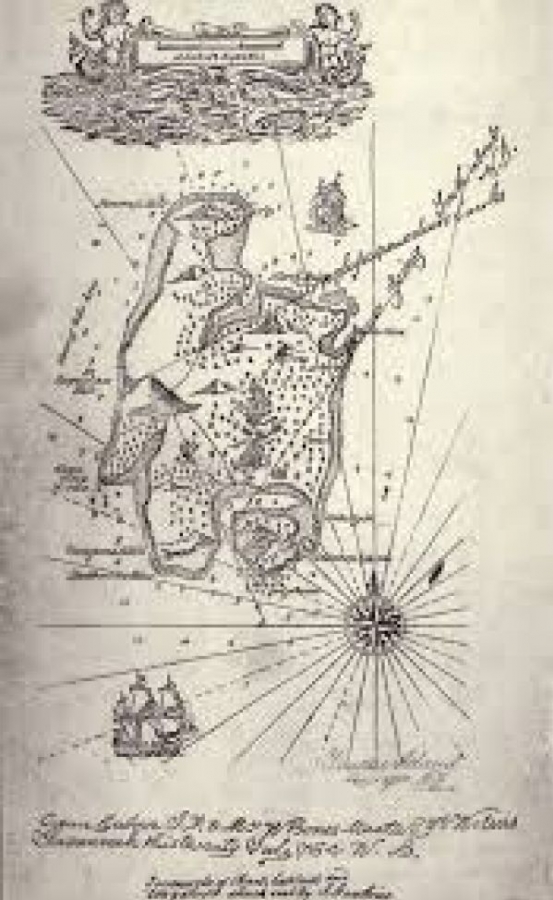
Treasure Island
In the introduction, Stevenson addresses a “hesitating purchaser”, inviting him to buy the book, > if sailor tales (told) to sailor tunes, storm, adventure, heat and cold, if schooners, islands, and maroons, and buccaneers and buried gold, and all the old romance, retold exactly in the ancient way, can please the wiser youngsters of today, as they pleased me when I was a boy . These words, whose charm in the English language is difficult to express in Italian, encapsulate the essence of a masterpiece: a great adventure novel that also aims to be instructive for the young, drawn in by “entertaining hours” of reading. Entertainment and morality, fantasy and education, exotic voyages and bourgeois solidity converge admirably, achieving a literary feat never equalled by other writers. The balance would be perfect were it not for the meddling hand of the pirate Silver, the personification of the dark glamour of evil. The author imagines that the protagonist, a boy named Jim, is asked to recount, “keeping nothing back but the bearings of the island”, the events that led to the discovery of the treasure. And Jim does so from the very beginning, from the moment a brooding sea-dog, who went by the name of the captain, arrived at his father’s inn. A man of few words, when drunk he would tell dreadful tales of hangings, great storms, treachery, and sailors cast overboard as punishment (“walking the plank”, literally walking on a plank). Yet above all, what terrified young Jim were the verses the man loved to sing under his breath: > fifteen men on the dead man's chest, yo-ho-ho, and a bottle of rum! , a refrain that agitated the captain just as he was terrified by the thought that a seafaring man with “one leg” might turn up at the inn. Jim is still a child; his nights are haunted by nightmares born of the terrifying tales, the mysterious song, and the ominous one-legged man. Though terrified, he was forced to summon all his courage to save himself and his mother from a band of pirates attempting to steal the treasure map from the captain. On a stormy night, abandoned by the frightened neighbours, alongside the lifeless body of the captain, Jim displayed the qualities that would stay with him throughout the novel: audacity, intelligence, and presence of mind. Not only did he bring his mother to safety, but he also managed to secure possession of the map. The boy then recounts the expedition to Treasure Island. The carelessness of Jim’s friends—the village doctor and a country squire—results in a crew that is largely untrustworthy, made up of shady characters or weak personalities easily swayed by the prospect of easy riches: the fatal lure of evil. Worse still, Long John Silver is hired as ship’s cook—a man who, as fate would have it, has only one leg. Jim suspects he might be the very figure feared by the captain, but > I thought I knew what a buccaneer was like—a figure very different, in my eyes, from this clean and pleasant gentleman.... very tall and strong, with a face as big as a ham ( a face as big as ham > ), plain and pale, but intelligent and smiling... under his left shoulder he carried a crutch, which he managed with wonderful dexterity, hopping about upon it like a bird . From the outset, an ambiguous bond forms between Jim and Silver. The wordplay, the flattery, the professions of friendship, the anecdotes of ships and sailors—accompanied by knowledgeable and seasoned explanations—win over the boy, captivated by the harbour, the sea, and the maritime world. Be that as it may, Jim is shrewder than the heedless adults. En route to the island, he discovers Silver’s plot and reveals it to his friends, saving their lives. Then, boldly, he ventures inland and stumbles upon a man abandoned for years in this wild wilderness, far from civilization: a character who will prove pivotal in overcoming the pirates. Even more daringly, Jim sets out alone in a frail coracle to recapture the ship, which is poorly guarded by the pirates. The scenes of this exploit, which will forge the boy’s character forever, are among the finest in the novel. The stormy sea, the rocky coast teeming with giant shellfish, the depiction of the fierce buccaneers attempting—and failing—to kill Jim: all these elements evoke a hostile world while serving to highlight the boy’s steadfastness. The true peril for Jim is fear, which he continuously overcomes, growing steadily stronger and more mature. Yet the final ordeal he must face to achieve full adulthood is the most daunting. Taken prisoner by Silver—who nevertheless saves his life—Jim witnesses the pirate’s double game: on the one hand pledging loyalty to Jim’s friends (those who embody order and justice), while on the other ready to deceive and betray, just as he betrayed his fellow buccaneers whom he dragged into mutiny. The boy is fully aware that Silver is a cunning and insidious liar, yet he cannot help feeling a stir of affection for the cook. > Certainly he took no pains to hide his thoughts; and certainly I read them like print.... in the immediate nearness of the gold, all else had been forgotten... and I could not doubt that he hoped to discover where the treasure was, find it, and aboard the ship, under cover of night, cut the throat of every honest person... but my heart was sore for him, wicked as he was, to think on the horrid perils that surrounded him, and the shameful noose that awaited him . In the end, however, Silver saves himself, even making off with a small stash of the treasure. Jim and his friends are only too glad to be rid of him and to return, safe and wealthy, to civilization. > To my inexpressible joy, the highest mountains of Treasure Island dissolved into the blue curves of the sea . Alongside the theme of adventure, Stevenson’s tale is many other things: a *Bildungsroman* of the journey into adulthood; a “swan song” of maritime England, which, now secure in its empire, looks with distaste upon the perils of the sea that nonetheless granted it power and wealth; nostalgia for a tranquil world, identified with bourgeois, urban society; and the indulgence of a great writer trying his hand at a canting, somewhat archaic English. There is no doubt, however, that Stevenson returns to a theme dear to him: the fascination of evil. The virtuous gentlemen set off in search of a treasure that was the fruit of theft, plunder, and violence. Silver is villainous, yet he saves himself and ends up rich as well, while his comrades are killed or marooned on the island to die of privation; and this perhaps because the cook assumes the guise of the “clean and pleasant gentleman”, the educated man—after all, he could belong to the very same caste as the doctor and the squire. What lesson, then, does young Jim draw on his path to adulthood? The language, the vocabulary, and the syntax are an essential component of the book’s appeal, making it challenging to read in English and demanding to render effectively in translation. *Treasure Island* belongs to that category of great, somewhat timeless books that nevertheless risk slipping into oblivion, rather like our own Gadda. And yet it is the writing itself that makes it an “inexhaustible treasure” of discovery, suited to readers of all ages. Why read it? Read it, read it, read it—read it unceasingly.
The Twelve Tribes of Hattie
> Fate had brought Hattie out of Georgia to bear eleven children and keep them alive in the North, but she herself was only a child, profoundly inadequate to the task she had been given . She is a Black woman; she left a land of segregation only to find herself in a degraded, impoverished, solitary, and marginalized urban periphery, yet she is determined not to return to the South and to raise her children against all odds, beyond her own strength, beyond her very capacity to love. The story begins in 1928, when sixteen-year-old Hattie has just given birth to twins. The cold, malnutrition, and the lack of medical care and medicine lead to the infants' deaths. > Oh, their skin was so soft! She felt their death like a mutilation in her own body : a wound that leaves her like > a lake of ice, thin and smooth, beneath which nothing could be seen or known or > a long January afternoon, the trees are always bare and there is not a single flower . Had Hattie been capable of loving more, of worrying less about keeping her children alive, would their lives have been better? The novel revolves around this question, and the author explores it with great skill by recounting episodes from the lives of the eleven children over a span of fifty years, up to 1980. After the dramatic episode of the twins' death, the narrative continues: Floyd, the eldest son, discovers his homosexuality; Six, another son, severely burned as a boy, finds his calling as a preacher in a Protestant church, but reveals himself to be a false and hypocritical man. The narrative then returns to Hattie to tell us about the only daughter born out of wedlock, the fruit of a brief and unhappy love affair, and about Ella, whom Hattie decides to give away to a sister in order to offer her a better future than that of her siblings. In the subsequent chapters, Alice's existential void takes center stage: she has married well and lives in an affluent home, but is condemned to a fragile survival due to her separation from Billups, the brother to whom she is deeply attached. Franklin, another son, has been abandoned by his wife and in some way courts death in Vietnam. With the final episodes, narrative tension mounts. Another daughter, Bell, has severed ties with Hattie ever since the latter discovered she had slept with an old lover of hers; yet Bell did so because as a child she had seen her mother with that man and she was so > beautiful and happy that an afternoon full of light was pale by comparison (...) whereas Hattie had always been stern and angry with Bell > . Only in the hospital bed, where Bell is admitted with tuberculosis, do mother and daughter find each other again, but even in this circumstance, Hattie had that same stern expression, in which Bell saw tenderness, Hattie's tenderness, which was always harsh > . Finally, we witness the madness of the youngest daughter, Cassie. Hattie and her husband, now elderly and frail, are forced to have her committed to a psychiatric hospital. As they take her away, Hattie sees in the rearview mirror her granddaughter, Cassie's daughter, running after the car, calling out and trying to stop them. She knew Cassie would not have wanted to be seen by her daughter at her worst. This was Hattie's kindness. With sorrow she parted daughter from granddaughter." The lives of Hattie's children are all in pieces, shattered because they never received that maternal love they so desperately needed. On the other hand, the amount of love a parent can give is finite; in Hattie's case, her social circumstances were far too wretched to leave her with any energy to devote to her children, beyond what was spent keeping them alive and preventing them from dying as the twins did. Too much suffering can only be endured by steeling oneself, by becoming hard and strong! The novel carries a powerful social dimension, yet it assumes a universal significance that transcends the specific plight of African Americans. The author addresses parent-child relationships, the difficulty parents face in understanding that material well-being is not enough, that there is something more that must be given: attention and affection. The failing of Hattie's tribe—and of children in general—is the inability to appreciate parental devotion, the tenderness and love that parents so often cannot or do not know how to express. The book is exceptionally well-written, with a gripping narrative pace and remarkably well-drawn characters. In her fateful misery, Hattie is a figure out of Greek tragedy, an African American Medea, harsh yet protective, difficult to forget. The author acknowledges her debt to Toni Morrison, yet Mathis's style is more straightforward than that of the great African American writer, just as her characters are more firmly anchored in their specific social condition. The novel displays a lucid narrative realism, a rich yet non-idiomatic vocabulary, and a classical, almost textbook syntax. Why read it? Dramatic, deeply compelling..
Vanishing Acts
Delia’s father had always told her that her mother was dead, so much so that she has become a memory continually resurfacing in her mind. > I used to imagine how my mother would come back. (...) In all of these daydreams, death was not as absolute as it was supposed to be, and we always found each other by accident. In all of these daydreams, my mother and I recognized each other without a single word. Delia's life has unfolded peacefully, with a loving father and two friends: Fritz and Eric, the latter of whom Delia falls in love with as a girl and with whom she has a daughter. Her only torments are that ever-present feeling of having lost something and the fact that Eric is an alcoholic. Until, suddenly, the police show up at the house to arrest her father, Andrew, accused of having kidnapped his daughter twenty-five years earlier. The novel tackles many themes—perhaps too many: Andrew's deceit, having concealed the existence of her mother, Elise, from Delia; Eric's alcoholism, resurfacing under stress and upon discovering that Elise had also struggled with alcohol addiction; the dynamics between the three friends, Delia, Eric, and Fritz, the latter having always been in love with her (serving in the novel as a kind of guardian angel); the new surroundings where Delia moves with her daughter to attend the trial and where she meets Rutham, a blend of Native medicine woman and hippie grandmother; the harshness and brutality of the prison where Andrew is incarcerated; potential childhood sexual abuse, repressed by Delia but brought back to light by her father's accusations against Elise during the trial (perhaps yet another lie); and finally the trial itself, recounted with the standard American police-procedural approach. To impose order on such a sprawling narrative, a review must select a single thread, even at the risk of stripping away the plot's richness. One might begin with a curious question the Native medicine woman poses to Delia: > What if the whole kidnapping experience wasn't Delia's story? What happens if disappearing wasn't the most catastrophic event in your life? What else would it be? (asks Delia). Ruthman raises her face to the sun. "Coming back," she says. And indeed, Delia is not happy when she meets her mother; Elise, tears in her eyes, realizes this and tells Delia that she has lost her once again, and forever. Too vast is the divide between fantasy and reality! > My mythical, imaginary mother was a god and a superhero and a comfort to me. (...) It took me twenty-five years to be able to admit that I'm glad I didn't know my mother until now. Not because, as my father suspected, she might have ruined my life, but because this way, I didn't have to witness her ruining her own. As the author states, through Delia's voice, > What matters is not what you have accumulated over the years, but those few things you can carry with you. It is a pity that such a compelling theme—the confrontation between memory and reality—is compromised by a plot overcrowded with narrative threads, superfluous characters, and redundant episodes. Why depict prison life only to traffic in clichés, and why become entangled in the interpersonal dynamics of childhood friends transitioning into adulthood? It would have been far better to examine in psychological depth Delia’s discovery of her mother as well as the mother's own emotions, which remain perpetually relegated to the background until fading away entirely. Further accentuating its melodramatic potboiler quality is the now ubiquitous technique of multi-voiced narration: each chapter recounts the story from the perspective of a different character, generating a redundancy of the "I" (is one not enough?) that renders the whole enterprise long-winded, repetitive, and tedious. The novel's merit lies in its prose: a syntactic structure that is straightforward yet far from trivial, and an elegant vocabulary enriched by idioms, adjectives, and verbs drawn from colloquial speech, marked by a distinctly American cadence. Distant from New York intellectualism and the overwrought virtuosity of certain contemporary American authors (one need only think of the much-celebrated Cormac McCarthy; see the review of *The Road* on this site), Picoult returns us to a style accessible to the general reader. Why read it? The prose is engaging; the premise, potentially intriguing.

Villages
Owen, the novel’s protagonist, grew up in a small town, where > sex and religion had distinct, antique smells; families were balanced like frail nests on knobby branches of preceding history . It is a world of vague certainties, which Owen leaves behind to study computer science at university. There he marries Phyllis, a brilliant mathematics student. Owen is captivated by his wife’s intellect and erudition, yet subconsciously senses a kind of detachment, as though she lived in a world of her own, populated by mathematicians and poets, while the real world were a “tedious and insignificant place of exile.” The couple moves to a small town, where Owen, together with a partner, launches a software company that proves to be a major success. Four children follow, Phyllis devotes herself to the family, and with the nineteen-sixties American customs shift, not least as a result of the sexual revolution; computer technology evolves rapidly, confronting Owen with a relentless technological challenge. The couple takes part in local high society, and in this gossipy, hypocritical milieu, Owen begins a succession of affairs—the first ones more emotionally involving, the later ones progressively confined to purely sexual encounters. Owen is an attractive, obliging man, yet scandal and gossip fail to destroy the marriage thanks to Phyllis’s determination to safeguard the family, and above all because she forgives her husband out of love. The marriage unravels when Owen, by now weary of these flings, meets Julia and asks for a divorce. In a confrontation—the only true argument of their marriage—Owen justifies this decision by claiming that Julia, a deeply religious woman, will save him from his own weaknesses. Phyllis rebels, but, disgusted by her husband’s hypocrisy, flees. Whether by accident or suicide, she dies in a car crash, and once again Owen is spared from having to make his life’s choices alone. One of the book’s central themes is undoubtedly the evolution of American society, observed from two distinct vantage points: the revolution in sexual mores (with Owen’s escapades becoming increasingly explicit) and the computer revolution, from mainframes to the personal computer. Another theme is the depiction of small-town American life, which in many respects recalls episodes of the television series *Desperate Housewives*. Then there is the figure of Owen himself—pliable, fragile, yet opportunistic—who merely drifts along with events while taking advantage of a protective cocoon (his mother, his two wives, and his business partner) that allows him to remain an adolescent all his life. It is no coincidence that the novel concludes with a description of Owen’s dreams, reminiscing nostalgically about his mother and the village of his childhood. Updike’s style is lush with adjectives and baroque constructions that lend musicality and expressive vitality to the narrative. Although the book is scarce in incident, it is the prose style that sustains the narrative rhythm, making for an enjoyable read. Yet such verbal redundancy does not favor economy, and the reader easily gets lost amid “so many fireworks.” Why read it? It is a thoroughly enjoyable read, especially in the original language.

A Visit from the Goon Squad (Time Is a Bastard)
The novel consists of 13 chapters, which could be read as stories in their own right, so disparate are they in genre and style. The connection between them is extremely fragile, resting merely on the fact that each chapter shares a character with another. There is, therefore, neither a unified plot nor a hierarchy of characters; the whole resembles the faint interplay of subatomic particles (in this case, the protagonists), with the author like a perplexed physicist wondering whether «a particle can know what is happening to the others». That is to say: is it possible, in our fractured and liquid society, to find a common ground of relationships, or does each individual live as a solitary, incommunicable monad? From this opening alone, one can grasp that this is a complex, sophisticated, fragmented, and in some ways incomprehensible novel. It is difficult to provide a cohesive overview of the narrative. I will try. The story is supposed to unfold from the 1980s to the present day, with the Bush era in between, and all that it meant for the American consciousness. Bennie is a former musician and now a record executive; his assistant is Sasha, a young woman suffering from kleptomania. From these two characters, several paths branch out, which only at the end, perhaps, converge once more. In a succession that is disjointed from both a chronological and narrative standpoint (the temporal leaps are numerous, just as the links between the stories remain unclear), we follow the fortunes of the band Bennie belonged to in his youth, the familial and romantic affairs of the record executive who discovered the group, the story of Jules—the brother of Bennie’s ex-wife—who served years in prison for attempting to rape Kitty, a young actress whom we find, many years later, collaborating with Dolly, a publicist who was herself, at another point in time, the employer of Bennie’s wife when the two were not yet separated.In other stories we follow Sasha, her transgressive life among a group of youths devoted to sex and marijuana, and then, no less, in Naples, where she lives in the Spanish Quarter. The book closes with the characters now advanced in years, far removed from their reckless, confused lives. Bennie and Alex, an old friend of Sasha’s from whom she had once stolen a wallet, go looking for her to find out what became of her. They do not find her, and so we are left to conclude that a stable relationship between people is impossible—that we are like «blind» individuals knowing nothing of one another. Yet the generation of the 1980s, to which the characters belong, is now gone, swept away by the Bush era: new lifestyles are emerging, embodied by Lulu, Bennie’s assistant and, as it happens, Dolly’s daughter—willful, cold, decisive, technological. The novel, with which the author won the Pulitzer Prize in 2010, was presented in Italy under the title *Il tempo è bastardo*, placing the emphasis on one of the book’s central themes: memory as an extreme, confused attempt to return to youthful egocentrism, when «nothing was decided yet». Time—not chronological, but that of memory—could be the novel’s unifying element. Yet perhaps, to make sense of the book, a near-literal translation of the title is more fitting: a visit from a squad of reckless fools (literally, it would be from a squad of thugs). Indeed, the novel seems to narrate the retreat into a bourgeois, conformist lifestyle of a generation that wanted to live «over the top», free and transgressive: nostalgia for that happy age is all that remains. The author displays formidable writing talent, through the richness and elegance of her language and the multitude of literary genres in which she has successfully tried her hand. In one chapter, she even abandons prose in favor of a PowerPoint presentation. What is evident is the courageous pursuit of approaches capable of constructing the form of the novel upon new rules and styles. Innovation, however, got the better of her when it comes to the overall structure: an incomprehensible mosaic, a lack of narrative momentum, a redundancy of characters, and a dispersion of plotlines. What remains, then, are a few exquisite stories alongside others that are far less compelling, but the whole proves unreadable. Why skip it? It is a book too intellectualized to be an enjoyable read.
Wait until spring, Bandini
The story belongs to *The Bandini Quartet* saga, chronicling the fortunes of the Italian-American Bandini family, and of Arturo Bandini in particular. The setting is the family: a bricklayer father who is consequently unemployed during the long Colorado winters, a mother striving to maintain a sense of decency and a bare minimum of subsistence, and three sons, the eldest of whom, Arturo, must also shoulder the burden of his father’s frequent, drunken disappearances. In this already fraught domestic sphere, the father’s infidelity with a wealthy local woman triggers the mother’s breakdown; she sinks into prolonged bouts of depression and refuses to let her husband back into the home. It falls to Arturo to seek out his father and bring him back. The themes are those familiar to the author: family dynamics, the bond between son and parents, Catholic culture, and so forth. The narrative unfolds sluggishly, at times becoming tedious and verbose. The musical cadences that characterized the previous novel are absent here. Predictable tropes tied to Italian heritage and Catholicism often seem to dominate (for instance, guilt, recourse to confession, and rituals). The mother’s revolt—her defiance in the face of wounded dignity—emerges as a high point in the narrative and constitutes its finest pages. Another theme is Arturo’s coming-of-age, a journey inevitably accelerated by his mother’s fragility and his father’s absence.
Washington Square
The book is set in late nineteenth-century New York. Catherine, the daughter of a prominent physician in the city, is courted by a young man who is interested in her dowry. Catherine’s father refuses and declares that he will not grant the girl her inheritance. A romantic drama unfolds, in which Catherine’s aunt assumes an important role: a woman who, driven by a romanticized conception of love and the futile pursuit of extraordinary occurrences, wishes the girl would abandon her father and marry the young man regardless. Following a journey to Europe with her father, Catherine realizes that he holds no esteem for her whatsoever, and decides to marry the young man even against her parent’s will. Yet the young man, who had hoped the father would change his mind, abandons the girl, knowing he cannot gain access to the doctor’s fortune. Years pass, Catherine does not marry, and after her father’s death the young man reappears—now an aging man—hoping to resume their former relationship. But Catherine turns him away. The underlying theme of the book is the story of a young woman who is the object of the aspirations and notions of others. The father believes his daughter to be foolish, devoid of qualities, and maintains toward her until the very end a contemptuous attitude, aimed more at asserting his own intellect and foresight (he had grasped from the outset that the young man was after the dowry) than at considering his daughter’s feelings. The aunt is in search of emotional thrills to fill her life and does not consider that her actions (her friendship with the young man, her attempt to manipulate the girl, etc. ) might cause harm to the point of ruining Catherine’s life. The young man is patently a scoundrel, a vacuous figure who seeks until the very end to use the girl to secure a position for himself, unconcerned about returning after so many years to wound her anew. Throughout this story, Catherine’s personality gradually emerges; she finds the strength to take a solitary stand, determined not to compromise with anyone, even at the cost of her own happiness. She has been and continues to be manipulated; her father holds an opinion of her shaped by stereotypes, yet she lives her own life, now indifferent and in opposition to those around her. To the young man, now a mature man, who asks if she is angry, Catherine replies: > no, I am not angry; anger does not last that way for years. But there are other things. Impressions that endure, when they have been strong. But I cannot speak... Catherine picked up her knitting needles, sat down with them again, for life, as it were .
Toilet
In Hindu tradition, a widow > must remain in perpetual mourning... her head is shaved clean. her ornaments removed... she must eat no cooked food in order to cool sexual energies, avoid worldly gatherings because a widow brings misfortune (having caused her husband's death), and she must remain chaste, devout, and faithful to her husband’s memory . Religious tradition is compounded by economic motives. Through the marginalization of widows, sequestered in dedicated dwellings, the relatives—of both the woman and the deceased—rid themselves of a claimant to the inheritance. Yet > the combination of moral unworthiness and innocence lends (widows) an irresistible erotic appeal. And eroticism is heightened by their vulnerability and availability . The lack of financial means (they are frequently abandoned by their families), loneliness, and social ostracism render widows easy victims of prostitution. The book addresses the lives and destinies of these widows. It does so through the story of a young girl. Chuyia is not yet six years old when she is given in marriage to a man far older than herself. She is still living with her family, waiting to become a woman, when her husband dies. She is cast out mercilessly into a house for widows. Uprooted from her world, abandoned and forgotten by her parents, the child must rebuild an emotional sphere of her own. She finds it in several companions in misfortune, older than she: old Bua, who still reminisces about the sweets and delicacies served at her lavish wedding; Shankuntala, who lives out her fate as a widow with profound devoutness and wonders whether her life is not > an illusion that burst like a bubble and opened into another illusion in which she was a widow , and the radiant Kalyani, who, precisely because of her beauty, has been coerced into prostitution and has learned to “live like a lotus, uncorrupted by dirty water”. Kalyani’s life is, in fact, a series of discrete episodes, of compartments—some opened to the sunlight, others (“the nocturnal calls”) repressed and hidden from herself. In their own way, each of the widows has found a modus vivendi to render life bearable, an existence otherwise intolerable. And this would have been Chuyia’s fate, were it not for two terrible events: Kalyani takes her own life upon learning that the young man she loves is the son of the man to whom she is prostituted; Chuyia, not yet nine years old, is drugged and raped, so as to initiate her into prostitution. How can the pious Shankuntala continue to believe in a religion that justifies such cruel and unjust destinies? Is it truly that God is Truth, or is it not rather, as Gandhi says, that Truth is God? Meaning that we must act out of the awareness of being part of a whole, in which every being possesses equal dignity and the right to live. With this awareness, which finally sets her free, Shakuntala resolves to save Chuyia at least, entrusting her to Gandhi. The happy ending is not an unexpected twist—though a welcome one nonetheless. It is the consequence of a cultural and psychological maturation. It is the sign of liberation. The novel unfolds slowly, with a rhythm that mirrors the inexorability of the widows' destiny. The opening scene radiates a childhood serenity that is prematurely dispersed. > Birds hopped among the tree branches, making the leaves tremble and filling the forest with chirping... All of Chuyia’s senses sharpened in the wild beauty of the forest, her breathing slowed to harmonize with the deep rhythm of the plant world, and her heart was at peace . It is the image of that communion with the “whole,” with Truth—Gandhi’s message: a communion shattered by the cruel rules of society. We then follow the young girl into the house of widows. There is no facile moralizing, no overt social denunciation: things are as they are, and as they have always been. Admittedly, small acts of defiance occur, yet a melancholic resignation to one's fate prevails. The women always return to memory, immersing themselves in prayer and the veneration of the dead. A nostalgic gentleness prevails, reflected in the prose: rich in vocabulary, full of refined adjectives, serene as widows are expected to be. The novel gathers speed in its final pages, when, confronted with the horror of what has occurred, Shankuntala reclaims control of her own destiny, and the tumult of the crowd, the cries of the people, and the headlong rush of events take over. Why read it? It depicts the Indian world, suspended between ancestral traditions and renewal. It also depicts the absurd and oppressive rules of any religion and tradition.

The way home
Chris grew up in a respectable middle-class family. His father runs an installation business: hardworking, reserved, yet attentive to the family’s needs; like all parents, he is full of expectations regarding his son’s future. The mother is protective, affectionate, ready to indulge anything from her boy, so loved and desired. It is a peaceful and well-off household, yet how is it possible that Chris deals drugs, gets involved in petty theft and brawls? > He was not trying to hurt his parents, really. But in his mind there was this thought: they have unreasonable expectations of me. They do not understand who I am... I don't want to be their good boy and I don't want the things they want for me. If they do not understand, it is their problem, not mine . Charged with drug dealing, assault, and causing accidents while attempting to flee the police, Chris receives a severe sentence. He is committed to a juvenile correctional facility, predominantly populated by Black youths. Proving to possess greater resilience than anticipated, the young man manages to survive in an environment that should be hostile to him. Indeed, he establishes a series of friendships that endure beyond prison walls. His only friction is with an older, violent, and aggressive youth named Lawrence. The author does not, however, delve deeply into the prison environment, which resembles a boarding school more than a prison, even a juvenile one. Attention is entirely focused on depicting the relationship between Chris and his father: a cold, detached dynamic marked by mutual distrust. For the father, the disappointment was too profound to offer solidarity and affection to his son. The boy senses his parent's low esteem and withdraws into himself, bolstered by his new experience, which he regards as an achievement. Parent-child relations are fraught to such an extent that one is astonished when, in the novel’s second half, Chris is found working for his father. During an installation job in an apartment, Chris and Ben, a former fellow inmate, discover a bag of money under a floor. They do not steal the cash; they leave it where they found it, promising each other to keep quiet. Ben, however, mentions it to Lawrence over drinks one evening. Lawrence steals the money, unaware that it belongs to two dangerous criminals who stashed it away to retrieve upon their release from prison. The two thugs murder Ben in an effort to discover who has the cash. Chris reveals nothing to his father or the police, contacting Lawrence instead to seek mutual vengeance for their friend’s death. Such is the prison code of honor. To his girlfriend, who urges him against it, Chris replies that > there are two personalities in me, there is the person you know, and the one that is still inside me. The boy who did bad things and was locked up in prison. The one you have never met . It seems Chris is lost for good, yet it is Lawrence who saves him, ensuring Chris does not carry out the revenge, which falls solely upon himself, the bad seed. Indeed, destiny is sealed at birth: Chris was "born in a good suburb, raised in a loving home," while Lawrence > had never found that place ( where) they speak to you with kindness and patience instead of sarcasm and cruelty . The novel pursues several narrative threads: intergenerational conflict, the passage from adolescence to adulthood—which often finds positive resolution through sheer luck alone—and parents coming to terms with the fact that their children harbor their own aspirations and desires. The happy ending should not lead us into facile optimism regarding social change. Everything is already determined from birth: those who are white can be saved, even if they occasionally lose their way; those who are Black can only be dragged down, back into the world from which they desperately strive to rise. Compelling social and psychological themes are diluted by a sluggish narrative pace, devoid of action and at times mundane. Particularly in the depiction of prison life, the author seems eager to present a placid, reassuring vision of the so-called rehabilitation of juvenile offenders. The leap between the first part—the bad Chris—and the second—the good Chris—is so pronounced and thinly explored that it strains the credibility of the entire narrative. Finally, reviews often tout Pelecanos as a writer of noir, albeit with a social bent. From this vantage point, one is left disappointed by the dearth of action and suspense. Why read it? It makes for a pleasant read, but nothing more.
White Fang
*White Fang* is the tale of the birth of friendship between wolf and man, but also the chronicle of a catharsis, of a transition from solitude to sociability. The novel opens with the mortal conflict between the two animal species. Two men, with their dogs, are pursued by a pack of wolves desperately seeking food in the cold North American winter. Patiently, with lucid and ruthless precision, the wolves gradually eliminate the various members of the party before launching their final assault on the sole survivor. In this fateful moment, there is no longer room for the arrogance of the human species, for its intellectual contortions, for its presumed supremacy. The man > cast a terrified glance at the circle of wolves that would predictably form around him, and suddenly the realization struck him that this wondrous body of his, this pulsing flesh, was nothing more than meat, quarry for voracious beasts, to be torn and ripped apart by the ravenous fangs (of wolves) to become their nourishment, just as the mouse and the rabbit had often been nourishment for him . Upon the arrival of some hunters, the wolf pack flees, disbanding. A female and two males depart together. This is the finest part of the book, in which London effectively depicts the wilderness of the forest, the clash of the two males for the female, mating and the birth of the pups, their discovery of the surrounding world, and the famine that decimates the family, sparing only the she-wolf and one of the cubs, White Fang. Nature is fascinating yet brutal; among the various species there is a relentless struggle for food, in which the strongest and most cunning prevails. The competitive vision of the nineteenth century, of a triumphant bourgeoisie, emerges in London’s pages, alongside a romanticism nourished by the richness and mystery of the wilderness. White Fang's mother is a cross between a wolf and a dog. For London, genetic inheritance is an imprinting no being can escape, > because life reaches its summit when that which it is equipped to do is realized to the fullest . The encounter with a tribe of Indians revives in White Fang’s mother her nature as a “dog,” dependent on man. Contact with man is an extremely harsh trial for White Fang, an ongoing conflict between his independent nature and devotion to man’s strength, who in his animal psychology is experienced as a "god > . There is no affection toward man; instead, in White Fang there is fear and admiration. Alongside the men are the dogs. Alone against all, White Fang grows hard, ruthless, a warrior: he never learned to play with (the dogs), he only knew how to fight > . He becomes a cold fighter, but also a solitary and sorrowful animal, having never known the affection and play of other pups. His qualities as a fighter will prove invaluable when, sold to a cruel white man, he is used in dog fights, in which he always emerges victorious. White Fang comes to know the world of hatred to its depths, knowing he can defend himself against it only through strength and cunning: he has no friends and seeks none. And it is during one such fight that White Fang, gravely wounded, is rescued, tended to, and cared for by a wealthy gold hunter. From this point onward, the story becomes trite and predictable. Little by little, day after day, White Fang discovers that he is capable of affection and devotion toward man; he is no longer alone, he is surrounded by an environment full of love, he discovers friendship and, with it, fatherhood: the pup sprawled in front of him. (White Fang) pricked up his ears and looked at him curiously. Then their noses touched and he felt the pup's warm little tongue upon his jaw. White Fang's tongue came out, he knew not why, and licked the pup's muzzle. The first two parts of the book are splendid and clear in their meaning. The wolves’ attack on the men and the expert naturalist’s depiction of the forest are an evident exaltation of wild nature, of the untamed strength of environments where one fights on an equal footing" to survive and not for amusement. Then, instead, the complexity of human relationships takes over: hatred, amusement at the expense of the innocent (animals), the ambiguity of human affection, which demands fidelity and obedience regardless. White Fang is ultimately a victim of man, as are all animals. His instinct must bend to the laws of man, and only in fatherhood does he reclaim his wolfish destiny. From the standpoint of writing, Jack London’s fundamental virtue is his narrative pace, action-packed yet set within an exceptionally compact plot. The author has no need to expand the story, which is instead a continuous deepening of the same theme, entrusted to a rich and multifaceted use of verbs and adjectives. Why read it? It is a pleasure to let oneself be swept away by London’s love for wolves and nature.

The White Tiger
In the splendid stories of *Between the Assassinations*, Arvind Adiga had developed a pessimistic chronicle of an unalterable social destiny, from which one can escape only through a desperate individual choice. The Indian writer returns to this theme with this novel, which recounts the story of a man's rebellion against the petrification of caste, the exploitation of the poor by the rich, and the social imprisonment forged by tradition and family ties. There are no grand ideals behind the revolt; there is merely the desire to have > the chance to be a man, and for that, it was worth killing . The author imagines the protagonist writing to the Chinese premier to explain how one becomes a successful entrepreneur in modern India, "the centre of technology and outsourcing." One need not have attended university or worn fine clothes: entrepreneurs are made of "half-baked clay," they must emerge from the dark side of society and possess the resolve of those who have nothing to lose, who know that there are "only two destinies: eat or be eaten." The protagonist fits the profile. True, in the impoverished village where he was born and raised, they did not even give him a name, calling him merely Munna—boy—yet, from childhood, he senses that he is not destined to "remain a slave." Only, it is not so easy to "spit out one's past." One must break free from the "cage" in which one has been trapped since birth. To depict this social and psychological condition, the author employs an effective metaphor: the poultry slaughterhouse. > Go to Old Delhi and watch how they keep the chickens there in the market. Hundreds of pale hens and brightly coloured roosters, stuffed tightly into wire cages, packed together like worms in a belly (...). On a wooden table (...) sits a young butcher, smiling complacently, displaying the flesh and organs of a freshly slaughtered chicken (...). The roosters see the organs of their brothers lying around them. They know they will be next. Yet they do not rebel. They do not try to escape from the coop.(...) Because the desire to be a servant has been bred into me; carved into my brain, nail after nail, and injected into my blood, in the same way that waste and industrial poisons have been poured into Mother Ganga. (...) Servants must prevent other servants from becoming innovators, experimenters, or entrepreneurs. (...) The coop is maintained from the inside . The narrative is precisely the protagonist's liberation from this subtle yet unbreakable prison. By chance, he manages to move to New Delhi as a driver for the brother of the village boss. He remains a servant in every sense, at beck and call for any need; yet driving the car grants him access to every facet of his master's life, from intimate matters to shady dealings. It is a kind of unveiling, a discovery of the sins and emptiness of the rich. The obedience and subservience inculcated over centuries would have nevertheless kept him a faithful servant; at most, he might have indulged in some petty, innocent pleasure, as other drivers do: urinating in the masters' flowerpots, slapping them while they sleep, beating their pets. An incident helps awaken his consciousness. The master's wife runs over a poor person, and the boss's family demands that Munna take the blame and go to prison. Even the protagonist's own relatives urge him to make this sacrifice, as though it were the most natural thing in the world. Fortunately, the police, suitably bribed, close the investigation, leaving no consequences; but the protagonist grasps the hollow nature of traditional values of loyalty and the hypocrisy of the benevolent paternalism displayed by his master. He often has to drive the latter, carrying a bag full of cash, to bribe government officials. He decides to seize the opportunity: he murders the master and takes the money, laying the groundwork to become a successful entrepreneur. The caustic irony of the narration must not mislead: the novel is staunchly realist, a cold social accounting and a vigorous political indictment. The whole of Indian society emerges desecrated and exposed in its true nature, both modern (the myth of the world's largest democracy, the headlong and all-resolving economic boom) and traditional, which so fascinates Westerners. The protagonist is a stereotypical figure, as cold and cynical as the master he killed: a true "white tiger," because he is cruel and at the same time rare. Munna achieves success, but this offers no solace to the reader. The hope lies in the fact that he performs two acts of humanity: fleeing after the crime, he risks capture by the police to save a young cousin who lives with him; he compensates the mother of a man struck by one of his drivers. Slight gestures of solidarity, which cannot make us forget that the protagonist failed to warn his relatives of the vengeance of the boss's family, who will indeed slaughter them all. Where what matters is "the size of the belly"—money—there is little room to be "good"! The novel's primary virtue is its narrative style: prose that is spare yet rich. The flaw lies in the plot, which fails to sustain an intense narrative pace, rendering the tale often repetitive, burdened with too many sociological and political digressions. In its execution, the author fails to sustain the expectations raised by the intriguing literary device of the letter to the Chinese premier. Why read it? A strong realist stamp, highly effective prose.
Women in love
The narrative unfolds within a framework of relationships among four protagonists: two men bound by a close friendship, and two sisters, both young schoolteachers. The historical context is England in the second half of the nineteenth century, marked by the advent of machines, positivism, and a yearning for a poetic world, epitomised by the English countryside. The two men operate within the roles assigned to the male by English society. Birkin is a romantic young man who seeks in woman a submissive companion (a wife and a mother), believing that true friendship, essential to a man's completeness, is that shared with other men. One might say his touchstone is Plato's *Symposium*, even if he does not go so far as a homosexual relationship—which, in fact, he gently declines when proposed by his friend. Gerald is a young engineer, a wealthy industrialist who has radically overhauled the organisation of the mines he owns, defying his father’s authority. A horrific childhood incident (he inadvertently contributed to his brother's death), a troubled relationship with his father, and a positivist world-view—which nevertheless conflicts with profound inner torment—conspire to lend him an outward confidence while driving him to seek comfort and solace in woman. In him, male friendship borders, almost overtly, on the pursuit of a homosexual relationship. While the men serve as a point of reference, locked as they are within their social roles and their egos, it is the two women who shatter convention entirely: and this not out of an impulse toward social emancipation, but because sensuality and physical restlessness contribute to subverting the concept of woman as wife and mother. It is Ursula, one of the sisters, who entices Birkin, drawing him into a sexual relationship—intensely erotic even by contemporary standards—that the man himself perhaps did not seek. It is Ursula, once again, who resists marriage, prevaricates, and, when she finally yields, finds herself in conflict with her parents. Gudrun's personality appears more complex: she too is driven by a powerful sensuality, which is sublimated into an intellectual quest for freedom, for an unconventional life. Her relationship with Gerald develops precisely around this contradiction: on the one hand, she experiences a fierce physical attraction; on the other, she disdains him for his prosaic nature, for his conventional view of gender roles. From this contradiction the final tragedy erupts, in which Gerald attempts to kill the young woman before taking his own life. Alongside the protagonists stands nature, which forms an integral part of the tale. It is a kind of pantheism, a living nature that merges with the protagonists: > nothing else would work, nothing else would give satisfaction, except this coolness and this netting of vegetation, which penetrated into the blood. How fortunate he was that there was this pleasant, subtle vegetation interacting, waiting for him as he waited for it; what a fullness, what a joy! . Yet nature also leads toward dissolution, toward death. > A small, bright moon shone just ahead, a brilliant thing, a bearer of sorrow, that was always there, eternal, from which there was no escape. He (Gerald) wanted to go to the end, he could bear no more. Yet he could not sleep . The plot unfolds slowly. At the outset, there is the depiction of the small English town along with the introduction of the protagonists. In truth, these appear as standalone scenes, unframed by a broader narrative arc. Each of these scenes is meant to introduce certain interior themes, tied to the web of relationships, which will later erupt in the second half of the story. At times, the author embarks on digressions into social philosophy, using the protagonists (Birkin in particular) as mouthpieces. The death of Gerald's father and the erotic scene between Ursula and Birkin mark the turning point of the novel, which moves, ever slowly, toward Ursula's marriage to Birkin, Gudrun's decision to enter into a romantic relationship with Gerald, and ultimately the journey to Austria, amidst the snow and cold. Here, Gerald's jealousy of Gudrun, his realisation that he cannot master the young woman, and her decision to leave him drive everything toward the final tragedy. The writer writes exquisitely, with a style steeped—both in its diction and in the cadence of its prose—in a pantheistic sensualism reminiscent of D'Annunzio. The two authors appear remarkably similar in the elegance and refinement of their language as well.
World without end
Two hundred years after the events recounted in *The Pillars of the Earth*, Kingsbridge has become a prosperous town whose prospects for growth are, however, jeopardized by monastic rule, which curtails entrepreneurial freedom in favor of rigid stagnation and heavy taxation. There is, consequently, the risk of an economic and social decline. The engine of innovation and change is a woman, Caris. She refuses to accept the traditional role assigned to women—as mother and wife—and chooses to lead an independent life, renouncing motherhood and pursuing a troubled romance with Merthin. Caris will subsequently become a shrewd wool merchant, an innovator—introducing the manufacture of textiles and thereby giving rise to the English cloth industry—a nun and abbess (paradoxically more independent in this role than she would have been had she married), a physician of great renown, a courageous political figure, and ultimately Merthin’s wife. He, in turn, represents the engineer and the archetypal male figure, capable of profoundly innovating construction techniques, yet conversely unable to comprehend the complexity of the female character. Summarized in this manner, the book might sound compelling. In reality, the staggering number of subplots, situations, and characters fails to lend dynamism or allure to the narrative: there is no suspense for an action-driven novel, while the characters remain predictable and flat. Caris’s tormented life and her problematic, complex evolution are never explored in depth, as though this character surrendered her love life and accepted her fate as an independent woman without suffering, almost like an "automaton," bereft of feelings and remorse. Moreover, the sheer breadth of the subjects covered renders the historical reconstruction itself exceedingly fragile, and ultimately unable to hold the reader’s attention. One need only consider the description of the battle during the Hundred Years’ War: accurate regarding the decisive role of the archers, yet tedious, verbose, and scarcely engaging.

Wuthering Heights
A wild setting and free, violent personalities are the hallmarks of a complex and difficult novel. The complexity stems from the book’s “matryoshka” architecture: a first-person narrator records the story recounted by a second first-person narrator. Furthermore, the novel unfolds across different timelines, with frequent flashbacks. The difficulty lies in its language: the frequent use of dialectal English, a vocabulary-rich style, and an involved syntax. A gentleman moves to the country and, on a stormy evening, finds himself at Wuthering Heights (*Wuthering Heights*), undergoing an unsettling and, in some respects, terrifying experience. One feels transported back in time to a pre-industrial era unfamiliar with the manners of Victorian England, where a magical interpretation of the world still holds sway. This regression, which underscores the divide between city and country, between civilization and barbarism, is heightened by the use of dialect among many of the inhabitants of Wuthering Heights. From the outset, the novel’s opening foreshadows what will become the book’s underlying theme: the eruption of man’s primordial passions. Having struggled back to his residence, the gentleman has Nelly—the housekeeper who raised all the protagonists—recount the family’s history to him. Without presuming to detail the entire plot, one can summarize that the narrative hinges entirely upon the love between Heathcliff and Catherine; a love grounded precisely in the shared nature of the two characters: free, wild, and violent. Their love cannot be consummated in marriage—and thus recognized by society—precisely because Victorian respectability cannot accept that Heathcliff, a poor, dark-skinned orphan, might aspire to the hand of a young lady of good family. Yet Catherine happens to share Heathcliff’s temperament, and thus chafes against the rules of polite society. Catherine’s death, following a dramatic encounter with Heathcliff, unleashes the latter’s vengeful, sinister soul. At this point, the narrative drifts increasingly into the effects of terror and mystery typical of Gothic fiction, to the extent that at times Catherine’s ghost returns to haunt Wuthering Heights, reminding Heathcliff not only of their love, but also of his guilt. Yet the ending is predictable: bourgeois rationality prevails (there is no ghost), and the family scions marry happily. Yet is the story true, or merely a figment of the narrator Nelly’s imagination? Could it be that the housekeeper interprets the family’s affairs through the lens of her own fancy and local gossip? Heathcliff and Catherine are characters both modern and ancient at once. From modernity they bear the yearning for freedom and self-actualization; from the bygone world they retain a crude, vindictive spirit. The contrast with Victorian society is framed nostalgically—that is, as a return to a rural world where feelings could be expressed with greater freedom and transparency than under the strictures of bourgeois society. This sociological interpretation does not, however, translate into a genuine analysis of the characters, who remain impersonal and trapped in the roles assigned them by the author. The plot unfolds slowly, devoid of rhythm, often predictable and repetitive. Why not read it? The book is fundamentally boring, and the reading experience is weighed down by an unnecessarily difficult English.

The Yiddish Policemen's Union
Sitka is a remote Alaskan island where the author imagines that a community of Yiddish-speaking Jews from Eastern Europe has settled. Relations with the native population have proved difficult enough to prompt the United States government to relocate most of the Jews to other countries. In a situation suspended in uncertainty, Landsman—a skeptical, disillusioned Jew, a solitary alcoholic police detective abandoned by his wife—becomes embroiled in the murder of the son of a powerful Jewish sect leader. Despite the obstacles raised by the police authorities themselves, Landsman doggedly pursues the killers, only to discover an international conspiracy to blow up the Grand Mosque of Jerusalem. > Times have always been strange to be a Jew, just as they have always been for a chicken . This sentence encapsulates the book, whose fundamental motif is the isolation of Jewish society, increasingly locked into eschatological visions: the search for the promised land, the awaiting of the Messiah, the allure of magical and esoteric symbols. Yet in reality, money and power also reign supreme. The novel’s opening is promising, as the author effectively captures the figure of the protagonist and the cold, harsh Alaskan setting, while successfully generating the suspense typical of a detective story. The plot’s emphasis on chess—the victim was a great champion—introduces a stimulating element, raising expectations tied precisely to the tactical patterns of the discipline. Then the book devolves into a hodgepodge, crowded with the most predictable narrative tropes of high-octane pulp fiction: an overabundance of characters, increasingly convoluted family dynamics, terrorist groups, secret services, and ultimately an improbable international plot. The book’s other motifs are the Yiddish language and the historically pursued ideal of a promised land—not necessarily in Palestine—where Yiddish could be used as an official language. Yet are the “yids” capable of coexisting with others? To this question Chabon offers a negative answer: there is no happy ending to the diaspora. The novel’s brilliance, but also the sheer difficulty of reading it, lies in its language. The author upends English by imposing an idiom of his own, particularly in his diction. Suffice it to consider, for example, that Chabon uses “shalom” for a gun; but “shalom” in Yiddish means peace (in English, *peace*), whereas slang uses “piece” for a gun. It is a clever play on meanings, demanding considerable linguistic knowledge and close attention from the reader. Why not read it? It is an overblown potboiler, prolix, where the author’s intellectualism overwhelmingly prevails, alongside his existential angst regarding the Jewish people to whom he belongs.