Finished reading on: September 01, 2011
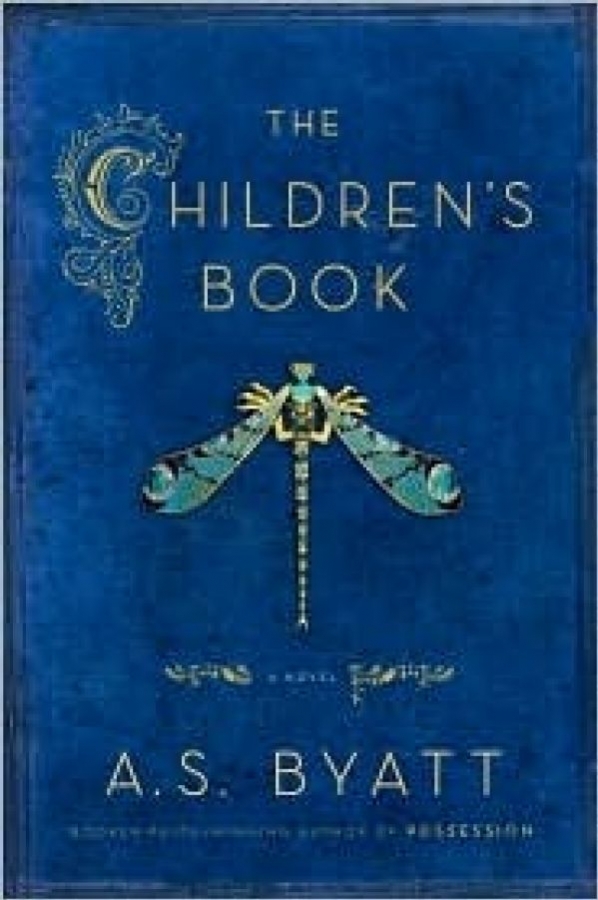
The children's book
AI Translation Notice: This review was translated from the original Italian using artificial intelligence. Book quotes and excerpts are translated interpretations and will not match the author's original English phrasing or official published translations.
The novel is set in England between the late nineteenth and early twentieth centuries.
It is the triumphant era of the bourgeoisie, which would come to a tragic end with the First World War.
Technological and artistic innovation—including in the decorative arts and crafts—individual freedom and equality, the role of women and feminism, socialist and anarchist ideas: these are the defining hallmarks of this historical period, providing the backdrop to a profoundly contemporary theme: that of betrayed childhood.
At the end of the nineteenth century,
children were different from children before and after.
They were neither dolls nor miniature adults.
They were not hidden away in nurseries, but were present at family dinners, where their developing characters were taken seriously and rationally discussed, during meals and on long country walks.
And yet, at the same time, children in this world had their own separate, largely independent lives, as children.
Parents found it hard to do in practice what they believed in theory that they should do, which was to love all the children equally
.
One should not, however, expect a conventional historical and social novel; it is in fact an intricate narrative in which different planes of storytelling, internal and external, intersect through the fairy tales written by one of the mothers of these large bourgeois families: Olive.
Her seven children (who, as will emerge, are not all born of the same mother and father) are each the subject of a story.
Yet here lies the first betrayal: the stories are not truly for them, but for the reading public, as Olive confesses at one point:
I don’t really like making up imaginary children.
I get frightfully bored with their little quarrels and their innocence.
But the readers have an insatiable desire for these clever little people having comical adventures
.
On the parents' part, there is no genuine attention paid to the children: their utopian ideas about education, about their children’s free will, about an affectionate and stimulating environment in which to bring up the young, are mere words masking a real indifference.
And the children grow up regardless of their parents, gradually discovering the lies of their fathers and mothers, their subterfuges, and in some cases even their violence.
They adapt by keeping the truth concealed, by not disturbing the prevailing hypocrisy, and by guarding family secrets.
Each reacts differently: one takes refuge in the woods, cutting himself off from everyone; another skillfully conceals his true political beliefs; another vents his rage upon his father’s cherished possessions; another remains suspended, waiting, letting life simply roll by.
There are also those who flee their parents’ ideological vagueness by pursuing concrete professions, such as medicine or stockbroking.
The First World War brings a tragic end to many of the young protagonists' lives and leaves the survivors profoundly altered.
Yet the war is merely the epilogue to a tragedy that had already found voice in Olive’s fantastical, almost psychoanalytic tales, all centered on underworld realms, as if foreshadowing life in the trenches.
It happens sometimes that writers, even accomplished ones, measure themselves against narratives that vastly exceed their strength and skill.
Such is the case with this book, which not only takes on too many themes (children and adults, the interrelated histories of several families, works of art and the emergence of modern museums, feminism, and many others besides) and too many characters, but above all proves redundant due to a rich, overwrought, and baroque prose.
Too many words, too many topics, but little capacity to convey tension or foster readerly engagement.
The narrative plot, much like the characters, feels contrived, monotonous, and in many instances predictable.
Why not read it? It is prolix, and the labor of getting to the very end goes unrewarded by moments of high expressive power.