Finished reading on: December 24, 2008
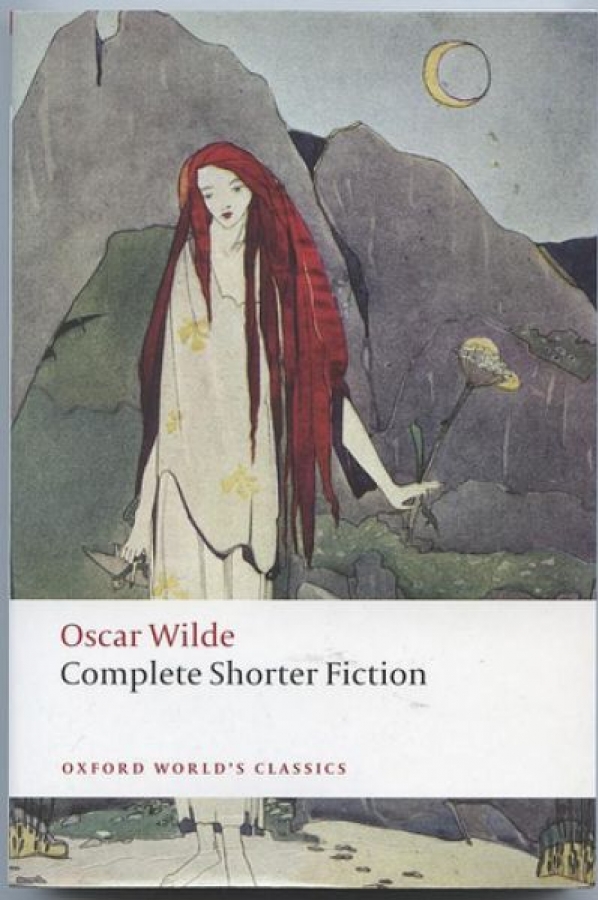
Complete Shorter Fiction
AI Translation Notice: This review was translated from the original Italian using artificial intelligence. Book quotes and excerpts are translated interpretations and will not match the author's original English phrasing or official published translations.
The book brings together Oscar Wilde’s major short stories, in which the style is above all remarkable, particularly the sentence structure.
The phrasing is not overly elaborate, favouring short sentences, but the juxtaposition of words (simple and close to everyday language) succeeds in lending poetic, and in certain cases elegiac, qualities to the writing.
The result is a splendid English that recovers the essential nature of words through conversational rhythm.
The content of the stories is generally fantastical and in many cases paradoxical: it draws upon the world of nature and the supernatural, which provide the setting and often supply the protagonists.
On a first reading, a broadly moralistic approach seems to predominate, accompanied by a pursuit of the improbable and a nostalgia for the “goodness” of nature in contrast to human selfishness and pettiness.
In reality, what emerges is a pervasive melancholy, almost a search for something lost (a remembrance of things past?), and a celebration of beauty.
All the protagonists (people, animals, natural environments) are characterized by sublime physical traits and remarkable intellectual attributes: ugliness does not exist.
Aesthetics thus prevails over ethics: a sort of exaltation of aestheticism.
In this way, the theme of melancholy is also clarified: it is a nostalgia for lost beauty.
Of particular interest is the story The Portrait of Mr W.
H., in which the author puts forward several hypotheses concerning the addressee of some of Shakespeare’s sonnets.
To appreciate it fully, one would need a deeper familiarity with Shakespeare’s poetry and drama, but it is evident that here, too, one of the central themes is the love of beauty, which emerges from the protagonist’s conviction that the person described in the sonnets was a young actor who played the female roles in the tragedies.
Shakespeare did not seek to flatter an eminent figure, but was writing solely out of love for someone who worked alongside him (undoubtedly less “highborn”) and with whom he shared a kindred sensibility.