John Williams
Books by this author (3)

Butcher's Crossing
The year is 1873 and Butcherʼs Crossing is a Kansas town, in reality a small settlement of buffalo hunters. Andrews is a twenty-year-old youth; he has abandoned Boston for a vague notion of freedom. > Sometimes, after listening to the hushed voices in church and school, he would pass beyond the borders of Cambridge into the lands and woods lying to the southwest. There, in some solitary place, standing motionless upon bare ground, he felt his mind fill with the clear air and plunged into infinite space: the emptiness and constraint he felt were dissolved in the wild nature that surrounded him . The young man meets a hunter and allows himself to be drawn into a venture: to go beyond the Great Plains, into the mountains, where thousands of buffalo still graze. > He realized that the hunt was merely a stratagem, a deception practiced upon himself. (...) No business impelled him... he was going there for freedom . An odd team is assembled: Miller the leader, a paranoid hunter who kills buffalo for the sheer pleasure of it, and not merely out of greed; Schneider, a pragmatic and cynical man, tasked with skinning the beasts with Andrewsʼs help; and with them an old alcoholic madman, Charley Hoge. With this group, Andrews ventures into the Wild West—at once an adventure and a physical and spiritual transformation. They represent another vastness and another horizon, yet the young manʼs mind remains “full of the wonders he had known as a child.” Francine, a prostitute, tells him affectionately, smiling gently: > you will come back; but you wonʼt be the same. You wonʼt be so young; you will become like the others. Andrews looked at her, confused, and in his confusion cried out: I will only become myself . The stages of his transformation, from youth to adulthood, are marked by the different phases of the journey. First, they travel for many days across the Great Plains, and Andrews must accustom himself to the long hours on horseback in a flat and monotonous landscape: > he felt like the earth, identityless and formless (...), he sensed his body slowly becoming lean and strong: he thought at times that he was entering into a new body, or a real body, previously concealed by an unnatural softness, whiteness, and delicacy . The second phase consists of the buffalo hunt: the merciless slaughter, the beast skinned and butchered. > To Andrews, the entire business seemed like a dance, a dark minuet ; the endless slaughter like > a mechanism, an automation, (...) like a cold, senseless response to life. (...) He realized he was turning away not out of some womanish nausea at the blood, (...) but from the shock of seeing the buffalo, moments before proud and noble and full of dignity, now stripped and helpless, an inert piece of flesh. (...) Its being had been killed, and in that killing he felt the destruction of something within himself, and he was unable to face it . And finally, there is the long winter: the group finds itself trapped by snow until spring, freezing and completely isolated. > He came to accept the silence in which he lived, and no longer sought any meaning in it. (...) He vaguely recalled the comforts of his home in Boston; but that seemed unreal and distant, and of those thoughts there remained only faint ghosts of remembrance : a sort of alienation, a loss of consciousness and identity. The wilderness, inscrutable and indifferent, gets the better of the young manʼs dreams: it creates a hard man, incapable of affection, solitary and individualistic. And when the party finally returns to Butcherʼs Crossing, having lost their entire cargo of hides while crossing a swollen river, and when Miller and his men discover that the price of hides has collapsed, that their toil was for nothing, Andrews wonders what the meaning of it all was. Where had he been, and why? Nothing remains but to leave, to take to the road again, alone. > Even now, in the light of dawn, the town was like a small ruin; the light struck the edges of the buildings and made all the more evident a emptiness that was already there. (...) He did not know where he was going; but he knew that (the direction) would come to him later in the day. He rode on unhurriedly, and felt behind him the sun rising slowly and warming the air . One must not be deceived by the story, by the meticulous descriptions of the landscapes and the buffalo hunt: the subject of the narrative is not the Wild West. Nor are we dealing with a *Bildungsroman*, because Andrews has not truly become an adult—borne out by the fact that he abandons the woman, Francine, who welcomed him with love upon his return from the long journey. The subject of the novel is estrangement from the world: the sense of not belonging to anything, a solitary man in an incomprehensible world, devoid of friendships and values. If the great conquest of the West, the American myth, had been this, what would become of the values of community and freedom that nevertheless underpin American society? The novel does not speak of this, though it might seem to; the narrative unfolds within the authorʼs own consciousness, addressing the failed search for a balance between individuality and sociality. The story is very well written. The style is elegant, the sentences flow smoothly and pleasantly, and the documentary element is well integrated with the plot and characters. One senses, however, a pronounced intellectualized quality, something contrived—the product of research rather than a lived world, at least in its ideals. It speaks of wilderness, of men struggling against a hostile environment, but if one compares the novel to the works of Jack London, and in particular to that masterpiece *White Fang*, it becomes quite clear how John Williams is merely yet another intellectual, writing about himself and—why not?—about men and environments he knows only from books, because he has studied them. Why read it? Fine prose, superb descriptions of setting, admirably etched characters.
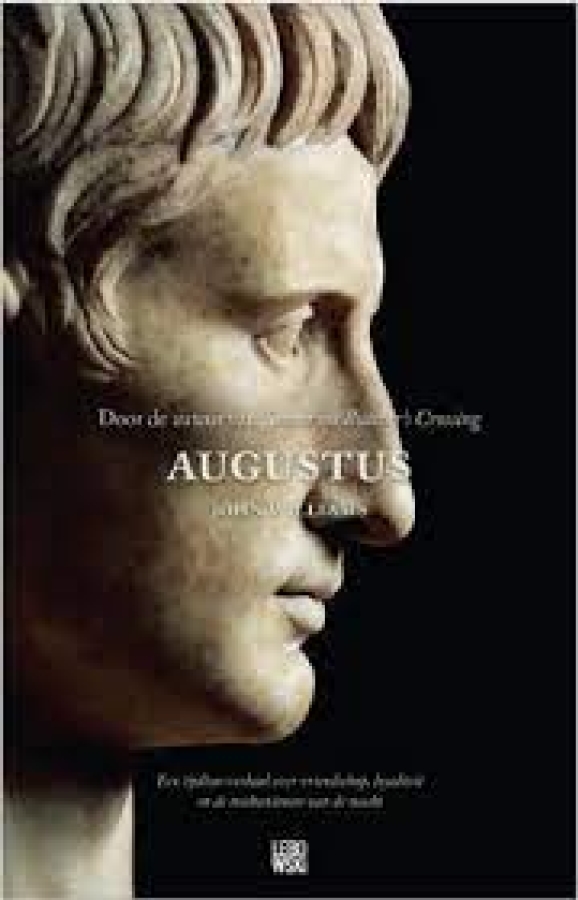
Augustus: a Novel
John Williams wrote three widely acclaimed novels: *Butcher's Crossing* in 1960, *Stoner* in 1965, and this biography of Augustus in 1972 (with this entry, all of his books have now been reviewed on this site). Williams is an exceptionally talented writer who continually reinvents his style, adapting it to the story and the characters. In this case, the author constructs the plot through letters written by various figures; Augustus himself intervenes in the first person only at the very end, allowing us to grasp key turning points—both political and personal—of his life from differing perspectives. It is an exquisite literary device, yet one that fragments the narrative and assumes the reader is already familiar, at least in broad strokes, with the complex events that led first to the Principate and later to the accession of Tiberius. Who was Octavian, later Augustus, in truth? When his great-uncle Caesar dies, naming him his heir, Octavian is an eighteen-year-old youth: he learns the news in Greece, where he is staying with his friends Maecenas, Agrippa, and Salvidienus Rufus. In his journal, the latter recounts how Octavian voices his uncertainties regarding the true loyalty of Caesar's legions and, turning to his companions, states that he will share his fears only with the three of them, > who are truly my friends, (...) a cold sorrow had settled upon him and pulled him away from us . It is as if the young Octavian had realized that youth was over and that upon him fell the grave burden of ending the civil wars and securing peace and prosperity for Rome: to accomplish this, he must become a shrewd and ruthless politician, relegating personal affection to the background and exploiting everything and everyone, even his oldest friends and his beloved daughter Julia. Paraphrasing the myth of Orpheus and Eurydice, Horace recounts Octavian's destiny. > His love was not a woman; his Eurydice was knowledge, a dream of the world, to which he sang his song. But the world of light that was his dream of knowledge was destroyed by a civil war; (...) and his dream vanished, as if evaporating, into the darkness of time and circumstance. He saw the world, and understood that he was alone, fatherless, propertyless, hopeless, without dreams..... It was only then that the gods gave him their golden lyre, and allowed him to play not as they willed, but as he himself desired . It is a magnificent synthesis of Octavian's destiny, elevating him to a singular and immortal role in history, pursuing an end to which everything is subordinated—even Julia's happiness. And it is here that we, too, venture into the darkness of the human soul. With a stroke of literary genius, Williams introduces Julia's journal on the island of Ponza, where she has been exiled. Julia’s sorrowful, resigned account is preceded by the gossip surrounding her dissolute life, almost as if to justify her father's dreadful decision. Yet one cannot help but feel sympathy for this still-young woman, who was forced to marry Agrippa, a man far older than she, and later the unsettling Tiberius. It may well be true that her father exiled her for her immoral conduct to spare her execution for treason against the state; what is certain is that Augustus's cold, cruel severity contrasts starkly with Julia’s gentle melancholy. These are exquisite pages that alone justify reading the novel: the fading of memories, rendered useless and bearing only grief, juxtaposed against the precision in the account of the encounter between Octavian and Julia, father and daughter. > His face was gaunt, and there were lines of weariness around his pale eyes; but in the uncertain light of the room, the face could have been that of the man I remembered from my childhood . Julia learns that the conspiracy has been uncovered by Tiberius, and her father can do nothing other than condemn her to safeguard his authority. > My child, he said, this has nothing to do with love. He turned away from me again and picked up some papers on the desk. (...) I have not seen my father since. I understand that he will (no longer) speak my name . The elegance of the prose, the fictionalized yet masterly reconstruction of events that remain obscure to historians, the lexical richness, and the ability to capture the idiosyncrasies of the various figures (from Mark Antony to Cicero down to the minor players) are literary merits that dazzle the reader. In many reviews it is compared to Robert Graves's *I, Claudius*; yet it is an entirely different matter. Flitting superficially across the history and the dramatis personae, Williams fails to convey passion and mystery; the novel ends up being as detached and rigid as we imagine Octavian Augustus to have been. Why read it? It demands some effort, but Julia's diary is truly beautiful.
Stoner
The novel chronicles the obscure career of a professor of English literature. William is the only son of a modest farming family. At the cost of great sacrifices, his parents sent him to study agriculture, in the hope that he would one day return with what he had learned to improve the management of the land. At university, the young Stoner falls in love with literature, and with books. Above all, he chooses the shelter of the university’s secure walls. As a friend once told him: > in the world you would have always been on the brink of success, but you would have been destroyed by your failures. So you chose, you were chosen; providence.... snatched you from the clutches of the world and placed you safe here, among your brothers... Who are you?. A simple son of the soil, what do you expect of yourself? These words prove prophetic of what will be a mundane life: a gradual retreat into mediocrity, shrinking into a corner, accepting defeat before even fighting, demanding little from existence. He marries only to discover immediately that he is not loved, yet he does not rebel; he takes on an exorbitant debt for his modest salary, simply to buy the house his wife desires; and it is she, once again, who decides to get pregnant, giving him a daughter whom William, however, cannot love as he would like and who soon becomes a stranger to him. Our protagonist accepts everything for the sake of an easy life, for a sluggish peace of mind. He falls in love with a young teacher, who reciprocates his love. But when the dean of the faculty urges him to bring the affair to a resolution, what does our “courageous” William do? > He leaned back in his chair and looked up at the low, dark ceiling that had been the sky of their world. He said calmly: if I threw it all away, if I quit and went away, you’d come with me, wouldn’t you? Yes, but you know I won’t do it, don’t you? Yes, I know.... Because then, Stoner explained to himself,... we would both become something else, something other than ourselves. We would be nothing . And like all those who bury “their heads in the sand,” William is quite glad that his young lover left without telling him and that > she left him no farewell note to say things that could not be said . It is better to live within the walls of the University of Columbia, where William had entered as a student, had become a professor, and would retire, as late as possible. No matter if, in the meantime, epochal events unfold in real life, overwhelming the lives of millions of individuals: the First World War, the Great Depression of the 1930s, the Second World War, and the harsh postwar years. As happens with many intellectuals, it is enough to contemplate them, not to live them. It comes as no surprise, then, that he touches a book on his deathbed. Books gave him that security he sought all his life, and for which he renounced truly living. In his introduction, John McGahern states that Stoner is “a real hero” because > he bore witness to values that are important... The important thing in the novel for me is Stoner’s sense of a mission. Teaching for him is a mission.... his mission gave him a particular kind of identity and made him what he was . For teaching, Stoner renounced everything. But are we sure one can be a good teacher by refraining from fighting for the people one loves, from defending one's country, from staying close to the land of one's parents—in other words, educating others without living oneself? And did not William think so as well? At the end of his life, he indeed acknowledges that > he had wanted to be a teacher, and he had become one; yet he knew, he had always known, that for most of his life he had been an indifferent man... Dispassionately, rationally, he contemplated the failure that his life must appear to have been... What did you expect? he asked himself. The academic setting must not mislead us. The real story of the novel is the timeless tale of someone who prefers a mediocre life to an intense existence, habitual and quiet relationships to turbulent yet profound emotional bonds. In short, someone who chooses indifference and withdrawal into oneself (an escape into books?) rather than allowing themselves to be swept away by events and affections. The novel is deemed a masterpiece today, fifty years after its publication. Could the copyright have expired? For it is difficult to fathom what reasons there might be to consider it a masterpiece. To be sure, the writing is exceedingly elegant and grammatically flawless, worthy of a fine professor of English. Yet it is banal, just as the plot proves tedious. This petty academic world is particularly irritating. It is not a slice of the world. It is like reading about the serene life of a medieval monastery while the barbarians rage outside: a useless microcosm. Granted, we live in the era of anti-heroes, but for God’s sake—give us some real stories and characters rich in personality! Why read it? It reads well, but leaves little behind.