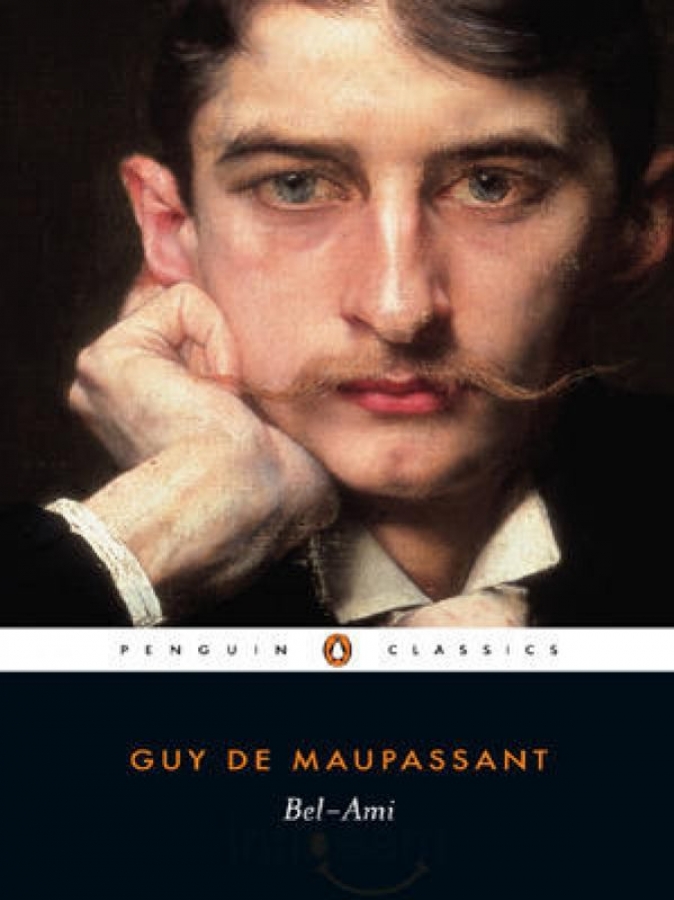
Bel-Ami
The novel is largely set in Paris during the 1880s, the period of the Third Republic following the fall of Napoleon III’s Empire. France, governed by an unscrupulous and corrupt political class, is embarking on its colonial adventure with the conquest of North Africa. Georges Duroy is a young man > tall, well-built, fair, with a reddish-tinged chestnut blondness, upturned moustaches that seemed to foam upon his lips... he looked remarkably like the worst rogue of popular romance . He is a young man from the provinces who has arrived in Paris without any precise aim, save for the allure of > places where _filles publiques_ swarmed, their dance halls, their cafés, their streets; he loved to follow them, speak to them, use familiar address, breathe in their violent perfumes . In short, he is a good-looking fellow, shallow and conceited, who will rightly come to be nicknamed Bel-Ami. Penniless, he can do little more than drift with the crowd until he happens upon a former comrade from his military service, Forestier, who has become the political editor of the newspaper _La Vie française_, owned by Monsieur Walter, an ambitious social climber who entwines business and politics, weaponising the press for his own, often illicit, ends. His friend secures him a post at the newspaper, and thus, despite himself, the young man launches into a journalistic career. Maupassant depicts with subtle irony this nascent world of the press, already by that time a compliant instrument in games of power. Duroy’s swift indoctrination enlightens the young man as to the true nature of journalism. One day, he is dispatched alongside a more seasoned colleague to interview several ambassadors. The two stop at a café; after all, there is no need to gather actual news—it suffices to construct it from secondhand information, even inventing it if necessary, and to cobble together with minimal effort an article containing precisely what the master desires. Are we speaking of nineteenth-century France or of contemporary Italy? Moving in Forestier’s social circle allows the young man to meet two women who will prove pivotal to his Parisian fortunes: Clotilde, "a little brunette, of the sort one calls pretty dark-haired women," and Madeleine, Forestier’s wife. The former shares Duroy’s tastes: she loves pleasure, is unpretentious, and takes life as it comes. She soon becomes Duroy’s ideal mistress, the only woman in whose presence he feels truly at ease and for whom he feels genuine sexual attraction, perhaps because Clotilde is somewhat of a _fille publique_. Madeleine is a modern, independent woman who relishes meddling in political and financial intrigues. As a woman, she cannot expect to play a leading role in the public sphere; she operates instead from behind the scenes through her men—her husband (a mediocre sort), her powerful lover, and Duroy himself, who allows himself to be steered, even as he chafes at her intellectual superiority. For Bel-Ami is vain and frivolous, yet the acute awareness of his own intellectual and moral inferiority breeds in him a vengeful resentment toward the very people from whom he receives aid—often crucial aid—for his career. Upon Forestier’s death, Duroy marries Madeleine; their relationship resembles a business partnership far more than a conjugal bond. Bel-Ami knows full well that Madeleine has several lovers (all men of prominence and power), but he cares little, not least because he too reaps tangible benefits from his wife’s connections: confidential intelligence, money, and honours. Yet he consistently harbours a certain bitterness and disdain toward Madeleine, who endures it patiently, perhaps out of genuine affection for the young man. Out of pure caprice and vanity, Duroy also seduces Madame Walter, the wife of the newspaper’s proprietor; she proves, however, to be a tiresome mistress, having fallen genuinely in love with him and being plagued by guilt over betraying her religious and moral values. How curious—a sincere person in a world of artifice! Life suspended between Clotilde’s eroticism and Madeleine’s intellect might have carried on placidly enough—setting aside the tedium of his liaison with Madame Walter—were it not for Duroy’s decision to marry the newspaper proprietor’s young daughter (and thus Madame Walter’s child). He must rid himself of his wife, and so he arranges for Madeleine to be caught in flagrant adultery, thereby securing a divorce. He then succeeds in marrying the young and wealthy Walter girl, once again through deceit: he persuades the girl (not yet eighteen) to elope with him, creating the necessary pretext for a shotgun wedding. Has Duroy achieved his ends: power, wealth, success? In reality, Bel-Ami’s exploits—the betrayals, the ignominious acts, the abused affections—do not stem from the pursuit of grand ambitions: the young man seeks merely the gratification of his vanity. On the day of his lavish wedding, Duroy > walked slowly down the high steps between two rows of spectators. Yet he saw no one: his thoughts drifted back to the past, and before his eyes, dazzled by the blinding sun, hovered the image of Madame de Marelle (Clotilde), rearranging before the mirror the curls upon her temples, which were always dishevelled when she rose from bed The book may be regarded as a realist novel, insofar as it portrays, with a touch both light and brutal, Parisian high society, power struggles, the role of the press, the enchantment of the boulevards, and even emergent artistic currents. It is a period of monumental upheaval, cultural as well, yet an atmosphere of vacuity pervades the narrative. The social milieu, much like certain existential themes (death, for instance), serves merely as a backdrop to Duroy’s transformation into Bel-Ami, and thence into the wealthy son-in-law of a powerful bourgeois grandee. The young man slips down a moral slope, occasionally feeling revulsion at his own deeds, only to shrug off these fleeting qualms. He is embarrassed when Clotilde suggests he meet her husband—with whom the young man will subsequently become fast friends. When Madeleine inherits a substantial sum from a lover, the young man initially refuses with righteous indignation, as accepting would lay bare his wife’s liaison with the man; yet he soon convinces himself—and seeks to convince Madeleine—that if he pockets half the estate, appearances are preserved, and all is well. It has been called the novel of money, of the press, of politics and careerism; in truth, it is the book of vacuity. And it is noteworthy, whether intentional or not, that it falls to two women (the female sex being a mere instrument for Bel-Ami) to tear through this veneer of bourgeois morality. It falls to Clotilde to fling the truth in his face: > you deceive everyone, you exploit everyone, you take money and pleasure from everyone, and you expect me to treat you like an honest man? Yet what truly enrages him is his mistress’s accusation that he bedded the proprietor’s wealthy daughter before marriage—a girl he had, in fact, respected (out of vanity? or a genuine sense of honour?). "He could endure anything, but this falsehood drove him to distraction." The question remains, then, whether Bel-Ami is entirely incapable of decent feeling, or whether he is fundamentally swept along by circumstance. It falls next to Madeleine to prove that a path through life can be forged beyond the mere chase of petty gratifications. Unlike Bel-Ami, Madeleine possesses a project of her own: to act as a mentor to men, thereby redressing the subjugation of women in nineteenth-century bourgeois society. The greatest virtue of the book lies in the writing of _Bel-Ami_. Maupassant conjures a muted, realistic atmosphere across his settings, admirably capturing the spirit of nineteenth-century Parisian society. His descriptions often seem rendered in pastel, reminiscent of Degas’s portraits. His description, for instance, of the hotel room where Madeleine is caught with her lover succeeds, in just a few strokes, in evoking that sense of the vulgar and the drab one expects from an adulterous rendezvous (within nineteenth-century bourgeois culture): > it was an ordinary hotel room with standard furnishings, where hung that hateful, stale smell peculiar to hotel bedrooms—a smell that emanated from the curtains, the brasses, the walls, the chairs; the smell of all those who had slept or lived, for a day or six months, in this public lodging, leaving behind a trace of their scent, that human scent which, blending with those that had gone before, formed over time a confused, sweet, and intolerable stench, identical in all such places . Why read it? It is a remarkably modern work in its milieu and its characters. The prose is both pleasurable and refined.

Cécile is Dead
This is likely not one of Simenon’s finest novels. The plot is exceedingly simple: the niece, who served as a maid, kills her sick aunt when the latter refuses to give her money for her brother. Rummaging through the drawers, she discovers old papers proving that the aunt, together with her lover, had murdered her husband fifteen years earlier. The aunt’s former lover, who remains her business partner and lives in an adjoining flat, in turn murders Cécile to prevent her from revealing the contents of the documents she uncovered. From the standpoint of the detective genre, the events of the novel feel predictable, and the pacing certainly fails to grip the reader. The atmosphere (the figure of Maigret, the petty-bourgeois life) is sketched in a hurried, almost superficial manner. The fundamental virtue of the novel lies in its style. Even if the French language is not simple (owing to the richness of its vocabulary), it becomes readily intelligible through the sequence of clauses and words, which, even phonetically, help convey the traits of the characters, Maigret’s demeanor, and the salient aspects of the setting. What is to be appreciated is not so much the novel as a whole, but rather certain glimpses, such as the following: > Il arrivait a Maigret de hausser les épaules quand on s’émerveillait devant lui de la résignation des humbles, des malades …..sans horizon…. ; il savait par expérience que la bete humaine s’accomode de n’importe quel nid, du moment qu’elle peut le remplir de sa chaleur, de son odeur, de ses habitudes .

The Count of Monte Cristo
The plot of the novel is well known. Edmond Dantès is wrongfully imprisoned. He manages to escape, becomes immensely wealthy, and consequently devotes his life to vengeance through a series of deceptions and acts of cruelty. The novel appears to have been inspired by a true story. It unfolds across three distinct levels: adventure, sustained only at times by a gripping pace, as in the first part (the imprisonment, the acquaintance with Abbé Faria, and the escape) and at certain subsequent moments. All too often, the novel develops in a slow and tedious manner, even in the face of surprises and plot twists; the setting, which emerges from the description of Rome, of the island of Monte Cristo itself, and of Parisian society. In some instances, it is an effective, if somewhat mannered, fresco (as in the case of Rome); in others, one is confronted with a superficial and hurried description; the superhero, embodied in the figure of the Count of Monte Cristo—a hero who proves to be negative, insofar as he pursues his revenge with a sadism and a voluptuousness that cannot be justified solely by a desire for justice. From this perspective, the novel’s “villains” appear far more vivid and real; they are, in fact, the true characters, endowed with a depth of their own and driven by contradictions that make them human. The novel is repetitive and tedious, and it is truly difficult to make it all the way to the end.
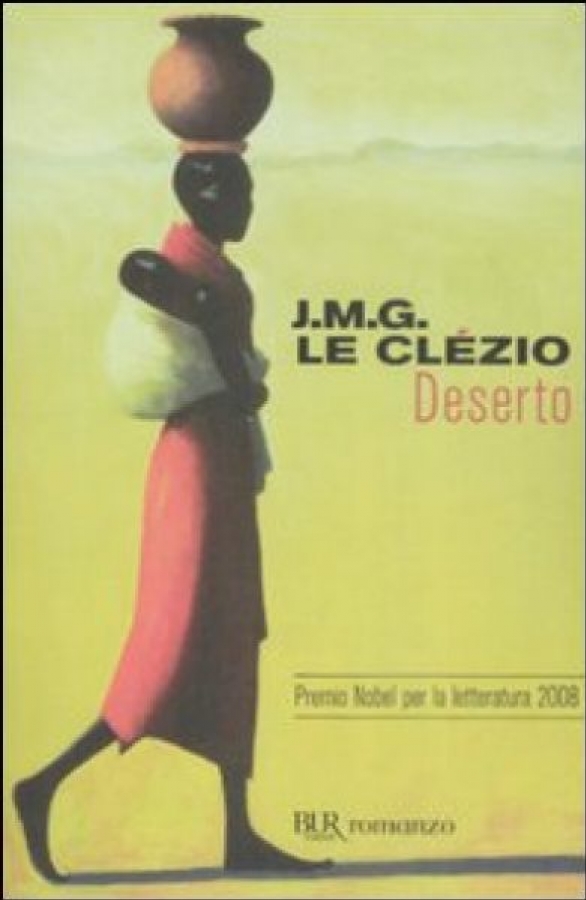
Desert
This is a book that develops along two narrative paths that are seemingly distinct, yet bound together by an ideal thread. On the one hand, it narrates the story of a desert people, followers of a sheikh revered as a saint, who intend to resist the French conquest of Saharan Africa. The desperate march of these people is seen through the eyes of a boy, who may well be the grandfather of Lalla, the novel’s protagonist. On the other hand, the novel chronicles the story of Lalla, born amid the scrub and taken in by her aunt in a small seaside village. Lalla lives a wild existence, in the wind and among the dunes, a lover of solitude and of the desert. During her long, solitary walks, she is accompanied by a shepherd, Hartani, a boy who does not speak her language but who possesses a profound understanding of nature, of birds, of flora, of the sea and the desert. Hartani belongs to the "blue men," the men of the desert, the very same people who took part in the grand and disastrous march recounted in the novel’s other thread. Lalla is meant to be wed to a wealthy merchant, and so she flees with Hartani toward the desert. The story then picks up with Lalla arriving aboard a small vessel in Marseille, seeking shelter with her aunt, who has relocated there. Lalla is pregnant, but hides her condition and leads a life just as wild in the great French city: yet what in the village had been light and symbiosis with all living beings turns, in Marseille, into darkness and loneliness. Lalla lives in a tenement hotel that houses scores of immigrants who come, out of desperation, to work in France. There she also meets a boy who survives by stealing and begging. Lalla has descended into the underworld, yet among the desperate she discovers a profound solidarity and support. By chance, she meets a photographer who turns her into a famous model; in the end, however, Lalla resolves to return to Africa and give birth to her child amid the dunes, in the coolness and sweetness of a tree’s shade. The true subject is the contrast between Western and North African civilization. This contrast is crystallized not so much in the characters—too stereotypical, devoid of depth and complexity—nor in the plot, virtually non-existent and in certain respects implausible (such as the episode of the photographer who makes Lalla famous), but rather in the landscapes and in the author’s ability to impart density and chromatic richness to the descriptions. Upon the sand dunes, "Lalla opens her eyes wide, lets the sky enter into her," and senses the presence of God: > where is the road? Lalla does not know where she is going, adrift, swept along by the desert wind that blows, vengeful and cruel, the wind that sweeps men away and brings down the rocks at the foot of the mountains. It is the wind that moves toward infinity, beyond the horizon, beyond the sky all the way to the cold constellations, the Milky Way, to the sun . If the desert is light, infinity, and bliss, the city is death. > Lalla watches those who depart for other cities, toward hunger, cold, misfortune, those who are going to be humiliated, who are going to live in solitude. They move toward dark cities, toward low skies, toward steam, toward the diseases that ravage the chest . Yet Lalla harbors a dream: it is the desert people’s dream of freedom, of living free in the sun and the wind. It is written in magnificent French, with a powerfully lyrical style, brimming with evocative resonance and musical cadence, succeeding in rendering through words the sensory impressions of a natural world and an environment. Beyond individual pages, however, this vision of a "virtuous" society set in opposition to Western civilization feels somewhat disingenuous—more an intellectual, aestheticizing posture than a genuine impulse to chronicle the true complexity and suffering of an oppressed, shattered, and migrant society. It is, in a sense, the Westerner’s quintessential search for the presumed purity of the Other.
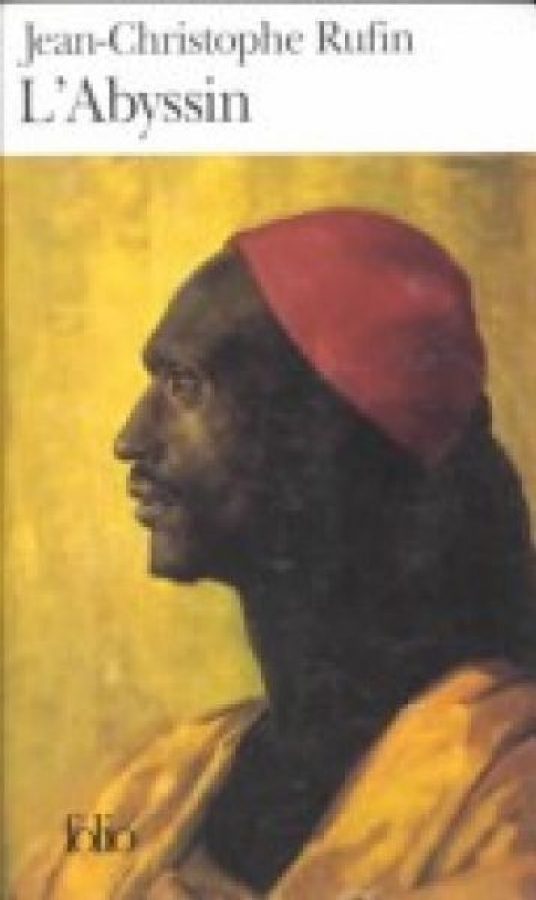
The Abyssinian
The novel is set in the late seventeenth century, during the reign of Louis XIV, and recounts the exploits of a Frenchman, Poncet, who journeys to Abyssinia on an expedition mounted by the Jesuits to restore ties with the empire fifty years after the expulsion of Catholic priests. The protagonist is an adventurous young man who commits himself to this enterprise out of love for the daughter of the French consul in Cairo. He thus finds himself entangled in a web of intrigue between rival religious orders (the Capuchins against the Jesuits) and competing factions within the court of the French king. The story predictably features a happy ending, with the two lovers managing to wed after numerous adventures. The work reads like a cross between *The Three Musketeers* (the great French novel) and the tales of Maalouf, yet it completely lacks historical atmosphere, narrative momentum, and character analysis. For instance, the transformation of the consul’s young daughter from a devout maiden into an adventuress unfolds so flatly as to render it entirely implausible.
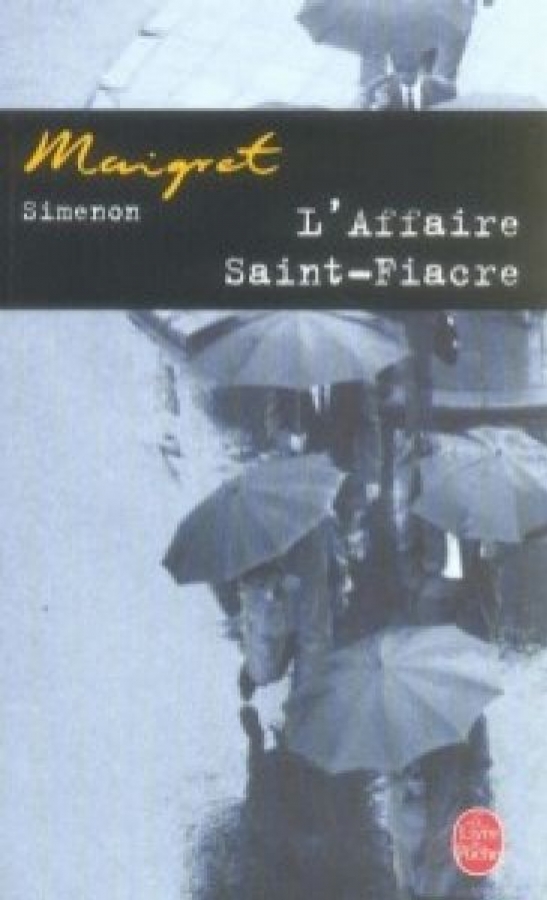
The Saint-Fiacre Affair
Maigret returns to the village where he grew up, as an elderly countess has died and he suspects she was murdered. All the figures of a potentially sordid affair are present: the countess’s young lover, the playboy son living the high life, a young parish priest who perhaps knows more than he lets on, and so forth. What emerges is a portrait of a provincial milieu, sketched, in truth, in a superficial and unengaging manner. The characters, too, emerge flat, devoid of any genuine analysis of the motivations underpinning their actions and the events. The detective element is virtually nonexistent, and Maigret feels more like an extra than a police superintendent capable of steering and managing the investigation. Perhaps I am simply unlucky, as I cannot seem to read a book by Simenon that I truly enjoy.

Leo the African
Set between the fifteenth and sixteenth centuries, the novel recounts the life of Hassan al-Wazzan, known as Leo Africanus. Forced to leave Granada following the Castilian conquest, the protagonist leads an adventurous life: first in Fez in North Africa, then in Cairo, and subsequently in Rome; he also undertakes numerous journeys, encountering widely disparate figures and milieus. As with all the author’s novels, the unfolding narrative and the depiction of Mediterranean civilizations serve as an occasion to address the themes of religious and cultural diversity, and to envision a society where coexistence and exchange among different peoples and traditions are possible. What also emerges is a portrait of Muslim society that is markedly more tolerant and open than that typical of Christian nations. A prevailing sense of nostalgia pervades the work for a historical and social context—such as that of Mediterranean societies prior to the sixteenth century—that was destroyed by the fanaticism of the Christian kingdoms, particularly the nascent power of Spain, as well as by the drive for dominance of the Turkish Empire, which was likewise in an emergent phase. From a narrative standpoint, the novel is compelling in its first part (life in Granada and Fez), only to lose its way in an acceleration of events that precipitates a decline in pacing and style. In particular, the fourth part, set in Rome and Italy more broadly, feels rushed: the protagonist's conduct is insufficiently explored, coming across as peculiar and superficial; his embrace of Roman life and of Catholicism itself ought to have been far more thoroughly examined and analyzed.
The Tenant
Elie Nagéar is a young cosmopolitan who grew up and lived for a long time across many countries, particularly in Turkey. On his journey to Europe, he meets Sylvie, with whom he has a relationship. The young woman works in a nightclub, and in no time the two squander what little money they possess. Seized by desperation during a train journey from Brussels to Paris, Elie robs and kills a wealthy patron of the nightclub. To hide him, Sylvie sends him to her mother, who runs a boarding house. The life of the landlady, of Antoinette, her other daughter, and of the lodgers revolves around the kitchen, where relationships intertwine and where Elie soon becomes the center of attention with the incredible stories of his life and the countries he has lived in: > like the prelude to an orchestra, one could hear the clatter of forks, plates, and glasses rising and intensifying; whenever a voice was heard, it was Elie’s... He was not lying, yet he felt as if he were. He searched his memory for something more to tell, something comforting and flowing like a Neapolitan song . Thus a surreal atmosphere is created, disrupting the house’s mediocre and monotonous existence. All the inhabitants of the boarding house are so fascinated by the new lodger that, once it becomes known that he is the killer, far from reporting him, they actually help hide him in the hope that he might escape. Even when Elie, by then captured and sentenced, is boarded alongside the other deportees onto the ship that will carry him to forced labor, the landlady will be there on the pier to see him off, filled with nostalgia for a young man who, for a brief time, brought novelty to her mediocre bourgeois life. The milieu is the Belgian petite bourgeoisie. The story unfolds slowly, attentive to the details of life in a boarding house, where the tenants can barely make ends meet and where, paradoxically, all concern is devoted to propriety, to upholding a good name: the landlady’s husband is a conductor for the Belgian railways!! Why, then, does everyone let themselves be captivated by the new lodger’s stories? Why do they not turn him in? Perhaps because, Simenon seems to tell us, we all feel constrained by the flatness of everyday life. Why not read it? It reads very well owing to its concise and effective style. Yet the narrative pace is too slow to make for an enthralling read.
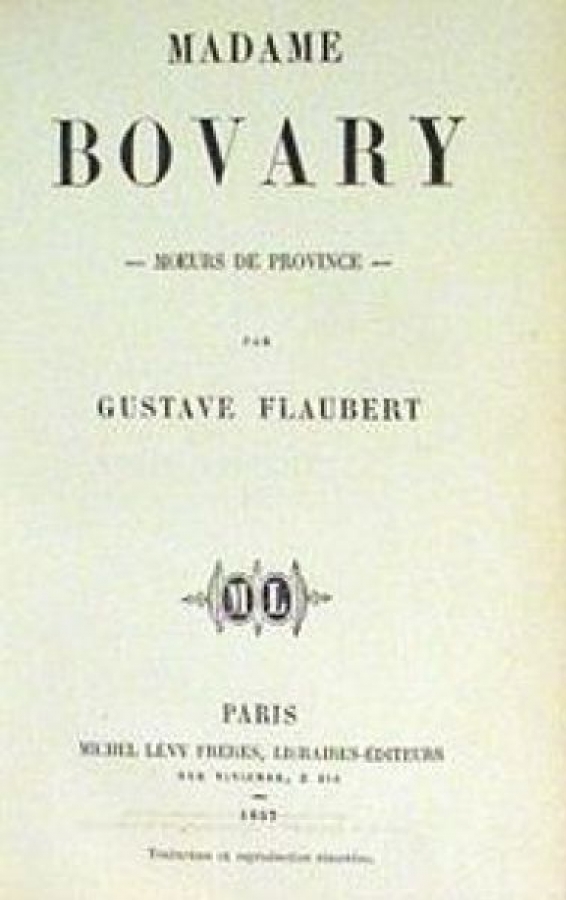
Madame Bovary
The novel recounts the fortunes of Madame Bovary, who, married to a provincial doctor, attempts to escape a prosaic and tedious existence by pursuing a series of affairs and leading an extravagant lifestyle—choices that ultimately lead her to financial ruin, emotional desolation, and, inevitably, suicide. It is a celebrated novel, widely considered the wellspring of nineteenth-century realism, which tackles the theme—subsequently taken up by numerous other authors—of the pettiness of bourgeois morality. At heart, Emma Bovary pursues a dream of happiness, striving not to be trapped within the mediocrity of everyday life. Surrounding her, by contrast, hypocrisy, the pursuit of money, social ambition, and the like prevail. In truth, Madame Bovary is herself a child of her time: there is no genuinely romantic sensibility within her, no sense of guilt, and she is willing to resort to any falsehood to achieve her ends—which are, in reality, modest, such as meeting her lovers, buying elegant dresses, and so forth. The third part of the book, unquestionably the finest, which portrays the events leading to Madame Bovary’s death, is conducted in an almost illustrative manner. The characters, in fact, emerge as cold and flat, devoid of even the slightest introspective probing into their motivations and feelings. Ultimately, this is a social novel that appears to have enjoyed a renown far exceeding its actual merits. It bears the heavy imprint of the nineteenth-century ethos and leaves little room, even in its style and narrative rhythm, for that lyricism so typical of our own day.
Michael Strogoff
Michel Strogoff > was tall, vigorous, broad-shouldered, deep-chested... he could endure to the utmost cold, hunger, thirst, and fatigue : an iron body and a heart of gold. In this manner, Verne introduces the protagonist right from the outset. The setting is Tsarist Russia, likely in the second half of the nineteenth century. An army of Tartars is overrunning Eastern Siberia and threatens to seize its capital, where the Grand Duke, brother to the Emperor, resides. At the head of this horde of "barbarians" stands a traitor, bent on presenting himself to the Grand Duke, winning his trust, and ultimately capturing him. Michel Strogoff is entrusted with the mission of warning the Grand Duke in time, journeying across a Siberia torn by war. It is an epic endeavor, an extraordinary mission. This adventurous undertaking can be divided into three parts. In the first, which is rather dull and predictable, Strogoff travels incognito as a merchant, crossing European Russia, the Urals, and then the first Siberian steppes. Right from the start of the journey, he encounters a young woman, Nadia, who must make the same trek to join her father. Strogoff decides to accompany the young woman, believing that doing so will make it easier to avert suspicion regarding his true mission. Here emerges a defining trait of the protagonist—dissimulation—which contrasts sharply with the loyalty and sincerity of the other characters who stand by him, particularly Nadia. A dramatic scene brings about a turning point that injects pace and intrigue into the narrative: Strogoff and the young woman are captured by the Tartars; the protagonist is forced to watch his mother about to be beaten to death, reveals himself as the Tsar's courier, and is subsequently blinded. From that moment on, Strogoff becomes dependent on Nadia, who serves as his guide. This section of the novel is the most compelling, as the protagonist's vulnerability makes him human, less of a superhero; moreover, amidst the ever-adventurous and dramatic developments, other characters appear, generous and eager to lend assistance. Finally, the third part is dominated by grand set pieces, where natural perils intertwine with the drama of battle. Strogoff and Nadia, along with other refugees, journey down an ice-choked river aboard a raft. By a stroke of fortune, they manage to reach the capital, besieged by the Tartars, where the traitor has already infiltrated—only to be slain by Strogoff. The story would be flawless were it not revealed at the end that Strogoff was never blind at all, but had feigned blindness so as to be left free to move, given that the Tartars would have deemed him harmless. Yet how could he lie even to his friends, and above all to Nadia, who had helped him asking nothing in return, out of pure love? In the preface, the commentator views this novel as an "obstacle course" in which "a hero above suspicion" overcomes every trial simply to achieve his goal. It is from this that a sense of coldness, contrivance, and determinism arises, where feelings have no place, relegated to the background in deference to duty and the assertion of one's own strength and will. It is the other characters who offer flashes of human richness, from which the author seems to swiftly retreat, taking refuge in stereotypes. The harsh, grim Siberian wilderness forms the backdrop of the novel—in a sense the true adversary of the superhero, Michel Strogoff. It is a pity that here, too, imagination is lacking; it is mere geography, without the description of Siberia ever sparking the reader's imagination. Why read it? The story is gripping, particularly in its second part. Certain scenes are mesmerizing, such as the Tartar feast with its exotic dances, the epic descent down the frozen river, and the final battle.
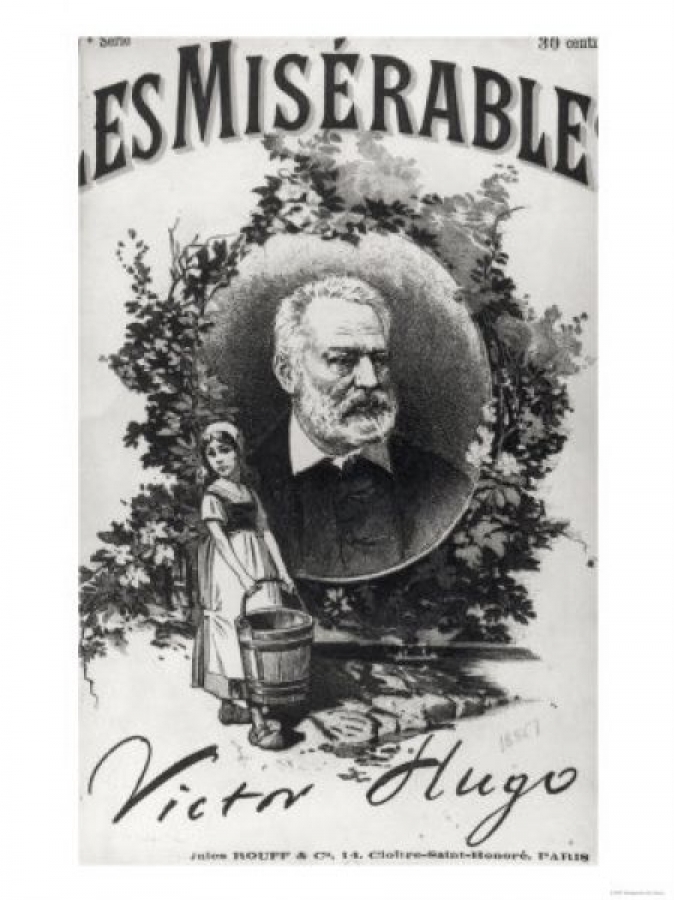
Les Misérables
The novel chronicles the life of Jean Valjean, a convict who, following an encounter with a bishop (a saint), is transformed into a good and righteous man: he first becomes a wealthy industrialist, then, returned to prison, escapes in order to save and raise a young girl, Cosette, who, upon reaching adulthood, falls in love with a young revolutionary. Jean Valjean rescues the young man from certain death (during the 1832 rebellion), and then chooses to disappear so as not to jeopardize the couple's future with his status as an escaped convict. Yet goodness triumphs and, as the author writes, “the night was starless and profoundly dark.” Doubtless in the shadows, some immense angel had come forth, with outspread wings, to await the soul from the supreme shadow to the supreme dawn. As Victor Hugo wrote: “the book which the reader has before his eyes at this moment is, from one end to the other, in its entirety and in its details, whatever its intermittences, exceptions, and lacunae, the march from evil to good. From the unjust toward the just, from the false to the true, from night to day, from appetite to conscience, from putrefaction to life; from bestiality to duty, from hell to heaven, from nothingness to God. Starting point: matter; destination: the soul. The hydra (evil) at the beginning, the angel at the end > This conception is based on faith in progress (which Hugo identifies with God, and therefore with a humanistic and Christian socialism) and on the uprising of the world of the wretched > driven by unstoppable social forces. From this point of view, the countless characters in the novel become archetypes > , representatives of a role to be fulfilled in the great transformation of the world, and thus devoid of any true depth: feelings and motivations are only ostensibly analyzed and explored; in reality, it is merely a succession of rhetorical devices (the interrogative form predominates) to illustrate contradictions and dilemmas that do not belong to the intimate sphere (and in this sense universal), but rather to a social and historical function. One need only think of the conversion > of Jean Valjean and the analysis of the crises of conscience the protagonist faces throughout the novel (the decision to appear at a trial to prevent an innocent man from paying for his crimes, and the decision to withdraw into the shadows so as not to jeopardize the young couple's happiness): in every case, one is confronted with a sort of divine illumination and moral imperative, while the depiction of the character's resulting misery (due to the loss of Cosette) is flat and schematic. Even more paradoxical and astonishingly devoid of any psychological or philosophical depth is one of the most dramatic episodes in the entire novel. Inspector Javert (Jean Valjean’s relentless persecutor) is caught in a vice between human law, which demands the arrest of the former convict, and his conscience, which compels him to release Jean Valjean, who had saved his life. His inability to break free from this dilemma drives him to suicide. It is clear that Hugo intends to attack bureaucratic, callous approaches to the enforcement of the law—a law that is often unjust because partisan (Javert’s final piece of writing, a mere list of recommendations for the chief of police, is incisive and remarkably effective). Yet one need only imagine what a Dostoevsky would have made of the contradiction between the human conscience and the imperatives imposed by institutional rules and norms to realize how far removed the French author is from the modern spirit, anchored as he is to a cold, moralistic vision of humanity and its struggles. His depiction of French history (from the French Revolution to the Citizen King) is likewise a series of epic events governed by Providence: the very defeat at Waterloo is attributed to a destiny bent on closing the Napoleonic era in order to inaugurate a new phase of social transformation that will lead to the great upheavals of 1848. Yet do individuals and social classes truly exist, or is everything already predetermined by an obscure, immanent force, at once religious and scientific: Progress? *Les Misérables* is a deeply dated work, enclosed within nineteenth-century culture, with little left to say to the man of postmodernism and globalization. As often happens with great authors (take Dante’s *Divine Comedy* itself), the most valuable parts involve components and approaches that cannot be traced back to the stated intentions. Victor Hugo is a Romantic author who ceaselessly pursues the grotesque and the visionary: stylistic traits that occasionally render the reading cumbersome, yet contribute to producing pages of great beauty and suspense. Consider the description of Cosette, an eight-year-old child sent to fetch water in the dead of night, watching the setting of Jupiter and feeling the surrounding nature seem to stir to capture her: the tall grasses swarmed beneath the north wind like eels. The rocks twisted like long claw-armed arms, seeking to seize prey…. > ; of the episode of the trap set by the criminals for Jean Valjean, so full of twists and unforeseen turns; and finally of the magnificent chapter ( Comment de frère on devient père > ) in which the two abandoned children seize the bread thrown to the swans to feed themselves. In a few pages, the author manages to capture the stillness of the Jardin du Luxembourg, the solitude of childhood, the solidarity among children, and the narrow-minded hypocrisy of bourgeois culture. The novel’s true masterpiece is the episode of the elephant: a striking, visually magnificent scene in which a monument built to glorify power becomes the sanctuary of three children. Then there is another protagonist of the novel: the city of Paris. The author’s toponomastic precision, the minute description of streets and houses (many of which had already vanished during Victor Hugo’s own lifetime), provide a romantic setting for the novel and its backdrop. This is prior to the grands boulevards, in the midst of a reticular city where it is easy to lose oneself and disappear. The pages devoted to the Parisian argot spoken among the wretched" are also of great interest, indicating an almost anthropological attentiveness on the author’s part. Yet is the idea of Progress truly authentic, or merely literary and political, concealing in truth a Romantic nostalgia for the Middle Ages and pre-revolutionary history? The novel is, on the whole, prolix, tedious in many stretches, and fundamentally a potboiler.

Monsieur Malaussène
In the neighborhood of Belleville lives the Malaussène tribe, and with them a myriad of characters. Belleville is a Parisian periphery, ravaged by the postmodernist manias of architects, the stupidity of politicians, and the greed of speculators; but it is also a magical place, a sort of Sherwood Forest, where Robin Hood is Benjamin Malaussène and the Sheriff is embodied by those who seek to evict long-standing tenants to demolish the old buildings and erect new ones for corporate offices and the wealthy bourgeoisie. > If one day you ask me what happiness looks like, and you will ask me, I will answer: like here In Belleville, where it is possible to screen the last film in the history of cinema (a film destined to be destroyed afterward) in a forgotten theater, where it is possible to tattoo all the streets of Belleville onto a person's body as a living testament to the neighborhood. In Belleville there is also an illusionist, who makes you see things that are not there; in Belleville > angels, who at times grow bored, are drawn toward us by the warmth and the surging of feelings and are personified in a detective nun. The novel features countless characters and a wealth of intertwining events: murders, disappearances, love affairs, bizarre twists of fate, persecutions. At the center, hero-like, stands Benjamin Malaussène, a fixed point in a magic lantern, in a kaleidoscope full of lights and illusions. There is no real plot, and the novel is difficult to follow. I must confess that I was unable to read it to the end, having lost my way among so many characters and so many words. Yet perhaps this was the author's very purpose: to demonstrate that no rationality governs existence, and that everything unfolds along a tenuous boundary between reality and imagination. Why not read it? Quite frankly, it is deeply muddled and verbose.

The Death of Belle
A teacher who has always led a quiet, monotonous life is thrown into turmoil by the murder of a young woman who had been staying with him for several months. One evening, in fact, the protagonist finds himself home alone, as his wife has gone out to play cards with friends. The girl returns home, gives an absent-minded greeting, and goes straight to her room. In the morning, she is found dead. The suspicions of the police, as well as those of the neighborhood, turn immediately toward the man. The protagonist sees his world collapse; he feels ostracized by the community, whose members felt bolstered listening to the pastor's words, writes Simenon: > they felt they were the law, they were justice, every new sentence uttered over their heads made them stronger, while Ashby, in their midst, grew weaker and more isolated . The police also delve into the protagonist’s past, discovering that his father was a drunkard who squandered the family fortune before committing suicide. This inquiry casts the protagonist back to the anguish of his youth—to the prospect, that is, of becoming like his father: > what struck him was not so much this or that particular vice, a definite danger; what drew him was something vague, belonging to certain quarters of big cities, to certain streets, certain lights, even certain smells . The fear of being inexorably drawn toward vice and depravity had driven him to seek security, peace, and order, to the point of marrying a woman for whom friendship prevailed over passion. Feeling unjustly accused, abandoned by friends and community alike, along with the resurfacing of his past, are elements that bring this fatal attraction back into the open, shattering the shell the protagonist had fashioned for himself. Inexorably, as if driven by a fateful force, the protagonist murders a young woman, committing the very crime of which he had been falsely accused. This is only ostensibly a detective story. In truth, Simenon masterfully outlines the falsehood of life within a hypocritical community that ambiguously casts out one of its members merely because he is suspected of a crime. To everyone, it seems only natural that Ashby had become infatuated with the girl and killed her in a fit of murderous passion. Yet Simenon’s skill also lies in crafting a protagonist torn between two opposing forces: social order and the lure of lust and violence. When the rules of social coexistence—in which the protagonist believed and which had served as a bulwark against his own impulses—dissolve and reveal their utter vacuity, he gives free rein to his true inclinations. A profoundly relevant theme is thus explored: the relationship between communal ties and the complexity of individual feelings and dispositions. The crime is nothing more than the catalyst for a polarity rooted both within society (solidarity versus hypocrisy and confinement) and within the individual (the pursuit of peace and stability versus the urge toward transgression).
Nana
The novel is set in Paris in the years immediately preceding the fall of Napoleon III’s empire. Nana is an eighteen-year-old girl endowed with a peculiar charm that stems, far more than from beauty itself, from her sensuality, youthfulness, and demeanor. From the outset, Zola presents her as a goddess, a deity of vulgarity and scandal. > Nana, very tall, very robust for her eighteen years (in other passages of the book Zola uses the adjective stout), in her white goddess’s tunic, her long hair simply laid bare over her shoulders, walked down toward the stage with an easy demeanor, laughing at the audience. Nana was naked. She was naked with a quiet audacity, confident in the power of her flesh. She was Venus rising from the waves, veiled by nothing but her hair. No one was laughing anymore; the men’s faces, rapt, grew tense, their mouths parched and irritated . For Zola, Nana is an innocent woman, audacious yet fraught with ambiguity and a sensuality that made her “a devourer of men.” The novel opens with a variety show at the theater, where Nana appears amid music, gaudy sets, and foul-mouthed, envious actors and actresses. Nana is, in a sense, a nineteenth-century “showgirl”—a performer, and a mediocre one at that, who is simultaneously the kept woman of wealthy bourgeois gentlemen. In this first part of the novel, the figure of Nana allows for a depiction of nineteenth-century society, where wealthy and prominent figures move from the tedious conversations of austere salons to the life of the theater, if not directly to brothels, squandering their fortunes on mistresses and prostitutes. Hypocrisy and deceit reign supreme. Yet this world does not suit Nana. She seeks, in some way, genuine passion: she beds numerous men, including penniless youths, alienating powerful lovers and thereby squandering influential connections. In the central section, which functions as a sort of caesura between the first (more descriptive) part and the second, more dramatic and complex one, Nana descends into the underworld: she becomes a streetwalker, engages in lesbian affairs, and loses herself in depravity. She does so with voluptuousness, not with revulsion. What ultimately compels her to change her life will not be disgust with the streets, but betrayal and abandonment by the man she loves, who beats her, robs her, and finally casts her out. Nana then resolves to return to high society, but “in grand style,” courting the envy and admiration even of respectable women. She becomes the mistress of a powerful aristocrat, resides in a sumptuous mansion, and squanders fortunes on jewelry, furniture, horses, and carriages. She stands at the very center of French polite society. Yet this life does not suit Nana. As she screams at the aristocrat, who has just uncovered yet another infidelity, > get it through that thick skull of yours: I intend to be free. If I like a man, I go to bed with him . Nana moves like a destructive force, squandering wealth, ruining powerful bourgeois and aristocrats, driving both young and old to suicide. Is she the personification of a social vengeance of the poor against the rich? Or simply the expression of an irrepressible craving for luxury, sex, and depravity? Nana is likely both. Her story ends tragically with her death from smallpox, on the very day France goes to war and the Second Empire begins to crumble. Disfigured by the disease, Nana is abandoned by her friends, who prefer to join the jubilant demonstrations for the departure of troops to the front. Zola is a great social writer, perhaps the greatest of all time. The primary purpose of his novels is to portray and condemn the society of his day from the vantage point of emerging social forces. In his work there is always a social critique that, while lending his novels immense emotional and ideological impact, often desiccates his characters, reducing them to stereotypes of a social class or a societal role. In *Nana*, there is something else. It appears that Zola begins within his conventional frameworks, but gradually Nana’s figure takes shape autonomously. She is no longer merely the representative of a social class. She is a woman who wants to live intensely, a woman who despises men and desires to destroy them for the suffering they have inflicted upon her. It is no coincidence that the turning point of the novel is precisely her abandonment by the lover with whom she had forsaken polite society to endure a life of squalor. Nor is it insignificant that the only person to exert any real influence over Nana is her friend Satin, with whom she shares a loving relationship. From a literary standpoint, Zola alternates passages of extraordinary beauty (the novel’s zenith being the description of the race at the hippodrome) with overwrought pages, somewhat striving for effect and melodrama, as seen in the concluding chapters. What endures, however, is an undeniable ability to convey to the reader the profound essence of events through a chromatic, almost painterly use of language, especially of adjectives.
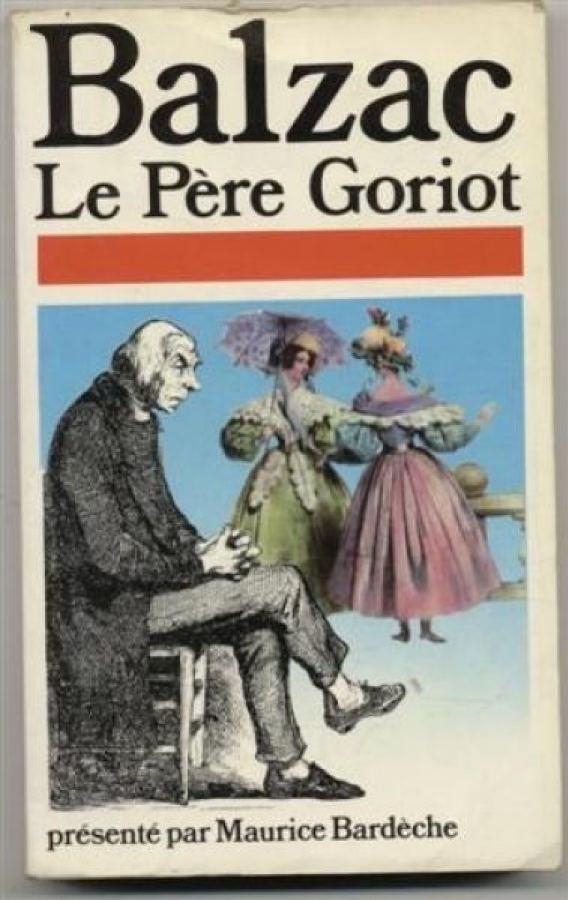
Father Goriot
Balzac lived in the first half of the nineteenth century and thus depicts the society of Louis-Philippe. The novel recounts the story of a man who, out of love for his daughters, leads a wretched and despised life. His paternal devotion stands in stark contrast to a society dominated by money, appearances, and climbing the social ladder at all costs. The approach is moralistic, the style tedious and ponderous, the French difficult: in short, a "bad" novel, which I could not bring myself to finish. When one compares Balzac (at least the Balzac of this book) with Stendhal, the disparity in quality is striking: where Stendhal is nimble yet profound in his characterizations (figures rich in contradictions), Balzac appears rigid, didactic, and predictable. In Stendhal there are "heroes"; in Balzac, opaque figures already condemned to an existence trapped within the constraints of money and social ambition. Perhaps Balzac’s society is truer to life, but it is undeniably duller. To say nothing of the French. In Stendhal it flows, and it is the very structure and rhythm of the sentence that endow the narrative with meaning (with no need for an excess of adjectives); in Balzac, an elaborate vocabulary is required merely to give expression to the tale.
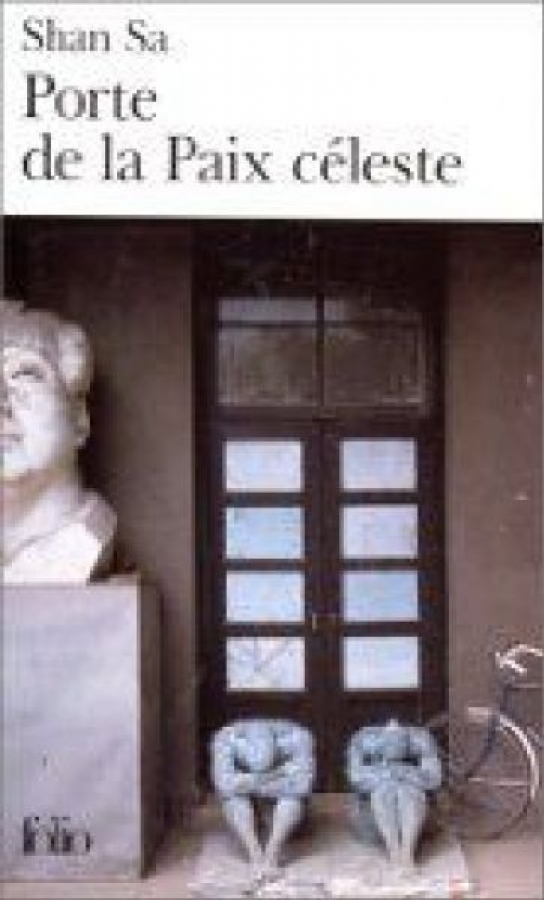
Gate of Heavenly Peace
The novel opens with the events of Tiananmen Square and the flight of one of the revolt’s instigators (the protagonist, Ayamei): the young woman takes refuge with a fishing family in an isolated area, where she is hunted by the Chinese army under the command of a young officer, Zhao. To evade capture, Ayamei flees into the woods and immerses herself in a new life, in close contact with nature, and “in the mountains she breathes only for the light, the wind, and the forest.” The novel concludes mysteriously: Ayamei climbs to the highest peak of the mountains, and Zhao, having deduced where she is hiding, looks through his binoculars toward the mountain and sees the figure of a woman who falls into the void, gazes at him, and > eyes locked in eyes, he forgot all of his past life. The gaze was dark, intense. The lips red . The Tiananmen Square uprising is merely an occasion to unfold a narrative that is a blend of romanticism, an awakening to the limits and hypocrisies of a rule-bound society, and, ultimately, a “magical” tale characteristic of the Chinese world. Ayamei’s love for Min, a rebellious and nonconformist schoolmate, is the classic Western story of a relationship thwarted by society and parents, culminating in the young man’s suicide, precisely as the predictable plot of love stories in our own literature dictates. The burgeoning awareness of Ayamei and Zhao traces a distinct yet parallel path, leading them to grasp the vacuity and cruelty of a society that assigns each individual a role and a responsibility within the overarching dominance of collective demands over personal ones. Finally, there is the more distinctly Chinese theme: the rediscovery of nature and its mythological and magical dimensions, losing oneself in a pre-rational realm where the values of beauty and balance are ends in themselves rather than instruments. As the protagonist asks, > is it possible to forget that all beauty is ephemeral, is it possible to live the unreal? or Zhao’s questioning whether it is right to kill the eagle, which > magnificent, perches upon a rock. Its muscles are hard as steel: its eyes gleam like the sharp blade of a dagger; its black plumage resembles a suit of armor . The answer can only be affirmative in a society where everyone is assigned a function, and thus the hunter’s is to kill the prey (“it is our trade, hunters have no mercy”). This medley of inspirations proves to be the novel’s limitation: it fails to strike a narrative equilibrium, suffering from numerous lapses in pacing and thematic development (take, for instance, the excerpts from Ayamei’s diary, often tedious and predictable). The style suffers as well: a very effective opening (short, sparse sentences) gradually gives way to an increasingly lyrical tone, which—while enhancing the perception of an encroaching unreality—nonetheless strips the prose of that dry, taut quality which constitutes one of the novel’s greatest strengths.


The Red and the Black
The novel chronicles the fortunes of Julien Sorel: the son of a carpenter, he manages through his own drive and intellect to climb the social ladder, first within the provincial bourgeoisie and subsequently among the Parisian aristocracy. He is engaged as a tutor to the Mayor’s children, and soon embarks on an affair with the Mayor’s wife. He then pursues his studies in a seminary and, through a series of fortuitous circumstances, becomes secretary to a powerful nobleman, with whose daughter he enters into another love affair. The young noblewoman, haughty and proud, falls madly in love with Julien, by whom she is soon expecting a child. The Mayor’s wife, persuaded by her confessor, sends the girl’s father a letter that slanders Julien’s character. Consumed by rage at his injured honor and by the betrayal of his former lover, he attempts to kill her; he is subsequently imprisoned, tried, and sentenced to death. During his imprisonment he realizes that he is truly in love with his first mistress, but by then it is too late. The plot of the book appears to correspond to an actual real-life incident; yet beyond mere verisimilitude, the narrative may be interpreted from three distinct perspectives. From the standpoint of historical context, the novel depicts the social ascent of a representative of the common people, rising through the bourgeoisie and up to the aristocracy. In Julien there is neither submissiveness nor the slightest humility: he is convinced that he is equal to, if not worthier than, the members of the bourgeoisie and aristocracy he encounters along his path. As he comes to know them better, an initial phase of admiration gives way to disillusionment with the narrow-mindedness of the provincial bourgeoisie and the vacuity of the aristocracy. In this sense, Stendhal’s novel resembles Proust’s, even if it totally lacks the philosophical underpinnings that characterize *In Search of Lost Time*. The portrait that emerges of the clergy is likewise profoundly negative. In this light, the title *The Red and the Black* would seem to signify the conflict between the progressive, democratic spirit and the reactionary conservatism of the ruling classes in the first half of the nineteenth century. The title, however, appears to mirror deeper and, to some extent, universal peculiarities and contrasts. The novel’s characters all operate within an atmosphere of falsehood and hypocrisy, which equally marks Julien’s behavior. One need only consider the subterfuges he employs to conquer and dominate the beautiful Mathilde, or the fact that until the very last moment he maintains an ambiguous posture toward her, showing her affection at the very moment he is in love with his former mistress, the Mayor's wife. Underlying these sentiments, a pervasive superficiality and a logic dictated by mere expediency hold sway. This ambiguity dissolves only in Julien’s revolutionary act—at this point a "true hero"—as he seeks to avenge the false accusations leveled against him and accepts death with courage and dignity. Confronted with injustice and death, Julien casts aside hypocrisy and expediency to act with integrity, even if in a manner baffling to his contemporaries. The third perspective is embodied by the two women, the Mayor’s wife and Mathilde, who constitute the novel’s true heroines. From the outset, their feelings are profoundly genuine: the Mayor’s wife endures an unhappy marriage and confronts her new lover with astonishment yet immense courage; Mathilde, so haughty and aristocratic, is nonetheless willing to forfeit everything, with passionate abandon, for the man she loves. One need only recall the pages describing the rapprochement between Mathilde and Julien. On the young woman’s part, a profound struggle unfolds between her aristocratic pride and her burgeoning love; on Julien’s, what predominates is merely the fear of being "made a fool of" and the drive to dominate, even through deceit. Julien fails to grasp the true stature of these two women; he suspects ulterior motives and snares, only to later indulge in fantasies of their devotion after his demise. In truth, the end of both women will be tragic and profoundly genuine, just like their love: the Mayor’s wife will die of a broken heart, while Mathilde, seized by madness, will bear away her lover’s severed head.

Female Terrorists
The author is an American writer, but I read the book in its French translation. A young man, the son of an Irish woman and an Egyptian father who abandoned him, lives in sharp conflict with American society—a conflict that also reflects his troubled relationship with his mother, a free-spirited woman full of artistic ideas, and an idealized vision of his father’s society: the Muslim world. He develops a profound faith in this religion by attending the Quranic study classes of an imam by whom he is deeply influenced. Meanwhile, another narrative unfolds: a Jewish high school teacher—at the school where the boy is, in fact, a brilliant student—leads a drab existence steeped in disillusionment and existential weariness. In his role as guidance counselor, he approaches the boy to persuade him to go to university, but meets with an outright refusal, as the young man has decided to obtain a truck driver’s license. Indeed, he goes to work at a furniture store whose owner, a Lebanese man, is a friend of the sheikh. In reality, it is a terrorist front, and the young man is persuaded to drive a truck laden with explosives into a congested city tunnel in order to perpetrate a massacre. The Jewish teacher, having learned that the police suspect an impending attack and that the Lebanese merchant has been killed by fellow Lebanese because he was an undercover police informant, pursues him to convince him to desist. He then climbs into the truck, seemingly deciding to meet his death as well, and the book ultimately concludes leaving the reader in uncertainty regarding the explosion: it remains unclear whether the young man resolved to carry out the attack after all, or if he desisted, persuaded by the teacher. The fundamental theme of the novel is the young man’s innocence set against an American society in the throes of moral and spiritual decay, and an adult world that is both hypocritical and resigned. Even the figures the boy regarded as role models, such as the imam and the Lebanese merchant, ultimately prove to be frauds who exploit the youth and abandon him to his fate. The girl he ideally loves is, in reality, a prostitute paid by the Lebanese merchant to sleep with him. His mother loves her son, but her “head” is always on other things; she does not listen to him even at the most difficult moment of his life, as he heads toward a suicide bombing. Only the Jewish teacher stands close to the boy and understands his motivations. And here we find a juxtaposition of powerful political resonance: adherents of two religions that today seem worlds apart prove instead to be kindred spirits, perhaps because the Torah shares so many affinities with the Quran, and perhaps because the Jewish teacher is so repulsed by American society that he understands the young man’s suicidal impulse. The underlying premise of the book is thus very strong and echoes, if you will, Dostoevsky’s *The Idiot*: the young man is an idiot, an anti-hero, because he does not understand the rules of the world. The trouble is that the pacing remains persistently sluggish, often verbose and redundant, only acquiring at the very end, in the final chapter, a velocity that would have been far better encountered earlier. By contrast, the characters are thinly sketched; they remain flat, at times inscrutable. Even the surrounding environment is stereotypical and predictable, rendering its depiction largely ineffective.
The Life of Euripides
Euripides is one of the three great tragic playwrights of ancient Greece (the other two being Aeschylus and Sophocles) and lived between 480 and 408 B. C. in a historical period characterized by three fundamental phases: the peak years of Athens under the governance of Pericles, the prolonged Peloponnesian War between Athens and Sparta with the consequent decline of the former’s political and cultural life, and the defeat followed by the emergence of Macedonia as a hegemonic power. Marie Delcourt is a Belgian scholar and humanist who belonged to the French literary circles of the 1930s and was particularly influenced by Gide. Her biography of Euripides highlights the link between the evolution of his literary output and three fundamental aspects: the political and civic fortunes of Athens: the author paints a portrait of Euripides as deeply nostalgic for the Periclean era and underscores the constant invocation in his tragedies of the values of civic coexistence, tolerance, and hospitality characteristic of the Athens of that time. It is precisely the quest for a “prince” that drives Euripides to leave Athens and move to the court of the King of Macedonia, where he would meet his death; the philosophical currents of the era: the figure of Anaxagoras (and therefore the influence of his naturalistic views and critical stance toward myth and religion in general), the dialectic of the Sophists as a destructive force against truths and rules, and finally the thought of Socrates, as a search for values no longer rooted in religion but grounded in individual conscience. In reality, this familiarity seems to translate in Euripides into a confused syncretism in which the individual dimension prevails, with difficulty, over the collective one; the innovative and contradictory nature of Euripides, who is perpetually exploring new inspirations and expressive techniques, never willing to settle upon what has already been established and achieved. It is difficult to determine how much of these considerations stems from a critically rigorous reading of Euripides and how much, instead, reflects the existential and cultural milieu of the author. The fact remains that the author succeeds in offering a highly stimulating and engaging profile of Euripides, one that also prompts a series of reflections on the current state of disorientation in Italian society: one is led to think how valuable an author like Euripides would be for our country, capable of interpreting it beyond intimistic readings and sociological analyses. Reading the book is at times demanding due to the relentless historical and literary references, yet it is generally smooth and pleasurable: the style is frequently rhetorical and emphatic, the sentence structure convoluted and ornate, as is the vocabulary.