Finished reading on: December 24, 2008
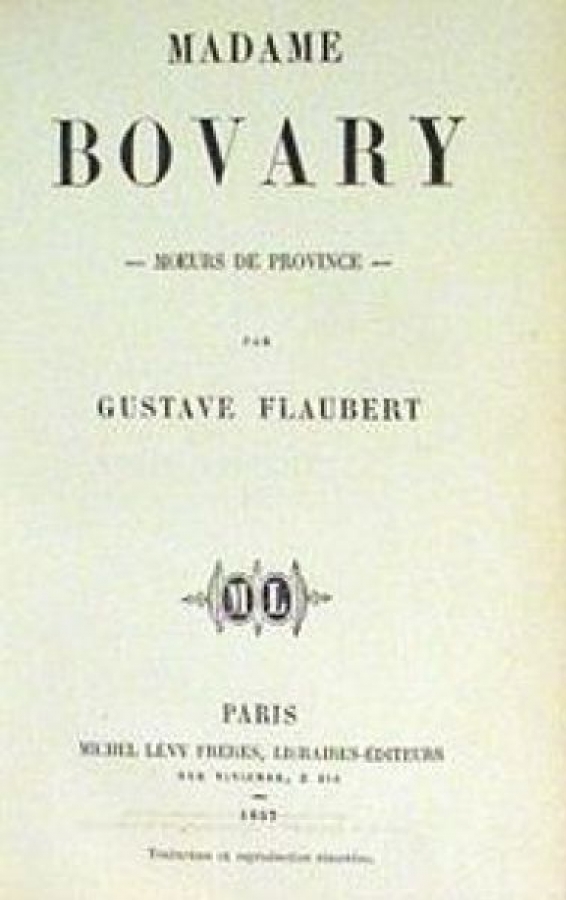
Madame Bovary
AI Translation Notice: This review was translated from the original Italian using artificial intelligence. Book quotes and excerpts are translated interpretations and will not match the author's original English phrasing or official published translations.
The novel recounts the fortunes of Madame Bovary, who, married to a provincial doctor, attempts to escape a prosaic and tedious existence by pursuing a series of affairs and leading an extravagant lifestyle—choices that ultimately lead her to financial ruin, emotional desolation, and, inevitably, suicide.
It is a celebrated novel, widely considered the wellspring of nineteenth-century realism, which tackles the theme—subsequently taken up by numerous other authors—of the pettiness of bourgeois morality.
At heart, Emma Bovary pursues a dream of happiness, striving not to be trapped within the mediocrity of everyday life.
Surrounding her, by contrast, hypocrisy, the pursuit of money, social ambition, and the like prevail.
In truth, Madame Bovary is herself a child of her time: there is no genuinely romantic sensibility within her, no sense of guilt, and she is willing to resort to any falsehood to achieve her ends—which are, in reality, modest, such as meeting her lovers, buying elegant dresses, and so forth.
The third part of the book, unquestionably the finest, which portrays the events leading to Madame Bovary’s death, is conducted in an almost illustrative manner.
The characters, in fact, emerge as cold and flat, devoid of even the slightest introspective probing into their motivations and feelings.
Ultimately, this is a social novel that appears to have enjoyed a renown far exceeding its actual merits.
It bears the heavy imprint of the nineteenth-century ethos and leaves little room, even in its style and narrative rhythm, for that lyricism so typical of our own day.