Finished reading on: June 18, 2010
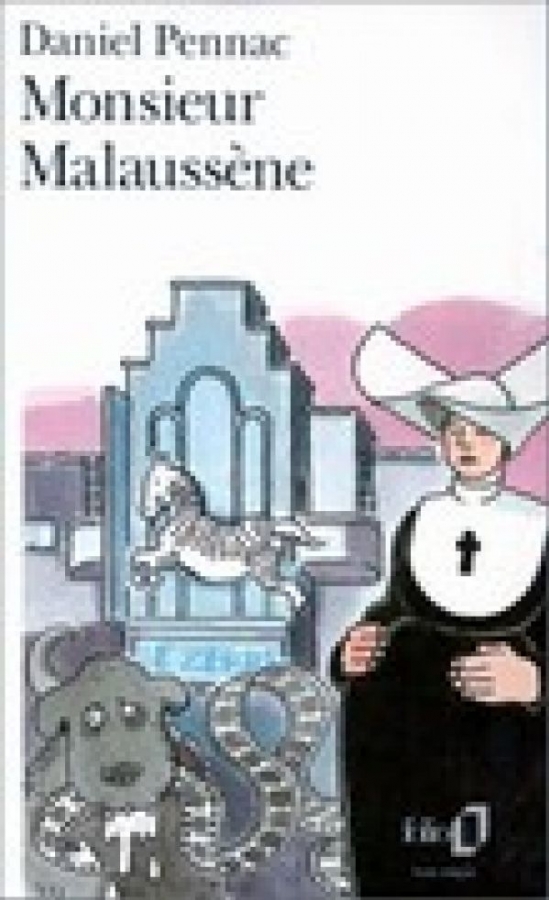
Monsieur Malaussène
Title of the original version reviewed: «Monsier Malaussène»
AI Translation Notice: This review was translated from the original Italian using artificial intelligence. Book quotes and excerpts are translated interpretations and will not match the author's original English phrasing or official published translations.
In the neighborhood of Belleville lives the Malaussène tribe, and with them a myriad of characters.
Belleville is a Parisian periphery, ravaged by the postmodernist manias of architects, the stupidity of politicians, and the greed of speculators; but it is also a magical place, a sort of Sherwood Forest, where Robin Hood is Benjamin Malaussène and the Sheriff is embodied by those who seek to evict long-standing tenants to demolish the old buildings and erect new ones for corporate offices and the wealthy bourgeoisie.
If one day you ask me what happiness looks like, and you will ask me, I will answer: like here
In Belleville, where it is possible to screen the last film in the history of cinema (a film destined to be destroyed afterward) in a forgotten theater, where it is possible to tattoo all the streets of Belleville onto a person's body as a living testament to the neighborhood.
In Belleville there is also an illusionist, who makes you see things that are not there; in Belleville
angels, who at times grow bored, are drawn toward us by the warmth and the surging of feelings
and are personified in a detective nun.
The novel features countless characters and a wealth of intertwining events: murders, disappearances, love affairs, bizarre twists of fate, persecutions.
At the center, hero-like, stands Benjamin Malaussène, a fixed point in a magic lantern, in a kaleidoscope full of lights and illusions.
There is no real plot, and the novel is difficult to follow. I must confess that I was unable to read it to the end, having lost my way among so many characters and so many words.
Yet perhaps this was the author's very purpose: to demonstrate that no rationality governs existence, and that everything unfolds along a tenuous boundary between reality and imagination.
Why not read it? Quite frankly, it is deeply muddled and verbose.