Aravind Adiga
Books by this author (2)
Between the assassinations
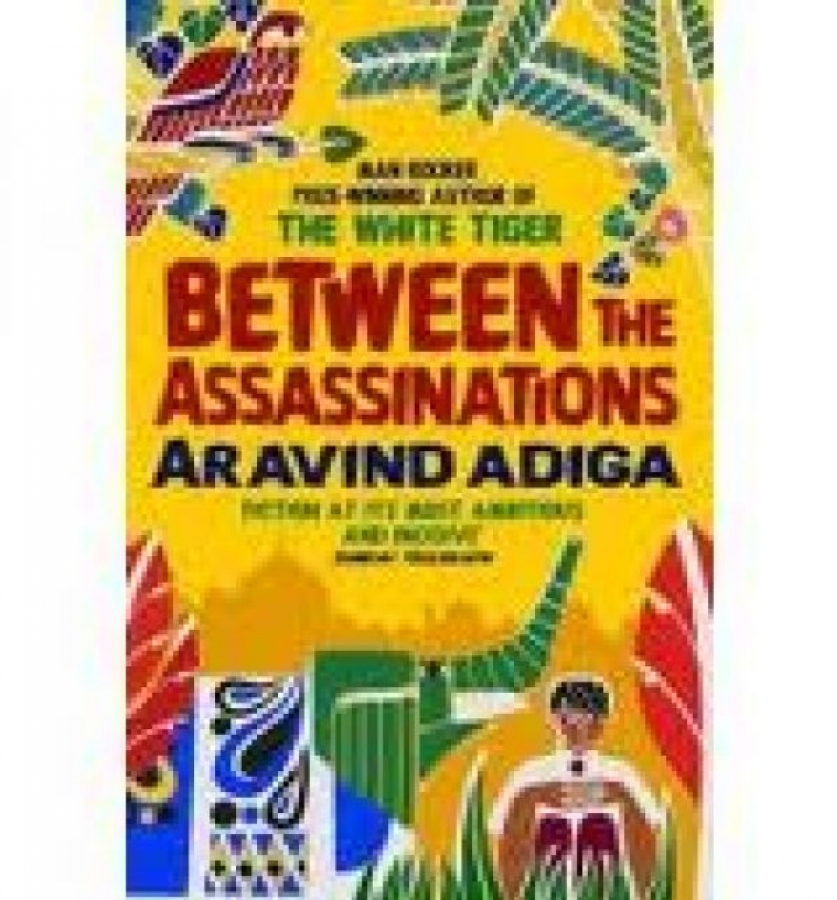
The book is a collection of short stories set in a town in South-Western India, Kittur. The author traverses the various corners of the city, its people, and its social life, like a modern-day Guy de Maupassant. Yet in truth, as an editor remarks when rejecting the stories, > your characters want absolutely nothing. They simply walk through richly described situations and think deeply. They walk through cows, trees, roosters, and think, and then walk through roosters, trees, and cows, and think a bit more. That is all. The narrative, in fact, unfolds between the realistic, stark, and often repetitive depiction of modern Indian society, and the pessimistic chronicle of an unalterable social and existential condition. Despite India’s intense economic dynamism, there is no real shift in the social fabric, in caste relations, in the mechanisms of power—ever dominated by corruption and abuse—nor in the lives of the characters, who, whenever they aspire to or believe they have attained even a modicum of social mobility, are thrust back into the immutable roles of a stratified society. All the stories are remarkably fine, but the most emblematic of the entire collection is *“Market and Maiden”*. Keshaya is a boy from the countryside looking for work in the city: “he is small, thin, dark-skinned, with huge eyes that wander dreamily.” Full of energy yet at the same time “capable of staring at the ceiling for hours,” the boy does not quite know what he wants, but remains captivated by the life of the tram conductor, who works outside, clinging perilously to the vehicle. He manages to secure this job and is thrilled because he rides to work on a bicycle given to him by his employer. It belonged to a former tram conductor, who now begs in the street after being crippled in an accident. One day, Keshaya falls, strikes his head, is fired, and finds himself wandering through the market like a madman, like a wild man. And everyone pretends not to recognize him, yet “he was the king of tram number 5,” cries the lame man, the only one standing by him, bound by the solidarity shared among the poor and the wretched. “That is the way of the world,” remarks the protagonist of another story, “and so it’s a rotten world.” And what can the writer do? If he does not wish to go mad, like another character in the book, he must convince himself that > every true word, as soon as it has been written, is like the full moon, in a day it vanishes and passes entirely into darkness. And this is the way of all things . What is truly remarkable in these stories is Adiga’s writing. It succeeds in transfiguring social realism into the anticipation, or the possibility, of an escape—wholly contemplative and interior—from the deterministic and inexorable forces of economics and sociology. In *“The Bunder”*, Abasi is a small-business owner, beleaguered by the corruption of public officials, who endures a profound inner conflict between the necessity of providing security for his family and the harrowing awareness that the manufacturing processes in his factory will inexorably lead the female laborers to blindness. What is to be done? He climbs onto the roof of his factory: > from here a man can see the limits of Kittur... and see the Arabian Sea stretching out from Kittur. The setting sun is shining above it. A ship is slowly leaving the harbor, sailing where the blue waters of the sea change color and turn a deep dark. And it is about to meet a broad swath of the brilliant setting sun, an oasis of pure light Will Abisa throw himself from the roof, or will he submit to the inexorable laws of economics? We are left in a state of suspense, of waiting, which forms the resolution to most of the stories. Why read it? Splendid stories, marvelous prose, and human and social narratives of powerful resonance.
The White Tiger
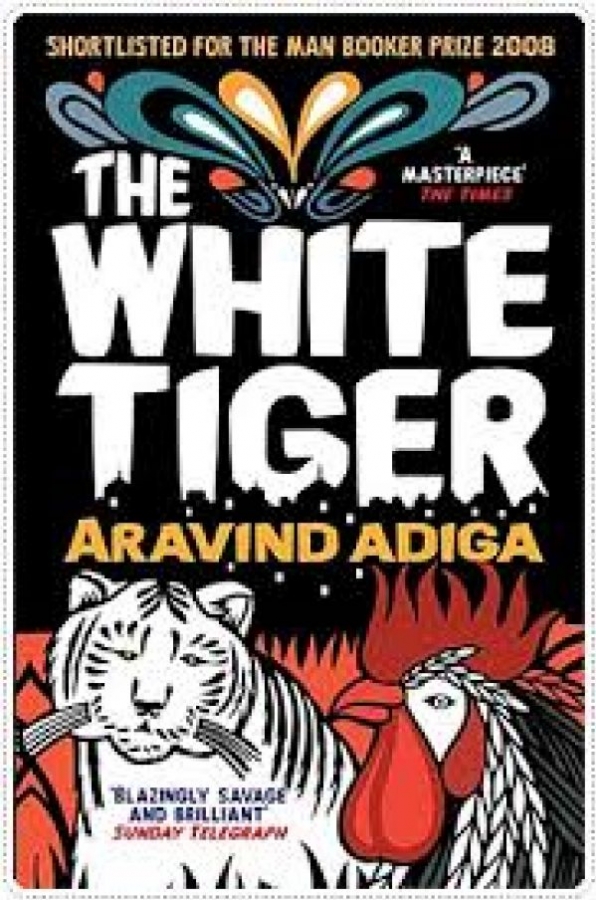
In the splendid stories of *Between the Assassinations*, Arvind Adiga had developed a pessimistic chronicle of an unalterable social destiny, from which one can escape only through a desperate individual choice. The Indian writer returns to this theme with this novel, which recounts the story of a man's rebellion against the petrification of caste, the exploitation of the poor by the rich, and the social imprisonment forged by tradition and family ties. There are no grand ideals behind the revolt; there is merely the desire to have > the chance to be a man, and for that, it was worth killing . The author imagines the protagonist writing to the Chinese premier to explain how one becomes a successful entrepreneur in modern India, "the centre of technology and outsourcing." One need not have attended university or worn fine clothes: entrepreneurs are made of "half-baked clay," they must emerge from the dark side of society and possess the resolve of those who have nothing to lose, who know that there are "only two destinies: eat or be eaten." The protagonist fits the profile. True, in the impoverished village where he was born and raised, they did not even give him a name, calling him merely Munna—boy—yet, from childhood, he senses that he is not destined to "remain a slave." Only, it is not so easy to "spit out one's past." One must break free from the "cage" in which one has been trapped since birth. To depict this social and psychological condition, the author employs an effective metaphor: the poultry slaughterhouse. > Go to Old Delhi and watch how they keep the chickens there in the market. Hundreds of pale hens and brightly coloured roosters, stuffed tightly into wire cages, packed together like worms in a belly (...). On a wooden table (...) sits a young butcher, smiling complacently, displaying the flesh and organs of a freshly slaughtered chicken (...). The roosters see the organs of their brothers lying around them. They know they will be next. Yet they do not rebel. They do not try to escape from the coop.(...) Because the desire to be a servant has been bred into me; carved into my brain, nail after nail, and injected into my blood, in the same way that waste and industrial poisons have been poured into Mother Ganga. (...) Servants must prevent other servants from becoming innovators, experimenters, or entrepreneurs. (...) The coop is maintained from the inside . The narrative is precisely the protagonist's liberation from this subtle yet unbreakable prison. By chance, he manages to move to New Delhi as a driver for the brother of the village boss. He remains a servant in every sense, at beck and call for any need; yet driving the car grants him access to every facet of his master's life, from intimate matters to shady dealings. It is a kind of unveiling, a discovery of the sins and emptiness of the rich. The obedience and subservience inculcated over centuries would have nevertheless kept him a faithful servant; at most, he might have indulged in some petty, innocent pleasure, as other drivers do: urinating in the masters' flowerpots, slapping them while they sleep, beating their pets. An incident helps awaken his consciousness. The master's wife runs over a poor person, and the boss's family demands that Munna take the blame and go to prison. Even the protagonist's own relatives urge him to make this sacrifice, as though it were the most natural thing in the world. Fortunately, the police, suitably bribed, close the investigation, leaving no consequences; but the protagonist grasps the hollow nature of traditional values of loyalty and the hypocrisy of the benevolent paternalism displayed by his master. He often has to drive the latter, carrying a bag full of cash, to bribe government officials. He decides to seize the opportunity: he murders the master and takes the money, laying the groundwork to become a successful entrepreneur. The caustic irony of the narration must not mislead: the novel is staunchly realist, a cold social accounting and a vigorous political indictment. The whole of Indian society emerges desecrated and exposed in its true nature, both modern (the myth of the world's largest democracy, the headlong and all-resolving economic boom) and traditional, which so fascinates Westerners. The protagonist is a stereotypical figure, as cold and cynical as the master he killed: a true "white tiger," because he is cruel and at the same time rare. Munna achieves success, but this offers no solace to the reader. The hope lies in the fact that he performs two acts of humanity: fleeing after the crime, he risks capture by the police to save a young cousin who lives with him; he compensates the mother of a man struck by one of his drivers. Slight gestures of solidarity, which cannot make us forget that the protagonist failed to warn his relatives of the vengeance of the boss's family, who will indeed slaughter them all. Where what matters is "the size of the belly"—money—there is little room to be "good"! The novel's primary virtue is its narrative style: prose that is spare yet rich. The flaw lies in the plot, which fails to sustain an intense narrative pace, rendering the tale often repetitive, burdened with too many sociological and political digressions. In its execution, the author fails to sustain the expectations raised by the intriguing literary device of the letter to the Chinese premier. Why read it? A strong realist stamp, highly effective prose.